Venezuela's Gold: Sovereignty, Sanctions, and the $4 Billion Standoff That Shook Latin America
For nearly eight years, 31 tonnes of Venezuelan gold have sat motionless in the vaults of the Bank of England — not lost, not stolen, but frozen in place by the collision of geopolitics, competing claims of legitimacy, international sanctions, and a legal labyrinth that has wound its way through British courts to the United Kingdom's highest tribunal. Worth approximately $4.3 billion at current market prices, these reserves represent one of the most contested sovereign asset disputes in modern history. In 2026, the story entered a new and dramatic chapter: a catastrophic earthquake, a US military intervention that toppled a sitting government, and a hastily negotiated deal that critics say has handed Washington unprecedented control over Caracas's most valuable financial lifeline.
The debate over whether this constitutes a pragmatic solution to an impossible situation — or the effective subordination of Venezuelan sovereignty to American imperial interests — has ignited controversy across Latin America and beyond.
Background: Venezuela's Gold and Its Journey to London
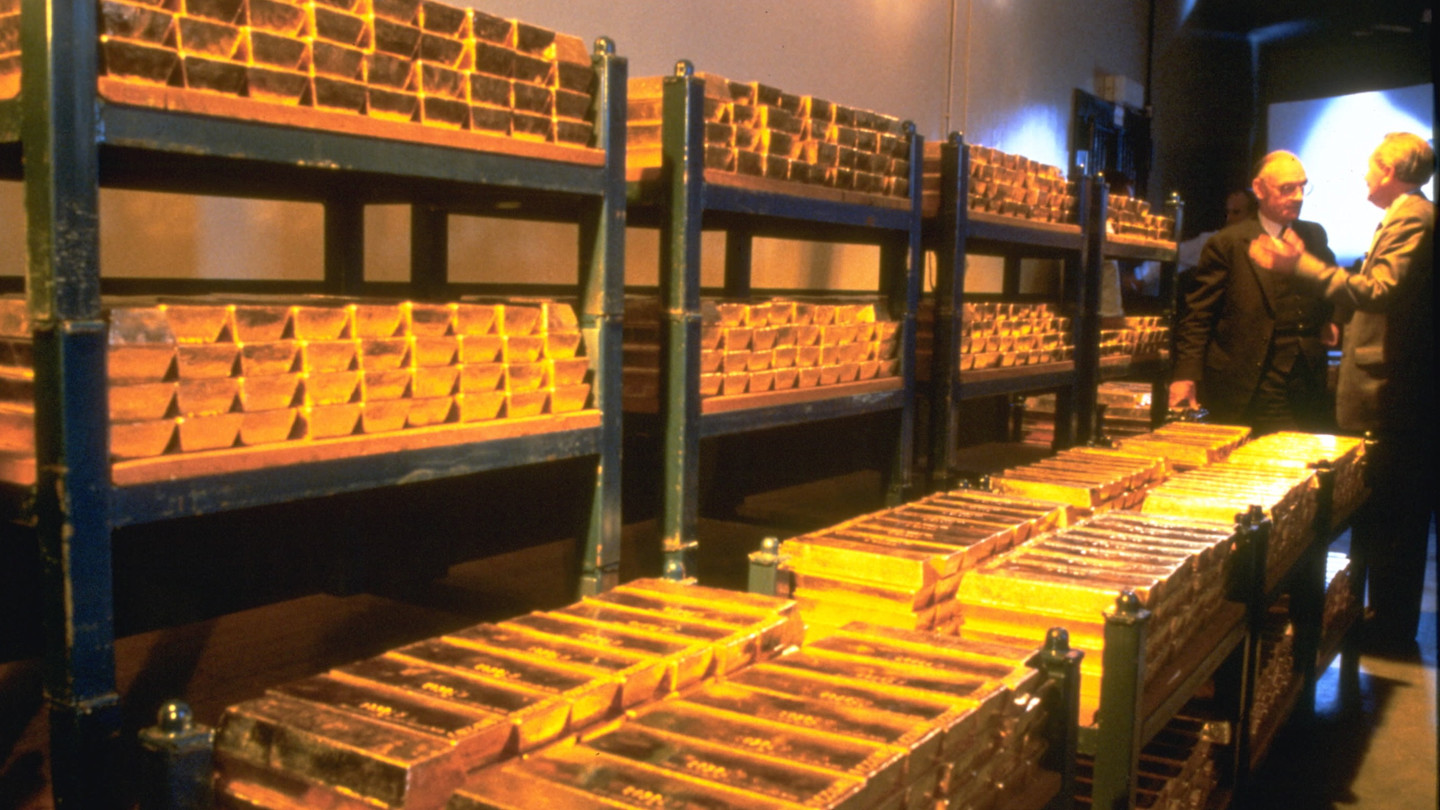
To understand the current crisis, one must first understand how Venezuelan gold came to rest in a foreign vault in the first place. The Banco Central de Venezuela (BCV), like many central banks, has historically stored a portion of its gold reserves abroad — partly for liquidity purposes and partly because London's gold market, anchored by the Bank of England, functions as the world's most liquid and established custodian system for sovereign bullion.
Under Hugo Chávez, Venezuela took a dramatically different posture. In 2011, Chávez launched a high-profile gold repatriation campaign, calling the return of Venezuela's gold a matter of national sovereignty and anti-imperialism. Between November 25, 2011, and January 30, 2012, the BCV repatriated 12,819 Good Delivery gold bars to Caracas — a total of roughly 160 tonnes drawn from vaults in the United States, Europe, and the Bank of England. The operation was internationally televised and celebrated as a symbolic victory over the Western financial architecture that Chávez frequently condemned.
Yet even after this dramatic repatriation, approximately 50.8 tonnes — or about 4,089 Good Delivery bars — remained in the Bank of England's London vaults. Over subsequent years, as Venezuela's economy deteriorated under crushing US sanctions and chronic mismanagement, the Maduro government gradually sold off portions of these remaining reserves to raise hard currency. By the time the freeze began in earnest, only approximately 31 tonnes remained.
The Freeze Begins: Recognition Politics and the Guaidó Dispute
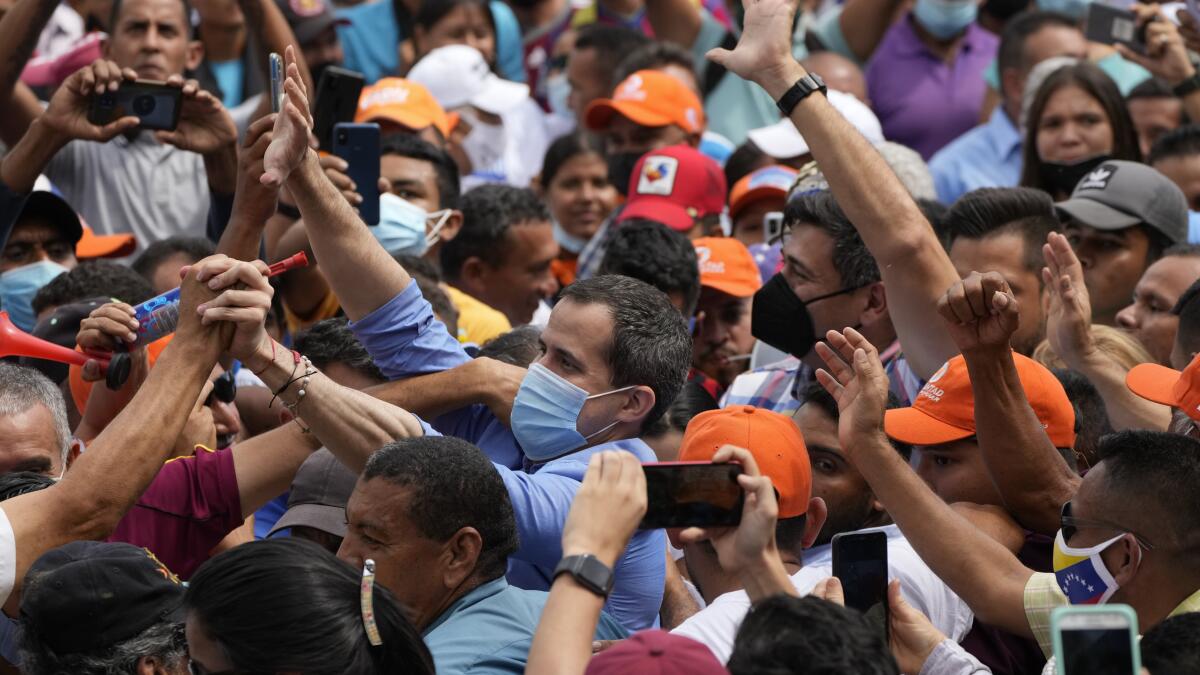
The crisis that locked Venezuela's London gold in place was not primarily financial — it was political. In January 2019, opposition leader Juan Guaidó declared himself interim president of Venezuela, invoking a contested interpretation of the Venezuelan constitution. The United States, the United Kingdom, and more than 50 other countries formally recognized Guaidó as Venezuela's legitimate president, refusing to acknowledge the continued legitimacy of Nicolás Maduro's government, whose 2018 re-election had been widely condemned as fraudulent.
This act of recognition had an immediate and concrete consequence: the Bank of England, operating within the framework of British government policy, suddenly faced two rival claimants to Venezuela's gold. The Maduro-appointed board of the BCV demanded the gold be transferred or sold. The Guaidó-aligned board, now recognized by London as the legitimate governing authority, issued conflicting instructions. With no clear legal resolution, the Bank of England did what any prudent custodian would do in such circumstances — it froze the assets and awaited a court's determination.
In May 2020, the Maduro-controlled BCV formally applied to the Bank of England to sell approximately $1 billion worth of the gold, seeking to redirect the proceeds through the United Nations Development Programme to fund Venezuela's response to the COVID-19 pandemic. The Bank refused.
What followed was one of the most complex and internationally watched sovereign asset litigations in British legal history.
Years in Court: The British Legal Saga

The legal battle over Venezuela's gold passed through multiple levels of the British judicial system over several years, with rulings that sometimes contradicted each other and regularly reflected the political complexity underlying the dispute.
In July 2020, the Commercial Court initially ruled in favor of Guaidó's board, affirming that the UK government's recognition of Guaidó was determinative — meaning that only his BCV board could issue valid instructions regarding the gold. The court held that the government's position on foreign recognition was a matter of executive prerogative that courts were bound to follow.
However, in October 2020, the Court of Appeal overturned that ruling, finding that the original judgment had been too quick to treat Guaidó's recognition as absolute. The appeals court held that recognition could be more nuanced, and that the matter required further examination.
The case then reached the UK Supreme Court. In December 2021, the Supreme Court delivered a landmark ruling: it held that Britain had "unequivocally recognised" Guaidó as Venezuela's constitutional interim president, and that this recognition was binding on all British courts. Only Guaidó's board, the court found, could lawfully issue instructions on Venezuela's gold. The Supreme Court stated explicitly that Maduro should not be recognized "for any purpose."
In July 2022, the Commercial Court — now armed with the Supreme Court's guidance — rejected Maduro's attempt to rely on rulings from Venezuela's own Supreme Tribunal (TSJ) that had attempted to invalidate Guaidó's board appointments. The court refused to recognize those TSJ rulings, further entrenching Guaidó's board's legal position in London.
But even this apparent victory was complicated almost immediately. In late December 2022, Venezuela's opposition parties voted to dissolve Guaidó's parallel government, stripping him of his self-proclaimed interim presidency amid frustration over his inability to actually displace Maduro or access the frozen assets. The collapse of Guaidó's shadow government left the legal landscape murkier than ever — the board he had appointed still had a notional legal claim in UK courts, but the political structure backing that claim had dissolved.
The Turning Point: 2026 and the US Intervention
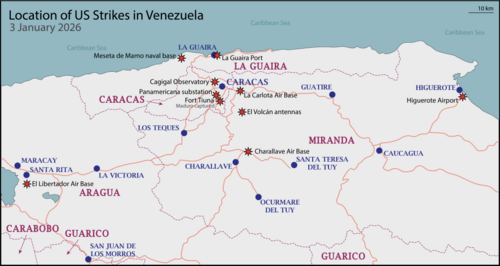
The dispute over Venezuela's gold had already been extraordinary when the geopolitical context shifted dramatically and irreversibly in early 2026.
On January 3, 2026, US military forces conducted a covert operation in Caracas that resulted in the capture of President Nicolás Maduro and his wife, Cilia Flores. The operation included airstrikes on Venezuelan air defense infrastructure and a direct assault on Maduro's presidential compound. Maduro — who had been indicted in the United States on narcoterrorism charges since 2020, with a reward of up to $50 million offered for his capture by then-Attorney General Pam Bondi in August 2025 — was taken into US custody.
The intervention was immediately controversial. The UN Secretary-General stated it set a "dangerous precedent," and a number of US allies condemned the action at an emergency UN Security Council session. Legal scholars across the globe debated its compatibility with international law and the UN Charter's prohibitions on the use of force against sovereign states.
In the wake of Maduro's capture, Vice President Delcy Rodríguez was sworn in as acting president of Venezuela. The Rodríguez government, operating in the extraordinary circumstances of a post-intervention political landscape, announced the release of multiple Venezuelan and foreign political prisoners beginning January 8, 2026 — a move widely seen as an attempt to normalize relations with Washington and the broader international community.
The United Kingdom, which had long withheld recognition from Maduro's government, extended recognition to the Rodríguez administration. The Bank of England's longstanding justification for freezing the gold — that it could not identify a legitimate Venezuelan government to receive it — was in flux once more.
March 2026: The First Gold Deal
Even as the 31 tonnes held in London remained frozen, Trump administration officials moved quickly to establish a new commercial relationship with Venezuela's post-Maduro government around its gold resources.
On March 5, 2026, Axios reported that Trump officials had brokered what it described as a "massive" gold deal between Venezuela and the United States. Venezuela's state-owned mining company, Minerven, signed a contract to supply between 650 and 1,000 kilograms of gold dore bars — bars containing approximately 98% pure gold — to the commodities trading giant Trafigura, which would then shepherd the metal to US refineries under a separate arrangement with the US government.
US Interior Secretary Doug Burgum, who had traveled to Venezuela to discuss oil and mineral resource opportunities, helped broker the arrangement. The deal was framed by the Trump administration as part of a broader normalization of commercial relations between Washington and Caracas. By March 6, Axios also reported that the US and Venezuela had reached a historic agreement to re-establish formal diplomatic and consular relations.
The Minerven-Trafigura contract represented the third extraction deal negotiated under US supervision since the intervention, following prior agreements in Venezuela's oil sector. Critics noted that the pattern reflected something more concerning than mere commercial normalization: the systematic integration of Venezuelan resource production into US-controlled supply chains.
June 2026: Catastrophe and Crisis

On June 24, 2026, Venezuela was struck by a catastrophic seismic event. A 7.2 magnitude foreshock was followed just 30 seconds later by a 7.5 magnitude mainshock, devastating northwestern and central parts of the country. The capital Caracas suffered severe damage, and in the coastal state of La Guaira, an estimated 80% of buildings collapsed. By mid-August 2026, official and unofficial death tolls exceeded 6,000 people, with the full extent of casualties and displacement still being tabulated.
The earthquakes transformed the political calculus around Venezuela's frozen gold. What had been a prolonged legal and geopolitical dispute suddenly acquired humanitarian urgency. Venezuelan authorities publicly identified the Bank of England gold as the most logical and available source of reconstruction funding — if only they could access it.
CNN's international reporting in late July 2026 captured the grim irony of the situation: Venezuela had $4 billion in sovereign gold stored in a foreign vault, a population reeling from one of the worst natural disasters in the country's history, and no clear legal mechanism for accessing its own assets.
The Venezuelan government, under acting president Delcy Rodríguez, formally demanded the release of the frozen gold for post-earthquake reconstruction. The US Treasury Department responded by issuing a limited license — permitting certain relief-related transactions through October 2026 — but did not simply return the gold to Caracas's direct control.
August 2026: The Unprecedented Joint Agreement
The most remarkable development in the long saga of Venezuela's London gold came in mid-August 2026. On August 12 and 13, delegations from the Rodríguez government and representatives of the Venezuelan opposition — long bitter rivals in one of the hemisphere's most polarized political conflicts — signed a joint statement in Caracas.
In an agreement described as extraordinary by regional observers, both sides pledged to work together to secure the unfreezing of the 31 tonnes of gold held at the Bank of England, with the stated goal of directing those resources toward post-earthquake reconstruction.
The joint declaration represented a rare moment of consensus in Venezuelan politics. For years, the government and opposition had fought each other — in courts, in the streets, and in international forums — over the gold itself. Now, with thousands dead and a country in ruins, they had found a common cause.
But the mechanism of the agreement raised immediate and substantial concerns.
According to statements from the opposition delegation, the released funds would not be transferred directly to Venezuelan government control. Instead, they would be deposited in a US Treasury Department bank account, subject to external audits, and any disbursement of the funds would require approval from both the US Treasury and the State Department.
The Euronews report from August 17, 2026 confirmed the outlines of this framework: Venezuela's UK-held gold would be released to US control, with foreign oversight mechanisms governing how and when the resources could actually be used. Venezuela — the nation whose reserves these legally and nominally were — would have no unilateral authority over their deployment.
The Sovereignty Debate: "A Colonial Relationship"
The announcement triggered an immediate backlash from economists, international law scholars, and regional governments who viewed the arrangement as a deeply troubling precedent.
The most prominent voice in this critique has been Paulo Nogueira Batista Jr., a former Brazilian executive director at the International Monetary Fund and a longtime critic of what he characterizes as asymmetric US influence in Latin American economic affairs. Speaking publicly in the days following the announcement, Batista argued that placing Venezuela's sovereign gold under US Treasury control would amount to creating a "colonial relationship" between Washington and Caracas.
"The US not only controls Venezuela after they abducted Maduro," Batista stated, "but exerts enormous influence over Great Britain, including the Bank of England." He warned that the arrangement would allow Washington to "micromanage" how Venezuela's own national wealth is spent, and characterized it as a "terrible precedent" for US relations with Latin America more broadly.
Batista's concerns echo long-standing principles in international law. The UN General Assembly's 1962 Resolution 1803 on Permanent Sovereignty over Natural Resources — one of the foundational documents of post-colonial international economic law — establishes that nations have the right to permanent sovereignty over their own natural resources, and that those resources cannot be controlled by foreign powers without meaningful sovereign consent. Critics argue that an arrangement where Venezuela can only access its own gold by seeking approval from the US Treasury and State Department fundamentally violates this principle, regardless of the nominal legality of the framework.
The Venezuelanalysis outlet, in its coverage of the agreement, noted that routing Venezuelan sovereign funds through the US Department of the Treasury was presented as a "legal workaround" to the problem of unfreezing the assets — but that it created a new problem: it transformed the custodian of Venezuela's wealth from a neutral British institution (however politically constrained) to the government of the United States, which had just conducted a military intervention in Venezuela's territory and had direct strategic interests in the country's resource economy.
OilPrice.com described the situation more bluntly in its August 2026 coverage: "U.S. Moves to Secure Venezuela's Gold as Influence Deepens After Intervention."
Counterarguments: The Case for the Deal
Defenders of the arrangement — both within Venezuela and internationally — argue that the sovereignty concerns, while real, must be weighed against equally real practical realities.
The gold at the Bank of England has been effectively inaccessible for nearly eight years. Multiple court rulings, multiple diplomatic interventions, and multiple UN-mediated efforts have all failed to transfer a single ounce of it to Venezuelan control. In that context, a deal that actually moves the resources — even if through a US-administered mechanism — may represent a pragmatic gain over continued paralysis.
Supporters also note that the arrangement includes external audit requirements, which they argue provides accountability that direct BCV control might not. Venezuela's economy has been devastated by both sanctions and internal mismanagement; ensuring that reconstruction funds reach their intended purposes, rather than being diverted, is a legitimate concern.
The earthquake humanitarian context adds urgency. With more than 6,000 dead, hundreds of thousands displaced, and 80% of buildings collapsed in some areas, the argument that Venezuela can afford to wait years more for a philosophically purer resolution of the gold dispute carries less weight than it might have before June 24, 2026.
Additionally, some analysts point out that the deal was negotiated and signed voluntarily by both the Venezuelan government and the opposition — it was not simply imposed. Both parties calculated that access to $4 billion through a US-managed mechanism was preferable to continued denial.
The Bigger Picture: Venezuela's Total Gold Position and the Resource Economy
The 31 tonnes in London represent only part of Venezuela's gold story. The country holds approximately 47 tonnes of gold in total reserves, with the remainder held domestically by the BCV in Caracas. Venezuela once had significantly larger gold reserves — at peak, the country held over 360 tonnes — but years of economic crisis drove the government to sell reserves on international markets, often under sanctions pressure that forced it to accept steep discounts.
Venezuela also has one of the world's largest gold mining sectors, concentrated in the Orinoco Mining Arc in Bolívar state. The arc covers approximately 112,000 square kilometers and contains substantial deposits of gold, diamonds, coltan, and other minerals. Critics of Venezuela's mining development policies have long argued that these resources have been exploited with minimal environmental oversight and significant human rights concerns, including the displacement of Indigenous communities and the presence of armed groups controlling informal mining operations.
The March 2026 Minerven-Trafigura gold contract specifically involves production from this mining sector — newly extracted gold being channeled into US markets — rather than the Bank of England reserves. This distinction matters: the London gold represents accumulated historical sovereign reserves, while the Minerven contract involves ongoing production. Together, they represent two distinct vectors through which Venezuelan gold is moving into closer alignment with US commercial and financial infrastructure.
The Role of the Bank of England and International Financial Architecture
The Bank of England's role throughout this saga deserves particular attention. As one of the world's oldest central bank custodians, the Bank of England holds gold on behalf of numerous sovereign nations and international institutions. Its refusal to release Venezuela's gold — maintained consistently for years across shifting political circumstances — was legally defensible given the UK government's official non-recognition of Maduro's government.
But critics have argued that the Bank of England's custodianship essentially became an extension of US-UK sanctions policy, even without a formal sanctions designation on the gold itself. Venezuela's gold was not technically sanctioned — it was frozen by virtue of the recognition dispute, not a sanctions order. Yet the practical effect was identical to a sanctions freeze. The BullionStar analysis published by researcher Ronan Manly referred to the situation as Venezuela's gold being "in limbo," noting that the Bank of England had become, in effect, an unwilling enforcer of geopolitical policy.
The situation has prompted broader questions about the risks of holding sovereign assets in foreign custodial institutions, particularly in the United States and United Kingdom. Following Russia's frozen assets (approximately $300 billion held in Western institutions following the 2022 Ukraine invasion) and Venezuela's gold dispute, a number of emerging economies have reportedly begun reassessing their reliance on Western custodians for sovereign reserve storage.
What Happens Next: Open Questions and Unresolved Issues
As of mid-August 2026, several critical questions remain unresolved.
Will the Bank of England actually transfer the gold? The joint statement by Venezuela's government and opposition pledging cooperation was a significant political development, but it does not automatically unlock the vaults. Legal processes in UK courts, and the Bank of England's own governance procedures, still need to validate the transfer mechanism. The question of which board — the defunct Guaidó-era board, or some new legitimacy structure — has legal authority to instruct the Bank is unresolved.
How will the US Treasury manage disbursements? The opposition delegation indicated that access to the funds would require US Treasury and State Department approval. The specific criteria for such approvals, the timeline for disbursements, and the dispute resolution mechanisms if Venezuela's government disagrees with US decisions — none of this has been publicly specified.
What is the long-term political trajectory? Acting President Delcy Rodríguez is governing Venezuela in extraordinary circumstances following a US military intervention. The country is in reconstruction mode following a catastrophic earthquake. The political landscape is uncertain, and any future Venezuelan government might contest the legitimacy of agreements made in this period.
Does the arrangement violate international law? This question, raised by Nogueira Batista and others, is likely to be tested in international forums. Venezuela could theoretically bring a claim before the International Court of Justice or other bodies arguing that effective US control over its sovereign assets constitutes a violation of permanent sovereignty over natural resources.
Conclusion
Venezuela's 31 tonnes of gold at the Bank of England has never been merely a financial story. From Chávez's 2011 repatriation spectacle to Guaidó's court battles to Maduro's ouster to the June 2026 earthquake, the gold has served as a barometer of Venezuela's geopolitical situation — a physical measure of sovereignty, leverage, and dependence.
The current arrangement, in which Venezuelan gold may be released from British vaults only to be placed under US Treasury supervision, represents neither a clean victory nor a straightforward defeat for any party. Venezuela's government and opposition secured, at least nominally, a path to accessing resources that have been frozen for eight years. The United States consolidated influence over a key Latin American economy's sovereign assets. The Bank of England, in its own way, found a politically viable exit from a custodial role that had become legally and diplomatically untenable.
What critics like Paulo Nogueira Batista Jr. rightly identify is that the precedent being set here extends beyond Venezuela. The normalization of a framework in which a major power controls another nation's sovereign reserves — determining when and how that nation may spend its own wealth — marks a meaningful shift in the architecture of international economic sovereignty. Whether that shift proves temporary, a pragmatic emergency measure born of extraordinary circumstances, or the crystallization of a new and troubling norm, will depend on what Venezuela and Latin America do with it.
For now, 31 tonnes of gold remain at the center of a story that is far from over.
Sources:
- Venezuela's UK-Held Gold to Be Released to US Control, Foreign Audits — Venezuelanalysis
- Venezuela's $4 billion, 31-ton gold reserve reportedly leaving London — Crypto Briefing
- Venezuela seeks return of 31 tonnes of gold worth €4bn from Bank of England — Euronews
- Why Might Venezuelan Gold in London End Up in the U.S. Treasury Instead of the Central Bank? — EVTV Miami
- Venezuela Holds 47 Tons of Gold — EVTV Miami
- US control of Venezuela sets 'terrible precedent' – ex-IMF official — RT
- US issues limited licence for Venezuelan gold following high-level visit — Al Jazeera
- Scoop: Trump officials broker massive U.S.-Venezuela gold deal — Axios
- Venezuela Gold: Old Rivals Unite to Reclaim US$4 Billion in London — Rio Times Online
- Venezuela's 31 Tonnes of Gold Become Bargaining Chip in Power Talks — SL Guardian
- Venezuela Unites to Recover $4.4B Gold from Bank of England for Earthquake Reconstruction — IndexBox
- Why Venezuela can't access $4 billion in gold that could help with earthquake recovery — CNN
- 2026 Venezuela earthquakes — Wikipedia
- Venezuela's Gold in Limbo at the Bank of England — BullionStar
- 2026 United States intervention in Venezuela — Wikipedia
- The US capture of Nicolás Maduro — House of Commons Library
- Venezuela opposition leader Juan Guaidó wins U.K. court ruling in battle over gold — NBC News
- UK court overturns ruling on $1.8bn of Venezuelan gold — The Guardian (via PressReader)
- UK High Court rules Maduro cannot access gold held by Bank of England — JURIST
- U.S. Moves to Secure Venezuela's Gold as Influence Deepens After Intervention — OilPrice.com
- Venezuelan Gov't Demands Release of Frozen Assets for Post-Earthquake Reconstruction — Venezuelanalysis