The Voyager Program, launched in the late 1970s by NASA, stands as a monumental achievement in space exploration and scientific research. Designed to capitalize on an optimal alignment of the outer planets, the Voyager missions have provided invaluable insights into our solar system's composition, structure, and dynamics. More than four decades since their launch, the Voyager spacecraft continue to transmit data back to Earth from interstellar space, offering a unique perspective on particle dynamics beyond the heliosphere [1].
This article delves into the technical intricacies of the Voyager missions, tracing their historical context, key figures involved in their development and execution, recent breakthroughs and challenges faced by scientists today, and the profound cultural and scientific legacies they have left behind. By exploring these multifaceted aspects, we aim to provide a comprehensive overview of one of humanity's most ambitious endeavors.
Historical Context
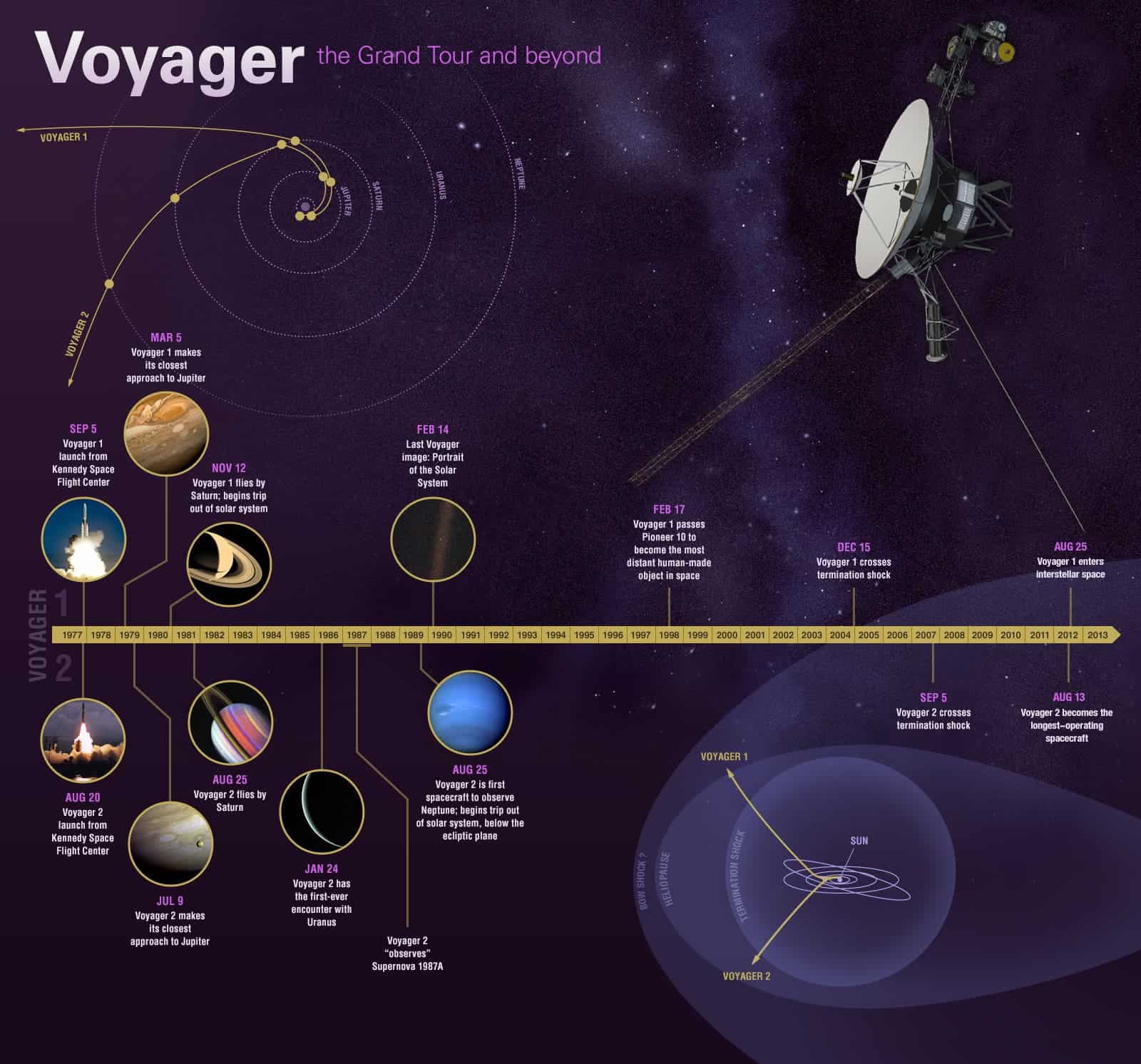
The Voyager Program was conceived as part of NASA’s Grand Tour initiative aimed at utilizing a rare planetary alignment to explore Jupiter, Saturn, Uranus, and Neptune efficiently [2]. Launched on August 20, 1977 (Voyager 2) and September 5, 1977 (Voyager 1), these spacecraft were designed with the objective of conducting flyby missions of the gas giants. However, due to their exceptional performance and robust communication systems, both Voyagers were extended to explore interstellar space [3].
Design and Construction
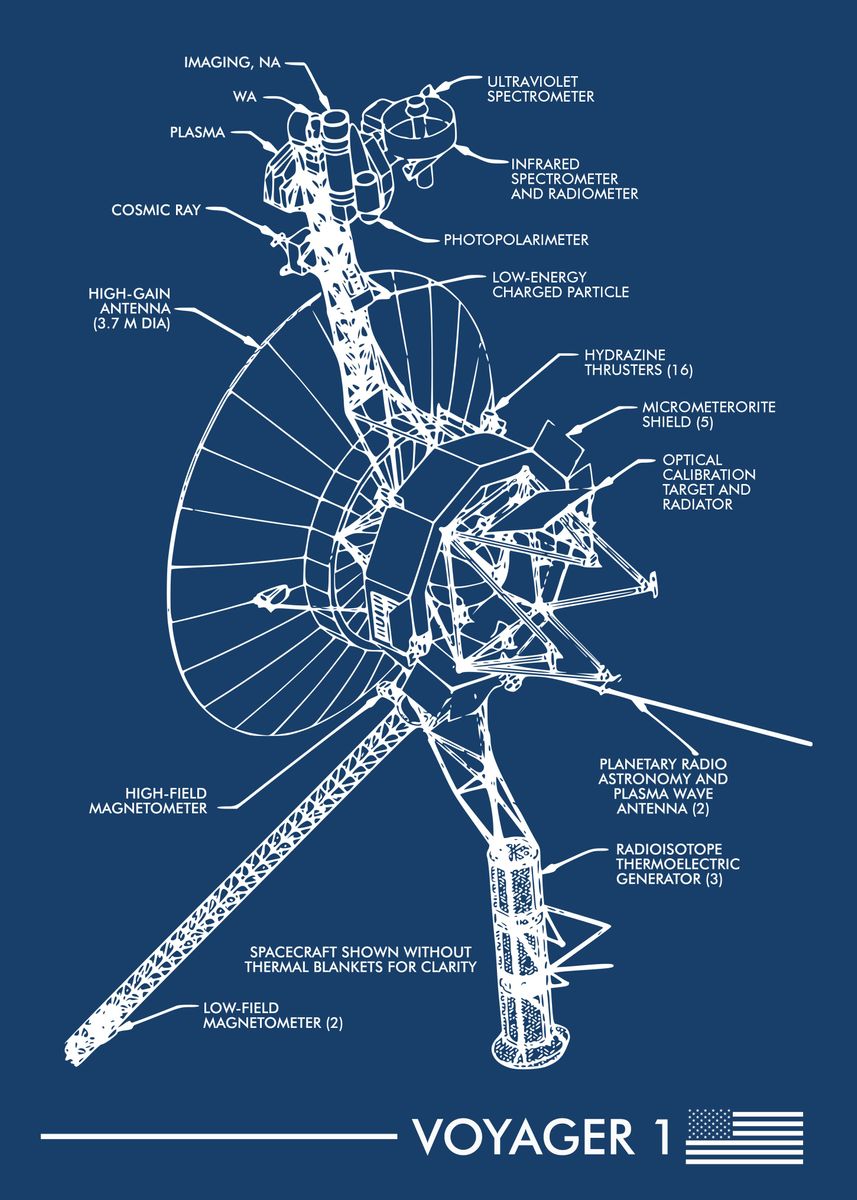
Each Voyager spacecraft is equipped with advanced imaging instruments and scientific sensors capable of measuring magnetic fields, cosmic rays, solar wind particles, and plasma waves. The design philosophy behind the Voyagers emphasized reliability and redundancy, given the vast distances and harsh conditions they would encounter during their mission [2]. Key features include:
- Power Supply: A radioisotope thermoelectric generator (RTG) that converts heat generated by plutonium decay into electrical power.
- Communication Systems: High-gain antennas to transmit data back to Earth over billions of miles using extremely low power levels.
The spacecraft were built with the intent to gather as much scientific data as possible, from atmospheric compositions and magnetic fields to particle emissions. This wealth of information has not only expanded our understanding of the outer planets but also provided crucial insights into interstellar space [1].
Mission Overview
Initial Missions
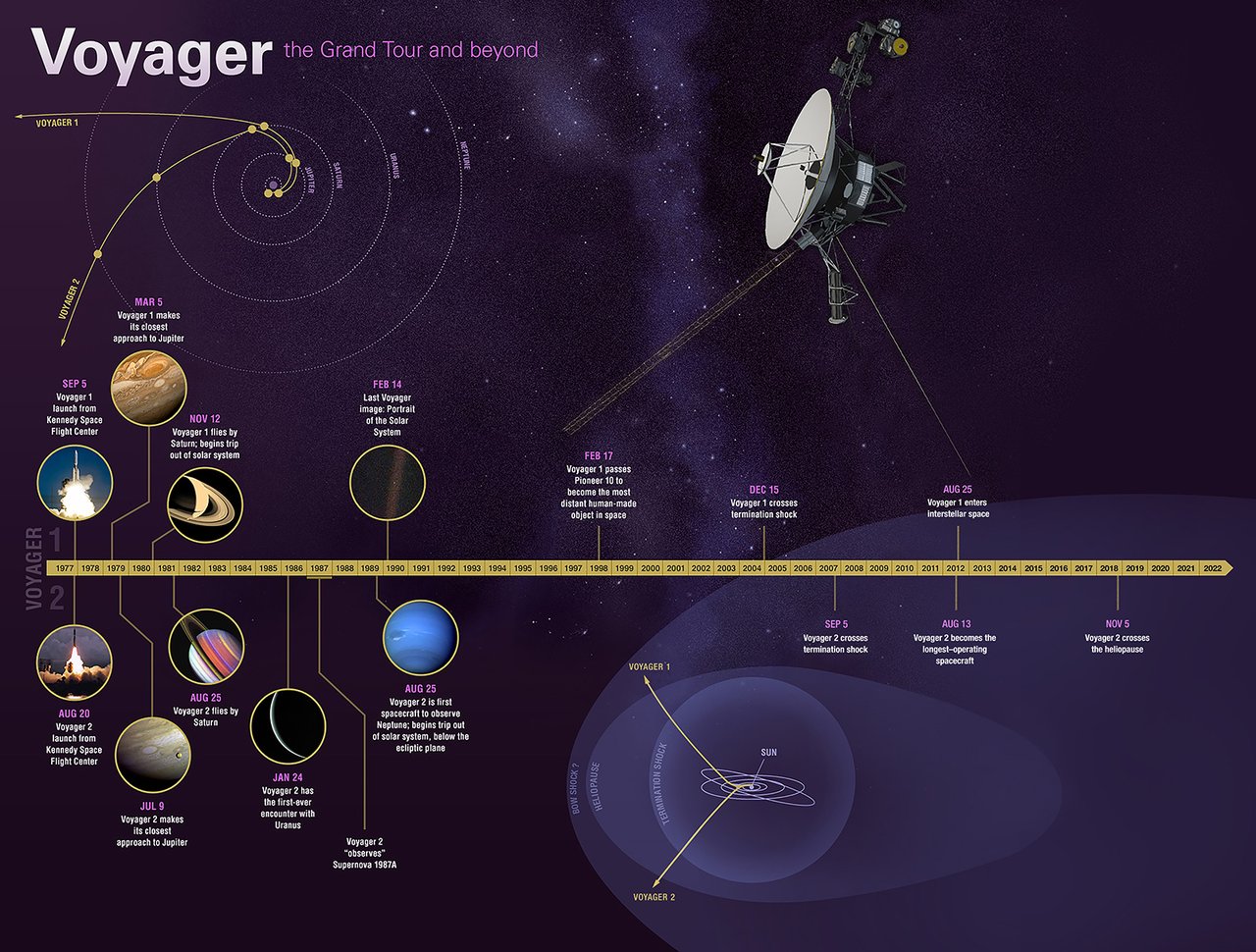
- Voyager 2: Conducted flybys of Jupiter in July 1979, Saturn in August 1981, Uranus in January 1986, and Neptune in August 1989.
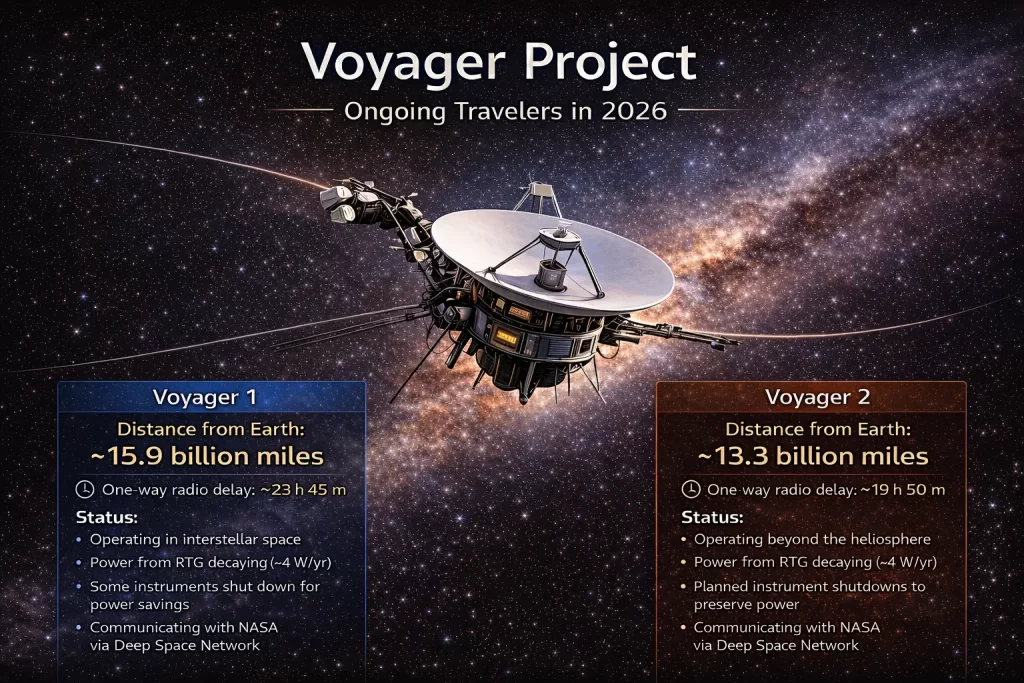
- Voyager 1: Explored Jupiter in March 1979, followed by a flyby of Saturn in November 1980. It entered interstellar space on August 25, 2012, becoming the first human-made object to venture beyond our solar system [3].
Interstellar Exploration
As the Voyagers crossed into interstellar space, they began detecting an increase in cosmic ray particles and a decrease in solar wind speed. These observations confirmed theoretical models of particle dynamics in regions beyond the heliosphere, providing critical data on galactic cosmic rays and magnetic field interactions [1].
Communication Systems
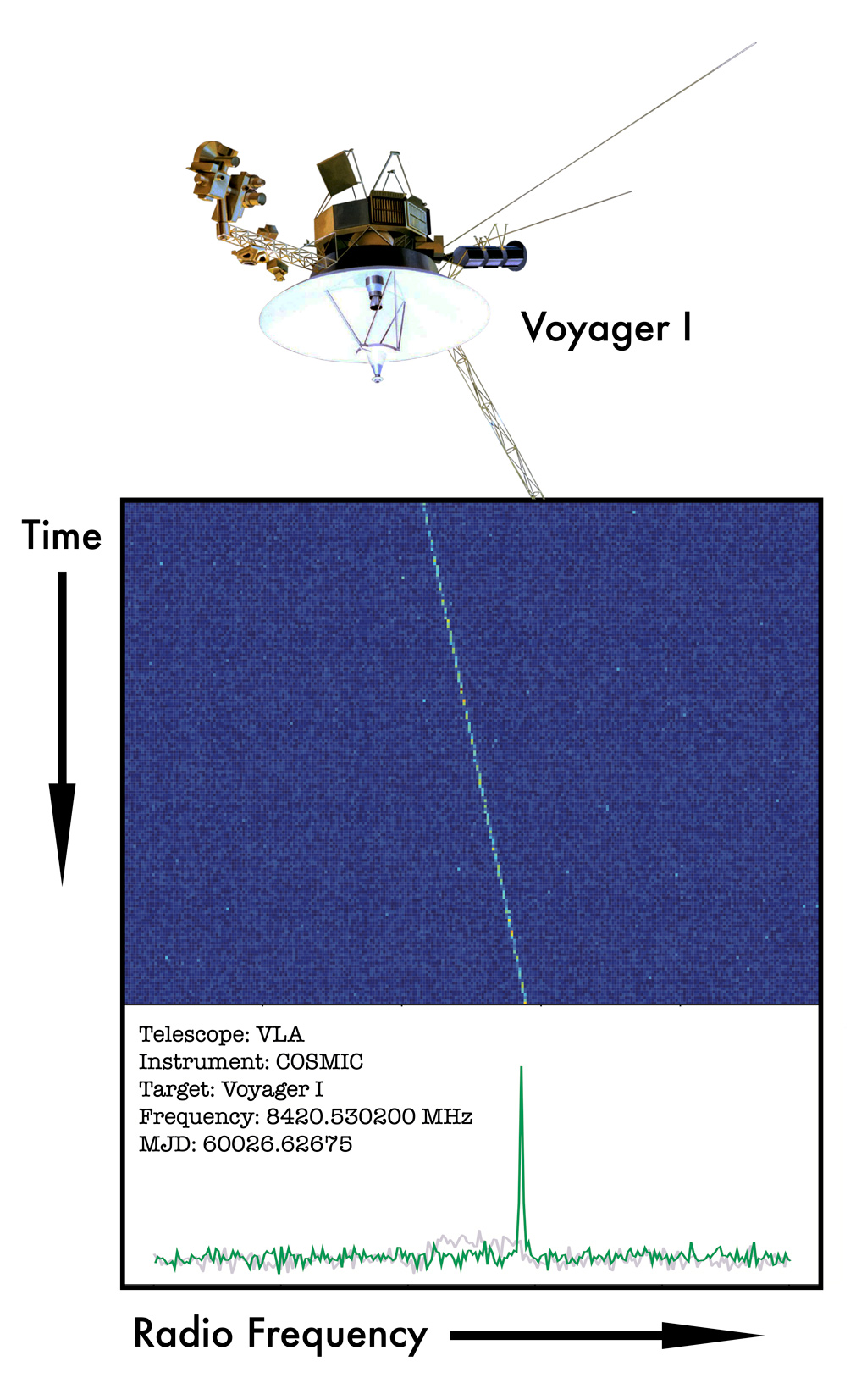
The communication system of the Voyager spacecraft relies on ultra-high frequency (UHF) antennas for near-Earth operation and a large-diameter parabolic high-gain antenna for long-range communication. The Deep Space Network (DSN), managed by NASA, provides continuous tracking and two-way communications with the Voyagers [2].
Despite significant technological advancements since their launch, maintaining reliable communication has been challenging due to diminishing power levels in the RTGs and increasing distance from Earth. Nevertheless, engineers have implemented innovative solutions such as optimizing signal processing algorithms and adjusting antenna configurations to enhance data reception [3].
Recent Breakthroughs
Recent research on Voyager data has led to several breakthroughs:
- Interstellar Boundary Explorer (IBEX): Data collected by the IBEX satellite combined with Voyager observations provide detailed maps of the heliospheric boundary, enhancing our understanding of how solar winds interact with interstellar medium [2].
- Galactic Cosmic Ray Studies: Analysis of cosmic ray data from Voyagers has revealed new insights into particle acceleration mechanisms in supernova remnants and other astrophysical sources [1].
Key Figures & Contributions
Project Leaders
- Edward Stone: A key figure in the Voyager Program, serving as project scientist for over four decades. His leadership was instrumental in extending the mission beyond its initial objectives.
Research Institutions
- NASA Jet Propulsion Laboratory (JPL): The primary developer and operator of the Voyager spacecraft. JPL’s expertise in space exploration has been crucial to the program's success.
Current State & Recent Developments
As of 2024, both Voyagers continue to transmit scientific data back to Earth, albeit at reduced rates due to limitations in their power supply systems [1]. Despite these challenges, scientists remain optimistic about the potential for continued discoveries. Ongoing research focuses on analyzing existing datasets and preparing for future missions that will build upon the foundational knowledge gathered by the Voyagers.
Key Takeaways
- Longevity: The Voyager spacecraft have operated far beyond their original design specifications.
- Scientific Contributions: Their data has revolutionized our understanding of planetary science, heliophysics, and astrophysics.
- Cultural Impact: Each carries a Golden Record, symbolizing humanity’s message to the cosmos.
- Engineering Feats: The robust communication systems enable transmission over vast interstellar distances.
- Future Prospects: Ongoing analysis of Voyager data continues to inform future space exploration missions.
The Voyager Program stands as an enduring testament to human ingenuity and our relentless pursuit of knowledge. Its legacy will undoubtedly continue to inspire generations of scientists, engineers, and explorers.