There is an old tension at the heart of American democracy, one the Founders themselves could not resolve: who controls elections? The Constitution gestures toward both federal supremacy and state sovereignty in the same breath, and for nearly 250 years, the United States has been negotiating what that ambiguity actually means. The SAVE America Act — the Safeguard American Voter Eligibility Act — arrived in 2025 and 2026 as the latest, loudest attempt to tip that balance decisively in one direction. To understand it is to understand not merely a single bill, but a centuries-long argument about who belongs in the American electorate, who gets to draw that boundary, and who suffers when those decisions go wrong.
The existing overview you have read correctly identifies the SAVE America Act as consequential and contested. But it barely scratches the surface. The bill's actual provisions are more radical than a casual reading suggests; the historical antecedents more disturbing; the constitutional arguments more sophisticated; the empirical evidence about its likely effects more alarming; and the political maneuvering surrounding it more revealing about the state of American democracy in the mid-2020s. This deep dive attempts to cover all of that — not as a polemic, but as a rigorous examination of one of the most consequential pieces of election legislation proposed in the modern era.
The Full Text: What the SAVE America Act Actually Says
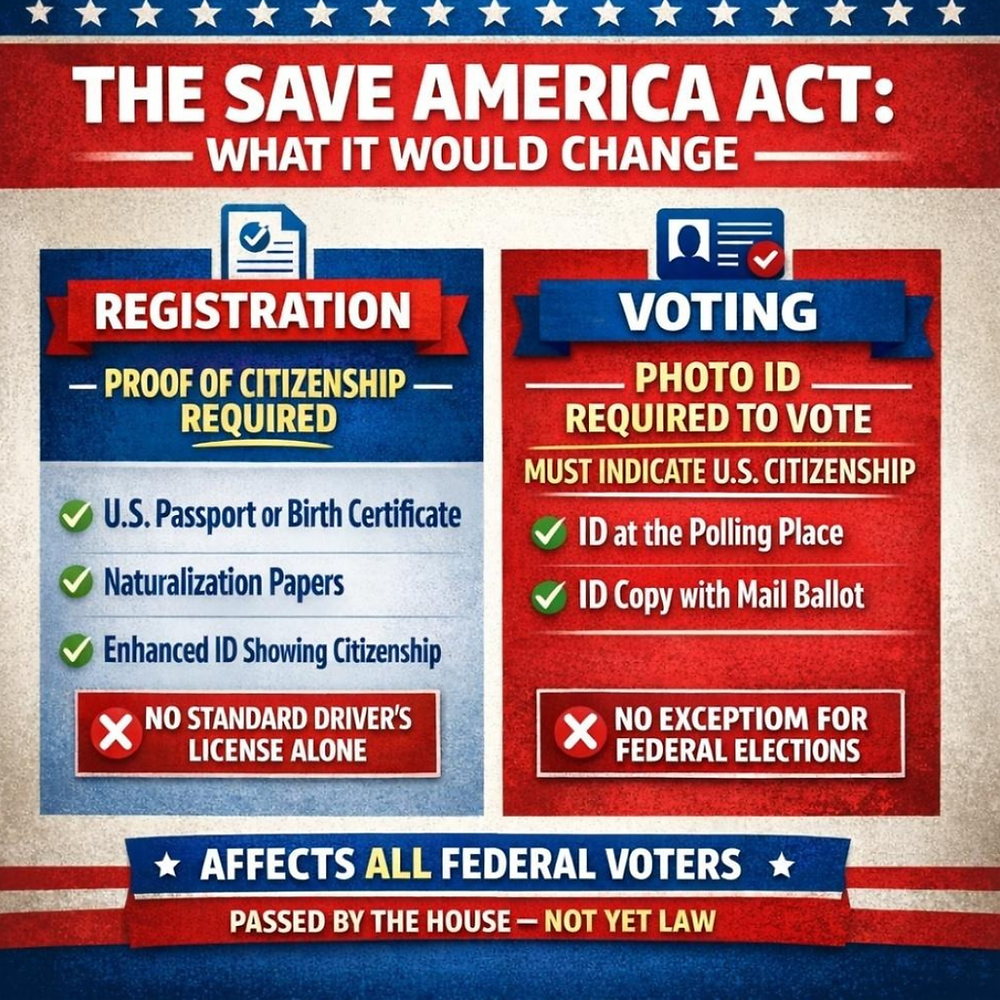
To evaluate the SAVE America Act properly, one must begin with what it actually mandates, rather than how its advocates or opponents characterize it.
Introduced in the House by Representative Chip Roy of Texas and championed in the Senate with the vocal backing of President Donald Trump (who made it a centerpiece of his post-2024 legislative agenda), the SAVE America Act contains several core provisions that go substantially further than a simple "voter ID requirement":
Proof of Citizenship to Register
The most sweeping provision requires documentary proof of citizenship — a U.S. passport, a birth certificate, or a REAL ID-compliant document explicitly noting citizenship status — to register to vote in federal elections. This is not mere photo ID at the polls; it is a documentary barrier at the point of registration. Critically, this provision applies to the federal voter registration form created by the National Voter Registration Act of 1993 (NVRA), the form that states are currently required to accept. The bill would make it illegal to accept registration without such documentation.
This distinction matters enormously. Research by the Brennan Center for Justice, the Government Accountability Office, and independent demographers has consistently found that tens of millions of American citizens — estimates range from 21 million to over 40 million depending on methodology — do not have readily accessible documentary proof of citizenship. The demographic concentration of that group is not random: it skews toward low-income Americans, elderly Americans (particularly those born at home or in rural areas where birth certificates were sporadically issued), Native Americans, Black Americans in states with historical underinvestment in vital records infrastructure, and young adults who have not yet obtained passports.
Mandatory Purging of Non-Citizens and Verification Mechanisms
The bill requires states to systematically cross-reference voter rolls against Department of Homeland Security databases — specifically the SAVE (Systematic Alien Verification for Entitlements) program — to identify and remove any non-citizen from registration lists within 30 days of identification. Failure to comply would expose states to federal liability.
On its face, this sounds unimpeachable. But the mechanics of database cross-referencing are not, in practice, clean. The SAVE database itself contains errors and outdated information. Naturalization records are sometimes not updated promptly. Citizens who were born abroad and naturalized, citizens with foreign-sounding names, citizens who were flagged as non-citizens during prior database queries and had to fight bureaucratic battles to be re-listed correctly — all of these groups face substantially elevated risk of erroneous purging.
The Help America Vote Act of 2002 already requires states to verify voter registration information against state records, including motor vehicle databases and Social Security databases. The SAVE America Act adds a DHS layer that legal scholars argue is both redundant and more error-prone.
Removal of Same-Day Registration
The bill would prohibit same-day voter registration in federal elections. Approximately 21 states and the District of Columbia currently offer same-day registration, a practice that research — including rigorous natural experiments conducted by political scientists Barry Burden, David Canon, Kenneth Mayer, and Donald Moynihan — has consistently found increases turnout by 3 to 7 percentage points, with the strongest effects among young voters, highly mobile populations, and voters of color.
Criminal Penalties for Voter Registration Drives
Perhaps the provision generating the most alarm among civil society organizations is the section imposing criminal liability — including federal felony charges — on organizations that submit voter registration forms on behalf of registrants who are later found to be non-citizens, even if the organization had no knowledge of the registrant's status and acted in good faith. Critics argue this provision would functionally destroy third-party voter registration drives, since no organization could accept the risk of prosecution for an error made by a registrant. Organizations like the League of Women Voters, NAACP, and Rock the Vote have characterized this as a deliberate effort to dismantle civic infrastructure that has registered millions of eligible voters over decades.
Election Day as a Federal Standard (Contested)
The bill's more procedural provisions — establishing uniform poll closing times and standardizing certain administrative processes — have attracted less controversy, but advocates for voting rights note that even these provisions, which appear neutral, could have asymmetric effects depending on implementation.
The Historical Architecture of American Voter Exclusion
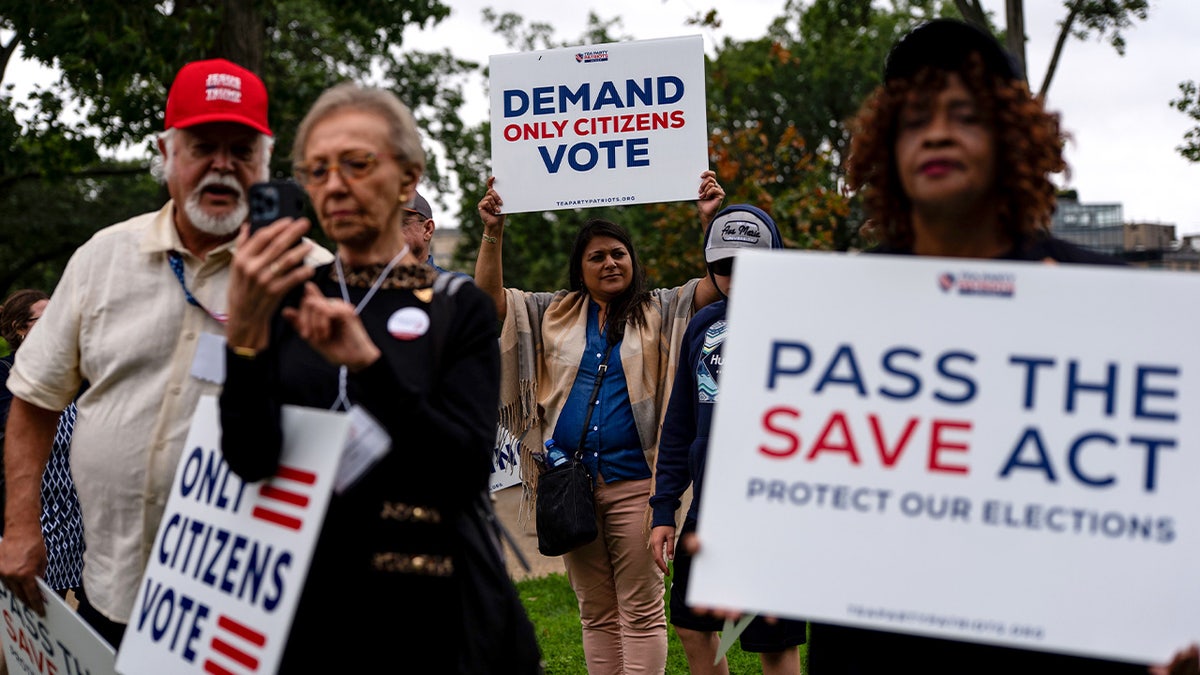
To evaluate the SAVE America Act's likely effects fairly, one must understand the historical context of voter suppression in the United States — not as a rhetorical exercise, but because the mechanisms the bill employs have direct historical antecedents that allow us to forecast effects with reasonable confidence.
The Literacy Test Era and Administrative Disenfranchisement
From Reconstruction through the Voting Rights Act of 1965, the primary tool of Black voter disenfranchisement in the South was not explicit racial language — that had been foreclosed by the Fifteenth Amendment — but seemingly neutral administrative requirements applied with discriminatory intent and effect. Literacy tests, grandfather clauses, poll taxes, and white primaries all operated on the principle that a facially neutral barrier, applied to a population with racially structured access to resources, would produce racially stratified outcomes without requiring a racial classification on the face of the statute.
The proof-of-citizenship requirement functions according to the same logic. The requirement is facially neutral: it applies to all registrants regardless of race. But because documentary citizenship documentation is differentially distributed across the population in ways that correlate with race, income, and geography due to historical inequities in record-keeping, healthcare, and civil infrastructure — the facially neutral requirement produces disparate outcomes.
Legal scholar Michelle Alexander, in The New Jim Crow (2010), documented how the modern carceral state operates through mechanisms of formal neutrality that produce racial stratification. The voter suppression literature — including work by scholars Carol Anderson (One Person, No Vote, 2018), Ari Berman (Give Us the Ballot, 2015), and Alexander Keyssar (The Right to Vote, 2000) — traces this same logic through the entire post-Reconstruction history of American election law.
The Arizona Precedent: Arizona v. Inter Tribal Council of Arizona (2013)
The SAVE America Act's most direct legal antecedent is Arizona's Proposition 200, passed in 2004, which required documentary proof of citizenship for voter registration. The Supreme Court addressed this in Arizona v. Inter Tribal Council of Arizona (2013), a decision that is both a warning and a roadmap for the SAVE America Act's architects.
The Court, in an opinion written by Justice Antonin Scalia, held 7-2 that Arizona could not require proof of citizenship as a condition for federal voter registration when the federal form did not require such documentation. The National Voter Registration Act, the Court held, preempted Arizona's requirement for the federal form. States remained free to require documentation for state elections, but for federal elections, the federal form controlled.
This decision created the legal architecture that the SAVE America Act is explicitly designed to dismantle. By amending the NVRA itself — rather than attempting an end-run around it at the state level — the bill would eliminate the preemption problem the Court identified. It would make the federal form require documentation, rather than prohibit states from requiring what the federal form does not.
Justice Anthony Kennedy's concurrence in Inter Tribal Council hinted at what Congress might permissibly do if it chose to reopen the NVRA, and the SAVE America Act's drafters appear to have read that concurrence carefully.
The Shelby County Aftermath
The other critical piece of legal context is Shelby County v. Holder (2013), which gutted the preclearance requirements of the Voting Rights Act. Before Shelby County, states with histories of voting discrimination — primarily, but not exclusively, in the South — were required to obtain federal approval before changing their election laws. This preclearance regime prevented dozens of discriminatory changes from taking effect.
After Shelby County, states were free to implement election law changes without prior federal review. The decade following the decision saw a dramatic acceleration in voter ID laws, voter roll purges, polling place closures, and other measures in formerly-covered jurisdictions. Research by the Government Accountability Office found that strict voter ID laws reduced turnout among eligible voters by 2 to 3 percentage points overall, with disparate effects on Black, Hispanic, young, and low-income voters.
The SAVE America Act represents, in this context, a federal codification and acceleration of the post-Shelby County wave — taking restrictions that had been adopted piecemeal at the state level and making them national policy, while simultaneously expanding their scope beyond anything previously attempted.
The Constitutional Arguments: A Serious Engagement
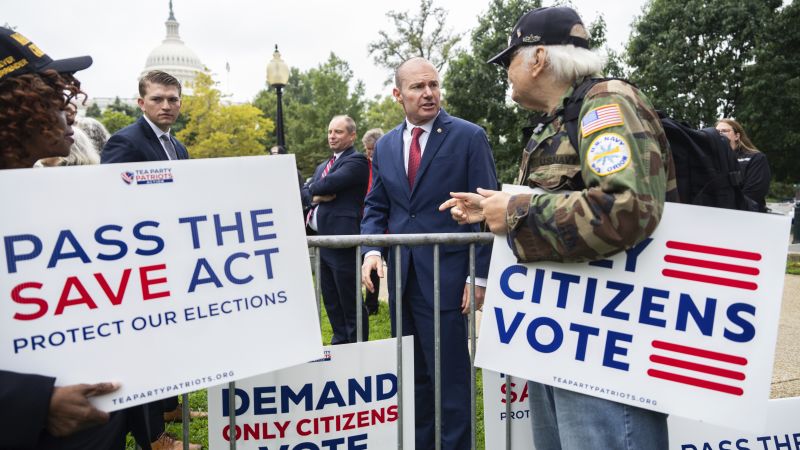
Defenders of the SAVE America Act deserve a serious hearing on constitutional grounds, and their arguments are more sophisticated than their critics sometimes acknowledge.
The Elections Clause Argument
Article I, Section 4 of the Constitution gives Congress broad power to "make or alter" regulations for federal elections. Proponents argue — correctly, as a formal matter — that this clause empowers Congress to set documentary requirements for federal voter registration. The Supreme Court has generally read the Elections Clause broadly. In Foster v. Love (1997), the Court upheld federal power to override state election timing rules. In Tashjian v. Republican Party of Connecticut (1986), the Court recognized that federal and state election rules occupy different domains.
The argument, then, is that the SAVE America Act is simply Congress exercising its plainly enumerated power to regulate federal elections — power it possesses regardless of whether the specific regulations it chooses are wise policy.
Constitutional law professor Edward Foley of the Moritz College of Law has written extensively on the Elections Clause and acknowledges that Congress's formal authority here is substantial. The policy question, Foley argues, is separate from the constitutional one.
The Legitimate Interest in Citizenship Verification
Supporters of the act point out that non-citizen voting, while not epidemic, is not entirely fictional. Several high-profile investigations — in Pennsylvania, in Texas, in North Carolina — have uncovered small numbers of non-citizens registered to vote, occasionally even having cast ballots. The numbers are consistently tiny relative to total registrations (typically in the dozens to low hundreds out of millions of registrations), but supporters argue that any non-citizen voting undermines the principle that self-governance is reserved for citizens.
Political scientist Hans von Spakovsky of the Heritage Foundation has documented individual cases of non-citizen registration and voting, arguing that current verification systems are inadequate. His position — contested by most election researchers but held sincerely — is that the scale of non-citizen registration is systematically undercounted because current detection mechanisms are too weak.
The counterargument, advanced by scholars including Michael Morse and Lorraine Minnite (author of The Myth of Voter Fraud, 2010), is that prosecuted cases of non-citizen voting involve people who often registered by mistake — non-citizens who were registered automatically during DMV transactions, for instance — rather than intentional fraud. The question is whether the remedy of documentary proof of citizenship is proportionate to the problem, particularly given its effect on citizen voters who lack the required documents.
The Equal Protection Problem
Even granting Congress's formal Elections Clause authority, the bill faces serious challenges under the Equal Protection Clause of the Fourteenth Amendment and the Voting Rights Act's Section 2, which prohibits voting practices that result in racial discrimination.
Legal challenges to the SAVE America Act — several of which were filed within days of the House passing the bill — argue that the proof-of-citizenship requirement, the aggressive purging mandate, and the destruction of third-party registration drives collectively constitute a system whose foreseeable effect is to dilute the voting power of racial minorities, in violation of Section 2.
The legal standard under Section 2 (as interpreted in Thornburg v. Gingles, 1986, and refined in Brnovich v. Democratic National Committee, 2021) requires courts to evaluate the totality of circumstances, including the historical background of voting discrimination, the extent of racial disparities in access to the documentary requirements, and the state's (or in this case, Congress's) interest in the challenged practice.
Brnovich, written by Justice Samuel Alito, narrowed Section 2 vote denial claims considerably, making it harder for plaintiffs to challenge facially neutral voting rules. But even under Brnovich's more restrictive framework, legal scholars including Rick Pildes and Samuel Issacharoff argue that the scale of disparate impact created by the SAVE America Act is sufficiently large to survive the threshold inquiry.
The Empirical Evidence: What the Research Actually Shows
The debate about the SAVE America Act is frequently conducted with reference to research on similar measures, and that research deserves careful treatment — including its limitations.
What We Know About Voter ID Laws
The literature on strict voter ID laws — the closest existing analog to the SAVE America Act's registration requirements — has grown substantially since the mid-2000s. Early studies by political scientists Justin Grimmer, Eitan Hersh, Marc Meredith, and Michael Morse found minimal turnout effects from voter ID requirements, leading some commentators to conclude that such requirements were policy-neutral.
More recent and methodologically rigorous work has told a different story. A 2017 study by Zoltan Hajnal, Nazita Lajevardi, and Lindsay Nielson, published in the Journal of Politics, found that strict voter ID laws reduced turnout in general elections by 2-3 percentage points, with effects as large as 4-8 percentage points among minority voters. A 2019 study by Bernard Fraga and Michael Miller using precinct-level data found similar results for Black voter turnout specifically.
The methodological debate is substantive. Grimmer and colleagues' challenge to Hajnal et al. centered on data quality issues in the Cooperative Congressional Election Study. Hajnal and colleagues responded with robustness checks. Both sides make legitimate methodological points, which is to say: the research consensus is not as settled as either side in the political debate claims. What is clear is that the effects, if they exist, are concentrated among minority, low-income, and young voters — precisely the populations with lower rates of documentary citizenship proof.
The Documentary Gap
The specific question of how many U.S. citizens lack proof of citizenship has received careful empirical attention. A 2017 study by the Government Accountability Office, analyzing data from several states that had implemented proof-of-citizenship requirements for state elections, found that:
- In Kansas, which implemented proof-of-citizenship requirements for state voter registration in 2013, approximately 31,000 would-be registrants were blocked from completing registration over three years due to documentary requirements.
- Of those who were ultimately evaluated, the vast majority — over 94% — were U.S. citizens unable to immediately produce required documents.
- Non-citizens attempting to fraudulently register represented a tiny fraction of those blocked.
The Brennan Center's 2006 study found that approximately 7% of U.S. citizens — roughly 21 million people at current population levels — lack ready access to documentary proof of citizenship. The concentration of that group, as noted above, is heavily skewed toward demographic groups that have historically faced voting barriers.
A 2023 update by the nonpartisan States United Democracy Center found that these figures had not substantially improved despite the proliferation of voter ID laws, partly because the barriers are not primarily attitudinal but structural: obtaining a birth certificate in rural Mississippi requires money, transportation, time off work, and navigating a bureaucracy that has historically served some citizens better than others.
The Non-Citizen Voting Problem in Context
What is the empirical scale of the problem the SAVE America Act is designed to solve?
A comprehensive 2020 study by the National Academy of Sciences, Measuring Levels of Voter Fraud in American Elections, concluded that documented cases of non-citizen voting are "exceedingly rare" — constituting, at most, a few hundred cases nationally across federal elections, in an electorate of over 150 million registered voters. The few systematic academic studies — including work by Jesse Richman and Guido Earnhart, who argued non-citizen voting might be more common than documented (a study that has been widely critiqued methodologically), and the more cautious work of David Cottrell, Michael Herron, and Sean Westwood, who found no evidence of meaningful non-citizen voting — place the phenomenon at a scale that would not affect election outcomes in any but the most inconceivably close races.
This empirical finding creates what political theorist Michael Walzer might call an asymmetry of harms: the proposed remedy (documentary proof of citizenship requirements) demonstrably affects millions of eligible citizens; the problem being addressed (non-citizen voting) demonstrably affects hundreds of ballots, if that. The SAVE America Act's defenders must either contest the empirical findings, argue that the principle transcends the numbers, or argue that prevention has value independent of current scale.
Political Economy and the Strategic Logic
To understand the SAVE America Act fully, one must grapple with why, given this empirical landscape, it commands such fervent political support. This requires attention to the political economy of election reform — who benefits, how, and why.
The Base Mobilization Function
Political scientists who study election reform legislation have noted that such legislation often serves functions beyond its stated purpose. The SAVE America Act, regardless of whether it passes in its entirety, serves as a powerful organizing and mobilization tool for its political coalition. Research by political scientists Thad Kousser and Justin Phillips on state ballot initiatives and legislative proposals found that contentious process questions — who can vote, how — reliably generate high donor engagement and base turnout in ways that substantive policy questions often do not.
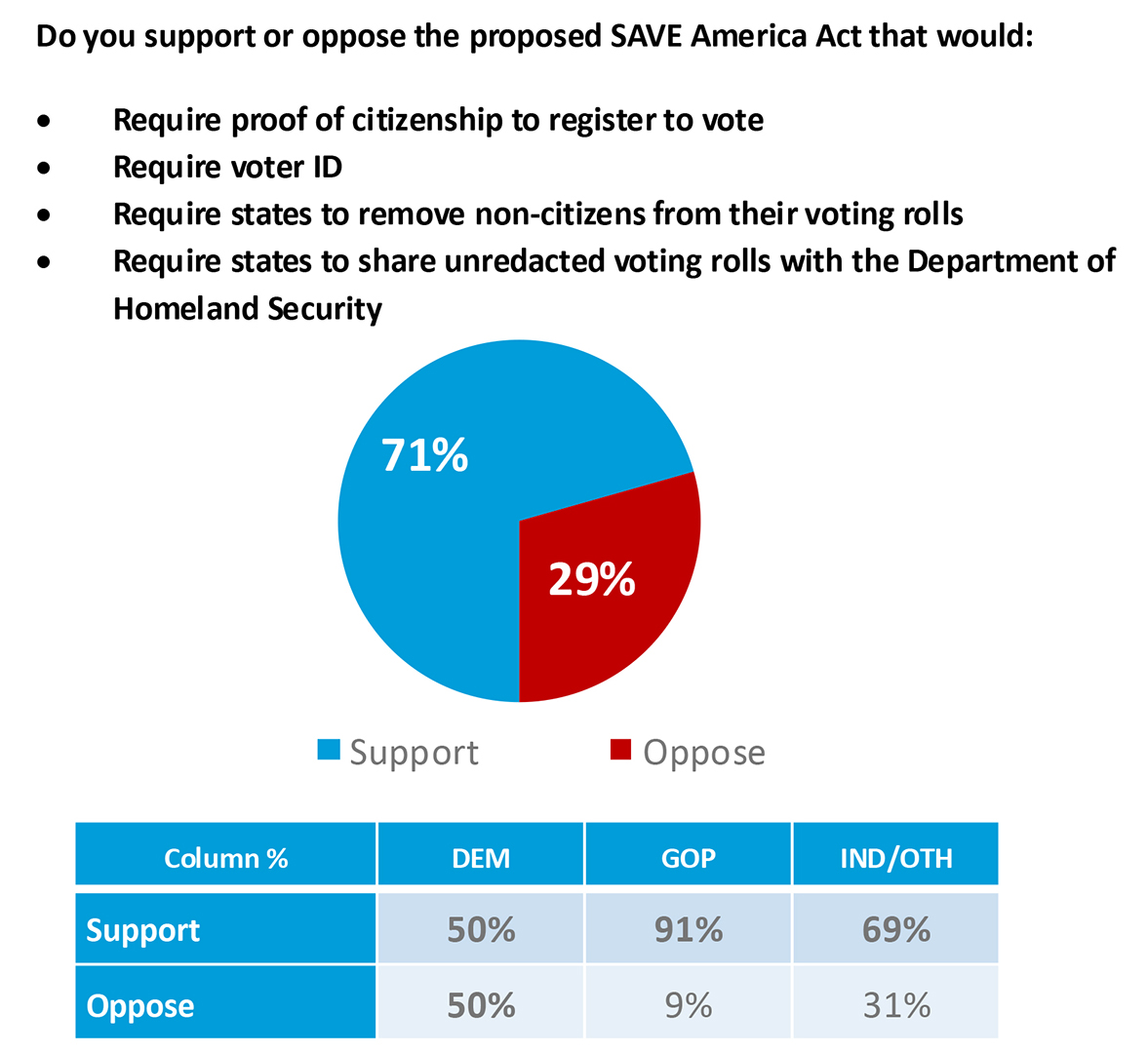
The White House's release of polling data showing "massive support" for the SAVE America Act reflects this dynamic: framed as a question about citizenship verification and election integrity, the bill polls favorably with substantial majorities. Framed as a question about documentary requirements that would block tens of millions of eligible citizens from registering, support drops dramatically. Both framings involve real aspects of the legislation; neither tells the complete story.
The Structural Partisan Logic
The asymmetric demographic effects of the SAVE America Act have a direct partisan valence that is difficult to discuss but impossible to ignore. The populations most likely to lack documentary proof of citizenship — low-income Americans, Black and Hispanic Americans, young Americans, rural Americans, the elderly — are also populations that have, in recent election cycles, voted overwhelmingly for Democratic candidates.
This does not prove that the bill was designed primarily for partisan purposes rather than legitimate policy goals. But it does explain why the bill has effectively zero Democratic support in Congress and near-universal Republican support, despite the stated rationale being one (non-citizen voting prevention) that, if empirically valid, would be a bipartisan concern.
Political scientist Samuel Issacharoff of New York University has written that election law has become the primary terrain on which structural partisan advantage is contested in the United States, particularly after the decline of redistricting as a reliable tool (given independent redistricting commissions in many states) and the increasing competitiveness of presidential elections. The SAVE America Act, in this frame, is not primarily election policy — it is structural politics.
The Federalism Paradox
There is a genuinely paradoxical dimension to the SAVE America Act's political coalition. The Republican Party has, for decades, been the party of states' rights and resistance to federal overreach in election administration. The Help America Vote Act of 2002, which imposed minimal federal standards on state election administration, was criticized by significant portions of the Republican coalition as an inappropriate federalization of elections.
The SAVE America Act represents a wholesale reversal of this federalist logic — using federal power to override state decisions to offer same-day registration, to allow third-party registration drives, and to maintain their own citizenship verification procedures. States like Oregon and Washington, which have implemented highly efficient and secure election systems using vote-by-mail and automatic voter registration, would see their systems disrupted by federal mandates.
The willingness of the party of states' rights to embrace sweeping federal preemption of state election law when the federal mandate restricts rather than expands voter access reveals that the animating principle was never federalism per se, but the specific policy outcome — a restricted electorate — with federalism as the preferred constitutional vehicle when useful and set aside when inconvenient.
This is not, to be clear, unique to Republicans: Democrats supported the Voting Rights Act's aggressive federal preemption of state election law in 1965 and have proposed federal voting rights expansions (the For the People Act, the John Lewis Voting Rights Advancement Act) that equally involve federal preemption of state choices. The point is not hypocrisy but instrumentalism: election law federalism has always been, for both parties, a means to an end rather than a principled commitment.
State-Level Analogues and Their Outcomes
Because the SAVE America Act draws on and extends state-level experiments with documentary requirements and registration restrictions, the record of those state-level experiments provides the clearest available evidence of likely national effects.
Kansas: The Kobach Experiment
From 2011 to 2016, Kansas Secretary of State Kris Kobach implemented what he called the most stringent documentary proof-of-citizenship requirement for voter registration in the country. The experience is instructive.
Between 2013 and 2016, approximately 35,000 Kansas residents — roughly 14% of all new registrants during the period — were placed in a "suspense" category because they could not immediately produce proof of citizenship. An investigation by the American Civil Liberties Union found that the vast majority of these individuals were U.S. citizens who lacked readily accessible documents.
A federal court eventually blocked the requirement. In Fish v. Kobach (D. Kan. 2018), Judge Julie Robinson issued a comprehensive 118-page ruling finding that the requirement violated the NVRA and the Equal Protection Clause, and that Kansas had failed to produce evidence that non-citizen voting was a problem of sufficient scale to justify the burden imposed on eligible citizens.
Kobach appealed. The Tenth Circuit affirmed. The Supreme Court declined to hear the case. Kobach's experiment effectively ended — but it produced one of the most detailed evidentiary records in American legal history of the documentary gap between the theory of proof-of-citizenship requirements and their practical effects.
Georgia: The Exact Match Controversy
Georgia's "exact match" voter registration verification system — which required that voter registration information match exactly to records in the state motor vehicle or Social Security database, and which flagged for investigation any discrepancy, including minor typographical differences — resulted in the suspension of approximately 340,000 voter registrations before the 2018 gubernatorial election.
A significant majority of flagged registrations belonged to Black, Hispanic, or Asian-American voters. The Lawyers' Committee for Civil Rights and other organizations successfully challenged the system, and subsequent investigations found that the vast majority of flagged registrations were of U.S. citizens whose records contained minor discrepancies due to data entry errors, name changes, or database limitations.
Georgia Secretary of State Brian Kemp's management of the voter rolls during the 2018 election he himself won — defeating Stacey Abrams in a race decided by approximately 55,000 votes — became a case study in how facially neutral administrative procedures can produce racially disparate outcomes at consequential scale.
The SAVE America Act's mandatory purging provision, cross-referencing voter rolls against DHS databases with known error rates, is widely expected to replicate the Georgia problem nationally.
Oregon: The Opposite Experiment
Oregon provides the most fully developed counterpoint. Beginning in 2015, Oregon implemented automatic voter registration — automatically registering every eligible citizen who interacts with the DMV unless they opt out. The system was subsequently adopted by 23 additional states and the District of Columbia.
Academic evaluations of automatic voter registration — including studies by researchers at the MIT Election Data and Science Lab and the Bipartisan Policy Center — have consistently found that the system dramatically increases registration rates, with marginal increases in turnout, at very low administrative cost. Oregon's system also includes robust citizenship verification because DMV records are cross-referenced with federal citizenship data at the point of license issuance — making the argument that documentation requirements are necessary to prevent non-citizen registration in automatic registration states largely moot.
Oregon's experience demonstrates that it is possible to simultaneously expand voter access and verify citizenship with reasonable confidence — using existing administrative infrastructure rather than requiring individual documentary production. The SAVE America Act's rejection of this approach in favor of a documentary requirement that creates new barriers rather than using existing data suggests that the bill's primary goal is not efficiently achieving citizenship verification.
The International Context: How Other Democracies Handle This
The United States is one of very few advanced democracies to place primary responsibility for voter registration on individual citizens rather than the state. This baseline fact is often missing from domestic debates about requirements like those in the SAVE America Act.
In the United Kingdom, Australia, Canada, Germany, France, Sweden, and most other established democracies, the government takes affirmative responsibility for registering eligible voters. Citizenship verification occurs through administrative records at the point of registration, not through a documentary production requirement imposed on the citizen. Voter rolls are continuously updated through census data, tax records, and other administrative sources.
The result, consistently, is dramatically higher registration rates: in Australia, over 96% of eligible citizens are registered; in Germany, over 97%; in Sweden, over 98%. The United States, by contrast, has historically registered approximately 70-75% of eligible citizens, with registration rates for low-income citizens substantially lower.
The SAVE America Act moves in the opposite direction from the international consensus on best practices for voter registration. Where democracies that began with restrictive registration systems have been moving toward administrative registration (including the United Kingdom, which introduced automatic registration through the Individual Electoral Registration process in 2014), the SAVE America Act would make American registration more onerous.
This is not, by itself, an argument that the SAVE America Act is wrong — reasonable people can disagree about whether the American constitutional structure, with its emphasis on individual rights and federalism, warrants a different approach to voter registration than parliamentary democracies. But the international context reframes the bill's documentary requirements not as a logical necessity but as a specific policy choice with a specific distribution of costs — one that other democracies have generally concluded is not worth making.
The Advocacy Landscape: Competing Organizations and Interests
The SAVE America Act has generated one of the most organized advocacy responses to any election bill in recent memory, reflecting both its scope and the stakes involved.
Pro-SAVE Act Organizations
The Heritage Foundation's Election Law Reform Initiative, led by Hans von Spakovsky and John Fund, has been the primary intellectual infrastructure for the bill's provisions. Von Spakovsky's database of election fraud cases — which runs to thousands of entries but has been criticized by researchers for including cases without final convictions and for the small scale of incidents relative to total elections — has been cited repeatedly in congressional testimony supporting the bill.
True the Vote, the organization founded by Catherine Engelbrecht that rose to prominence through its aggressive voter roll challenges and was at the center of documentary controversies regarding the 2020 election, has been a grassroots organizing force for the SAVE America Act, promoting it to state Republican parties and facilitating what it describes as citizen election integrity activism.
The Public Interest Legal Foundation has filed litigation in multiple states arguing that voter rolls contain illegal non-citizen registrations, providing legal scaffolding for the bill's proponents.
Opposition Organizations
The Brennan Center for Justice at NYU Law has produced some of the most comprehensive empirical analysis of the bill's likely effects, estimating that the proof-of-citizenship requirement could block up to 21 million eligible citizens from registration.
The NAACP Legal Defense and Educational Fund, the American Civil Liberties Union, the Lawyers' Committee for Civil Rights Under Law, and Demos (a nonpartisan public policy organization) have filed or announced litigation challenging the bill across multiple constitutional theories.
The League of Women Voters, which has operated non-partisan voter registration drives for over a century, has described the criminal liability provision for registration organizations as "existential" — a provision that would effectively end the civic infrastructure of voluntary voter registration assistance.
Rock the Vote, the long-running youth civic engagement organization, has raised concerns that the combination of proof-of-citizenship requirements and same-day registration prohibition would produce the largest reduction in youth voter participation since the 26th Amendment lowered the voting age to 18 in 1971.
Open Questions, Paradoxes, and Research Frontiers
Several dimensions of the SAVE America Act remain genuinely open questions — areas where the empirical evidence is incomplete, the constitutional law unsettled, or the political outcomes uncertain.
The Database Accuracy Frontier
One of the most important unresolved empirical questions concerns the actual error rate of the DHS SAVE database for citizenship verification purposes. The database was designed for benefits eligibility verification, not voter roll management, and its accuracy for the latter purpose has not been systematically studied. Research commissioned in the wake of the SAVE America Act's House passage — by the MIT Election Data and Science Lab and independently by scholars at the University of Wisconsin's Elections Research Center — is underway but has not yet produced published results.
The error rate matters enormously. Even a 0.1% false-positive rate — flagging citizen registrants as potential non-citizens — applied to 150 million registered voters would generate 150,000 erroneous purge notices. Given the expedited timeline the bill requires for purging (30 days), the burden of proof reversal it implies (registrants must demonstrate their citizenship rather than the state demonstrating their non-citizenship), and the historical difficulty of low-income citizens in navigating bureaucratic correction processes, even small error rates would produce significant harm.
The Implementation Question
How the bill would be implemented — by which federal agency, with what appeals mechanisms, with what funding for states to develop the necessary infrastructure — is almost entirely undetermined in the text of the bill. Election administration scholars, including Heather Gerken of Yale Law School and Daniel Tokaji of the University of Wisconsin, have argued that the absence of implementation detail is itself a significant problem: election administration is a deeply local and technical enterprise, and federal mandates without serious implementation infrastructure consistently produce chaos.
The 2002 Help America Vote Act, widely viewed as well-intentioned, created serious implementation problems precisely because Congress mandated changes without providing adequate resources or implementation guidance. The SAVE America Act's mandates are substantially more ambitious than HAVA's, and its implementation provisions are substantially less developed.
The Constitutional Ceiling
Legal scholars disagree about whether, if the Supreme Court's current composition were to evaluate the SAVE America Act, the bill would survive constitutional scrutiny.
Optimists about the bill's constitutionality point to the current Court's consistent deference to state (and by extension, federal) restrictions on voting access, its narrowing of Section 2's scope in Brnovich, and its generally skeptical posture toward voting rights challenges since Shelby County.
Pessimists about the bill's constitutionality — including Foley, Pildes, and Issacharoff — note that the scale of eligible citizens affected is unprecedented, that the Equal Protection record from state-level analogues is damning, and that even the current Court has limits when the affected group is this large and the harm this direct.
The Supreme Court's election law jurisprudence in 2026 — with several related cases including challenges to state proof-of-citizenship requirements working their way through the circuits — may produce controlling precedents on the SAVE America Act before the Senate votes.
The Democratic Legitimacy Question
There is a deeper political philosophy question underlying the technical legal and empirical debates: what is the theory of democratic legitimacy that best evaluates the SAVE America Act?
If one holds a strict procedural theory of democracy — that legitimate elections require an absolutely defined and verified citizenry, with any non-citizen participation representing a fundamental category violation — the bill's logic follows even if the costs to eligible citizens are high. Citizenship, on this view, is the predicate of democratic participation, and its verification is not optional regardless of cost.
If one holds a participatory theory of democracy — that legitimate elections maximize the meaningful participation of all affected persons, and that barriers to participation undermine legitimacy — the bill's logic is reversed. On this view, excluding millions of eligible citizens through documentary requirements is a more serious democratic harm than the marginal inclusion of a tiny number of non-citizens.
If one holds a deliberative theory of democracy — that the quality of democratic outcomes depends on the quality of the deliberative process, including who has voice in it — the bill's effects on civic infrastructure (destroying third-party registration drives, eliminating same-day registration that enables last-minute civic engagement) are of particular concern.
Most Americans, of course, hold some combination of these theories without articulating them clearly. The SAVE America Act forces the question: when the costs of preventing non-citizen participation fall primarily on eligible citizen voters who belong to historically marginalized groups, what does democracy require?
The Senate Fight and What Comes Next
As of mid-2026, the SAVE America Act has passed the House and faces a Senate in which the Republican majority must navigate significant institutional constraints, including the filibuster.
Senate Majority Leader John Thune has pursued a reconciliation strategy for portions of the bill that can be framed as budgetary, while pursuing either filibuster reform or bipartisan negotiation for other provisions. This procedural complexity has created a situation in which the bill's various provisions may have substantially different legislative trajectories — some passing quickly, others stalling indefinitely, some being stripped or modified as the price of Senate passage.
The litigation landscape is equally complex. Federal judges in multiple circuits have issued preliminary injunctions blocking implementation of specific provisions, while others have declined to do so. The resulting circuit split is building pressure for Supreme Court intervention on an expedited timeline.
The political outcomes are genuinely uncertain. The SAVE America Act could pass substantially intact, could pass with significant modifications, could pass through reconciliation as a partial bill, could stall indefinitely in the Senate, or could be mooted by Supreme Court decisions on related issues before it reaches a final vote.
What is not uncertain is the underlying conflict. The SAVE America Act is the sharpest articulation in a generation of a fundamental dispute about what American democracy is for and who it belongs to. That dispute will not be resolved by this bill's passage or failure. It has been ongoing since the Constitutional Convention, accelerated through the Civil War and Reconstruction, survived the Jim Crow era and the Voting Rights Act, and found new terrain in the post-Shelby County era of election law.
Conclusion: The Deepest Stakes
The SAVE America Act's advocates describe it as common sense: of course a democracy should verify that its voters are citizens; of course election integrity requires documentary certainty. Its opponents describe it as a weapon: a deliberately calibrated instrument for restricting the electorate in ways that happen, entirely predictably, to disadvantage people who vote in a particular direction.
Both descriptions contain truth, and both miss something important.
What they miss is the systemic reality: the distribution of documentary access in the United States is not random. It reflects a history of racially differential investment in civic infrastructure, vital records systems, public education, and economic opportunity. When a law requires documentation to which access is racially stratified, it does not require racial intent to produce racial effect — the structurally racist history does that work silently, through the arithmetic of administrative access.
The SAVE America Act's deepest challenge is not constitutional, though the constitutional challenges are serious. It is philosophical: can a democratic system credibly claim to be protecting itself when the most clearly documented effect of its protective mechanisms is excluding those whom history has already most systematically excluded?
The answer to that question will not come from Congress, or from the Supreme Court, or from the political scientists who study election law. It will come from the millions of eligible citizens who attempt to register after the bill's passage, from the election workers who implement its provisions under impossible timelines, from the civil society organizations that attempt to navigate criminal liability for serving their communities, and from the courts that must eventually determine whether a democracy can constitutionally protect itself at the cost of those it claims to serve.
The SAVE America Act is, ultimately, a test of American democracy's conception of itself. The outcome of that test — whatever it is — will tell us something important about what kind of democracy the United States actually is, rather than the kind it imagines itself to be.
This article draws on primary legislative texts, federal court decisions, academic literature in political science, constitutional law, and election administration, reports from the Brennan Center for Justice, the Government Accountability Office, the National Academy of Sciences, and the States United Democracy Center, and scholarship by Alexander Keyssar, Carol Anderson, Ari Berman, Richard Pildes, Samuel Issacharoff, Edward Foley, Michael Walzer, and others cited throughout. The Everything of Everything is committed to tracking this legislation's evolution and updating this analysis as new empirical evidence, judicial decisions, and legislative developments emerge.