The New Left from the Unknown: Shadow Donors and the Progressive Insurgency Reshaping American Politics
A Wall Street Journal investigation published in October 2026 landed like a grenade in the already combustible landscape of American campaign finance. It identified a cohort of political newcomers — largely unknown, largely younger, many of South Asian and Middle Eastern descent — who had quietly channeled millions of dollars into a coordinated effort to reshape the Democratic Party from the inside out. These were not the Soroses or Steyers of political lore. They were tech executives, physicians, and entrepreneurs who, until very recently, had barely registered on the donor rolls of the Federal Election Commission. They had no public profiles, no political dynasties, no history of fundraising galas attended by Washington insiders. And yet, according to the Journal's analysis of FEC filings, they were becoming one of the most consequential financial forces in the 2025–2026 election cycle — a cycle that may prove to be a historic inflection point for a Democratic Party caught between its institutionalist past and an insurgent, socialist-inflected future.
This is their story, and the story of the movement they are funding.
The Architecture of Emergence: Where Did They Come From?
To understand the new donor class, it helps to understand what created the vacuum they are now filling. For two decades, the Democratic Party's left flank was bankrolled through a complex ecosystem of 501(c)(4) nonprofits, donor clubs, and "dark money" networks anchored by organizations like the Sixteen Thirty Fund, managed by Arabella Advisors. By 2024, the Sixteen Thirty Fund alone was disbursing nearly $311 million annually — a colossal sum channeled into abortion-rights organizing, climate advocacy, voting-rights litigation, and electoral work supporting down-ballot Democrats. At its peak in 2020, the fund disbursed over $410 million.
But cracks appeared. The Gates Foundation announced it would stop routing grant money through Arabella-managed nonprofits, representing the loss of what had amounted to nearly half a billion dollars in prior giving. By late 2025, Arabella Advisors itself was effectively ceasing operations, with its financial sponsorship arm acquired by a new public benefit corporation called Sunflower Services. The Democracy Alliance — a donor network founded in 2005 whose roughly 120 members pay $35,000 in annual dues and commit to directing at least $200,000 annually toward progressive groups — was pivoting away from broadcast television toward digital content creators, signaling its own recognition that the old infrastructure was becoming obsolete.
Into this partial vacuum walked a new generation of donors. Their entry point was not the Democracy Alliance's three-day retreats or Arabella's sophisticated fiscal sponsorship arrangements. It was Gaza.
The Gaza Catalyst: When Foreign Policy Became Domestic Funding
The October 7, 2023, Hamas attack on Israel and Israel's subsequent military campaign in Gaza scrambled American progressive politics in ways that are still reverberating. For a generation of Muslim Americans, Arab Americans, and South Asians with ties to the broader Muslim world, it became a mobilizing political cause in a way few issues had before. And for a subset of that community with substantial financial resources, it translated into a specific target: the American Israel Public Affairs Committee, or AIPAC, and its vast electoral apparatus.
AIPAC's super PAC, the United Democracy Project, had already demonstrated its willingness to spend aggressively in Democratic primaries. In the 2022 cycle, it poured money into defeating progressive incumbents like Jamaal Bowman and Cori Bush. By the 2025–2026 cycle, its spending had reached a new scale. According to reporting reviewed by The Nation and other outlets, AIPAC and its affiliated spending vehicles have directed more than $104 million into the 2026 election cycle. In the Michigan Democratic Senate primary alone, UDP reportedly funneled $30.6 million in support of establishment-backed Rep. Haley Stevens against progressive challenger Abdul El-Sayed — the largest sum the organization had ever devoted to a single congressional race.
This asymmetry created a clear opening. If AIPAC could shape Democratic primaries, perhaps a counter-force could too. The vehicle that emerged was American Priorities, a super PAC launched in early 2026 with the stated mission of opposing AIPAC's influence and backing candidates critical of U.S. military aid to Israel.
American Priorities: The Super PAC at the Center of the Story
American Priorities is the organizational hub through which much of the new donor energy has been channeled. Its founder, Hannah Fertig, told Semafor in March 2026 that the group intends to spend "at least $10 million" on the midterms — a figure that, while modest compared to AIPAC's war chest, was already remarkable given how recently the group had been formed and how few of its donors had any prior political giving history.
The Wall Street Journal's analysis of FEC filings found that the PAC's top 12 donors collectively contributed approximately $5.7 million in the 2025–2026 election cycle. Four of those top donors had given nothing to the PAC — or, in some cases, to any political committee — before 2025. The two largest contributors were Mohammad Waqas and Omer Hasan, both tech executives, who together gave more than $2 million to American Priorities. Both men had also contributed to a separate super PAC backing Zohran Mamdani's successful 2025 New York City mayoral campaign. Five of the 12 largest donors to American Priorities had donated to either Mamdani or Mamdani-affiliated efforts, suggesting an overlapping network of individuals united by both a domestic progressive politics and a foreign policy stance at odds with the traditional Democratic establishment.
The PAC's spending has been strategic and targeted. It deployed more than $500,000 in direct support of El-Sayed's Michigan Senate campaign, even after El-Sayed had publicly pledged to refuse super PAC funding — a tension that drew criticism but did not legally force the campaign to return the independent expenditures. More significantly, the group spent more than $1 million backing Claire Valdez in New York's 7th Congressional District and Darializa Avila Chevalier in the 13th — two Democratic Socialists of America-affiliated candidates who went on to win their primaries and unseat incumbents.
The Candidates They Made
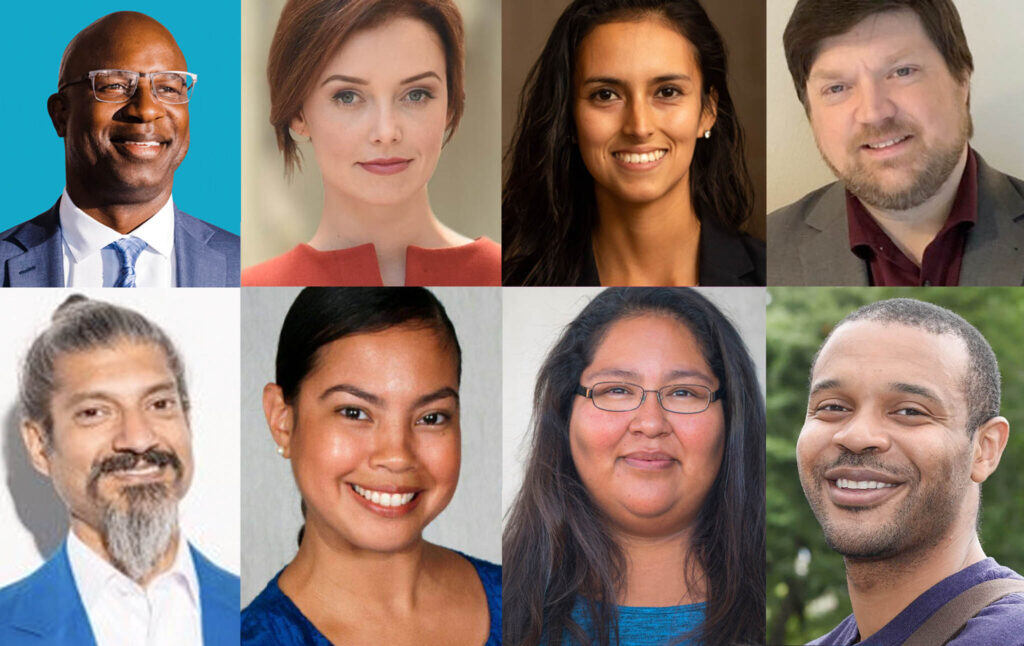
The names Valdez and Avila Chevalier would, until recently, have been known only to committed progressives in Brooklyn and upper Manhattan. They are now on track to enter Congress as the next cohort of the democratic socialist left.
Darializa Avila Chevalier defeated incumbent Rep. Adriano Espaillat in New York's 13th Congressional District, capturing approximately 49.4% of the vote in a primary that Espaillat had been expected to win. Espaillat had served the district since 2017, was a member of the Congressional Hispanic Caucus, and enjoyed institutional backing. Her victory was widely described as the biggest upset of the June 2026 primary season.
Claire Valdez won the open seat vacated by retiring Rep. Nydia Velázquez in New York's 7th District with 56.1% of the vote, defeating Brooklyn Borough President Antonio Reynoso, who carried Velázquez's personal endorsement. Since both districts are heavily Democratic, both candidates are expected to win the November general election, making them near-certain members of the 120th Congress.
Their victories are part of a broader pattern. In Colorado, democratic socialist Melat Kiros, backed by Justice Democrats, toppled Rep. Diana DeGette — a 15-term incumbent — in the 1st Congressional District primary. In New York's 10th, Brad Lander also won his primary. According to reporting from Bloomberg Government, these wins have made 2026 Justice Democrats' most successful primary year to date. A July 2026 analysis found that roughly two-thirds of DSA- and Justice Democrats-backed non-incumbent candidates who ran in primaries through that point had advanced.
In Michigan, Abdul El-Sayed, a public health physician and DSA-affiliated progressive, won the Democratic Senate nomination narrowly over Haley Stevens — a historic result given the $30 million that AIPAC-aligned forces had spent against him.
The Mamdani Nexus: How a Mayoral Victory Unlocked a National Network
No figure better illustrates the emergence of this new donor ecosystem than Zohran Mamdani, who in November 2025 became the mayor of New York City — the first Muslim and the first South Asian to hold that office.
Mamdani's primary campaign was characterized by its small-dollar, grassroots character. He raised over $1.7 million from more than 20,000 individual donors, most of whom gave small amounts amplified by New York City's public matching funds system, which matches the first $250 of any qualifying local donation at up to an 8:1 ratio. At least 26 billionaires reportedly pooled more than $22 million into efforts to block his rise. Only two wealthy supporters — Elizabeth Simons, who gave $250,000 to the main independent group supporting him, and tech entrepreneur Tom Preston-Werner — were documented as having given substantially to pro-Mamdani efforts.
His victory, however, did something that no amount of campaign messaging could have engineered: it demonstrated proof of concept. A democratic socialist with a Muslim and South Asian identity, running explicit on policies including free buses, public housing expansion, and a ceasefire-aligned foreign policy critique, could win in the most media-saturated, billionaire-invested political environment in America. For donors in Mamdani's orbit — people like Waqas and Hasan, who had backed his super PAC — the lesson was clear: money deployed at the right moment, in the right races, could crack open the Democratic Party's institutional establishment.
The overlap between Mamdani donors and American Priorities donors is not coincidental. It represents the crystallization of a network: affluent professionals, concentrated in tech and medicine, who share an ethnic or religious identity and a foreign policy grievance, and who have now connected that grievance to a broader progressive project.
The Broader Infrastructure: From Dark Money to Digital Strategy
The newly emerging donor class does not operate in isolation. It intersects with — and in some ways is succeeding — a larger left-progressive infrastructure that is simultaneously undergoing its most significant reorganization in a generation.
The Democracy Alliance, which since 2005 has channeled over $2 billion into progressive think tanks, media operations, and electoral efforts, is pivoting toward digital content creators. A Semafor report from May 2026 documented a three-day retreat at which Alliance president Pamela Shifman announced that the group would invest "tens of millions" in new media ahead of the midterms, explicitly acknowledging that the old model — buying broadcast television ads — was failing to reach the audiences the left needed. This is not a retreat; it is a tactical evolution.
Meanwhile, the Soros family, through its Democracy PAC, has contributed approximately $102.8 million to Democratic causes in the 2025–2026 cycle, according to FEC filings — a figure that dwarfs even the most generous of the new donors but sits in a different political and strategic space. Where Democracy PAC tends to back institutional Democratic candidates and infrastructure, the new donor class is explicitly funding insurgents against that establishment.
This distinction matters enormously. The Democratic Party's internal class struggle is, in part, a struggle between different pools of capital. One pool — historically dominant, associated with figures like George Soros, Reid Hoffman, and the Democracy Alliance membership — has prioritized winning general elections, maintaining institutional relationships, and managing the party's coalition. The other pool — newer, less institutionally embedded, animated by a specific combination of democratic socialist domestic politics and pro-Palestinian foreign policy — is funding candidates who are actively primarying members of that coalition.
The AIPAC Counter-Force and the New Foreign Policy Fault Line

Perhaps the most distinctive feature of the new donor class is that foreign policy — specifically the Israel-Palestine conflict — is not a peripheral issue for them but the issue that activated their political giving in the first place. This marks a meaningful departure from the usual logic of American campaign finance, where domestic economic interests dominate donor motivation.
AIPAC's escalating involvement in Democratic primaries created a concrete adversary around which a counter-movement could organize. American Priorities' Fertig has explicitly framed the group's mission as making Democratic foreign policy reflect "where the Democratic base has moved," arguing that unconditional U.S. military support for Israel no longer commands majority support among Democratic primary voters. Polling has consistently shown that Democratic voters under 45, and particularly non-white Democratic voters, have moved significantly toward more critical positions on Israeli military conduct in Gaza.
AIPAC's own tactical innovations have simultaneously galvanized opposition. Reports indicate that UDP-aligned spending in the 2026 cycle has flowed through a series of pop-up PACs with innocuous names — outlets like "Elect Chicago Women" — that spent over $16 million in Illinois primaries without disclosing their funders before Election Day. One corporate entity called Fig and Olive Action contributed approximately $470,000 to American Priorities-affiliated spending without disclosing its underlying donors. The opacity, in short, runs on both sides — but the scale of AIPAC's resources has meant that the opacity disproportionately served the establishment.
A New Donor Establishment?

Former Democratic fundraiser Evan Barker told Fox News in July 2026 that what the party is witnessing is not a grassroots movement but a "new donor establishment" — a phrase that carries some analytical weight even coming from a critic. The progressive and DSA-aligned money, Barker argued, has adopted exactly the tactics — super PAC spending, coordinated independent expenditures, pop-up political committees — that the institutional left once criticized the right for pioneering.
There is a genuine tension here. Many of the candidates being supported by American Priorities — including El-Sayed — have publicly pledged to run without super PAC support. El-Sayed did not return American Priorities' money; he could not, legally. But the episode illustrates a structural contradiction: a movement that began in part as a critique of money in politics is now benefiting from, and in some cases dependent on, large concentrations of political capital deployed through the very channels it has criticized.
DSA's national structure did not endorse El-Sayed — he does not identify as a socialist — and some DSA members canvassed for their own endorsed candidates while separately expressing support for him. The movement is not monolithic; its donor base is not its membership base, and its membership base is not its candidate base. These overlapping but distinct circles make the "New Left" a more complex phenomenon than either its champions or its critics typically describe.
Structural Forces and the 2026 Midterm Stakes
The 2026 midterms are shaping up to be a genuinely contested test of whether the new donor infrastructure can translate primary victories into general election wins and congressional power.
The structural landscape is favorable in some respects. Districts like New York's 7th and 13th are so heavily Democratic that primary wins are effectively general election wins. The Colorado 1st, centered on Denver, is similarly safe. In Michigan, El-Sayed's general election contest against Republican Mike Rogers is expected to be the most consequential midterm test for the left, and AIPAC is reportedly considering backing Rogers — meaning the organization may spend against a Democratic nominee in a general election for a U.S. Senate seat, an unprecedented escalation that would itself validate the progressive critique that AIPAC's interests do not align with the Democratic Party's.
AdImpact projects the 2026 cycle to be the most expensive in American history for advertising alone. Crypto-affiliated super PACs, AI-industry political vehicles, AIPAC-aligned groups, and progressive counter-PACs are all operating simultaneously in Democratic primaries, creating a landscape where the party's own primary system is effectively contested terrain for multiple competing donor blocs with incompatible visions of what the party should be and do.
The Democracy Alliance's bet on digital content creators reflects a recognition that the information environment has fragmented enough that a well-placed YouTube video or podcast appearance can move primary votes in ways that a $500,000 television buy cannot. The new donor class, many of whom built careers in technology, understands this landscape intuitively.
Who They Are, and Why It Matters
The Wall Street Journal's characterization of the new donors as "virtually unknown" is precisely the point. Political power in America has, for generations, flowed through recognizable channels: old-money foundations, corporate PACs, union treasuries, and a donor class whose names and affiliations were at least nominally traceable. The emergence of first-generation wealth — much of it from the tech and medical sectors, much of it held by Americans whose families immigrated from South Asia and the Middle East — as a political force represents something genuinely new.
These are not donors with established relationships with Democratic members of Congress. They do not have seats at the tables where the party's legislative agenda is negotiated. They are not invited to the retreats. Their entry into politics was not mediated by the party apparatus but by a specific historical moment — a war, a community's grief, and the discovery that existing political institutions were not adequately responsive to their concerns.
This is, structurally, how new political coalitions are born. The labor movement's entry into Democratic Party politics in the 1930s was similarly driven by crisis and exclusion. The civil rights movement's transformation of the Democratic coalition in the 1960s was similarly driven by people who had been locked out of institutional power. The question of whether this new donor class and the candidates they are funding can build a durable political coalition — or whether they represent a cycle-specific insurgency that will be absorbed or defeated — is one that will not be answered in 2026.
Conclusion
The October 2026 Wall Street Journal investigation gave a name and a narrative to something that had been building for two years: a cohort of previously invisible donors, activated by the Gaza crisis, connected by professional and ethnic networks, and channeling their resources into a specific vision of what the Democratic Party should become. Mohammad Waqas and Omer Hasan gave more than $2 million to American Priorities. Their super PAC spent over $1.5 million in New York congressional primaries and half a million dollars in Michigan. The candidates they backed won.
That is the proximate story. The larger story is about a Democratic Party whose traditional financial architecture is fracturing, whose establishment has discovered that it cannot indefinitely absorb a generation shaped by economic precarity, a war conducted in their name, and the example of leaders like Zohran Mamdani proving that socialist politics can win in the most visible arena in American democracy. The new donors are not just funding candidates; they are funding a hypothesis — that the Democratic Party's next majority looks less like the Obama coalition and more like the movement that won New York City in 2025.
Whether the midterms validate that hypothesis will depend on races in Michigan, on the final tallies in safe-seat New York, and on whether a new Congress arrives in January 2027 with enough critical mass to shift the party's orientation. The donors who made it possible will remain, in all likelihood, virtually unknown to most Americans. That, too, is part of the story.
Sources:
- Election Law Blog — "The Crew of Virtually Unknown Donors Powering the Rise of the New Left"
- VIN News — WSJ: Virtually Unknown Donors Power Progressive Candidates And Efforts Against Pro-Israel Spending
- Legal Insurrection — Mamdani's Political Rise Energizes Donors Funding Anti-Israel Candidates
- JTA — Abdul El-Sayed has refused super PAC funding; an anti-AIPAC PAC says it will spend for him anyway
- The Intercept — Michigan Primary Results: El-Sayed, Stevens, AIPAC
- In These Times — After Abdul El-Sayed's Win in Michigan, Progressives Are Preparing for the Next Round Against AIPAC
- DNYUZ — Democratic Socialist Melat Kiros Topples a Nearly 30-Year Incumbent to Win Colorado House Primary
- Fox News — Rising Socialist Stars on Track to Congress: Who Are Darializa Avila Chevalier, Brad Lander and Claire Valdez?
- CBS Austin — Mamdani-backed House Candidates in NYC Win Primaries, Oust Incumbents
- Fox News — Ex-Dem Operative Details 'New Donor Establishment' Behind Mamdani-Era Progressives
- Semafor — The anti-AIPAC PAC Talks About Its 2026 Strategy
- Semafor — Progressive Megadonors Bet Big on Content Creators
- The Nation — Crypto, AI, and AIPAC Spend Millions to Defeat Progressive Democrats
- American Prospect — Pro-Palestine Super PAC, Midterm Elections, AIPAC, Israel, Gaza
- Axios — Who Is Zohran Mamdani, NYC's Democratic Mayoral Nominee
- Anadolu Agency — Most Billionaires Tried to Block Rise of NYC Mayor-Elect Mamdani
- WRAL/CNN — Exclusive: Liberal Donor Network Charts Plan to Seize House in 2026
- AllSides — How the Left's Dark Money Behemoth Spent Its Millions
- Zeteo — Meet All the New Progressives and Democratic Socialists Heading to Congress
- NBC News — Justice Democrats Backs Sixth House Primary Challenger, Against Rep. Diana DeGette
- KQED — Saikat Chakrabarti Launches Campaign to Support Connie Chan's Bid for Congress
- Washington Examiner — Over 30 Socialists Have Won Primaries This Year