The Muslim Brotherhood in America: Infrastructure, Ideology, and the Long Campaign for Political Islam
Few organizations in modern history have demonstrated the same combination of longevity, ideological coherence, and organizational sophistication as the Muslim Brotherhood — and few have generated as much legal scrutiny, political controversy, and unresolved policy debate within the United States. Founded nearly a century ago in Egypt, the Brotherhood has operated in America for more than six decades, cultivating a layered network of institutions that has intersected with federal terrorism investigations, congressional hearings, and, as of 2025 and 2026, a cascade of executive and legislative action aimed at finally imposing formal designations on its branches. Understanding the Brotherhood in America requires tracing its roots from a Suez Canal town in 1928 to a Senate subcommittee hearing in Washington, D.C., in August 2026.
Origins: Hassan al-Banna and the Birth of Political Islam
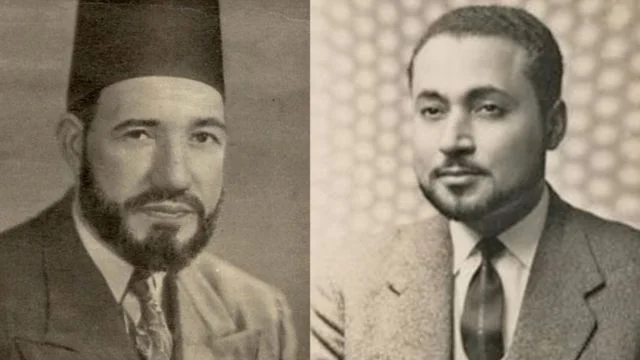
The Society of the Muslim Brothers — Jamʿiyyat al-Ikhwān al-Muslimīn — was founded in Ismailia, Egypt, in March 1928 by Hassan al-Banna, a 22-year-old schoolteacher. Born in 1906 in the Nile Delta town of Mahmoudiyya, al-Banna had come of age under British colonial administration and became consumed by what he saw as the twin threats of Western secularism and cultural imperialism. Watching foreign workers live in relative comfort in the Egyptian canal zone while local Muslims lived in poverty, he began preaching a message of religious revivalism, social reform, and pan-Islamic unity.
Al-Banna's ideological synthesis was ambitious: he rejected the emerging phenomenon of Arab nationalism as too parochial, instead espousing a vision of the global Muslim community (ummah) reorganized around Islamic law (sharia). His ultimate stated aim was the reestablishment of a caliphate — a unified Islamic state stretching from the Atlantic to the Pacific — achieved not through immediate armed revolution but through a generational strategy of da'wa (outreach and religious education), community institution-building, and incremental political infiltration.
His core motto, still cited by Brotherhood affiliates globally, encapsulates this program: "Allah is our objective. The Prophet is our leader. The Quran is our law. Jihad is our way. Dying in the way of Allah is our highest hope."
The organization grew with remarkable speed. Al-Banna launched branches across Egypt — each with its own mosque, school, and social services — and by the late 1940s the Brotherhood claimed anywhere from 300,000 to two million active members, with a paramilitary "Secret Apparatus" (al-Jihaz al-Sirri) responsible for political violence. Al-Banna was assassinated in Cairo in February 1949 by Egyptian government agents, likely in retaliation for the Brotherhood's own assassination of Prime Minister Mahmoud Fahmi al-Nuqrashi. His death did not end the movement; it galvanized it.
The Brotherhood's ideology was subsequently refined by figures including Sayyid Qutb, whose writings from an Egyptian prison in the 1960s introduced the concept of jahiliyyah (pre-Islamic ignorance applied to modern Muslim societies) and laid intellectual groundwork that later inspired jihadist organizations including al-Qaeda. The Brotherhood officially repudiated Qutb's most violent applications of his ideology, but the theological inheritance has remained contested.
Ideology: The Doctrine of "Civilization Jihad"
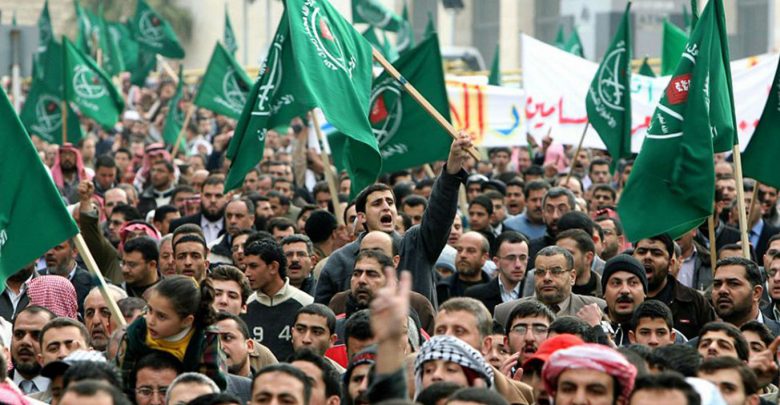
The Brotherhood's strategic framework for operating in the West was articulated most explicitly not in al-Banna's original writings but in an internal document produced by its North American leadership in 1991. Written by Mohamed Akram Adlouni, a senior Brotherhood member and Hamas figure, and approved by the Brotherhood's Shura Council, the document — formally titled An Explanatory Memorandum: On the General Strategic Goal for the Group in North America — was discovered in 2004 by the FBI during a search of the home of Ismail Elbarasse in Annandale, Virginia. Elbarasse, a former associate of the head of Hamas's political bureau Mousa Abu Marzook, had a hidden sub-basement containing more than 80 banker boxes of North American Brotherhood archives.
The Explanatory Memorandum was entered into evidence during the landmark Holy Land Foundation terrorism financing trial and remains one of the most significant primary source documents in the public record of American counterterrorism investigations. Its language is explicit about Brotherhood strategy:
"The Ikhwan [Brotherhood] must understand that their work in America is a kind of grand Jihad in eliminating and destroying the Western civilization from within and 'sabotaging' its miserable house by their hands and the hands of the believers so that it is eliminated and God's religion is made victorious over all other religions."
The memorandum described this strategy as "civilization jihad" — a long-term effort to Islamize society through institutional means rather than armed violence. It called for establishing a network of Brotherhood-affiliated organizations that would serve as the vehicles for this infiltration, listing dozens of existing or planned institutions. Its authenticity has been confirmed by U.S. federal courts; Brotherhood-linked organizations have characterized it as a dated internal draft that has been misrepresented.
Arrival in America: The Institutional Buildout, 1950s–1990s
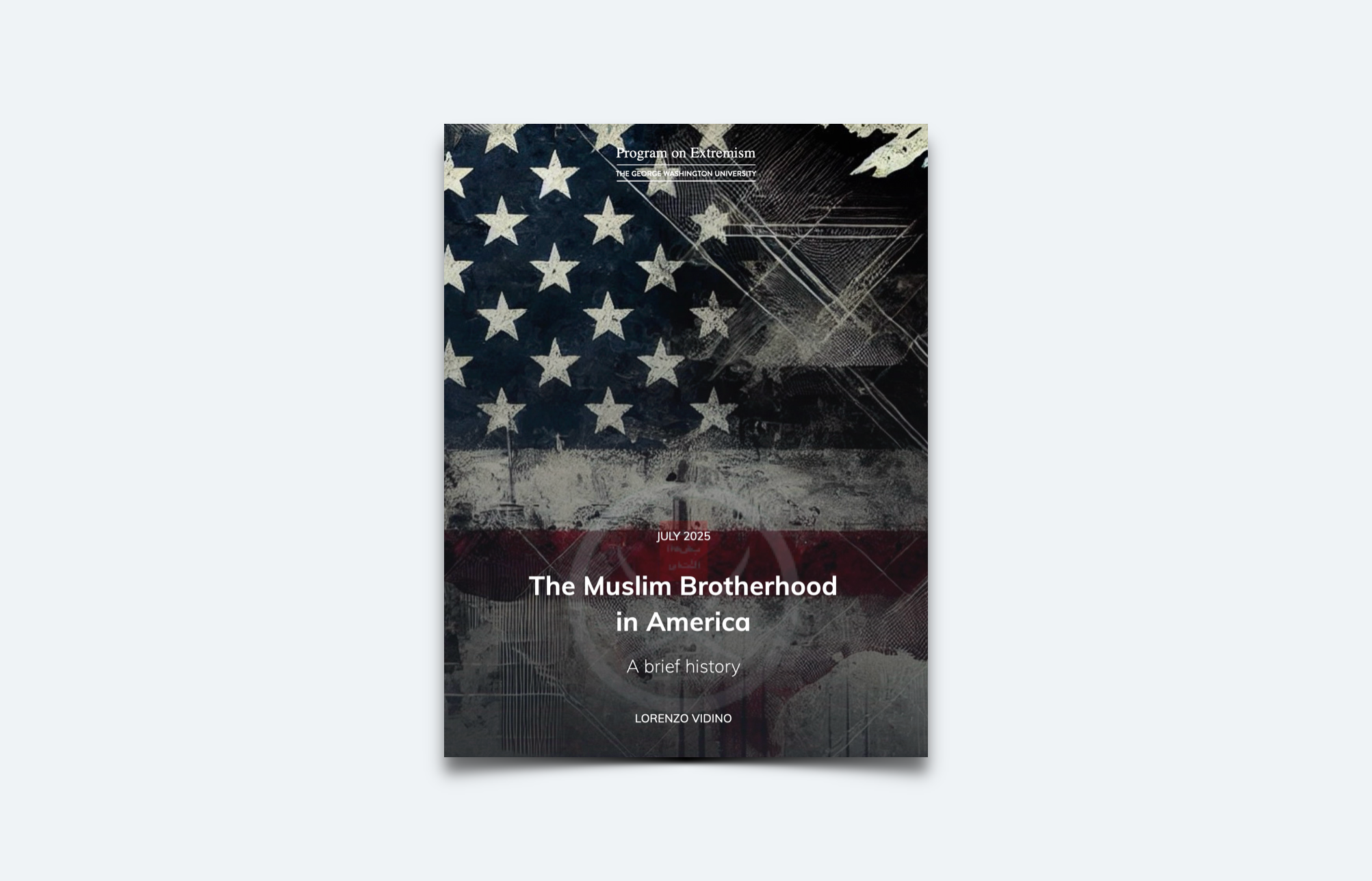
The Brotherhood's penetration of the United States was methodical, beginning in the late 1950s with the arrival of foreign graduate students from Muslim-majority countries — many of them Brotherhood members or sympathizers — at American universities. This population formed the core of the organization's initial American presence.
The Muslim Students Association (1963)
The first formal institutional beachhead was the Muslim Students Association of the United States and Canada (MSA), founded on January 1, 1963, at a national conference at the University of Illinois at Urbana-Champaign. Two Brotherhood members — Ahmed Totonji and Jamal Barzinji, both Iraqi Kurds — were among its architects. Early funding came from Saudi Wahhabist charitable networks that maintained an overlapping ideological agenda.
The MSA served simultaneously as a religious community center, an ideological training ground, and an organizational incubator. By 2024, the MSA maintained 162 chapters across the United States and Canada, serving Muslim students at high schools and universities. Alumni of the MSA went on to fill leadership roles in virtually every subsequent Brotherhood-linked organization in America.
The Islamic Society of North America (1981)
The Islamic Society of North America (ISNA) was formally incorporated in 1981 in Plainfield, Indiana, as a direct outgrowth of the MSA's expanding community. It became one of the largest Muslim umbrella organizations in the country, claiming to represent hundreds of affiliated mosques and Islamic centers. ISNA publishes Islamic Horizons magazine, operates a marriage services bureau, organizes an annual convention attended by tens of thousands, and has served as a credentialing body for Muslim chaplains in the U.S. military and federal prisons.
ISNA was named by the U.S. Department of Justice as an unindicted co-conspirator in the Holy Land Foundation terrorism financing trial, with prosecutors establishing that ISNA and its subsidiary, the North American Islamic Trust (NAIT), shared connections with the Holy Land Foundation and its function of providing financial support to Hamas.
The North American Islamic Trust (1971)
NAIT, established in 1971, operates as the real-estate holding entity for the Brotherhood network. It holds title to more than 300 mosques — approximately 27 percent of the estimated 1,200 mosques in the United States at the time of analysis — as well as Islamic schools and community centers. This financial infrastructure provides the Brotherhood's network with a physical institutional presence across the continent that operates independently of any individual organization's rise or fall.
The Palestine Committee and Hamas Finance Operations
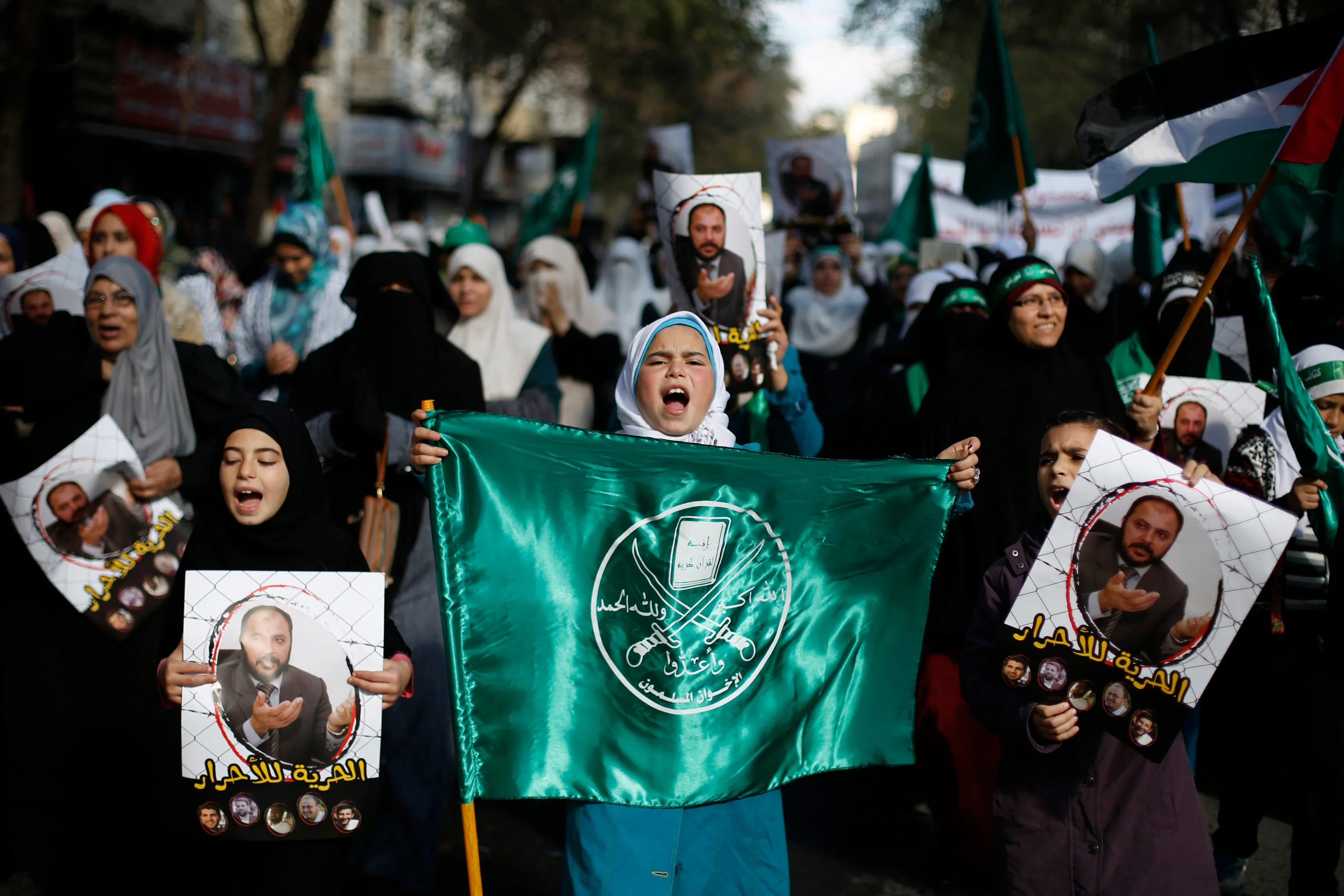
By the early 1990s, the Brotherhood had established in the United States what it internally called the Palestine Committee — a coordinating body whose explicit purpose was to provide financial, political, and propaganda support for Hamas, the Brotherhood's Palestinian affiliate. The existence and activities of the Palestine Committee were revealed through a combination of FBI surveillance and the Holy Land Foundation trial.
The Philadelphia Meeting (1993)
In October 1993, FBI wiretaps captured a gathering of senior U.S.-based Hamas operatives and Brotherhood-affiliated figures at a Philadelphia hotel. Participants discussed strategies for countering the Oslo Accords and for continuing support to Hamas despite increasing U.S. law enforcement scrutiny. Among those recorded were Omar Ahmad and Nihad Awad, who would go on to co-found the Council on American-Islamic Relations (CAIR) in 1994.
The Council on American-Islamic Relations (CAIR)
CAIR was established in June 1994 by Omar Ahmad (who served as chairman) and Nihad Awad (who has served as executive director since its founding). Prior to establishing CAIR, Ahmad had served as president of the Islamic Association for Palestine (IAP), itself a key Palestine Committee organization that served as Hamas's primary American propaganda arm.
CAIR rapidly became the most prominent Muslim civil rights and advocacy organization in the United States, with 35 chapters and offices across the country and a media presence that made it the go-to source for Muslim community commentary for mainstream news organizations. It has engaged in extensive legislative advocacy, interfaith dialogue, law enforcement training programs, and anti-discrimination litigation.
In 2007, CAIR was named by federal prosecutors as an unindicted co-conspirator and/or joint venturer in the Holy Land Foundation case. The U.S. Court of Appeals for the Fifth Circuit later ruled in 2010 that the district court had properly kept CAIR on the co-conspirator list, and the Supreme Court declined to review the case.
CAIR has consistently and vigorously denied any meaningful organizational connection to Hamas or the Muslim Brotherhood, describing the co-conspirator designation as a "smear" based on guilt by association and arguing that the government's decision was tactical and improper. The organization points to its long record of opposing terrorism and of cooperating with law enforcement on counterterrorism matters as evidence of its commitment to American values.
The Holy Land Foundation: The Largest Terrorism Financing Prosecution in U.S. History
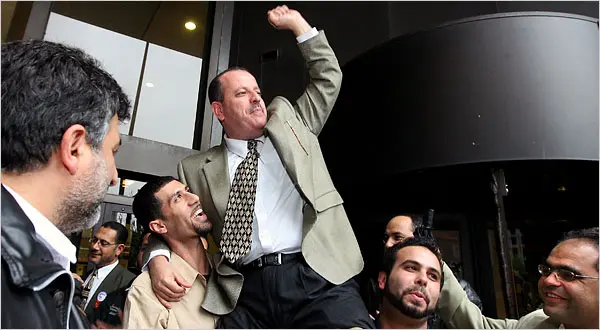
The Holy Land Foundation for Relief and Development (HLF), based in Richardson, Texas, was at the time of its closure the largest Muslim charity in the United States. Established in the early 1990s, it raised tens of millions of dollars, ostensibly for Palestinian humanitarian relief.
Federal investigators determined that HLF had become, in the words of prosecutors, the chief fundraising arm of the Palestine Committee in the United States. Rather than directing donations to legitimate humanitarian needs, HLF funneled money to Hamas-controlled zakat (charitable giving) committees and charitable societies in the West Bank and Gaza — entities that functioned as Hamas's social infrastructure and recruitment arm.
President George W. Bush designated HLF as a terrorist organization and froze its assets in December 2001. Federal indictments followed in 2004. After an initial trial in 2007 ended in a hung jury on most counts and acquittals on others, a retrial produced a sweeping verdict: on November 24, 2008, a federal jury in Dallas returned guilty verdicts on all 108 counts against the HLF and its five former officers.
Key statistics from the HLF prosecution:
- HLF transferred approximately $12.4 million to Hamas-controlled entities
- The five convicted officers received sentences ranging from 15 to 65 years in federal prison (handed down May 27, 2009)
- Federal prosecutors identified more than 300 unindicted co-conspirators in connection with the case
- The trial produced an enormous public evidentiary record, including the Explanatory Memorandum and hundreds of other Brotherhood internal documents
The defendants and their sentences:
- Shukri Abu Baker (CEO): 65 years
- Mohammad El-Mezain (endowments director): 15 years
- Ghassan Elashi (chairman, also CAIR-Dallas founder): 65 years
- Mufid Abdulqader: 20 years
- Abdulrahman Odeh: 65 years
Counterterrorism Investigations and Surveillance
Beyond the Holy Land Foundation case, the Muslim Brotherhood's American network intersected with federal law enforcement through multiple investigations and legal proceedings across several decades.
The 2004 FBI search of Ismail Elbarasse's home — which produced the Explanatory Memorandum and the broader Brotherhood archive — was triggered by Elbarasse's arrest on an outstanding Maryland material witness warrant related to a Hamas fundraising investigation. Elbarasse had previously been identified as a close associate of Hamas political bureau chief Mousa Abu Marzook, with whom he co-owned property.
FBI Director Robert Mueller testified before the Senate Intelligence Committee in 2003 that the Bureau was investigating domestic Brotherhood networks. The Bureau's position on the Brotherhood in America has evolved over the years but has consistently identified the network as warranting counterintelligence scrutiny, even when the legal threshold for criminal prosecution was not met.
The Global Relief Foundation, the Benevolence International Foundation, and the Islamic American Relief Agency were among other Muslim charities shut down by the U.S. government in the early 2000s for alleged ties to terrorist financing, some with overlapping Brotherhood connections.
Legislative and Executive Action: 2025–2026
The question of whether to formally designate the Muslim Brotherhood — or some of its branches — as a Foreign Terrorist Organization (FTO) under U.S. law has been debated in Congress for over a decade. A series of actions in 2025 and 2026 moved this from debate toward policy.
Executive Order 14362 (November 2025)
On November 24, 2025, President Donald Trump signed Executive Order 14362, titled Designation of Certain Muslim Brotherhood Chapters as Foreign Terrorist Organizations and Specially Designated Global Terrorists. The order directed the Secretary of State and Secretary of the Treasury, in consultation with the Attorney General and Director of National Intelligence, to submit a report within a defined period on whether to designate the Brotherhood's chapters in Lebanon, Egypt, and Jordan. The secretaries were directed to take action within 45 days of the report's completion if appropriate.
Treasury and State Department Designations (January 2026)
In January 2026, the United States formally designated the Egyptian, Lebanese, and Jordanian branches of the Muslim Brotherhood. The State Department designated the Lebanese branch as a Foreign Terrorist Organization (FTO) and Specially Designated Global Terrorist (SDGT) — the highest available designation under U.S. law, carrying the most extensive sanctions implications. The Treasury Department designated the Egyptian and Jordanian branches as SDGTs for providing material support to Hamas.
These designations triggered asset freezes and prohibited U.S. persons from conducting financial transactions with the named entities.
The Muslim Brotherhood Terrorist Designation Act of 2025
Congress moved in parallel with the executive branch. H.R. 4397, the Muslim Brotherhood Terrorist Designation Act of 2025, was introduced as bipartisan legislation by Representative Mario Díaz-Balart (R-FL) and Representative Jared Moskowitz (D-FL), Co-Chairs of the Friends of Egypt Caucus. A Senate companion bill, S. 2293, was introduced by Senators Ashley Moody and Ted Cruz, joined by Senators Tom Cotton, John Boozman, Rick Scott, and Dave McCormick.
The legislation would:
- Direct the President to formally designate the Muslim Brotherhood as a terrorist organization
- Require annual reporting to Congress on Brotherhood chapters that threaten U.S. national security
- Impose sanctions on Brotherhood members
- Block Brotherhood-linked individuals from entering the United States
- Create a legal pathway for designating Brotherhood affiliates as terror-sponsoring entities
As of December 3, 2025, the House Committee on Foreign Affairs approved the legislation. The bill's future in the full Senate remains subject to procedural and political dynamics.
Senate Judiciary Subcommittee Hearing: August 5, 2026
On August 5, 2026, the Senate Judiciary Committee's Subcommittee on Federal Courts, Oversight, Agency Action, and Federal Rights convened a hearing titled "Hidden in Plain Sight: Confronting the Muslim Brotherhood Network in America." Subcommittee Chairman Ted Cruz (R-TX) delivered opening remarks arguing that the United States has systematically failed to confront what he described as a durable Brotherhood infrastructure operating within American institutions.
Expert witnesses included Lara Burns, a Senior Fellow at the Program on Extremism at George Washington University, who testified that the Brotherhood's support infrastructure for Islamist terrorism has operated in the United States for decades, functioning through a network of organizations that provide financial, propaganda, and organizational support "often under the guise of charitable, advocacy, or activist organizations."
The hearing was notably attended only by Cruz among Republican senators; all five Democratic members of the subcommittee boycotted the proceeding. The absence of bipartisan participation drew criticism from both sides — Democrats arguing the hearing was a partisan exercise that unfairly targeted Muslim American communities, and Republicans arguing the boycott represented willful blindness to a documented national security threat.
Academic and Research Perspectives
The most comprehensive recent scholarly treatment of the subject is Dr. Lorenzo Vidino's July 2025 report, The Muslim Brotherhood in America: A Brief History, published by the Program on Extremism at George Washington University. Vidino, who has spent two decades researching Brotherhood networks in the United States and Europe, drew on court documents, trial exhibits, academic literature, Brotherhood publications, and firsthand interviews with current and former members.
His findings include:
- The Brotherhood's U.S. presence dates to the late 1950s, making it one of the earliest Western Brotherhood implantations
- The organizational footprint in the United States is historically substantial, comparable in scope and sophistication to Brotherhood networks in France and the United Kingdom
- The network has operated through interlocking organizations that mutually reinforce one another's institutional legitimacy and share leadership personnel
- The report explicitly does not take a political position on the designation debate, but documents the Brotherhood's development on American soil using open-source and firsthand evidence
Vidino's report was published in the context of Congressional consideration of the Muslim Brotherhood Terrorist Designation Act of 2025, and was cited in subsequent Senate testimony.
The Global Context: Bans and Designations Elsewhere
The United States' deliberations on Brotherhood designation took place against a background of increasing international action:
Arab World:
- Egypt banned the Brotherhood and designated it a terrorist organization in 2013 following the military ouster of Brotherhood-aligned President Mohamed Morsi
- Jordan designated the Brotherhood in April 2025
- Saudi Arabia, UAE, Bahrain, Syria, and Libya have all designated the Brotherhood as a terrorist organization at various points
Western Democracies:
- Austria banned Brotherhood-linked entities under 2021 anti-terrorism legislation
- Germany banned a single Brotherhood-affiliated organization in one city in 2024
- The Netherlands parliament approved a motion to ban the organization
- Argentina designated the Lebanese, Egyptian, and Jordanian chapters as terrorist organizations in January 2026
- Kenya added the Brotherhood and Hizb ut-Tahrir to its terrorist entity list in 2025
The Brotherhood retains legal status as a political party or civil society organization in the United Kingdom, much of Western Europe, and Turkey, where it has historically enjoyed significant government support.
The Debate: Designation, Civil Liberties, and the Question of Evidence
The Brotherhood designation debate in the United States involves genuine complexity that goes beyond partisan positioning.
Arguments for designation center on the Explanatory Memorandum's explicit statement of subversive strategic intent, the documented organizational connections between U.S. Brotherhood network organizations and Hamas (a designated FTO), the Holy Land Foundation convictions, and the broader international pattern of Brotherhood-linked violence through affiliated movements including Hamas and aspects of armed Islamism in Libya, Syria, and elsewhere.
Arguments against a blanket U.S. designation include:
- The Brotherhood is a highly decentralized movement with significant variation between national chapters in ideology and tactics
- A designation of the "Muslim Brotherhood" as a monolithic entity faces definitional and legal challenges, as the organization has no formal international headquarters or unified command structure
- Critics including the American Civil Liberties Union and Muslim civil rights groups argue that designation would sweep in American Muslim civic organizations based on historic associations, chilling protected religious and political activity
- Some counterterrorism analysts argue that the Brotherhood, in its Western manifestations, has served as a moderating force that keeps populations within the bounds of political participation rather than violent radicalization
- Senior law enforcement officials have noted that the naming of ISNA, CAIR, and others as unindicted co-conspirators was partly a prosecutorial tactic, and these organizations were not charged or convicted of crimes
CAIR, for its part, has maintained robust public documentation dispelling what it characterizes as fabricated connections, arguing that its founders' pre-CAIR participation in Muslim advocacy organizations has been systematically mischaracterized and that the organization itself has a 30-year record of opposing terrorism in all its forms.
Conclusion
The Muslim Brotherhood's American story spans more than six decades, from the founding of the Muslim Students Association at Urbana-Champaign in 1963 to the January 2026 terrorism designations of its Egyptian, Lebanese, and Jordanian branches by the U.S. Treasury and State Departments. The factual record established through federal trials — above all the Holy Land Foundation case, which resulted in 108 guilty verdicts and the public entry of the Brotherhood's own strategic documents into the evidentiary record — is both extensive and unambiguous on several key points: the Brotherhood built an institutional network in the United States; that network included organizations formally connected to Hamas financing; and the strategic framework governing that network was articulated in writing by Brotherhood leadership itself.
What remains genuinely contested is what consequences should follow from those facts — specifically whether a blanket terrorist designation of the global Muslim Brotherhood is legally coherent, strategically sound, and consistent with constitutional protections for American Muslim citizens and institutions who have operated within the law. That debate, which has consumed Congress, executive branch agencies, and scholars for over a decade, reached a new level of intensity in 2025 and 2026 as the Trump administration moved through executive order to designate individual branches, Congress advanced designation legislation with bipartisan support, and Senate hearings brought the underlying evidentiary record back into public view. The resolution of this debate will have lasting consequences — for counterterrorism policy, for the civil liberties of Muslim Americans, and for the United States' relationship with Muslim communities both domestically and abroad.
Sources:
- Designations of Muslim Brotherhood Chapters – U.S. Department of State
- Treasury and State Departments Designate Muslim Brotherhood Branches as Terrorist Organizations – U.S. Department of the Treasury
- Executive Order 14362 – Wikipedia
- The Muslim Brotherhood in America: A Brief History – Lorenzo Vidino, GWU Program on Extremism (July 2025)
- Hidden in Plain Sight: Confronting the Muslim Brotherhood Network in America – Senate Judiciary Committee Hearing (August 5, 2026)
- Lara Burns Testifies Before Senate Judiciary Subcommittee – GWU Program on Extremism
- Sen. Cruz Delivers Opening Remarks on Muslim Brotherhood Threat – Senator Ted Cruz
- Federal Jury Convicts Holy Land Foundation – U.S. Department of Justice (November 24, 2008)
- Holy Land Foundation for Relief and Development – ADL
- An Explanatory Memorandum – Center for Security Policy
- H.R. 4397, Muslim Brotherhood Terrorist Designation Act of 2025 – Congress.gov
- S. 2293, Muslim Brotherhood Terrorist Designation Act of 2025 – Congress.gov
- The Muslim Brotherhood's U.S. Network – Hudson Institute
- North American Islamic Trust (NAIT) – Influence Watch
- Muslim Brotherhood – Britannica
- Hassan al-Banna – Britannica
- Muslim Students Association – Wikipedia
- Council on American-Islamic Relations – Influence Watch
- U.S. Designates Three Muslim Brotherhood Chapters as Terrorist Organizations – HSToday
- New Study Explores History of the Muslim Brotherhood in America – HSToday
- The Muslim Brotherhood Threat to the United States – RealClearWorld (May 2026)