The Higgs boson particle stands at the intersection of theoretical and experimental physics, symbolizing one of the most profound milestones in modern science. Its discovery in 2012 by the ATLAS and CMS collaborations at CERN’s Large Hadron Collider (LHC) confirmed a key prediction of the Standard Model (SM) of particle physics: that elementary particles acquire mass through interactions with an all-pervasive field, now known as the Higgs field. This particle, named after Peter Higgs, one of its theorists, not only fills in a crucial gap in our understanding of fundamental forces but also opens new avenues for exploration into beyond-the-Standard-Model (BSM) physics.

The Core Mechanism: How It Actually Works
The Higgs boson is a quantum excitation of the Higgs field, much like how sound waves are excitations in air [1]. According to Peter Higgs and his contemporaries, in the early universe shortly after the Big Bang, particles were massless. However, as the universe cooled, the Higgs field "turned on," causing particles to interact with it and gain mass. This process is known as spontaneous symmetry breaking (SSB), a fundamental concept in physics that explains how the simplest symmetries can be broken down into more complex ones [3].
Key Figures & Contributions
Several theoretical physicists were instrumental in proposing the mechanism for mass generation through interactions with the Higgs field. The primary contributors include Robert Brout and François Englert; Peter Higgs; Gerald Guralnik, Carl Hagen, and Tom Kibble. Their work was published between 1964 to 1967 [3]. In recognition of their groundbreaking contributions, they were awarded the Nobel Prize in Physics in 2013.
Historical Context: The Discovery Timeline
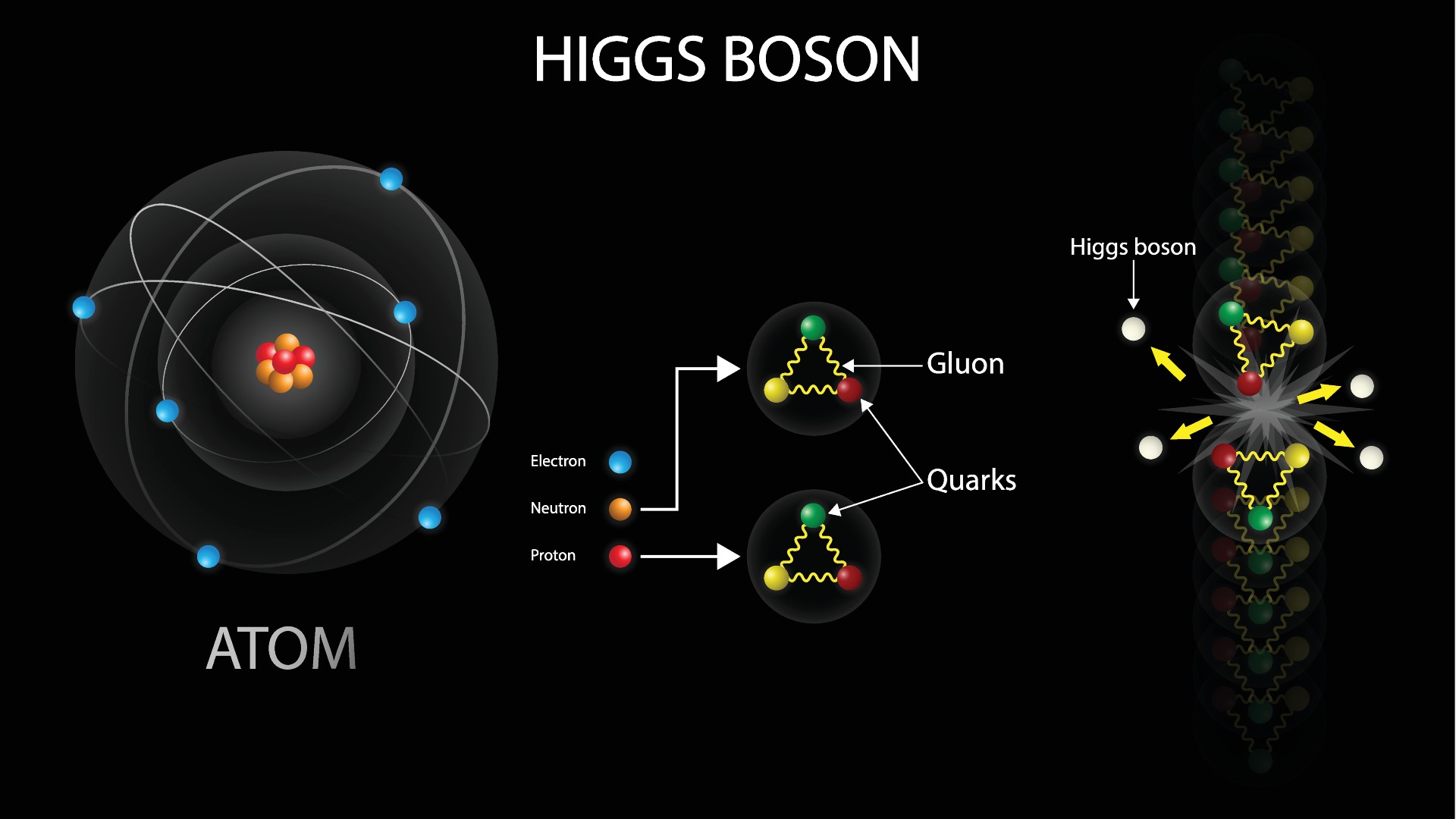
The search for the Higgs boson began in earnest with the Large Electron-Positron (LEP) collider at CERN, which operated from 1989 to 2000. However, it was not until the Tevatron, located at Fermilab and operational from 2001 to 2011, that significant progress was made [2]. The LHC at CERN officially took over in 2012, where the ATLAS and CMS collaborations announced the discovery of a particle consistent with the Higgs boson. This event marked the culmination of decades of theoretical work and experimental effort.
Key Takeaways
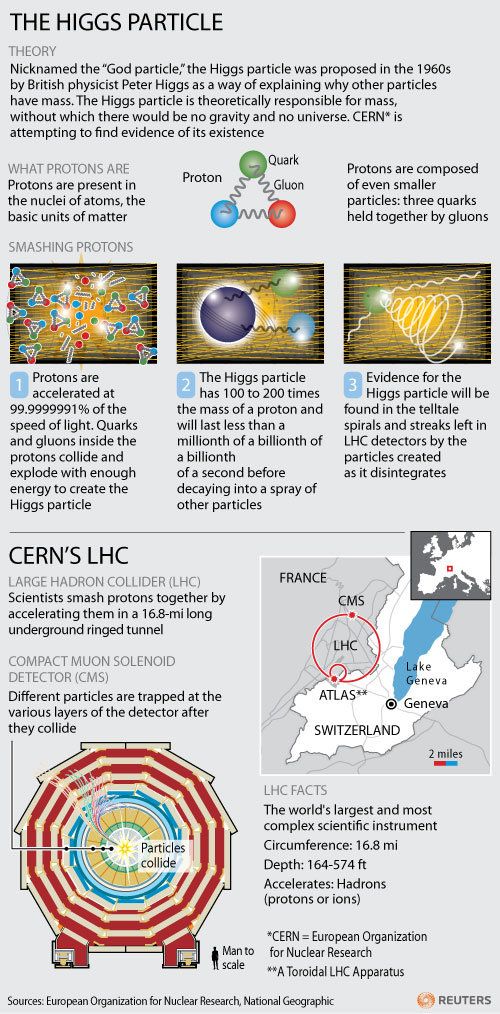
- Discovery History: The Higgs boson was first proposed in 1964 and confirmed through experiments at CERN’s LHC.
- Mechanics of Mass Acquisition: Particles gain mass by interacting with the Higgs field, which is realized as a quantum excitation—the Higgs boson.
- Standard Model Confirmation: The discovery solidified key predictions about particle interactions and symmetry breaking.
- Ongoing Research: Precision measurements and theoretical extensions continue to refine our understanding of the Higgs mechanism.
- Future Directions: Questions remain regarding dark matter, potential new particles, and beyond-the-Standard-Model physics.
Key Figures & Contributions
- Robert Brout and François Englert
- Peter Higgs
- Gerald Guralnik, Carl Hagen, Tom Kibble
Current State & Recent Developments
With the discovery of the Higgs boson in 2012, a new era of precision measurements began. These measurements have confirmed that the discovered particle behaves as predicted by the Standard Model. However, numerous questions remain unanswered [4]. For instance, the precise nature of the interactions between the Higgs boson and other particles is still being explored. Moreover, the search for additional Higgs-like particles or signs of new physics beyond the SM continues. The High-Luminosity LHC (HL-LHC), set to operate from 2030, promises to deepen our understanding in these areas.
Conclusion
The Higgs boson particle stands as a testament to human curiosity and scientific ingenuity. Its discovery not only confirmed key predictions of the Standard Model but also posed new questions for future exploration. As we continue to unravel the mysteries of the universe, the Higgs boson remains an enduring symbol of our quest for knowledge.
References
- [1] ## The Higgs Mechanism: How It Works
- [2] ## Key Takeaways
- [3] ## The Higgs Mechanism: How It Works
- [4] ## The Crisis in Physics: Why the Higgs Boson Should NOT Exist!