The discovery of the Higgs boson, announced on 4 July 2012 by the ATLAS and CMS collaborations at CERN, marked a pivotal milestone in modern physics. This particle is central to our understanding of how particles acquire mass, playing an essential role in the electroweak symmetry breaking mechanism that allows the weak nuclear force to exist. Its discovery not only confirmed one of the most profound theories in contemporary science but also opened new avenues for exploring fundamental aspects of the universe.
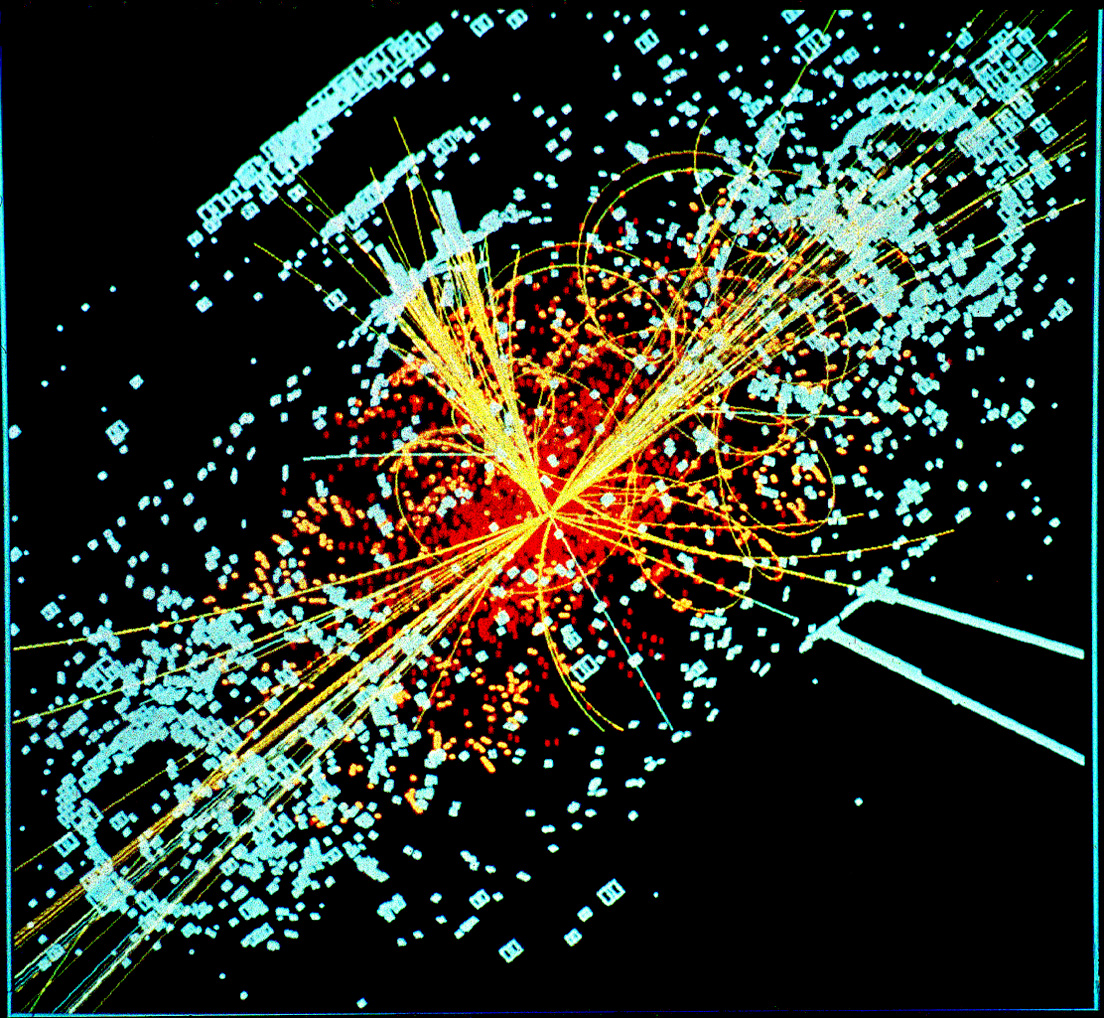
The Higgs Mechanism: How It Works
In 1964, several theoretical physicists—Robert Brout and François Englert; Peter Higgs; Gerald Guralnik, Carl Hagen, and Tom Kibble—proposed a mechanism that explained how elementary particles could acquire mass through interaction with an all-pervasive field now known as the Higgs field [3]. According to this theory, just like an electron moving through a medium experiences resistance (and therefore acquires mass), other fundamental particles interact with the Higgs field and gain mass. The Higgs boson is a quantum excitation of this field, much like how sound waves are excitations in air.
Key Figures & Contributions
- Peter Higgs: Proposed the mechanism that led to the discovery [3].
- ATLAS and CMS Collaborations at CERN: Conducted experiments leading to the 2012 announcement [1].
- Robert Brout, François Englert, Gerald Guralnik, Carl Hagen, Tom Kibble: Independently formulated the theory [3].
Historical Context: From Hypothesis to Discovery
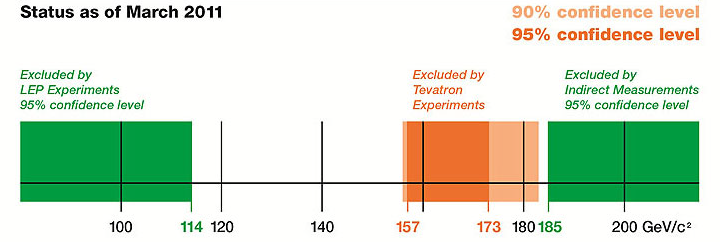
The search for the Higgs boson began long before its eventual discovery. In 1964, Peter Higgs published a paper outlining his theoretical framework [3]. Over the following decades, various experiments and refinements of accelerator technology were necessary to reach the sensitivity required for detecting such an elusive particle. The Large Hadron Collider (LHC) at CERN was pivotal; it provided the energy scale needed to produce Higgs bosons in sufficient quantities for detection.
Discovering the Higgs: ATLAS and CMS Experiments
In 2012, using data from proton-proton collisions at the LHC, both the ATLAS and CMS experiments observed a new particle with a mass of approximately 125 GeV. This mass range was consistent with the predictions for the Standard Model Higgs boson [4].
Significance to Physics
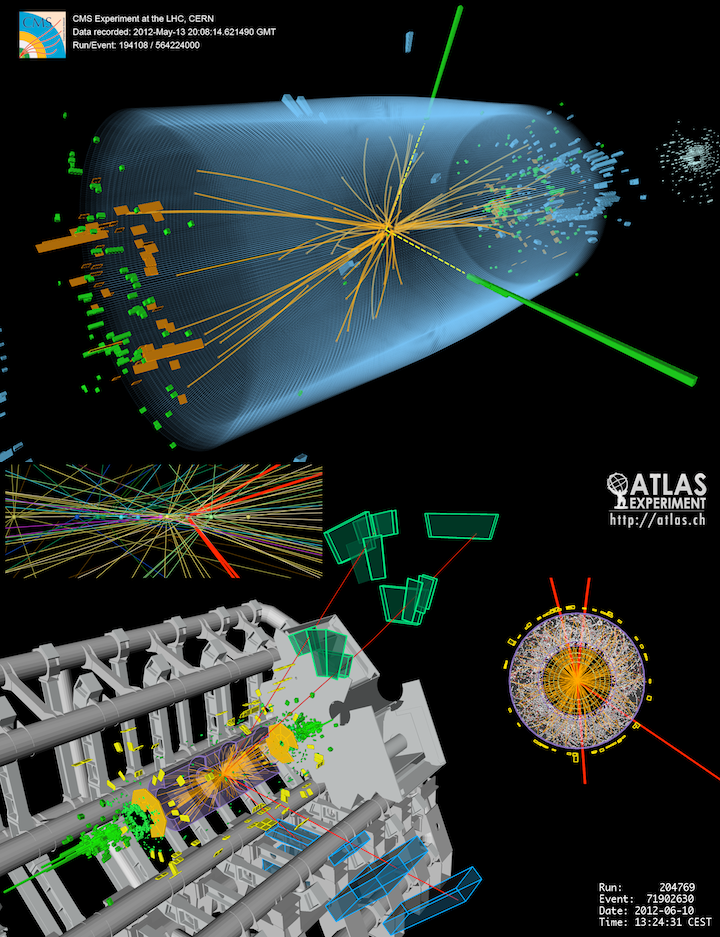
The discovery of the Higgs boson is not just significant because it confirms one of the most profound theories in modern physics; it also has far-reaching implications:
Electroweak Symmetry Breaking
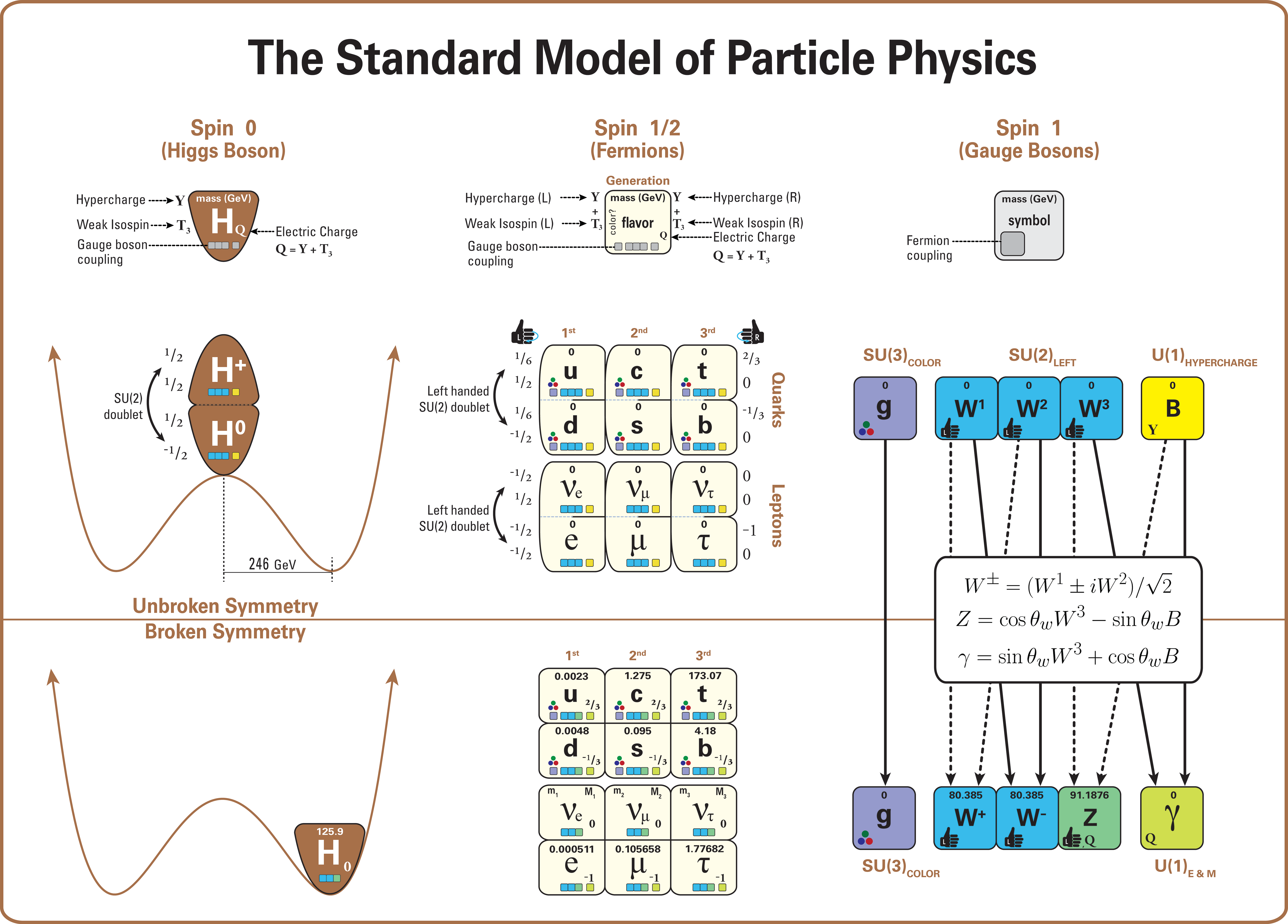
The Higgs mechanism explains how the weak nuclear force and electromagnetic force unify at high energies, but separate into distinct forces at lower scales [3]. This unification is crucial for our understanding of particle interactions.
Mass Acquisition
All known particles acquire mass through interaction with the Higgs field. Without the Higgs boson, the Standard Model would predict massless particles, which contradicts experimental observations [2].
Recent Developments and Controversies
Recent years have seen ongoing research to explore the properties of the Higgs boson further:
Measurement Precision
Experiments at the LHC continue to refine measurements of the Higgs boson's properties. For instance, ATLAS has reported precise mass values with uncertainties as small as 0.2 GeV [5].
Dark Matter and Beyond
Despite its importance, the Higgs boson does not explain dark matter or other potential phenomena that may require new physics beyond the Standard Model [6]. This has sparked debates about the future directions of particle physics research.
Applications and Future Trajectory
The insights gained from studying the Higgs boson have broader implications for technology and fundamental science:
Technological Advancements
Techniques developed in the quest for the Higgs boson—such as precision data analysis and advanced detector technologies—are finding applications in other fields, including medical imaging [7].
Theoretical Physics
The discovery of the Higgs boson has spurred further theoretical work on extensions to the Standard Model, such as supersymmetry or theories involving extra dimensions [8].
Key Takeaways
- Discovery History: The Higgs boson was first proposed in 1964 and confirmed through experiments at CERN’s LHC.
- Mechanics of Mass Acquisition: Particles gain mass by interacting with the Higgs field, which is realized as a quantum excitation—the Higgs boson.
- Standard Model Confirmation: The discovery solidified key predictions about particle interactions and symmetry breaking.
- Ongoing Research: Precision measurements and theoretical extensions continue to refine our understanding of the Higgs mechanism.
- Future Directions: Questions remain regarding dark matter, potential new particles, and beyond-the-Standard-Model physics.
This article synthesizes existing knowledge with recent advancements, providing a comprehensive overview of the Higgs boson particle. It highlights its significance in physics and opens avenues for further exploration into the fundamental nature of our universe.