Now I have enough to write the article.
TESS Satellite Discovers Rare Brown Dwarf Orbiting Massive Star — and the Universe Has Been Busy This Week
By The Everything of Everything | August 16, 2026
A Desert Anomaly: The Brown Dwarf That Shouldn't Be There
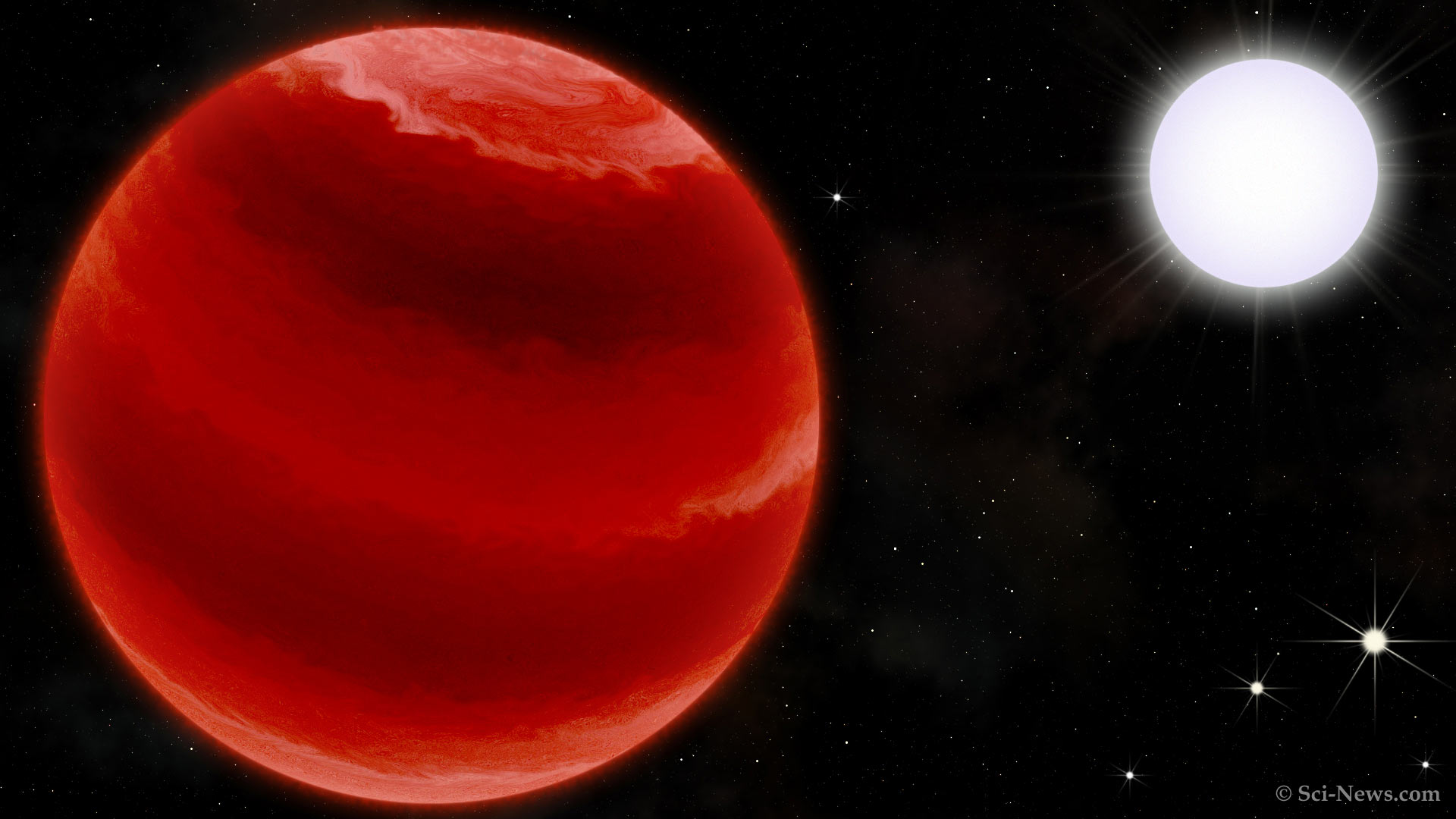
NASA's Transiting Exoplanet Survey Satellite has turned up one of the most puzzling objects in recent memory: a brown dwarf — that shadowy class of bodies too massive to be planets but too light to ignite as stars — orbiting closer to its host star than anyone expected to find one.
The object, designated HIP 61637 b, weighs in at 48 Jupiter masses and circles its host star every 6.89 days at a distance of just 0.10 AU — closer to its star than Mercury is to our Sun. A team led by Nino Ephremidze and David Latham at the Harvard-Smithsonian Center for Astrophysics submitted the discovery to The Astronomical Journal on August 4, with the findings covered in detail by Phys.org and Daily Galaxy.
What makes HIP 61637 b doubly strange is its host: an aging A-type star pushing nearly three times the Sun's mass — the brightest and most massive star ever found hosting a transiting brown dwarf. The system is roughly 396 million years old, making HIP 61637 b only the seventh brown dwarf whose age can be reliably pinned down.
The object sits squarely in the so-called "brown dwarf desert," a well-documented scarcity zone where brown dwarfs in tight orbits around their stars are vanishingly rare. Astronomers have theories — gravitational interactions that destabilize these objects, or formation pathways that simply don't favor close-in configurations — but no consensus. As TechTimes reports, every comparable brown dwarf found around a massive host has had a dramatically elongated orbit. HIP 61637 b's orbit is nearly circular. That alone breaks the pattern and demands an explanation. Astrobites walked through the implications in a detailed breakdown published August 12.
Why it matters: brown dwarfs are the missing link between planetary and stellar formation, and each confirmed example with a known age and mass tightens the constraints on competing formation models. A system this unusual, around a star this massive, is a stress test for every theory on the table.
Eyes on the Sky: Venus, X-Ray Binaries, and a Record-Breaking Weekend
Tonight's skywatchers get a gift: the Moon and Venus are in conjunction, separated by just over two degrees as seen from Earth. Venus is blazing at magnitude −4.4 in Virgo, and the Moon — a four-day-old crescent — will display the ghostly glow of earthshine on its unlit face. According to In-The-Sky.org, the pair will be visible to the naked eye low in the western sky for roughly an hour after sunset. No equipment needed; just find a clear western horizon.
Meanwhile, eyes further afield are watching Centaurus X-4 (Cen X-4), a neutron star X-ray binary about 1,200 light-years away that has been in quiescence since its last confirmed outburst in 1979. It briefly stirred in late 2020 with a "misfired outburst" — a multiwavelength flux spike that faded without going full-blown — as documented in a 2022 paper in The Astrophysical Journal. Reports of renewed activity have astronomers training instruments on it again, watching to see whether this notoriously restless system is finally gearing up for its first true outburst in nearly five decades.
On the launch side, SpaceX shattered its own operational record on Saturday evening. Two Falcon 9 rockets lifted off from opposite coasts of the United States — one from Cape Canaveral at 9:12 p.m. EDT carrying eight Globalstar communications satellites, another from Vandenberg Space Force Base at 9:50 p.m. EDT hauling the classified USSF-366 payload for the US Space Force — with just 38 minutes and 31 seconds between them. As Space.com reports, that obliterated the previous record (set August 2024) by 27 minutes and brought SpaceX's 2026 Falcon 9 tally to 96 launches. The feat is a striking demonstration of how thoroughly reusable rocketry has normalized the logistics of orbital access.
Key Takeaways
- HIP 61637 b, a 48-Jupiter-mass brown dwarf discovered by TESS, is the most massive and brightest star ever found hosting a transiting brown dwarf, and its near-circular close-in orbit defies every pattern seen in comparable systems — making it a critical test case for brown dwarf formation theory.
- The brown dwarf desert remains poorly understood, but each anomalous find like HIP 61637 b narrows the field of viable explanations; the system's reliably known age of ~396 million years adds rare chronological context.
- Cen X-4, dormant since 1979, is under active watch following reports of renewed activity — if a full outburst occurs, it would be the first in 47 years and a major opportunity for modern X-ray observatories to study neutron star accretion in real time.
- SpaceX's 38-minute dual-launch record underscores that high-cadence, bi-coastal orbital launches are no longer hypothetical — they are operational reality, with profound implications for commercial and national security space programs alike.
Sources:
- TESS discovers a rare brown dwarf orbiting a massive, aging star — Phys.org
- TESS Finds a 48-Jupiter-Mass Brown Dwarf Around an Aging Star — Daily Galaxy
- Brown Dwarf in Near-Circular Orbit Around Massive Star Defies Desert Pattern — TechTimes
- An Unlikely Couple: A close-in brown dwarf orbiting a massive, aging star — Astrobites
- Conjunction of the Moon and Venus — In-The-Sky.org
- A Misfired Outburst in the Neutron Star X-Ray Binary Centaurus X-4 — IOPscience
- SpaceX breaks record launch doubleheader USSF-366 Globalstar — Space.com
- SpaceX sets launch record with two Falcon 9 missions 38 minutes apart — Emirates 24|7