SpaceX Plans Up to $500 Billion for Data Centers as AI Reshapes Global Finance and Academia
The AI infrastructure race has entered a new, almost incomprehensible scale. Reports circulating this week indicate that SpaceX — through its AI subsidiary xAI — is moving fast enough to potentially spend $500 billion on data centers in a single year, a figure that would represent one of the largest capital commitments in corporate history. At the same time, AI market volatility is showing its teeth, while breakthroughs in mathematical reasoning are unsettling academics and educators alike.
The $500 Billion Build-Out: What SpaceX Is Actually Planning

According to 247 Wall St. and analysis from SemiAnalysis, SpaceX's xAI currently operates data centers drawing 1.4 gigawatts of power. Elon Musk has told staff the company intends to scale that to 10 gigawatts by late 2027 — a 7x increase. At current market rates for AI compute, that capacity could generate between $300 billion and $500 billion in annual revenue, with spending to match.
The economics driving this are already visible. In June 2026, SpaceX signed a deal to rent approximately 110,000 GPUs to Google, priced at $920 million per month — roughly $48 billion per gigawatt of compute annually, as Tom's Hardware reported. That single contract illustrates why the arms race for compute infrastructure has become so frantic: the margins on raw GPU capacity, at scale, are extraordinary.
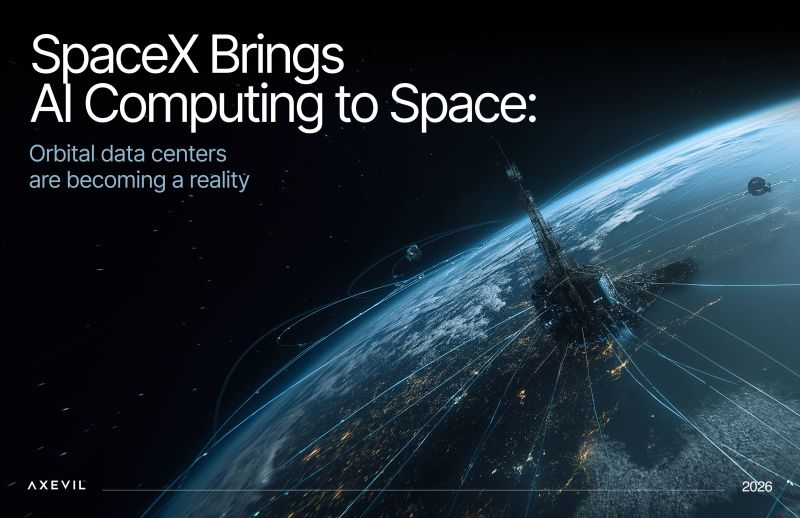
Data Centre Magazine notes that SpaceX's ambitions also extend into orbital compute concepts, leveraging its Starlink constellation infrastructure as a potential backbone for distributed AI processing — a vertical integration play no other company is positioned to attempt.
The broader implication is stark: if AI inference demand continues at this trajectory, the companies that own the compute will effectively own the economy of the next decade.
The Other Side of the Bet: Jane Street's $15 Billion Warning
Not everyone is winning the AI trade. Bloomberg and Fortune reported this week that quantitative trading giant Jane Street posted a $15 billion loss in July — its first negative month since 2016 — tied directly to leveraged exposure in AI-linked equities.
The firm had taken a significant stake in an AI-focused hedge fund called Situational Awareness, which was forced to liquidate positions to Citadel after key bets soured. Memory chip and semiconductor names — the physical substrate of AI infrastructure — fell as much as 50% during July's sell-off. As Blockonomi noted, the incident reveals a structural fault line: the very enthusiasm financing AI build-outs is creating dangerous leverage concentrations.
Jane Street still leads the year with more than $40 billion in net trading revenue, per Yahoo Finance, so the firm is hardly broken. But the episode signals that AI market volatility is now operating at a scale capable of producing single-month losses that would bankrupt most institutions.
The Intellectual Disruption: AI Rewrites Mathematics and Education

While capital floods into compute, AI is simultaneously rewriting what human expertise means. Quanta Magazine documented how a collaboration between the Institute for Advanced Study and DeepMind used an AI system called LeanMind to formally prove the Sylvester-Gallai conjecture — the first major open mathematical problem solved by AI without substantial human guidance, with the proof verified and published in the Annals of Mathematics.
Separately, Anthropic's Fable 5 reportedly found a counterexample to the Jacobian conjecture, one of Fields Medalist Steve Smale's 18 "century-level" problems, according to DEV Community. The pace of these results is pulling mathematicians out of academia and into AI labs at OpenAI, Google, and startups like Harmonic and Axiom Math.
In classrooms, TutorFlow reports that AI has shifted from experimental tool to foundational pillar of mathematical pedagogy — but educators are raising alarms about cognitive over-reliance, as students increasingly offload reasoning to adaptive AI tutors rather than developing it themselves.
Key Takeaways
- SpaceX/xAI is targeting 10 gigawatts of AI compute capacity by 2027, with analysts projecting spending of up to $500 billion in a single year — underwritten by landmark GPU rental deals like the $920M/month Google contract.
- Jane Street's $15 billion July loss is a direct warning that leveraged AI investment strategies carry systemic risk; AI market euphoria is building concentration risk across financial institutions globally.
- AI is now solving century-old mathematical problems without human guidance, triggering an academic talent drain from universities to tech firms and raising fundamental questions about the future of mathematical research.
- The AI arms race is a two-sided ledger: those who own compute infrastructure stand to capture historic returns; those who bet on the equities without owning the underlying assets face volatile, potentially catastrophic drawdowns.
Sources:
- SpaceX is Planning to Spend Up to $500 Billion on Data Centers — 247 Wall St.
- Elon Musk says xAI will increase data center capacity 7x by 2027 — Tom's Hardware
- What is Behind SpaceX's 10GW AI Data Centre Ambition? — Data Centre Magazine
- Jane Street Took $15 Billion Loss in July as AI Stocks Slumped — Bloomberg
- Jane Street lost $15 billion in its first down month in a decade — Fortune
- Jane Street Takes $15B July Hit — Blockonomi
- The AI Revolution in Math Has Arrived — Quanta Magazine
- Ten Breakthrough Advances in Mathematics and Theoretical CS (2026) — DEV Community
- How AI Is Transforming Education in 2026 — TutorFlow