South Korea and the U.S. Launch Major War Games as the North Korean Threat Evolves
By The Everything of Everything | Government & Politics | August 17, 2026
The United States and South Korea kicked off one of their most consequential joint military exercises in years today, a move that reflects not just the enduring anxieties of the Korean Peninsula, but a rapidly reshaping threat environment shaped by North Korean troops battle-tested in Ukraine and a Washington alliance policy demanding allies carry more of the load.
Ulchi Freedom Shield 2026: Bigger Stakes, New Playbook
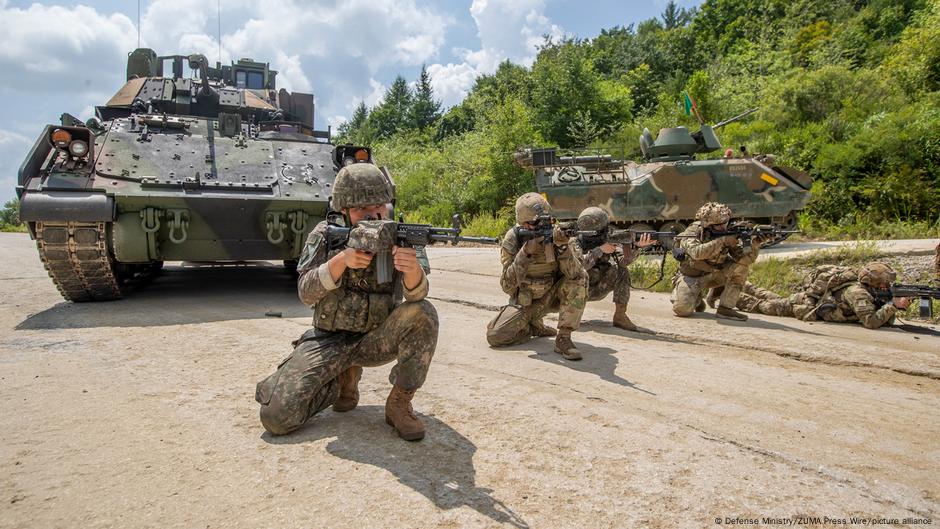
The annual Ulchi Freedom Shield exercise launched this morning and runs through August 27, deploying approximately 18,000 South Korean soldiers alongside U.S. forces across a combination of live field maneuvers, computer-simulated command post drills, and coordinated civil defense exercises. The scale is comparable to previous years, but the scenarios are not.
According to U.S. Army reporting on Freedom Shield 26, this year's exercise explicitly incorporates "realistic threats, including lessons learned from recent conflicts" — a direct reference to North Korea's active military participation in Russia's war in Ukraine. North Korean forces, numbering roughly 11,000 troops stationed in Russia's Kursk Oblast as of early 2026, have returned real-world experience in drone warfare, GPS jamming, combined-arms tactics, and cyberattack coordination. That knowledge transfer to the Korean People's Army is not theoretical — it is now a planning assumption inside the alliance's wargaming.
The exercise also includes at least 14 combined field training events at the battalion level or above, ABC News reports, and continues preparations for the conditions-based transition of wartime operational control (OPCON) from the United States to Seoul — a politically and operationally sensitive milestone that has been deferred for years.
A Deepening Architecture: Drones, Trilateralism, and Industrial Integration
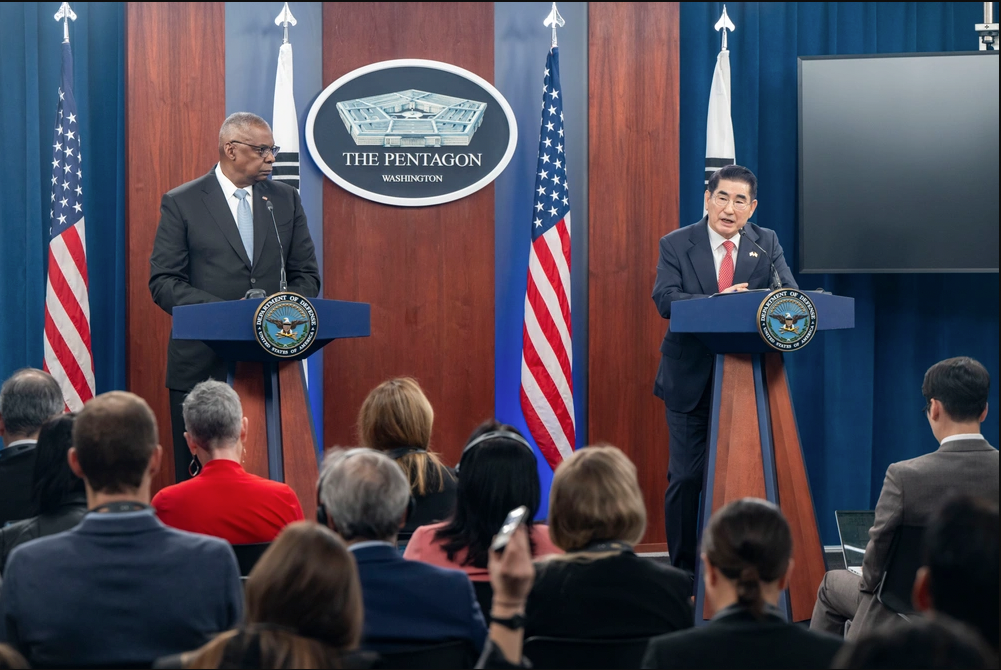
Ulchi Freedom Shield is the most visible element of a defense relationship that has widened considerably in 2026. In May, Washington and Seoul formalized a new counter-drone partnership through a letter of intent signed in Seoul, creating what Army Recognition described as a direct link between U.S. Army acquisition channels and South Korea's fast-expanding unmanned systems sector. The agreement targets shared supply chains, common technical standards, and interoperable anti-drone systems — a direct response to the UAV tactics North Korea has been honing.
In July, the top military officers of South Korea, the United States, and Japan met and reaffirmed trilateral security cooperation, UPI reported, agreeing to expand combined exercises and high-level military exchanges. The trilateral dimension matters: Japan's participation strengthens the alliance's ability to project force across the broader Indo-Pacific and complicates Pyongyang's contingency planning.
Underpinning all of this is a strategic shift from Washington. The 2026 U.S. National Defense Strategy, released in January, signals that allies must assume a greater share of defense burden while the U.S. rebalances toward industrial and logistics capacity as a core warfighting asset, RealClearDefense analyzed. For Seoul, this means deeper integration of South Korean defense manufacturing into the alliance's sustainment pipeline — not merely interoperability on the battlefield, but interoperability in the factory.
Why It Matters
The timing of Ulchi Freedom Shield is never accidental, and 2026 is no exception. North Korea's battlefield experience in Ukraine — earned at the cost of an estimated 6,000 casualties — has materially upgraded Pyongyang's capabilities in ways that intelligence agencies are still fully mapping. Russia has also pledged long-term military cooperation with North Korea through at least 2031, The Defense Post reported, including potential transfers of satellite, submarine, and ICBM technology.
The alliance's answer is to stress-test its own readiness against that upgraded adversary, establish new technological partnerships to counter drone and electronic warfare threats, and lock in trilateral coordination before regional dynamics shift further. With OPCON transition still unresolved and Washington recalibrating what it expects from treaty allies, Seoul has both the motivation and the pressure to prove the alliance's value — and its own self-sufficiency — simultaneously.
Key Takeaways
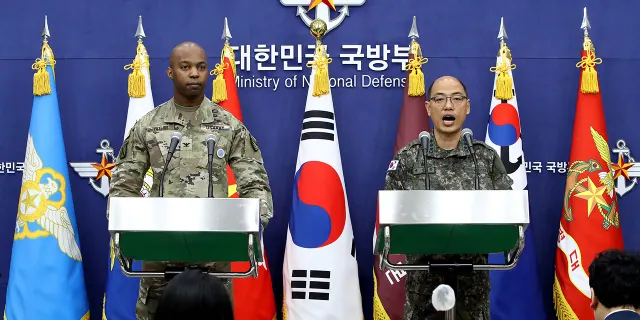
- Ulchi Freedom Shield 2026, running August 17–27, incorporates lessons from North Korea's Ukraine combat deployments for the first time at this scale, including drone warfare, GPS jamming, and cyberattack scenarios.
- North Korea's military has been fundamentally upgraded through its Russia deployment, with ~11,000 troops gaining real-world combined-arms experience and Pyongyang receiving Russian technology in return.
- The U.S.-South Korea alliance is diversifying beyond exercises into industrial and technological integration, including a new joint counter-drone partnership and trilateral coordination with Japan.
- Washington's 2026 National Defense Strategy places greater responsibility on South Korea to self-sustain, making this year's exercises as much a test of Seoul's readiness to lead as they are a demonstration of allied deterrence.
Sources:
- U.S., South Korea to launch major joint military exercise Aug. 17 - UPI
- Freedom Shield 26 strengthens ROK-US combined defense posture - U.S. Army
- South Korea, US to begin exercises next week - ABC News
- U.S. and South Korea Launch Joint Counter-Drone Alliance - Army Recognition
- What the 2026 U.S. National Defense Strategy Means for the ROK–U.S. Alliance - RealClearDefense
- South Korea, U.S., Japan military chiefs reaffirm cooperation - UPI
- Russia, North Korea Agree 'Long-Term' Military Cooperation - The Defense Post
- Nearly 11,000 North Korean troops in Russia's Kursk Oblast - Yahoo News