Social Media or Social Biasing?
The platforms we scroll through for news, connection, and entertainment have quietly become the most consequential editorial forces in human history — without the accountability of editors, the constraints of broadcast regulators, or the transparency of newsrooms. When Mark Zuckerberg dismantled Meta's fact-checking program in January 2025 and appeared on Joe Rogan's podcast to denounce "institutional overreach," he was not merely tweaking a policy. He was signaling a realignment of the most powerful content distribution machine on earth. Meanwhile, Elon Musk had already remade X (formerly Twitter) in his own political image, reinstating thousands of banned accounts and openly campaigning for right-wing candidates across multiple countries. These are not isolated events. Across the top ten social media platforms that shape political discourse globally, a pattern emerges: every platform encodes ideological assumptions into its architecture, its moderation decisions, and its algorithmic amplification — often reflecting the worldview of its founders, its advertisers, or its most vocal user base. This article examines the top ten platforms by reach and political influence, auditing each for structural bias, leadership ideology, and the documented effects on their subscriber communities.
The Framework: What Is Platform Bias?
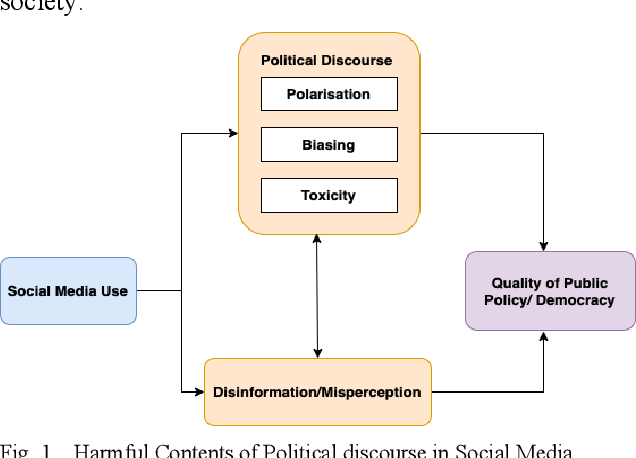
Before examining individual platforms, it is essential to define what "bias" means in the context of social media. It operates across at least three distinct layers:
Algorithmic bias — what content the platform's recommendation systems amplify or suppress, independent of explicit moderation.
Moderation bias — which content is labeled, removed, demonetized, or shadow-banned, and whether enforcement is applied consistently across the political spectrum.
Ownership and leadership bias — the ideological leanings of executives and shareholders, which shape policy, corporate political donations, and public statements.
A 2024 Pew Research survey spanning 24 countries found that a median of 57% of respondents believe social media has been "mostly bad for democracy," while 65% said these platforms make people easier to manipulate with false information. A landmark 2023 study published in Science, conducted in partnership with Meta's own researchers, confirmed that Facebook's algorithm significantly increases exposure to politically like-minded content — creating echo chambers that reduce cross-partisan exposure even when users are shown chronological feeds. The findings established that algorithmic design is not neutral: it is a political choice with measurable consequences.
1. Facebook (Meta)
The Platform
With approximately 3.07 billion monthly active users as of 2025, Facebook remains the largest social network on earth and the most studied for political influence. It is the primary news source for hundreds of millions of people, particularly in the Global South and among older demographics in Western countries.
Corporate and Leadership Bias
Mark Zuckerberg spent much of Facebook's first decade carefully cultivating relationships with Democratic-leaning civil society organizations and progressive content moderation frameworks. He hired former Democratic senator Hillary Clinton's press secretary as a vice president. Meta's Oversight Board, established in 2020 as an independent content arbiter, was stocked with globally recognized human rights scholars and drew its philosophical framework from liberal democratic norms.
The pivot began quietly and accelerated dramatically. By late 2023, Zuckerberg had begun appearing on conservative-leaning podcasts. In January 2025, he announced the dismantling of Meta's third-party fact-checking program in the United States, replacing it with a "Community Notes" system modeled on X. He simultaneously ended Meta's diversity, equity, and inclusion (DEI) programs and relaxed hate speech policies governing topics like immigration and gender identity. Zuckerberg framed these changes as combating censorship — but critics, including the American Psychological Association and dozens of former Meta trust-and-safety employees, characterized them as capitulation to political pressure from the incoming Trump administration, with which Zuckerberg had cultivated a conspicuous rapprochement.
Subscriber Bias Patterns
Facebook's user base skews older and, in the United States, more Republican-leaning than platforms like Instagram or TikTok. However, the platform's political ecosystem is deeply bifurcated: progressive groups organizing mutual aid and climate activism coexist with sprawling networks of far-right misinformation. A 2023 Science study found that Facebook's feed algorithm substantially increased exposure to politically congenial content — not because users explicitly chose it, but because engagement-optimized recommendations systematically privileged emotionally charged partisan material. The study found that high-quality news sources were consistently outcompeted in the algorithm by lower-credibility partisan content.
2. YouTube (Alphabet/Google)
The Platform
YouTube hosts over 2.7 billion logged-in monthly users and is the world's second-largest search engine. For political content, it occupies a unique position: it is simultaneously a repository of authoritative journalism, educational content, and a proven pipeline for radicalization into extremist political content.
Corporate and Leadership Bias
Alphabet (Google's parent) and its CEO Sundar Pichai operate within a corporate culture that historically aligned with progressive social causes — supporting LGBTQ+ employee networks, funding climate research, and maintaining content policies that disproportionately restricted far-right content. Internal Google documents leaked in 2019 and subsequently reviewed by congressional investigators showed employees debating how to frame search results about immigration in ways that reflected "our values." Pichai himself donated to Democratic campaigns before becoming CEO.
YouTube's content moderation apparatus — which demonetizes, restricts, or removes videos — has faced persistent criticism from conservative creators who argue their content on topics like gun rights, border security, and COVID-19 is more aggressively flagged than equivalent liberal content. Congress held hearings on this in 2022 and 2024, with Republican lawmakers presenting case studies they argued demonstrated selective enforcement. YouTube has disputed these characterizations, pointing to its politically neutral advertiser-friendly guidelines.
Subscriber Bias Patterns
YouTube's political ecosystem is perhaps its most studied feature. Research published in the Proceedings of the National Academy of Sciences documented what became known as the "rabbit hole" phenomenon: recommendation algorithms systematically led users from mainstream political content toward progressively more extreme material on both ends of the spectrum, with right-wing radicalization pathways particularly well-documented. Researchers at Harvard's Shorenstein Center found that YouTube's recommendation system up-weighted content that generated high watch-time, a metric that empirically favored emotionally provocative political content. In 2019, YouTube updated its algorithm to reduce recommendations of "borderline content" — but conservative critics argued this change disproportionately affected right-leaning creators.
3. Instagram (Meta)
The Platform
Instagram's 2 billion+ monthly users skew younger and more urban than Facebook's, making it a critical arena for political mobilization among millennials and Gen Z. Its visual format — images, short-form Reels — has become central to political campaigning, protest organizing, and activist movements globally.
Corporate and Leadership Bias
Instagram is headed by Adam Mosseri, who has attempted to position the platform as deliberately apolitical. In January 2024, Mosseri announced that Instagram would stop proactively recommending political content in Explore, Reels, and other algorithmic surfaces — a decision he framed as protecting users from unwanted divisiveness. "We're going to try to avoid making recommendations that could be seen as trying to influence an election," Mosseri stated. Critics from both left and right rejected this framing: conservatives argued the policy suppressed legitimate political speech, while progressives noted that the change arrived at a moment when Palestinian solidarity content had already been experiencing documented suppression.
In January 2025, Instagram's parent Meta made the additional changes described above — ending fact-checking, relaxing hate speech rules — which downstream affected Instagram's moderation posture.
Subscriber Bias Patterns
Instagram's user base is among the most ethnically and politically diverse of any major platform, but its algorithmic amplification has been documented as inconsistent. In 2021, a Meta internal study (the "Instagram Civic Integrity" documents, later revealed through the whistleblower Frances Haugen) found that the platform's algorithms could amplify extreme political content, particularly content related to outrage and moral condemnation. Separately, independent researchers and activist organizations documented instances where pro-Palestinian content was removed or restricted at higher rates than comparable pro-Israeli content during the 2021 Gaza conflict — claims Meta disputed but which were sufficient to trigger a congressional inquiry.
4. X / Twitter (X Corp)
The Platform
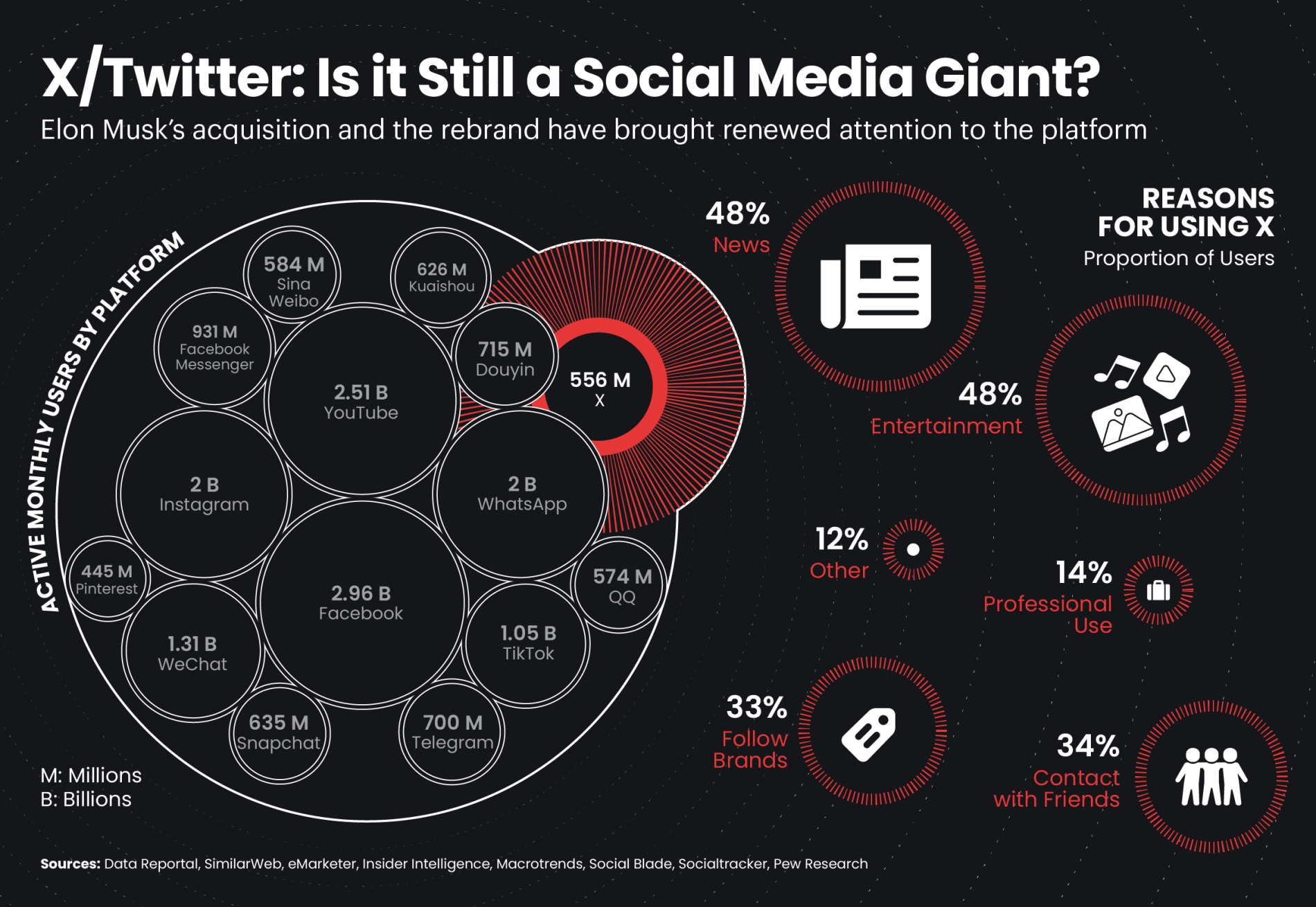
X (formerly Twitter), with approximately 600 million monthly active users, punches far above its demographic weight in political influence. It remains the primary platform where journalists, politicians, academics, and policymakers communicate in real time — giving its algorithmic and moderation choices outsized consequence for public discourse.
Corporate and Leadership Bias
No social media story of the decade has been more consequential or more explicitly ideological than Elon Musk's $44 billion acquisition of Twitter in October 2022 and its subsequent transformation into X. Musk's stated justification was "free speech" — but his actions followed a clear directional pattern. Within weeks of the acquisition, he reinstated Donald Trump's account (suspended following the January 6, 2021 Capitol attack), along with thousands of other previously banned accounts including figures associated with far-right extremism, election denial, and coordinated harassment campaigns. By 2024, Musk had become one of the most prominent political figures in the global right, openly campaigning for Trump, funding a political action committee supporting Trump's campaign, and subsequently being named as a co-director of the Department of Government Efficiency (DOGE) under the Trump administration.
Musk released internal company documents — the "Twitter Files" — through a curated set of conservative journalists, framing them as evidence of left-wing censorship. Independent researchers who reviewed the same documents offered more mixed assessments. X subsequently underwent dramatic staffing reductions (approximately 80% of the workforce was eliminated), gutting trust-and-safety teams and content moderation capacity. The Global Alliance for Responsible Media suspended X from its program in 2023, citing the platform's failure to enforce its own brand safety standards.
Subscriber Bias Patterns
The documented effects of Musk's ownership on X's algorithmic environment are substantial. Research from the Center for Countering Digital Hate found that hateful content on X increased significantly following the acquisition. A study by the Stern Center for Business and Human Rights at New York University found that engagement with political content on X shifted measurably rightward after 2022, as right-wing accounts experienced increased algorithmic amplification while some left-leaning accounts reported reduced reach. Musk himself became the single most algorithmically amplified account on the platform — a fact revealed through X's own internal code, which showed his posts receiving special treatment in the recommendation system.
5. TikTok (ByteDance)
The Platform
TikTok's approximately 1.7 billion monthly active users — predominantly under 35 — make it the defining cultural and increasingly political platform of the current generation. Its short-form video algorithm is widely considered the most powerful content recommendation system ever deployed at scale.
Corporate and Leadership Bias
TikTok's bias problem is structurally different from every other platform on this list: it is the only major Western-facing social network owned by a company — ByteDance — legally domiciled in the People's Republic of China, a one-party state. This creates a distinct category of potential bias: not liberal vs. conservative, but the interests of the Chinese Communist Party vs. those of liberal democratic discourse.
In February 2024, TikTok announced it would stop algorithmically recommending political content to users by default, citing concern about users receiving unsolicited political material. Critics argued this decision served both the platform's commercial interests and, potentially, the interests of a Chinese government wary of facilitating political mobilization. The US government's concern was direct: in March 2024, the House of Representatives passed legislation requiring ByteDance to divest TikTok or face a ban. The bill became law. In January 2025, TikTok went briefly dark in the United States before being restored after President-elect Trump signaled he would delay enforcement — a remarkable illustration of the intersection of platform politics, geopolitics, and executive power.
TikTok CEO Shou Zi Chew has repeatedly testified before Congress, insisting that ByteDance has no meaningful CCP influence over content decisions. Independent researchers and former employees have told a more complicated story, citing documented instances where content about Tiananmen Square, Uyghur detention, and Tibetan independence was suppressed on TikTok while trending on competitor platforms.
Subscriber Bias Patterns
TikTok's political user base is overwhelmingly progressive in the United States, reflecting its young demographic profile. Research from the Reuters Institute found TikTok users were significantly more likely to encounter climate change content, racial justice content, and anti-establishment political messaging than users of other platforms. The 2024 US election cycle saw both Democratic and Republican campaigns invest heavily in TikTok strategy — but data suggested Democratic candidates generated significantly more organic engagement on the platform, consistent with its age skew.
6. Reddit
The Platform
Reddit's approximately 1.5 billion monthly active users engage through a decentralized structure of topic-based communities (subreddits), each governed by volunteer moderators. This structure makes Reddit's political character unusually dependent on its most active users — who skew younger, more educated, and more liberal than the general population.
Corporate and Leadership Bias
Reddit went public in March 2024 under CEO Steve Huffman. Huffman's tenure has been marked by controversy: in 2016, he admitted to secretly editing user comments in a pro-Trump subreddit — a significant breach of platform integrity that he apologized for. Reddit's corporate moderation policies have historically privileged the removal of "hate speech" defined in ways that map more closely to progressive frameworks, and the platform has quarantined or banned subreddits associated with far-right politics (r/The_Donald, r/WatchPeopleDie) more frequently than comparable left-wing communities. Reddit's advertising team has been documented as refusing to run ads in politically sensitive subreddits in ways that more frequently affected conservative-leaning communities.
In 2023, Reddit triggered a massive user revolt — "the blackout" — when it announced new API pricing that would effectively shut down third-party apps. Thousands of subreddits went dark in protest. The episode illustrated Reddit's dual power structure: corporate leadership sets platform rules, but community moderators actually control individual spaces, creating governance tensions that have direct political implications.
Subscriber Bias Patterns
Studies of Reddit's political content have consistently found a left-liberal skew. Analysis of the most-upvoted political content across major political subreddits shows progressive viewpoints receive substantially higher engagement, reflecting the composition of the active user base. The platform's front page — determined by vote algorithms — is an imperfect but meaningful signal of collective user sentiment, and it has historically reflected mainstream progressive positions on issues from healthcare to gun control. Conservative subreddits exist and have large memberships (r/Conservative has over 1.2 million members), but they report higher rates of content removal and shadow-banning than equivalent left-leaning communities.
7. LinkedIn (Microsoft)
The Platform
LinkedIn's approximately 1 billion registered users make it the world's largest professional network. Its political influence operates differently from consumer platforms — it shapes professional norms, corporate discourse, and the views of business and policy elites rather than mass publics.
Corporate and Leadership Bias
LinkedIn is owned by Microsoft, one of the largest corporate political donors in the United States. Microsoft's political giving has historically favored bipartisan recipients but leans slightly Democratic in aggregate, consistent with the broader tech industry. LinkedIn's CEO Ryan Roslansky has maintained a lower political profile than counterparts at other platforms.
LinkedIn's content moderation has faced criticism for ideological inconsistency. Conservative political content has been removed in cases where comparable progressive content remained. Most notably, LinkedIn restricted access to its platform in mainland China for over a decade, removing content that violated Chinese censorship requirements — a compromise that drew criticism from press freedom advocates. In 2021, LinkedIn shut down its social feed in China entirely, citing "an increasingly challenging operating environment." The decision was widely read as tacit acknowledgment that maintaining a journalistic-integrity standard and operating in China were irreconcilable.
LinkedIn has prohibited political advertising since 2020, positioning itself as a professional rather than partisan space. However, its algorithmic amplification of content favors posts that generate high engagement — which in the professional context often means conformist takes aligned with corporate mainstream liberalism (pro-DEI, pro-ESG, anti-disruption) rather than heterodox political positions from either left or right.
Subscriber Bias Patterns
LinkedIn's user base, being heavily weighted toward college-educated professionals and corporate employees, trends significantly toward mainstream liberal positions on social issues and market-oriented centrist positions on economic ones. The platform's culture actively discourages explicit political partisanship — but tacitly enforces a form of ideological conformity that advantages perspectives legible to corporate human resources departments and venture capital firms.
8. Telegram
The Platform
Telegram's approximately 900 million monthly active users span a uniquely heterodox political spectrum. The platform's end-to-end encrypted channels and minimal content moderation have made it a haven for political dissidents, criminal enterprises, extremist movements, and journalists operating in authoritarian states — sometimes simultaneously.
Corporate and Leadership Bias
Telegram was founded by Pavel Durov, a Russian-born entrepreneur who built the platform as an explicit alternative to government surveillance after being forced out of his earlier company, VKontakte (VK), by Russian authorities who demanded user data. Durov positioned Telegram as a radical free-speech platform with near-zero content moderation as a founding principle, not a policy choice. This position attracted both genuine political dissidents and bad actors who exploited the platform's opacity.
In August 2024, Durov was arrested at Le Bourget airport in France on charges related to facilitating criminal activity on Telegram — including drug trafficking, child sexual abuse material distribution, and fraud — by failing to moderate the platform or cooperate with law enforcement. His arrest was the most significant legal challenge to a social media founder's "neutral platform" defense in the platform era. Durov subsequently announced Telegram would begin cooperating with law enforcement requests in certain categories, marking a significant departure from its founding posture.
Telegram's political character varies dramatically by region. In Russia and Eastern Europe, it is a critical tool for anti-government communication and independent journalism. In Western democracies, it hosts large far-right and conspiracy theory communities that migrated from other platforms following deplatforming. In the Middle East and Southeast Asia, it is used by both government-aligned and opposition political movements.
Subscriber Bias Patterns
Telegram's decentralized channel structure makes aggregate subscriber bias analysis methodologically difficult. What can be documented is that its most politically active communities in Western democracies skew toward anti-establishment, libertarian, and far-right positions — reflecting the user segments most motivated to seek out unmoderated spaces following removals from mainstream platforms. Studies of Telegram political channels by researchers at the Global Network on Extremism and Technology found that the platform hosted some of the largest English-language far-right and conspiracy channels remaining on any major platform as of 2024.
9. Pinterest
The Platform
Pinterest's approximately 550 million monthly active users make it smaller than its peers in this list but significant for its deliberate political positioning. The platform is built around visual inspiration, DIY projects, recipes, and lifestyle content — and has explicitly chosen to minimize political content as a core product decision.
Corporate and Leadership Bias
Pinterest banned all political advertising in 2018 — making it one of the first major platforms to do so — and has maintained this policy. CEO Bill Ready has framed this decision as a commitment to platform health and user experience: "We never want Pinterest to be a place where politics and social conflict thrive." This stance has allowed Pinterest to avoid many of the controversies that have embroiled its competitors.
Pinterest's content policies have, however, faced criticism from conservative and religious communities for restricting content they deem legitimate. In 2019, Live Action, an anti-abortion organization, sued Pinterest alleging the platform categorized its content as pornography in a spam filter — a claim Pinterest disputed. The platform's blocking of anti-vaccination content (implemented in 2019 following public health concerns) was praised by medical authorities but criticized by skeptics of platform content authority.
Subscriber Bias Patterns
Pinterest's user base is predominantly female (approximately 70%), suburban, and focused on lifestyle content. Political engagement on the platform is minimal by design and by user preference. The platform's deliberate avoidance of political content recommendation makes it an outlier in this analysis — it represents a genuine attempt to build a non-partisan content environment, with the trade-off that it also excludes civic information and political mobilization content that many users might find valuable.
10. Snapchat (Snap Inc.)
The Platform
Snapchat's approximately 800 million monthly active users are overwhelmingly young, with the platform retaining strong penetration among users aged 13 to 24. This demographic profile makes Snapchat's political environment a leading indicator of the political socialization of the next generation of voters.
Corporate and Leadership Bias
Snap CEO Evan Spiegel has maintained a lower political profile than Musk, Zuckerberg, or Huffman. Snapchat does not algorithmically surface political content in the same mass-reach fashion as Facebook or YouTube — its architecture (ephemeral posts, friend networks, curated Discover stories) limits viral amplification. For the 2024 elections, Snap announced measures including political ad labeling, partnerships with election integrity organizations, and expanded civic information features directing users to registration resources.
Snap has faced criticism for its Discover section, which curates content from media partners and has at various points included content critics characterized as sensationalist or politically skewed in its partner selection. The platform's decision to not run a President Trump Discover spotlight following January 6, 2021 — while continuing to distribute his Snaps to followers — drew attention to the tensions between platform moderation and distribution decisions.
Subscriber Bias Patterns
Snapchat's young, diverse user base skews progressively on social issues, consistent with generational polling data. However, political engagement on Snapchat is lower than on other platforms in this list, partly by design. Research on youth political socialization suggests Snapchat's influence on political views operates less through direct political content and more through social norm transmission — the aggregate effect of peer-to-peer content sharing on topics like climate, identity, and social justice.
Cross-Platform Analysis: Structural Patterns in Platform Bias
The Ownership Concentration Problem
Five of the ten platforms examined here are controlled by two companies (Meta owns Facebook, Instagram, and WhatsApp; Alphabet/Google owns YouTube). This concentration means that the ideological pivot of a single CEO — as Zuckerberg demonstrated in January 2025 — can instantaneously reshape the content environment for over 5 billion users. The degree of power held by platform owners without democratic accountability has no historical precedent in communications history.
The Algorithm as Hidden Editor
Every major platform studied here uses engagement-optimized recommendation algorithms as their primary content distribution mechanism. The empirical literature — from the 2023 Science study on Facebook to Harvard's research on YouTube's rabbit hole to NYU's analysis of X post-Musk — consistently finds that engagement optimization systematically amplifies emotionally provocative, politically extreme content over measured, accurate, or nuanced content. This is not incidental bias: it is the structural consequence of optimizing for the metric (engagement) that most reliably predicts advertising revenue.
The Conservative Grievance and the Liberal Infrastructure
The political debate about social media bias tends to run on two parallel tracks. The conservative argument — prevalent in the United States and documented in Pew Research polling, where 90% of Republicans believe platforms censor their viewpoints — focuses on moderation decisions: account bans, content removals, demonetization. The liberal counter-argument focuses on algorithmic amplification: platforms have historically boosted engagement-generating content that is disproportionately misinformation, conspiracy theory, and partisan outrage, content that empirically skews right.
Both claims contain documented truth. Twitter's pre-Musk moderation did restrict more right-wing accounts than left-wing ones in absolute numbers. Facebook's engagement algorithm did systematically amplify partisan and emotionally extreme content, benefiting populist movements on the right in the 2016-2020 period. These are not mutually exclusive findings: a platform can simultaneously under-moderate harmful right-wing content while also removing legitimate conservative speech through inconsistent enforcement.
Geopolitical Bias as an Emerging Category
TikTok's Chinese ownership and LinkedIn's decade of Chinese censorship compliance introduce a third dimension of bias that transcends the liberal-conservative binary: the structural alignment of platform decisions with the interests of authoritarian governments. As geopolitical competition between democratic and authoritarian states intensifies, the question of who owns platform infrastructure — and what obligations that ownership entails — will become increasingly central to the politics of information.
The Advertiser Veto
Across multiple platforms, the most consistent force shaping content policy is not ideological conviction but advertiser preference. The mass advertiser exodus from X following Musk's acquisition — driven by brand safety concerns about adjacency to hate speech — constrained what the "free speech absolutist" platform could actually do commercially. Similarly, YouTube's demonetization policies are effectively a form of advertiser-driven content moderation, imposed not by government regulators but by the commercial preferences of Fortune 500 marketing departments.
Regulation and Resistance: The Policy Landscape
The European Union's Digital Services Act (DSA), which came into full force in 2024, represents the most ambitious regulatory attempt to address platform bias. It requires large platforms to conduct algorithmic risk assessments, provide transparency about content moderation, and allow independent researcher access to data. All ten platforms examined here are subject to the DSA's requirements for their EU operations.
In the United States, no equivalent framework exists. Section 230 of the Communications Decency Act continues to shield platforms from liability for user-generated content — a protection that critics argue removes the legal incentive to moderate harmful content while opponents argue is essential to maintaining platforms as spaces for free expression. The prospect of Section 230 reform has been debated for a decade without resolution, as different political coalitions seek to amend it for opposite reasons: conservatives wanting platforms held liable for moderation bias, progressives wanting them held liable for harmful content.
Conclusion
The evidence is unambiguous: the world's ten most influential social media platforms are not neutral conduits for human expression. They are active, architecturally embedded editorial systems that shape what billions of people see, believe, and feel about politics. The nature of their bias varies by platform — leftward in moderation culture at YouTube and Facebook circa 2018, rightward in algorithmic amplification across most platforms due to engagement optimization, pro-CCP in content suppression at TikTok, pro-Trump at X under Musk, and anti-political by deliberate design at Pinterest and Snapchat. Each bias reflects a specific constellation of ownership interests, advertising dependencies, user demographics, and regulatory environments.
What makes the current moment historically distinctive is the explicit politicization of platform leadership. Elon Musk and Mark Zuckerberg — who between them control platforms used by over 7 billion accounts — have both made visible, deliberate ideological pivots in 2024 and 2025, abandoning the pretense of neutral facilitation that characterized earlier platform governance. This transparency is, paradoxically, clarifying: it strips away the comfortable fiction that algorithms are neutral and forces a direct confrontation with the question that platforms have long avoided. Social media does not merely reflect society's political divisions. Through the compounding effects of algorithmic amplification, moderation inconsistency, and ownership ideology, it actively manufactures them. The question for citizens, legislators, and platform users alike is no longer whether social media is political — it is who gets to decide how, and to what end.
Sources consulted include Pew Research Center, Reuters Institute for the Study of Journalism, Science (AAAS), proceedings of the U.S. Senate Commerce Committee and House Energy & Commerce Committee, the Digital Services Act regulatory filings, reporting from The Guardian, The New York Times, The Verge, TechCrunch, BBC News, and Politico; research from the NYU Stern Center for Business and Human Rights, Harvard Shorenstein Center, Global Network on Extremism and Technology, and Center for Countering Digital Hate.