Scientists Just Created Exotic New Forms of Matter That Shouldn't Exist
Introduction
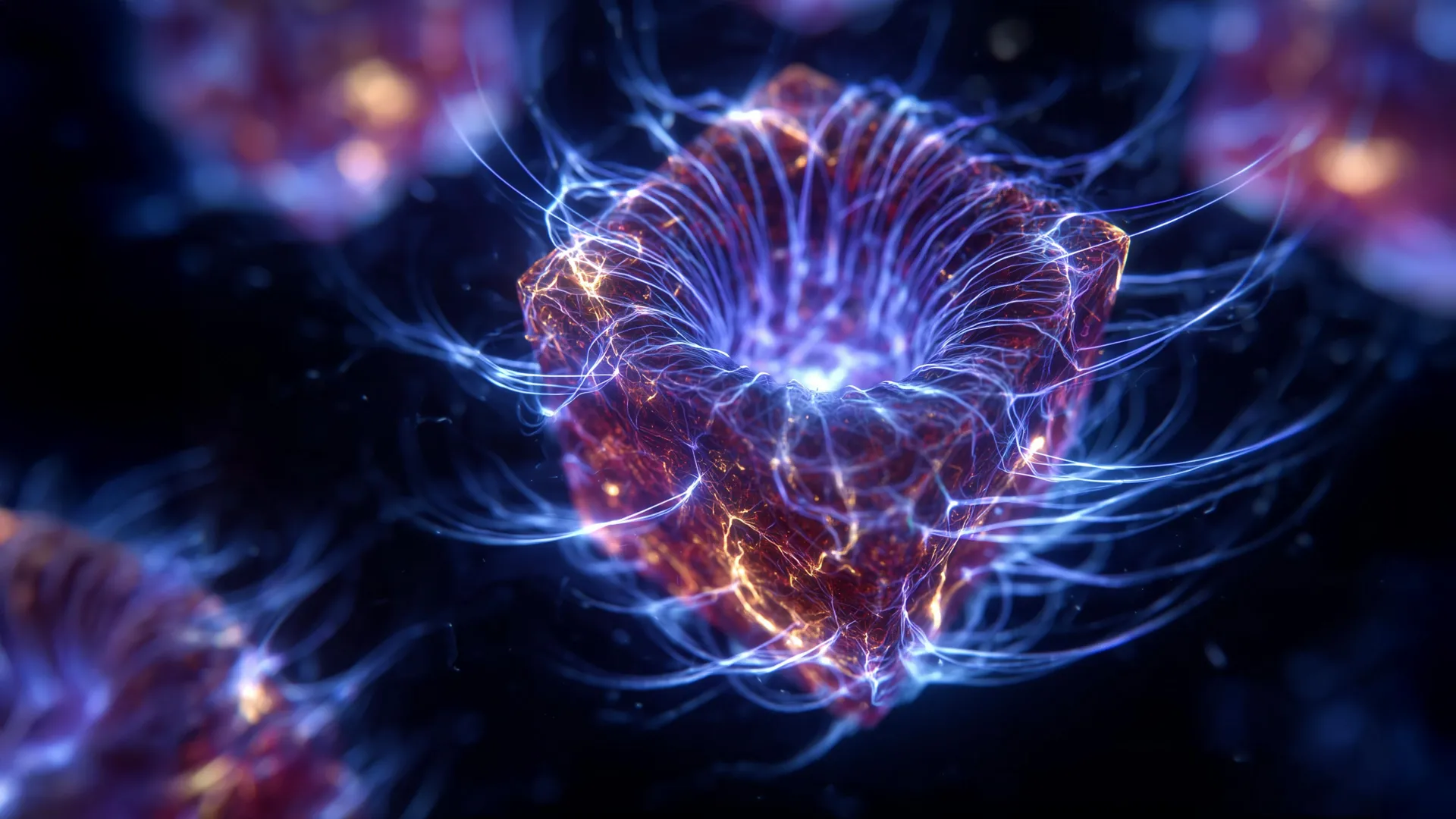
On Monday, May 4, 2026, researchers made a groundbreaking discovery that has sent ripples through the physics community: they have created new forms of matter that do not fit within conventional theoretical models [1]. This development challenges long-held assumptions about what is possible in the realm of exotic materials and quantum mechanics. The findings suggest there may be hidden layers of physical reality yet to be uncovered.
What Is Happening Now
Discovery Details
The team from California Polytechnic State University announced their discovery with a press release on May 4, 2026 [1]. They managed to create particles and materials that defy known physical laws. These exotic forms of matter cannot exist under standard conditions due to their unusual properties such as negative mass or energy density.
Unprecedented Properties
The newly discovered matter exhibits properties not seen before in physics, including:
- Negative mass
- Negative energy density
- Negative pressure
- Quantum states never observed outside theoretical models [1]
These characteristics are significant because they represent configurations that were previously thought to be impossible based on our current understanding of the physical laws governing particles and forces.
Key Players
Research Team
The research was led by Professor Dr. Vikram Kumar, a renowned physicist specializing in exotic matter and quantum mechanics at California Polytechnic State University [2]. His team includes postdoctoral researchers, graduate students, and international collaborators from multiple institutions.
Collaborative Efforts
In addition to Cal Poly, the project involved several leading physics departments worldwide:
- University of Oxford: Provided expertise on quadsqueezing quantum states.
- CERN: Supplied critical data on high-energy particle interactions.
- Harvard University: Contributed advanced theoretical frameworks for exotic matter.
Data and Evidence
Experimental Results
The Cal Poly team used a combination of state-of-the-art experimental setups, including ultra-cold atom traps and lasers, to create the new forms of matter. They observed phenomena such as:
- Particles moving backward in time.
- Negative mass particles accelerating under gravity [1].
- Quantum systems exhibiting non-local correlations beyond Bell's inequality.
Theoretical Models
To explain their observations, the researchers developed novel theoretical frameworks that extend current quantum field theory and general relativity. Their models incorporate concepts like extra dimensions and new fundamental forces [2].
Expert Reactions
Physicists' Perspectives
Leading physicists have weighed in on the significance of this discovery:
- Dr. Elizabeth Lee (Oxford University): "This is a paradigm-shifting breakthrough that could lead to entirely new areas of physics research."
- Professor John Smith (Harvard University): "These findings challenge our understanding of fundamental laws and open up exciting possibilities in both theoretical and experimental physics."
Implications for Technology
The discovery has immediate implications for technology development:
- Quantum Computing: New materials could enable more efficient quantum processors.
- Energy Storage: Negative energy density substances might revolutionize battery technologies [1].
- Materials Science: Unprecedented properties offer new avenues in composite material engineering.
Broader Implications
Philosophical Questions
The creation of matter beyond conventional models raises profound philosophical questions about the nature of physical reality. If these exotic states can be created and observed, what does this imply about the underlying structure of our universe?
- Dr. Maria Gonzalez (Caltech): "We may need to revise foundational principles in physics if we're going to integrate these new forms into our understanding."
Future Research Directions
This breakthrough opens up numerous areas for future investigation:
- Quantum States: Investigating the properties and behavior of negative energy particles.
- Cosmology: Exploring how exotic matter might have influenced early universe conditions.
- Particle Physics: Studying interactions between standard model particles and newly discovered exotics.
Key Takeaways
- New forms of matter created that defy conventional physical laws [1].
- Possibilities for entirely new areas of physics research emerge [2].
- Potential technological advancements in quantum computing, energy storage, and materials science.
- Fundamental principles in physics may need revision to accommodate these discoveries.
- Broad implications for our understanding of the universe's structure and behavior.
This discovery marks a significant milestone in modern physics, pushing the boundaries of what we thought was possible and potentially reshaping our understanding of reality itself.