Religion Tally Across America: Who Believes What, and What's Changing
The United States has long styled itself a nation under God, but the religious map of America looks strikingly different today than it did a decade ago. A sweeping new dataset from the Pew Research Center's 2023–24 Religious Landscape Study — based on nearly 37,000 respondents — gives the clearest picture yet of a country mid-transformation, and a few unexpected plot twists along the way.
The Current Scorecard: Where Americans Stand Today
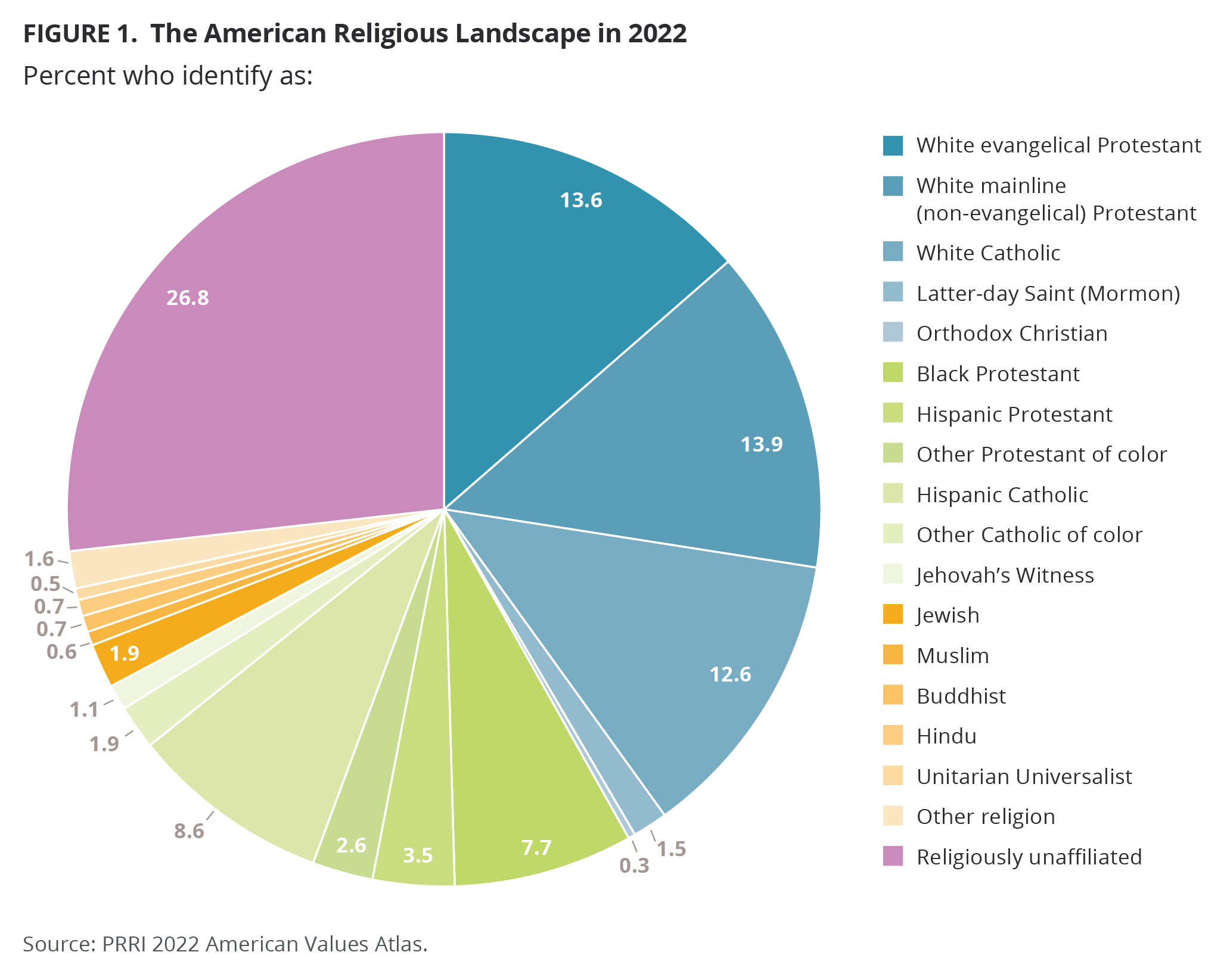
Christianity remains the dominant faith, claimed by 62% of U.S. adults in 2024, but that figure masks a dramatic slide from 78% in 2007. Break it down further and the erosion is even starker:
- Evangelical Protestants: 23% (down from 26% in 2007)
- Catholics: 19% (down from 24%)
- Mainline Protestants: 11% (down from 18%)
- Historically Black Protestant churches: 5% (down from 7%)
Non-Christian faiths remain relatively small but stable. Jewish Americans account for roughly 2%, Muslims around 1%, and Buddhists and Hindus each at about 1%. Islam, however, is an outlier worth watching — Pew's June 2025 global report confirmed it was the world's fastest-growing religion between 2010 and 2020, driven by a younger median age (24 vs. 33 for non-Muslims) and higher birth rates. In the U.S. specifically, an estimated 23% of Muslim adults are converts — a conversion rate that outpaces departures.
Then there are the "nones" — the religiously unaffiliated — now tallying 28–29% of American adults, making them collectively the single largest "religious" bloc in the country, according to NPR's read of Pew data:
- Atheists: 5%
- Agnostics: 6%
- Nothing in particular: 19%
Ten Years of Drift: The Numbers That Moved Most
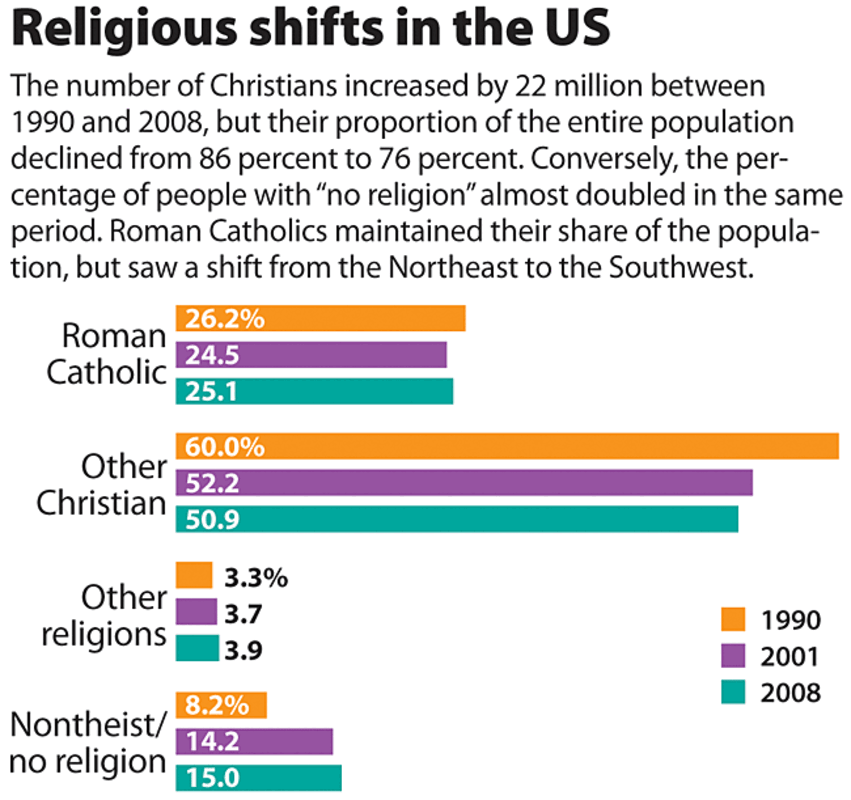
The decade from 2014 to 2024 tells a clear story of institutional religion losing ground while the unaffiliated surge. In 2014, nones represented 23% of adults; by 2024, that figure sat at 28–29% — a six-point climb in ten years, following an even sharper seven-point jump in the decade before that, per Pew's tracking.
The atheist and agnostic populations specifically doubled since 2013, moving from 2% to 4–5% each. The broadest and fastest-moving category remains "nothing in particular" — people who are not hostile to religion but simply do not engage with it.
The most significant new finding, however, is what stopped happening. After two decades of freefall, Christian identification appears to have stabilized between 2019 and 2024, hovering between 60% and 64%. Pew's December 2025 follow-up confirmed religion in America has "held steady" since approximately 2020. The floor, it seems, may have been found — at least for now.
That said, the cultural attachment to faith is quietly hollowing out even among those who keep the label. The share of U.S. adults who say religion is important in their daily lives dropped from 66% in 2015 to 49% in 2025, per PRRI. Belonging without believing — or believing without practicing — is increasingly the American mode.
The Fastest-Growing Category, and Why It Matters
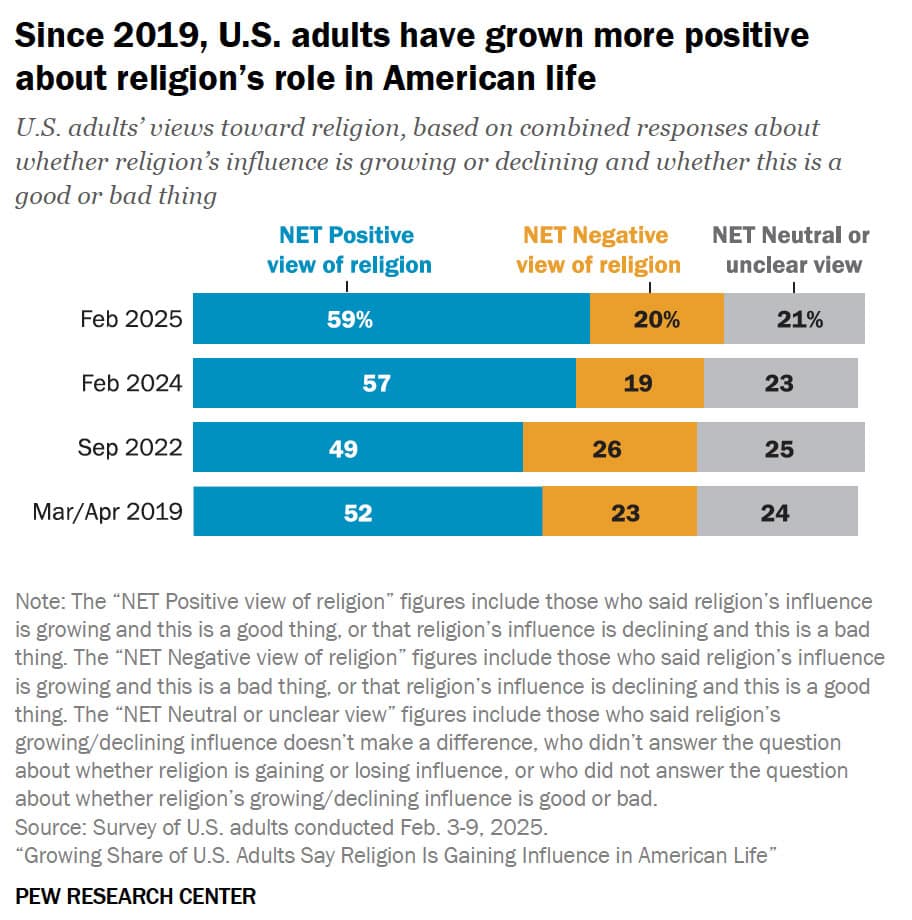
On raw numbers, the religiously unaffiliated remain the single fastest-growing demographic over the past decade, even though that growth has now plateaued. But within traditional religion, Islam stands out as the fastest-growing organized faith in the U.S., buoyed by immigration, a youthful congregation, and a net-positive conversion balance.
The generational divide is the engine under all of this. Only 27% of adults aged 18–24 report praying daily, compared with majorities among older cohorts. As older, more religious Americans age out of the population, their replacement generation is dramatically less observant — a structural shift that demographic stabilization in surveys cannot fully mask.
The implications extend beyond theology. Religious institutions are anchor points for civic life, charitable giving, and social trust. A country where nearly one-in-three adults has no religious home is navigating an identity shift that will ripple through politics, community infrastructure, and culture for decades to come.
Key Takeaways
- Christianity is stabilizing, not recovering — the share of Christian Americans has plateaued near 62%, ending two decades of decline, but the population that remains is less actively devout than before.
- The "nones" — at 28–29% — are now the largest single religious bloc in the United States, with atheists (5%) and agnostics (6%) each having doubled since 2013.
- Islam is the fastest-growing organized religion in both the U.S. and worldwide, driven by demographics and a positive net conversion rate — not mass evangelism.
- The generational gap is the defining variable: younger Americans are far less religious by every measure, meaning today's relative stability in the data likely masks continued long-term secularization.
Sources:
- Pew Research Center: Decline of Christianity in the U.S. Has Slowed, May Have Leveled Off (2025)
- Pew Research Center: Religious Landscape Study Executive Summary
- Pew Research Center: Religion Holds Steady in America (Dec 2025)
- Pew Research Center: Has the Rise of Religious Nones Come to an End?
- Pew Research Center: Religious Nones in America — Who They Are and What They Believe
- Pew Research Center: Islam Was the World's Fastest-Growing Religion from 2010 to 2020
- NPR: Religious 'Nones' Are Now the Largest Single Group in the U.S.
- PRRI: New Survey Shows 'Religiously Unaffiliated' Is Fastest Growing Religious Category