Photo Essay: The War With Iran
The Twelve-Day War — the compressed exchange between Israel, the United States, and Iran that began on June 13, 2025 and paused with a ceasefire on June 24 — left a set of images that will define how this conflict is remembered. Not maps. Not statements. Pictures. The war's meaning now lives in what the cameras found afterward: a mountain with its side torn open, a residential tower with a bite taken out of it, a nuclear facility with a shaft of light punched down through eight hundred feet of rock.
This photo essay walks the reader through those images. It does not litigate cause. It documents what remained.
The Bruise on Natanz
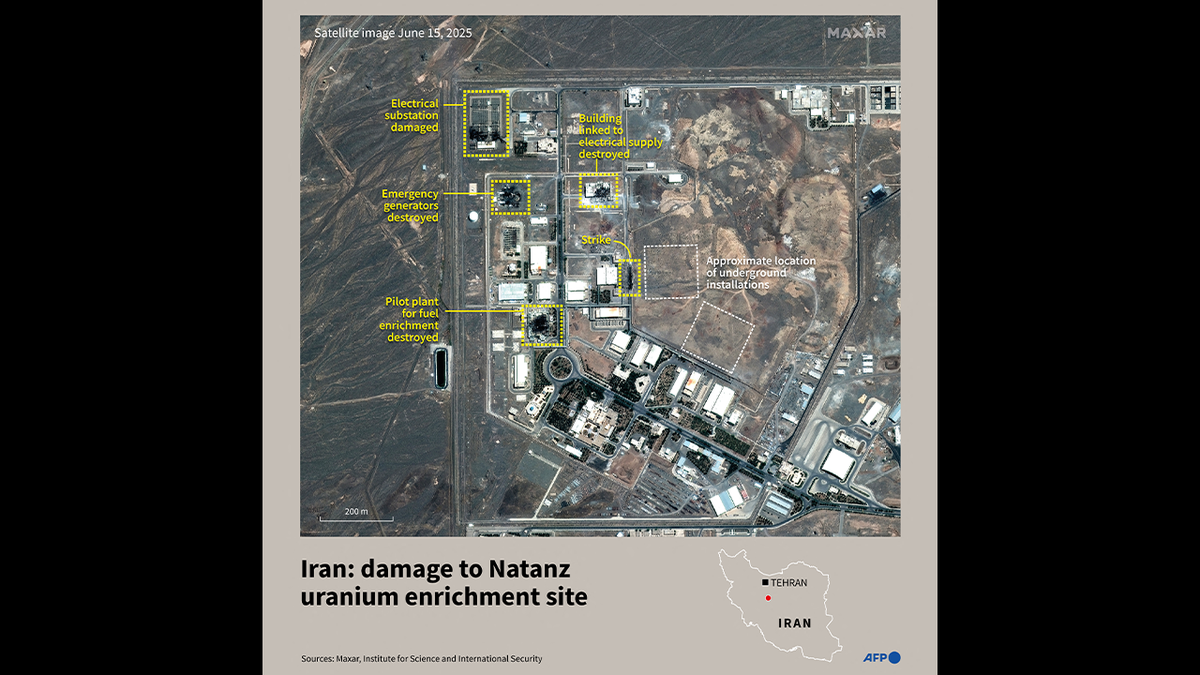
Seen from orbit, the Natanz enrichment complex looks like a bruise pressed into the pale ocher desert. Concrete pads that once held centrifuge halls are now dark craters ringed with pulverized fill. The above-ground pilot plant is gone — a rectangle of shadow where a building stood. The main underground halls, cut into a hillside two hundred kilometers south of Tehran, register from the air as a series of collapsed roof panels and long parallel cracks running toward the perimeter fence. Power lines lie tangled at the substation, transformers split open, oil pooled and blackened on the concrete.
At ground level the scale is different. The blast doors, engineered to withstand aerial bombing, hang partially off their hinges. Fine white dust — pulverized concrete — coats everything in a soft layer, and the desert wind moves it in slow drifts across the road that used to lead to the main gate. The gate itself is intact. The camera keeps returning to that detail. The gate stands. Everything behind it does not.
Fordow's Sealed Mouth
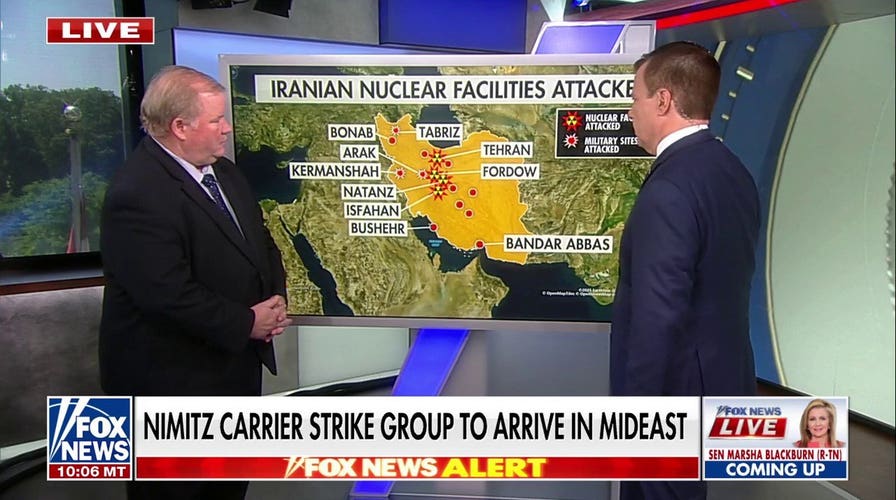
Fordow was the harder problem. Buried inside a mountain near Qom, its centrifuge hall sat roughly ninety meters below the surface, under layered rock chosen for exactly this kind of moment. The photographs taken in the days after June 22 show, from above, six neat punctures in the mountainside — each about the diameter of a car — arranged in two parallel lines. These are the entry points of the American bunker-busting munitions. Each one enters the rock at a precise angle and continues downward, invisible to the camera but readable in the pattern of the surface disturbance.
At the mountain's base, the ventilation shafts have vomited a cone of fine gray dust that spreads outward in a fan. A single service road runs up the mountainside and terminates at a set of steel doors that are still standing. Beyond them, in imagery released later, the tunnel curves and then narrows into blackness. The mouth of Fordow is sealed — not by demolition, but by the collapse of the ceiling somewhere deeper in. A mountain closed itself.
Isfahan After the Fire
Isfahan burned for two nights. The uranium conversion facility, on the eastern outskirts of the city, took a series of strikes that ignited the process chemicals — hexafluoride, ammonia, hydrofluoric solutions — and sent a low, greasy column of smoke into the air that hung over the mosques and the bazaar for forty-eight hours. Photographs from the city center show worshippers walking to Friday prayer through a light haze, the sun a flat orange disc behind them, the domes of the Shah Mosque a shade dimmer than usual.
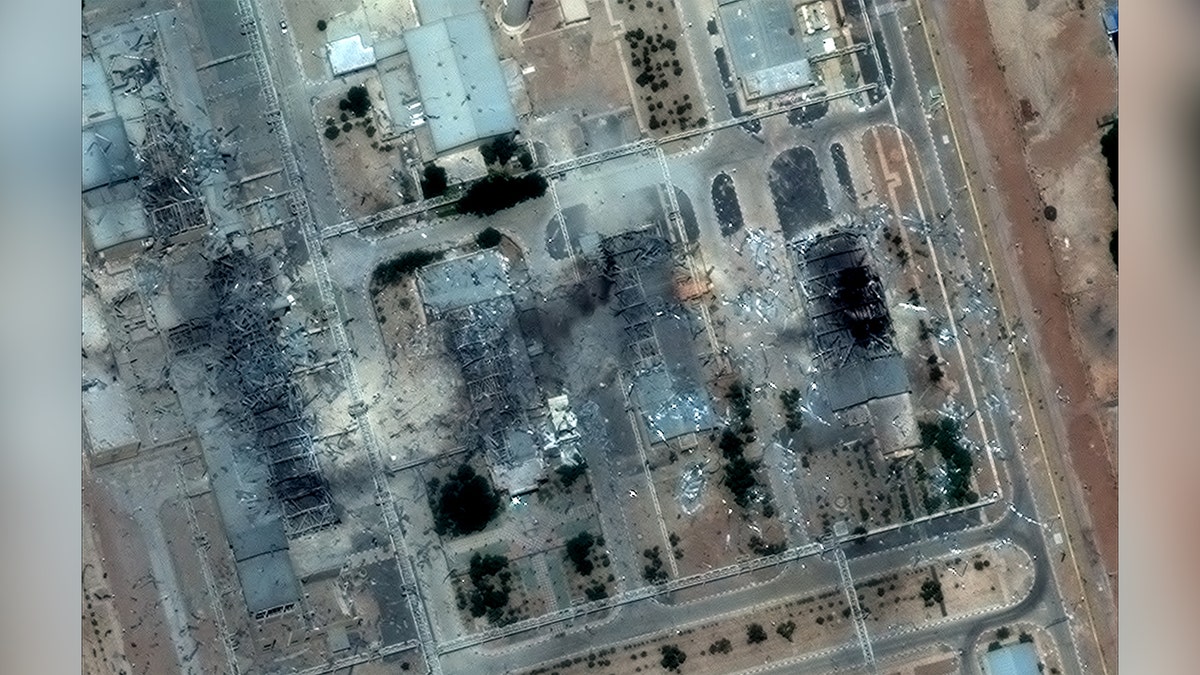
At the plant itself, the aftermath is more industrial than dramatic. Storage tanks lie split open like ripe fruit. A cooling tower has folded inward on itself, its lattice of steel now a heap. Scorch marks radiate from the largest reactor building in a black star. Emergency vehicles from the city — small, white, painted with the crescent of the Iranian Red Crescent — stand parked at the perimeter, waiting for radiation clearances that will take days.
Tel Aviv, Bat Yam, Ramat Gan
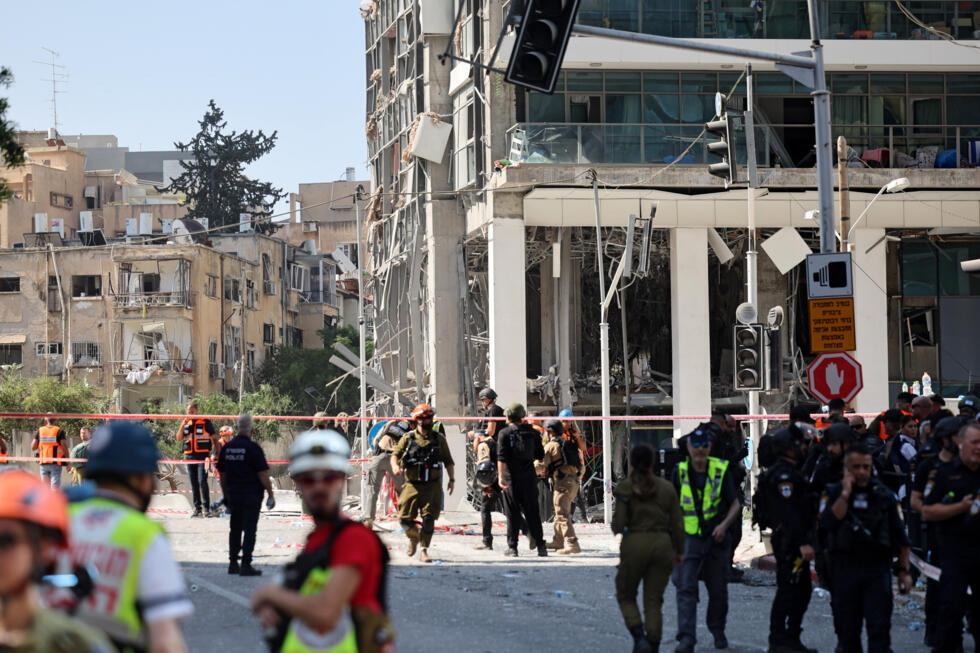
The Iranian ballistic response arrived in Israel in waves. The photographs that traveled fastest were from Bat Yam and Ramat Gan — dense residential neighborhoods south and east of Tel Aviv — where interceptors missed and warheads landed among apartment blocks. In Bat Yam, a nine-story building has had its center column removed as if by an enormous ice-cream scoop, and the floors above have pancaked into the crater in a stack of concrete pages. In Ramat Gan, an entire street of low-rise buildings is a field of rubble stitched together by the twisted metal of parked cars.
The most-reproduced image is a woman standing at what used to be her kitchen doorway. The kitchen is gone. Her doorway remains — a rectangle of tile framing empty air, four stories up. She is looking down. She is not crying. She is looking at where her kitchen went.
Haifa Refinery, Burning
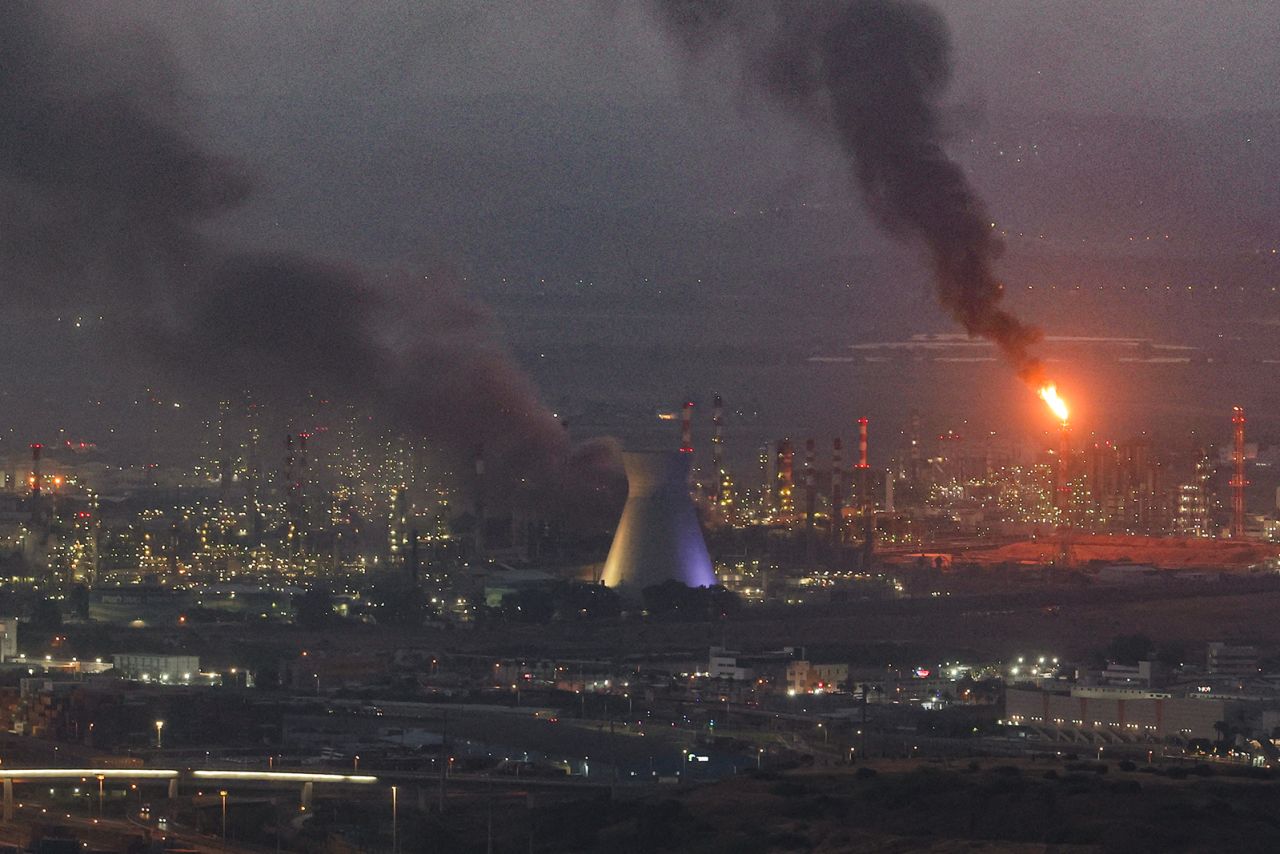
The strike on the Bazan refinery in Haifa produced the largest visible fire of the war. Photographs taken from the ridge above the bay show the entire lower harbor lit orange, the smoke plume tall enough at its peak to cast a shadow over the eastern edge of the city. The refinery's cracking towers stand blackened, some folded, some upright but hollowed. A cooling pond is a mirror of flame. The service road along the base of the towers is dotted with the small silhouettes of firefighters, hoses arcing water that vaporizes before it touches the metal.
By dawn the fires were controlled. By the next dawn they were out. The photograph taken a week later shows the same skyline in gray daylight — the towers still standing, still black, the sky finally clear, the sea flat, a container ship moving slowly into the northern quay as if nothing had happened.
Tehran's Shattered Windows
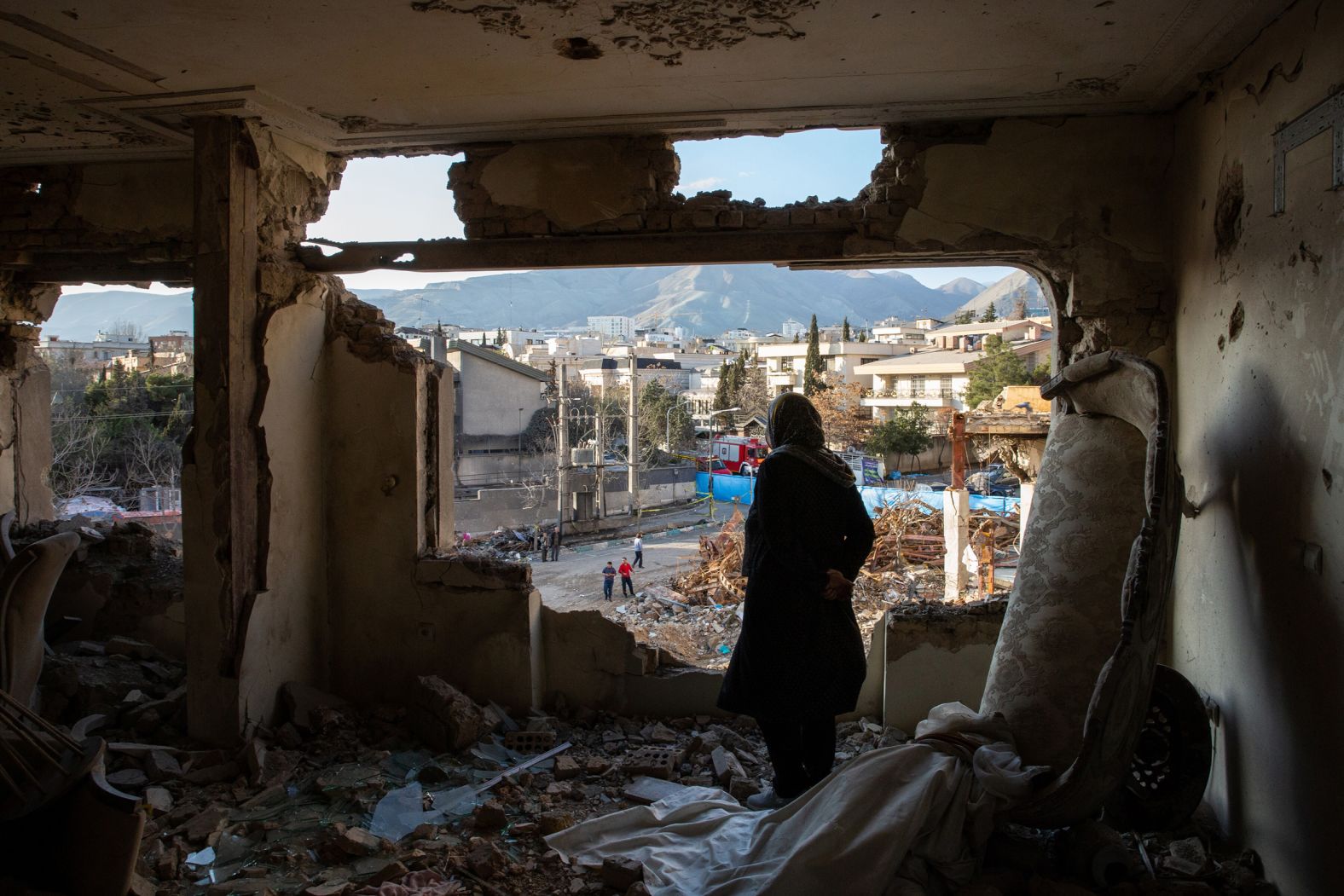
The strikes inside Tehran itself were surgical in intent and residential in consequence. Photographs from the Saadat Abad and Zafaraniyeh neighborhoods show individual apartments extracted from otherwise intact towers — a single floor of a fifteen-story building blown outward, curtains fluttering from what remains of the frames, a bedroom exposed to the street. Neighbors on the floor above sweep glass. A cat sits on a windowsill three floors up, watching.
At a compound on Pasdaran Boulevard the strike was harder to miss. A three-story villa, home of a senior IRGC commander, has been reduced to a single standing wall and a heap of masonry. Around it, the neighborhood is intact. The photograph pulls back to show a leafy street of manicured hedges and parked German sedans, and in the middle of it a rectangle of destruction the width of the plot line. Nothing else on the block is damaged. The precision is itself the message the photograph carries.
Al Udeid, Cratered Concrete
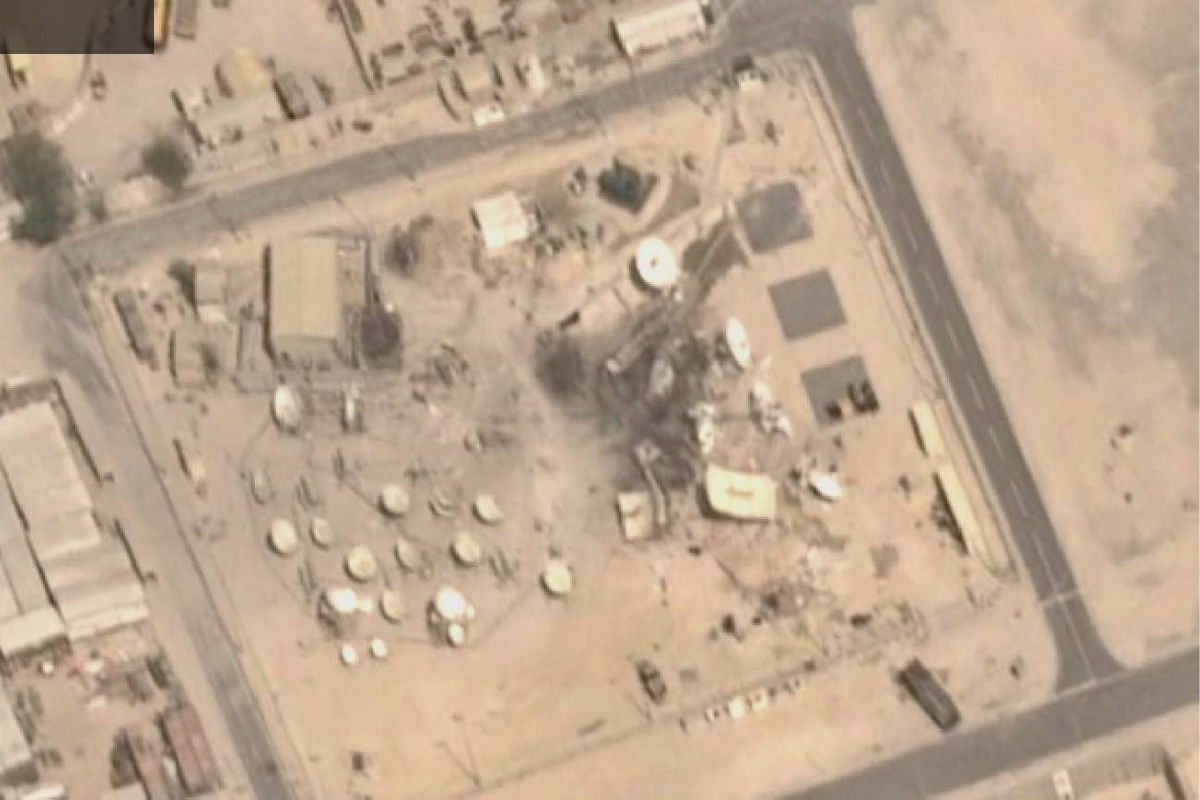
The Iranian retaliation against the American airbase at Al Udeid, west of Doha, was announced hours in advance and largely intercepted. Photographs of the aftermath show two craters in the outer perimeter, a section of chain-link fence blown flat, and a single warehouse with its roof caved in. The runways are untouched. The aircraft revetments are untouched. The photograph that traveled — a Qatari fire truck spraying foam onto the smoking warehouse, an American MP standing to one side, the desert sun already high — is the least destructive image of any strike site of the war. It looks like an industrial accident more than an attack. Both governments described it that way afterward, and the ceasefire came within thirty-six hours.
The Oil Terminals
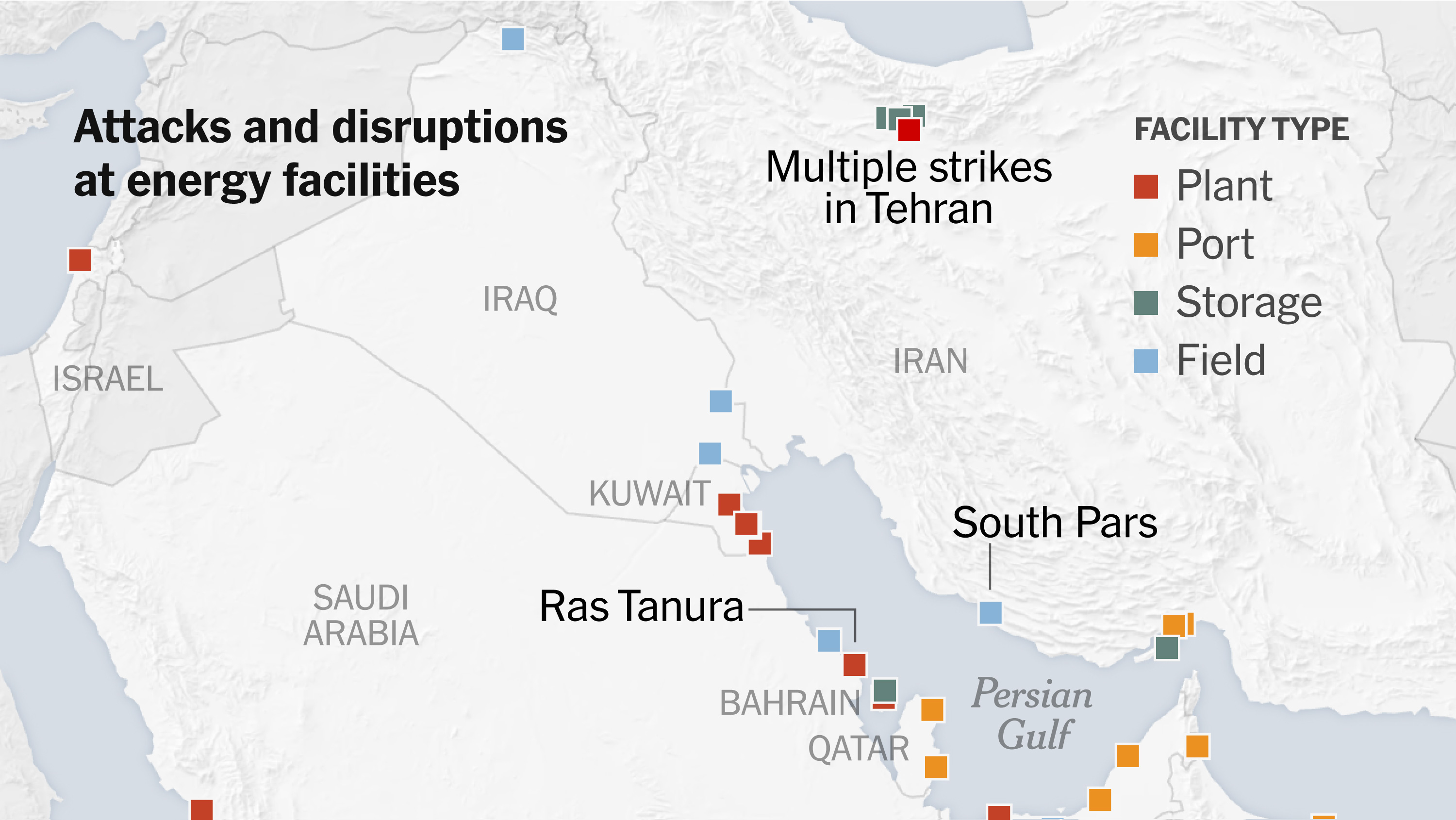
Kharg Island, in the northern Persian Gulf, exports the majority of Iran's crude. It was not hit. The photographs of Kharg during the war are photographs of tankers riding at anchor with their loading arms detached, waiting. What was hit — twice — was the smaller South Pars gas-processing complex at Assaluyeh on the mainland. The images show a single processing train converted into a black stump, flare stacks still burning uncontrolled days later, a plume of unburned gas venting sideways into a wind that carries it toward the empty desert.
At Bandar Abbas, on the Strait of Hormuz, one storage tank in a farm of forty burned down to its foundation ring. In the photograph, the surrounding tanks are unmarked — the fire was contained by the earthen berms designed exactly for that purpose. The single burned ring, viewed from above, is a black coin among silver coins.
The Displaced
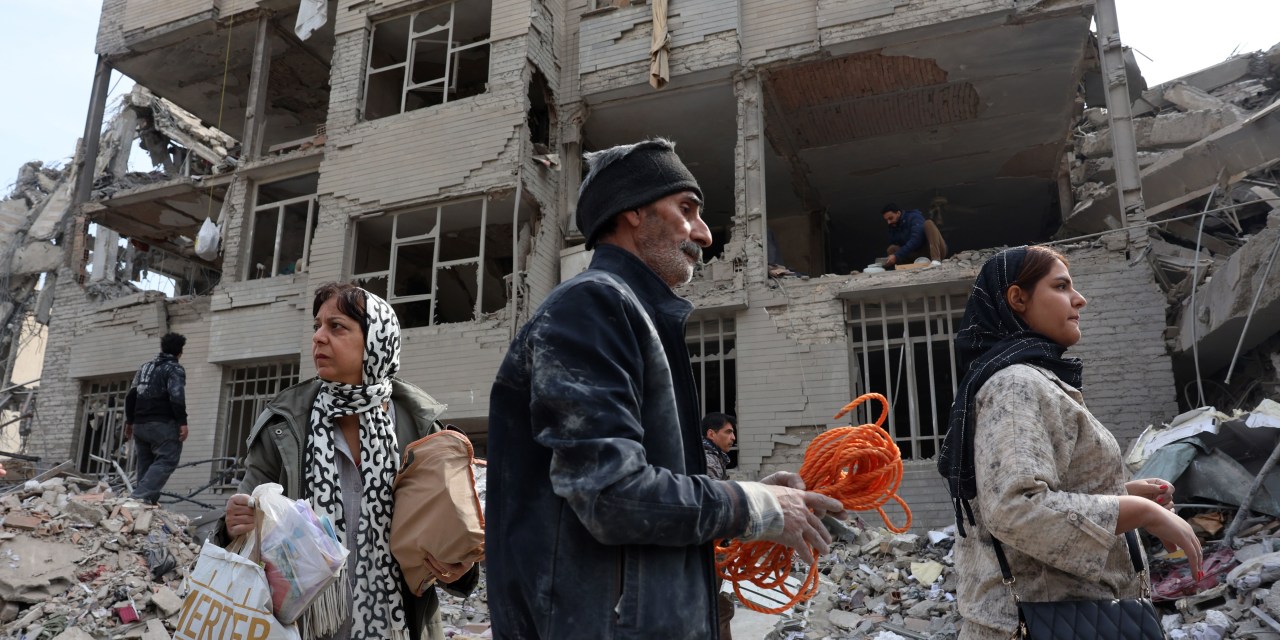
The images that will outlast the strikes are the ones of movement. From Tehran, the highway north to the Caspian was a solid stream of cars for four days — sedans loaded with mattresses and children, roof racks bulging, gas stations backed up a kilometer. In Isfahan and Shiraz the buses filled and left half-empty and filled again. In northern Israel, families moved south to hotels in the Negev, and in southern Israel families moved north to hotels on the Carmel, passing each other on Route 6.
One photograph, taken at a rest stop on the Chalus Road out of Tehran, shows a family of five eating bread on the hood of a Peugeot 405. The father is looking at his phone. The mother is looking at the road. The three children are looking at the camera. Behind them the mountains of the Alborz rise in a dry haze. It could be a photograph from any decade of the last fifty years. That is its point.
The Ceasefire That Held
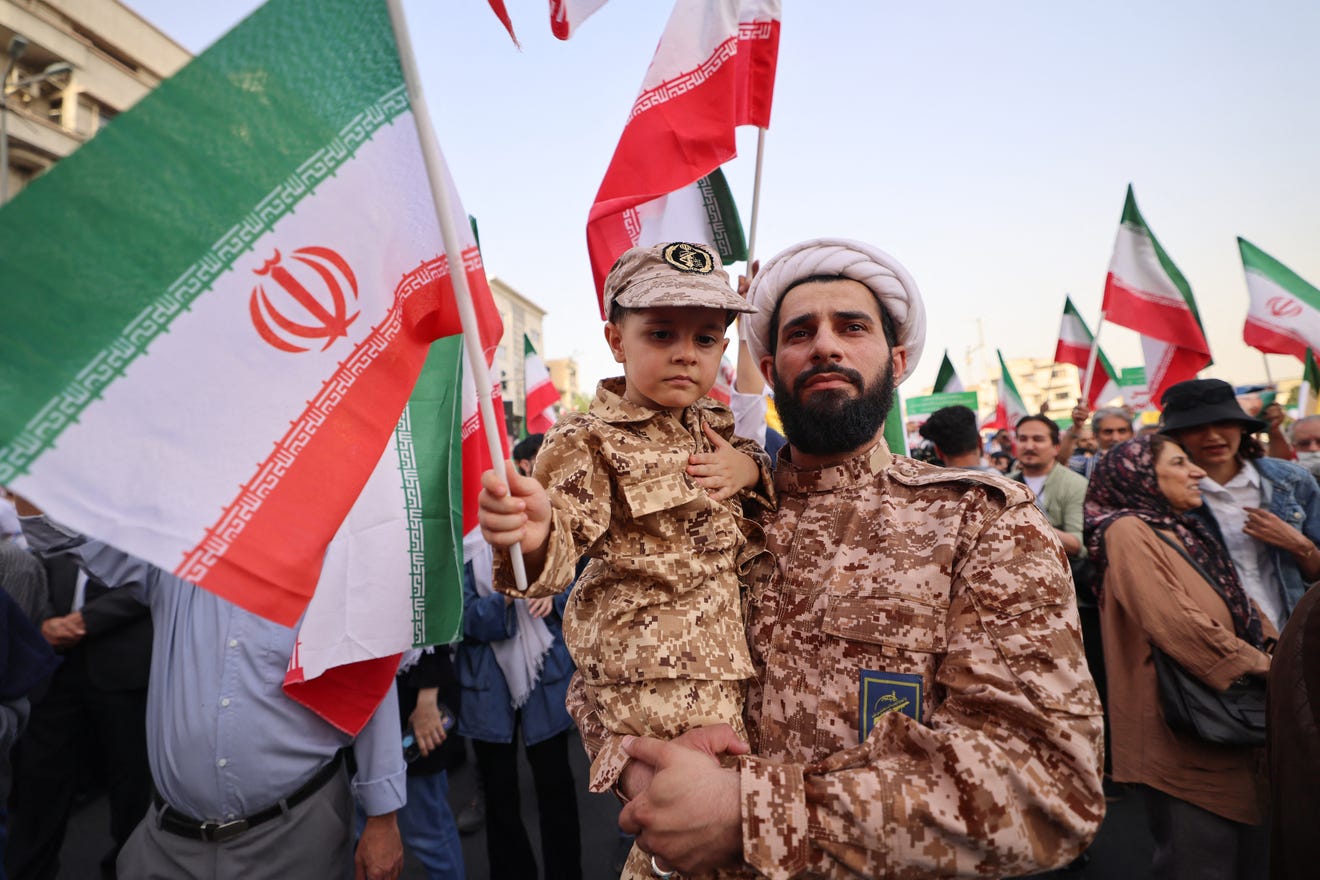
The ceasefire took effect on June 24, 2025. The photographs from the following week are the strangest of the collection because so many of them show ordinary things. Bakeries reopening in Tehran. A wedding in Ramat Gan, held in the hall next to the building that was hit. A crew from the Israeli electric company restringing a line above a road strewn with glass. A crew from the Iranian power ministry doing the same thing outside Karaj. In both photographs the workers wear orange vests. In both photographs the traffic has begun to move again.
The final image of the essay is an aerial shot of Natanz taken sixty days after the strikes. The craters are the same. The dust has stopped drifting. A single tracked vehicle, small as a beetle from that height, is moving across the site. Whether it is clearing rubble or preparing to rebuild is not clear from the photograph. That question — what comes next — the pictures cannot answer.