Teotihuacan: City of the Gods
The Pyramid of the Sun at First Light
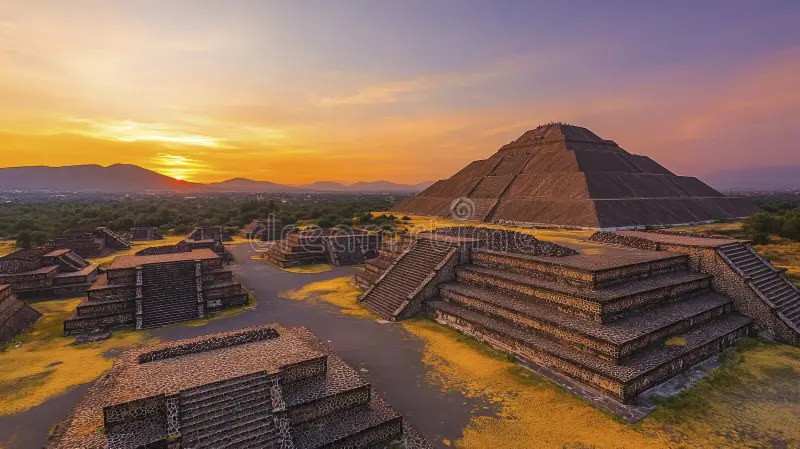
Before the tourists arrive, before the vendors unfurl their blankets of obsidian figurines and jaguar masks, there is a moment when Teotihuacan belongs entirely to the light. Stand at the base of the Pyramid of the Sun in the hour before sunrise and the structure above you is more darkness than stone — a vast, stepped silhouette pressing against a sky still bruised violet and orange at the edges. The pyramid does not so much rise as loom. At 216 feet tall and 720 feet wide at its base, it is larger than it has any right to be, larger than memory can hold. You keep looking up and finding more of it.
Then the sun clears the mountains to the east. It happens fast. The ancient volcanic stone flushes warm amber, the shadow-lines between each terrace sharpening into bold horizontal cuts, and suddenly the pyramid is not monolithic at all — it is layered, deliberate, a thing assembled level by level by tens of thousands of human hands over years that slide beyond easy comprehension. The light catches the texture of the rough-hewn andesite and basalt, each stone rough as broken bread crust. The surface breathes. You can see the seams where blocks were fitted together without mortar, wedged into permanence through sheer mass and precision.
This is the moment the ancient Teotihuacanos may have designed this building to produce. The pyramid's western face aligns with the setting sun on the summer solstice. Its eastern face greets the equinox dawn. The builders were not merely stacking rock toward the heavens. They were calibrating time itself in stone, using the largest object in the Western Hemisphere — at the time of its construction around 100 CE — as a kind of colossal sundial aimed at eternity.
The Avenue of the Dead Stretching Toward the Horizon
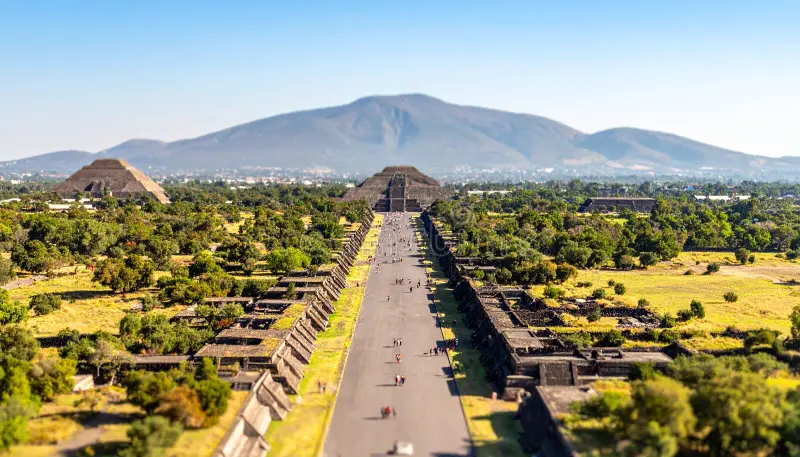
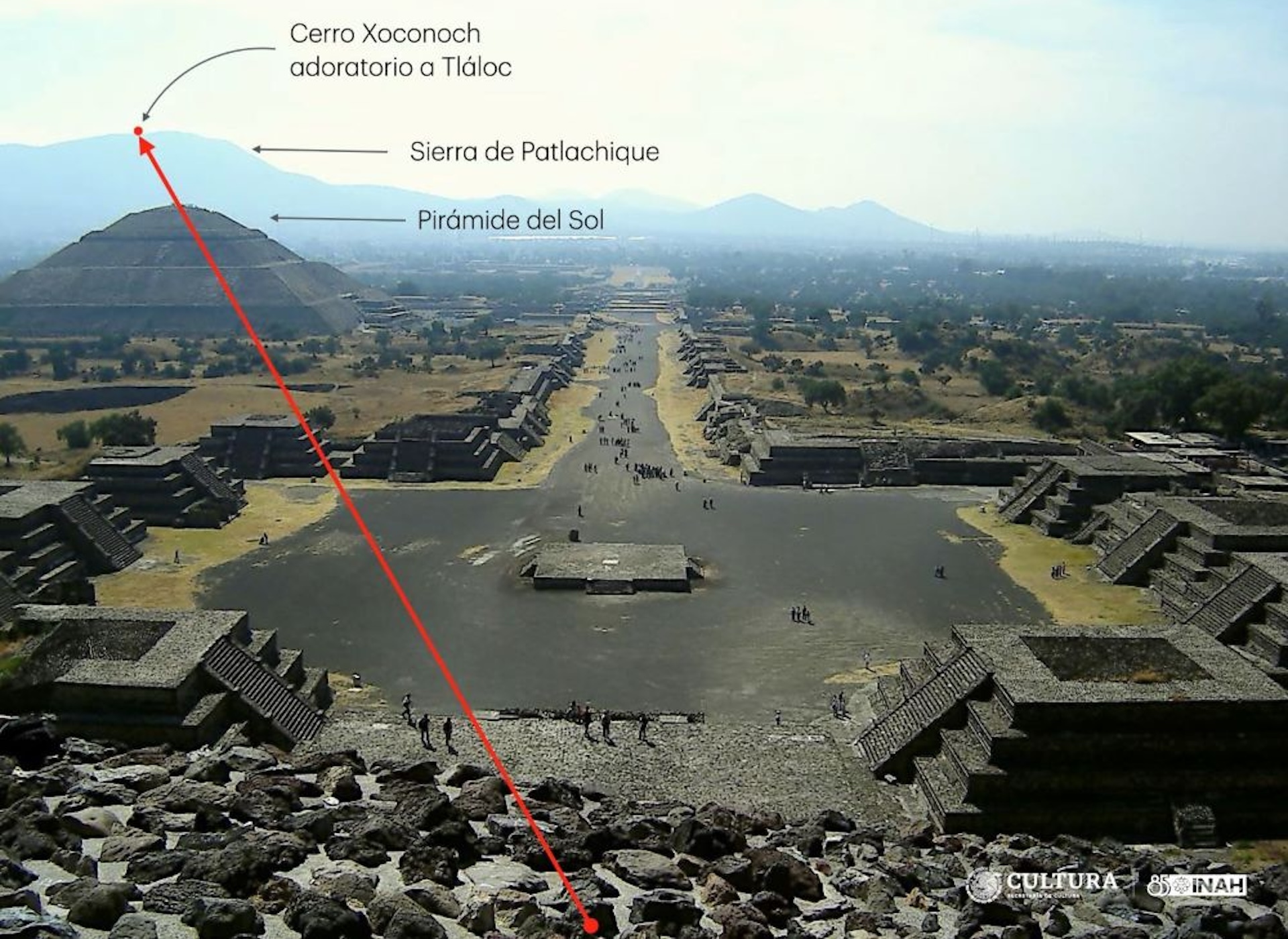
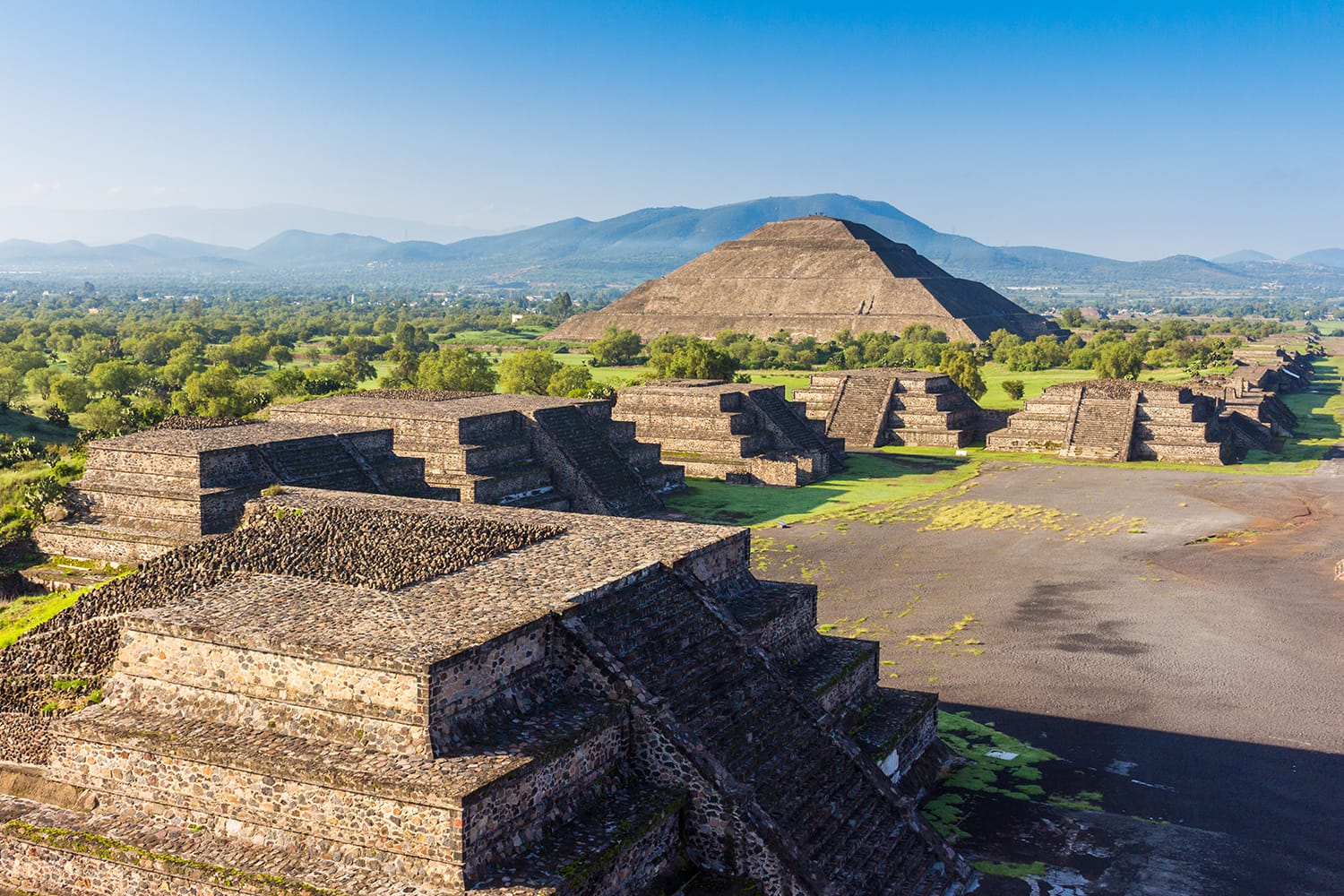
Walk out from the pyramid's base onto the broad central corridor and your eyes take a long time to reach the end of it. The Avenue of the Dead runs for nearly a mile and a half through the heart of Teotihuacan, a processional road more than 130 feet wide, flanked by temple platforms on both sides that step upward like the pages of a closing book. The Spanish misnamed it when they arrived centuries after the city's collapse — they assumed the platforms were tombs. They were not. They were stages for the living, platforms for ceremony, for spectacle, for the performance of cosmological order.
The avenue is paved in a pale, polished lime plaster that even now, worn and fractured by two millennia of sun and rain, reflects the sky back at you. On a clear afternoon, walking its length, you see the blue overhead reproduced underfoot in fragments. The effect is dizzying and exhilarating — a corridor that seems to exist simultaneously on the earth and above it. On either side, the platforms rise in a repeating rhythm of talud-tablero architecture: a sloping base panel supporting a vertical framed panel above, a design so distinctive to Teotihuacan that when it appears in Mayan cities hundreds of miles to the south, it signals cultural influence as clearly as a signature.
At the avenue's far northern end, framed perfectly by the corridor's vanishing geometry, the Pyramid of the Moon floats above everything. It appears, from this distance, to be the same height as the Pyramid of the Sun, though it is actually shorter. The illusion is intentional. Its builders placed it against the slope of Cerro Gordo — the extinct volcano behind it — so that pyramid and mountain form a single continuous silhouette, the manmade and the geological indistinguishable. Stand at the southern end and squint. The city invented perspective before the Renaissance did.
The Feathered Serpent Heads Emerging From Stone
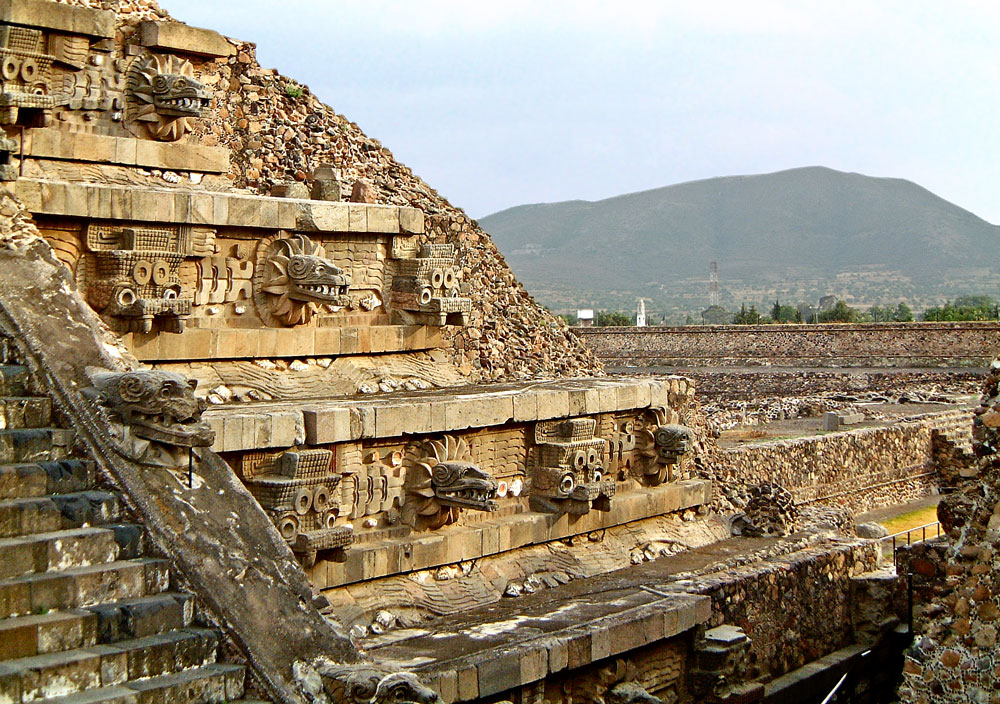
At the Temple of Quetzalcoatl, on the eastern face of the Citadel compound, the stone walls are not blank. They never were. Carved heads thrust outward from the facade at regular intervals, jutting into space on stone necks roughly the size of a human torso. Some are feathered serpents — sinuous, scaly, their mouths open to reveal fanged teeth, their eyes blank and wide. Between them, other heads protrude: a different kind of face, flat and goggle-eyed, wearing a crown of jade-colored headdress. These are tentatively identified as the Fire Serpent, the star-bearing creature of the night sky. The two types of heads alternate across the facade in a rhythm that is both decorative and theological — a zipper of cosmic forces, earth and sky, earth-bound and celestial, locked in repeating alternation.
In direct afternoon sunlight the carving is ferocious in its clarity. The feathers around the serpent heads still show traces of red pigment in their deepest cuts. The stone itself is a dark greenish-gray, the color of deep water, and the serpent scales have a faceted geometry that looks almost modern — angular, precise, as if rendered by someone who understood that abstraction carries more power than realism. When the wind moves through the Citadel plaza, raking dry grass along the plaza floor, you half expect the heads to turn.
These were not merely decorations. When archaeologists excavated beneath the Temple of Quetzalcoatl in the 1980s and 1990s, they found burial chambers containing over two hundred sacrificial victims — men dressed as warriors, their hands bound behind their backs, entombed in mass graves around the building's perimeter. Some wore collars of human maxillary teeth. The sculptures above them were not celebrations. They were warnings, or invocations. The beauty of this facade and the horror beneath it exist in the same stone, inseparable, which is perhaps what the builders intended.
Stone Steps Rising Into Thin Air
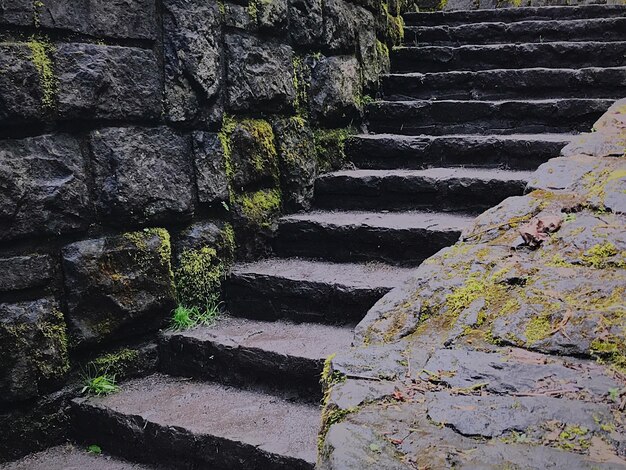
Climb the Pyramid of the Sun on a clear day in the dry season and the ascent reveals itself in stages of increasing commitment. The first terrace is easy — wide steps, gentle slope, the city spreading out behind you before you have gained enough altitude to see it whole. By the second terrace, your calves have begun their complaint. The steps are not scaled for modern tourists. They are steep in the way that devotional acts are steep — you must lean into the climb, your body angled toward the summit, your hands occasionally dropping to touch the stone above for balance. This is, it turns out, the correct posture. You are meant to approach the gods with your head bowed.
The stone under your palms is extraordinary. It is warm in the sun to a depth you can feel — not surface heat but heat that has been collected over centuries, stored in the mass of the structure and released slowly back into air and hands. The roughness catches the light at sharp angles, and you see that what looks from a distance like uniform gray is actually a palette: umber, ochre, pale rose where iron minerals have oxidized, dark patches where moisture has crept into hairline cracks and darkened the stone from within. The pyramid has a complexion. It is the complexion of something very old and very much still here.
At the summit, the wind is constant and the view is geometric perfection. The Avenue of the Dead bisects the horizon. The Pyramid of the Moon sits in its planned position, cathedral-like in the middle distance. The agricultural fields that now surround the archaeological zone are a patchwork of greens and yellows — maguey, maize, scrub — that approximate, loosely, the green valley floor that once fed a city of perhaps 125,000 to 200,000 people. At its peak in the third or fourth century CE, Teotihuacan was one of the largest cities on earth. From the summit, that fact feels less like history and more like weight.
The Market District Where Commerce Once Roared
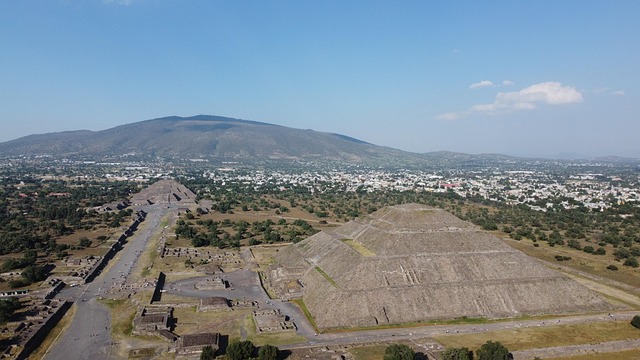
Southeast of the great pyramids, where the ground is lower and the excavation less complete, the outlines of Teotihuacan's market district emerge from the earth like a partially solved puzzle. Platforms and enclosures, rooms opening onto rooms, the foundations of what archaeologists believe was one of the ancient world's great commercial hubs. The stone here is lower, rougher, less ceremonially dressed — this was not a place of worship but of transaction, the sacred city's economic engine humming alongside its spiritual one.
The earth in this zone is a particular shade of reddish-brown, shot through with pottery fragments that catch the light after rain. Walk slowly and you will see them everywhere: the curved rim of a vessel, the flat base of a storage jar, a fragment painted with geometric designs in faded terracotta and cream. The city produced pottery on an industrial scale, in workshops identified by their scatter patterns and kiln debris, and traded it across Mesoamerica. Goods moved in and out of Teotihuacan along routes that reached the Gulf Coast, the Pacific, the Maya lowlands. The obsidian blades manufactured here — sharp as surgical steel, struck from the volcanic deposits at Pachuca — have been found as far as Guatemala.
Imagine this space filled. The Teotihuacan market at its height would have been a place of noise and color beyond anything the archaeological record can fully restore: dyed textiles in cochineal red and indigo blue, baskets of cacao and dried chiles, turquoise from northern Mesoamerica spread on mats, the percussion of ceramic goods being tested with a tap of the fingernail. Languages other than Nahuatl — the language we most associate with the city, though even this is disputed — would have competed for air space. The city was cosmopolitan in the full sense: a place where the world converged.
The Murals Still Burning With Color
In the residential compound of Tetitla, a short walk from the main archaeological zone, stand in a doorway and let your eyes adjust. The light here is different — dimmer, filtered through the roofless room above. Then the walls begin to resolve. They are painted. Not in the faded, ghostly way of so many ancient murals, but in colors still aggressive enough to startle after fifteen centuries: deep jade greens, rich terracotta reds, a yellow the color of fresh butter. The pigments were mineral-based — cinnabar for red, malachite for green — and they have held against time with startling stubbornness.
The murals at Tetitla show a world that is simultaneously symbolic and reportorial. A great goddess — sometimes called the Teotihuacan Spider Woman or the Great Goddess, though her identity remains debated — stands with arms outstretched, streams of water and jade and maize falling from her hands. Priests or ritual performers surround her, rendered in profile in a flat, stylized convention that resembles neither the rounded naturalism of Roman portraiture nor the elongated geometry of Egyptian relief, but something entirely its own: a visual language invented here, serving purposes that were entirely local and cosmological. Her headdress alone is a landscape — feathers and flowers and geometric elements stacked into a towering complexity.
Move to another room and the subject changes. Jaguars prowl through a field of symbols. Birds display wings geometrically arranged, each feather a separate formal decision. In one famous compound at Atetelco, warriors process across a wall with a rigidity that conveys not stiffness but ceremony — these are not men in motion but offices in motion, roles rather than individuals. No individual faces appear in Teotihuacan art. No single king stares down from a stele with his name carved beside him. This was a city that, uniquely among great Mesoamerican powers, either had no supreme ruler or had one who chose erasure over monument. The murals show a civilization, not a biography.
The Obsidian Blades and Offerings Beneath the Earth
Much of what Teotihuacan kept, it kept underground. In 2003, heavy rains revealed a tunnel beneath the Temple of Quetzalcoatl — a passage over 330 feet long, running from the center of the Citadel to a terminal chamber below the temple's central axis. For a decade and a half, archaeologist Sergio Gómez and his team excavated it using robots and painstaking hand tools, and what they found there remapped the understanding of the city. The tunnel walls were embedded with metallic pyrite dust — iron and fool's gold mixed to create a surface that shimmered in the torchlight like a mirror of the night sky. The tunnel was a replica of the underworld. The builders had constructed a cosmos beneath their cosmos.
At the tunnel's end, in three sealed chambers, archaeologists found the objects of extraordinary care: jade figurines from as far as Guatemala, rubber balls, seeds, bones of exotic animals — jaguars, pumas, eagles, rattlesnakes — wooden boxes, obsidian blades, shells from both coasts, a carved stone crocodile. Over 100,000 individual objects recovered from a tunnel that no one had entered for roughly 1,800 years. The obsidian blades, still sharp enough to cut, were arranged in deliberate patterns. Nothing in that tunnel was random. Every object was placed with the precision of someone who believed the placement mattered cosmically, permanently.
Stand above the tunnel at the surface now, on the Citadel plaza's paved expanse, and the distance between your feet and what lies below them is roughly sixty feet of dirt, rubble, and closed time. The plaza feels different once you know what it sits over. The ancient Teotihuacanos may have wanted it to feel this way — the living world supported by a foundation of ritual, the surface of the city levitating above an underworld dense with sacrifice and intention. Architecture as cosmology, space as theology, the ground itself as argument.
The Equinox Pilgrims Climbing in White
Twice a year, on the spring and autumn equinoxes, Teotihuacan belongs to the pilgrims. They come in white — white shirts, white dresses, white trousers — tens of thousands of them, mostly Mexican, mostly seeking something that official religion has not provided or that they want to supplement with something older and more elemental. They climb the Pyramid of the Sun at dawn with their arms raised and their palms open, facing east, and the visual effect from a distance is staggering: a pyramid covered in white figures, a monument that has become a congregation.
The energy at these gatherings is not uniform. Some people weep. Some laugh. Old women sit on the lower terraces with their eyes closed, moving their lips. Young couples reach the summit and turn slowly, arms still raised, completing a revolution as the sun rises above the mountains. Children run up the steps ahead of their parents in the uncontainable way children have, reaching the top too fast to feel the weight of where they are. What the ancient Teotihuacanos did on these dates is not fully known. What these modern pilgrims are doing is improvised, syncretic, personal — a practice built from fragments of pre-Columbian tradition, colonial spiritual trauma, and contemporary longing. It is not authentic in any archaeological sense. It may be authentic in every human one.
The sight of the white-clad figures at sunrise, layered across the pyramid's dark stone against a sky moving from pink to blue to white-hot, is one of the purely visual experiences the site produces without curatorial assistance. Teotihuacan is not only a ruin. It is a living site in the fullest sense — a place where the human impulse toward the sacred keeps finding the stone that was placed here to receive it, two thousand years later, still.
The Valley Floor Where a City Once Breathed
From the highest point of the Pyramid of the Sun, looking outward past the archaeological zone's limits, the valley of Teotihuacan extends in every direction in shades of green and gold and brown. The Sierra Nevada and Sierra de Guadalupe frame it to the south and west. To the north, Cerro Gordo dominates the horizon. This basin was chosen deliberately — for its water sources, its defensibility, its proximity to obsidian deposits, its alignment with celestial features that the builders found significant. The city that grew here between roughly 100 BCE and 550 CE was not an accident of geography but a decision made in it.
The bones of the ancient residential neighborhoods extend far beyond the visible monuments. Ground-penetrating radar surveys and systematic surface surveys have mapped apartment compounds — the standard residential unit of the city, shared by perhaps sixty to one hundred people each — spreading across roughly eight square miles. At its height, there may have been more than two thousand such compounds. The people of Teotihuacan did not live in hovels and mud-brick. They lived in rooms arranged around internal courtyards, with plastered floors and painted walls, with drainage systems and storage rooms and shrines in the household centers. They were urban in the fullest sense — dense, organized, connected, anonymous in a way that city life has always made people anonymous.
Then the city ended. Around 550 CE, much of the city's civic center was deliberately burned. The temples along the Avenue of the Dead show evidence of controlled, targeted fire — the burning was not random destruction by an invading force but selective demolition, the monuments of the ruling class destroyed from within. Whether this was revolution, civil collapse, the unraveling of a drought-stressed system, or something else entirely remains genuinely uncertain. The people did not vanish — they dispersed, carrying Teotihuacan's architectural grammar, artistic conventions, and cosmological frameworks south and east, seeding them across Mesoamerica like a diaspora of ideas. The city emptied. The stone remained. And it remains now, in the morning light, in the late afternoon shadow, patient as anything can be that has already outlasted the civilization that raised it, waiting for the eye to find it and try, once more, to read what it says.