Our Solar System: Ghost Planet 9
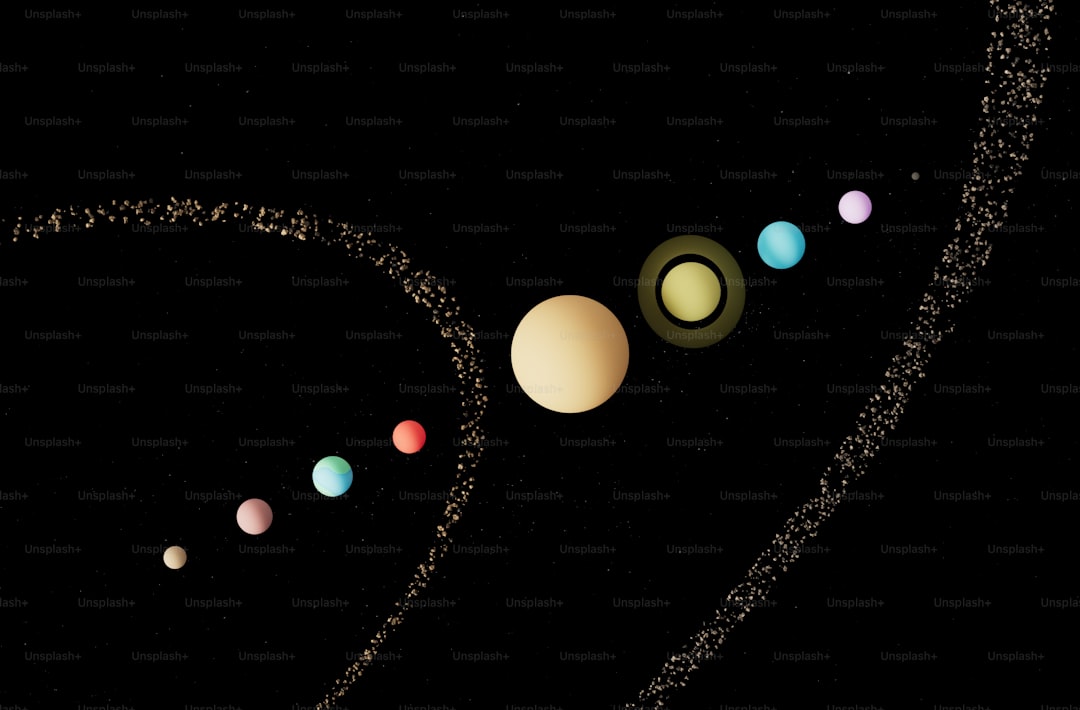
For nearly a decade, a specter has haunted the outermost reaches of our solar system — a world so massive it bends the orbits of distant icy bodies, yet so remote that no telescope has yet captured its light. Astronomers call it Planet Nine, and the debate surrounding its existence has become one of the most compelling scientific controversies in modern planetary science. It is not Pluto, demoted to dwarf planet status in 2006 by the International Astronomical Union. Planet Nine, if it exists, is something far more imposing: a world several times the mass of Earth, orbiting the Sun at distances that dwarf anything in the known solar system, taking thousands of years to complete a single revolution. Its gravitational fingerprints, scientists argue, are written across the orbits of the solar system's most distant known objects — an invisible hand tugging at the edges of our cosmic neighborhood. Whether that hand is real or an illusion born of incomplete data remains one of astronomy's most urgent open questions.
The Reclassification That Created a Vacancy
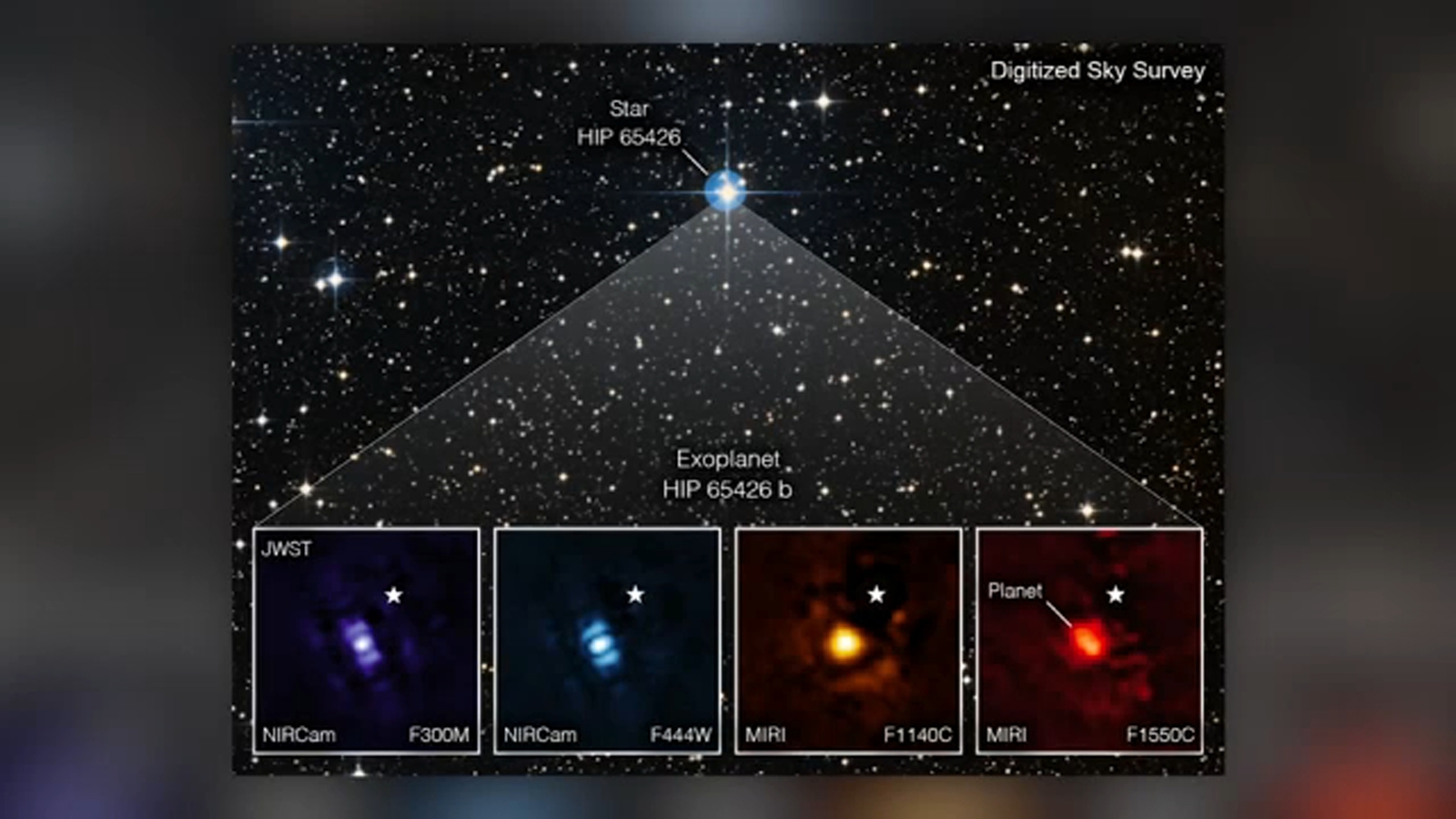
To understand why astronomers began hunting for a new ninth planet, one must first understand what happened to the previous occupant of that title. Pluto was discovered in 1930 by astronomer Clyde Tombaugh at Lowell Observatory in Flagstaff, Arizona, and for 76 years it was considered the ninth planet in the solar system. But the late 1990s and early 2000s brought a cascade of discoveries in the Kuiper Belt — the vast ring of icy bodies beyond Neptune — that forced a reckoning. Objects like Quaoar (2002), Sedna (2003), and Eris (2005, initially nicknamed "Xena") began to crowd the planetary register. Eris, discovered by a team led by Mike Brown of the California Institute of Technology, appeared at first to be larger than Pluto. Either the solar system had ten planets, or it had none beyond Neptune.
The International Astronomical Union (IAU) convened at its General Assembly in Prague in August 2006 and settled the matter by codifying a new definition of "planet." To qualify, a body must orbit the Sun, have sufficient mass for gravity to pull it into a roughly spherical shape, and — critically — have cleared the neighborhood around its orbit of other debris. Pluto, embedded in the Kuiper Belt, failed that final criterion. It was reclassified as a "dwarf planet," joining Eris, Ceres, Makemake, and Haumea in that category. The solar system's official planet count dropped to eight.
Mike Brown, whose discovery of Eris had effectively forced Pluto's demotion, is the same researcher who would later lead the charge to find a true ninth planet. He has been publicly unrepentant about Pluto's reclassification — his Twitter handle was, for years, "plutokiller" — and channeled his energy into the deep outer solar system. The vacancy left by Pluto was, in Brown's view, an invitation to find something far more worthy of the title.
The Discovery That Started Everything: Sedna and the Outer Fringe
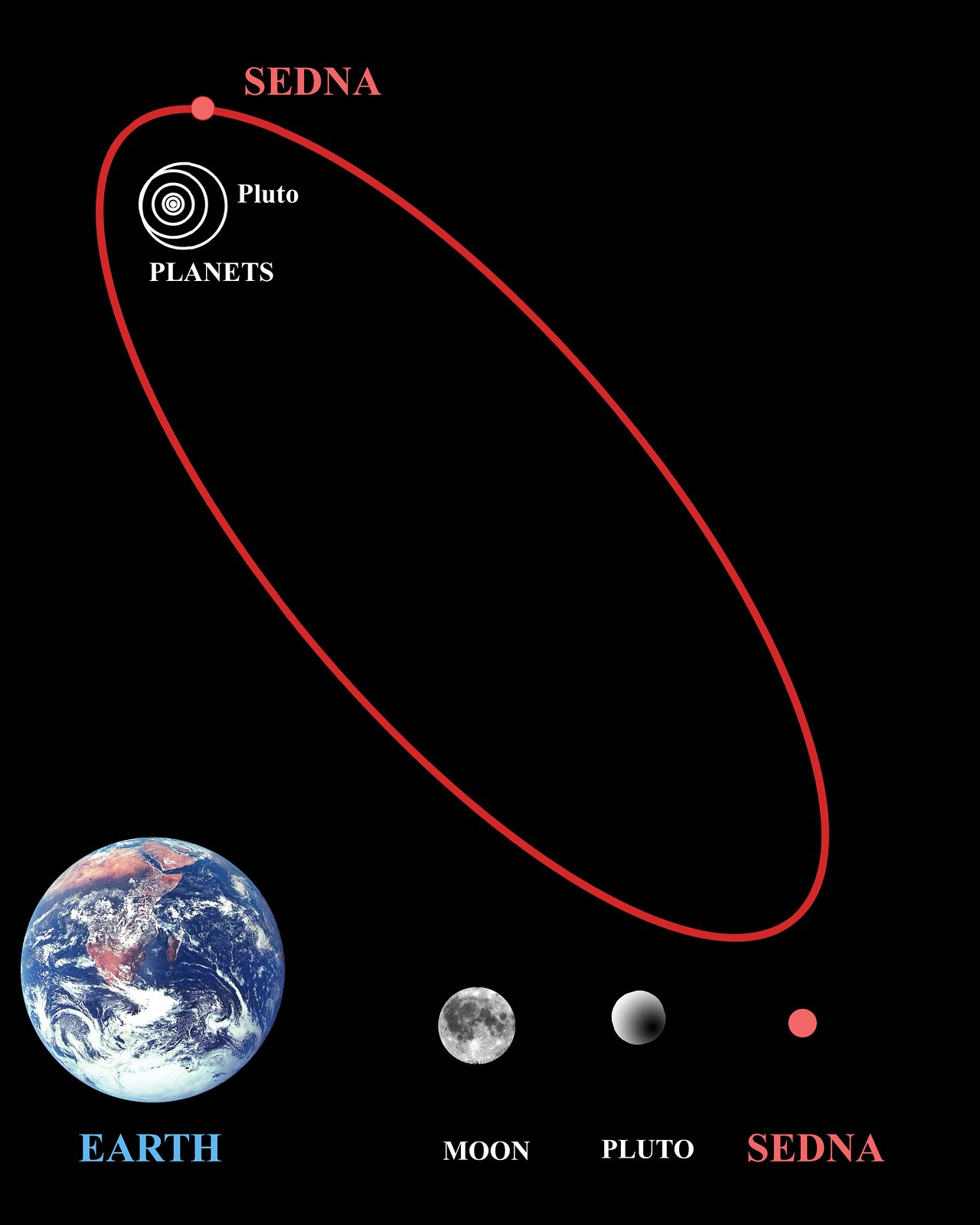
The story of Planet Nine properly begins not with its proposed discoverers but with an object called Sedna, announced in March 2004 by Brown, Chad Trujillo, and David Rabinowitz. Sedna is a reddish, roughly spherical body about 1,000 kilometers in diameter, orbiting the Sun at extraordinary distances. Its perihelion — the closest point of its orbit to the Sun — is approximately 76 astronomical units (AU), where one AU equals the average Earth-Sun distance of roughly 150 million kilometers. Its aphelion, the farthest point, extends to about 937 AU. Its orbital period is approximately 11,400 years.
What made Sedna immediately puzzling was its location. It sits too far from Neptune to have been scattered to its current orbit by gravitational interactions with that planet. It lies too close to the Sun to be a classical Oort Cloud object. It occupies an otherwise empty region of space — a "no man's land" in orbital mechanics — and its orbit is highly eccentric and steeply inclined. The discoverers themselves were baffled. Some proposed that Sedna had been scattered by a passing star during the Sun's early stellar birth cluster. Others suggested it was evidence of a distant, massive body in the outer solar system.
The next major clue arrived in 2012 with the discovery of 2012 VP₁₁₃ (informally nicknamed "Biden" by some astronomers, a reference to then-Vice President Joe Biden). Found by Scott Sheppard of the Carnegie Institution for Science and Chad Trujillo of the Gemini Observatory, this object has a perihelion even farther from the Sun than Sedna's, at approximately 80 AU. Trujillo and Sheppard published a paper in Nature in 2014 noting something remarkable: when they examined the dozen or so known extreme trans-Neptunian objects (ETNOs) with perihelia beyond 30 AU, they found that the angles describing the orientation of their orbits — specifically, the argument of perihelion — were clustered in an unexpectedly tight range. Statistically, if these objects were distributed randomly, their orbital orientations should also be random. They were not. Trujillo and Sheppard suggested, cautiously, that an unknown planet might be responsible.
Batygin and Brown: The 2016 Hypothesis
The hypothesis gained serious traction on January 20, 2016, when Konstantin Batygin and Mike Brown published a landmark paper in The Astronomical Journal titled "Evidence for a Distant Giant Planet in the Solar System." Batygin, a theoretical astrophysicist at Caltech, and Brown combined observational analysis with computer simulations to build a far more rigorous case than had previously existed.
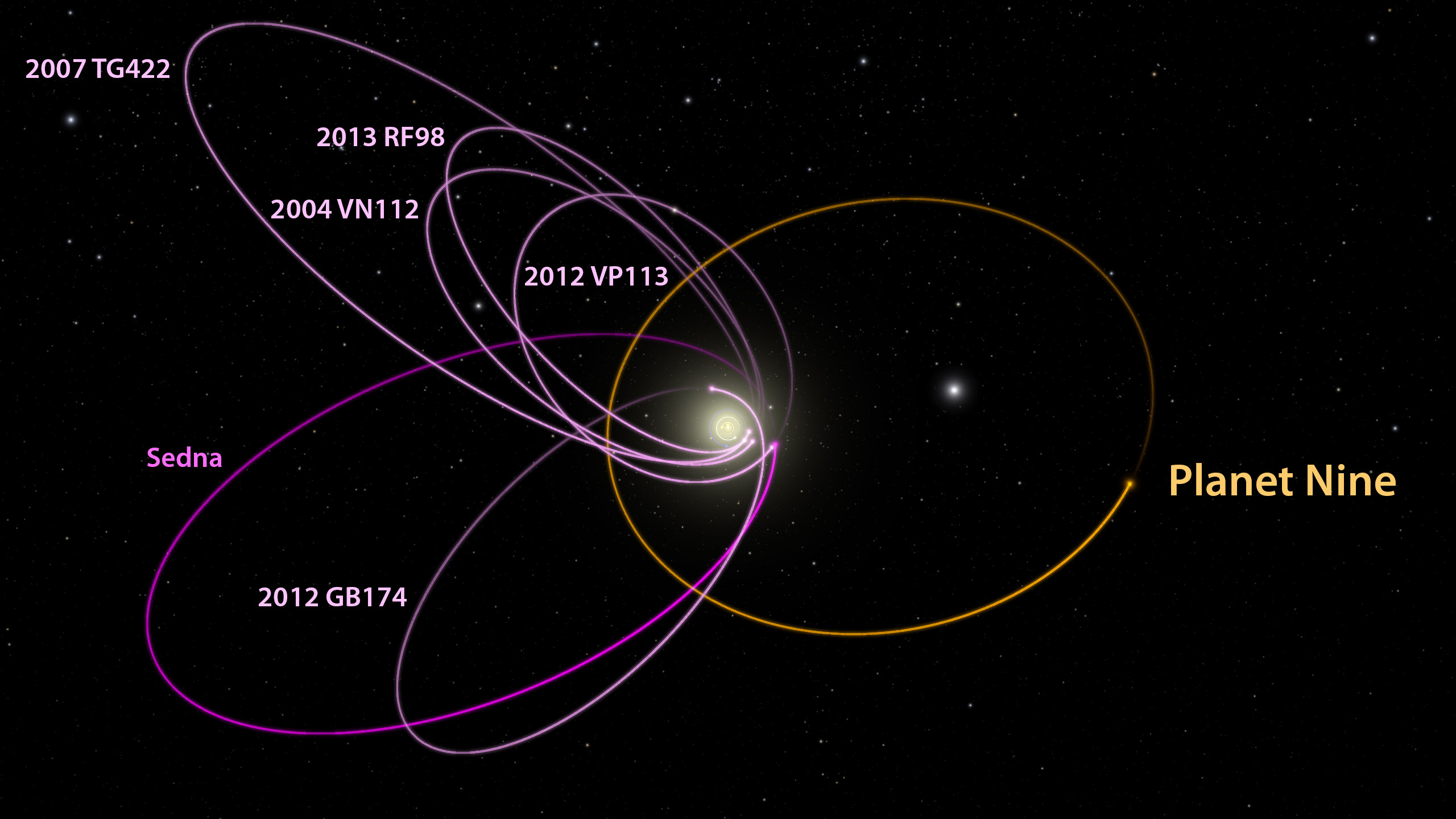
Batygin and Brown analyzed six ETNOs — objects with semi-major axes greater than 250 AU and perihelia beyond Neptune — and found that their orbits were not only clustered in argument of perihelion, as Trujillo and Sheppard had noted, but also clustered in physical space. The long axes of these six orbits all pointed in roughly the same direction. The probability of this occurring by chance, the authors calculated, was approximately 0.007% — roughly one in 14,000. Something was herding these distant bodies.
Through extensive N-body simulations — computational models that calculate the gravitational interactions between many bodies simultaneously — Batygin and Brown determined that a distant, massive planet could produce the observed clustering. Their proposed Planet Nine has the following estimated characteristics:
- Mass: Approximately 5–10 times the mass of Earth (making it a "super-Earth" or possibly a "mini-Neptune")
- Semi-major axis: Approximately 400–800 AU (most estimates cluster around 500–600 AU)
- Orbital period: Between 10,000 and 20,000 years (some estimates extend to 25,000 years)
- Eccentricity: Roughly 0.2–0.5, meaning its orbit is significantly elongated
- Inclination: Approximately 15–25 degrees relative to the plane of the solar system
A critical and counterintuitive prediction of the model was that Planet Nine's orbit should be anti-aligned with the clustered ETNOs — that is, its own perihelion should point roughly 180 degrees away from the perihelia of the objects it shepherds. This is a feature of a specific gravitational resonance mechanism, not an accident, and it has been borne out in subsequent analyses.
The paper electrified the astronomical community. Brown and Batygin were not making a tentative suggestion; they were presenting a detailed, testable prediction backed by both statistical analysis and dynamical simulations. "We are pretty sure there's a planet out there," Brown said at the time. "We'd be absolutely shocked if it's not there."
What Is Planet Nine, Exactly?
If Planet Nine exists, its physical nature is a matter of serious scientific interest. A body with five to ten Earth masses is not a gas giant like Jupiter or Saturn (which are roughly 318 and 95 Earth masses, respectively), nor is it a small, icy dwarf planet. It sits in a category that our solar system, conspicuously, does not otherwise possess: the super-Earth to mini-Neptune regime.
This is notable because exoplanet surveys — particularly data from the Kepler Space Telescope — have shown that super-Earths and mini-Neptunes are, in fact, the most common type of planet in the galaxy. Our solar system, lacking any such body in the known eight planets, appears unusual among planetary systems. If Planet Nine exists, it would bring our solar system more in line with galactic norms.
The hypothetical planet is likely an ice giant, structurally similar to Uranus and Neptune but somewhat smaller. At distances of 400–800 AU from the Sun, it receives roughly 1/160,000th to 1/640,000th the solar energy that Earth does. It would be extraordinarily cold — surface temperatures might be around 40–50 Kelvin (approximately −230°C to −223°C). It would produce some internal heat through gradual gravitational contraction, as all giant planets do, but it would be essentially black and frigid by human standards.
Its extreme distance means it reflects almost no sunlight back toward us. Even if Planet Nine is ten Earth masses and has a Neptune-like composition, it would appear extremely faint — estimated at around magnitude 22 or fainter in visual light, compared to Neptune's magnitude of 7.7 and Pluto's 14.3. This places it at or beyond the detection limit of most current ground-based and space-based surveys, which partly explains why it has not yet been definitively found despite years of searching.
The Supporting Cast: More Distant Objects and New Evidence
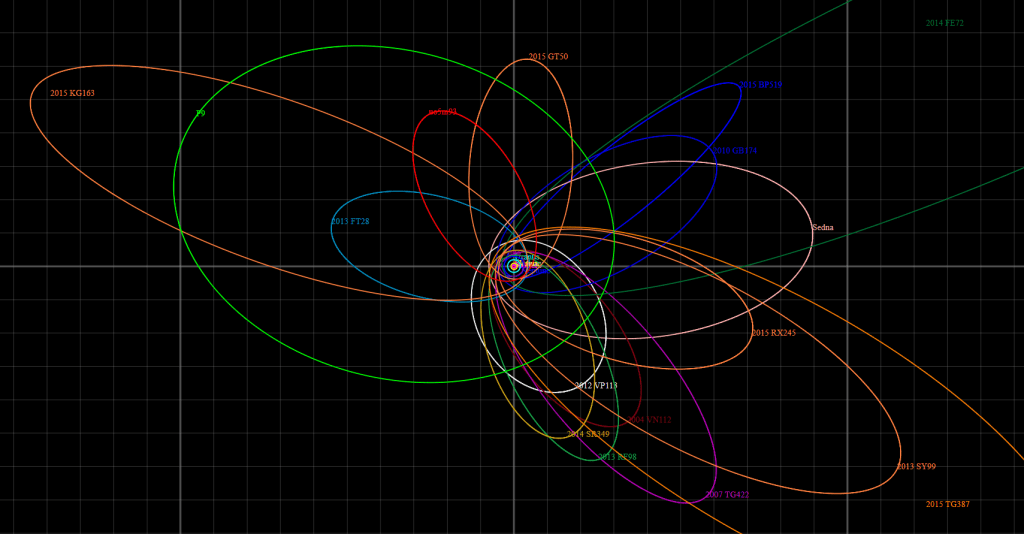
Since the 2016 Batygin and Brown paper, the catalog of distant solar system objects has grown, and many of the new discoveries appear to support the Planet Nine hypothesis — though each one also intensifies the debate over observational bias.
In 2017, the team announced additional ETNOs with orbital properties consistent with Planet Nine's gravitational influence. Objects like 2015 BP₅₁₉ exhibited orbital inclinations so extreme — nearly 54 degrees to the ecliptic — that Batygin and Brown concluded they could only be explained by perturbations from a distant massive body over billions of years.
2015 TG₃₈₇, nicknamed "The Goblin," was announced in 2018 by Sheppard, Trujillo, and Nathan Kaib. With a perihelion at approximately 65 AU and a semi-major axis of roughly 1,140 AU, The Goblin never ventures close enough to the gas giants to be influenced by them. Its orbital dynamics, the discoverers argued, are therefore "pristine" — a direct read-out of whatever shaped the outer solar system. Its elongated, tilted orbit was consistent with Planet Nine's predicted influence.
In 2019, Sheppard and colleagues announced 2018 VG₁₈, nicknamed "Farout," with a perihelion around 123 AU — the most distant perihelion of any known solar system object at the time. The following year, 2018 AG₃₇, nicknamed "Farfarout," pushed that record to approximately 132 AU. These objects, while not yet fully characterized in their orbits (which requires years of observation to pin down), are beginning to map the territory where Planet Nine's influence would be most pronounced.
By 2021, Batygin and Brown had updated their analysis to include a larger sample of ETNOs. Their refined model suggested Planet Nine's mass might be closer to 5–7 Earth masses, slightly lower than initial estimates, with a semi-major axis of approximately 400–800 AU and perihelion somewhere between 300 and 380 AU. The anti-alignment signature remained statistically robust.
The Skeptics and the Selection Bias Problem
The Planet Nine hypothesis has not gone unchallenged. A substantial contingent of astronomers argues that the orbital clustering of ETNOs is not a real signal but an observational selection bias — a systematic artifact of how and where telescopes look at the sky.
The most influential critique came from a team led by Katerina Volk and Renu Malhotra of the University of Arizona in a 2017 paper, and was later expanded by Ann-Marie Madigan of the University of Colorado and collaborators. In 2019, a particularly pointed challenge came from a study by Kevin Napier, Fred Adams, Juliette Becker, and colleagues at the University of Michigan, published in The Planetary Science Journal in 2021. Analyzing the OSSOS (Outer Solar System Origins Survey) dataset, which was specifically designed to correct for detection biases, they found no statistically significant clustering of ETNOs. In other words, when you account for where telescopes have and haven't looked, the apparent clustering largely or entirely disappears.
The core argument of the skeptics runs as follows: most trans-Neptunian object surveys are not all-sky surveys. They tend to concentrate on regions near the ecliptic (the plane of the solar system) and on specific windows of sky that are well-positioned for observation. Objects in certain orbital configurations are therefore systematically more likely to be discovered than others. If Planet Nine's apparent evidence rests on a sample of only a few dozen objects, many of which were found in overlapping survey footprints, the apparent clustering could be a statistical ghost — a pattern projected onto incomplete data.
Batygin and Brown have responded vigorously to this critique. They argue that the OSSOS dataset, while better controlled, is also smaller and less sensitive to the specific orbital configurations they are studying. They contend that when the full population of known ETNOs — not just OSSOS objects — is analyzed while accounting for survey biases, the clustering signal remains. The debate has become highly technical, with each side disputing the other's statistical methodology in papers that sometimes read more like dueling legal briefs than scientific communications.
Additional alternative hypotheses have been proposed. Madigan and collaborators have suggested a mechanism called "collective gravity" or the "inclination instability", by which a massive disk of smaller trans-Neptunian objects, collectively, might produce clustering-like effects without requiring a single large planet. Others have proposed that early close stellar encounters — a passing star brushing through the outer solar system billions of years ago — could have shaped ETNO orbits into the patterns we observe.
The honest assessment, as of the mid-2020s, is that the Planet Nine hypothesis remains unconfirmed but unrefuted. The statistical debate is genuine, and the skeptics have raised legitimate concerns. But Batygin and Brown's model has also made specific, testable predictions that have been independently confirmed in several cases — a hallmark of a productive scientific hypothesis, even if the planet itself remains undetected.
How Planet Nine Might Have Formed — Or Arrived
If Planet Nine is real, explaining how it ended up at hundreds of AU from the Sun is its own theoretical challenge. The current planetary formation models hold that planets form in the protoplanetary disk close to the Sun, where there is sufficient density of gas and dust for accretion. The region beyond 50–100 AU is too sparse for in-situ formation of a large body on any reasonable timescale. So if Planet Nine is there, it either formed elsewhere and migrated, or it came from somewhere else entirely.
The most widely favored scenario is inward formation followed by outward ejection. In the early solar system, four or more giant-planet cores may have begun to form in the region now occupied by Jupiter, Saturn, Uranus, and Neptune. The gravitational interactions among these nascent giants were chaotic and violent. Computer simulations of the early solar system's dynamical evolution — particularly the "Nice model" developed by researchers including Alessandro Morbidelli, Harold Levison, and colleagues — suggest that multiple close gravitational encounters between the giant planets scattered them to their present orbits. In this framework, a fifth giant-planet core could have been ejected from the inner planetary system by a close encounter with Jupiter, sent spiraling outward on an extremely eccentric orbit. Over billions of years, subsequent interactions with passing stars in the Sun's birth cluster could have raised the object's perihelion, parking it at hundreds of AU in a more stable configuration.
A more exotic possibility is that Planet Nine is a captured rogue planet — a world that formed around another star and was subsequently captured by the Sun's gravity during the crowded stellar nursery period 4.5 billion years ago. This scenario is not impossible; stellar capture events, while rare, occur at non-negligible rates in dense birth clusters, and a captured body would naturally end up in a wide, eccentric, inclined orbit consistent with Planet Nine's predicted parameters.
A third hypothesis, proposed by James Unwin and colleagues, suggests Planet Nine could be a primordial black hole — a sub-planetary-mass black hole formed in the very early universe. In this scenario, the gravitational effects on ETNOs would be identical to those of a planet of the same mass. The primordial black hole hypothesis is considered highly speculative and is not favored by most planetary scientists, but it illustrates the breadth of possibilities that the observational constraints still allow.
The Search Campaigns: Telescopes and Techniques
Finding Planet Nine requires covering enormous swaths of sky at extreme sensitivity. Astronomers have pursued the hunt through multiple observational strategies.
The Subaru Telescope Survey
Mike Brown and Konstantin Batygin, along with collaborators including Sheppard and Trujillo, have been conducting systematic surveys of the outer solar system using the Subaru Telescope at Mauna Kea, Hawaii. The Subaru's wide-field Hyper Suprime-Cam instrument can image large patches of sky in a single exposure, making it well-suited for detecting faint, slow-moving objects. The survey targets areas of sky predicted by the Planet Nine model to contain the highest density of distant objects, incrementally narrowing the region where Planet Nine itself might lurk.
Searching for Heat Signatures
At distances of 400–800 AU, Planet Nine would be too cold to emit much thermal (infrared) radiation. However, it might still show up in archival data from infrared sky surveys. The Infrared Astronomical Satellite (IRAS), which operated in 1983, and WISE (Wide-field Infrared Survey Explorer), which operated from 2009 to 2011 and then intermittently thereafter (rebranded as NEOWISE), both surveyed large portions of the sky in infrared wavelengths. Teams have combed through IRAS and WISE catalogs looking for unidentified point sources that moved between epochs in ways consistent with a Planet Nine orbit. Several intriguing candidates have been proposed — including a possible IRAS detection reported by a team including Wouter Vlemmings and colleagues in 2021 — but none has been confirmed as Planet Nine.
The Vera C. Rubin Observatory: The Game-Changer
The most transformative new instrument for the Planet Nine search is the Vera C. Rubin Observatory (formerly known as the Large Synoptic Survey Telescope, or LSST) in Chile. Equipped with an 8.4-meter primary mirror and the world's largest digital camera — a 3,200-megapixel array — the Rubin Observatory is designed to repeatedly image the entire southern sky every few nights to a depth far beyond previous surveys. First light was achieved in late 2024, with the Legacy Survey of Space and Time (LSST) survey beginning its full operations in 2025.
For Planet Nine, the Rubin Observatory is potentially decisive in two ways. First, it will discover hundreds or thousands of new ETNOs, giving astronomers the statistical sample necessary to definitively test whether clustering is real or illusory. If the clustering signal disappears in a large, unbiased Rubin dataset, the evidence for Planet Nine evaporates. If it persists and strengthens, the case becomes overwhelming. Second, the Rubin Observatory is sensitive enough to potentially detect Planet Nine directly — if it lies within the surveyed sky footprint and is brighter than approximately magnitude 24.5.
The critical caveat is geometry: Planet Nine's predicted orbit is tilted relative to the ecliptic and its perihelion and aphelion are uncertain within wide ranges. Depending on where Planet Nine currently is in its ~15,000-year orbit, it may or may not fall within Rubin's survey area. Astronomers have proposed optimized search strategies that prioritize regions of sky most likely to contain Planet Nine given the current best dynamical constraints. But there is no guarantee of a quick result. If Planet Nine is currently near aphelion — its farthest point from the Sun — it could be extremely faint and in a region of sky Rubin surveys infrequently.
Planet Nine and the Architecture of the Solar System
Beyond the specific question of whether Planet Nine exists, its potential presence illuminates deeper questions about why our solar system looks the way it does.
One of the long-standing puzzles in planetary science is the missing super-Earths problem. As mentioned earlier, exoplanet surveys show that the most common planetary type in the galaxy is the super-Earth to mini-Neptune class — worlds with one to ten Earth masses. Yet our solar system, conspicuously, has none in the known eight planets. The inner planets are small and rocky; the outer planets are gas and ice giants. If Planet Nine is real, it fills this gap, suggesting that super-Earths are not absent from our solar system but merely hiding in the dark, at extreme distances.
The discovery of Planet Nine would also bear on models of late solar system dynamical instability. The Nice model and its successors invoke a period roughly 3.9 billion years ago (associated with the Late Heavy Bombardment, a spike in cratering on the Moon and other bodies) during which the giant planets reshuffled their orbits. Planet Nine's hypothetical ejection from the inner solar system, if confirmed, would provide direct physical evidence for this violent early period — a fossil of the solar system's turbulent youth, preserved in ice and darkness at the solar system's frontier.
There is also the question of the inclination of the Sun. The Sun rotates on its axis at an angle of roughly 6 degrees relative to the average plane of the ecliptic. This slight tilt has long been unexplained, as the Sun's rotation should reflect the initial angular momentum of the solar nebula, which should be closely aligned with the planets' orbital plane. Batygin and collaborators have proposed that Planet Nine's mass and orbital inclination, acting over billions of years, could have tilted the entire planetary system by 6 degrees relative to the Sun's original equator — effectively explaining the Sun's apparent tilt as an artifact of Planet Nine's gravitational influence. This is a bold, specific, and testable prediction.
Key Milestones in the Planet Nine Story
| Year | Event |
|---|---|
| 2003 | Discovery of Sedna, the first object with no plausible explanation in standard solar system models |
| 2006 | Pluto reclassified as dwarf planet; solar system officially has eight planets |
| 2012 | Discovery of 2012 VP₁₁₃ ("Biden"); orbital clustering of ETNOs noted |
| 2014 | Trujillo and Sheppard publish paper in Nature noting argument-of-perihelion clustering |
| 2016 | Batygin and Brown publish landmark Planet Nine hypothesis in The Astronomical Journal |
| 2017 | Discovery of 2015 BP₅₁₉ with extreme orbital inclination |
| 2018 | "The Goblin" (2015 TG₃₈₇) announced; perihelion at ~65 AU |
| 2019 | "Farout" (2018 VG₁₈) confirmed, perihelion at ~123 AU; OSSOS team publishes critique of clustering evidence |
| 2021 | "Farfarout" (2018 AG₃₇) confirmed at ~132 AU; Michigan team publishes formal rebuttal |
| 2021 | Possible IRAS detection of a distant object reported, not confirmed |
| 2024–25 | Vera C. Rubin Observatory achieves first light; LSST survey begins |
The Odds: Where Does the Science Stand?
As of 2025–2026, the scientific community remains genuinely divided, though perhaps leaning toward the hypothesis's validity. The original statistical argument from Batygin and Brown — roughly 1-in-14,000 probability of chance clustering — has been challenged and weakened by bias analyses, but never fully dismantled. The discovery of object after object with orbital properties consistent with Planet Nine's predictions has sustained interest, even as each new object is also subject to the selection bias critique.
Batygin himself has expressed growing confidence. In interviews and papers published through 2023 and 2024, he has maintained that the cumulative evidence — the clustering, the high-inclination ETNOs, the perpendicular orbits, the solar tilt — forms a coherent, mutually reinforcing picture that is difficult to explain by any mechanism other than a distant massive planet. He has estimated the probability of Planet Nine's existence at somewhere between 70 and 90 percent, acknowledging the genuine uncertainties while standing firmly by the hypothesis.
Brown has been slightly more cautious in recent statements, emphasizing that only direct detection will settle the question. "We know what it should look like. We know roughly where in the sky to look. The only question is whether we have a telescope sensitive enough and we've pointed it in the right direction," he said in a 2023 public lecture.
The skeptics, for their part, have not abandoned their position. The OSSOS result remains the most rigorous dataset available, and its null result is not trivially explained away. Proponents of alternative mechanisms — collective gravity, early stellar encounters — continue to publish and refine their models. The field is in exactly the state that productive scientific controversies should be: contested, actively researched, and approaching a decisive test.
Why It Matters
The search for Planet Nine is not merely a treasure hunt for a missing world. It is a probe of the deepest questions in planetary science: How do solar systems form? Are the eight known planets truly all there is, or is our picture of our own neighborhood still radically incomplete? What is the nature of the objects at the farthest reaches of our Sun's gravitational domain?
The answer also has philosophical weight. In the entire history of human astronomy, the solar system has been repeatedly revealed to be larger and stranger than previously imagined. The discovery of Uranus in 1781 doubled the known size of the solar system overnight. Neptune's 1846 discovery came through exactly the kind of mathematical prediction — detecting an unseen body through its gravitational influence on a known one — that underpins the Planet Nine hypothesis. Pluto's discovery in 1930, and its subsequent demotion, reshaped our definition of what a planet is. Each chapter has deepened our understanding of where we live and how our corner of the cosmos came to be.
The Vera C. Rubin Observatory, the continued expansion of the known ETNO population, and the refinement of dynamical models are converging on what may be the defining discovery in solar system science of the 21st century. Or they may confirm that the solar system's edge is a quieter, less dramatic place than Planet Nine's advocates believe — that the clustering is noise, and the ghost is not there.
Either way, astronomy wins. A confirmed Planet Nine would rewrite textbooks and reshape our understanding of planetary systems across the galaxy. A confirmed null result would still yield the largest and most complete catalog of distant solar system objects ever assembled, unlocking new insights into the solar system's formation and structure. Science is, in the end, what you do when you do not yet know the answer.
Conclusion
The hunt for Planet Nine represents the leading edge of solar system exploration in an era when interplanetary probes and orbital telescopes have become routine tools. A hypothetical world of five to ten Earth masses, orbiting the Sun at perhaps 500 AU, plausibly explains the otherwise puzzling clustering of extreme trans-Neptunian objects, the extraordinary inclinations of some distant orbits, and even the slight tilt of the Sun's rotation axis. Championed most forcefully by Konstantin Batygin and Mike Brown of Caltech, the hypothesis has generated an enormous body of observational and theoretical work since its formal articulation in 2016, while also attracting serious and well-grounded criticism from researchers who argue the apparent signal is an artifact of incomplete sky surveys.
The Vera C. Rubin Observatory's Legacy Survey of Space and Time, now operational, stands to be the arbiter. Within the coming decade, its deep, unbiased, all-sky catalog of outer solar system objects will either cement the clustering signal as real and Planet Nine as all but certain, or dissolve it into statistical noise. For now, Planet Nine remains what its informal designation suggests — a ghost: compelling, elusive, present in the equations and perhaps absent from the sky, or present in the sky and simply awaiting the right instrument at the right moment to step out of the dark and into the light of discovery.
Sources and key references include: Batygin, K. & Brown, M.E. (2016), "Evidence for a Distant Giant Planet in the Solar System," The Astronomical Journal, 151, 22; Trujillo, C.A. & Sheppard, S.S. (2014), "A Sedna-like body with a perihelion of 80 astronomical units," Nature, 507, 471–474; Napier, K.J., Gerdes, D.W., Lin, H.W., et al. (2021), "No Evidence for Orbital Clustering in the Extreme Trans-Neptunian Objects," The Planetary Science Journal, 2, 59; Sheppard, S.S., Trujillo, C., Tholen, D.J. & Kaib, N. (2019), "A New High Perihelion Trans-Plutonian Inner Oort Cloud Object: 2015 TG387," The Astronomical Journal, 157, 139; Brown, M.E. & Batygin, K. (2021), "The Orbit of Planet Nine," The Astrophysical Journal Letters, 910, L20.