NASA Mars Curiosity Rover
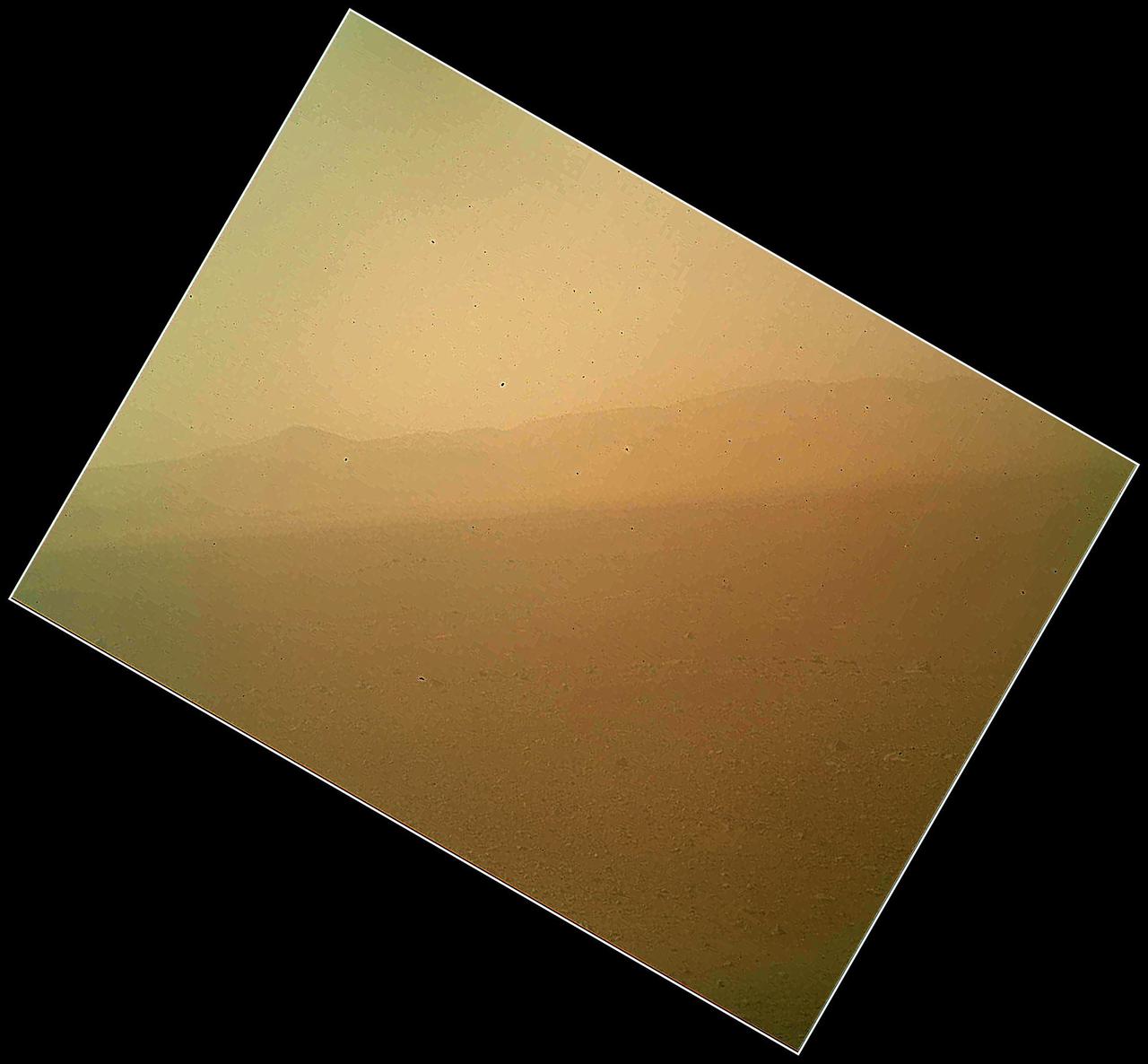
For over a decade, a car-sized robot has been silently rolling across the rust-colored plains and sculpted ridges of an alien world, drilling into ancient rock, sniffing the atmosphere, and sending back data that is fundamentally reshaping our understanding of whether Mars once harbored the conditions necessary for life. NASA's Mars Science Laboratory rover — universally known as Curiosity — has become one of the most consequential scientific instruments ever built, a roving geologist and chemist stationed permanently 140 million miles from home. Since touching down in Gale Crater on August 6, 2012, Curiosity has driven more than 33 kilometers, climbed hundreds of vertical meters up the lower slopes of a towering mountain, survived radiation storms and dust seasons, endured wheel damage and software glitches, and kept transmitting science. It remains operational in 2025, well into its fourth extended mission phase, still delivering discoveries that make headlines and challenge assumptions about early planetary history. This is the story of how Curiosity came to be, how it works, what it has found, and why, more than thirteen years after landing, it still matters.
Origins and Mission Genesis
The Science Case for a New Rover
By the mid-2000s, NASA's Mars Exploration Rovers — Spirit and Opportunity, which landed in January 2004 — had transformed understanding of Mars' surface by confirming that liquid water once flowed there. But those golf-cart-sized rovers were limited in analytical power; they could identify minerals suggestive of watery environments but could not comprehensively interrogate the chemistry of rocks and soil at the molecular level needed to determine whether Mars ever had the conditions to support microbial life.
The Mars Science Laboratory (MSL) program was conceived to answer that grander question: was Mars ever habitable? NASA formally approved the project in 2003, placing it in the "flagship" mission class — the agency's most ambitious and expensive category of robotic planetary science. The science objectives were straightforward in statement but demanding in execution: characterize the climate and geology of a landing site, assess whether that site could have hosted microbial life, and study the radiation environment on the Martian surface to prepare for future human missions.
Designing the Mission
Development of MSL began in earnest around 2004 at NASA's Jet Propulsion Laboratory (JPL) in Pasadena, California. The program was managed by JPL, which has been responsible for every Mars surface mission in the agency's history. The original target launch window was 2009, but the complexity of the engineering — particularly the novel sky crane landing system — pushed the schedule to 2011, adding to the mission's cost and generating significant Congressional scrutiny.
The rover itself was designed to be dramatically larger and more capable than its predecessors. Where Spirit and Opportunity were roughly the size of a riding lawn mower and weighed about 185 kilograms each, Curiosity would be roughly the size of a Mini Cooper automobile and weigh 899 kilograms. This scale increase enabled a far more sophisticated science payload and a more robust power system, but it also meant that the tried-and-tested airbag landing method used for previous rovers was simply not viable. A new approach was required.
Engineering: Building Curiosity
Structure and Mobility
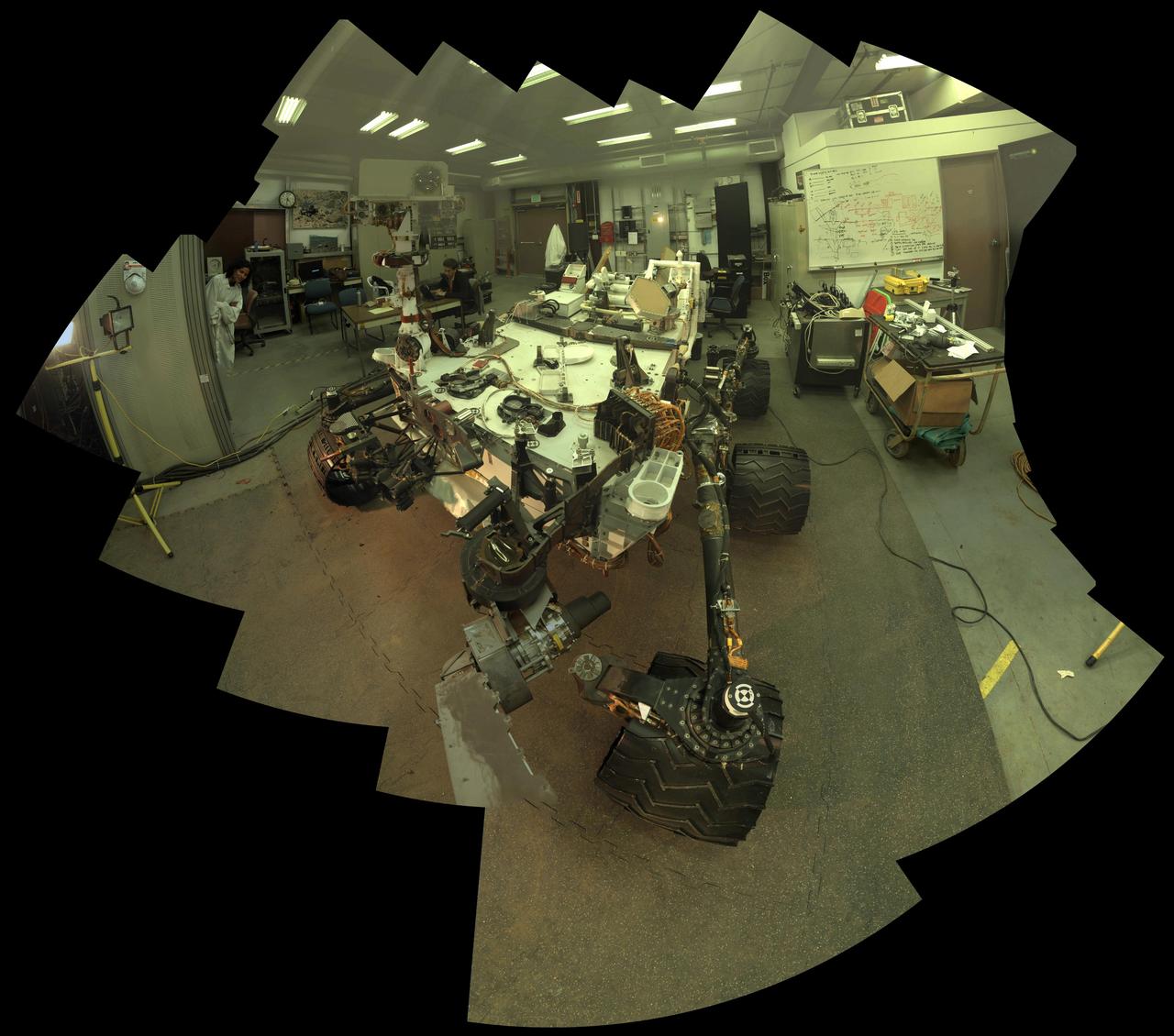
Curiosity's body — the "warm electronics box" — is an aluminum structure roughly the size and shape of a large SUV body, designed to protect sensitive electronics from the extreme temperature swings of the Martian environment, which range from about -73°C (-100°F) at night to 20°C (70°F) during the warmest afternoons in equatorial regions. The rover sits on a six-wheel rocker-bogie suspension system, an articulated design that allows all six wheels to maintain contact with the surface regardless of terrain irregularities. Each wheel is 50 centimeters (about 20 inches) in diameter, machined from aluminum with a pattern of chevron-shaped grooves designed to provide traction on loose soil and rocky ground.
The rocker-bogie system, first used on the Mars Pathfinder Sojourner rover in 1997, allows the rover to tilt as much as 45 degrees without tipping over, and to climb over obstacles up to 65 centimeters (about 25 inches) tall. A sophisticated mobility control system coordinates the six independently driven, four-steerable wheels.
Power: The Nuclear Heartbeat
One of the most significant engineering decisions in Curiosity's design was the choice of power source. Previous Mars rovers relied on solar panels, but solar power has significant limitations: dust accumulation reduces output over time (a factor that ultimately ended Spirit's mission), and solar energy is unavailable at night or during severe dust storms. MSL engineers chose a Multi-Mission Radioisotope Thermoelectric Generator (MMRTG) — a nuclear battery that converts heat from the natural radioactive decay of plutonium-238 dioxide into electricity.
At the time of landing, the MMRTG provided approximately 110 watts of electrical power and generated substantial heat used to warm the rover's electronics during frigid Martian nights. Unlike solar panels, the MMRTG degrades slowly and predictably — plutonium-238 has a half-life of 87.7 years — meaning Curiosity's power output decreases by only a few percent each year. The roughly 4.8 kilograms of plutonium oxide fuel loaded into the MMRTG was sufficient to power the rover for at least one full Martian year (about 687 Earth days), and the system remains viable well into the 2030s, though output has declined meaningfully since landing. As of the mid-2020s, Curiosity's power output has declined to roughly 90 watts, requiring mission planners to be increasingly selective about which instruments and activities to prioritize on any given sol (Martian day).
The Science Payload: A Rolling Laboratory
Curiosity carries ten science instruments weighing a total of about 75 kilograms — more than ten times the science payload mass of Spirit and Opportunity combined.
ChemCam (Chemistry and Camera) fires a pulsed laser at rocks and soil from up to 7 meters away and analyzes the resulting plasma with a spectrometer — a technique called Laser-Induced Breakdown Spectroscopy (LIBS). ChemCam can identify the elemental composition of a target without the rover needing to physically touch it, and its Remote Micro Imager (RMI) provides high-resolution images of distant targets. The instrument was jointly developed by Los Alamos National Laboratory and CNES, the French space agency.
SAM (Sample Analysis at Mars) is the largest and most complex instrument, a miniaturized chemistry laboratory occupying much of the rover's interior volume. SAM uses gas chromatography, mass spectrometry, and tunable laser spectrometry to identify and measure organic compounds, atmospheric gases including carbon dioxide, nitrogen, argon, and crucially methane, and isotope ratios that reveal the history of planetary processes. SAM has 74 sample cups for processing powdered rock and soil samples.
CheMin (Chemistry and Mineralogy) uses X-ray diffraction to identify minerals in rock and soil samples delivered to it by the rover's drill. Unlike elemental analysis, mineral identification reveals the history of formation conditions — specifically, whether minerals formed in the presence of water and at what temperature and pH.
MAHLI (Mars Hand Lens Imager) is a camera on the rover's arm that can focus from millimeters to infinity, serving as both a microscopic imager of rock textures and a tool for inspecting the rover's own hardware. It has taken iconic selfie portraits of Curiosity assembled from dozens of individual images.
APXS (Alpha Particle X-ray Spectrometer) measures the elemental composition of rocks and soils through bombardment with alpha particles and X-rays, a technique with a long heritage in Mars rover missions.
REMS (Rover Environmental Monitoring Station), provided by the Spanish Centro de Astrobiología, measures air temperature, ground temperature, humidity, ultraviolet radiation, atmospheric pressure, and wind speed and direction — building a long-term record of Martian meteorology.
RAD (Radiation Assessment Detector) characterizes the radiation environment on the Martian surface, crucial data for future human exploration planning. RAD operated throughout the cruise from Earth and measured radiation in space as well as on the surface.
DAN (Dynamic Albedo of Neutrons), provided by the Russian Federal Space Agency, detects hydrogen in the subsurface by bombarding the ground with neutrons and detecting back-scattered radiation — an indirect method for finding subsurface water or ice.
MARDI (Mars Descent Imager) captured video footage of the final minutes of descent and landing, providing surface context imagery.
Navcams and Hazcams (navigation and hazard avoidance cameras) are engineering cameras that help rover drivers on Earth plan routes and identify obstacles, but their images are also scientifically valuable.
The Drill: Penetrating Mars
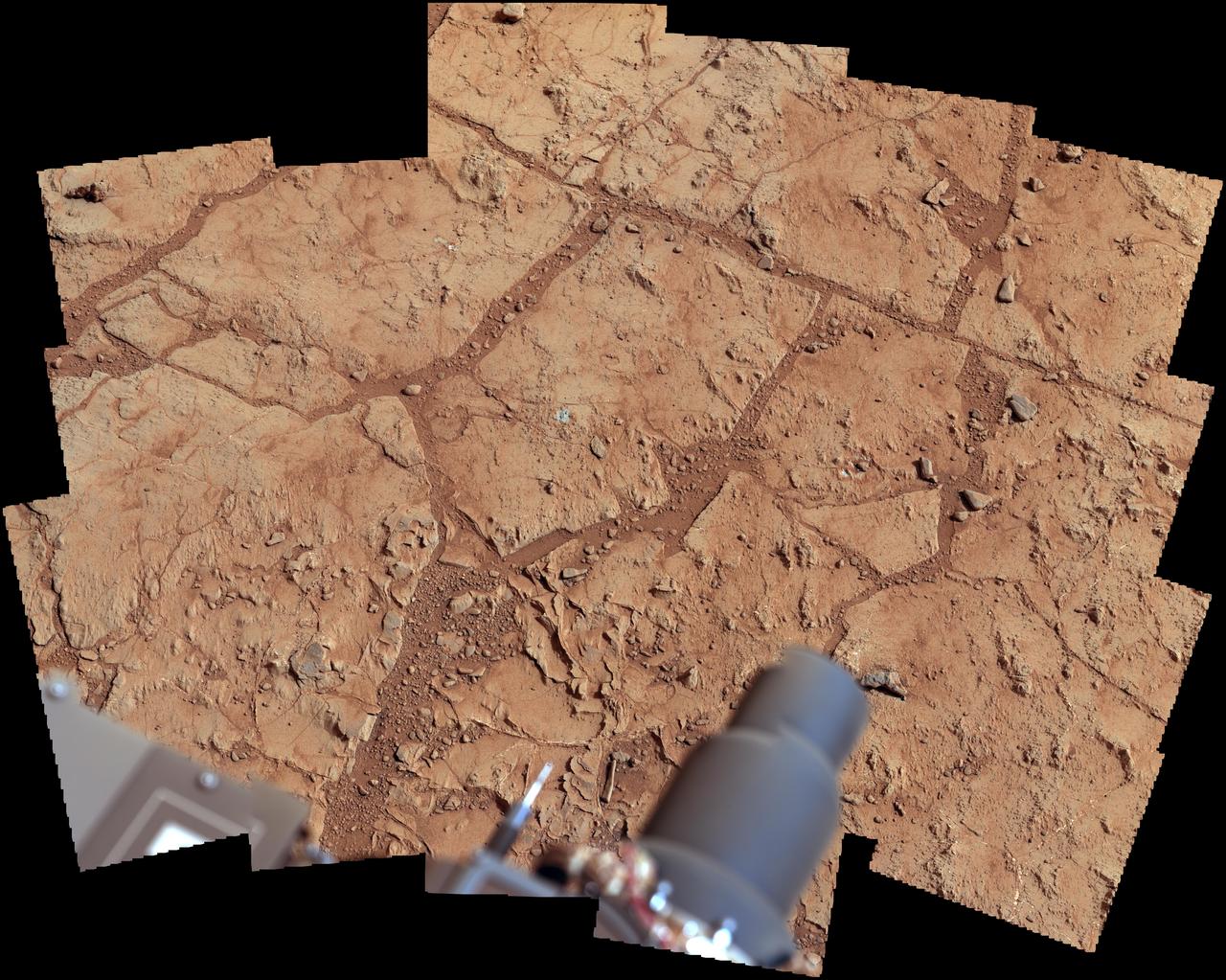
Among Curiosity's most powerful capabilities is its percussive drill, mounted on the end of a two-meter robotic arm. The drill can bore 6 centimeters (about 2.5 inches) into rock, extracting a powder of pulverized material that is then portioned and delivered to CheMin and SAM for analysis. This capability to sample the interior of rocks — shielded from surface radiation and weathering — was entirely unprecedented in Mars exploration. No previous Mars surface mission had penetrated the rock surface.
The drill suffered a serious malfunction in late 2016 when the feed mechanism failed. For 18 months, engineers at JPL developed a creative workaround: a new drilling technique that uses the rover's weight and arm motion rather than the feed actuator. This "feed-extended" or "percussion-only" drilling approach was successfully tested on Mars in 2018 and restored full drilling capability, a remarkable feat of remote engineering.
Launch, Cruise, and the Seven Minutes of Terror
Lift-off and the Journey to Mars
Curiosity launched from Cape Canaveral Air Force Station, Florida, on November 26, 2011, atop an Atlas V 541 rocket provided by United Launch Alliance. The launch window was chosen based on planetary alignment — Mars and Earth are in optimal positions for transit approximately every 26 months. The spacecraft — comprising Curiosity, its aeroshell, descent stage, and cruise stage — was placed on an 8.5-month, 567-million-kilometer (352-million-mile) interplanetary trajectory.
During the cruise phase, Curiosity was largely dormant inside its aeroshell, oriented with its heat shield facing the Sun. The RAD instrument operated throughout, and periodic health checks confirmed spacecraft systems remained functional. In total, about 350 commands were sent to the spacecraft during cruise.
Entry, Descent, and Landing
The approach and landing phase — formally the Entry, Descent, and Landing (EDL) sequence — was described by mission engineers as "seven minutes of terror" because the entire automated sequence from atmospheric entry to touchdown takes approximately seven minutes, and the radio signal from Mars takes more than thirteen minutes to reach Earth at the distances involved during Curiosity's landing. By the time mission controllers received the first signal indicating atmospheric entry had begun, the rover had already landed — or crashed.
The EDL sequence was the most technically complex ever attempted in Mars exploration:
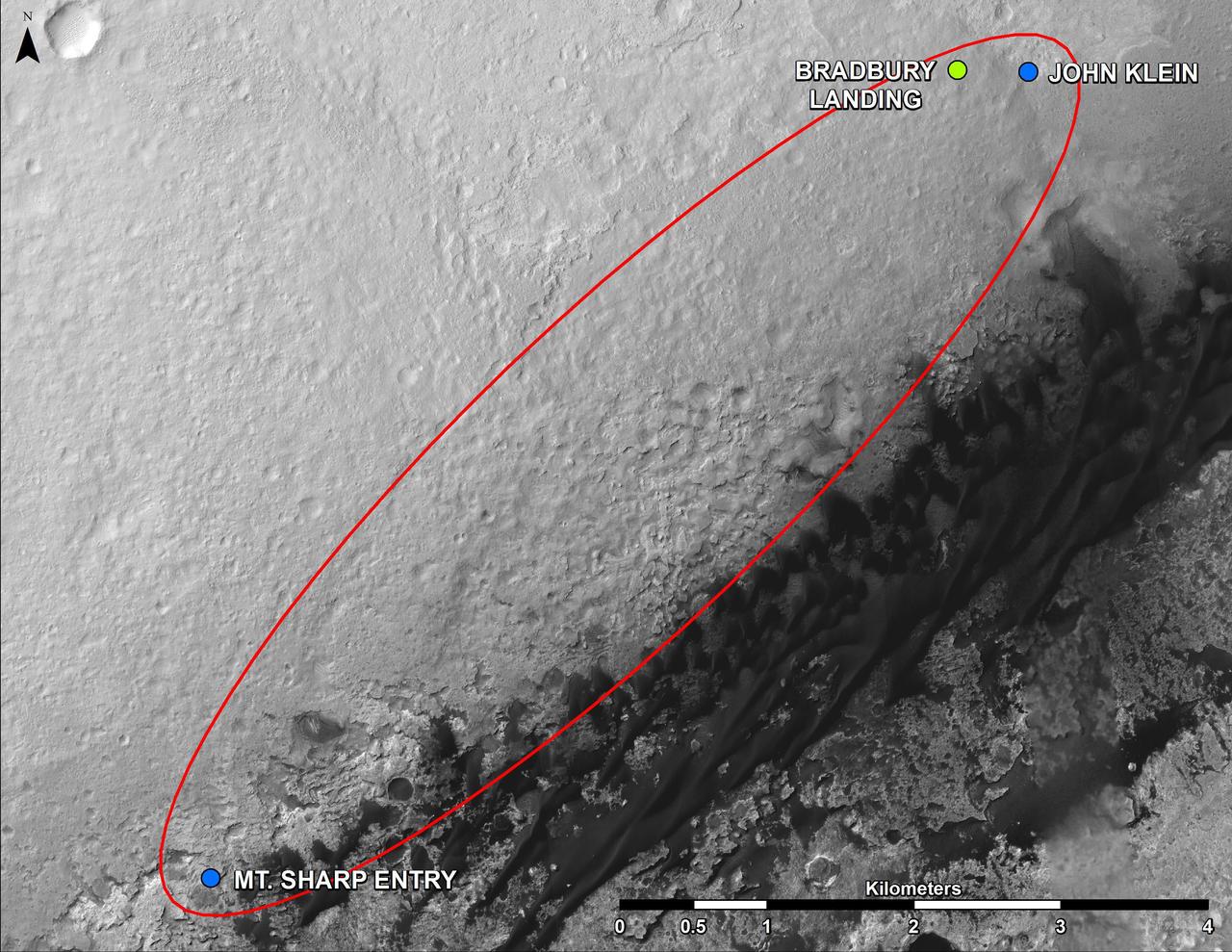
- Guided entry: Unlike previous Mars landers, the MSL capsule used small rocket thrusters during entry to steer its trajectory, making it the first guided Mars entry in history. This reduced the landing ellipse to just 7 by 20 kilometers — dramatically more precise than prior missions.
- Atmospheric deceleration: The 4.5-meter heat shield experienced temperatures exceeding 2,100°C (3,800°F) during atmospheric entry as aerodynamic drag slowed the spacecraft from approximately 5,900 m/s (13,200 mph) to around 400 m/s (900 mph) in about four minutes.
- Parachute deployment: At supersonic speeds (about Mach 1.7), a 21.5-meter diameter supersonic parachute deployed, the largest ever used on a Mars mission, slowing the vehicle further.
- Heat shield jettison and radar activation: The heat shield separated, exposing the rover to the Martian atmosphere and activating the radar that would measure descent velocity and altitude.
- Powered descent: Eight Mars Lander Engines (MLEs) ignited, slowing the vehicle to walking pace. The backshell and parachute separated and were blown away.
- Sky crane: In the final moments, the descent stage — hovering on its engines — lowered Curiosity on three braided nylon bridles and an electrical umbilical to a landing height. When Curiosity's wheels touched the surface and sensors detected the tension in the bridles drop, the cords were severed and the descent stage flew away to crash some distance away.
At 10:32 PM Pacific Daylight Time on August 5, 2012 (05:32 UTC, August 6, 2012), Curiosity touched down in Gale Crater. The first signal confirming safe landing — greeted by tearful celebrations at JPL — arrived at 10:31 PM PDT after accounting for the light-travel time. Mission controllers saw the event live via data arriving simultaneously with first hazcam images showing the rover safely on the ground, wheels down, in Gale Crater.
Why Gale Crater?
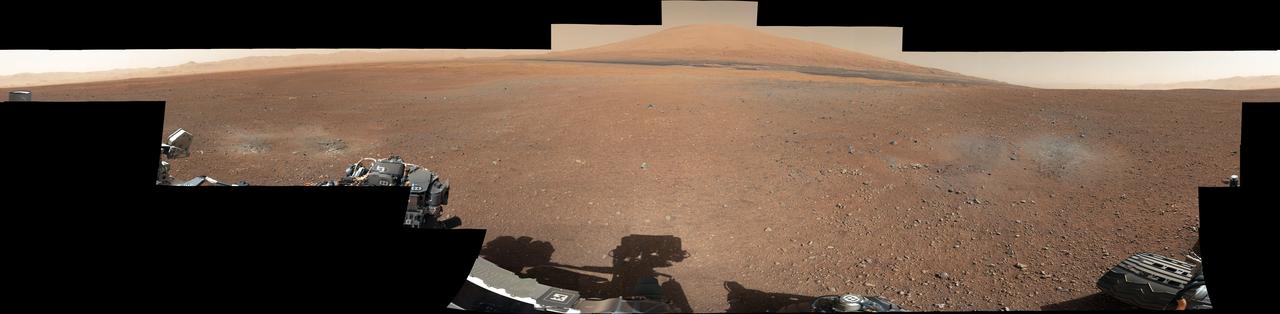
Gale Crater was selected from a field of dozens of candidate landing sites through a years-long community review process. The 154-kilometer-diameter impact crater was formed roughly 3.5 to 3.8 billion years ago. Its defining feature is Aeolis Mons — a central mound of layered sedimentary rock rising about 5.5 kilometers above the crater floor, informally called Mount Sharp after geologist Robert Sharp. The layered stratigraphy of Mount Sharp represents a sequential record of Martian geological and climatic history spanning hundreds of millions of years, readable in the same way geologists read the layers of the Grand Canyon. The lower slopes of the mound, where Curiosity has been climbing, are accessible from the landing site and contain minerals — including clay minerals and sulfates — that formed in the presence of water and are thus prime targets for habitability research.
The Mission: Exploration and Discovery
The Early Mission: Yellowknife Bay
After landing and a period of post-landing checkouts, Curiosity drove to a flat area called Yellowknife Bay, reaching it in December 2012. In February 2013, the rover drilled its first rock hole into a fine-grained sedimentary rock called mudstone at a drill site named "John Klein." The results, announced in March 2013, were stunning: the rock contained sulfur, nitrogen, hydrogen, oxygen, phosphorus, and carbon — the key chemical ingredients for life as we know it. Crucially, the minerals indicated that the ancient lake environment that deposited the mudstone was fresh water (not hypersaline or extremely acidic), that it had a mild pH, and that it had chemical energy sources available — an environment that would have been not merely tolerable but potentially hospitable to microbial life.
The Yellowknife Bay findings were Curiosity's first major result and one of the most significant announcements in the history of Mars exploration: Mars was definitively confirmed to have once had habitable environments.
Climbing Mount Sharp
After the Yellowknife Bay science bonanza, Curiosity spent 2013 and 2014 driving south toward the base of Mount Sharp, a journey of about 8 kilometers. Along the way, it crossed various geological terrains and measured background radiation levels. The drive was not without trouble — by late 2013, significant damage to the aluminum wheels from sharp rocks (called "Murchison" rocks) prompted route changes to seek smoother terrain. The wheel damage, while alarming in early images, was ultimately managed through careful route selection and monitoring.
Curiosity reached the base of Mount Sharp in September 2014 and has been climbing ever since. The mountain's lower slopes preserve a geological record of Mars' transition from a wet, potentially habitable early period to the cold, arid desert it is today — and studying that transition is the core of Curiosity's extended scientific mission.
Methane: A Tantalizing Mystery
Among the most consequential and controversial findings of the Curiosity mission has been the detection of methane in the Martian atmosphere. Methane is significant because on Earth, most atmospheric methane is produced by biological activity. On Mars, it could also be produced by geological processes (serpentinization of olivine-bearing rocks with water). Either way, because methane is destroyed by ultraviolet radiation over timescales of centuries, any methane present in the Martian atmosphere must have been recently released.
SAM detected background levels of methane at about 0.7 parts per billion by volume (ppbv) — near the detection limit — and then, in June 2019, detected a dramatic spike of approximately 21 ppbv of methane over a period of several sols. This was the highest methane concentration ever measured at the Martian surface. Subsequent sols saw the concentration return to background levels, suggesting a local, transient source. The origin of the spike remains unexplained. Complicating the picture, the European Space Agency's Mars Express orbiter has also detected methane plumes from orbit, while the ExoMars Trace Gas Orbiter (TGO), launched in 2016 specifically to detect trace gases, has so far not confirmed consistent methane above its detection threshold — a discrepancy that remains an active area of scientific debate.
Organic Molecules
In 2018, Curiosity announced two landmark findings related to organic chemistry. First, SAM detected ancient organic molecules — thiophene, methanethiol, dimethylsulfide, and other sulfur-bearing organics — preserved in 3.5-billion-year-old mudstone from the Murray formation. These are the most complex organic molecules found on Mars, though the team was careful to note that they could have been produced by non-biological processes (including meteorite delivery) or by geological chemistry involving sulfur. Nevertheless, finding organics preserved over billions of years was itself remarkable and suggested Mars' chemical record is far richer than previously thought.
Second, SAM measured seasonal variations in methane concentration, with levels peaking in northern summer and declining in northern winter — behavior consistent with a reservoir of methane that releases gas as temperatures rise. The cyclic, seasonal pattern argued against contamination as an explanation and pointed to a genuine Martian phenomenon.
Boron, Nitrogen, and the Chemistry of Habitability
Beyond organic molecules, Curiosity's instruments have systematically catalogued the chemical complexity of Gale Crater's ancient lakebeds. The detection of boron in veins of calcium sulfate minerals was notable because, on Earth, boron is associated with environments where water evaporated from briny lakes, and it is a key element in the chemical stability of RNA. Nitrogen compounds essential to all known life were also detected, adding to the picture of a chemically rich ancient environment.
Radiation: The Human Factor
RAD's measurements of the Martian radiation environment are directly relevant to planning human missions. The instrument found that the Martian surface receives significantly more radiation than Earth's surface — roughly 0.64 millisieverts per day (compared to about 0.0024 mSv/day from natural background on Earth), due to the thin atmosphere (about 1% of Earth's atmospheric pressure) and the lack of a global magnetic field. A six-month Mars surface stay would expose an astronaut to roughly half the career radiation limit set by NASA for low-Earth-orbit missions. Curiosity's data showed that radiation levels fluctuate with atmospheric pressure — when pressure increases (during warmer seasons), the atmosphere provides more shielding. These findings have informed mission planning for human Mars exploration, pointing to the need for radiation shelters or underground habitats.
Perchlorate and the Surface Chemistry Challenge
Curiosity has confirmed the widespread presence of perchlorate salts (ClO₄⁻) in Martian soil and rock. Perchlorate, previously detected by the Phoenix lander in 2008, is present at levels of about 0.5 to 1 percent in some Martian soils. This finding has dual implications: perchlorates are hygroscopic (water-absorbing) and can lower the freezing point of water, potentially enabling liquid brines in the shallow subsurface in some conditions. But perchlorates are also toxic to many microorganisms and can destroy organic molecules when heated — meaning that SAM's own heating of samples potentially destroys some of the organics it is trying to detect, a complication that required years of analytical work to understand and partially account for.
Challenges, Adaptations, and Resilience
Wheel Wear and the Rocky Road
Curiosity's aluminum wheels were not designed for the unexpectedly sharp, rocky terrain of Gale Crater's plains. By late 2013, images showed punctures and cracks in the wheel treads — damage more extensive and faster-occurring than pre-mission wear models predicted. Mission planners responded by selecting smoother routes, driving with more careful wheel placement, driving some portions backward to distribute wear, and eventually developing new software to monitor and respond to wheel traction in real time. As of 2025, all six wheels remain functional, though wear continues. The mission team regards wheel health as a key factor in the rover's operational life.
The Drill Malfunction and Recovery
In December 2016, the drill's feed mechanism — the system that extends and retracts the drill bit — failed. The drill was essential to the mission's core science. For 18 months, engineers and technicians at JPL worked on test rovers in simulated Martian terrain to develop a workaround. The solution, tested on Mars in May 2018 at a rock target called "Duluth," used the rover's arm to push the pre-extended drill into rock, relying on rover body weight rather than the feed mechanism. The technique required new software and new operational procedures, but it worked. Curiosity resumed drilling science in 2018 and has drilled dozens of holes since the fix was implemented — a testament to the ingenuity of the engineering team.
Software and Memory Glitches
In late 2018, Curiosity experienced a significant memory issue: the rover's flash memory suffered corruption that caused it to behave erratically, entering a precautionary "safe mode." Engineers managed the problem by switching which flash memory bank the rover used for operations and implemented new software to monitor and manage memory health. Similar issues have arisen periodically, reflecting the reality of operating hardware in a harsh radiation environment for over a decade.
Power Management in Later Years
As the MMRTG's plutonium fuel decays, power output decreases. By the mid-2020s, Curiosity operates with measurably less power than at landing, requiring mission planners to prioritize instrument use more carefully. Some high-power-draw activities must be sequenced carefully to avoid draining the lithium-ion battery too deeply. The team has become skilled at power-efficient operations, and the rover remains scientifically productive despite the constraint.
Recent Discoveries: 2023–2025
Gediz Vallis Channel and Ridge
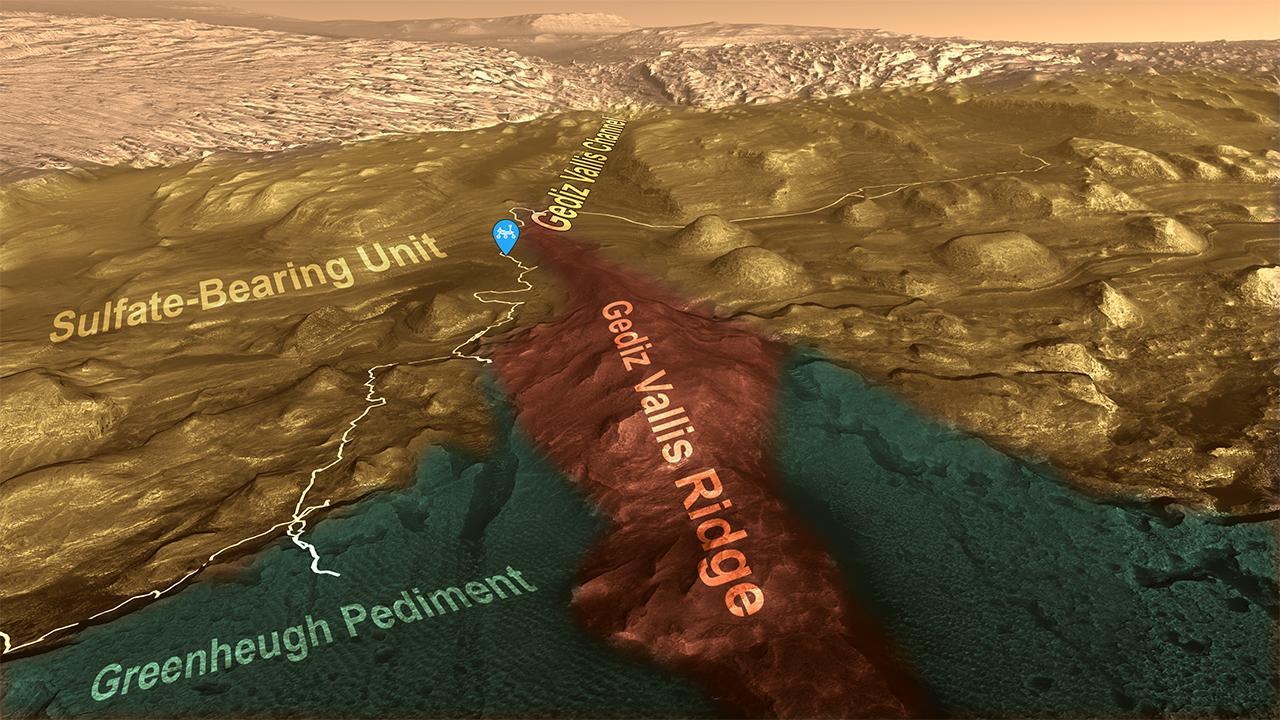
One of the most dramatic geological features Curiosity has encountered in its upper-mountain traverse is the Gediz Vallis channel system — an ancient dry riverbed carved into the slopes of Mount Sharp by debris flows and water, estimated to have been active roughly 3 billion years ago. In 2024, Curiosity drove along and studied a feature called Gediz Vallis Ridge, a mound of material deposited by ancient debris flows near the channel. The ridge contains rocks brought from higher on the mountain, giving Curiosity access to materials that originated at elevations it may never physically reach.
Studying the ridge material helped scientists understand a late-stage watery period on Mars — occurring after the main lake era captured in the lower mountain layers — suggesting water activity persisted on Mars longer and in more locations than previously appreciated.
Pure Sulfur Crystals
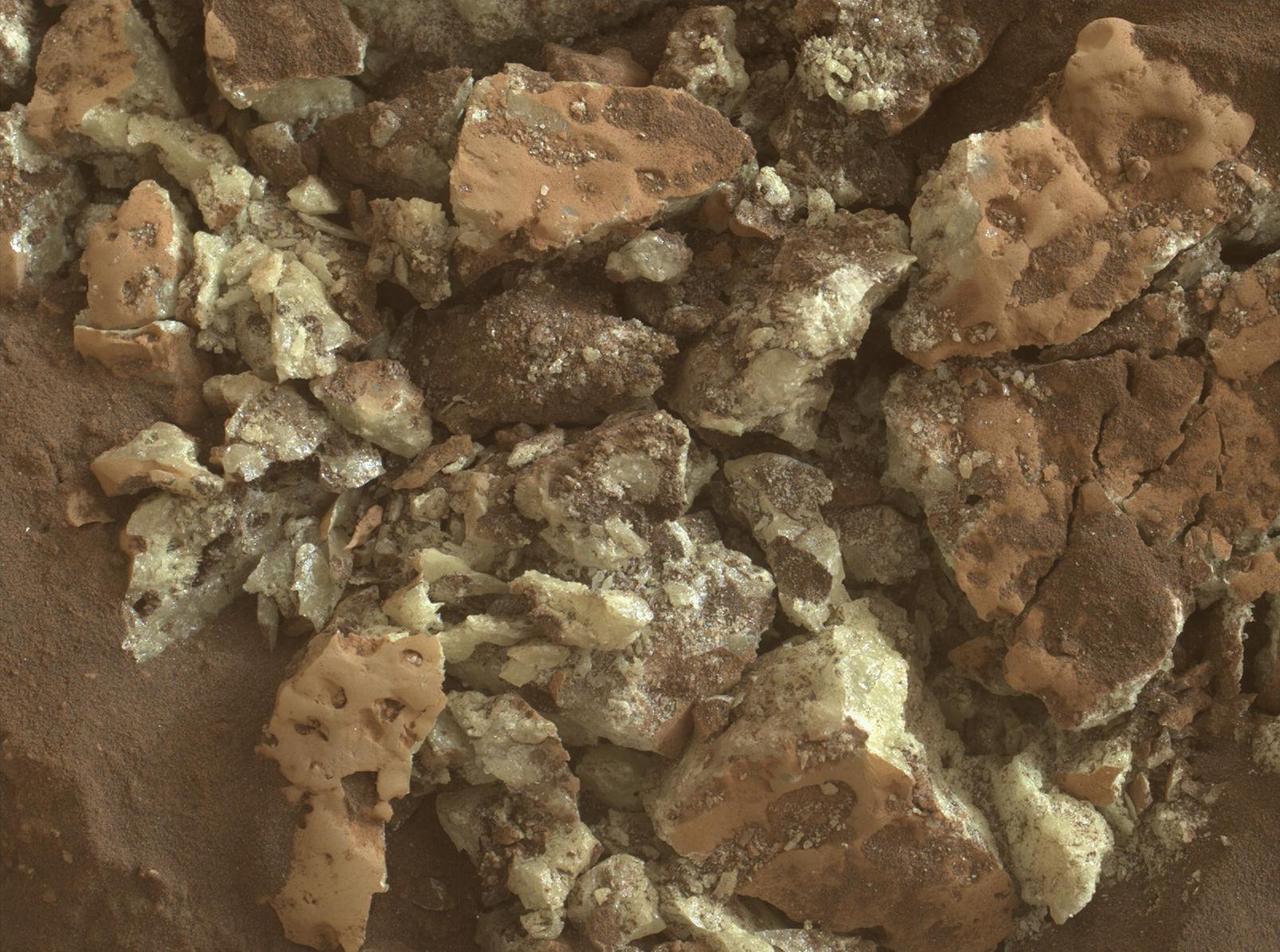
In the summer of 2024, Curiosity's imagery and chemical analyses revealed something never before seen on Mars: a field of rocks with bright yellow pure elemental sulfur crystals inside. When the rover drove over one of these rocks and crushed it, analysis confirmed elemental sulfur — not a sulfate mineral, but actual sulfur. This was entirely unexpected; pure elemental sulfur typically requires very specific and unusual chemical conditions to form. The discovery opened new questions about ancient volcanic or hydrothermal activity in the region and generated significant scientific interest and public attention.
Ongoing Atmospheric Science
REMS has now compiled more than 4,700 sols (Martian days) of continuous meteorological observations — one of the longest surface weather datasets from another planet. These data have refined understanding of Martian weather patterns, dust devil activity, and seasonal cycles. The pressure data in particular has been used to study the behavior of CO₂ ice caps at the poles — as CO₂ alternately freezes onto and sublimates off the polar caps, the total atmospheric pressure on Mars fluctuates by about 25% seasonally, a phenomenon Curiosity has documented year after year.
The Jau Drill Site and Sulfate Transition
In 2023 and 2024, Curiosity drilled multiple targets in the sulfate-bearing layers of Mount Sharp — rock formations rich in sulfate minerals that indicate evaporative conditions, where ancient lakes or groundwater evaporated and left mineral residues. The transition from clay-bearing to sulfate-bearing rock recorded in the mountain's stratigraphy marks a fundamental shift in Martian environmental conditions billions of years ago. Curiosity's chemical analysis of this transition zone is producing data central to understanding how and why Mars dried out.
Curiosity in the Broader Mars Exploration Context
Alongside Perseverance
Since February 2021, NASA has operated two science rovers on Mars simultaneously for the first time: Curiosity in Gale Crater and Perseverance in Jezero Crater. The two missions are complementary. Perseverance is designed to seek biosignatures — signs of past life — and to collect rock core samples for eventual return to Earth via the planned Mars Sample Return mission. Curiosity, with its in-situ chemical laboratory, provides definitive molecular-level analysis of rocks on the spot. Together, they give scientists two independent geological windows into early Mars.
Perseverance is a more capable rover in most respects, incorporating lessons learned from Curiosity's design and operation, and equipped with additional instruments including MOXIE (which demonstrated oxygen production from the Martian atmosphere) and a small helicopter drone, Ingenuity. But Curiosity's longer operational history and its proven SAM instrument suite mean it continues to produce science that no other surface asset can replicate.
Legacy for Human Mars Exploration
Data from Curiosity has informed multiple aspects of human Mars mission planning. RAD's radiation measurements provide the most detailed surface radiation dataset available. REMS atmospheric data informs life support and habitat engineering requirements. The demonstration that Martian rocks contain organic molecules and once supported habitable conditions both elevates the scientific rationale for eventual human expeditions and defines what those expeditions might investigate.
The People Behind Curiosity
The Curiosity mission represents thousands of person-years of work by engineers, scientists, and technicians at JPL and dozens of partner institutions worldwide. Several figures have been particularly prominent in the mission's public face and scientific leadership.
John Grotzinger (Caltech) served as the mission's Project Scientist from before launch through 2014, leading the science team through Yellowknife Bay and the first major habitability findings. He was succeeded by Ashwin Vasavada (JPL), who has served as Project Scientist since 2014 and has been the mission's most prominent scientific spokesperson through its extended mission phases.
Jennifer Trosper served as Mission Manager during critical early phases of the mission and later became Project Manager, overseeing the engineering challenges of the extended mission including the drill recovery. John McNamee served as Project Manager during the development and landing phases.
Roger Wiens (Los Alamos National Laboratory) led the ChemCam instrument team from its development through its years of operation on Mars. ChemCam has fired its laser more than 900,000 times at Martian targets, and Wiens shepherded the collaboration between the American and French teams that built it.
The Curiosity mission is a multinational endeavor: science instruments were contributed by teams in France (ChemCam), Russia (DAN), Spain (REMS), Canada, and multiple U.S. universities and national laboratories, with an international science team of over 400 researchers at peak activity.
Mission Cost and Management
The Mars Science Laboratory mission cost approximately $2.5 billion in total — one of the most expensive robotic planetary science missions in history. The cost includes spacecraft development ($1.8 billion), launch ($185 million), and mission operations through the primary mission. Extended mission operations cost approximately $50–60 million per year. The budget overruns during development — the mission's cost grew from an initial estimate of about $1.6 billion — were the subject of significant criticism and led NASA to reform how flagship missions are planned and budgeted.
Despite the cost controversy, the scientific return has been broadly viewed as justifying the investment. The mission has produced more than 1,000 peer-reviewed scientific publications, generated tens of thousands of raw images made freely available to the public, and fundamentally altered scientific consensus about Mars' past.
The Question That Drives It All
More than a decade into its mission, Curiosity has not definitively answered whether Mars once hosted life. That question remains open — intentionally so, as Mars remains an active area of scientific investigation. But Curiosity has established, with high confidence, that ancient Mars possessed habitable environments: the chemistry was right, the water was present, the energy sources existed, and the minerals needed for life's essential molecules were there.
What Curiosity cannot tell us is whether life actually arose in those ancient Martian lakes and rivers. Answering that question definitively may require returned samples — actual Martian rocks brought to Earth where they can be analyzed in laboratories vastly more capable than anything that can be miniaturized and launched to Mars. That is the goal of the Mars Sample Return campaign, built around Perseverance's sample cache. Curiosity's findings are what made the scientific community confident enough in Mars' ancient habitability to commit to the vast expense and complexity of sample return.
There is a symmetry to this: Curiosity's discoveries made the case for the next generation of Mars science. In identifying where the interesting chemistry is, what minerals to target, and what Mars' environmental history looks like, Curiosity has written the scientific rationale for missions that may, one day, finally answer the question it set out to explore.
Conclusion

The Mars Curiosity Rover stands as one of the defining scientific instruments of the 21st century — a machine that arrived on another world during a seven-minute automated drama and has spent every sol since earning its keep. It confirmed ancient habitable environments, detected organic chemistry preserved across billions of years, measured methane spikes that still puzzle scientists, documented radiation levels critical to human mission planning, and revealed geological surprises like pure sulfur crystals and ancient debris flow ridges. It overcame wheel damage, drill failures, memory corruption, and dwindling power while continuing to climb toward the sky of an alien mountain. In 2025, it rolls on — slower, more carefully managed, operating on less power than it once had, but still returning science, still making discoveries, still transmitting images from the floor of Gale Crater.
When Curiosity eventually falls silent — whether from power loss, a critical hardware failure, or the accumulation of years on harsh Martian terrain — it will have left behind a body of work that transformed planetary science and laid the intellectual foundation for humanity's next steps toward Mars. It is, by any measure, one of the most successful robotic explorers in history.
Sources: NASA/JPL Mars Science Laboratory mission pages; Science journal publications from the Curiosity science team (2013–2025); NASA Mars Exploration Program mission reports; USGS Astrogeology Science Center Mars geological maps; ESA Mars Express and ExoMars TGO mission data.