NASA James Webb Space Telescope (JWST)
On Christmas Day 2021, a rocket carrying humanity's most expensive and ambitious scientific instrument ever built lifted off from the Guiana Space Centre in Kourou, French Guiana. The James Webb Space Telescope — born from decades of engineering ingenuity, political battles, cost overruns, and the relentless ambition of thousands of scientists and engineers — was finally leaving Earth. At a staggering final cost of approximately $10 billion and more than 25 years in development, JWST represented either the greatest gamble in the history of space science or its finest hour. As it turned out, it was both — and then some.
In the three years since its deployment, JWST has fundamentally upended our understanding of the early universe, revealed the atmospheres of distant worlds, and delivered images of such clarity and depth that even seasoned astronomers have been moved to silence. This is the story of how it was built, how it works, and what it has shown us about the cosmos.
Origins and Development: A Quarter-Century in the Making
The Birth of an Idea
The conceptual origins of JWST trace to 1996, when a panel convened by the Space Telescope Science Institute (STScI) and NASA began envisioning what should come after the Hubble Space Telescope. Hubble, launched in 1986 and famously repaired in 1993 after the discovery of its flawed mirror, had proven that a large space telescope could transform astrophysics. The question was: what would its successor look like?
The resulting report, HST and Beyond: Exploration and the Search for Origins — A Vision for Ultraviolet-Optical-Infrared Space Astronomy, laid out the case for a much larger telescope operating primarily in the infrared. The scientific logic was compelling: to see the very first stars and galaxies that formed in the early universe, a telescope needed to observe in infrared wavelengths, since the expansion of the universe "redshifts" the ancient light from those objects — stretching ultraviolet and visible light into the infrared range by the time it reaches us.
Initially called the Next Generation Space Telescope (NGST), the project was renamed in September 2002 to honor James E. Webb, NASA's administrator from 1961 to 1968. Webb oversaw the agency's transformation during the critical Mercury, Gemini, and early Apollo years — not merely the Moon race, but the simultaneous buildup of NASA's scientific programs, university grants, and research infrastructure. In naming the telescope after him, NASA acknowledged that Webb's tenure represented not just one mission, but an era that defined American space science.
The naming was not without controversy. In 2021, a group of scientists published an open letter calling for the telescope to be renamed, citing allegations that Webb had participated in anti-LGBTQ discrimination during the Lavender Scare — the post-war federal purge of gay employees — during his time in the State Department and later at NASA. NASA conducted a review of historical records and concluded in 2021 that no evidence directly implicated Webb in discriminatory actions, and the name remained. The debate continues among some in the community.
The Long Road to Launch
Development contracts were awarded in the early 2000s, with Northrop Grumman Aerospace Systems as the prime contractor responsible for the spacecraft bus and the critical sunshield. Ball Aerospace led the fabrication of the 18 hexagonal mirror segments. The Space Telescope Science Institute, which already operated Hubble, was designated the science operations center.
The project's original schedule called for a 2007 launch at a cost of approximately $1 billion. What followed was one of the most protracted and expensive development sagas in spaceflight history. Complexity kept compounding: the telescope had to be folded origami-style to fit inside the rocket fairing, then unfurl in deep space through a precise sequence of 344 single-point-of-failure deployments. Any one of them going wrong meant mission failure with no possibility of repair — JWST, unlike Hubble, was destined for a location far beyond the reach of any crewed spacecraft.
Launch dates slipped repeatedly: 2010, 2013, 2018, 2019, 2020, 2021. Costs climbed from $1 billion to $3.5 billion to $6 billion and eventually to roughly $10 billion. Congress grew furious. A 2011 House subcommittee voted to cancel the project entirely, calling it a "budget-busting boondoggle." NASA lobbied successfully to continue, arguing that cancellation would waste the billions already spent and deprive science of a transformational tool.
During the final pre-launch years, the telescope underwent integration and testing at the Goddard Space Flight Center in Maryland, then was shipped to Northrop Grumman's facility in Redondo Beach, California, for final assembly and testing. Acoustic and vibration testing, a simulated launch environment, cryogenic testing at Johnson Space Center — every system was subjected to conditions more extreme than space itself would provide.
The COVID-19 pandemic caused additional delays in 2020. A valve problem discovered during propellant loading in late 2021 pushed the final launch date to December 25, 2021.
That morning, an Ariane 5 rocket — operated by the European Space Agency, whose contribution to JWST included both the rocket and a scientific instrument — carried JWST into the sky. Within 26 minutes, the telescope separated from the upper stage. The most dangerous deployment in history had begun.
Deployment: 29 Days of Terror
The flight to JWST's destination — the second Lagrange point (L2), approximately 1.5 million kilometers from Earth in the direction away from the Sun — took 29 days. During those days, the telescope executed its 344 critical deployments in a carefully choreographed sequence.
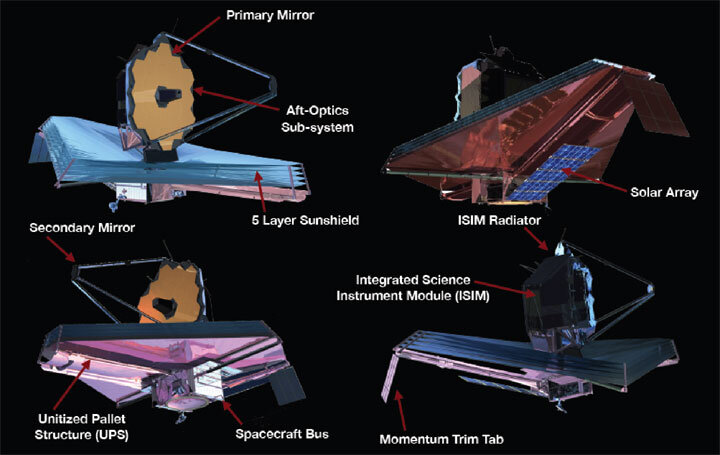
The first critical deployment was the solar array, which unfolded within hours of separation to provide power. Then came the antenna. Over the following two weeks, the five-layer sunshield unfolded — a membrane the size of a tennis court made of a material called Kapton, coated with aluminum and doped silicon on specific layers to reflect and radiate heat. The sunshield separates JWST into a warm side (facing the Sun) and an ultra-cold "cold side" facing deep space. By January 8, 2022, the sunshield was fully deployed — a triumph that engineers openly called a miracle of logistics.
The secondary mirror, a small 0.74-meter convex mirror mounted on three long folding booms, deployed next and locked into position. Finally, the two "wings" of the primary mirror, each holding three of the 18 hexagonal segments, unfolded and latched into place. By January 8, 2022, JWST had deployed all major structures.
On January 24, 2022, JWST fired its onboard thrusters to enter a halo orbit around L2 — not a fixed point, but a looping orbit around the gravitational equilibrium where the combined gravity of the Sun and Earth allows a spacecraft to maintain a stable position with minimal fuel expenditure. This orbit is ideal because the telescope always faces away from the Sun, and with both the Sun and Earth on the same side, a single sunshield can block the light and heat from both.
The next phase was mirror alignment — a months-long process of slowly adjusting each of the 18 mirror segments to act as a single unified mirror. Using a process called wavefront sensing and control, engineers used light from a single bright star to measure distortions in the mirror surface and then commanded 126 actuators (seven per segment) to make nanometer-scale adjustments. By early March 2022, the famous "selfie" image of the mirror alignment — showing all 18 segments reflecting the same star as 18 points of light, then as a unified sharp focus — was released. By April 2022, the mirror alignment was complete to well within specifications, achieving a wavefront error of approximately 60 nanometers RMS — far better than the requirement of 150 nanometers.
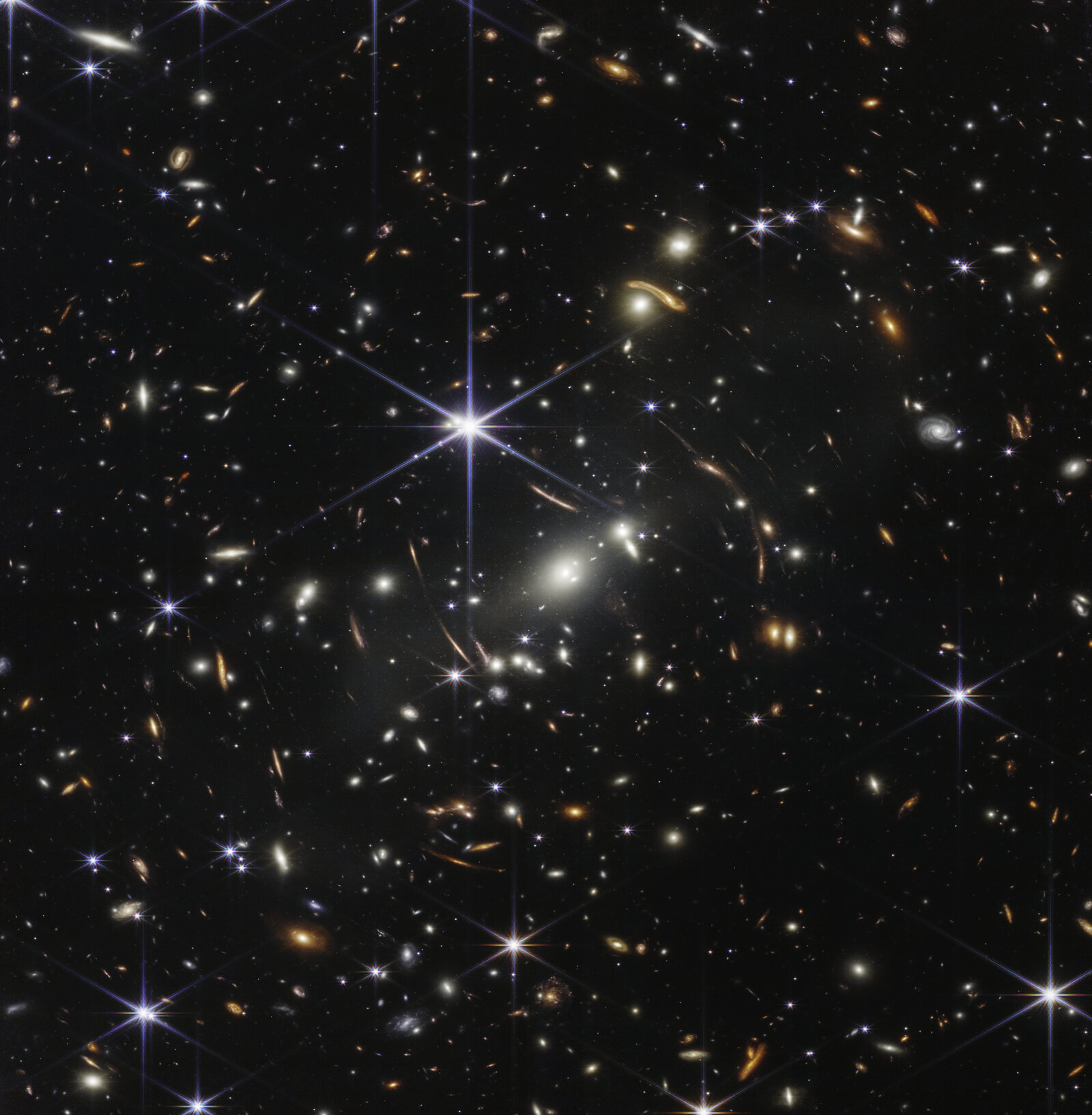
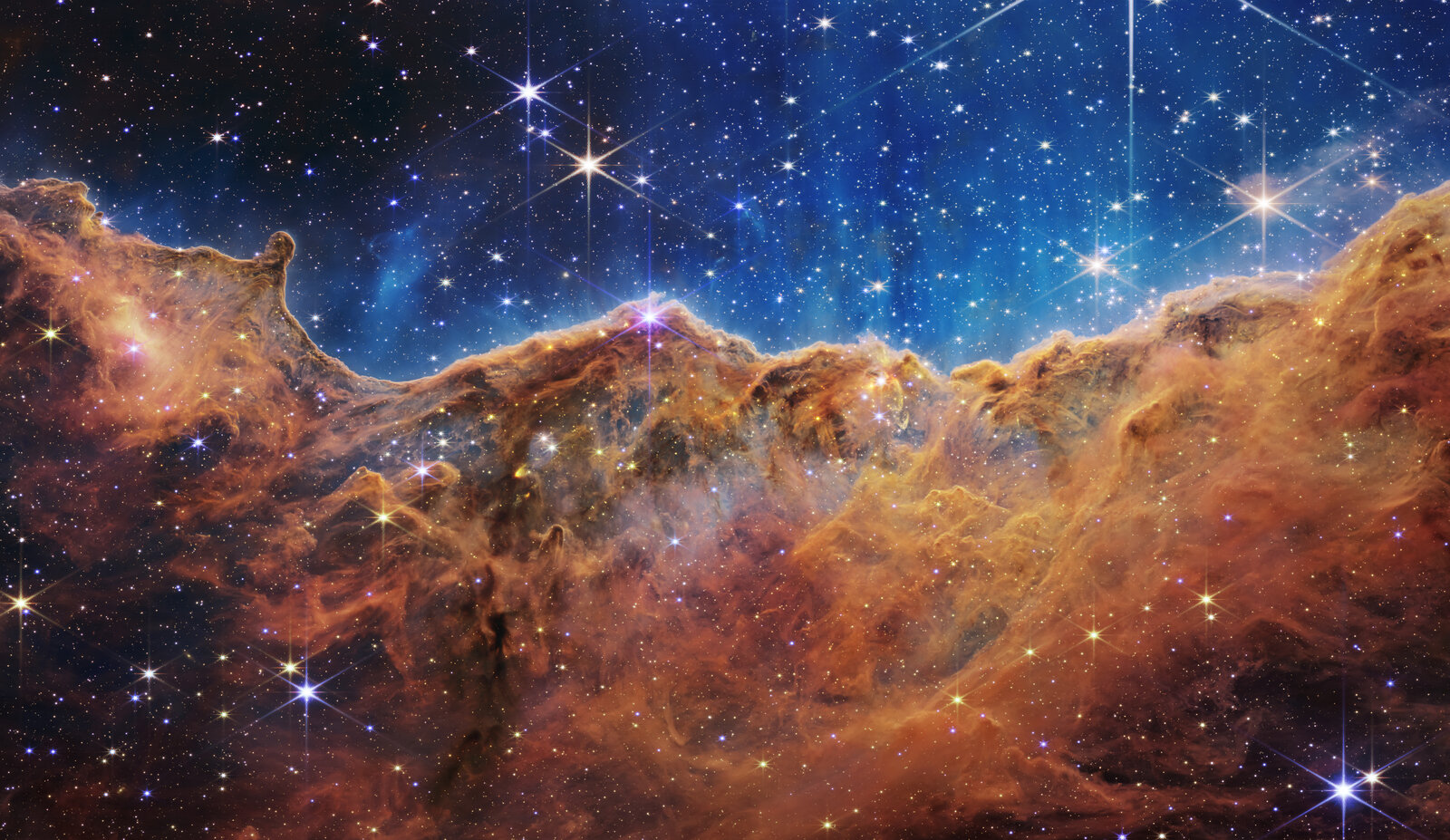
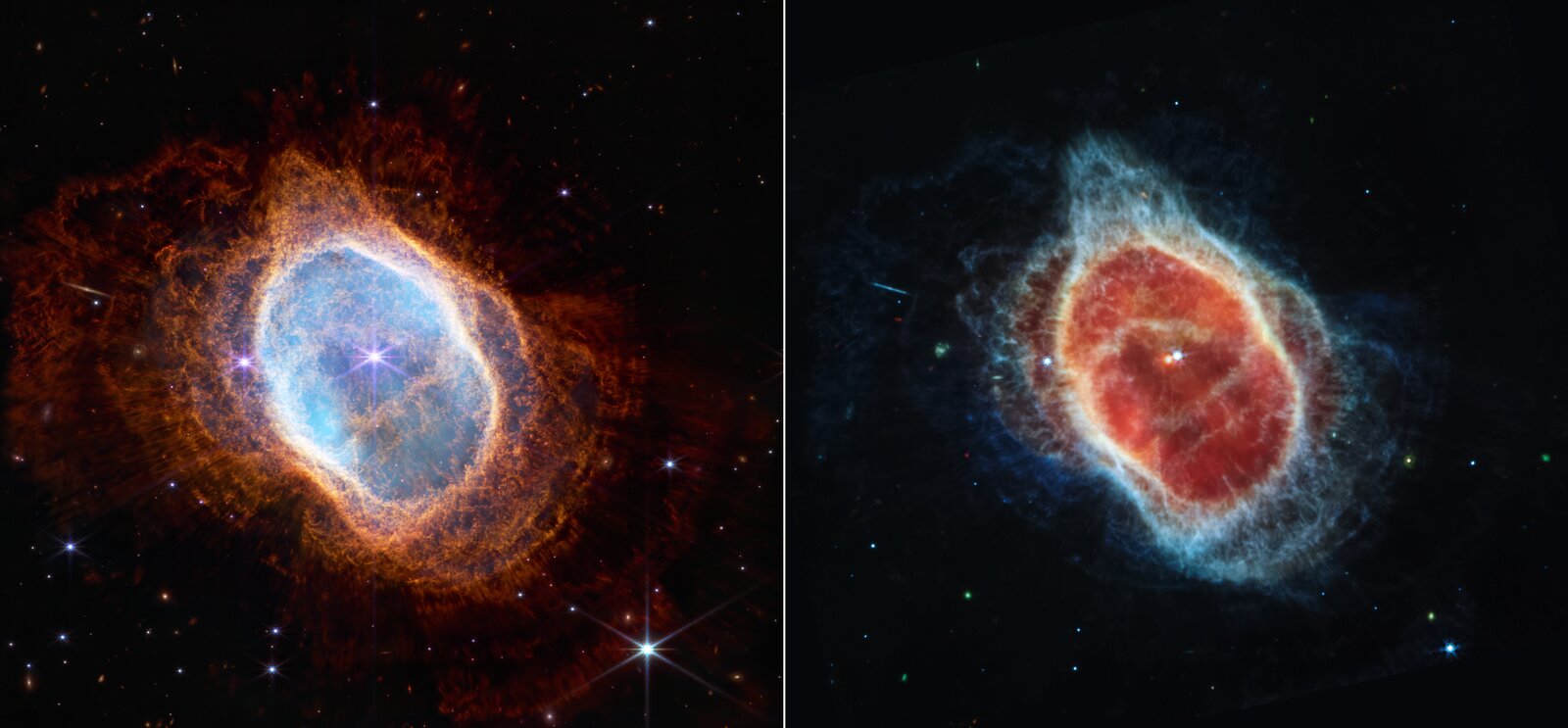
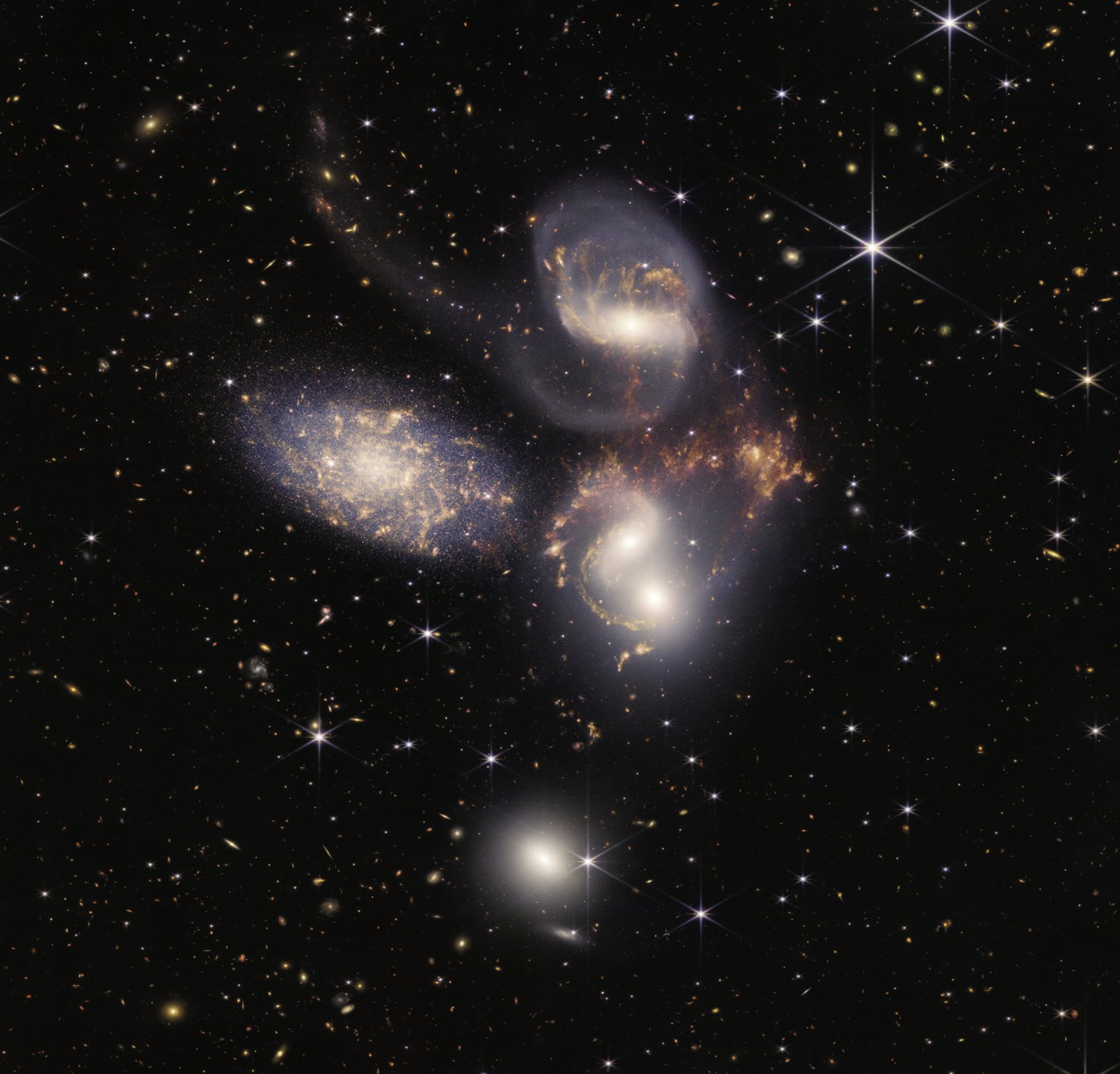
Instrument commissioning followed, and on July 12, 2022, NASA released the first science images to the public in a White House event: a deep field of galaxy cluster SMACS 0723, the spectrum of exoplanet WASP-96 b, the Southern Ring Nebula, Stephan's Quintet, and the Carina Nebula's star-forming "Cosmic Cliffs." The world collectively held its breath.
Engineering: What Makes JWST Unique
The Primary Mirror
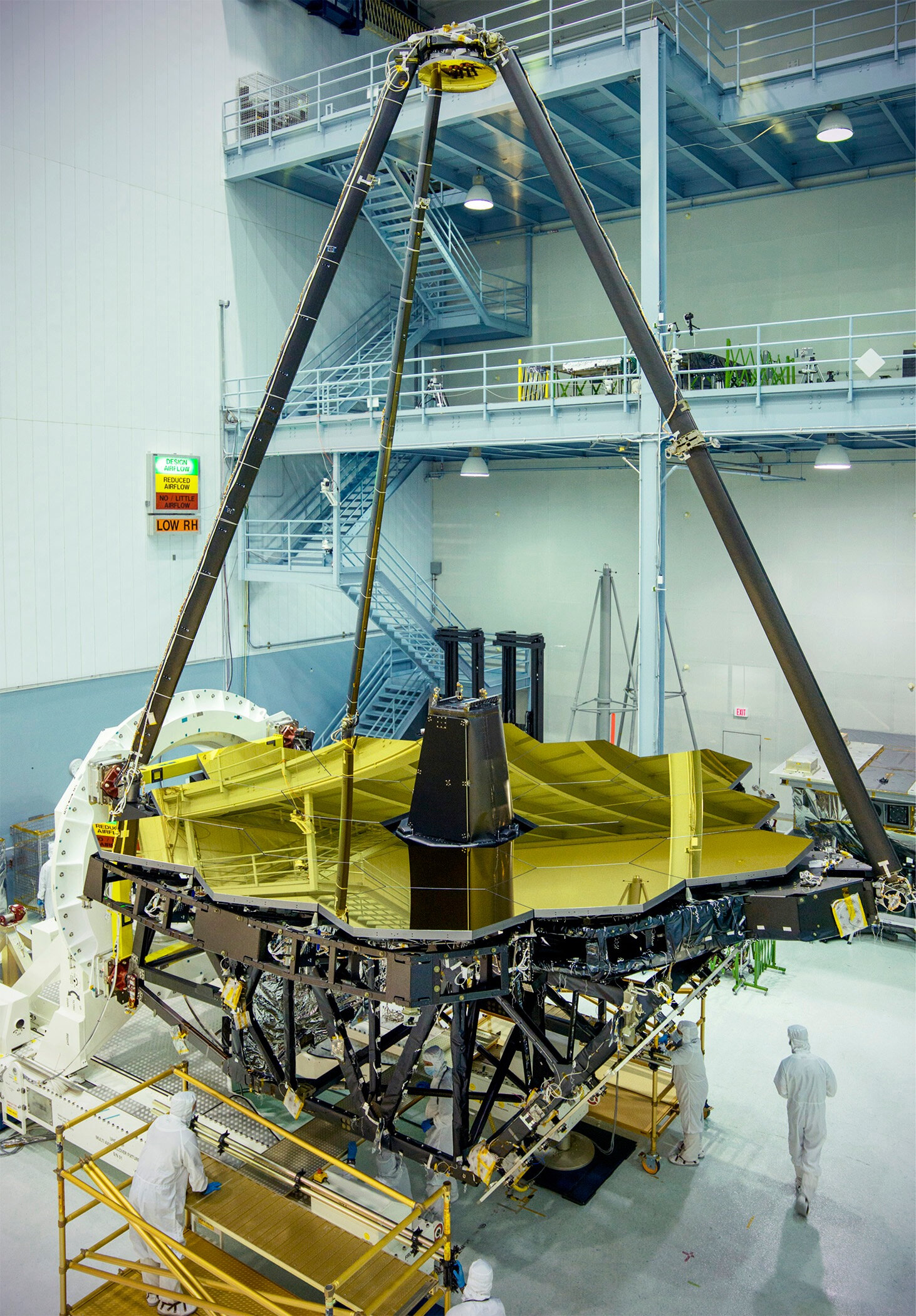
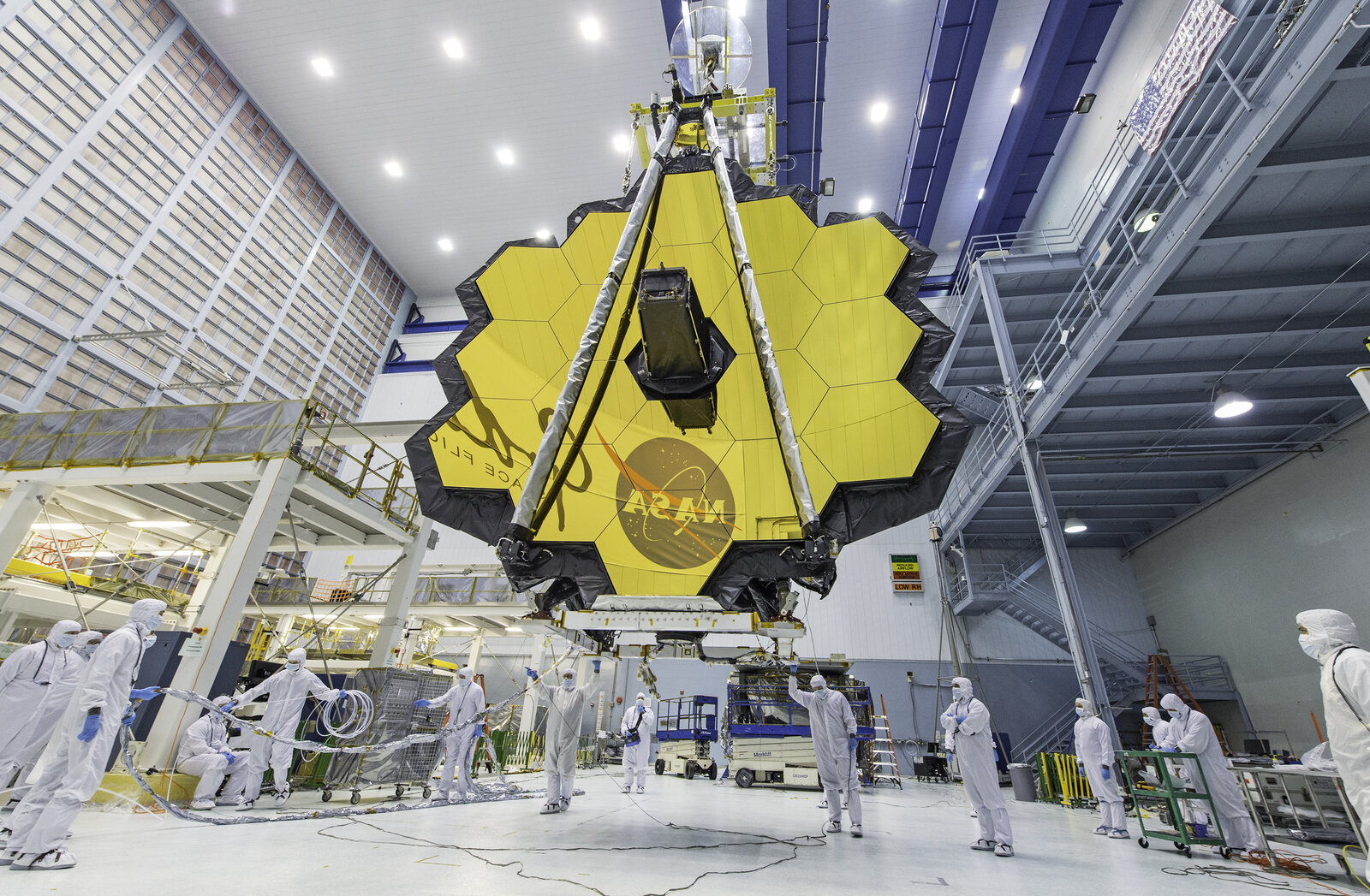
JWST's primary mirror is 6.5 meters (21.3 feet) across — nearly three times the diameter of Hubble's 2.4-meter mirror. Since mirror area scales with the square of the diameter, JWST collects roughly six times more light than Hubble. This is the foundational advantage that enables the telescope to see fainter, more distant objects.
The mirror is composed of 18 hexagonal segments, each approximately 1.32 meters across and made of beryllium — a lightweight, rigid metal that retains its shape extremely well at cryogenic temperatures. Each segment is coated with a microscopically thin layer of gold (approximately 48.25 grams per segment, totaling less than 1 kg for all 18), chosen because gold reflects infrared light with exceptional efficiency, typically above 98%. The hexagonal shape and segmented design were dictated by necessity: no single mirror 6.5 meters wide could fit inside any existing rocket fairing.
The Instruments
JWST carries four scientific instruments, mounted on the Integrated Science Instrument Module (ISIM) behind the primary mirror:
NIRCam (Near-Infrared Camera) — Built by the University of Arizona and Ball Aerospace, NIRCam is JWST's primary imager. It covers wavelengths from 0.6 to 5 micrometers and uses Mercury Cadmium Telluride (HgCdTe) detector arrays, a semiconductor material highly sensitive to infrared photons. NIRCam also serves as the wavefront sensing instrument, measuring the mirror's optical performance. It has two modules, each covering a field of view of about 2.2 × 2.2 arcminutes, and operates with a suite of color filters that can isolate specific wavelength ranges for scientific analysis.
NIRSpec (Near-Infrared Spectrograph) — Provided by the European Space Agency and built by Airbus, NIRSpec can observe the spectra of up to 100 astronomical objects simultaneously using a revolutionary device called a Microshutter Assembly (MSA) — a grid of 250,000 tiny programmable shutters, each the width of a human hair, that can be selectively opened or closed to select specific objects in the field of view. NIRSpec covers wavelengths from 0.6 to 5.3 micrometers and is critical for measuring the redshifts and chemical compositions of distant galaxies.
MIRI (Mid-Infrared Instrument) — A joint NASA/ESA instrument, MIRI covers the mid-infrared range from 5 to 28.5 micrometers, the longest wavelengths of any JWST instrument. It must be cooled to an extraordinary 6 Kelvin (-267°C) — colder than even JWST's passively-cooled environment — using a dedicated mechanical cryocooler. MIRI enables the study of the coldest objects: dust-shrouded star formation regions, distant galaxies seen in redshifted thermal emission, and the spectra of cool brown dwarfs and cold exoplanets.
NIRISS (Near Infrared Imager and Slitless Spectrograph) — Contributed by the Canadian Space Agency (CSA) and built by Honeywell and Com Dev, NIRISS operates from 0.6 to 5 micrometers and specializes in slitless spectroscopy (capturing spectra of all objects in its field simultaneously) and a technique called Aperture Masking Interferometry (AMI) for high-contrast imaging of objects near bright stars.
The Sunshield
Perhaps no component of JWST is more critical — or more impressive — than the five-layer sunshield. To detect faint infrared radiation from the distant universe, the telescope's detectors and mirrors must be extremely cold. Any warmth, including the telescope's own thermal emission, would overwhelm the faint signals it is trying to detect.
The sunshield blocks sunlight, Earthlight, and Moonlight, creating a permanent shadow on the cold side of the telescope. It is composed of five layers of Kapton polyimide film, each thinner than a human hair and coated with aluminum. The two Sun-facing layers also have a silicon coating that gives those specific layers a distinctive appearance and helps them radiate heat sideways rather than toward the telescope. The layers are separated by gaps that allow each layer to radiate its absorbed heat independently.
The combined effect is extraordinary: the Sun-facing side of the sunshield reaches about 85°C (185°F), while the cold side, where the mirrors and instruments reside, drops to about -233°C (40 Kelvin). This temperature differential across a few meters is one of the most extreme thermal engineering achievements in spaceflight.
The L2 Orbit
JWST's position at the Sun-Earth L2 point provides several operational advantages. Because the Sun and Earth are always on the same side of the telescope, JWST can always point the sunshield at them simultaneously. The telescope can observe almost the entire sky over the course of a year, with any given point in the sky accessible for at least 90 days per year. The L2 position also keeps the telescope outside Earth's Van Allen radiation belts (which degrade detectors over time) and away from the atmospheric distortions that affect ground-based observatories.
The main disadvantage is irreparability: at 1.5 million km, no crewed spacecraft can reach JWST. This is why every step of the development and testing was so rigorous.
How JWST Produces Images
Capturing Infrared Light
Unlike Hubble, which operates primarily in visible and ultraviolet light, JWST sees the universe in infrared radiation — wavelengths longer than what the human eye can detect. Infrared is critical for several reasons:
- Redshift: The universe is expanding, and light from very distant galaxies is stretched (redshifted) to longer wavelengths. Light that originally left a galaxy as ultraviolet or visible arrives at JWST as infrared. This means the most distant, earliest galaxies are only detectable in the infrared.
- Dust penetration: Infrared light passes through clouds of gas and dust that block visible light. This allows JWST to see into the cores of star-forming nebulae, the heart of galaxies, and the dense cocoons around newly forming stars.
- Cool objects: Many scientifically interesting objects — brown dwarfs, cold exoplanets, protoplanetary disks — emit primarily in the infrared.
From Photons to Data
When infrared photons from distant objects travel through space and hit JWST's mirror, they are reflected from the 18 primary mirror segments to the secondary mirror, then back through a hole in the primary mirror to the tertiary mirror and fine steering mirror, and finally directed into the instruments.
Inside NIRCam, the light falls on arrays of HgCdTe photodetectors. When an infrared photon strikes a detector pixel, it liberates electrons through the photoelectric effect. These electrons accumulate over the exposure time, and the resulting charge is read out electronically to produce a digital value — the signal in that pixel. NIRCam's detector arrays consist of 10 2048×2048 pixel detectors, providing extraordinary resolution over its wide field of view.
Because the detectors are sensitive to any source of heat, they must be maintained at cryogenic temperatures. The passive cooling provided by the sunshield keeps NIRCam and NIRSpec at approximately -233°C. MIRI's detectors, which need to be even colder, are maintained at 6 Kelvin by an active cryocooler — a mechanical refrigeration system that continuously pumps heat away.
Raw data from the detectors includes not just astronomical signal but also noise sources: cosmic ray hits (which leave bright streaks), detector dark current, read noise, and optical artifacts like "snowballs" (cosmic ray events that affect clusters of pixels). Calibration pipelines at the Space Telescope Science Institute process the raw data through several stages:
- Stage 1 (Detector-level corrections): Corrects for dark current, cosmic rays, detector saturation, and read-noise patterns.
- Stage 2 (Instrument-level corrections): Applies flat-field corrections (accounting for pixel-to-pixel sensitivity variation), background subtraction, and astrometric calibration (assigning sky coordinates to pixels).
- Stage 3 (Combined products): Drizzles multiple dithered exposures together to produce final images with higher resolution and reduced noise.
False Color: The Art and Science of JWST Images
An important and frequently misunderstood aspect of JWST imagery is that its images are not what your eyes would see. The telescope detects wavelengths far beyond the human visual range (roughly 0.4–0.7 micrometers). To create the iconic color images, scientists at STScI assign visible colors to infrared wavelength bands captured through different filters.
For example, in a typical color image:
- The shortest wavelengths (nearest to visible) are assigned blue
- Medium wavelengths are assigned green or yellow
- Longer wavelengths are assigned red or orange
This mapping follows the same logic as the human visual system (short wavelengths appear blue, long wavelengths appear red) but applied to an entirely different range of the spectrum. Scientists and visualization specialists at STScI, including visualization scientist Alyssa Pagan and others, make deliberate aesthetic choices about color assignment to maximize both scientific clarity and visual beauty, while ensuring the colors faithfully reflect the underlying data.
Some images combine data from multiple instruments or from JWST and other telescopes (such as the Chandra X-ray Observatory or Hubble) to produce composite multiwavelength views.
Resolution and Image Quality
At 2 micrometers, JWST achieves a diffraction-limited angular resolution of approximately 0.07 arcseconds — meaning it can distinguish two objects separated by that angle in the sky. For comparison, the full Moon is about 1,800 arcseconds across, so JWST's resolution corresponds to resolving a human-sized object at the distance of the Moon. In practice, this level of sharpness allows JWST to detect individual star-forming clumps within galaxies billions of light-years away.
The telescope's wavefront error — a measure of how perfectly its mirror focuses light — was measured in 2022 at approximately 60 nanometers RMS, well below the 150-nanometer requirement. This exceptional performance means JWST delivers near-theoretical optical quality.
How Accurate Are JWST's Images?
Scientific Accuracy
JWST's images represent genuine measurements of real physical phenomena. Every pixel's value corresponds to a real count of photons detected from a specific location in the sky. The calibration pipeline ensures that these values are linked to physical flux units (often expressed in nanojanskys, a measure of electromagnetic flux density). Astronomers can use these calibrated images to measure the brightness of objects, extract spectra, measure distances, and determine physical properties like temperature, mass, and chemical composition with known uncertainties.
The photometric accuracy of JWST — how precisely it measures how bright objects are — has been validated to within a few percent across most wavelengths, using calibration stars and celestial standards established over decades of astronomical photometry.
Astrometric accuracy (how precisely JWST locates objects on the sky) is also exceptional, with pointing stability better than 1 milliarcsecond — meaning the telescope can hold a target fixed to within a tiny fraction of a pixel over long exposures.
What the Colors Don't Tell You
JWST's color images, while scientifically grounded, do not represent "true color" in the photographic sense. A fundamental public misconception is that these images show what the universe "really looks like." In fact, they show what different wavelength ranges look like when translated into human-perceivable colors. A region that appears red in a JWST image is not red in the visual sense — it is emitting or reflecting infrared radiation that has been mapped to red by scientists for display.
This is not a distortion; it is a translation. The underlying data is accurate. The color assignment is interpretive, chosen to reveal scientifically meaningful information while creating aesthetically coherent images.
Limitations and Artifacts
No telescope is without limitations:
- Diffraction spikes: JWST's images of bright stars show 8-pointed diffraction spikes — cross-shaped patterns caused by the diffraction of light around the edges of the secondary mirror support struts and the gaps between mirror segments. These are physical artifacts of the telescope's design.
- Cosmic rays: Despite calibration, some cosmic ray artifacts remain in processed images.
- Persistence: Very bright sources can leave ghost images in subsequent exposures due to a property of the HgCdTe detectors called persistence.
- Filter coverage: Because each exposure uses specific filters, areas at the edges of filter coverage may have less signal and greater uncertainty.
All of these are well-characterized and understood by astronomers, who incorporate them into data analysis.
Scientific Discoveries: Rewriting the Universe
The Deep Field and the Early Universe
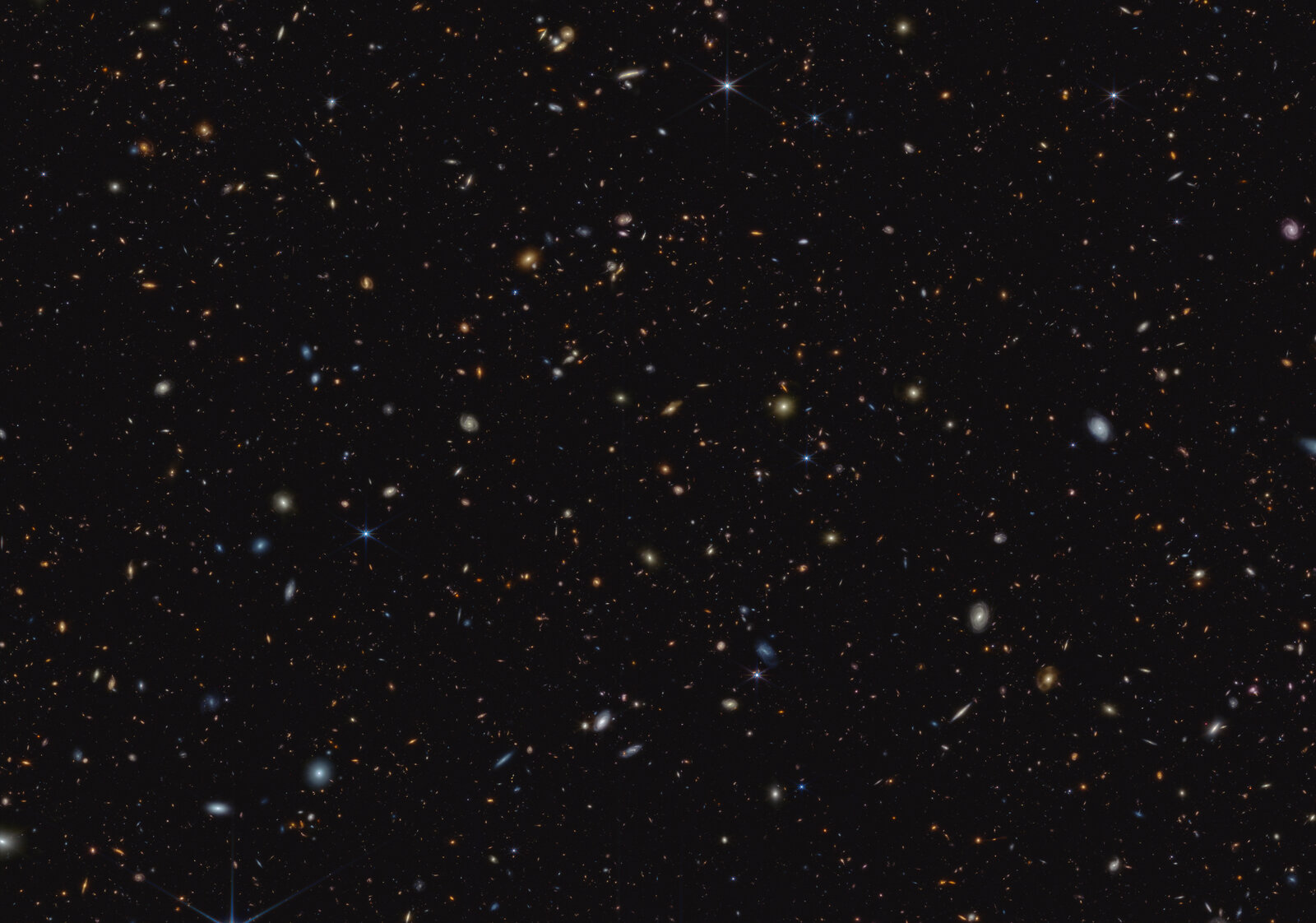
JWST's first deep field image, released July 12, 2022, showed galaxy cluster SMACS 0723 with a depth and clarity that surpassed Hubble's equivalent deep field images — images that Hubble had taken days to accumulate, versus JWST's 12.5 hours. Background galaxies were lensed and magnified by SMACS 0723's gravity into arcs and duplicated images, revealing structures at redshifts (z) of 4, 6, and beyond — corresponding to the universe when it was only a fraction of its current age.
The JADES (JWST Advanced Deep Extragalactic Survey) collaboration has used JWST's NIRCam and NIRSpec to systematically discover and characterize galaxies at unprecedented redshifts. In 2023, JADES confirmed galaxy JADES-GS-z13-0 at a redshift of z=13.2 — corresponding to just 320 million years after the Big Bang. In 2024, JADES identified JADES-GS-z14-0 at a record-breaking redshift of z=14.32 — roughly 290 million years after the Big Bang — the most distant galaxy spectroscopically confirmed as of 2025. Its luminosity and apparent size were astonishing: it was brighter and larger than any model had predicted at such an early epoch.
These early bright, massive galaxies have been described as a potential "crisis" in cosmological modeling. The standard ΛCDM (Lambda Cold Dark Matter) model of cosmology — the current consensus framework for how the universe evolved — predicted that galaxies at these early epochs would be small, dim, and primitive. JWST keeps finding them large, bright, and surprisingly chemically evolved. This has sparked intense debate about whether the models need revision, or whether galaxy formation proceeded through fundamentally different mechanisms than assumed.
Exoplanet Atmospheres
JWST has revolutionized exoplanet science. Using the technique of transmission spectroscopy — analyzing how starlight filters through a planet's atmosphere as it transits in front of its star — JWST has detected molecular signatures in exoplanet atmospheres with unprecedented precision.
Key discoveries include:
- WASP-39 b: In October 2022, JWST released the first clear detection of carbon dioxide (CO₂) in an exoplanet atmosphere, along with water vapor, sodium, potassium, carbon monoxide, and sulfur dioxide — the first detection of SO₂ in an exoplanet, produced by photochemical reactions driven by the star's ultraviolet light.
- K2-18 b: In September 2023, JWST observations of the "sub-Neptune" world K2-18 b revealed the presence of methane and CO₂, and a tentative signal consistent with dimethyl sulfide (DMS) — a molecule on Earth produced primarily by marine phytoplankton. This generated significant excitement and debate about possible biosignatures, though scientists emphasized the need for confirmation and cautioned against premature conclusions.
- TRAPPIST-1 system: JWST has observed multiple planets in this nearby system of seven rocky planets, three of which are in the habitable zone. Early MIRI observations of TRAPPIST-1 b and c suggested these planets lack thick atmospheres, placing constraints on planetary composition.
The Hubble Tension
One of the deepest unresolved problems in cosmology is the Hubble tension: the discrepancy between the rate of expansion of the universe as measured by the Cosmic Microwave Background (which gives approximately 67.4 km/s/Mpc) and the rate measured by local distance indicators like Cepheid variable stars (which give approximately 73 km/s/Mpc). If real, this tension implies unknown physics — possibly dark energy that varies over time, modified gravity, or undiscovered particle physics.
A crucial concern was that the local measurements might be contaminated by systematic errors in Hubble Space Telescope photometry of Cepheid stars in crowded galaxy fields. JWST's superior resolution allows it to cleanly separate individual Cepheids from surrounding stars, avoiding "crowding bias." A 2023 study led by Adam Riess (Nobel Prize, 2011) used JWST observations of Cepheids in multiple galaxies and confirmed that the high local Hubble constant value was not a systematic artifact of crowding. The tension is real, not an instrumental error. This was a landmark result that deepens the mystery of dark energy and cosmic expansion.
Stellar and Planetary Formation
JWST's ability to peer through dust has opened unprecedented windows into the birth of stars and planets:
- In the Carina Nebula's "Cosmic Cliffs" — a wall of gas and dust at the edge of a star-forming region — JWST revealed hundreds of never-before-seen young stellar objects (protostars), with jets and outflows visible in extraordinary detail.
- Observations of protoplanetary disks around young stars have revealed rings, gaps, and structures consistent with forming planets, as well as the first direct detection of large organic molecules like benzene and ethylene in the inner disk where rocky planets might form.
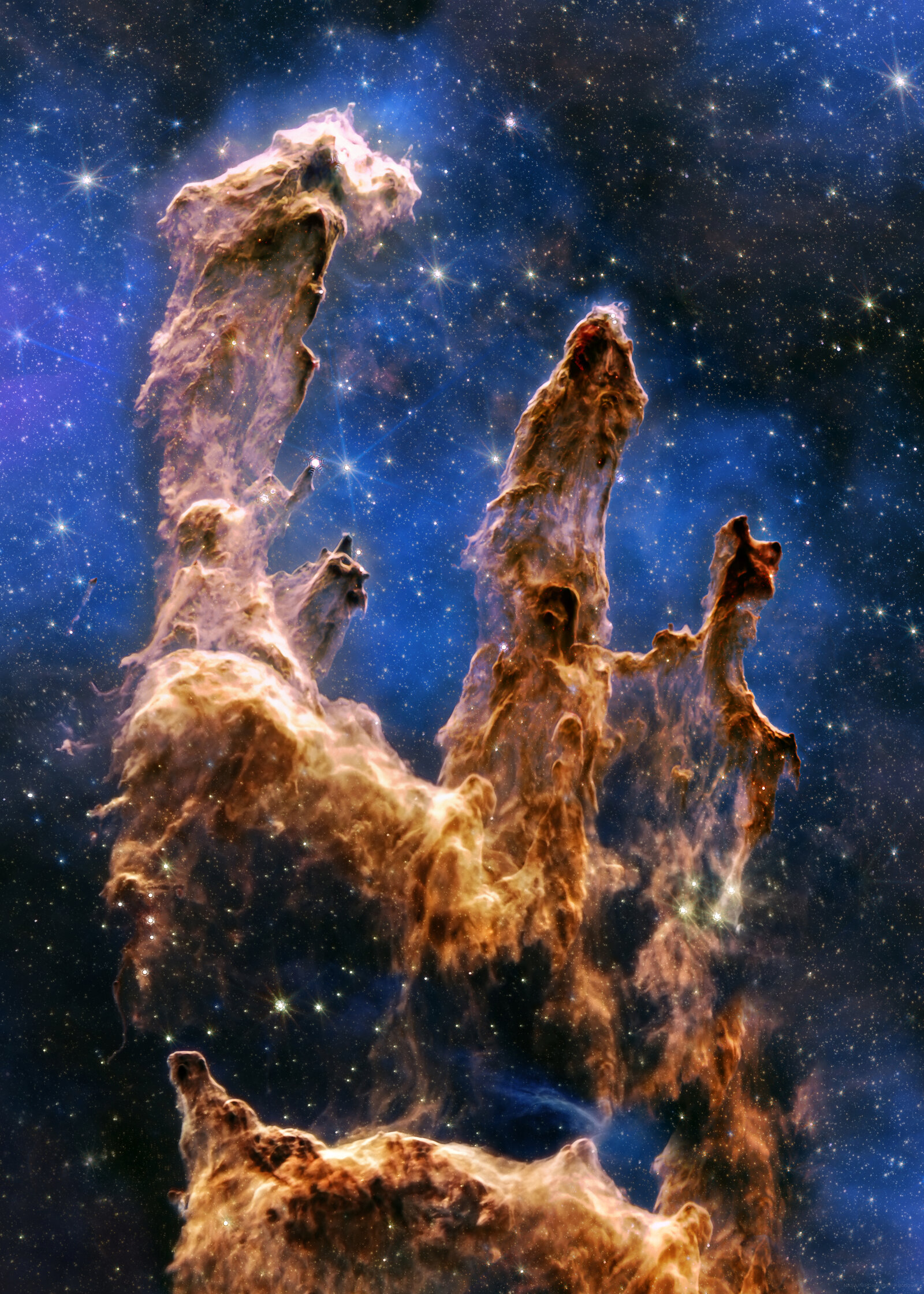
- JWST detected carbon-chain molecules (polycyclic aromatic hydrocarbons, PAHs) in star-forming regions with a clarity that Spitzer, the previous infrared space telescope, could only hint at.
Stellar Death and Supernovae
JWST captured the most detailed images ever of planetary nebulae — the shells of gas ejected by dying stars. The Southern Ring Nebula, one of the first-light images, revealed for the first time a second companion star embedded within the nebula itself, reshaping understanding of how the ejection of material had occurred.
Supernova remnants observed by JWST, including a detailed study of Cassiopeia A released in 2023, revealed intricate filamentary structures, complex dust distribution, and detailed chemical abundance maps across the remnant — providing new insight into how supernovae seed the galaxy with heavy elements.
JWST vs. Hubble: Complementary, Not Competitive
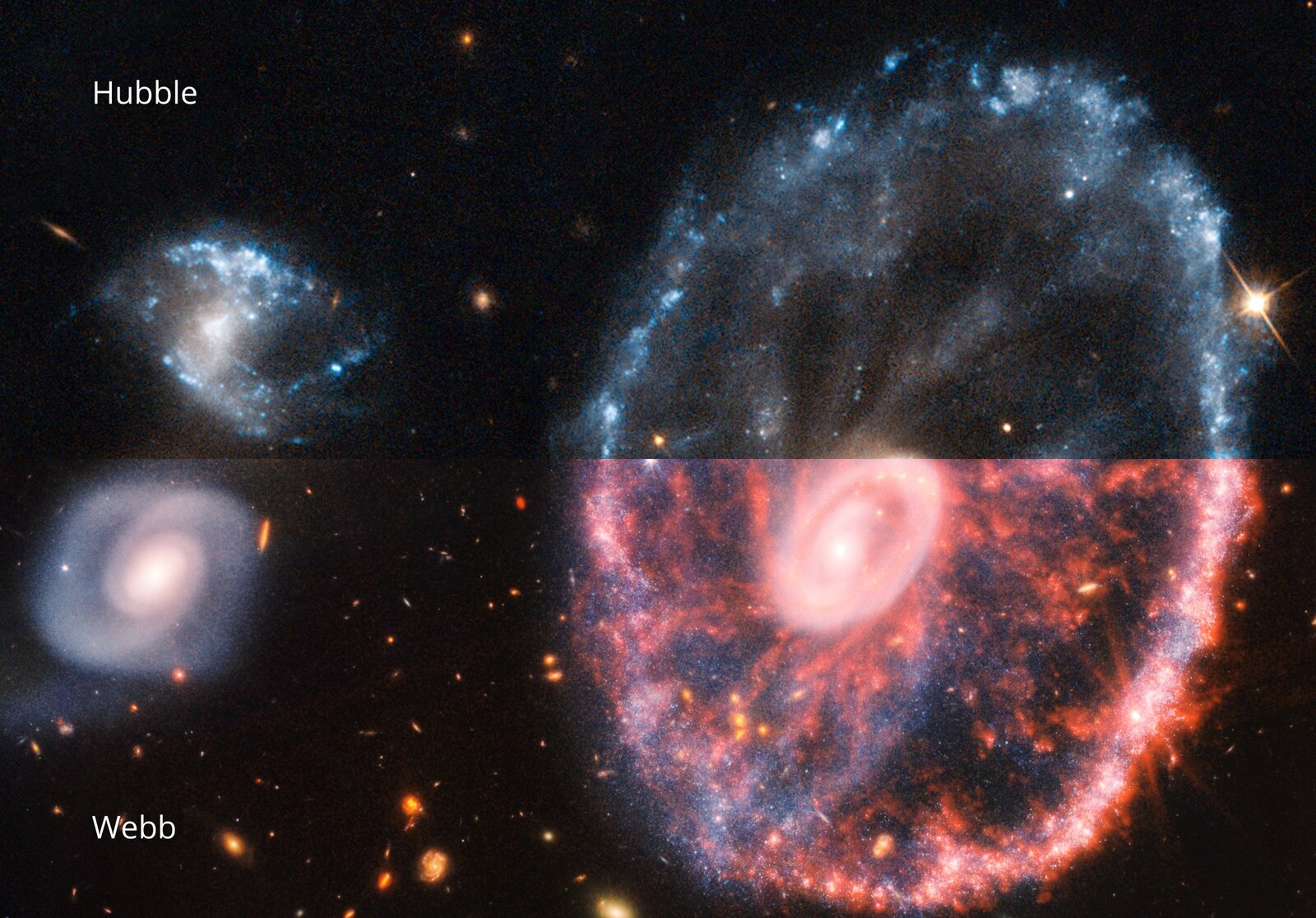
A common question is whether JWST replaces Hubble. The answer is no — the two telescopes are complementary. Hubble operates primarily in ultraviolet and visible light (and some near-infrared), while JWST focuses on near- and mid-infrared. Hubble remains uniquely capable of ultraviolet observations, which JWST cannot perform, making UV-sensitive phenomena (certain types of stellar populations, quasar emissions, some planetary studies) still Hubble territory.
The size difference is decisive in sensitivity: JWST's 6.5-meter mirror captures roughly six times more light than Hubble's 2.4-meter mirror. And JWST's position at L2, far from Earth's warm infrared glow, allows infrared sensitivity that would be impossible for any Earth-orbiting observatory.
Hubble, now over 30 years in operation and on borrowed time, continues to produce science. JWST and Hubble have been used together on joint observing programs, with each telescope contributing complementary wavelength coverage to produce richer multiwavelength views of the same objects.
Operations: Running the Most Powerful Eye in the Sky
JWST science operations are managed by the Space Telescope Science Institute (STScI) in Baltimore, Maryland. Proposals for telescope time are submitted by astronomers worldwide and reviewed by committees of independent scientists in a process called peer review. Time is allocated in units of hours and is fiercely competitive — in typical cycles, only about 15-20% of requested time is awarded.
Operations are conducted through the Deep Space Network (DSN), NASA's global network of large communication antennas, which relays commands to JWST and downlinks approximately 57 gigabytes of raw science data per day. This data flows through the STScI pipeline and is made available to the scientific community through the Mikulski Archive for Space Telescopes (MAST).
JWST was designed for a 10-year minimum mission lifetime, limited primarily by fuel for station-keeping maneuvers at L2. The Ariane 5 launch was exceptionally accurate, placing JWST on such a precise trajectory that far less fuel was consumed than budgeted during the midcourse correction burns — extending the potential mission lifetime to 20 years or more. This was an unexpected bonus that the science community greeted with enthusiasm: a much longer scientific lifetime than originally planned.
Key People Behind JWST
The telescope was the product of thousands of contributors, but several figures stand out:
- John Mather (NASA Goddard, Nobel Prize 2006 for Cosmic Microwave Background research) served as JWST's Senior Project Scientist from the beginning, providing scientific leadership throughout the development.
- Matt Mountain (STScI) was a driving force in the telescope's scientific development and a key advocate during the political crisis years.
- Mike Menzel served as NASA's JWST Mission Systems Engineer for much of the development.
- Gillian Wright (UK Astronomy Technology Centre) co-led the MIRI instrument development on the European side.
- Marcia Rieke (University of Arizona) is the principal investigator for NIRCam and a key figure in the JADES science program.
- Jane Rigby (NASA Goddard) served as Webb Operations Project Scientist and has been a prominent public communicator for the mission.
Conclusion
The James Webb Space Telescope is the product of everything humanity knew how to do at the turn of the 21st century — pushed to the absolute limit. It took 25 years, $10 billion, thousands of engineers, political survival, and 344 mechanisms that all had to work perfectly, in sequence, in the cold of space, beyond any hope of repair.
What it has returned is more than anyone dared promise. JWST has photographed the universe 290 million years after the Big Bang. It has tasted the atmospheres of distant worlds. It has revealed the birth of stars in crystalline detail behind curtains of dust that blocked every previous telescope. It has sharpened a fundamental tension in cosmology that may demand new physics. And it has done all of this in just its first three years of operations, with potentially two more decades ahead.
What JWST shows us — translated faithfully from infrared wavelengths no human eye can see, calibrated against physical standards, processed through rigorously validated pipelines — is the universe as it actually is. The colors are translations, not fabrications. The light is real. And every image is a window not into artists' imagination, but into deep time — light that traveled billions of years to fall, at last, on a golden mirror floating cold and still in the darkness between Sun and stars.
Sources: NASA JWST Mission Documentation; Space Telescope Science Institute (STScI); ESA Science; Nature Astronomy; The Astrophysical Journal; Adam Riess et al. (2023) Hubble Constant studies; JADES Collaboration (2023–2024); WASP-39b atmospheric characterization (JWST Transiting Exoplanet Community Early Release Science Team, 2022); Congressional Research Service JWST Budget Reports.