James Woods Sparks Debate After Warning America Must Stop the "Islamic Invasion"
The line between cultural commentary and incitement has rarely felt thinner in American public life. When veteran actor James Woods sat down for an interview on conservative pundit Benny Johnson's show in late July 2026 and declared that the election of New York City Mayor Zohran Mamdani represented "the most dangerous event in modern American history" — and warned of a "Muslim invasion" consuming the nation — the resulting firestorm exposed deep, unresolved tensions at the crossroads of immigration, religion, free speech, and national identity. Woods' remarks were not a spontaneous outburst. They were a concentrated expression of a worldview he has championed publicly for nearly a decade. And this time, the political climate gave those remarks a sharper edge than ever before.
Who Is James Woods, and Why Does He Still Have a Megaphone?
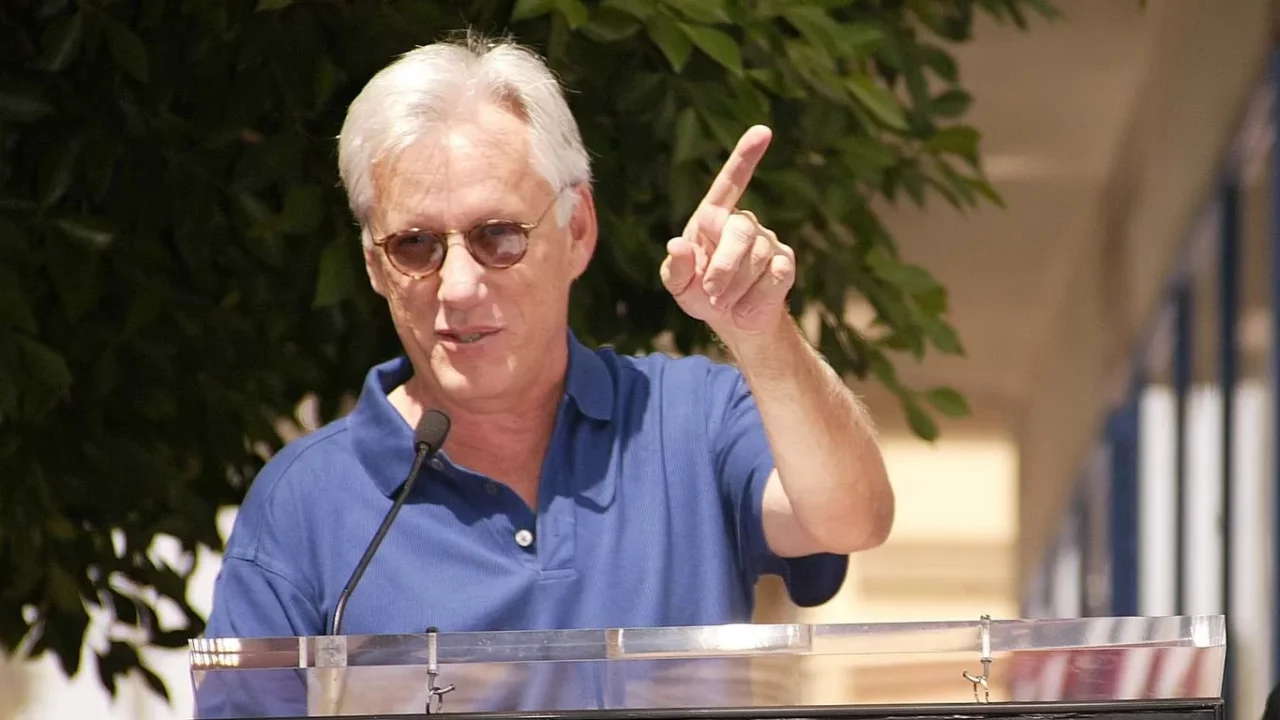
James Howard Woods was born on April 18, 1947, in Vernal, Utah. A child of the military — his father, Gail Peyton Woods, was an Army intelligence officer — he grew up after his father's death with a mother who ran a preschool. He enrolled at MIT, where he studied political science, dropping out just before graduation in 1969 to pursue acting. That decision paid off across half a century of work.
Woods made his film debut in 1972 in Elia Kazan's The Visitors, and built his reputation as one of Hollywood's most intense and technically gifted character actors. He earned Academy Award nominations for Salvador (1986) and Ghosts of Mississippi (1996), starred in Once Upon a Time in America, Casino, and voiced the villain Hades in Disney's Hercules. By any measure, he is a serious, decorated talent — one whose career spans more than 130 films and television appearances and who holds a star on the Hollywood Walk of Fame.
But the James Woods who commands attention in 2026 is not primarily the Oscar-nominated character actor. He is a prolific, often combative voice on social media, particularly on X (formerly Twitter), where his verified account has maintained more than two million followers. Since joining the platform in 2009, he has posted tens of thousands of times — often upward of ten posts per day — championing conservative causes, attacking Democratic politicians, and amplifying material from the farthest corners of the right-wing internet.
His political evolution has come at professional cost. On July 4, 2018, the Gersh Agency — his longtime talent representation — notified him by email that they would no longer represent him, an action Woods publicly attributed to his conservative politics. Far from silencing him, the rupture seemed to radicalize his output. He shed the constraints of professional image management and doubled down, becoming what media watchdog organization Media Matters described as "a main conduit for content from the far-right fever swamps to millions on Twitter."
The Trigger: Zohran Mamdani and New York City's Historic Election
To understand the context of Woods' July 2026 remarks, one must understand who Zohran Mamdani is and what his election represented in the American political landscape.
On November 4, 2025, Zohran Mamdani won New York City's mayoral election in what was widely described as a historic upset. A 34-year-old democratic socialist and state assemblyman, Mamdani defeated former Governor Andrew Cuomo in the Democratic primary and went on to win the general election. He was sworn into office on January 1, 2026, becoming the first Muslim, the first person of South Asian descent, and the first person born in Africa (he was born in Uganda, raised in Queens) to serve as mayor of the largest city in the United States.
Mamdani's election was celebrated across much of the progressive left as a generational turning point. NBC News reported that his victory "bridges long-standing divisions within the city's Muslim community," while ABC News noted he "struck a chord among Muslims and South Asians" nationally. City & State New York described the complexity of his identity — Muslim, Hindu, African, South Asian, and New Yorker — as a reflection of the city itself.
But Mamdani's tenure has not been controversy-free. His socialist economic agenda — including rental assistance programs, transit fare reductions, and a college savings fund for every kindergartener in the city's public schools — has drawn fierce opposition from business leaders, economists, and political opponents. Deseret News documented how critics have challenged his foreign and economic policy positions as overreaching. Fact-checking site Snopes catalogued at least 25 distinct rumors about Mamdani that have circulated since his election, many of them false, but reflecting the intensity of public scrutiny he faces.
More pointedly, controversy has dogged him over his perceived record on terrorism and extremism. Critics have cited his appointment of Ramzi Kassem — who previously represented Ahmed al-Darbi, convicted in connection with an al-Qaeda tanker bombing plot — as New York City's chief counsel. They have also raised his ties to Brooklyn Imam Siraj Wahhaj, whom some have linked to radical Islam, and what opponents describe as his failure to unambiguously condemn calls to "globalize the intifada." A Change.org petition, cited by CBS News, gathered more than 42,000 signatures from 9/11 families and supporters seeking to bar Mamdani from the 25th anniversary commemoration of the September 11 attacks. Fox News and the Times of Israel both reported on the petition in depth. Mamdani publicly stated his intention to attend the ceremony regardless, telling a reporter, "I will proudly honor families, the survivors, the first responders, forever impacted by that horrific terror attack by standing alongside them."
It was into this charged atmosphere that James Woods detonated his remarks.
The Interview: What Woods Actually Said
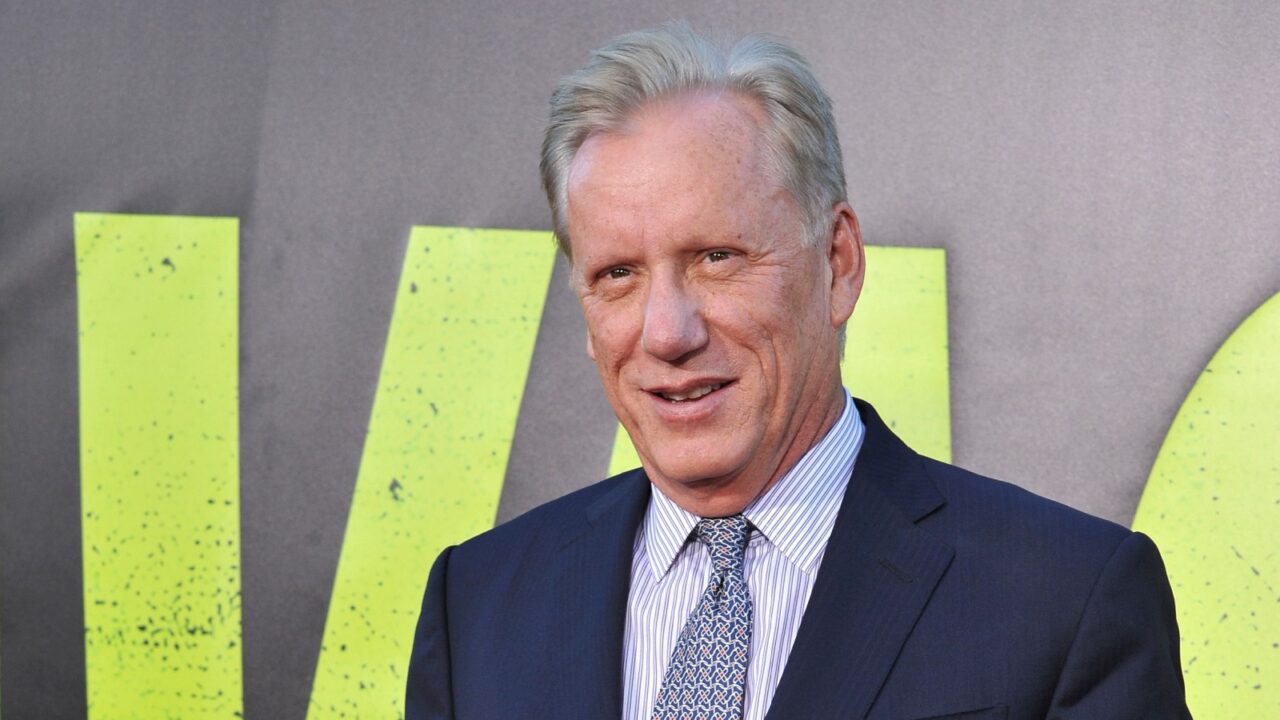
Appearing on Benny Johnson's program — a right-wing media property with a substantial online following — Woods was direct and unapologetic. He called Mamdani's election "the most dangerous event in modern American history," and from there, his language escalated rapidly.
Invoking the September 11 attacks as a geographic reference point, Woods asked how New York City — the city where the World Trade Center once stood — could "ever allow this Muslim invasion and cancer." He then offered what he described as a prediction: "They're gonna outbreed us and kill us, and it's gonna be done."
Aware that these statements would draw accusations of prejudice, Woods did not retreat. He leaned in, but attempted to reframe his target. He told reporters who inquired that he was "prejudiced against a religion that's really a political jihad — that actually has, in its revered text, that you will kill every non-believer." He insisted he was directing criticism at an ideology, not at individual people, and acknowledged that people have the right to practice their religion in America.
The distinction — religion as political system versus individuals as believers — is one Woods has employed before, and one that critics argue is a rhetorical fig leaf for blanket anti-Muslim sentiment. Supporters argue it is a legitimate analytical framework, one employed by scholars and security analysts who differentiate between Islamist political ideology and the lived faith of ordinary Muslims.
A Pattern, Not a One-Off
The July 2026 interview was not an isolated incident. It was the latest in a sustained pattern of increasingly incendiary statements about Islam and Muslim communities.
In January 2017, Woods posted a graphic image from the Bataclan terrorist attack in Paris — where 89 concertgoers were murdered by jihadist gunmen in November 2015 — to social media as a means of supporting then-President Donald Trump's travel restrictions targeting several Muslim-majority countries. Critics called the post exploitative and inflammatory; Woods framed it as honest documentation of the consequences of open immigration.
In December 2025, The Western Journal and The Gateway Pundit reported on another round of statements in which Woods again issued what outlets described as a "savage statement" about Islam, drawing outrage from Muslim civil rights organizations and praise from conservative commentators.
Across this period, Woods has been locked out of X multiple times for violating platform rules, including once for sharing intimate media. He has also quit and returned to the platform multiple times — in 2016 and 2018 — over what he characterized as censorship of conservative voices. Each departure and return has generated its own news cycle, amplifying rather than diminishing his reach.
The Reaction: Defenders and Critics Draw Battle Lines
Supporters: Voicing the Unsaid
Among conservatives, Woods' remarks were received as courageous plain-speaking. Outlets including Breitbart, Lifezette, and WLT Report framed the interview as a brave cultural warning from a rare Hollywood figure willing to say what others were afraid to say. Commentators on X amplified his remarks widely, with supporters arguing that concerns about cultural assimilation, Islamist extremism, and democratic accountability are legitimate topics that the mainstream media suppresses.
The argument from this camp runs roughly as follows: Western liberal democracies have consistently failed to distinguish between peaceful Muslim immigrants and adherents to Islamist political ideology. The election of Mamdani — someone whose associations and rhetoric critics claim reflect sympathy for anti-American and antisemitic positions — is precisely the kind of outcome that results from that failure to discriminate. In this framing, Woods is not a bigot but a prophet, warning of consequences that polite society refuses to acknowledge.
The 9/11 families' petition reinforced this framing for many in the conservative media ecosystem. Outlets treated the petition as evidence that ordinary Americans — not just right-wing provocateurs — share Woods' discomfort, and that dismissing such concerns as Islamophobia is both politically convenient and morally dishonest.
Critics: Dangerous Generalization Dressed as Analysis
From the other side, the response was swift and categorical. Civil rights organizations, progressive commentators, and Muslim American leaders condemned Woods' language as not merely offensive but genuinely dangerous.
Corey Sawyer, research and advocacy director for the Council on American-Islamic Relations (CAIR), framed the broader rhetoric of "Muslim invasion" as a gateway to policy extremism: "This is extreme language that is often used to advance extreme policies." CAIR and allied organizations have spent years tracking the pipeline from dehumanizing language to discriminatory legislation, and they argue the pattern is consistent.
Georgetown University's Bridge Initiative, which tracks Islamophobia in American public life, documented a surge in anti-Muslim sentiment in 2025-2026, tied in part to the escalating geopolitical context and domestic political developments. Al Jazeera reported in March 2026 that a U.S. civil rights group had documented a "broad attack on Muslim life" throughout 2025, with rhetorical escalation from political figures and media personalities playing a measurable role in legitimizing hostility on the ground.
Critics also challenged the intellectual framework Woods offered as a defense. Describing Islam as "really a political jihad" rather than a religion, they argued, misrepresents both the religion itself and the lived reality of the approximately 4.5 million Muslims in the United States, the vast majority of whom practice their faith peacefully, contribute to their communities, and have no ideological connection to extremism. The American Muslim Poll 2025, published by the Institute for Social Policy and Understanding, found that 70% of American Muslims are employed — a higher rate than Protestants, white Evangelicals, or the general population. Forty-six percent hold a college degree or higher, compared to 38% of the general public.
The invocation of demographic fears — "they're going to outbreed us" — drew particular condemnation. Scholars of political extremism note that this language is a hallmark of the "Great Replacement" theory, a conspiracy framework that has inspired mass violence at synagogues, mosques, and supermarkets across North America and Europe.
The Broader Landscape: Muslims in America
Who American Muslims Actually Are
The picture that emerges from current demographic data bears little resemblance to the monolithic threat Woods and like-minded commentators invoke. According to data compiled by The Global Statistics and confirmed by Pew Research Center analyses, the American Muslim community is among the most diverse religious communities in the country.
Approximately one-third of American Muslims are Black, one-third are of South Asian descent, one-quarter are of Arab descent, and the remainder come from a broad range of national backgrounds, including a growing Latino Muslim population. Forty-two percent were born in the United States. The three states with the largest Muslim populations are New York (approximately 724,475), California (approximately 504,056), and Illinois (approximately 473,792).
The community skews young — 26% of American Muslims fall between ages 18 and 24, compared to 10-12% for other surveyed religious groups — which partly explains the political salience of Muslim voters in cities like New York. Muslim Americans represent an increasingly organized and electorally significant constituency, one that has grown in engagement and political sophistication since the 2016 election.
Immigration Context
The largest increases in Muslim immigration to the United States occurred between 1991 and 2012, when approximately 1.7 million Muslims entered as legal permanent residents. More recently, Muslims comprised 42% of resettled refugees in fiscal year 2024, a figure that reflects the ongoing global refugee crisis more than any coordinated demographic strategy.
The Center for Immigration Studies, which advocates for immigration restriction, has documented what it describes as "accelerating immigration and naturalization of nationals of Muslim-majority nations" — a framing that critics argue conflates national origin with religious affiliation and treats both as security concerns by default.
The Free Speech Dimension
No analysis of this controversy can avoid grappling with the free speech question. Woods is not a government official. His remarks carry no state power. He is a private citizen exercising what the First Amendment broadly protects: the right to express views others find offensive, harmful, or dangerous.
This is not a trivial point. The free speech tradition in the United States is deliberately permissive, rooted in the conviction that the remedy for bad speech is more speech, not suppression. Commentators from across the political spectrum — including civil libertarians who have no sympathy for Woods' politics — have cautioned against reflexive demands to silence or deplatform controversial voices, arguing that such moves set precedents with unpredictable consequences.
At the same time, legal protection and moral endorsement are distinct categories. The language of "invasion," the prediction of being "outbred and killed," and the characterization of an entire world religion as "really a political jihad" are not neutral rhetorical choices. They activate well-documented psychological mechanisms that research has linked to increased willingness to accept or perpetrate violence against the named group.
The American Academy of Religion issued a statement specifically addressing anti-Muslim rhetoric, noting that "the failure to distinguish between legitimate and lawful criticism of Islamic doctrine or practice, and prejudice directed at Muslim individuals or communities as a group, is both intellectually dishonest and socially damaging." The distinction matters in practice, not just in theory.
Woods himself invoked this distinction in his post-interview clarification, insisting his concern is ideological rather than ethnic or racial. But critics noted that his prediction — "they're gonna outbreed us" — is inherently demographic, applying to all Muslims regardless of belief or practice, and cannot be squared with a claim that his objection is purely doctrinal.
Political Implications: Mamdani, the MAGA Coalition, and What Comes Next
The timing of Woods' remarks — and the broader furor over Mamdani's presence at 9/11 commemorations — is not politically accidental. It arrives as the United States navigates a polarized environment in which cultural identity, religion, and immigration have become the central axes of political contestation.
For conservatives, Mamdani's election represents everything they have warned about: a major American city electing a Muslim democratic socialist with ties to figures they associate with extremism. That a man born in Uganda, who identifies as a democratic socialist, could win the mayoralty of New York City — the site of the deadliest terrorist attack in American history — is, for this constituency, confirmation that progressive multiculturalism has moved beyond tolerance into something they experience as civilizational self-destruction.
For progressives and Muslim Americans, Mamdani's election represents a different validation: that America's democratic system is capacious enough to elect leaders from communities that have historically faced exclusion and suspicion. That a young, Muslim, South Asian, African-born candidate could win in New York by running on a platform of economic justice, affordable housing, and transit equity suggests that voters are capable of evaluating candidates on their policy merits rather than their religious identity.
Woods' intervention does not resolve this tension. It sharpens it. By framing Mamdani's election not as a policy disagreement but as an existential demographic threat — "the most dangerous event in modern American history" — Woods forecloses the possibility of ordinary political contestation. You cannot argue on the merits with an invasion. You can only repel it.
CAIR, Civil Rights Organizations, and the Institutional Response
The Council on American-Islamic Relations responded to the broader wave of anti-Muslim rhetoric with both public condemnation and legal monitoring. CAIR has for years maintained records of anti-Muslim incidents — hate crimes, employment discrimination, civil rights violations — and its annual reports have documented rising numbers of incidents in politically turbulent years.
The organization's position is that rhetoric like Woods' creates what researchers call a "permission structure" for discrimination and violence — a social signal that hostility toward Muslims is acceptable, even patriotic. This is a claim that is difficult to prove in individual cases but is supported by aggregate research on the relationship between elite rhetoric and hate crime frequency.
Other civil rights organizations, including the American Civil Liberties Union, have taken a more nuanced position, defending free speech rights while condemning specific statements and monitoring for any effort to translate rhetoric into discriminatory policy.
Hollywood, Politics, and the Woods Precedent
Woods occupies an unusual position in American public life. He is not a politician. He holds no office and commands no army. Yet his celebrity — built over a half-century of legitimate artistic achievement — grants him a megaphone that few private citizens possess. His 2+ million followers on X constitute an audience larger than most regional newspapers.
His willingness to deploy that platform for inflammatory political commentary has made him a case study in the intersection of celebrity, free speech, and democratic discourse. He is not alone: numerous other actors, musicians, and athletes have leveraged their platforms for political speech, across the ideological spectrum. But Woods is distinctive in the consistency and escalation of his anti-Muslim commentary and in the specificity of the threats he has invoked.
The professional consequences he has faced — losing his agency representation, finding fewer acting opportunities in mainstream Hollywood — have been real. But they have, paradoxically, enhanced his credibility in certain circles, making him a symbol of the culture war's casualties and a living argument for the conservative claim that Hollywood suppresses dissident voices.
Conclusion
James Woods' warning about an "Islamic invasion" of America is, in one sense, a story about a single actor's provocative interview. In another sense, it is a story about the collision of demographic change, political transformation, historical trauma, and contested national identity that defines this moment in American history.
The election of Zohran Mamdani as New York City's first Muslim mayor has become a Rorschach test: a sign of democratic vitality to some, a civilizational alarm to others. Woods placed himself firmly in the latter camp, using language — invasion, outbreed, cancer — that his supporters call brave truth-telling and his critics call dangerous dehumanization.
Both sides of this debate are responding to something real: to genuine anxieties about the future, genuine historical trauma, and genuine policy disagreements. But the language through which those anxieties are expressed is not neutral. It shapes the political environment in which millions of American Muslims — citizens, taxpayers, veterans, teachers, doctors — must live.
The debate sparked by Woods' remarks will not be settled by any single article, interview, or petition. It is, in the deepest sense, a debate about what kind of country America intends to be — and whether that answer can be reached through the inflammatory vocabulary of invasion and replacement, or whether it requires a harder, slower, less dramatic conversation about pluralism, security, and democratic accountability.
What is certain is that James Woods intended to provoke — and succeeded.
Sources:
- James Woods Warns of 'Muslim Invasion': Electing Mamdani 'Most Dangerous Event' in Modern American History – Breitbart
- James Woods Warns US Is Doomed After 'Muslim Invasion' – Mediaite
- James Woods calls Mamdani, 'Muslim invasion' dire: 'They're gonna outbreed us and kill us' – The Daily Bo Snerdley
- James Woods Sounds Alarm on 'Muslim Invasion,' Zohran Mamdani's Election – Lifezette
- James Woods warns of a Muslim invasion of America – Document News
- Zohran Mamdani elected as New York City mayor in historic win – Al Jazeera
- Zohran Mamdani's victory bridges long-standing divisions within the city's Muslim community – NBC News
- Zohran Mamdani's socialist policies and how critics are responding – Deseret News
- 25 rumors about Zohran Mamdani, examined – Snopes
- 9/11 families petition to bar Mayor Mamdani from anniversary ceremony – Fox News
- New pain for some 9/11 families as New York's mayor finds himself in commemoration controversy – CNN
- Why some 9/11 families signed petition to exclude Mamdani from memorial event – Snopes
- US civil rights group documents 'broad attack on Muslim life' in 2025 – Al Jazeera
- Actor James Woods is a main conduit for content from the far-right fever swamps – Media Matters
- Muslim Population in US 2026 – The Global Statistics
- American Muslim Poll 2025 – Institute for Social Policy and Understanding
- James Woods – Biography – IMDb
- August 3, 2026 – Bridge Initiative – Georgetown University