Islam: A Comprehensive Breakdown of the World's Second-Largest Faith
More than 2 billion people — roughly one in four human beings on Earth — identify as Muslim, making Islam the world's second-largest religion and, by most demographic projections, its fastest-growing one. Yet to speak of "Islam" as a monolith is to misunderstand it entirely. Like all great world religions, Islam contains within it a vast interior landscape: divergent legal traditions, competing theological schools, rival claims to prophetic succession, and rich mystical movements that have, over fourteen centuries, developed their own rituals, texts, institutions, and sacred geographies. Understanding Islam means understanding not just its shared foundations but also where those foundations crack — and why.
This article traces Islam from its Abrahamic roots, through the life of the Prophet Muhammad, through the political rupture that divided the faith within a generation of his death, and through the major schools and sects that have defined Muslim religious life ever since.
The Abrahamic Root: Islam, Judaism, and the Common Ancestor
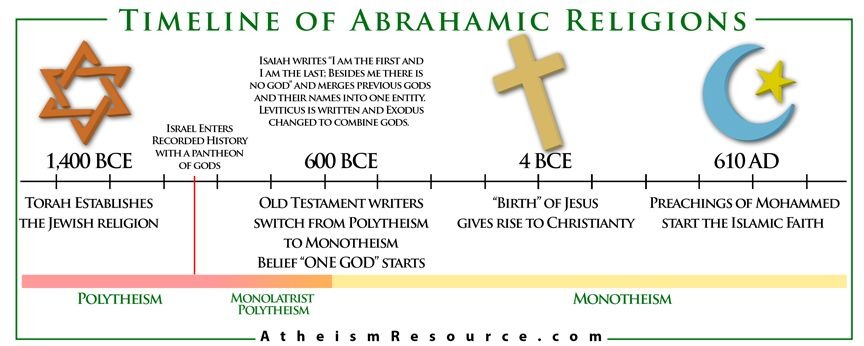
To understand Islam, one must begin not in 7th-century Arabia but in the ancient Near East, with a figure both Jews and Muslims claim as their spiritual patriarch: Abraham — known in the Islamic tradition as Ibrahim.
Judaism, Christianity, and Islam are collectively called the Abrahamic faiths — three monotheistic traditions that trace their ultimate theological lineage to Abraham's covenant with God. All three affirm a single, all-powerful, all-knowing creator. All three venerate a tradition of divine revelation delivered through human prophets. All three hold a sacred text to be the word of God. Yet the differences between them, particularly between Judaism and Islam, run deep — and are rooted in a story of two sons.
The Sons of Abraham: Ishmael and Isaac
In the Book of Genesis, Abraham fathers two sons: Ishmael, born to Hagar, his Egyptian maidservant, and Isaac, born to Sarah, his wife. Jewish scripture holds Isaac as the child of divine promise — the one through whom God's covenant with Abraham would be fulfilled. Isaac's descendants become the Israelites, the Jewish people, and — through a separate branch — the lineage of Jesus in Christian tradition.
Islam tells a related but divergent story. The Quran, while acknowledging both Ishmael and Isaac as prophets, elevates Ishmael (Ismail) as a central figure in the faith's sacred history. According to Islamic tradition, it was Ishmael — not Isaac — whom Abraham was commanded to sacrifice, and it was Ishmael who helped his father build the Kaaba, the sacred cube-shaped structure in Mecca that remains Islam's holiest site. Ishmael is considered the ancestor of the Arab peoples, and therefore the forefather of the Prophet Muhammad himself.
This genealogical divergence is not merely a theological footnote. It represents a foundational claim: that God's covenant with Abraham passed through the Ishmaelite lineage, culminating in the Arabian peninsula with the final prophet, Muhammad ibn Abdullah.
Islam's Self-Understanding: Restoration, Not Rupture
Importantly, Islam does not understand itself as having "branched off" from Judaism or Christianity in the way one branch of a tree splits from another. Rather, the Islamic theological position is that Islam is the original and complete expression of the same monotheism that God revealed to all prior prophets — Adam, Noah, Abraham, Moses, and Jesus among them. In this view, Judaism and Christianity are not wrong so much as incomplete or corrupted over time through human error, translation, and institutional distortion.
The Quran repeatedly acknowledges and honors the Torah (Tawrat) and the Gospels (Injil) as originally true revelations, but argues they have been altered (a concept called tahrif). Muslims who accept this framework believe Muhammad received the final, uncorrupted revelation in Arabic — the Quran — directly from God through the angel Gabriel (Jibril).
Jews and Christians occupy a special status in Islamic jurisprudence: they are Ahl al-Kitab, the "People of the Book" — communities who received divine scripture and are therefore afforded greater respect and legal protection than polytheists. This is a status that shaped Islamic governance, taxation, and social organization throughout the classical caliphates.
Why the Break Felt Real
Despite Islam's self-description as a restoration rather than a rupture, the historical encounter between early Muslims and the Jewish tribes of Arabia in the 7th century CE was shaped by very real conflict. When Muhammad began preaching in Mecca around 610 CE and later migrated to Medina in 622 CE (the Hijra, Year One of the Islamic calendar), he initially hoped to find acceptance among the Jewish tribes of Medina, seeing his message as a confirmation of their own prophetic tradition.
That acceptance did not come. The Jewish tribes of Medina — principally the Banu Qaynuqa, Banu Nadir, and Banu Qurayza — did not recognize Muhammad as a prophet. In the years that followed, political alliances broke down, open conflicts erupted, and eventually all three tribes were either expelled or, in the case of the Banu Qurayza following the Battle of the Trench (627 CE), executed or enslaved. These events mark a historical and theological separation between Islam and Judaism that hardened over generations into distinct civilizational identities.
What had once been anticipated as sibling faiths became, in practice, rival traditions — each claiming the inheritance of Abraham.
The Foundations of Islamic Faith: What All Muslims Share
Before exploring Islam's internal divisions, it is essential to establish what unites its 2 billion adherents. Beneath the denominational differences lie shared doctrines and practices that define the religion at its core.
The Shahada: Declaration of Faith
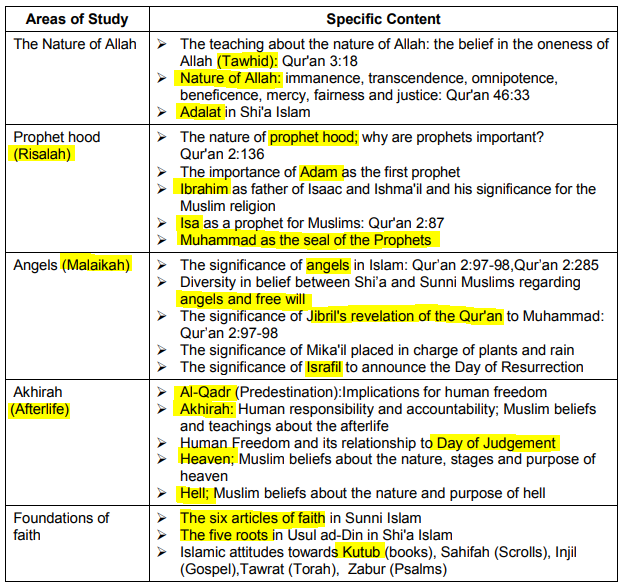
Every Muslim affirms the Shahada: "Ash-hadu an la ilaha ill Allah, wa ash-hadu anna Muhammadan rasul Allah" — "I bear witness that there is no god but God, and I bear witness that Muhammad is the Messenger of God." This dual declaration — monotheism plus prophethood — is the entry point into the faith and its most fundamental creed.
The Five Pillars of Islam
The Five Pillars are the essential practices of Islamic life, derived from both Quranic injunction and the Prophet's example (the Sunnah):
- Shahada — The declaration of faith, as described above.
- Salah — Obligatory ritual prayer performed five times daily (at dawn, midday, afternoon, sunset, and night), preceded by ritual purification (wudu) and oriented toward Mecca.
- Zakat — Obligatory almsgiving, typically calculated as 2.5% of accumulated wealth above a minimum threshold (nisab), distributed to defined categories of the poor and needy.
- Sawm — Fasting from food, drink, and sexual activity from dawn to sunset during the lunar month of Ramadan, commemorating the first revelation of the Quran to Muhammad.
- Hajj — Pilgrimage to the holy city of Mecca, obligatory once in a lifetime for those physically and financially able. Hajj follows prescribed rituals tracing the footsteps of Abraham and Ishmael, culminating in the circumambulation of the Kaaba.
The Six Articles of Faith
Alongside the Five Pillars, classical Islamic theology identifies Six Articles of Faith (arkan al-iman):
- Belief in Allah (God) — singular, without partners, associates, or equal.
- Belief in the Angels (mala'ika) — non-corporeal beings who serve God.
- Belief in the Revealed Books — including the Torah, Psalms, Gospels, and supremely the Quran.
- Belief in the Prophets and Messengers — from Adam to Muhammad, the "Seal of the Prophets."
- Belief in the Day of Judgment (Yawm al-Qiyama) — when all humans will be resurrected and held accountable.
- Belief in Divine Decree (Qadar) — that God is sovereign over all things, though the precise relationship between divine will and human free will has been a subject of intense theological debate throughout Islamic history.
The Quran and Hadith
The Quran is the inviolable center of Islamic authority — believed by Muslims to be the literal, verbatim word of God as revealed to Muhammad between approximately 610 and 632 CE. It consists of 114 chapters (suwar, singular: sura) arranged roughly by length rather than chronologically.
Alongside the Quran stands the Hadith — a vast corpus of reported sayings, actions, and silent approvals attributed to the Prophet Muhammad. Together, the Quran and authenticated Hadith constitute the Sunnah (the Prophet's way), which forms the basis for Islamic law (Sharia) and ethical guidance. The science of evaluating and authenticating Hadith (ilm al-rijal) became one of the most elaborate scholarly disciplines in Islamic intellectual history.
The Great Schism: How Sunni and Shia Islam Divided
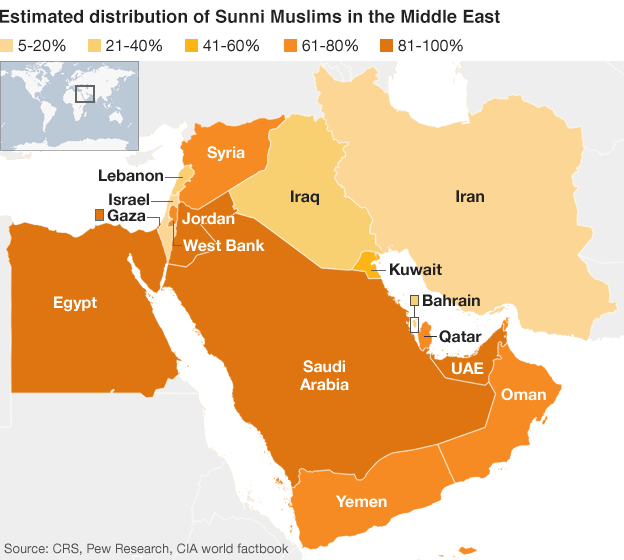
If the foundation of Islamic unity is the Quran and the prophethood of Muhammad, the foundation of Islam's most consequential internal division is the question of what happened the moment Muhammad died.
Death of the Prophet: 632 CE
The Prophet Muhammad died in Medina on June 8, 632 CE, without having left explicit written instructions designating a successor. The Muslim community (umma) was immediately plunged into a succession crisis that would define the religion for all time.
The Sunni Position: Abu Bakr as First Caliph
One faction held that the community should select a leader from among Muhammad's most trusted companions (Sahaba). Through deliberation among the community's elders, Abu Bakr al-Siddiq — the Prophet's closest companion and father-in-law — was selected as the first Khalifa (Caliph, or successor). Abu Bakr was followed by Umar ibn al-Khattab, then Uthman ibn Affan, and then Ali ibn Abi Talib — the four "Rightly-Guided Caliphs" of Sunni tradition.
This position — that community consensus legitimately selects leadership — became the Sunni position, and the followers of this majority became known as Ahl al-Sunnah wa'l-Jama'a: the People of the Prophetic Tradition and the Community.
The Shia Position: Ali Was the Rightful Heir
A minority held a radically different view. They argued that Muhammad had explicitly designated his cousin and son-in-law, Ali ibn Abi Talib, as his rightful successor — pointing especially to an incident at Ghadir Khumm, shortly before the Prophet's death, where Muhammad reportedly declared: "Whoever considers me their master (mawla), Ali is also their master." In this view, the selection of Abu Bakr — bypassing Ali — was a usurpation of divinely ordained authority.
This minority became the Shi'at Ali, the "Party of Ali," and eventually simply the Shia. For them, legitimate leadership (Imamate) was not a matter of community consensus but of divine appointment through the Prophet's bloodline.
The Battle of Karbala: 680 CE
The schism deepened catastrophically in 680 CE, when Ali's son Hussein ibn Ali — the Prophet's own grandson — refused to pledge allegiance to Yazid ibn Muawiya, whom he considered an illegitimate and corrupt ruler of the Umayyad Caliphate. Hussein traveled toward Kufa (in present-day Iraq) with a small group of family members and followers, numbering approximately 72 fighters, expecting support from the people of Kufa that never materialized.
They were intercepted by a massive Umayyad army at a plain called Karbala. After a ten-day siege in which Hussein's group was cut off from water, on the 10th of Muharram (Ashura), the army attacked. Hussein and nearly all his male companions were killed. Hussein's head was severed and sent to Damascus as a trophy for Yazid.
The massacre at Karbala became the foundational trauma and sacred narrative of Shia Islam. The grief over Hussein's martyrdom is commemorated annually during Ashura — a day of mourning, lamentation, and in some communities, ritual self-flagellation — and shapes Shia theology's deep emphasis on suffering, martyrdom, and redemptive sacrifice.
Major Branches and Sects of Islam
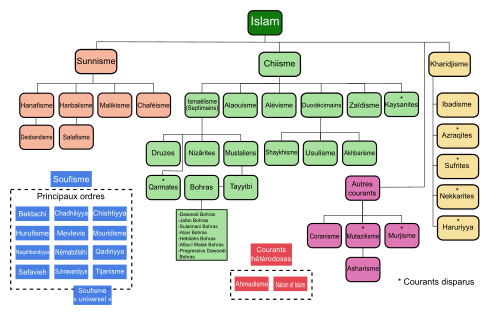
Sunni Islam: ~85% of All Muslims
Sunni Islam is by far the largest denomination, representing approximately 1.7 to 1.8 billion of the world's 2 billion Muslims. The word "Sunni" derives from Sunnah, referencing adherence to the prophetic tradition. Sunnis accept the authority of the four Rightly-Guided Caliphs and operate within four major schools of Islamic jurisprudence, each associated with a foundational scholar:
- Hanafi (founded by Abu Hanifa, d. 767 CE) — the most widely followed school globally, predominant in Turkey, Central Asia, South Asia, and parts of the Arab world. Known for its use of analogical reasoning (qiyas) and considered relatively flexible.
- Maliki (founded by Malik ibn Anas, d. 795 CE) — predominant in North Africa, West Africa, and parts of the Gulf. Emphasizes the practice of the people of Medina as a source of legal precedent.
- Shafi'i (founded by Muhammad ibn Idris al-Shafi'i, d. 820 CE) — predominant in East Africa, Southeast Asia, and parts of the Arab world. Known for its systematic methodology in deriving law.
- Hanbali (founded by Ahmad ibn Hanbal, d. 855 CE) — predominant in Saudi Arabia and Qatar. The most textualist of the four, relying strictly on Quran and Hadith with minimal room for analogy or juristic opinion. It is the school from which modern Salafi and Wahhabi movements draw their legal methodology.
Within Sunni Islam, a spectrum of theological tendencies ranges from traditional scholastic schools (Ash'ari and Maturidi theology, which dominate mainstream Sunni thought) to modern revivalist movements such as Salafism (which seeks to return to the practice of the Salaf al-Salih, the "Pious Predecessors") and Wahhabism (the austere reformist movement founded by Muhammad ibn Abd al-Wahhab in 18th-century Arabia and institutionalized by the Saudi state).
Shia Islam: ~10–13% of All Muslims
Shia Islam encompasses approximately 260–300 million Muslims, concentrated especially in Iran, Iraq, Azerbaijan, Bahrain, and significant communities across Lebanon, Pakistan, India, and the Gulf states. The defining doctrine of Shia theology is the Imamate — the belief that legitimate leadership of the Muslim community is divinely designated through the Prophet's family (Ahl al-Bayt), specifically through Ali and his descendants.
Within Shia Islam, several sub-branches emerged, divided primarily on the question of which Imam's line of succession they follow:
Twelver Shia (Ithna Ashari) — ~85% of all Shia
By far the largest Shia branch, Twelver Shia Islam follows a succession of twelve Imams beginning with Ali and ending with Muhammad al-Mahdi, the twelfth Imam, who is believed to have entered a state of Ghayba (occultation) in 874 CE as a young child. Twelvers believe the Hidden Imam is still alive, protected by God, and will return at the end of times to restore justice. In his absence, religious authority is exercised by qualified scholars — a doctrine that reached its most politically potent form in Ayatollah Khomeini's concept of Wilayat al-Faqih (Guardianship of the Islamic Jurist), the theological foundation of the Islamic Republic of Iran established in 1979.
Twelver Shia theology holds that the Imams are infallible (ma'sum) and possess esoteric knowledge beyond ordinary human comprehension. Veneration of the Imams at shrine sites — particularly Imam Hussein's shrine in Karbala and Imam Ali's shrine in Najaf — is a central feature of Twelver piety.
Ismaili Shia (Seveners)
Ismailism diverged from the Twelver line in 765 CE over a succession dispute following the death of the sixth Imam, Jafar al-Sadiq. While Twelvers recognized Jafar's son Musa al-Kazim as the seventh Imam, Ismailis recognized the previously designated but deceased Ismail ibn Jafar, then continued the Imamate through Ismail's son Muhammad ibn Ismail.
Unlike Twelver theology, Ismaili thought places heavy emphasis on ta'wil — the esoteric, allegorical interpretation of scripture — and the living Imam as an active spiritual guide who continuously interprets revelation for the community. The current Imam of the largest Ismaili community (the Nizari Ismailis) is Shah Karim al-Husayni, the Aga Khan IV, born in 1936 and leading a global community of approximately 15–20 million Ismailis. He is the 49th hereditary Imam in the Nizari line and exercises spiritual authority recognized by his followers worldwide.
Zaydi Shia
The Zaydis represent the branch theologically closest to Sunni Islam. They diverged in the early 8th century by supporting Zayd ibn Ali — a grandson of Hussein — as Imam over others. Zaydis do not accept the doctrine of Imamate infallibility, do not believe in the Hidden Imam, and hold that any worthy descendant of Ali and Fatima who actively leads the community against oppression can serve as Imam. This more egalitarian and activist approach makes Zaydism distinctive.
Today, Zaydis form the majority in Yemen, where the Houthi movement — officially known as Ansar Allah — emerged from Zaydi communities in the country's north and has been a central actor in Yemen's ongoing civil war.
Ibadi Islam: ~0.4% of All Muslims
Ibadi Islam is one of the oldest surviving Islamic denominations, predating the Sunni-Shia split. It emerged in the decades immediately following the Prophet's death from a group known as the Khawarij — early dissenters who rejected both Ali and Muawiya during the First Fitna (First Civil War of Islam). The Ibadis distinguished themselves from the more radical Kharijites by rejecting the latter's practice of declaring all Muslims who committed major sins to be apostates (takfir).
Ibadism is today the state religion of Oman, where it has been practiced for over a thousand years. Ibadis differ from Sunnis and Shia in several notable ways: they do not raise their hands during prayer at certain points, they recite the Quran silently during certain prayers, and they maintain that God cannot be seen on the Day of Judgment — a position that differentiates them from mainstream Sunni theology.
Ahmadiyya Islam: ~0.6% of All Muslims
The Ahmadiyya movement was founded in Qadian, British India in 1889 by Mirza Ghulam Ahmad (1835–1908), who claimed to be the Promised Messiah and Mahdi foretold in Islamic tradition. This claim is the central point of controversy: mainstream Muslim scholars — both Sunni and Shia — hold that Muhammad was definitively the "Seal of the Prophets" (Khatam al-Nabiyyin), and any claim to prophethood thereafter constitutes apostasy.
As a result, Ahmadis have been declared non-Muslim by the Pakistani government (through the Second Amendment to Pakistan's Constitution in 1974) and face significant legal persecution in Pakistan and some other Muslim-majority countries. Despite this, the Ahmadiyya community has grown into a globally active missionary movement, claiming between 10–20 million adherents worldwide, with a particularly strong presence in West Africa and among diaspora communities in Europe and North America.
Sufism: The Mystical Heart of Islam
Sufism (Tasawwuf) is not a separate denomination so much as a spiritual tradition and methodology that has been practiced across Sunni and Shia communities throughout Islamic history. At its core, Sufism seeks ma'rifa — direct, experiential knowledge of God — through inward spiritual development rather than external ritual alone.
The name "Sufi" is thought to derive from suf (wool), referring to the coarse woolen garments worn by early Islamic ascetics who rejected the luxury of the early Islamic empires. The roots of Sufi practice lie in the ascetic circles of 8th and 9th-century Islam, with figures such as Hasan al-Basri (d. 728 CE) and the remarkable female mystic Rabia al-Adawiyya (d. 801 CE), who articulated a theology of mahabbah (divine love) that emphasized loving God for God's own sake rather than for fear of punishment or hope of reward.
Over time, Sufi practice became organized into formal brotherhoods called Turuq (singular: Tariqa), each tracing a lineage of spiritual transmission (silsila) back to the Prophet himself. Major Sufi orders include:
- Naqshbandi — founded in Central Asia, influential across the Muslim world; known for "silent dhikr" (internal remembrance of God).
- Qadiri — founded by Abd al-Qadir al-Jilani (d. 1166 CE) in Baghdad; one of the most widespread orders globally.
- Chishti — dominant in South Asia, associated with the spread of Islam in India; known for its embrace of music (sama) as a path to divine ecstasy.
- Shadhili — predominant in North Africa and the Arab world.
- Mevlevi (Whirling Dervishes) — founded by the followers of the great Persian poet Jalal al-Din Rumi (d. 1273 CE) in Konya (modern Turkey); famous for the sema ceremony, a spiritual practice involving whirling movement as a form of meditative prayer.
Central Sufi practices include dhikr (the rhythmic repetition of God's names), muraqaba (meditation), and submission to a murshid or shaykh (spiritual guide). The relationship between student (murid) and guide is considered essential to spiritual progress.
Sufism has faced significant opposition from puritanical movements within Islam — Wahhabism and Salafism in particular — who regard shrine veneration, saint intercession, and some Sufi rituals as bid'a (forbidden religious innovation) or even shirk (polytheism). This theological tension has at times erupted into violence, most dramatically in the destruction of Sufi shrines and tombs by groups such as ISIS in Iraq and Syria and by Wahhabi-influenced movements in Libya and Mali.
Comparing the Major Branches: A Theological Summary
| Dimension | Sunni | Twelver Shia | Ismaili | Zaydi | Ibadi | Ahmadiyya |
|---|---|---|---|---|---|---|
| Succession after Muhammad | Community consensus (Abu Bakr) | Divine designation (Ali) | Ali, then through Ismail | Ali, activist leadership | Reject both early claimants | Follow Mirza Ghulam Ahmad |
| Imam's Role | Prayer leader only | Infallible divine guide | Living, authoritative interpreter | Activist, non-infallible | No special Imam doctrine | Caliph of Promised Messiah |
| Hidden Imam | No | Yes (12th Imam in occultation) | No (Imam is living) | No | No | No |
| Jurisprudence | Four schools (Hanafi, Maliki, Shafi'i, Hanbali) | Jafari school | Esoteric/ta'wil tradition | Zaydi school | Ibadi school | Ahmadi fiqh |
| Ashura | Observed (fasting for some) | Major day of mourning | Observed | Observed | Minor observance | Observed |
| Status in majority Muslim countries | Majority, dominant | Majority in Iran, Iraq | Minority everywhere | Majority in Yemen | Majority in Oman | Persecuted as non-Muslim in some countries |
Islam and Judaism: The Enduring Theological Dialogue
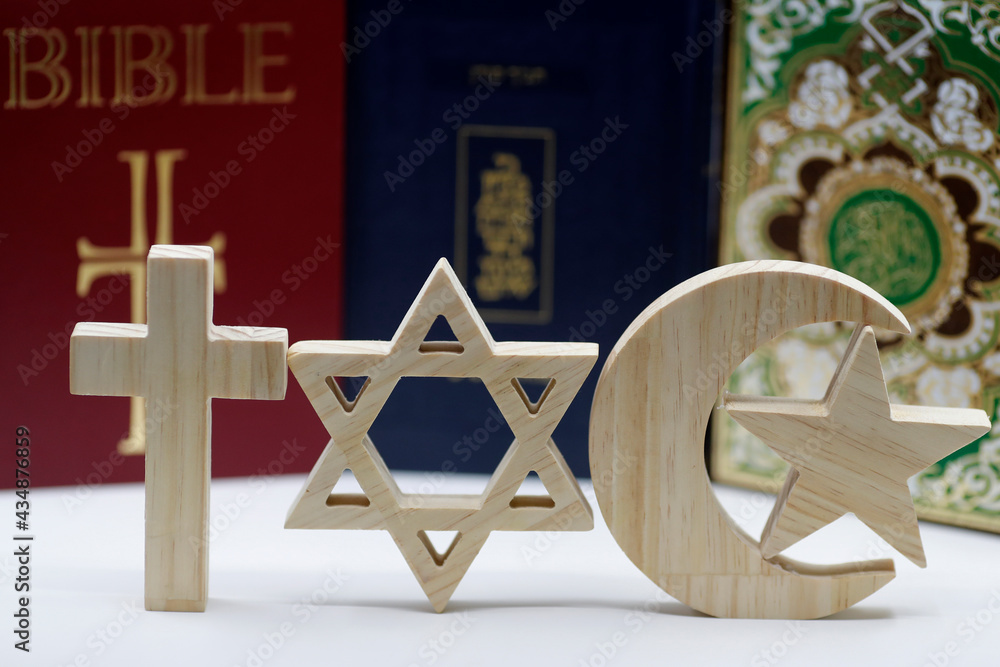
The relationship between Islam and Judaism is far more textured than simple opposition. At the level of law and practice, the two traditions share striking structural similarities: both are orthopraxic (right practice matters as much as right belief), both maintain elaborate dietary codes (Halal in Islam, Kashrut in Judaism), both observe communal prayer multiple times daily, both forbid the depiction of God, and both ground their legal systems in divinely revealed scripture interpreted by trained scholarly elites (Ulema in Islam, Rabbis in Judaism).
The key theological divergences are clear and largely known: Judaism rejects Muhammad as a prophet and the Quran as divine revelation; Islam holds that Jewish scripture was altered and that Muhammad brought its completion and correction. Islam accepts Jesus as a prophet; Judaism does not. Islam venerates Mary and affirms the virgin birth; Judaism does not recognize these Christian-Islamic theological claims at all.
Yet what makes the Islam-Judaism relationship unique within the Abrahamic family is its specific combination of deep affinity and sharp divergence. The Quran references Moses more than any other prophet — over 130 times — and holds the revelation given to Moses (the Torah) as genuine divine scripture in its original form. Muslim scholars absorbed Jewish (and Christian) narrative traditions through a body of literature called Isra'iliyyat — "Israelite stories" — incorporated into Quranic commentary to fill narrative gaps. Conversely, medieval Jewish philosophers such as Maimonides (1138–1204 CE) worked in an Arabic-speaking Islamic world and were deeply influenced by Islamic philosophy, kalam (speculative theology), and Aristotelian thought transmitted through Muslim scholars.
The medieval period saw both flourishing convivencia (coexistence) — as in Andalusia under the Umayyad Caliphate — and periodic oppression, as dhimmi (protected minority) status for Jews, while offering legal protection, also imposed social and legal disabilities. The modern political conflict centered on the Israeli-Palestinian question has added a geopolitical layer to what is already a theologically complex relationship, making interfaith dialogue between Muslims and Jews both more urgent and more fraught than at almost any prior period.
Islam's Global Footprint in the 21st Century
As of 2025–2026, Islam's global demographics continue to shift and grow. Muslims represent approximately 24.1% of the world's population — roughly 2 billion people. Indonesia remains the single largest Muslim-majority country by population (approximately 237 million Muslims), followed by Pakistan, Bangladesh, and Nigeria. In the Arab world, Egypt has the largest Muslim population at approximately 100 million.
Shia Islam remains predominant in Iran, Iraq, Azerbaijan, and Bahrain. Ibadi Islam is practiced almost exclusively in Oman and small diaspora communities. The Ahmadiyya community, despite persecution in South Asia, has established a significant presence across West Africa and Western Europe.
Sufism, despite pressure from Wahhabi and Salafi movements, continues to attract millions of followers globally, particularly across South Asia, Turkey, West Africa, and increasingly in Western spiritual communities drawn to its emphasis on love, poetry, and interior transformation.
The great internal debates of Islam in the 21st century — over the role of Islamic law in modern states, over the theological legitimacy of various reform movements, over Sunni-Shia geopolitical rivalry as proxy-fought through conflicts in Yemen, Syria, Iraq, and beyond — are in many ways continuations of disputes that began in 632 CE at the deathbed of the Prophet.
Conclusion
Islam is not one thing. It is a living civilization more than fourteen centuries old, rooted in a profound monotheistic vision that sees itself as the culmination of an Abrahamic prophetic tradition stretching back to Abraham, Moses, and beyond. Its foundational unity — the Quran, the Five Pillars, the Six Articles of Faith — coexists with extraordinary internal diversity: the Sunni majority's four great legal schools; the Shia minority's theology of divine succession and martyrdom; the Ismaili's living Imam; the Zaydi's activist leadership doctrine; the Ibadi's ancient independence; the Ahmadiyya's contested claim to a renewed prophethood; and the Sufi brotherhoods' insistence that the deepest truth of the faith lies in the heart.
Its break from Judaism was not, in Islam's own understanding, a break at all — but a restoration. Yet historically, the divergence over the two sons of Abraham, the rejection of Muhammad's prophethood, and the political conflicts of the early seventh century created distinct civilizational traditions that have coexisted, conflicted, and cross-pollinated for fourteen hundred years. To understand Islam in its full depth is to understand all of this simultaneously — the unity beneath the divisions, and the humanity within the theology.
Sources:
- The Major Branches Of Islam - World Atlas
- Sunni, Shia, and Sufi Islam - Biblical Training
- Exploring the Diversity within Islam: Sunni, Shi'ite, and Sufi Sects - Philosophy Institute
- Judaism, Christianity, and Islam: A Common Tradition - Al-Islam.org
- The Abrahamic Faiths - Medium
- Five Pillars of Islam - Wikipedia
- Ibadi Islam: Introduction, History And Beliefs - Wisdom House
- Comparative Study: Ahmadiyya Khilafat and Ismaili Imamat
- Islam's Sunni-Shia Divide, Explained - HISTORY
- The Battle of Karbala and the Splitting of the Muslim World
- Karbala Central to Sunni-Shia Split - Al Jazeera
- Comparing Jewish and Islamic Perspectives on Abraham and Ishmael - IslamiCity
- Tariqa - Britannica
- Sufism - Britannica
- The Three Branches of Shia Islam - Fanack
- Muslim Population By Country 2025 - IslamiCity
- World Muslim Population Statistics 2026 - World Metrics
- How is Islam Similar to Christianity and Judaism? - IslamiCity