Immigration and Customs Enforcement: ICE
On the morning of September 11, 2001, the United States government discovered, in the most catastrophic way imaginable, that its immigration bureaucracy was deeply broken. Within weeks, it emerged that several of the nineteen hijackers had been living in the country on expired visas — violations that a sprawling, under-resourced agency called the Immigration and Naturalization Service had failed to detect or act upon. The national reckoning that followed did not merely produce new security policies; it triggered the most sweeping reorganization of the federal government since President Harry Truman signed the National Security Act of 1947. Out of that transformation emerged two agencies that now define America's relationship with immigration enforcement: Customs and Border Protection (CBP) and Immigration and Customs Enforcement (ICE). More than two decades later, ICE remains one of the most powerful, most scrutinized, and most politically contested law enforcement agencies in the United States — an institution perpetually caught between congressional mandates, executive ambitions, judicial constraints, and the realities of a deeply divided public.
Part I: The Fall of the INS — A Century of Conflicting Missions

Origins and Structural Contradictions
The Immigration and Naturalization Service was not born broken, but it was born conflicted. Established formally in 1933 under the Department of Labor — though its functional roots stretch back to the Immigration Act of 1891 — the INS was transferred to the Department of Justice in 1940 under President Franklin D. Roosevelt, partly in response to wartime security concerns about subversive foreign nationals. That jurisdictional home within Justice shaped the agency's identity for the next six decades: it was simultaneously a law enforcement body charged with finding and removing people who violated immigration law, and a service agency responsible for processing visas, naturalizing citizens, and adjudicating immigration benefits.
This dual mandate created chronic institutional tension. The same bureaucracy that was supposed to expedite the legal pathway to citizenship was also tasked with surveilling, detaining, and deporting those who bypassed it. Resources were routinely pulled in both directions. Agents complained that their investigative work was subordinated to paperwork processing; immigrant advocates argued that the enforcement culture poisoned the service side. As the United States experienced successive waves of immigration in the 1980s and 1990s — driven by conflicts in Central America, economic pressures in Mexico, and the global movement of peoples — the INS expanded in size but not necessarily in coherence.
By the late 1990s, Congress had grown openly critical. The U.S. Commission on Immigration Reform, chaired by former congresswoman Barbara Jordan, issued findings in 1997 recommending that the INS be abolished entirely and its functions separated into distinct agencies. The commission concluded that the enforcement mission and the services mission were "fundamentally incompatible" within a single organization. Congress debated reform legislation for years, but internal disagreements stalled action.
The 9/11 Rupture
The September 11 attacks ended the debate. In the aftermath, investigators revealed systemic failures across the intelligence and immigration bureaucracies. The 9/11 Commission later documented how Mohamed Atta and other hijackers had entered the United States legally on tourist and student visas, then overstayed or violated the terms of those visas without consequence. The INS had no reliable mechanism for tracking visa expiration or flagging overstays. Its databases were fragmented and poorly maintained. Cooperation between INS and the FBI or CIA was minimal. Critics on both left and right agreed on one point: the agency was not fit for purpose in a post-9/11 security environment.
President George W. Bush moved quickly. On June 6, 2002, he proposed the creation of a new Cabinet-level Department of Homeland Security, consolidating 22 federal agencies and approximately 170,000 employees under a unified national security mission. The INS, critics argued, exemplified exactly the kind of fragmented, mission-confused agency that had allowed the 9/11 attacks to occur. Its abolition was treated not merely as a bureaucratic reform but as a national security imperative.
Part II: The Homeland Security Act of 2002 — Building the New Architecture
Legislative History and Passage
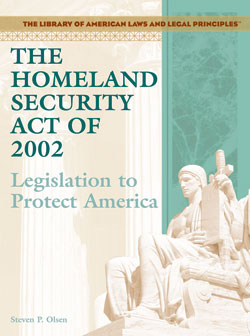
The Homeland Security Act of 2002 (Public Law 107-296) was signed by President Bush on November 25, 2002, following months of intense congressional negotiation. The legislation passed the Senate 90–9 and the House 299–121, reflecting the bipartisan consensus that structural reform was urgent, even as civil libertarians and some labor unions raised concerns about the consolidation of power and the implications for workers' rights and individual liberties.
The act created the Department of Homeland Security, which became operational on January 24, 2003, under the leadership of Tom Ridge, the former Governor of Pennsylvania. Ridge was sworn in as the first Secretary of Homeland Security — a Cabinet position that quickly became one of the most powerful in the executive branch.
The Dismantling of the INS
Under the act, the INS was formally abolished on March 1, 2003, and its functions were redistributed across three new entities, all housed within DHS:
U.S. Citizenship and Immigration Services (USCIS) absorbed the INS's service functions — processing visa petitions, green card applications, naturalization requests, and asylum claims. It operates largely on a fee-funded basis and is intended to be administratively distinct from enforcement work.
Customs and Border Protection (CBP) merged the border enforcement functions of the INS with the U.S. Customs Service (formerly in the Treasury Department), the Border Patrol, and the agricultural inspection arm of the Animal and Plant Health Inspection Service (APHIS). CBP's mission is explicitly focused on the border and ports of entry — stopping people, goods, and contraband from entering unlawfully.
Immigration and Customs Enforcement (ICE) was created as the principal investigative and interior enforcement arm of DHS. It absorbed the investigative divisions of the old INS and the investigative and enforcement functions of the U.S. Customs Service. Its jurisdiction extends beyond immigration: it is responsible for a broad spectrum of cross-border criminal investigations, from drug and weapons trafficking to financial crimes and cybercrime with a transnational nexus.
The geographic and conceptual division between CBP and ICE is significant. CBP is the first line of defense — it operates at and near the border, intercepting those attempting to enter unlawfully. ICE is the interior force — it operates across the entire country, tracking down individuals who have already entered, overstayed visas, or committed crimes that make them deportable, and conducting investigations into transnational criminal networks that exploit immigration vulnerabilities.
Legislative Intent vs. Operational Reality
The architects of the Homeland Security Act believed that separating enforcement from services would resolve the INS's structural contradictions. In many respects, it did. USCIS developed a more customer-service-oriented culture. ICE and CBP developed specialized enforcement identities and capabilities. But the separation also introduced new coordination problems. Sharing of information between the three agencies required deliberate effort. ICE and CBP sometimes operated in overlapping jurisdictions, creating turf disputes. USCIS adjudications could be undermined — or accelerated — by enforcement actions at ICE, creating tension between the agencies' missions that reflected broader political disagreements about immigration policy.
Part III: The Structure and Mandate of ICE
Organizational Divisions
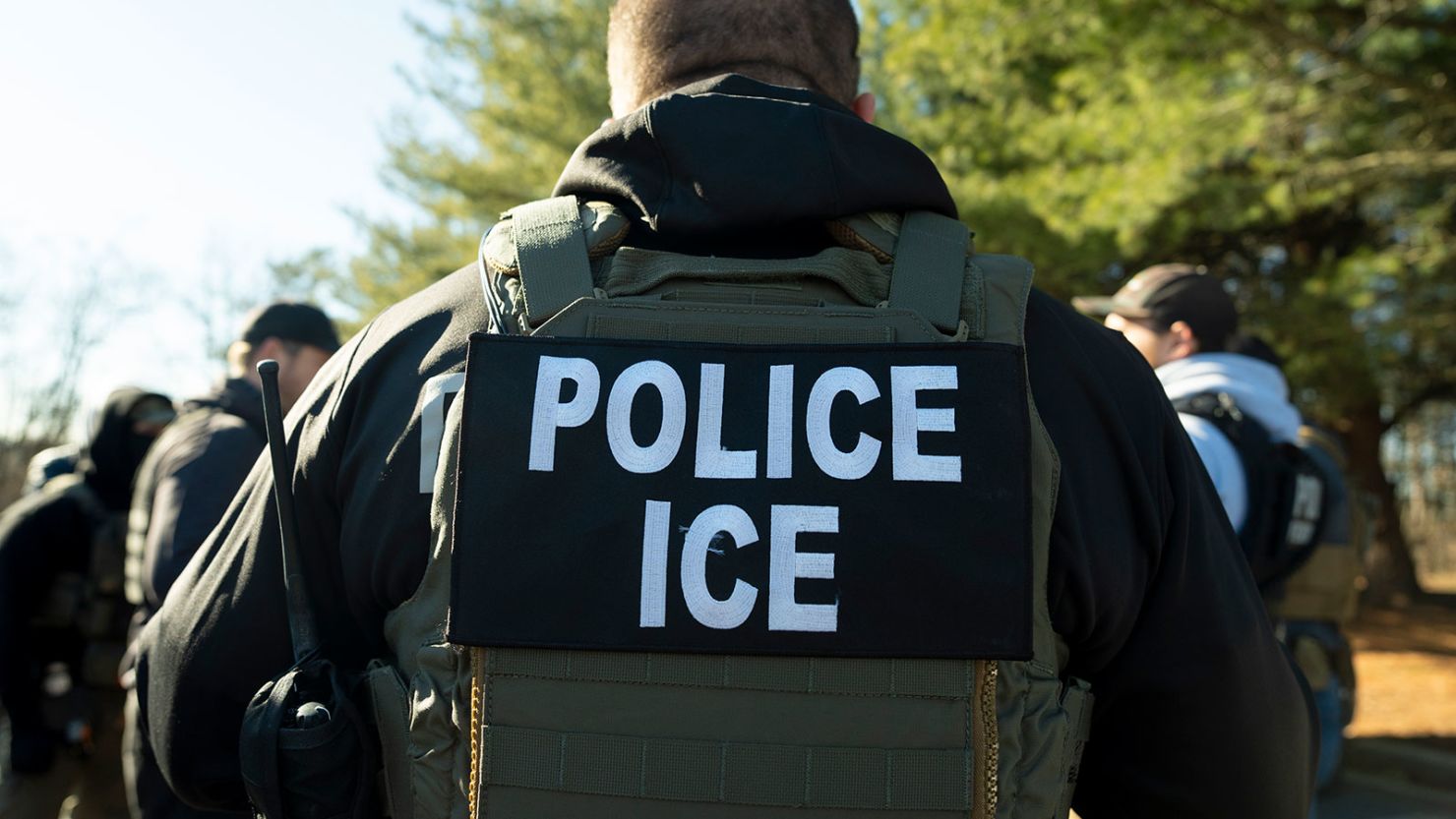
ICE is headquartered in Washington, D.C., with a network of 24 field offices across the United States and attaché offices in dozens of countries worldwide. The agency employs approximately 20,000 personnel — a mix of law enforcement officers, special agents, detention staff, attorneys, and support personnel.
ICE operates through two primary law enforcement components:
Enforcement and Removal Operations (ERO) is the division most often in the public eye. ERO is responsible for identifying, arresting, detaining, and removing noncitizens who have violated immigration law — whether by entering without authorization, overstaying visas, or committing crimes that render them deportable under federal statute. ERO operates immigration detention facilities (or contracts with local jails and private facilities to house detainees), manages the removal logistics of approximately hundreds of thousands of individuals per year, and manages the 287(g) program, which deputizes state and local law enforcement officers to perform certain immigration enforcement functions.
Homeland Security Investigations (HSI) is the investigative wing of ICE — the part that functions most like a traditional federal law enforcement agency. HSI's 10,000+ special agents conduct criminal investigations into transnational organized crime, human trafficking, drug smuggling, weapons proliferation, financial crimes, child exploitation, cybercrime, and trade fraud. HSI is one of the largest investigative agencies in the federal government. Its investigations frequently have no immigration nexus at all — the agency's authority over "customs" matters is broad, and HSI has become a key partner of the FBI, DEA, and DOJ in major organized crime prosecutions.
A third key component, the Office of the Principal Legal Advisor (OPLA), represents the U.S. government in immigration court proceedings. With hundreds of attorneys embedded across the country, OPLA is the largest immigration law enforcement legal office in the United States, arguing the government's position in millions of removal hearings before the Executive Office for Immigration Review (EOIR).
The Interior Enforcement Mandate
The conceptual centerpiece of ICE's mission is interior enforcement — the policing of immigration law not at the border but within the United States itself. This authority flows from the Immigration and Nationality Act (INA), particularly Section 287, which grants immigration officers broad authority to interrogate individuals about their immigration status under certain conditions, and from Title 8 of the U.S. Code, which defines deportable offenses.
Interior enforcement is inherently more complex — legally, politically, and operationally — than border enforcement. At the border, the legal authority to stop and question individuals is expansive. In the interior of the country, constitutional protections attach more robustly. The Fourth Amendment's prohibition on unreasonable searches and seizures applies to all persons on U.S. soil, regardless of immigration status, a principle repeatedly affirmed by federal courts. This creates constant tension between ICE's enforcement mandate and civil liberties constraints.
Part IV: ICE in the Modern Era — Policy, Politics, and Operational Challenges
The Obama Era: "Deporter in Chief" and Enforcement Priorities
Under President Barack Obama, ICE became the subject of an unexpected controversy: the administration deported more people than any previous administration — over 400,000 in fiscal year 2012 alone. Critics on the left labeled Obama the "deporter in chief." His administration implemented the Priority Enforcement Program (PEP) and later the Priority Enforcement Program, which directed ICE to focus enforcement resources on individuals with serious criminal records rather than prioritizing the undocumented population broadly. The Deferred Action for Childhood Arrivals (DACA) program, launched in 2012, further narrowed ICE's enforcement focus by shielding hundreds of thousands of "Dreamers" from removal.
These policies generated internal friction at ICE. Some agents argued that prosecutorial discretion directives effectively tied their hands. Unions representing ICE officers openly clashed with the administration, arguing that morale was collapsing and that the agency was being used as a political tool to demonstrate both toughness and restraint depending on the electoral cycle.
The Trump First Term: Expansion and Controversy
The election of Donald Trump in 2016 brought a dramatic shift. The administration rescinded enforcement priority categories, effectively making any undocumented immigrant deportable regardless of criminal history. ICE arrests increased sharply. Workplace raids, long dormant, were revived — including a major operation at chicken processing plants in Mississippi in 2019. The "zero tolerance" policy at the border resulted in the separation of thousands of migrant children from their parents, a crisis that did not directly involve ICE's interior operations but reflected the broader enforcement philosophy driving the administration.
Under Trump's first term, ICE faced sharp criticism from Democratic-led cities and states that adopted "sanctuary" policies limiting local law enforcement cooperation with ICE detainers. ICE, in turn, argued that such policies forced agents into communities to make arrests that would otherwise have been handled safely inside jails, increasing risk to officers and bystanders alike.
The Biden Interlude
President Joe Biden's administration sought again to narrow ICE's enforcement focus. In February 2021, the administration issued interim enforcement priorities directing ICE to concentrate on national security threats, recent border crossers, and individuals with serious criminal records. ICE enforcement interior arrests dropped significantly. A federal judge in Texas, however, enjoined portions of the guidance, ruling that it exceeded statutory authority — a legal precedent with implications for all administrations' efforts to shape ICE's discretionary enforcement.
Under Biden, ICE processed record numbers of border encounters, largely because of historic migration flows. The detention system strained, and ICE's budget was a persistent congressional flashpoint. HSI continued major investigative operations, including a historic prosecution of human trafficking networks and significant fentanyl seizure cases as synthetic opioids flooded U.S. communities.
Trump's Second Term: Maximum Enforcement (2025)
When Donald Trump returned to the presidency in January 2025, he arrived with an explicitly maximalist enforcement agenda. On his first day in office, January 20, 2025, Trump signed a series of executive orders dramatically reshaping immigration enforcement:
- The prior Biden administration's enforcement priority categories were immediately rescinded.
- Enforcement actions at or near "sensitive locations" — schools, churches, hospitals — were authorized, reversing a longstanding policy limiting ICE activity in those spaces.
- The designation of certain criminal organizations as "foreign terrorist organizations" broadened ICE's authority over individuals with suspected connections to those groups.
- National emergency declarations were invoked to direct military resources and funding toward immigration enforcement, including potential use of military personnel to assist ICE operations.
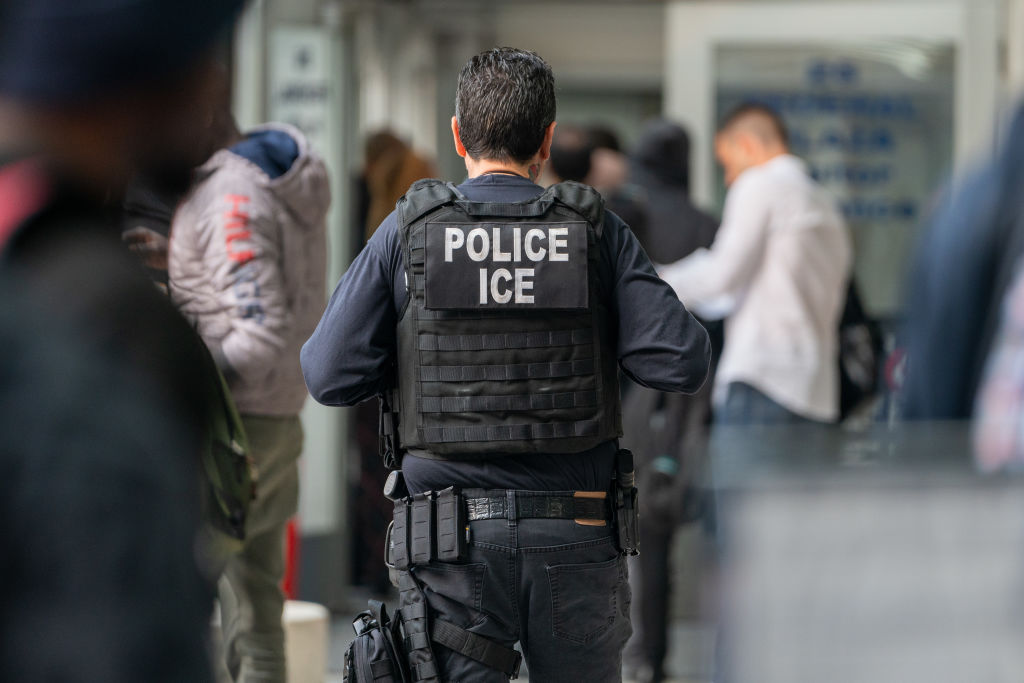
Acting ICE Director Todd Lyons, who took charge of the agency in early 2025, presided over a surge in enforcement activity. The administration announced "Operation Tidal Wave" and other named enforcement operations targeting cities with large undocumented populations, including Chicago, New York, Los Angeles, and Miami. ICE arrest numbers climbed sharply compared to prior years.
In fiscal year 2024, ICE ERO had conducted approximately 271,484 administrative arrests — a figure the new administration sought to dramatically exceed in 2025. Administration officials publicly set targets of removing hundreds of thousands per year, with some officials citing ambitions for one million or more removals annually as a long-term goal.
Part V: The Challenges ICE Currently Faces

1. Detention Capacity and Infrastructure
Perhaps the most immediate operational constraint facing ICE in 2025 is detention space. The agency's congressionally appropriated detention capacity has historically hovered around 34,000 beds, but aggressive enforcement operations require significantly more. ICE detains individuals in a patchwork of facilities: federally owned and operated ICE facilities, intergovernmental service agreements with county jails, and contracts with private prison operators such as GEO Group and CoreCivic.
Rapid expansion of arrests without proportional expansion of detention capacity creates a cascade of problems: overcrowding, longer detention periods, deteriorating conditions, and heightened scrutiny from the DHS Office of Inspector General and congressional oversight committees. Reports from 2024 and 2025 documented conditions in multiple detention facilities — inadequate medical care, deaths in custody, and allegations of abuse — that have generated lawsuits and congressional hearings.
The Trump administration's use of military facilities, including Guantanamo Bay Naval Station, to house a limited number of high-priority deportees reflected both the capacity strain and the administration's desire to signal resolve. However, the logistics and cost of such arrangements raised questions from fiscal conservatives about sustainability.
2. Legal Challenges and Judicial Constraints
ICE's expanded enforcement authorities under Trump's 2025 executive orders immediately generated a torrent of legal challenges. Federal courts across multiple circuits issued temporary restraining orders and preliminary injunctions blocking specific enforcement actions. The legal disputes touched on fundamental questions:
- Due process: Does rapid deportation without individualized hearings violate the Fifth Amendment's due process protections?
- Habeas corpus: Can the government detain individuals in locations that make it practically impossible for them to challenge their detention before a federal court?
- Statutory authority: Do executive orders actually permit ICE to take certain actions, or do they conflict with the INA and other statutes?
- Sanctuary city preemption: Can the federal government withhold funding or deploy federal agents in direct tension with state and local laws?
The Supreme Court became involved in landmark emergency rulings in 2025. In one significant episode, the Court addressed the administration's invocation of the Alien Enemies Act of 1798 — a wartime statute — to deport Venezuelan nationals allegedly affiliated with the Tren de Aragua gang, ruling that individuals had a right to judicial review before removal, even if the scope of that review was limited. The case of Kilmar Abrego Garcia, a Salvadoran man wrongly deported in violation of a federal court order, became a cause célèbre — highlighting the catastrophic consequences when ICE administrative errors intersect with politically charged enforcement environments.
3. The Sanctuary Jurisdiction Conflict
More than 500 cities, counties, and states have adopted policies limiting the degree to which local law enforcement cooperates with ICE detainers — requests for local jails to hold an individual beyond their release date so ICE can assume custody. ICE argues that these policies are directly responsible for the release of dangerous criminals who then reoffend. Sanctuary jurisdiction advocates argue that local cooperation with ICE erodes community trust in police, making immigrant communities less likely to report crimes or cooperate with investigations — a counterproductive outcome for public safety.
The Trump administration in 2025 aggressively targeted sanctuary jurisdictions, threatening to withhold federal law enforcement grants and, in some cases, deploying federal agents — including in confrontational circumstances with local police — to conduct enforcement operations in those communities. These confrontations generated substantial political and legal controversy, and multiple courts were asked to referee the limits of federal authority versus state and local police powers.
The 287(g) program, which allows ICE to enter formal agreements with local law enforcement agencies to perform immigration enforcement functions, expanded significantly under the Trump administration, with new agreements signed with hundreds of additional jurisdictions.
4. Workforce Challenges and Morale
Despite rhetoric about expanding enforcement dramatically, ICE faces significant human capital constraints. The agency has struggled with hiring and retention for years. Law enforcement positions at ICE compete with the FBI, DEA, CBP, and local departments for a limited pool of qualified candidates. Background investigation backlogs have delayed new agent onboarding. The political volatility of the agency's mission — celebrated by one administration, condemned by the next — creates institutional uncertainty that affects long-term career planning.
HSI in particular has experienced tension with ERO. HSI special agents often chafe at being identified publicly as "ICE agents" — a label that, for many in the public, conjures deportation raids rather than criminal investigations. There have been recurring, if ultimately unsuccessful, proposals within the agency to formally separate HSI from ICE and reconstitute it as a standalone investigative agency under DHS, which HSI agents argue would improve their ability to partner with local police departments and prosecutors in sanctuary jurisdictions who refuse cooperation with anything labeled "ICE."
5. The Fentanyl and Transnational Crime Nexus
One of the most significant operational challenges — and arguably ICE's most important societal function — is its role in confronting the transnational criminal networks responsible for the fentanyl epidemic devastating American communities. HSI is deeply embedded in operations targeting Mexican cartels, particularly the Sinaloa Cartel and Cartel Jalisco Nueva Generación (CJNG), which are responsible for the vast majority of synthetic opioids entering the United States.
The political landscape of the Trump administration's 2025 designation of these cartels as foreign terrorist organizations gave HSI broader investigative tools — including the ability to charge individuals with providing "material support to terrorism" — but also raised concerns among some federal prosecutors that overreach could undermine carefully built prosecution strategies. The intersection of immigration enforcement (ERO) and criminal investigation (HSI) is often imperfect: immigration enforcement operations can burn sources and disrupt long-running criminal investigations by alerting criminal networks, a tension that requires constant management between the two divisions.
Human trafficking investigations represent another critical HSI mission. The agency has led major prosecutions of sex trafficking and labor trafficking networks, often involving individuals who entered the country through irregular immigration channels. These investigations highlight the nuance often lost in public debates about ICE: the agency is simultaneously conducting some of the most important criminal investigations in the federal government and being called upon to conduct mass civil immigration enforcement operations — two functions that require very different cultures, skill sets, and legal frameworks.
6. Accountability, Oversight, and Civil Rights
ICE faces persistent oversight challenges. The DHS Office of Inspector General and the Government Accountability Office have issued numerous reports documenting deficiencies in ICE's detention system, its data management, and its civil rights compliance. The use of solitary confinement in immigration detention, allegations of coerced medical procedures in at least one ICE facility, and deaths of individuals in ICE custody have generated congressional inquiries and civil litigation.
The American Civil Liberties Union, Human Rights Watch, and numerous immigrant advocacy organizations maintain active litigation against ICE across multiple federal circuits. Courts have repeatedly found due process violations in specific ICE detention practices, though the Supreme Court has generally upheld the government's broad authority to detain noncitizens during removal proceedings.
The question of racial profiling — whether ICE enforcement operations improperly target individuals on the basis of race or national origin rather than actual legal violations — is a persistent and unresolved controversy. ICE training materials and internal guidance prohibit racial profiling, but the practical implementation of broad enforcement authority in communities of color has generated credible allegations and empirical research suggesting that enforcement patterns are not racially neutral.
7. Technology, Data, and Surveillance Infrastructure
ICE has made substantial investments in surveillance technology, including license plate reader networks, facial recognition tools, social media monitoring, and access to commercial data brokers' databases. These tools have significantly enhanced the agency's ability to locate individuals with removal orders or who are otherwise subject to enforcement. They have also generated substantial civil liberties controversy, with critics arguing that ICE's surveillance infrastructure increasingly resembles that of a domestic intelligence agency rather than a law enforcement body with clearly defined legal constraints.
The American Immigration Council and Electronic Frontier Foundation have documented ICE's use of immigration data shared by other government agencies — including state motor vehicle records and social services databases — in ways that they argue undermine the trust between immigrant communities and the state and local governments that seek to serve them.
8. Budget and Resource Allocation
In the 2025 budget cycle, the Trump administration requested substantial increases in ICE funding, including appropriations for additional detention beds, expanded deportation flights, and new agent hiring. Congress — even with Republican majorities in both chambers — engaged in significant debate about the pace and scale of spending increases. The "Big Beautiful Bill" budget reconciliation package debated in 2025 included provisions to fund a massive expansion of ICE's detention and removal infrastructure.
At the same time, fiscal hawks within the Republican Party raised questions about cost-effectiveness. Deporting individuals at scale — including the logistics of commercial charter flights, coordination with foreign governments, and the administrative processing required for each removal — is extraordinarily expensive on a per-unit basis. Critics argued that enforcement-only strategies without corresponding legal pathway reforms would simply cause the unauthorized population to adapt rather than diminish.
Part VI: The Ongoing Debate — What Is ICE For?
The political debate over ICE has become, in many respects, a proxy debate over what immigration law should be, who should be able to live in the United States, and what kind of country America aspires to be. The "Abolish ICE" movement, which gained traction among progressive activists in 2018, called not merely for reforms to the agency but for its elimination — arguing that an agency created to enforce mass deportations is irreparably incompatible with a humane immigration system. The movement's slogans reflected a genuine moral objection to the agency's core enforcement mission that transcends administrative criticism.
The countervailing argument — advanced by enforcement advocates across the political spectrum — holds that immigration law enforcement is a fundamental sovereign function of a nation-state, that individuals who violate immigration law undermine the fairness of the legal immigration system, and that an agency capable of removing those who pose public safety risks is an essential component of domestic security. The political valence of these arguments shifts depending on who is being targeted for removal and under whose authority.
What is often lost in this polarized debate is the complexity of what ICE actually does day-to-day. HSI's investigators build years-long cases against human traffickers, child exploiters, drug networks, and financial criminals. ERO officers serve as the operational mechanism through which immigration judges' removal orders are executed — orders that are themselves the product of an adversarial legal process. The agency operates at the intersection of criminal law, civil law, national security, and human rights in ways that resist simple characterization.
Conclusion
Immigration and Customs Enforcement is, at its foundation, a product of catastrophe — born from the ashes of an agency whose failure helped enable the deadliest foreign attack on American soil. The Homeland Security Act of 2002 represented a genuine attempt to resolve the structural contradictions that plagued the INS: to separate service from enforcement, to professionalize interior immigration policing, and to integrate customs enforcement with immigration investigation in a single coherent agency. To a meaningful degree, that structural reorganization succeeded. ICE and CBP are more capable, more specialized, and more technologically sophisticated than the INS ever was.
Yet the challenges ICE faces in 2025 are in many respects more acute than those of its predecessor. The agency operates in a legal environment of increasing judicial vigilance, a political environment of intense partisan polarization, an operational environment of historic migration pressures, and a fiscal environment where the ambitions of enforcement-maximalist administrations routinely outpace the available resources. Its dual mission — interior immigration enforcement and transnational criminal investigation — contains its own inherent tensions, mirroring in some ways the contradictions of the INS it replaced.
The question that will define ICE's trajectory in the coming years is not whether interior immigration enforcement should exist — Congress has been unambiguous that it should — but what the scope, character, and accountability mechanisms of that enforcement should look like. How aggressively the agency pursues removals, how it treats those in its custody, how it balances law enforcement objectives with civil liberties constraints, and how it navigates the space between executive ambition and judicial oversight will determine not only ICE's institutional fate but the lived experience of millions of people in the United States. In a democracy still working out what it means to be a nation of laws and a nation of immigrants simultaneously, ICE sits at that unresolved and volatile intersection.
Sources consulted include the Homeland Security Act of 2002 (Public Law 107-296); the 9/11 Commission Report (2004); ICE official agency publications and annual reports; DHS Office of Inspector General reports (2023–2025); Government Accountability Office immigration enforcement reports; federal court filings and opinions in sanctuary jurisdiction litigation (2025); reporting from the Associated Press, The New York Times, The Washington Post, Reuters, and Politico covering ICE operations in 2024–2025; the American Immigration Council policy briefs; and the Congressional Research Service reports on ICE structure, funding, and authorities.