Seoul's Mirror to the World: Why the Korean Peninsula's Story Is Everyone's History
The Everything of Everything | August 18, 2026 | By Staff Correspondent
When scholars, diplomats, and historians converged on Seoul this month for a series of overlapping conferences — from the Seoul National University International Conference on Contemporary Korean Studies to high-level Korea-U.S. alliance summits — the underlying question threading through each gathering was deceptively simple: why does Korea matter? The answer, researchers argued with growing urgency, is not merely regional. The Korean Peninsula's arc from prehistoric settlement to nuclear standoff represents a compressed drama of human civilization itself — colonization and resistance, invention and war, economic miracle and authoritarian nightmare, all playing out on a strip of land roughly the size of the United Kingdom.
"Korea as Method," the theme chosen by Seoul National University's Institute for Contemporary Korean Studies for its August 21–22 conference, captures the new intellectual posture: Korea is no longer just a subject of study. It is a lens through which to understand colonialism, democratization, digital culture, and the fractures of the post-Cold War order. That reframing demands a longer look — from the peninsula's prehistoric shores to the fault line that still splits it in two.
Deep Time: 700,000 Years Before the Conference Tables
The earliest chapter of Korea's story begins not with dynasties or diplomacy, but with bone and stone. According to the National Museum of Korea, the peninsula has been inhabited for approximately 700,000 years — hunter-gatherers who sheltered in caves along river valleys, following game and seasonal abundance. The scale of that duration is easily lost: it predates Homo sapiens' first paintings in Europe by half a million years.
The Neolithic transition arrived between 10,000 and 8,000 BCE, when communities began fishing, gathering wild plants, and — in a development archaeologists trace to characteristic pit-dwellings — settling in one place. These pit-houses, documented in detail by the Academy of Korean Studies, were typically 60 to 70 centimeters deep, four to six meters wide, with circular floor plans — engineering solutions that balanced insulation with communal living.
By the Bronze Age, roughly 1000 BCE, the peninsula's prehistoric inhabitants were building dolmens: massive stone burial monuments that encode, in their geographic clustering, some of the earliest evidence of stratified social organization in East Asia. South Korea alone holds approximately 40,000 of the world's 60,000 known dolmens, concentrated in Ganghwa, Hwasun, and Gochang — sites recognized by UNESCO in 2000 as outstanding universal cultural values. The sheer density is not incidental. It tells researchers that the Korean Bronze Age was demographically rich, politically complex, and deeply connected across what we now call Northeast Asia.
The Age of Kingdoms: Crossroads of Civilization
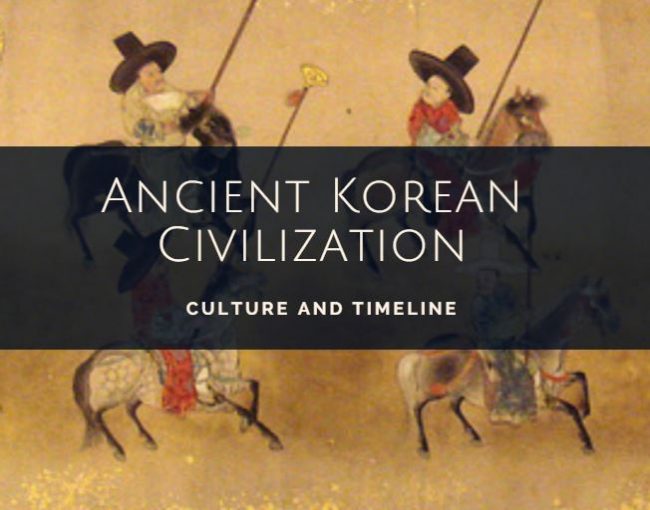
Korea's recorded dynastic history begins with the mythological founding narrative of Gojoseon, but its verifiable classical era crystallizes in the Three Kingdoms period: Goguryeo (37 BCE–668 CE) in the north, Baekje (18 BCE–660 CE) in the southwest, and Silla (57 BCE–935 CE) in the southeast. According to Britannica's overview of Korean history, these kingdoms shared centralized military systems, powerful aristocracies, and the adoption of Buddhism — a religious and philosophical current that flowed from India through China and found in Korea a powerful new host. In 668 CE, the Silla kingdom, allied with Tang-dynasty China, unified the peninsula for the first time.
The Goryeo dynasty (918–1392), which gave Korea its Western name, elevated this Buddhist inheritance to near-theocratic heights. Its most extraordinary cultural artifact is the Tripitaka Koreana — 81,258 (some sources cite over 87,000) wooden printing blocks engraved with the entire Buddhist canon between 1237 and 1248, a project begun during Mongol invasions as an act of collective prayer and cultural preservation. The Janggyeong Panjeon depositories at Haeinsa Temple, which have housed these blocks for over 750 years without significant deterioration, are listed by UNESCO as a World Heritage Site — a testament to medieval Korean ingenuity in humidity control and ventilation design that still confounds modern engineers.
The Joseon dynasty (1392–1910), Korea's longest at 518 years, represents perhaps the peninsula's most consequential cultural contribution to world civilization: Hangul. Commissioned by King Sejong the Great in the 15th century, the Korean alphabet was a deliberate act of democratization — designed so that any speaker of Korean could learn to read within days, regardless of access to classical Chinese education. The Korean Cultural Center New York describes Hangul as one of the few writing systems in human history whose inventor, invention date, and stated purpose are all precisely documented. Scholars of linguistics regard it as among the most scientifically rational writing systems ever devised.
The Geopolitical Crucible: Where Empires Collide
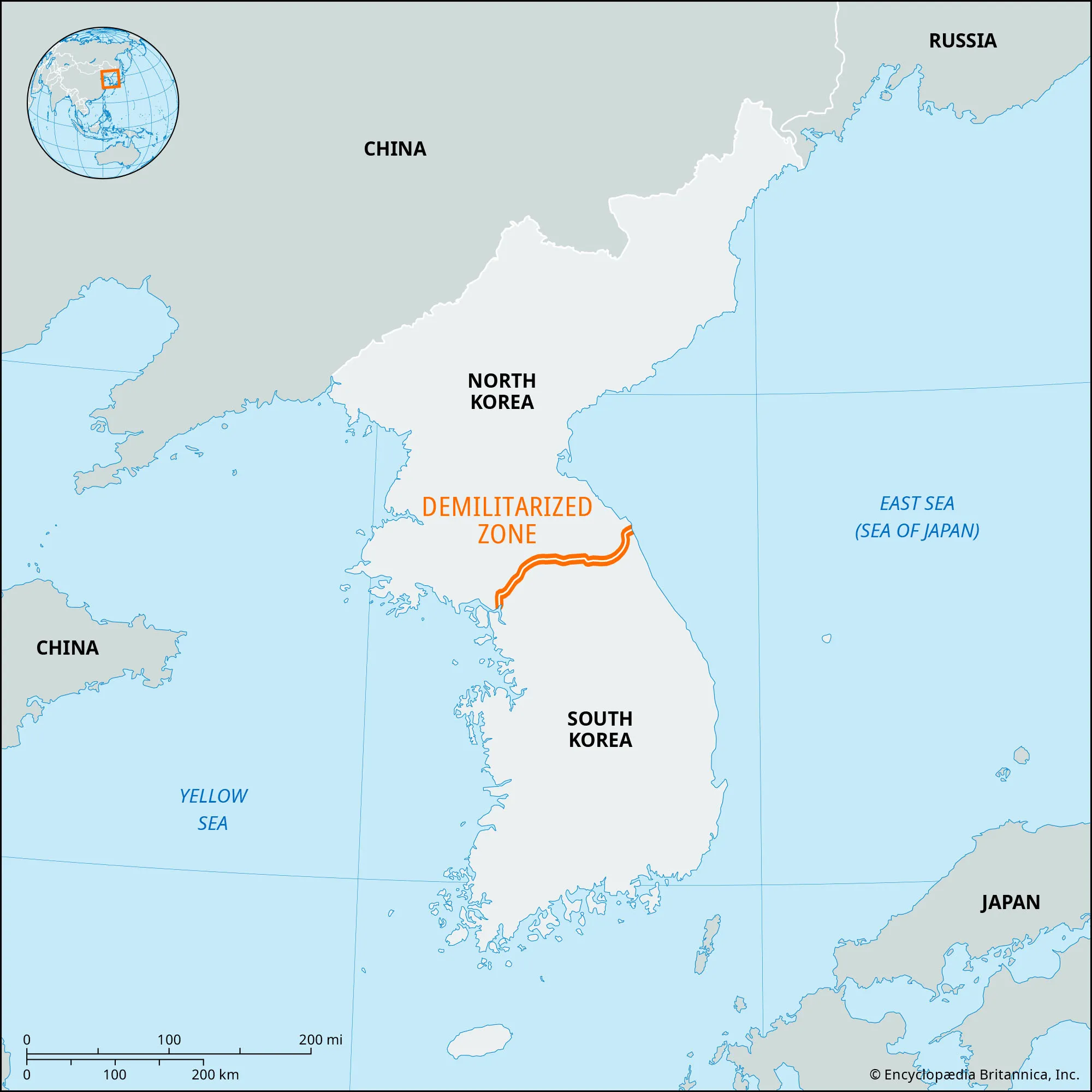
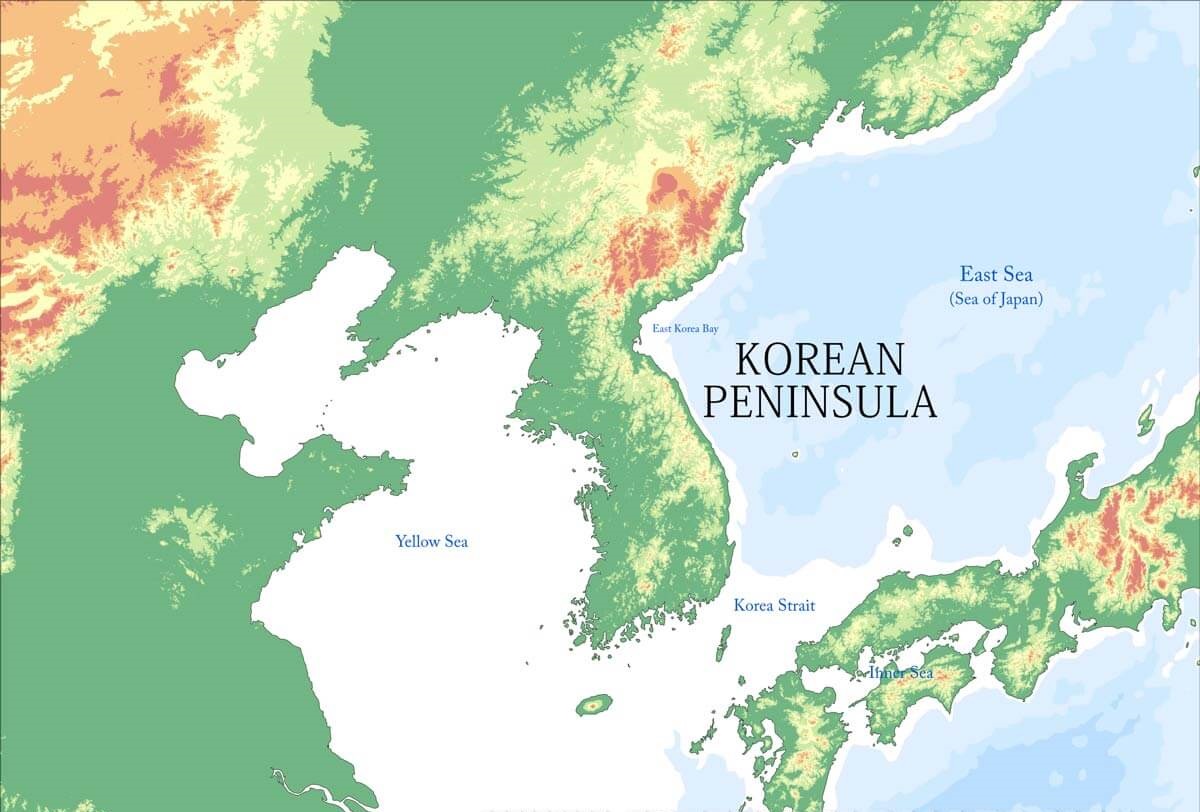
If culture explains what the Korean Peninsula produced, geography explains what was done to it. Bordered by China to the northwest and Russia to the northeast, facing Japan across a narrow sea, the peninsula has functioned for millennia as an unavoidable pressure point in East Asian power contests. The Foreign Policy Research Institute describes it bluntly as "the geopolitical pivot of Northeast Asia" — a land bridge that no regional hegemon can afford to ignore, and no occupying power can hold without perpetual friction.
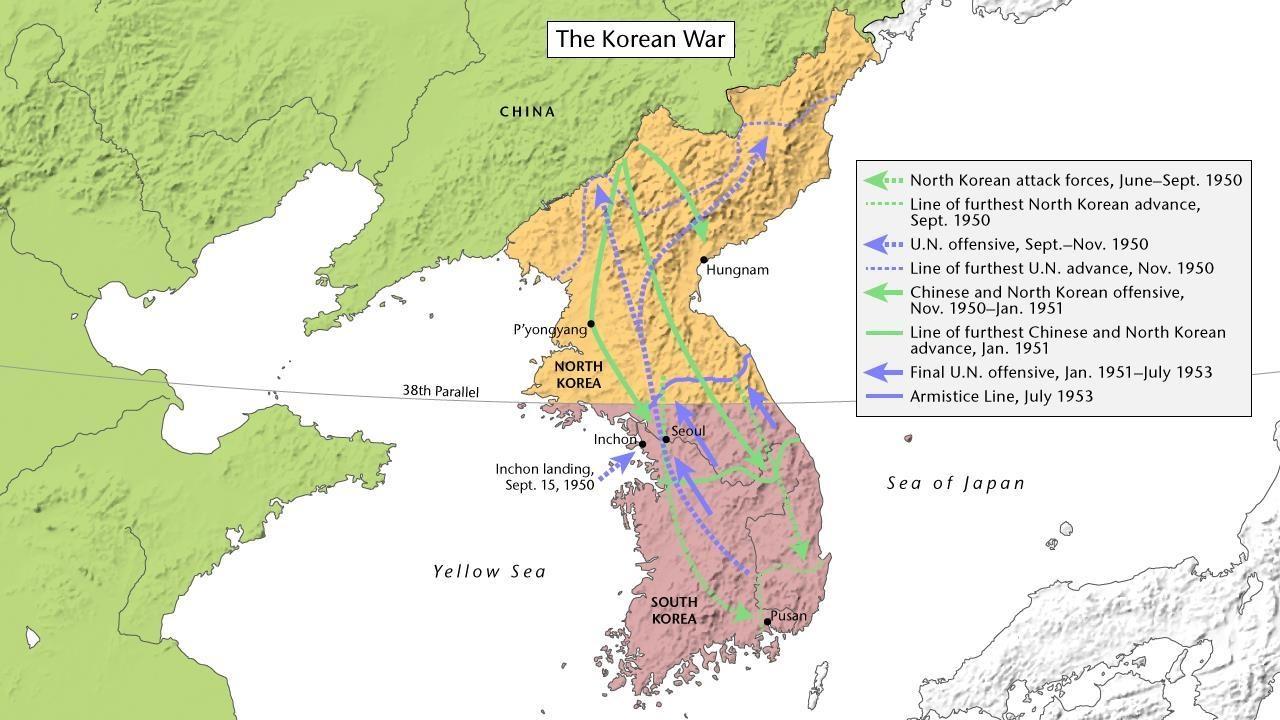
This structural reality drove the catastrophe of the 20th century. Japan's annexation of Korea in 1910, which ended the Joseon dynasty, unleashed four decades of colonial extraction, cultural suppression, and forced labor. The influence of China and Japan in modern Korean history left wounds that continue to inflame diplomatic relations across East Asia. When Japan surrendered in August 1945, the peninsula was liberated but not freed: American and Soviet forces divided it along the 38th parallel — a line drawn in Washington in a matter of hours that would harden into one of history's most militarized borders.
The Korean War (1950–1953), triggered when North Korean forces crossed that parallel on June 25, 1950, killed more than 2.5 million people, according to Britannica's account of the conflict. An armistice — never a peace treaty — froze the peninsula in a technical state of war that has persisted for over seven decades. As the Global Peace Foundation noted in 2026, this year marks 80 years since the peninsula's division: three generations of separated families, of a Korean nation geographically intact but politically amputated.
The Interregnum and Its Failure: A 2026 Reassessment
What makes 2026 an especially urgent moment for reassessing Korean history is the publication of new analytical frameworks that connect the peninsula's past to the fracturing present. In April 2026, the Stimson Center published a landmark analysis by Princeton emeritus professor Gilbert Rozman, arguing that between the end of the Cold War in 1989 and the emergence of a "New Cold War" in the early 2020s, the Korean Peninsula served as the defining testing ground for whether a new international order could hold.
It could not. As Asia Times summarized the analysis, the "Grand Strategic Triangle" of Washington, Beijing, and Moscow consistently prioritized spheres of influence over cooperative denuclearization, making regional reconciliation structurally impossible. The US-DPRK summits of 2018–2019 — which briefly raised hopes for a managed peace — instead revealed how China and Russia would use diplomacy as a tool of bloc consolidation rather than conflict resolution. The peninsula, in Rozman's reading, did not fail history. History failed the peninsula.
This context frames the USIP assessment of Northeast Asian geopolitics and its impact on peninsula peace: the peninsula remains, as it has been for centuries, hostage to the calculations of powers that surround it. The difference is that the stakes now include nuclear weapons, advanced missile technology, and a North Korean state that has effectively ended any near-term prospect of denuclearization.
Korea as Method: The Academic Turn
Against this backdrop of division and geopolitical weight, scholars are insisting on a different frame entirely. The 2026 SNU International Conference for Contemporary Korean Studies, held August 21–22 at Seoul National University, is built around the proposition that Korea should function not merely as a regional case study but as what conference organizers describe as "a methodological, theoretical, and epistemic lens" for rethinking global configurations.
The framework draws explicitly on Korean historical experiences — colonization, division, the compressed developmental miracle of the 1960s–1990s, the democratic transition of 1987, and the global spread of Korean popular culture in the digital era — as generative sites of knowledge production rather than passive outcomes of external forces.
A 2026 paper in Educational Philosophy and Theory extends this argument to pedagogy: "South Korea as Method" posits Korean educational culture as an example of what scholars call "epistemic insurgency" — a radical repositioning of knowledge-making from postcolonial contexts that challenges Western-dominated academic frameworks. The significance is not merely academic self-promotion. It reflects a genuine realignment in how the global intellectual community understands which societies have historically been treated as producers of theory versus objects of study.
Korean Studies enrollments have grown steadily across North America, Europe, and Australia — driven not only by the global appeal of K-pop and Korean cinema but by the recognition that Korean society, having traversed industrialization, democratization, digital transformation, and profound inequality debates within a single generation, offers an unusually legible social laboratory.
Heritage Under the Spotlight: UNESCO Comes to Busan
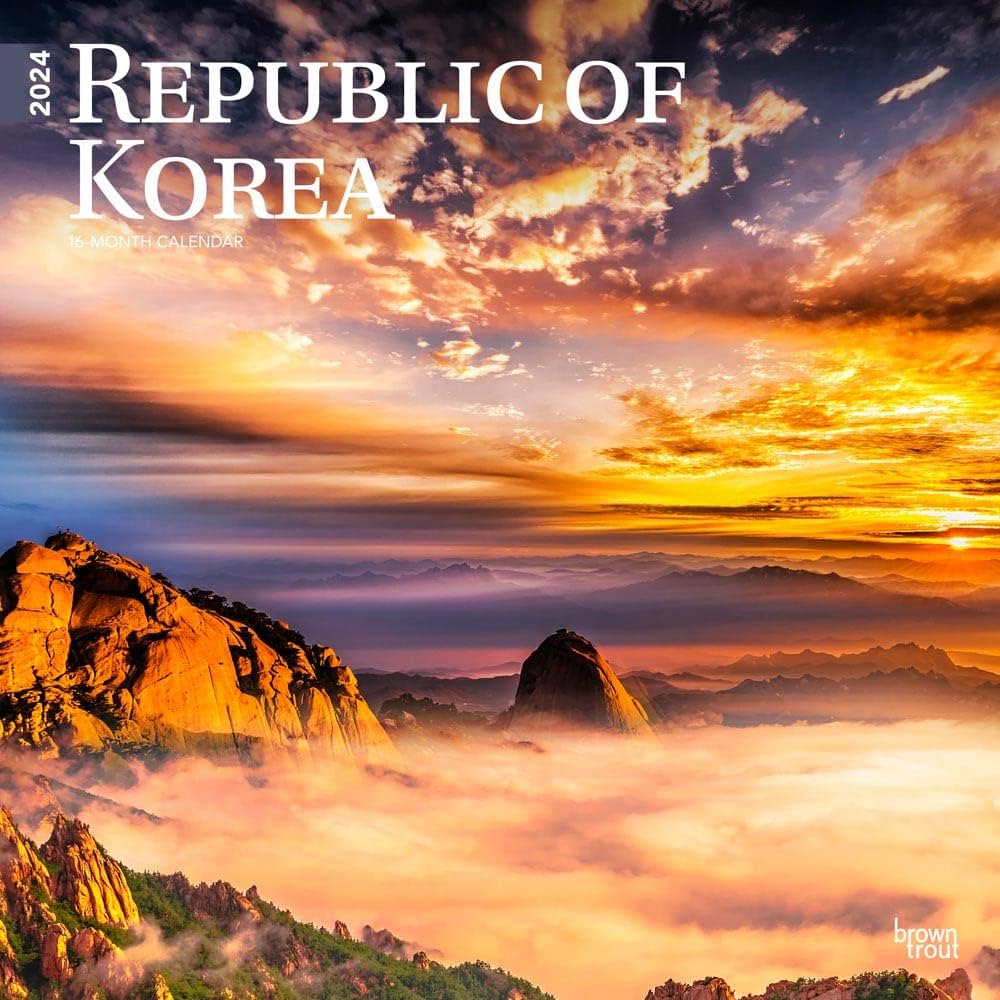
The most visible institutional event of 2026's Korean heritage moment was the UNESCO World Heritage Committee's 48th session, held in Busan from July 20 to 29. The choice of South Korea as host was itself a statement: the Republic of Korea has invested heavily in positioning itself as a steward of world cultural heritage, and hosting the committee — which examined 30 nominations and ultimately inscribed 25 new sites globally — amplified that message.
While no entirely new Korean site was added this year, the Committee approved the extension of the Getbol, Korean Tidal Flats (originally inscribed in 2021) to include additional coastal zones on the western and southern coasts. The Getbol represents an unusual intersection of ecological and cultural heritage: tidal flats that have sustained Korean fishing communities for millennia while serving as critical rest stops for migratory bird species spanning the East Asian-Australasian Flyway.
South Korea currently holds 16 UNESCO World Heritage Sites, ranging from the prehistoric dolmens to the Joseon-era royal palaces to the Buddhist mountain monasteries. North Korea, despite its political isolation, holds two: the Koguryo Tombs (inscribed 2004) and the historic monuments of Kaesong (inscribed 2013), as noted in the List of World Heritage Sites in North Korea. The peninsula as a whole, divided or not, represents an extraordinary density of sites of outstanding universal value.
The Alliance Dimension: History as Living Policy
The historical consciousness being cultivated in academic conferences and UNESCO sessions is not separate from hard security politics — it feeds directly into them. At the Korea-U.S. Friendship Conference held in Seoul in June 2026, approximately 150 political, religious, and civic leaders gathered to reaffirm what they called the "blood-forged alliance" between the two nations — a bond rooted explicitly in the shared sacrifice of the Korean War.
The conference honored United Nations veterans who fought during 1950–1953, framing the alliance not merely as a strategic convenience but as a historical obligation. This framing matters because it anchors contemporary policy debates — about US troop deployments, extended deterrence, and the terms of any future North Korea engagement — in a moral and historical register that resists purely transactional reassessment.
The Stimson Center's ongoing U.S.-ROK Alliance and Regional Leadership project reflects the same impulse from the think-tank community: to ensure that alliance management is informed by the full depth of the bilateral relationship, not just current strategic calculations. In a geopolitical environment where great-power competition is reasserting itself across the Indo-Pacific, the historical grounding of the Korea-U.S. relationship is simultaneously its greatest strength and its most contested terrain.
Meanwhile, a 2026 policy brief from the National Institute for Public Policy co-authored by Robert Joseph, Nicholas Eberstadt, and other senior security analysts argued that the Korean challenge can only be resolved at its source — by addressing the fundamental nature of the North Korean regime rather than managing its symptoms through arms control.
Broader Implications: What Korea's History Teaches the World
The convergence of academic, diplomatic, and heritage events around the Korean Peninsula in 2026 reflects a broader global recognition: that the peninsula's history is not a regional footnote but a case study in the most consequential dynamics of the modern era.
Colonial subjugation followed by rapid development, national division imposed by external powers, a war that killed millions and was technically never ended, an economic and democratic transformation of global significance, and a cultural export phenomenon that has reshaped entertainment, beauty, and food globally — Korea has lived, within a single century, what other societies have spread across several.
The "Korea as Method" framework emerging from Seoul's academic community is, at its core, an argument that this density of experience produces a particular kind of insight. Societies that have been at the crossroads of power — absorbing, resisting, adapting — often develop more refined understandings of how the international system actually operates than those that have dominated it. As the Wilson Center noted in its assessment of geopolitical implications of a new era on the Korean Peninsula, the peninsula is once again at an inflection point — where historical memory and present-day power dynamics intersect with unusual clarity.
The question Seoul's conferences are implicitly posing is whether that clarity can be translated into wisdom before the next crisis.
Key Takeaways
- The Korean Peninsula carries one of the world's deepest continuous human histories, with documented habitation spanning 700,000 years, Neolithic settlements from 10,000–8,000 BCE, and Bronze Age dolmens that represent 40,000 of the 60,000 dolmens found globally — all encoding a social complexity that predates most European equivalents.
- The peninsula's dynastic heritage — particularly the Goryeo and Joseon periods — produced cultural achievements of world-historical significance, including the Tripitaka Koreana woodblock collection and the Hangul alphabet, both regarded by scholars as among the most extraordinary intellectual accomplishments in Asian history.
- Geographically positioned between China, Russia, and Japan, Korea has been a structural pressure point in East Asian power politics for millennia, a reality that drove both Japanese colonization (1910–1945) and the Cold War division that has kept the peninsula technically at war for over 70 years.
- The 2026 analytical consensus, led by the Stimson Center and think-tanks from Princeton to USIP, is that the post-Cold War "interregnum" on the peninsula failed because great powers consistently prioritized sphere-of-influence logic over cooperative security — a diagnosis with direct implications for current US-ROK alliance management and North Korea policy.
- Seoul's hosting of the UNESCO World Heritage Committee and multiple major international conferences in 2026 reflects South Korea's strategic investment in soft power, using cultural heritage and academic leadership to project influence commensurate with its economic and technological standing.
- The "Korea as Method" framework emerging from Seoul National University and allied scholars represents a significant intellectual shift: Korea is increasingly treated not as an object of study but as a generative analytical lens for understanding colonialism, democratization, and digital modernity — a repositioning with implications for how global knowledge production is structured.
Sources consulted for this article:
Sources:
- Korea-US Friendship Conference highlights enduring alliance - The Korea Times
- 2026 SNU International Conference for Contemporary Korean Studies - kstudies.info
- Call for Papers: SNU Conference - Korean Studies in Europe
- SNU Contemporary Korean Studies - Institute Homepage
- National Museum of Korea - Prehistory and Ancient History
- Prehistoric Dwelling Sites of the Korean Peninsula - Academy of Korean Studies
- Gochang, Hwasun and Ganghwa Dolmen Sites - World Heritage Explorer
- Korea Information - History - Korean Cultural Center New York
- Goryeo Dynasty - Ancient Origins
- Rise and Fall of the Goryeo Dynasty - Open Korea
- Haeinsa Temple Janggyeong Panjeon - UNESCO World Heritage
- Korea - Britannica
- Korean War - Britannica
- The Korean Peninsula's Pivotal Role in the Interregnum Between Two Cold Wars - Stimson Center
- The Korean Peninsula's role between two cold wars was pivotal - Asia Times
- The Korean Peninsula: The Geopolitical Pivot of Northeast Asia - FPRI
- How Northeast Asian Geopolitics Impact Peace on the Korean Peninsula - USIP
- 80 Years Divided: Why Korean Reunification Still Matters - Global Peace Foundation
- South Korea as Method - Educational Philosophy and Theory, Taylor & Francis
- UNESCO World Heritage Committee session in South Korea - Korea Herald
- Getbol Korean Tidal Flats inscription - Korea JoongAng Daily
- World Heritage Sites in South Korea 2026 - Time Travel Turtle
- Toward a Free and Unified Korea - National Institute for Public Policy
- U.S.-ROK Alliance and Regional Leadership - Stimson Center
- Geopolitical Implications of a New Era on the Korean Peninsula - Wilson Center
- The Influence of China and Japan in Modern Korean History - Open Korea