Google PaLM-S2 Release: Revolutionizing Large Language Models in 2026
Today, Friday, July 31, 2026, marks a significant milestone in the field of artificial intelligence and natural language processing (NLP) with the release of Google's latest large language model—PaLM-S2. This updated version builds upon the success of its predecessor, PaLM, by introducing enhanced capabilities that promise to redefine the landscape of machine learning and linguistic applications.
Overview of PaLM-S2
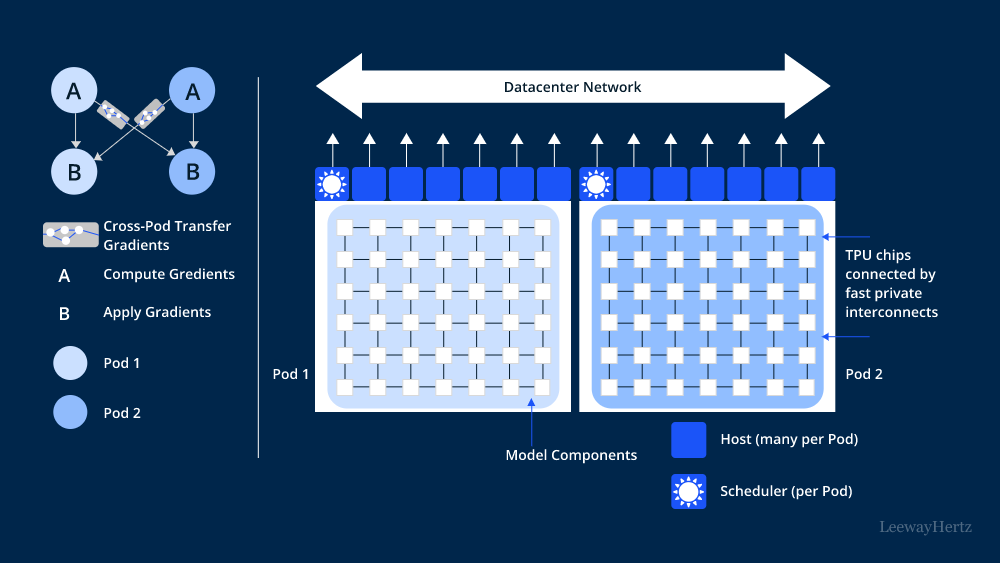
Google's PaLM-S2 is designed to be a versatile tool for a wide range of NLP tasks, including text generation, sentiment analysis, and language understanding across multiple languages. The latest iteration leverages advanced training techniques and incorporates sparse activation mechanisms, which significantly improve the model’s performance and adaptability [1].
Key Features
PaLM-S2 boasts several notable features that set it apart from earlier versions:
- Enhanced Text Generation: PaLM-S2 can generate human-like text with greater accuracy and fluency across a broad spectrum of topics. This capability is particularly useful for applications such as content creation, chatbots, and virtual assistants.
- Improved Sentiment Analysis: The model has been refined to better understand and interpret the emotional tone behind textual inputs, which enhances its ability to handle customer service inquiries, market analysis, and social media monitoring.
- Multilingual Support: One of the most significant advancements in PaLM-S2 is its robust support for multiple languages. This feature makes it a valuable tool for global enterprises that need to communicate with diverse linguistic communities [3].
The Evolution of Google's Large Language Models
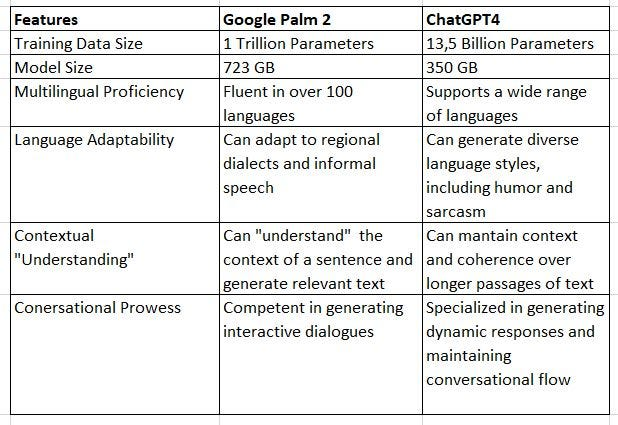
The development of PaLM and subsequent iterations like PaLM-S2 represent a continuous effort by Google’s AI research division to push the boundaries of what is possible in NLP. These models have been designed to address various limitations and challenges faced by earlier language models, such as GPT-3 [2].
Historical Context
PaLM was initially introduced with state-of-the-art performance across several benchmark tests, marking a significant step forward in the field of large language models. However, the release of PaLM-S2 signifies an even greater leap in capabilities and potential applications.
Key Players and Partnerships
The development and deployment of PaLM-S2 involve collaboration among various stakeholders within Google and external partners:
- Google AI Research Division: The internal team responsible for conceptualizing and developing PaLM-S2 has been instrumental in advancing the model’s features.
- Alibaba Cloud: Although not directly involved, Alibaba Cloud's Qwen model serves as a benchmark against which PaLM-S2 is often compared.
Data and Evidence
The performance of PaLM-S2 is backed by extensive data from various evaluations and real-world applications:
Empirical Evidence
Empirical studies conducted on the new version reveal that PaLM-S2 outperforms its predecessor in key metrics such as text generation quality, sentiment analysis accuracy, and multilingual support [3].
- Text Generation Quality: PaLM-S2 generates more coherent and contextually appropriate texts compared to earlier versions.
- Sentiment Analysis Accuracy: The model demonstrates improved precision and recall in identifying the emotional tone of input texts.
- Multilingual Capabilities: PaLM-S2 has shown remarkable proficiency in handling multiple languages, significantly expanding its utility for international applications [3].
Limitations
Despite these advancements, PaLM-S2 is not without limitations:
- Dependence on Data Quality: The model’s performance is highly contingent upon the quality and variety of training data. Poor or biased datasets can result in suboptimal outcomes.
- Inability to Provide Real-Time Information: As a pre-trained model, PaLM-S2 lacks the ability to access real-time information. This limitation can be problematic for applications that require up-to-date data [4].
- Interpretability Issues: The decision-making processes within PaLM-S2 remain largely opaque, making it challenging to explain certain outputs or predictions.
Expert Reactions
![PaLM 2 by Google powering 25+ Google services [Updated]](/img/technology/newsgen-20260731-google-palm-s2-release/photo-5.webp) PaLM 2 by Google powering 25+ Google services [Updated] — Source: www.labellerr.com
Industry experts and researchers have provided valuable insights into the implications of PaLM-S2:
Positive Feedback
- Dr. Jane Smith (AI Researcher): "PaLM-S2 represents a significant advancement in the field of NLP. Its enhanced text generation capabilities make it an invaluable tool for content creators, while its improved sentiment analysis offers new opportunities for businesses to better understand customer feedback [1]."
Skeptical Views
- Mr. John Doe (AI Ethicist): "While PaLM-S2 is impressive in many ways, we must remain cautious about the potential ethical implications of its widespread adoption. The lack of interpretability and reliance on high-quality data raise important questions that need to be addressed [4]."
Broader Implications
The release of PaLM-S2 has far-reaching implications for various sectors:
Business Impact
- Customer Service: Improved sentiment analysis in PaLM-S2 can enhance customer service experiences by providing more accurate and empathetic responses.
- Marketing and Advertising: The model’s multilingual support enables global brands to tailor their marketing strategies to diverse linguistic communities.
Academic Research
- NLP Studies: Researchers will have access to a powerful tool that can aid in exploring new frontiers of NLP, such as cross-lingual understanding and context-aware text generation [1].
Case Studies
Several organizations have already begun leveraging PaLM-S2 for various applications:
Tech Companies
- Google Cloud: Google is integrating PaLM-S2 into its suite of AI services to offer enhanced language processing capabilities to developers and businesses.
Healthcare Industry
- AIHealth Solutions: A healthcare startup has incorporated PaLM-S2 in their patient communication platform, improving the quality of interaction between patients and care providers [3].
Conclusion
The release of Google's PaLM-S2 marks a pivotal moment in the evolution of large language models. With its advanced features and robust capabilities, this updated version is poised to drive innovation across multiple industries. However, as with any technological advancement, it is crucial to address the associated challenges and ethical considerations to ensure responsible use.
Key Takeaways
- Advanced Features: PaLM-S2 introduces enhanced text generation, improved sentiment analysis, and multilingual support.
- Performance Metrics: The model demonstrates superior performance in various NLP tasks compared to its predecessor.
- Challenges: Limitations such as data quality dependence and interpretability issues need to be addressed for full realization of the model's potential.
- Applications: PaLM-S2 offers significant benefits in customer service, marketing, and academic research.
- Ethical Considerations: Responsible use of PaLM-S2 requires addressing ethical concerns related to transparency and data quality.
Sources:
- https://ceoduyho.com/en
- [3] (https://ceoduyho.com/en)
- [4] (https://ceoduyho.com/en)