The Brain Behind the Body: How Google DeepMind's Gemini Robotics 2 Is Rewiring the Future of Physical AI
By The Everything of Everything | Technology Desk | August 15, 2026
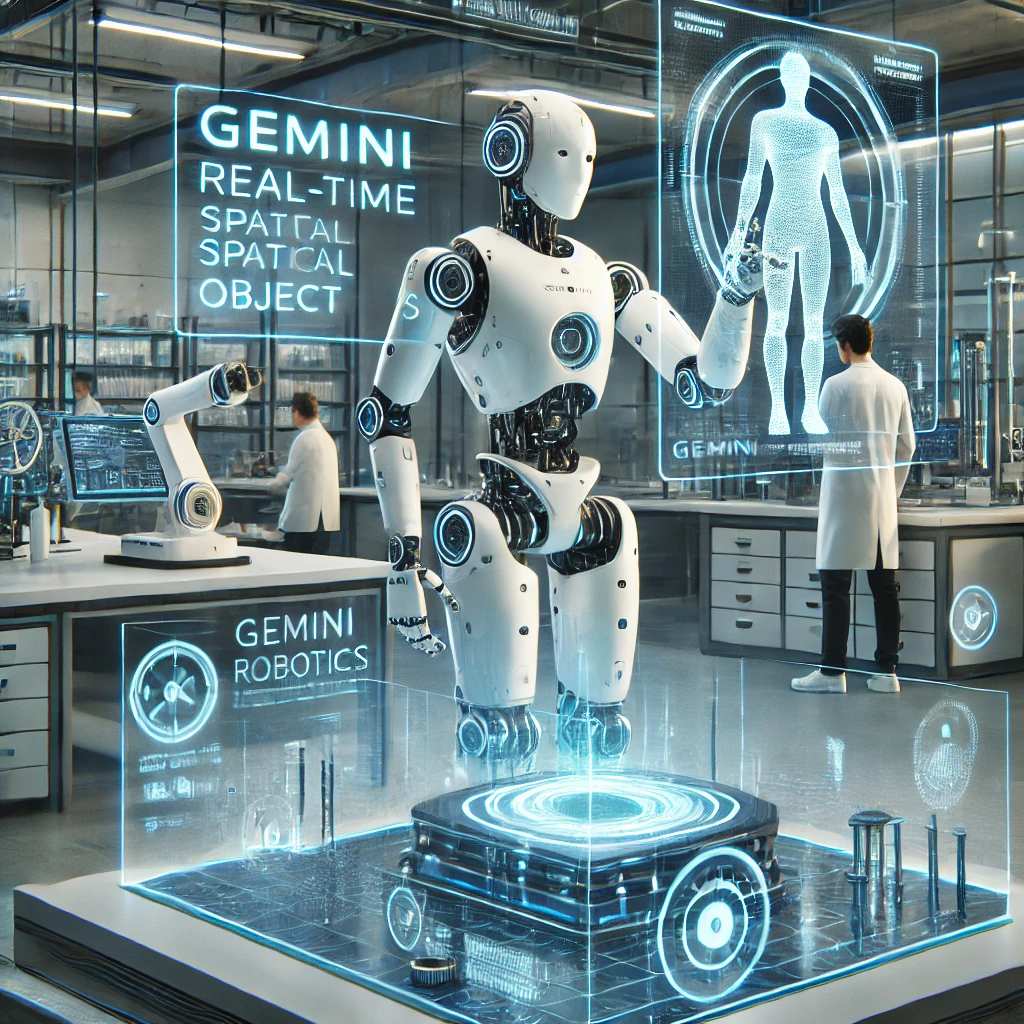
On July 30, 2026, Google DeepMind published a blog post that was quietly understated in tone and seismic in implication. The announcement — Gemini Robotics 2 brings whole body intelligence to robots — described a suite of AI models capable of something that has eluded robotics engineers for decades: giving a machine unified, intelligent control of its entire body, from the hips to the fingertips, guided not by a rigid script but by language and vision in real time.
The release was not just another incremental model update. It represented a strategic pivot in how Google intends to position itself in one of the most consequential technological races of the decade — not as a hardware manufacturer, but as the intelligence layer powering the humanoid robots that other companies build. And if the early demonstrations hold up, the implications stretch far beyond the factory floor.
What Gemini Robotics 2 Actually Is
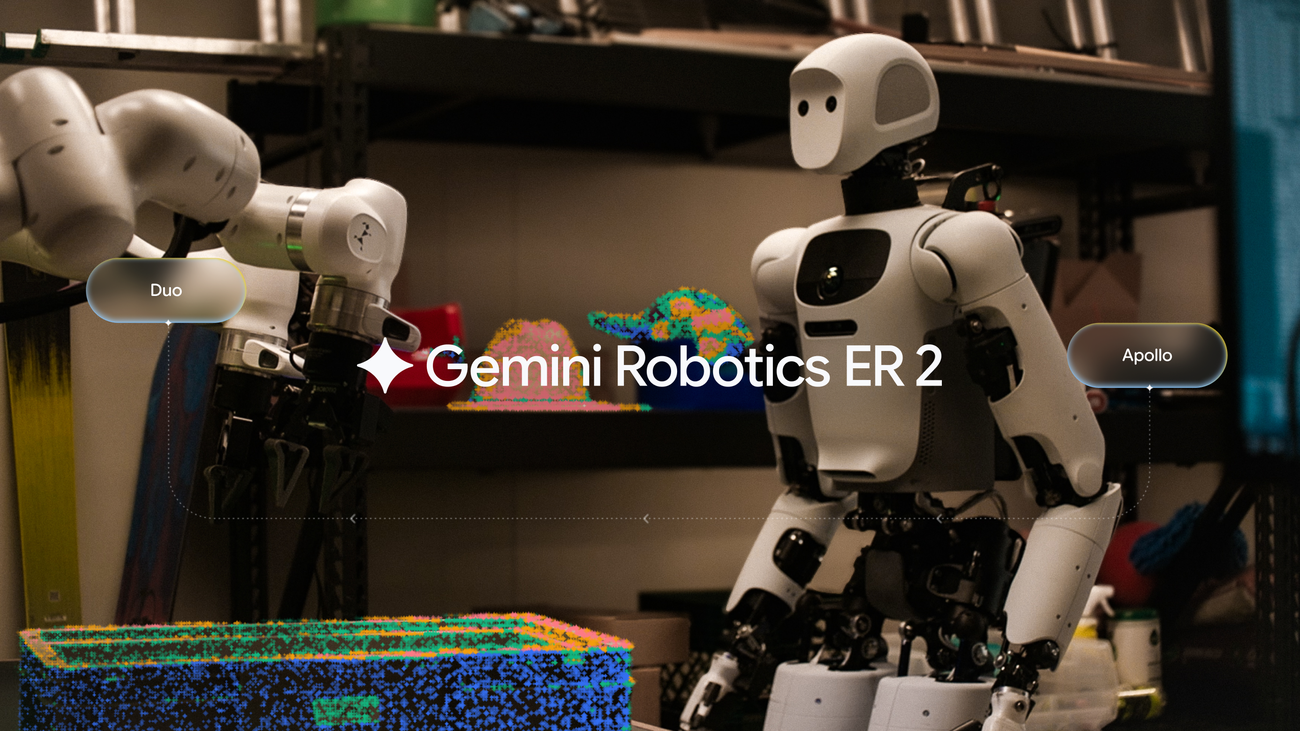
To understand what changed, it helps to know what existed before. The original Gemini Robotics, launched in early 2025, focused primarily on upper-body manipulation — tabletop tasks, picking and sorting, simple arm movements. Impressive for research. Insufficient for deployment.
Gemini Robotics 2, as detailed in Google DeepMind's official model documentation, arrives as a three-part system:
1. Gemini Robotics 2 (the VLA): The flagship vision-language-action model. It converts what a robot sees and what it's told into precise motor commands. This is the model capable of whole-body control — coordinating legs, torso, arms, and hands under a single unified policy rather than stitching together separate subsystems.
2. Gemini Robotics ER 2 (the "brain"): The Embodied Reasoning 2 model acts as the high-level planner. It processes spatial reasoning, communicates with humans, understands the physical environment, and orchestrates multi-step tasks that can unfold over several minutes. It can also coordinate multiple robots simultaneously — a capability that barely existed in prior generations.
3. Gemini Robotics On-Device 2: An edge-optimized version designed to run locally on the robot itself, without needing constant cloud connectivity. Its model card outlines this as the efficiency tier — sacrificing some reasoning depth for latency and reliability in real-world deployments.
Together, according to MarkTechPost's technical breakdown, these three models create a layered architecture: the ER 2 plans and communicates; the VLA translates plans into motion; and the On-Device model runs the low-level controls when bandwidth fails.
The Apollo 2 Demonstration: What Robots Can Now Do
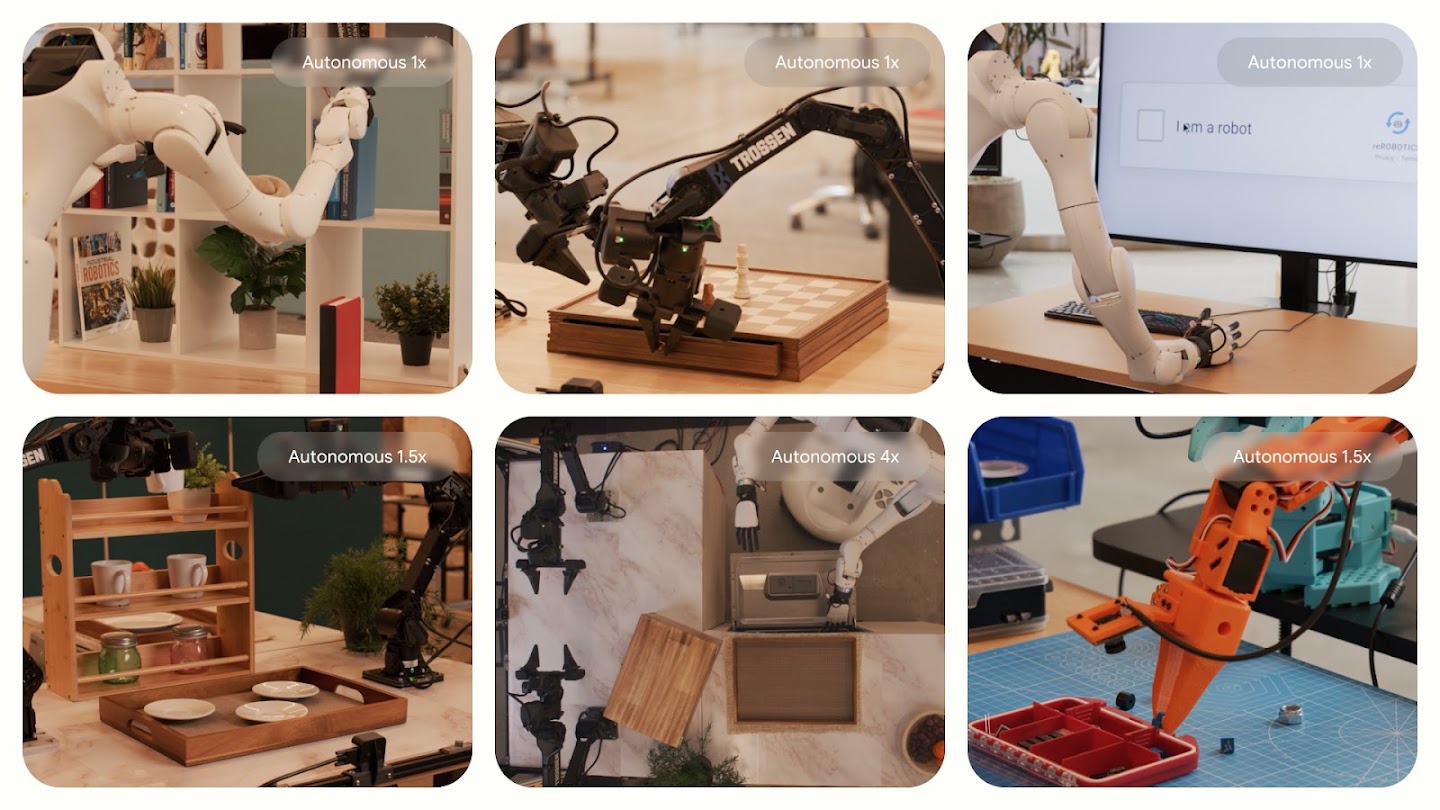
The most vivid evidence of this progress came in the form of Apptronik's Apollo 2 humanoid robot performing tasks that were, until recently, the stuff of science fiction pitches at enterprise conferences.
As documented by Interesting Engineering, powered by Gemini Robotics 2, Apollo 2 can now:
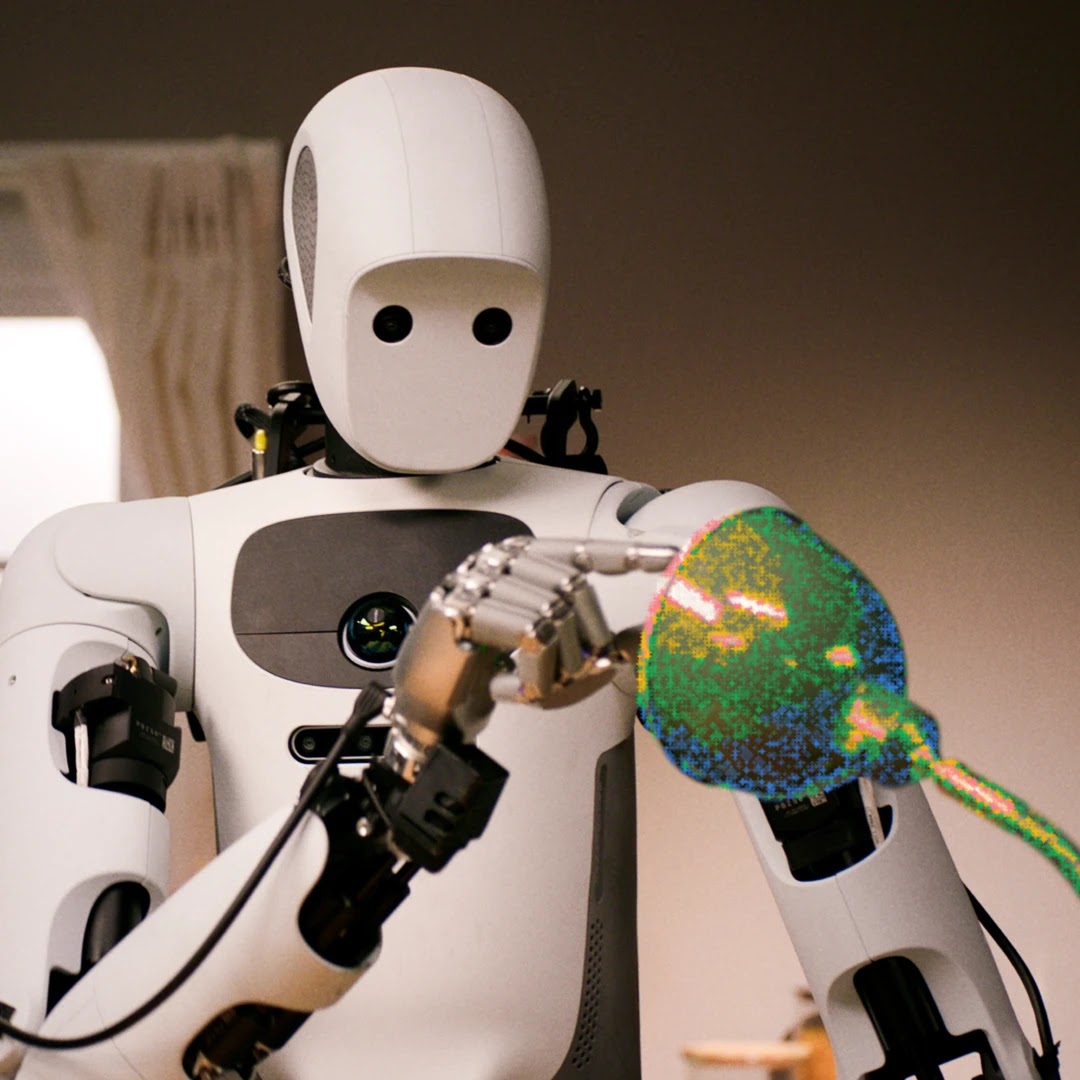
- Walk across a room in response to a spoken command, locate a specific object — say, a watering can — and place it precisely in a designated bin on a lower shelf
- Tie trash bags using its five-fingered hands
- Seal Ziploc bags and unscrew light bulbs
- Perform precise industrial insertion tasks using two-finger grippers
- Crouch, stretch, and navigate cluttered environments without losing task focus
The language of these instructions matters. Apollo 2 doesn't follow coordinates or pre-programmed sequences; it receives natural language instructions like "put the watering can into the green bin in the bottom shelf" and resolves the rest — locomotion, object recognition, grasp planning, and placement — on its own.
Robotics and Automation News described the system as representing the first time a Google model has coordinated a humanoid robot's legs, torso, arms, and hands under a single policy — a meaningful technical threshold. Earlier approaches required separate modules for locomotion and manipulation that had to be hand-tuned to cooperate. Gemini Robotics 2 collapses these into one trained system.
Perhaps equally significant is the adaptability. According to Engadget's coverage and Google DeepMind's technical materials, the model can generalize to new robot bodies — different shapes, sensor configurations, and joint counts — typically with fewer than 200 real-world demonstrations and just a few hours of additional fine-tuning. That is a dramatic reduction from what custom robotics software traditionally demands.
The Robot Park: Where Data Becomes Intelligence
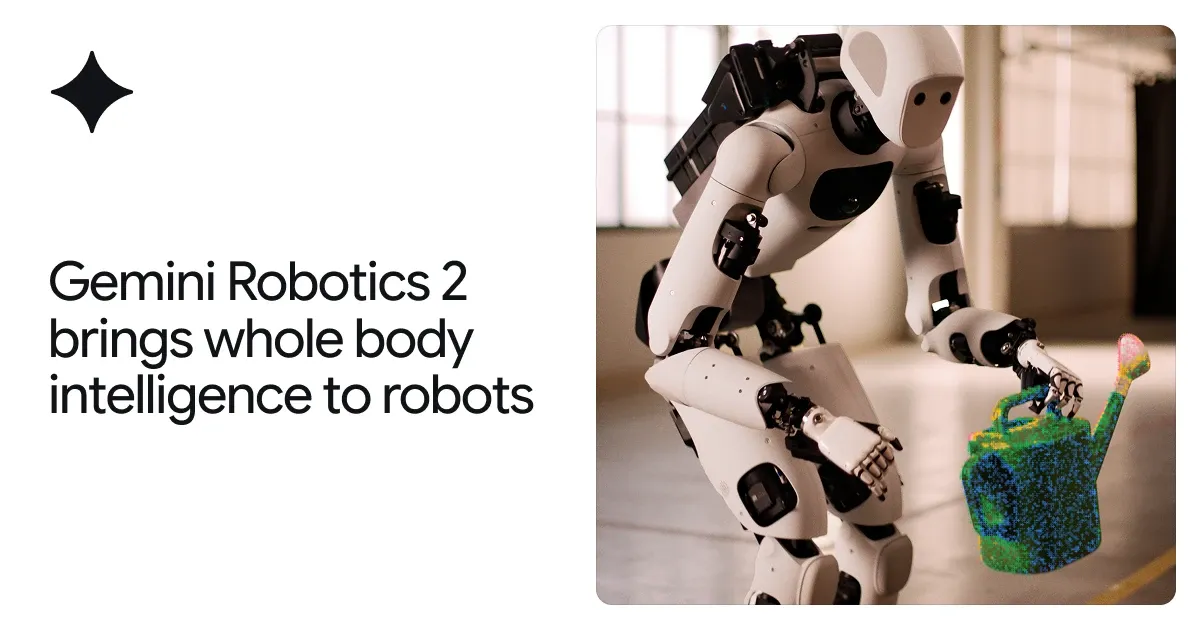
Behind every impressive demo is a data problem. Robots learn by doing, and doing requires space, hardware, and the kind of meticulously structured environments that capture useful training signal rather than noise.
In late June 2026, Apptronik opened what it calls "Robot Park," a 90,000-square-foot physical AI data factory in Austin, Texas. The facility is not a public attraction — it is an industrial training ground for humanoid robots, operating at scale.
As Robotics Tomorrow reported, Robot Park houses Apollo 2 units continuously performing logistics and manufacturing tasks in controlled environments, collecting teleoperation data and simulation outputs to feed the next generation of AI models — including Gemini Robotics 2's successors.
The data-collection network extends beyond Austin. The Robot Report noted that Apptronik's partner ecosystem — which includes Google DeepMind, Mercedes-Benz, and GXO Logistics — feeds real-world data from deployment sites back into the training pipeline. The loop between action, data, and model improvement is becoming tight and continuous in a way that historically required years of research cycles.
This is not just infrastructure — it is a competitive moat. Robotics and Automation News described the facility as purpose-built to produce the kind of high-fidelity, in-distribution real-world data that simulation alone cannot replicate — the so-called "sim-to-real gap" that has bedeviled robotics AI for a generation.
The Partnership Strategy: Google as the Intelligence Layer
Google DeepMind is not building humanoid robots. It is, very deliberately, becoming the operating system they run on.
This positioning was crystallized at CES 2026, when Google DeepMind and Boston Dynamics announced a formal AI partnership to integrate Gemini Robotics foundation models into the electric Atlas robot, with testing planned at Hyundai Motor Group manufacturing facilities. Boston Dynamics, long the prestige name in advanced bipedal robotics, now shares intellectual territory with Google's AI stack in one of its most high-profile commercial partnerships.
Meanwhile, Apptronik — the Austin-based company behind Apollo — runs a separate but parallel partnership arrangement. Two humanoid hardware companies, both running Gemini Robotics intelligence. One AI layer, multiple bodies.
RoboZaps' competitive analysis framed the strategic logic plainly: where Figure AI is vertically integrated — building its own robot, Helix model, and deployment operations — Google is pursuing horizontal integration. Supply the brain. Let the hardware makers race to build the best body. Capture value at the intelligence layer regardless of who wins the hardware competition.
This mirrors the pattern that made Microsoft dominant in personal computing in the 1990s, and that made Android the world's most-used mobile operating system. It is a recognizable playbook, applied to a new and physical domain.
The Numbers Behind the Headlines
Demonstrations are marketing. Numbers are evidence.
Google DeepMind's own performance data, as reported by Wavect's technical review, tells a more complicated story than the polished videos suggest:
- 92% success rate for unscrewing a light bulb
- 36% success rate for screwing one back in
- 32–44% success rates on several other complex multi-finger manipulation tasks
These figures reveal both the progress and the gap. Unscrewing requires detecting, grasping, and rotating — a sequence the model handles well. Screwing requires precise axial alignment under variable resistance — a task that remains challenging even for humans in awkward positions. The delta between these two numbers is a window into the difficulty of dexterous manipulation at scale.
TechTimes contextualized this frankly: Gemini Robotics 2 represents a capability milestone, not a proof of production reliability. It can do things robots couldn't do before. It cannot yet do them reliably enough for unsupervised industrial deployment across arbitrary tasks.
The State of Robotics 2026 Report from the Robotics Center of Silicon Valley documented the broader trend: the $38 billion robotics market now has 12 competing humanoid platforms, and VLA (vision-language-action) model adoption is accelerating across all of them, but production error rates remain the central barrier to scaled commercial deployment.
Safety: The Question Nobody Has Fully Answered
Carolina Parada, head of robotics at Google DeepMind, offered a candid assessment in technical communications accompanying the launch: "The safety question is even more pressing because you're putting them in a lot of other situations. There's a lot of uncertainty that will show up."
The Association for Advancing Automation's industry analysis outlined what safety compliance actually requires for physical AI at this stage: the model itself must be able to refuse operationally unsafe tasks, trigger intervention protocols during hardware faults or unsafe proximity to humans, and proactively request human help when instructions are ambiguous or contradictory.
Google's published Safety Evaluation document from July 2026 goes further, recommending that physical deployments layer deterministic low-level safety systems — hardware interlocks, emergency stops, task-specific risk assessments — on top of the AI model rather than delegating safety exclusively to learned behavior.
Critically, Google's model card explicitly excludes Gemini Robotics models from safety-critical applications including healthcare, transportation, or any context where malfunction could foreseeably cause death, personal injury, or property damage.
This is not an admission of failure — it is an acknowledgment of the current developmental arc. The models are extraordinary research tools and increasingly capable commercial products in controlled environments. They are not yet certified autonomous agents for high-stakes, unstructured, real-world deployment. The difference matters, and Parada and DeepMind's transparency about it is itself notable in an industry prone to overclaiming.
Developer Access and the Road to Commercial Deployment
For those looking to build with Gemini Robotics 2, Google has created tiered access that reflects the maturity gradient of the different models.
As reported by Unite.AI and confirmed by Google's developer documentation, the access structure is:
- Gemini Robotics ER 2 is available today via Google AI Studio and the Gemini API, accessible to any registered developer under the model string
gemini-robotics-er-2-preview. The "preview" label signals active development and potential breaking changes. - Gemini Robotics 2 VLA and On-Device 2 remain gated behind an early-access Trusted Tester Program, reflecting their higher physical risk profile and the need for controlled deployment contexts.
- Enterprise-scale access is available through the Gemini Enterprise Agent Platform in private preview.
The Flowith API Guide notes that developers who want to test the reasoning layer without physical hardware can do so now — orchestrating robot APIs in simulation, testing multi-step planning, and evaluating spatial reasoning — before ever connecting the model to a physical actuator. This is the recommended onboarding path for new entrants.
The Market Context: What's at Stake
The commercial significance of this technology race cannot be overstated. The humanoid robot market is currently valued at approximately $4.2 billion in 2026 and is projected to reach $40.5 billion by 2033, a CAGR of 38.2%. Broader physical AI market projections from MarketsandMarkets suggest the segment could reach $15.24 billion by 2032 at a 47.2% compound annual growth rate.
Venture investment in robotics reached $9.4 billion globally in 2025 — a 41% increase over 2024, per the State of Robotics 2026 Report. Tesla commenced Optimus Gen 3 mass production at its Fremont facility in January 2026 and committed $20 billion in 2026 capital expenditure to scaling physical AI output. CNBC reported in June 2026 that institutional investors are increasingly treating humanoid robotics as the next trillion-dollar AI adjacency.
Labor economics are part of the driver. Global manufacturing labor shortages, accelerating demographic pressures in aging economies, and the difficulty of staffing repetitive, physically demanding roles have combined to give enterprise buyers a genuine motivation to absorb robots that are good enough, not just perfect.
Competitive Landscape: The Intelligence Wars
Google DeepMind is not alone in recognizing where the value lies.
Figure AI, which ended its OpenAI collaboration in early 2025, developed Helix — an in-house VLA model — which now runs its Figure 03 platform. Figure's vertical integration means it controls the full stack, but also that it must solve every layer of the problem without partners. The RoboZaps competitive ranking places Figure 03 among the leading platforms in 2026, but notes the resource intensity of the go-it-alone approach.
Boston Dynamics, for its part, is threading the needle: leveraging the Google DeepMind partnership while also pursuing its planned IPO at a reported $100 billion valuation, as it scales Atlas deployments at Hyundai facilities.
The Register reported in January 2026 that Boston Dynamics beat Tesla to the first commercial humanoid deployment at scale, beginning production runs of the electric Atlas ahead of Optimus Gen 3.
The intelligence layer, though, remains contested. OpenAI has not yet published a dedicated robotics foundation model under its own branding. Whether it builds, buys, or partners is the open variable that hangs over the entire sector.
What This Means Beyond the Factory
The implications of whole-body AI control extend beyond logistics and manufacturing — though those use cases alone represent enormous economic stakes.
Healthcare robotics, assistive technologies for aging populations, search and rescue operations, infrastructure inspection in hazardous environments: each of these domains becomes more tractable as robots gain the ability to generalize across tasks, navigate unstructured environments, and receive and execute spoken instructions from non-expert operators.
Google's caution about safety-critical domains reflects not timidity but regulatory and liability reality. The moment a humanoid robot's AI-driven decision causes a human injury in a hospital or on a road, the legal and regulatory backlash could slow the entire industry. DeepMind is threading a needle: demonstrate capability, invite developers in, but control the deployment contexts carefully enough that the technology matures before it fails publicly in a way that defines it.
The XenoSpectrum analysis put it well: the shift from tabletop manipulation to whole-body humanoid control is less a single breakthrough than a threshold crossing — the point at which a suite of improving but incomplete capabilities becomes a coherent system that opens new application categories.
We are at, or just past, that threshold.
Key Takeaways
- Gemini Robotics 2, released July 30, 2026, is Google DeepMind's first AI system capable of unified whole-body humanoid control — coordinating legs, torso, arms, and fingers under a single learned policy, a significant departure from prior models that handled upper-body manipulation only.
- Google is not building robots; it is building the intelligence layer — its partnerships with Apptronik (Apollo 2) and Boston Dynamics (Atlas) signal a platform strategy analogous to Android: supply the AI, let hardware companies compete, capture value at the model level regardless of who wins the hardware race.
- Performance gaps remain significant: success rates on complex dexterous tasks range from 32–44%, confirming Gemini Robotics 2 as a capability milestone rather than a production-ready general system — a distinction the company itself acknowledges explicitly in its safety documentation.
- The data infrastructure behind the models is now a strategic asset: Apptronik's 90,000 sq ft Robot Park, feeding real-world training data back to Gemini Robotics models continuously, represents a compounding advantage that deepens with every deployment hour logged.
- Commercial deployment is gated and tiered: the ER 2 reasoning model is open to developers via API today; the full VLA requires early-access partner status — reflecting a deliberate ramp that prioritizes safety and model maturity over market speed.
- The humanoid robot market is accelerating regardless of any single player's progress: at a projected CAGR of 38.2% through 2033 and with $9.4 billion in 2025 venture investment, the economic gravity behind physical AI is now strong enough that the question is not whether this technology transforms manufacturing, logistics, and beyond — but which combination of models, hardware, and partnerships will define how it does.
Reporting for The Everything of Everything. Sources verified as of August 15, 2026.
Sources:
- Gemini Robotics 2 brings whole body intelligence to robots — Google DeepMind
- Google DeepMind Ships Three Physical AI Models — MarkTechPost
- Google DeepMind unveils Gemini Robotics 2 as Apptronik humanoid demonstrates whole-body AI — Robotics and Automation News
- Introducing Gemini Robotics ER 2 — Google Blog
- Gemini Robotics On-Device 2 Model Card — Google DeepMind
- Humanoid robots master full-body movement, multi-step reasoning via Gemini Robotics 2 — Interesting Engineering
- Google's new Gemini Robotics 2 platform — Engadget
- Apptronik Announces Robot Park — Forbes
- Welcome to Robot Park — RoboticsTomorrow
- Apptronik launches Robot Park with Google DeepMind — Robotics and Automation News
- Apptronik unveils Apollo 2 and flagship training facility — The Robot Report
- Boston Dynamics & Google DeepMind Form New AI Partnership
- Industry Insights: Google DeepMind Brings Gemini Robotics to Humanoids — Association for Advancing Automation
- Gemini Robotics 2 Safety Evaluations — Google DeepMind
- Gemini Robotics 2 Whole-Body Control Guide — Wavect
- Google Ships Gemini Robotics ER 2 With Multi-Robot Teamwork — Unite.AI
- State of Robotics 2026 Report — Robotics Center of Silicon Valley
- Humanoid Robot Market Report — Grand View Research
- Humanoid robots touted as next AI investment opportunity — CNBC
- Boston Dynamics beats Tesla to the humanoid robot punch — The Register
- Boston Dynamics IPO and $100B Valuation — RobotToday
- Gemini Robotics 2: From Tabletop Tasks to Whole-Body Humanoid Control — XenoSpectrum
- Gemini Robotics ER 2 API Access Guide — Flowith
- Google I/O 2026: Power the future of robotics with Gemini