Introduction to James Madison's Masterpiece
Published on March 5, 1788, Federalist No. 51 by James Madison is often hailed as a quintessential work in the annals of political philosophy and constitutional law. It is a compelling argument for the checks and balances system that forms the bedrock of the United States' federal government structure [1]. Today, this foundational essay remains remarkably relevant, providing insights into some of the most pressing debates on governance, including Senate reform and court packing.
The Necessity of Checks and Balances

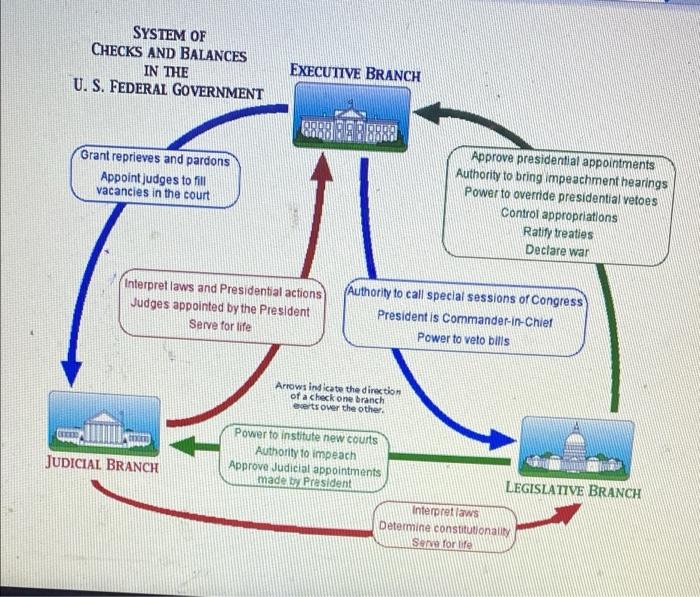
Madison's central thesis is rooted in a profound skepticism about human nature. He posits that men are not angels; thus, if left unchecked, even well-intentioned leaders will succumb to the ambition of seeking power [2]. The system of checks and balances is thus designed as a mechanism through which one branch of government may check or limit another.
Bicameralism: A Double Security
Madison advocates for bicameralism, the structure of having two Houses of Congress. By proposing that the House of Representatives be elected by the people and the Senate by the states, Madison believed this would create a double security against every excess of majority faction [3]. This concept is directly relevant to contemporary debates on Senate reform and the balance between state and federal power.
The Permanent Tenure of Judges
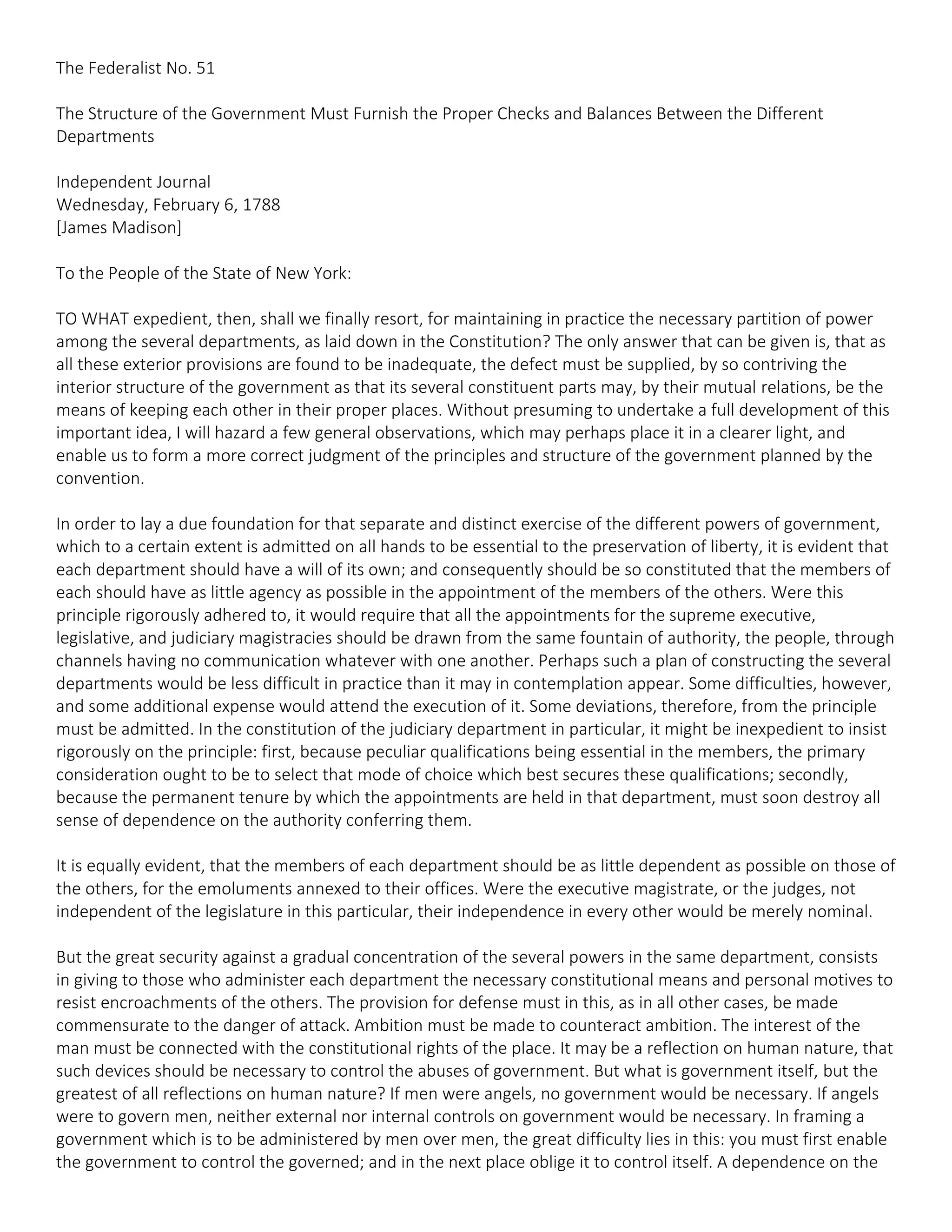
Another critical aspect of Madison's argument involves the judiciary. He argues that judges should hold office during good behavior, meaning they can only be removed from office through impeachment for "treason, bribery, or other high crimes and misdemeanors." This ensures their independence from both the executive and legislative branches [4].
Minority Rights and Majority Factions

Madison was acutely aware of the threat posed by majority factions to individual rights. He posited that a republic (a government in which the people have a direct say) can only maintain its freedom if it is structured so that the majority will be slow to act, as they must agree among themselves [5]. This insight continues to inform discussions on protecting minority rights against the tyranny of the majority.
The Passage and Its Warning
In perhaps his most famous passage, Madison reflects on the nature of man: "If men were angels, no government would be necessary. If angels were to govern men, neither external nor internal controls on government would be necessary" [6]. This serves as a reminder that good governance is not solely dependent on the character of politicians but also on the structural safeguards put in place.
The Modern Relevance: Senate Reform and Court Packing
Madison's ideas continue to be invoked in debates over Senate reform, with proposals for proportional representation or eliminating the filibuster often couched in terms of addressing the imbalance of power between states [7]. Similarly, discussions about court packing — adding more justices to the Supreme Court — reflect concerns over the balance between branches and the long-term impact on judicial independence.
Key Figures & Contributions
- James Madison: The fourth President of the United States and one of the Founding Fathers, Madison played a significant role in drafting the U.S. Constitution and its accompanying documents.
- Federalist Papers: A series of 85 articles and essays written by Madison, along with Alexander Hamilton and John Jay, that advocated for the ratification of the Constitution.
Current State & Recent Developments
The modern interpretations and applications of Federalist No. 51 vary widely but are deeply rooted in its core principles. Recent academic discussions have explored how these ideas can be reimagined to address contemporary issues such as partisan polarization and the role of unelected institutions like the Federal Reserve [8].
Key Takeaways
- Checks and Balances: The system ensures no single branch gains too much power, reflecting Madison's pessimistic view on human nature.
- Bicameralism's Relevance: Debates over Senate reform highlight its continued relevance in discussions about state versus federal powers.
- Judicial Independence: Permanent tenure for judges is a critical component of ensuring they remain free from political influence.
- Minority Rights: Madison's insights into the dangers posed by majority factions continue to inform modern discussions on rights and governance.
- Human Nature and Governance: His reflection that "if men were angels" remains a cautionary tale about relying solely on good intentions in government.
[1] Federalist No. 51, James Madison, The Federalist Papers, available at [link to Federalist No. 51].
[2] Ibid., reflecting on the nature of ambition and its counteractive measures.
[3] Ibid., advocating for bicameral representation as a check against majority factions.
[4] Federalist No. 78, another contribution by Madison, elaborating on this concept in more detail.
[5] James Madison, Federalist No. 10, explaining the necessity of large republics to temper majority will.
[6] Federalist No. 51, reflecting on the inherent limitations of human governance due to human nature.
[7] Recent discussions on Senate reform often cite Federalist No. 51 as foundational to understanding Madison's vision for balance in government.
[8] Various academic papers and publications exploring how Federalist principles apply to modern policy issues, such as those found in top-tier political science journals or addressed in recent books on constitutional law.
Data Overview