Introduction to Geologic Time Scales
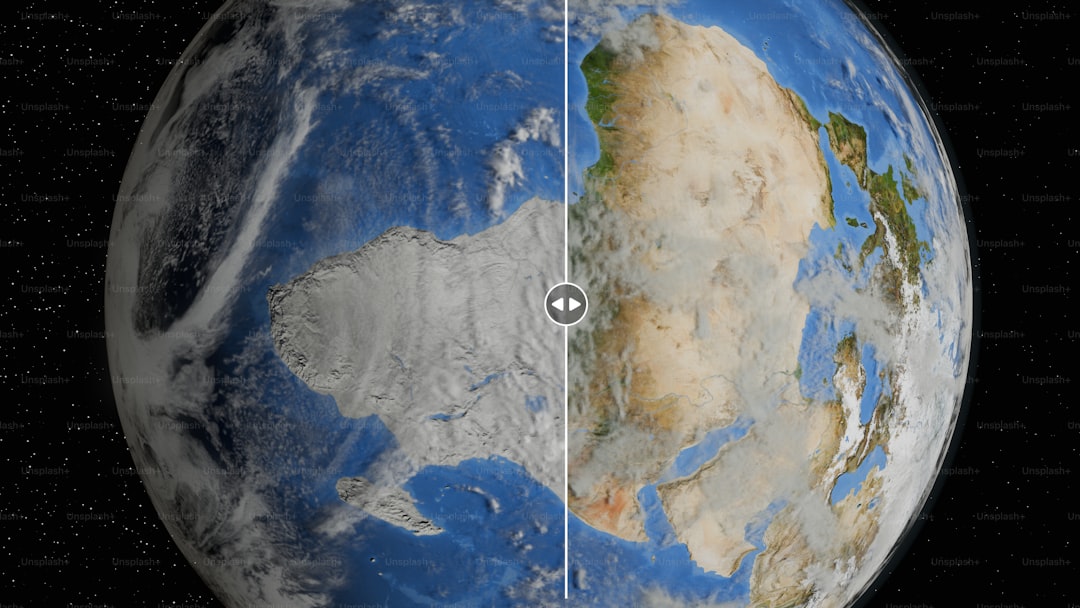
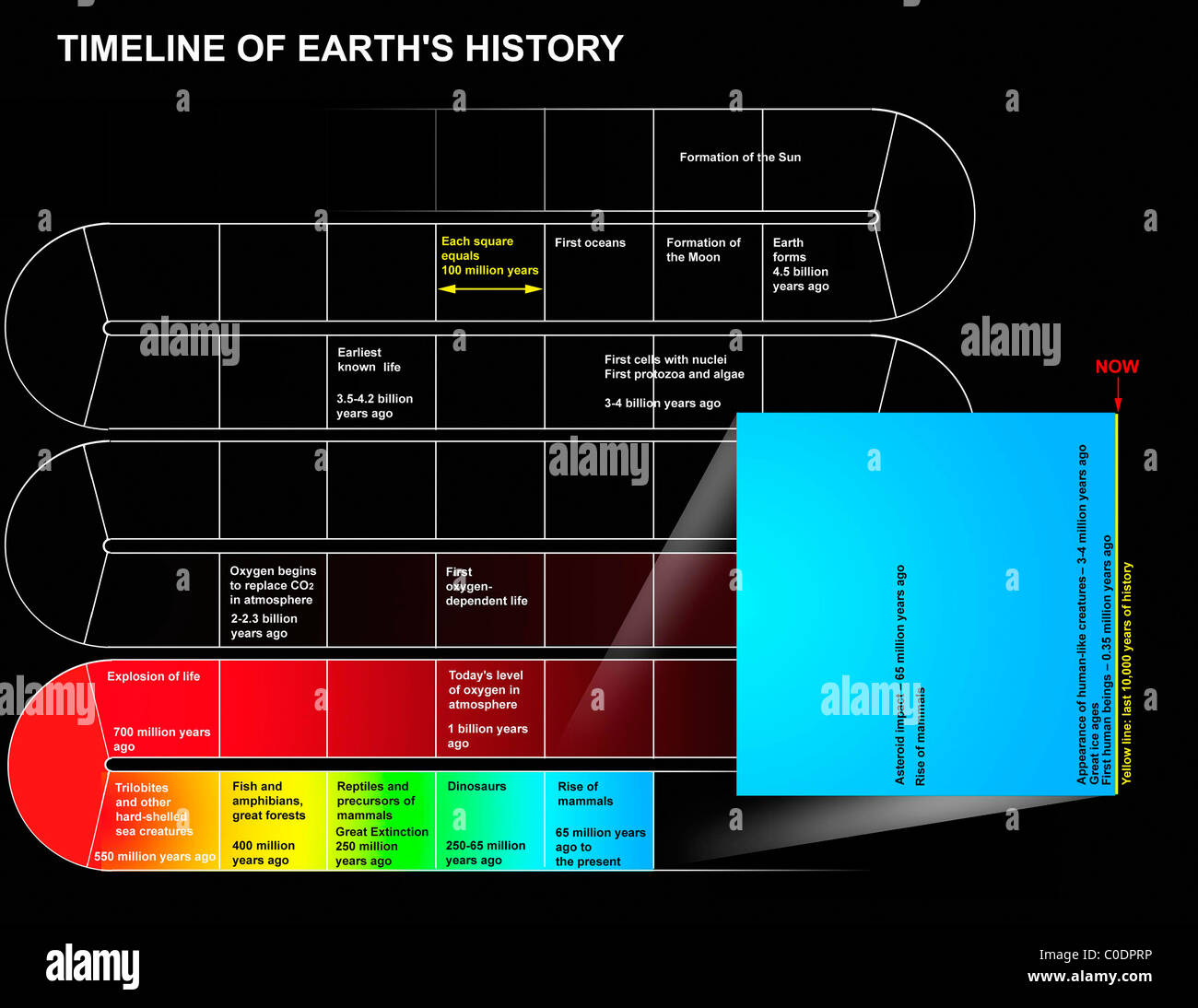
Understanding the history of our planet is essential for comprehending not only its past but also predicting its future. The geologic time scale, a chronological framework that divides Earth’s 4.6 billion-year history into eons, eras, periods, and epochs [1], serves as the backbone for this understanding. This scale organizes geological events and formations, enabling scientists to correlate rock layers with specific periods in Earth's history, thereby providing insights into the timeline of life on our planet.
The Major Time Periods of Earth
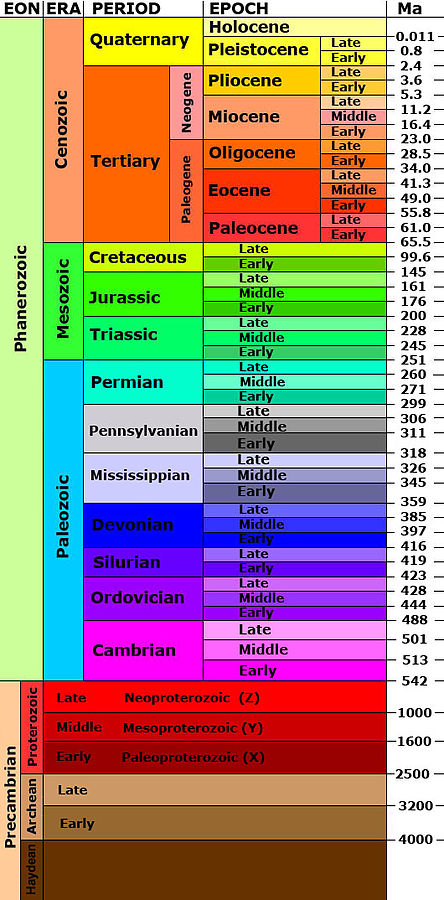
Precambrian Eon (4.600–541 Mya)
The oldest eon in Earth’s history is the Precambrian, spanning from 4.6 billion to approximately 541 million years ago (Mya). This vast period is divided into three distinct epochs: Hadean, Archean, and Proterozoic [2]. During this time, Earth was a very different place; it was still forming, its surface was molten, and life had yet to evolve. The formation of the Earth itself 4.600 Mya marked the beginning of the Hadean eon, followed by the emergence of the crust during the same period [2]. Life, as we know it today, did not exist until much later in this eon, around 3.5 billion years ago.
Paleozoic Era (541–252 Mya)
The Paleozoic era began with the Cambrian explosion, a rapid diversification of life that marked the beginning of multicellular organisms [2]. This era is divided into six periods: Cambrian, Ordovician, Silurian, Devonian, Carboniferous, and Permian. Each period saw significant changes in both marine and terrestrial life forms.
Cambrian Period (541–485 Mya)
The Cambrian period was marked by the appearance of a wide variety of complex multicellular organisms, including trilobites [2]. This period laid the foundation for future evolutionary developments.
Ordovician Period (485–443 Mya)
During the Ordovician, marine life flourished with the emergence of jawless fish and early cephalopods. Glaciations during this time created vast ice sheets that reshaped continents [2].
Mesozoic Era (252–66 Mya)
The Mesozoic era, known as the Age of Dinosaurs, is divided into three periods: Triassic, Jurassic, and Cretaceous.
Triassic Period (252–201 Mya)
This period saw the recovery from a severe mass extinction event at the end of the Permian. The climate was generally warm and dry, supporting diverse life forms [2].
Jurassic Period (201–145 Mya)
The Jurassic era is characterized by the dominance of dinosaurs, including large herbivores like Apatosaurus and carnivorous species such as Allosaurus [2]. This period also saw the evolution of early mammals.
Cretaceous Period (145–66 Mya)
The final period of the Mesozoic was marked by the rise of flowering plants and continued diversification of dinosaurs. It ended with another mass extinction event, which led to the demise of non-avian dinosaurs [2].
Cenozoic Era (66 Mya – Present)
The Cenozoic era, known as the Age of Mammals, began after the mass extinction that wiped out the non-avian dinosaurs. This era is divided into two periods: Paleogene and Neogene.
Paleogene Period (66–23 Mya)
During this period, mammals diversified greatly following the extinction event. The Paleocene epoch saw the rise of many modern mammal groups [2].
Neogene Period (23 Mya – Present)
The Neogene era is further divided into the Miocene and Pliocene epochs. It marked significant changes in climate and the evolution of humans, among other species [2].
Key Figures & Contributions
Several key figures have significantly contributed to our understanding of Earth's history:
- Alfred Wegener (1880–1930): Proposed continental drift theory.
- Harry Hess (1906–1969): Contributed to the concept of seafloor spreading, a critical component of plate tectonics [2].
- Geologists and paleontologists: Continuously refine our understanding through fossil discoveries and radiometric dating techniques.
Current State & Recent Developments

Recent advancements in geochronology and biostratigraphy have enhanced the precision of the geologic time scale. For instance, new isotopic dating methods allow for more accurate age determinations [2]. Additionally, ongoing research into deep-sea cores provides insights into past climates and environmental changes.
Key Takeaways
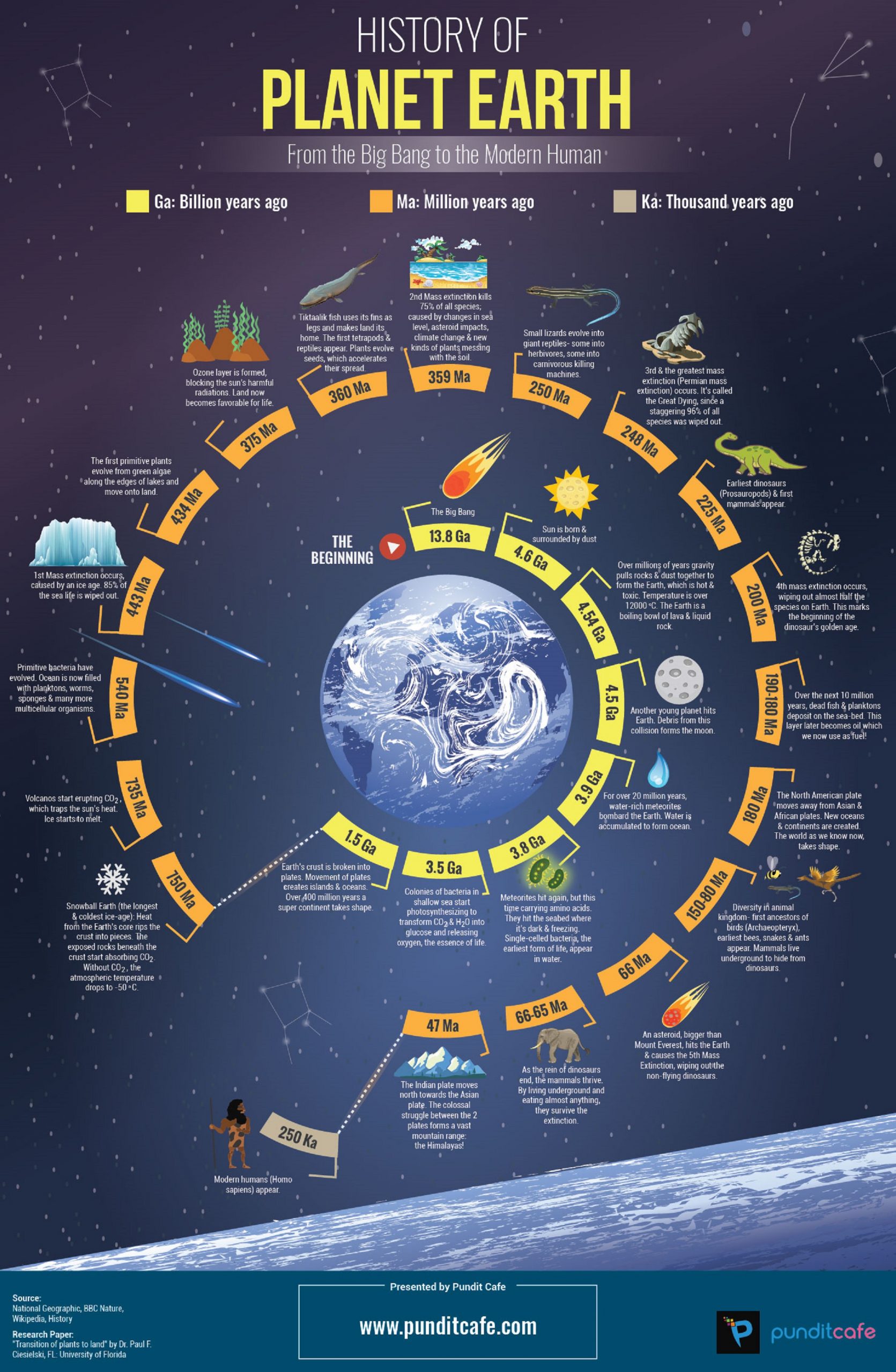
- The Precambrian eon laid the groundwork for life on Earth.
- The Paleozoic era saw the emergence of complex multicellular organisms.
- Dinosaurs dominated during the Mesozoic era before their sudden extinction.
- Mammals thrived in the Cenozoic era, with humans evolving relatively recently.
By understanding these major time periods, we can better comprehend the dynamic nature of Earth and its life forms.
Data Overview