Detroit's TCF Center: Dissecting the 2020 Election Fraud Claims
The 2020 presidential election produced no single flashpoint more contentious, litigated, or persistently misrepresented than what unfolded inside and outside Detroit's TCF Center — a massive convention complex on the Detroit riverfront that served as Wayne County's central hub for processing and tabulating absentee ballots. In the weeks following Election Day, claims of a stolen election coalesced around this building and a handful of witnesses. One name, above all others, became synonymous with those allegations: Mellissa Carone, a freelance IT contractor who had worked at the center on behalf of Dominion Voting Systems. Her affidavit, her congressional testimony, and her viral December 2020 appearance before a Michigan House panel electrified tens of millions of people who believed the election had been rigged. But the full story of the TCF Center — encompassing court rulings, a Republican-led Senate investigation, forensic audits, and years of defamation litigation — tells a substantially different account from the one that circulated on social media.
This article examines what actually happened inside the TCF Center, who said what under oath, what investigators found, and what the legal and democratic consequences have been.
Background: The TCF Center and Wayne County's 2020 Election
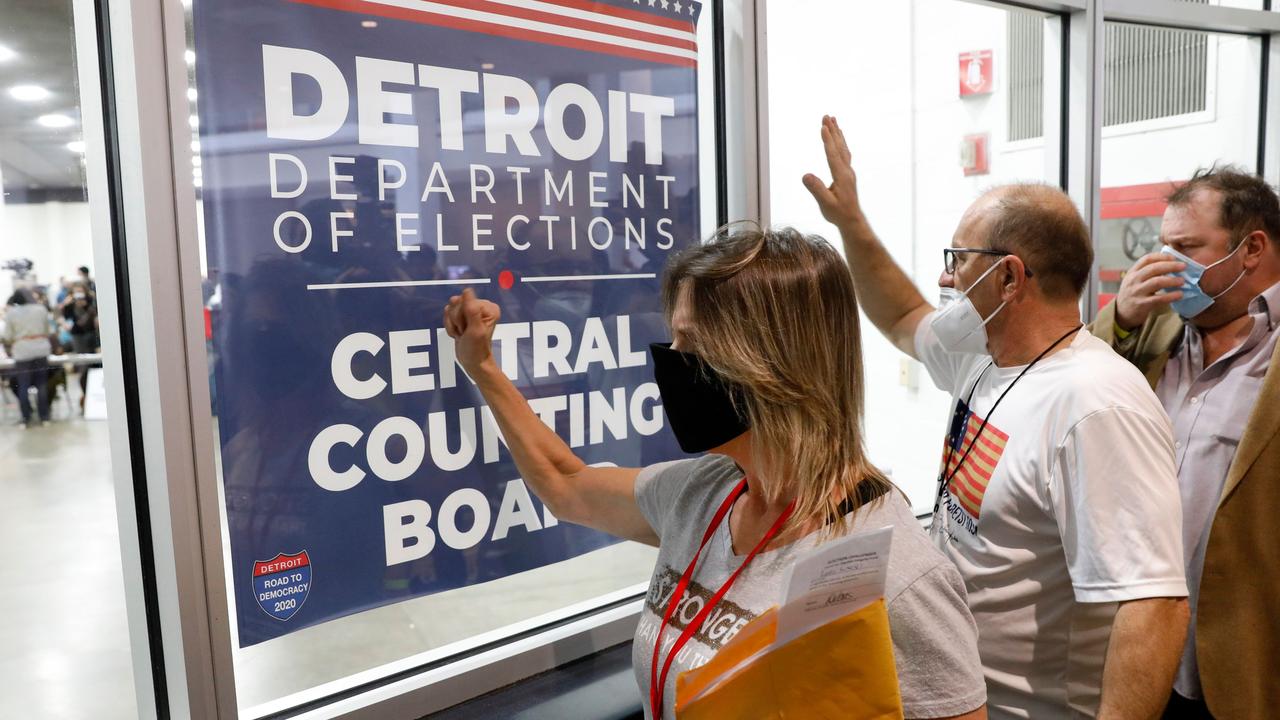
Wayne County, which encompasses Detroit and its immediate suburbs, is Michigan's most populous county and its most Democratic stronghold. In 2020, the county processed an unprecedented volume of absentee ballots, driven by the COVID-19 pandemic, which prompted Michigan officials to dramatically expand mail-in voting. The TCF Center — formerly known as Cobo Center — was designated as the central absentee ballot counting facility for Detroit.
The scale of the operation was enormous. Election workers, challengers from both parties, and credentialed observers were present on the floor as millions of absentee ballots were fed through tabulating machines. The environment was chaotic by multiple accounts — but chaos, election administrators and investigators would later note, is not the same as fraud.
Dominion Voting Systems was contracted by Wayne County to provide the voting equipment and associated technical support. As part of that arrangement, Dominion subcontracted individual IT personnel to assist on Election Day. Mellissa Carone, a 33-year-old freelance technology worker from Macomb County, was one of those subcontractors.
Mellissa Carone: The Witness at the Center of the Storm
What Carone Said She Witnessed
Carone arrived at the TCF Center at approximately 6:15 AM on November 3, 2020, and worked through the night, departing around 4:00 AM on November 4. She returned for a shorter shift later that same day, from approximately 10:00 AM to 1:45 PM. By her accounting, she worked roughly 27 hours across those two stints.
In an affidavit filed November 10, 2020 — one week after Election Day — Carone alleged a litany of serious election irregularities. Her key claims included:
- Ballot scanning fraud: She alleged that batches of ballots were being scanned through tabulating machines eight to ten times, artificially inflating vote totals.
- Chain of custody violations: She claimed ballots were being accessed by election workers after scanning, rather than being dropped directly into sealed boxes.
- Vehicle-based ballot dumps: She suggested that vans ostensibly delivering meals to election workers were actually concealing tens of thousands of fraudulent ballots.
- Partisan skewing: She stated she did not see a single vote for President Trump during the entirety of her 27-hour presence at the TCF Center.
- Supervisory misconduct: She alleged that her manager had directed her to the facility and that she witnessed deliberate, coordinated fraud.
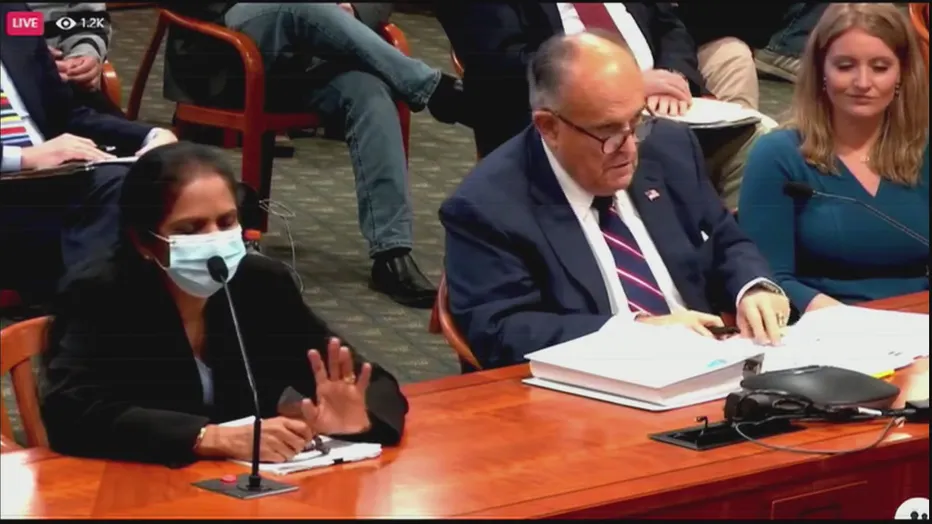
Carone's affidavit was quickly seized upon by the Trump campaign's legal team, led by Rudy Giuliani, who elevated her to the status of star witness. She appeared at a Michigan House Oversight Committee hearing on December 2, 2020 — a hearing that would generate one of the most widely circulated political clips of the year.
The Viral Testimony
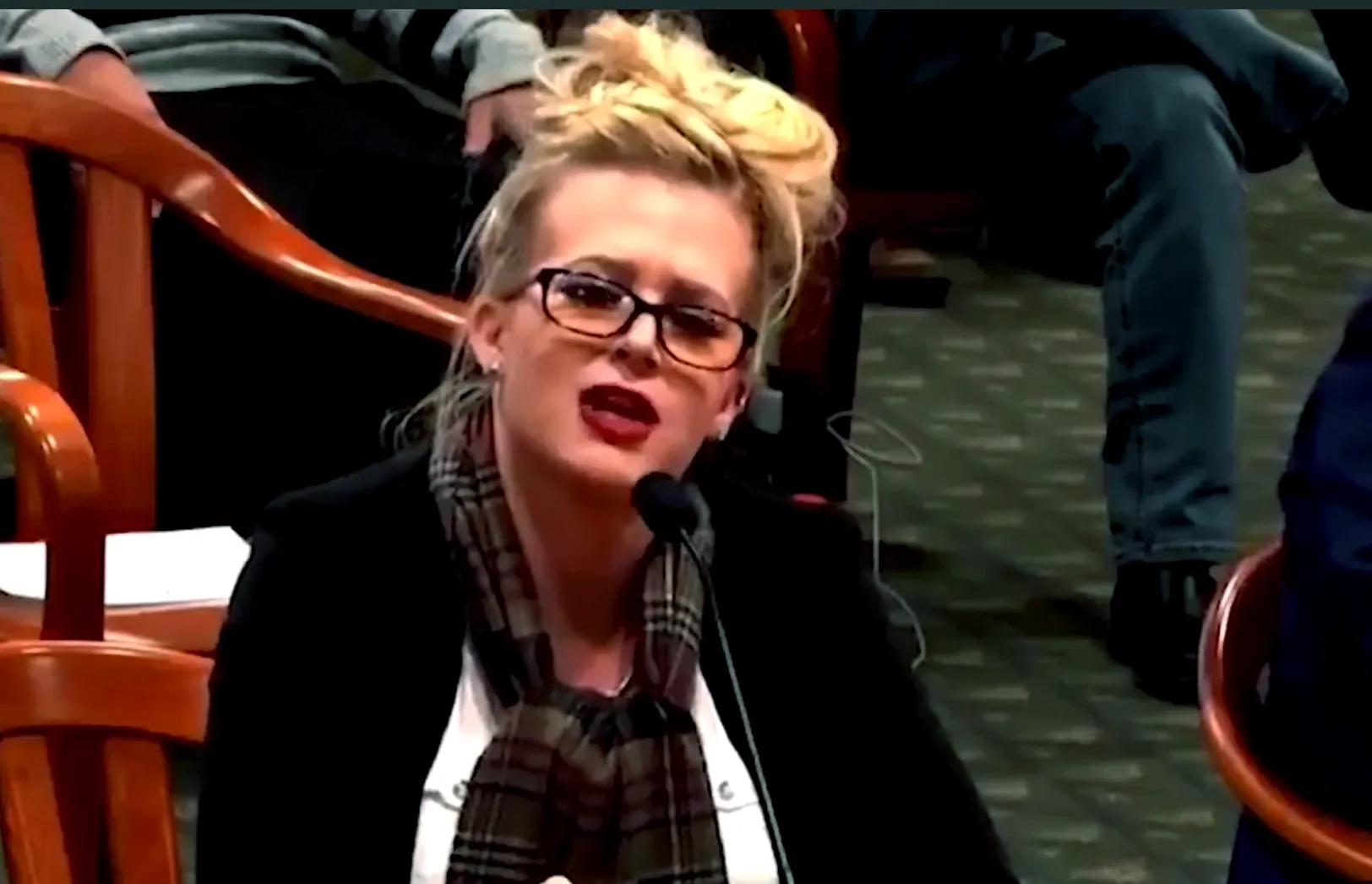
Carone's appearance before the committee, seated beside Giuliani, was volatile and combative. When committee member Rep. Steven Johnson presented official tallies and countered her claims, Carone responded with visible agitation, repeatedly insisting on the validity of her account. The exchange went viral on social media and was subsequently parodied on Saturday Night Live, with actress Kate McKinnon portraying Carone.
The spectacle made Carone a celebrity in certain political circles. She later formed a campaign committee to run for the Michigan House of Representatives (46th District, Oakland County) in early 2021, and subsequently sought a state Senate seat.
The Legal Record: Courts Reject Carone's Account
Before Carone ever testified before the House panel, a Michigan court had already ruled on the credibility of her sworn affidavit.
Wayne County Circuit Court Chief Judge Timothy Kenny reviewed the fraud claims — including Carone's affidavit — in a lawsuit filed by Republican poll challengers seeking to block the county's certification of results. In his November 13, 2020 ruling, Judge Kenny was direct:
"Ms. Carone's description of the events at the TCF Center does not square with any of the other affidavits."
He further stated that "neither Republican nor Democratic challengers nor city officials substantiate her version of events," and concluded that her "interpretation of events is incorrect and not credible."
This was not merely a Democratic judge dismissing a Republican witness. The ruling noted that Carone's account was contradicted by other Republican challengers who had been present inside the same facility.
The Michigan Court of Appeals subsequently rejected an appeal of that ruling 3-0. The Michigan Supreme Court denied a further appeal. The plaintiffs voluntarily dismissed the underlying case on November 19, 2020. On December 9, the U.S. Supreme Court refused to hear a related challenge. Wayne County's Board of Canvassers voted 4-0 to certify the results.
The Criminal Background of the Key Witness
Shortly after Carone's December testimony went viral, investigative reporting revealed a significant piece of context about her background that had not been disclosed in her affidavit.
In November 2018, Carone was accused of sending sexually explicit videos to her fiancé's ex-wife — conduct that prompted prosecutors to charge her with first-degree obscenity and using a computer to commit a crime. She entered into a plea agreement: the computer crime count was dismissed, and the obscenity charge was reduced to disorderly conduct. She was sentenced to 12 months of probation in September 2019.
Carone completed her probation on September 13, 2020 — fewer than two months before she was assigned to work at the TCF Center as a Dominion subcontractor.
This information did not appear in her affidavit or in her presentation to the House Oversight Committee. Multiple news outlets reported on it after the fact. It was relevant not because a prior conviction automatically makes a witness untruthful, but because a judge had already found her account non-credible, and this additional background raised further questions about why she had been elevated as the campaign's "star witness."
The Viral "Ballot Van" Video: A Case Study in Misinformation
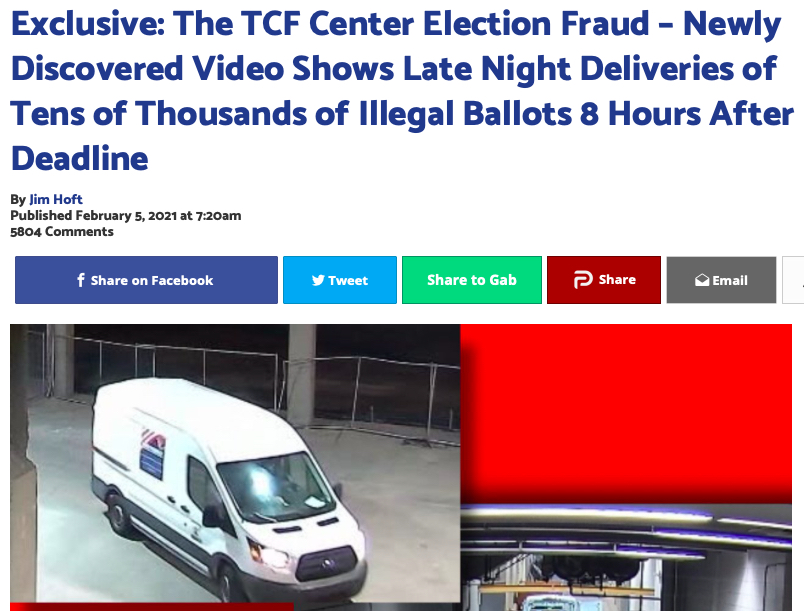
Among the most widely circulated pieces of alleged evidence from the TCF Center was a short video taken early Wednesday morning, November 4, by Kellye SoRelle, described as a member of "Lawyers for Trump," and distributed by the right-wing outlet Texas Scorecard.
The video depicted a man unloading a long black box from a white van into a red wagon in the early hours of the morning. The filmmakers alleged that the box was a ballot lockbox being smuggled into the TCF Center after the ballot-return deadline had passed.
The claim spread rapidly. Within hours, multiple media organizations — including WXYZ-TV, the Detroit affiliate whose crew was on scene — identified the individual and the contents of the vehicle.
WXYZ reporter Brett Kast stated publicly:
"The man in this video is Josh, and this is his wagon. He is not a Democrat operative, he is a photographer at @wxyzdetroit. The wagon was not hauling ballots into the TCF Center, it was hauling equipment in to our crew."
The long black box was a camera equipment case. The white van was a news crew vehicle.
PolitiFact and multiple other fact-checking organizations rated the claim that the video showed ballot-smuggling as false. The Michigan Senate Oversight Committee's 2021 report specifically cited this incident, finding that the widely circulated photograph alleging secret ballot delivery at the TCF Center "was actually a photo of a WXYZ-TV photographer hauling his equipment."
This episode is instructive: a piece of video evidence that was treated as confirmation of organized fraud was, within hours, explained and debunked by the very news organization whose equipment appeared in the footage. The debunking did not receive the same amplification as the original claim.
The "50,000 Illegal Ballots" Claim
Perhaps the most numerically specific and dramatic allegation associated with the TCF Center was the claim that approximately 50,000 illegal ballots were introduced into the count from the rear entrance around 4:30 AM, just before a 6:00 AM shift change.
No verified evidence for this claim has ever been presented. No surveillance footage, no testimony from non-partisan observers, no forensic audit, and no Republican challenger affidavit has corroborated the specific assertion that 50,000 fraudulent ballots were physically introduced into the TCF Center after the fact.
The Michigan Senate Oversight Committee's report addressed the late-night ballot deliveries directly. It found that approximately 16,000 ballots were delivered to the TCF Center in the early morning hours of November 4. These were not fraudulent ballots. They were lawfully cast absentee ballots that had been deposited at drop boxes and satellite locations throughout Detroit earlier on Election Day. Michigan law required them to be transported to and processed at the TCF Center. Their delivery in the overnight hours was a function of logistics, not fraud.
The committee specifically distinguished between "ballots arriving at the center" — a routine and legal process — and "illegal ballots being introduced to inflate the count" — which it found no evidence of.
Republican Observer Access: What the Record Shows
One of the persistent claims surrounding the TCF Center was that Republican poll challengers were illegally excluded from observing the ballot count, preventing proper oversight of the process. This claim was central to multiple legal filings and public statements.
The factual record is more complicated.
At peak capacity during the ballot counting period, more than 500 challengers from both parties — Republican, Democratic, and nonpartisan — were present inside the TCF Center simultaneously. Elections officials confirmed that at least 134 Republican challengers were actively observing absentee ballot processing before a surge of additional challengers arrived and were denied entry.
The subsequent denial of entry was attributed to COVID-19 capacity restrictions: the building had a specified maximum capacity for non-essential personnel, and that capacity had been reached. Michigan law governing poll challengers does not guarantee unlimited access; it guarantees that challengers may be present up to statutory limits.
A Michigan state court judge ruled against challengers who sought to force additional access, finding that their requests did not demonstrate legal entitlement beyond what had already been provided.
The Al Jazeera network independently confirmed through its reporting that GOP poll watchers had not been categorically excluded from the Michigan count, contrary to widespread claims.
The Republican-Led Senate Investigation: What Eight Months of Scrutiny Found
The most consequential official investigation of the 2020 Michigan election was conducted not by Democrats, not by the Biden administration, and not by critics of the fraud claims — but by a Republican-controlled Michigan Senate Oversight Committee, chaired by Republican Senator Ed McBroom.
The committee spent eight months conducting its inquiry. It held approximately 28 hours of public hearings, heard testimony from nearly 90 witnesses, and reviewed thousands of pages of documents. Its final report was released on June 23, 2021.
The findings were unambiguous:
"We find no evidence of widespread or systematic fraud in Michigan's prosecution of the 2020 election."
The report specifically addressed and debunked each major category of fraud allegation associated with the TCF Center and the broader Michigan election:
- Deceased voters: The committee found no evidence of votes being cast in the names of deceased people at a scale capable of affecting outcomes.
- Machine vote-switching: Claims that Dominion machines had switched votes from Trump to Biden were examined and rejected. Antrim County, which had briefly shown anomalous results due to a human configuration error that was quickly corrected, was frequently cited as evidence of machine fraud. The committee found it was not.
- Ballot harvesting: No evidence found.
- Ballot dumps and late-night fraud at TCF Center: Debunked. The late-night deliveries were lawfully cast ballots.
- Carone's specific claims: The report acknowledged the chaos and confusion that genuinely characterized the TCF Center environment, but found that Carone's specific accusations of systematic scanning fraud and organized ballot introduction were not corroborated by any other witness.
The committee went further than simply clearing the election of fraud. It recommended that Michigan's Democratic Attorney General Dana Nessel consider investigating individuals who had "spread false and irresponsible claims of voter fraud... to raise money or publicity for their own ends." It also specifically recommended that the Wayne County Republican Party issue a public repudiation of the actions that had "created a panic" at the TCF Center.
Committee Chair McBroom, a Republican, stated plainly: "Our clear finding is that citizens should be confident the results represent the true results of the ballots cast by Michigan voters."
Dominion Voting Systems: From Accused to Plaintiff
Dominion Voting Systems occupied a peculiar position in the TCF Center narrative. On one hand, Carone was nominally a Dominion subcontractor, lending her claims a superficial insider credibility. On the other hand, the company she worked for was itself one of the primary targets of the broader election fraud narrative — accused by numerous media figures, commentators, and political actors of having built machines designed to steal elections.
Dominion's response was to sue.
The company filed defamation lawsuits against multiple defendants, including Fox News, Newsmax, One America News, Rudy Giuliani, Sidney Powell, Mike Lindell (the MyPillow CEO), and others. Dominion directly and publicly called Carone a "leader of [a] misinformation campaign" and demanded retractions from those who amplified her claims.
The litigation produced extraordinary results:
Fox News settled with Dominion in April 2023 for $787.5 million — one of the largest defamation settlements in U.S. media history. Crucially, the settlement came after pretrial discovery revealed internal Fox communications in which hosts and executives privately expressed doubt about the fraud claims they were publicly amplifying. Fox's own stars had texted one another questioning Sidney Powell's credibility even as they booked her on air.
Newsmax settled with Dominion in August 2025 for $67 million, to be paid in three installments concluding in January 2027.
Rudy Giuliani reached a settlement with Dominion that permanently dismissed the $1.3 billion defamation suit against him.
Mike Lindell's $1.3 billion lawsuit concluded in 2026 following Dominion's acquisition by a former Republican election official, with the company ending the litigation.
These settlements, while not formal legal findings of fault in the traditional sense, followed discovery processes that produced substantial documentation of internal communications at odds with the public-facing fraud narrative. The financial scale of the outcomes — approaching and exceeding $1 billion in aggregate — reflects the legal system's assessment of the risk posed by the underlying claims.
The Carone Paradox: Belief Without Corroboration
A striking feature of the Mellissa Carone episode is the structure of the evidentiary problem. Carone provided a detailed, sworn account that described massive, systemic, coordinated fraud at a facility where hundreds of other witnesses — Republicans, Democrats, nonpartisan observers, city officials, and news media personnel — were simultaneously present.
None of them corroborated her account.
This is not a small evidentiary gap. If batches of ballots were being run through scanners eight to ten times, as Carone alleged, that fraud would have been observable to every Republican and Democratic challenger standing feet from those machines. If 50,000 fraudulent ballots were physically carried through the rear entrance of the TCF Center in boxes, that action would have been visible to surveillance cameras, security personnel, and the hundreds of individuals inside the building.
No Republican challenger affidavit — and there were many filed in the days after the election — corroborates Carone's specific account. No surveillance footage emerged. No forensic analysis of ballot totals revealed the kind of double-counting her testimony would imply. The vote totals themselves, when subjected to hand audits and machine recounts in the weeks following the election, matched.
Carone's attorney has maintained that she stands behind her affidavit. She has never been charged with making a false sworn statement. Her account remains, in the public record, vigorously disputed but unresolved in the criminal sense.
The Broader Legal Landscape: Trump's Federal Indictment
The events at the TCF Center became part of a much larger legal proceeding. In August 2023, Special Counsel Jack Smith indicted former President Donald Trump on federal charges related to efforts to overturn the 2020 election. Michigan, including the Detroit vote count dispute, featured prominently in the indictment's narrative of how false claims about election fraud were used to pressure officials and facilitate alternative elector schemes.
Separately, Michigan Attorney General Dana Nessel charged 16 individuals as part of the state's prosecution of fake electors — people who had signed documents falsely claiming to be Michigan's legitimate presidential electors and submitted them to the National Archives in an attempt to provide a procedural basis for overturning Biden's victory in the state.
The TCF Center allegations served as the pretext for this broader pressure campaign: if the Detroit count was fraudulent, the argument went, then Michigan's results were illegitimate, and therefore alternative electors were justified. Courts, investigators, and certified election results all rejected this chain of logic.
What the Evidence Actually Shows About Election Night
Stripped of the dramatic framing, here is what the documented record shows about Election Night 2020 at the TCF Center:
- Chaos and confusion were real. The Republican-led Senate committee acknowledged "confusion, fear, misunderstanding, and even chaos" at the facility. The volume of absentee ballots was historically unprecedented. Training for some election workers was inadequate. Some processes were not clearly communicated to challengers.
- Legitimate logistical questions existed. Delivering ballots to the TCF Center in the overnight hours, while legal, created visual scenes that were easy to misinterpret without context. Election administrators in subsequent cycles have acknowledged these optics and taken steps to improve transparency.
- More than 134 Republican challengers were present and observing. They filed their own affidavits. None corroborated Carone's account of systematic scanning fraud.
- The van video was a news camera, not a ballot box. Definitively identified within hours.
- The late ballot deliveries were legal. Approximately 16,000 ballots delivered to the TCF Center in the early morning hours of November 4 were lawfully cast absentee ballots, not fraudulent insertions.
- No court accepted any fraud claim as factual. Across dozens of lawsuits filed in Michigan and nationally, not a single court — including courts with Republican-appointed judges — found credible evidence of systemic fraud affecting the outcome.
- Biden carried Michigan by approximately 154,000 votes. The margin was not close enough to be affected by even the more moderate fraud allegations, let alone to require 50,000 fraudulent ballots to be introduced in a single building.
The Information Ecosystem: How the Claims Spread
Understanding the TCF Center story requires understanding not just what was alleged, but how those allegations moved through the information ecosystem.
The original affidavits — including Carone's — were filed in state courts, where they were subject to judicial scrutiny. Judges reviewed them and found them non-credible. That finding, however, received far less amplification than the original allegations had.
Carone's viral Michigan House testimony on December 2, 2020 — which followed a judicial finding of non-credibility made three weeks earlier — was broadcast by Fox News, One America News, and Newsmax, reaching audiences of millions. The prior judicial finding was not prominently featured in that coverage.
The Fox News settlement documents, revealed through discovery in the Dominion litigation, showed that some of the network's most prominent figures privately doubted the claims they were airing. Tucker Carlson texted colleagues in the days after the election expressing skepticism about Sidney Powell's fraud narrative. Sean Hannity and Laura Ingraham expressed similar doubts in private. Yet the claims continued to air.
This dynamic — in which legal findings of non-credibility were essentially inaccessible to audiences consuming the fraud narrative, while the original allegations were amplified by massive platforms — is central to understanding why the TCF Center story retains such currency in some quarters years after every official investigation concluded it was unfounded.
Dominion's Response to Carone Specifically
Dominion Voting Systems was direct in its public statements about Carone. Company lawyers characterized her as a participant in a "misinformation campaign" and stated that her claims had "no basis in reality." Dominion noted that as an IT subcontractor, Carone's role was technical support for the machines — she was not a ballot counter, not an election official, and not positioned to have comprehensive visibility into the full counting operation.
The company pointed out that its own systems produced audit logs and paper trails, and that those records, when reviewed by election officials and auditors, showed no evidence of the ballot-scanning irregularities Carone described. Every ballot scanned produced a corresponding paper record, and post-election audits in Michigan showed the machine counts were consistent with the paper ballots.
Detroit's Changes for Subsequent Elections
Michigan and Detroit election officials, taking seriously the operational criticisms that were separable from the fraud allegations, made substantive changes for subsequent election cycles.
NPR reported in October 2024 that Detroit's election administration undertook significant reforms in advance of the 2024 election, including improved training for both election workers and poll challengers, clearer communication about counting procedures, enhanced transparency measures, and better management of the physical layout at counting facilities to reduce confrontation and confusion.
These reforms acknowledged that the process at the TCF Center in 2020 had genuine weaknesses — in communication, in managing large numbers of challengers, in the transparency of logistical operations like overnight ballot delivery. Addressing those weaknesses was treated as distinct from validating the fraud claims, because the investigations found that the weaknesses in process did not translate into manipulation of the count.
Conclusion
The story of the TCF Center in November 2020 is, at its core, a case study in the gap between allegation and evidence. What is demonstrably true is that the facility was chaotic, that communications broke down, that the unprecedented volume of absentee ballots created logistical and visual scenarios that were easily misconstrued, and that legitimate criticisms of transparency existed.
What is equally demonstrably true — established through judicial rulings, a Republican-led state Senate investigation, federal audits, paper ballot reconciliations, and the collective testimony of hundreds of observers from both parties — is that no credible evidence of organized, systematic election fraud at the TCF Center was ever found.
Mellissa Carone's affidavit and testimony described events that no other witness, Republican or Democrat, corroborated. A Wayne County judge found her account non-credible. A Republican-led Senate committee examined the evidence for eight months and found no fraud. Every court that reviewed the claims rejected them. And the companies accused of facilitating fraud subsequently won or settled landmark defamation cases that produced nearly a billion dollars in recoveries from the media organizations that most aggressively amplified the allegations.
The 2020 TCF Center claims did not fail to gain traction because of censorship or suppression. They failed to survive legal and investigative scrutiny because the evidence, when subjected to the adversarial processes that courts and legislative investigations apply, did not hold up. Understanding that distinction — between the persistence of a narrative and the validity of its underlying claims — is essential to evaluating the TCF Center case and the broader question of what happened in Detroit on Election Night 2020.
Sources:
- Dominion Tells Michigan Voter Fraud Witness to Stop Making Claims with 'No Basis In Reality' - Newsweek
- Dominion Voting: Claims of Detroit elections fraud 'false and inaccurate' - BridgeDetroit
- Trump campaign's star witness in Michigan was deemed 'not credible.' - The Boston Globe
- Rudy Giuliani's star election fraud witness recently got off probation for "computer crime" - Salon.com
- Mellissa Carone, Dominion Subcontractor, Goes Viral After Bizarre Michigan Hearing - Truth or Fiction
- Michigan GOP investigation finds no evidence of widespread fraud in 2020 election - CNN
- GOP investigation finds no Michigan vote fraud, deems many claims 'ludicrous' - Bridge Michigan
- Michigan Senate finds no voter fraud. But here's what it did find - Detroit News
- Senate Committee finds 'no evidence' of voter fraud in Michigan during 2020 election - WXYZ
- Michigan Senate Investigation Finds No Evidence of Fraud in 2020 Election - Democracy Docket
- Viral video alleging a ballot box had entered Detroit's TCF Center after deadline was actually camera equipment - Metro Times
- Viral video shows no evidence of invalid ballots being smuggled into Detroit's main counting center - PolitiFact
- New videos falsely claim fraud in Detroit on 2020 election night - Click On Detroit
- Over 100 Republican challengers monitored absentee - PolitiFact
- GOP poll watchers not excluded from Michigan count - Al Jazeera
- Judge rules against challengers in Detroit vote counting case - NBC News
- Fox News settles blockbuster defamation lawsuit with Dominion Voting Systems - NPR
- Newsmax Settles Dominion Voting Systems Lawsuit for $67 Million - Yahoo/NBC News
- Recounting Election Night 2020: Trouble at TCF Center - Detroit PBS
- After a chaotic vote count in 2020, here's what Detroit will do differently this year - NPR
- Michigan Citizens for Election Integrity TCF Timeline Report
- Mellissa Carone Registers as Candidate for Michigan House - Deadline Detroit
- Michigan prosecution of fake electors - Wikipedia