Gravitational Waves from Binary Black Hole Merger: A Breakthrough in Observational Astronomy
Today, August 6, 2026, marks a significant milestone in the field of observational astronomy as NASA and ESA jointly announced the detection of gravitational waves emanating from the merger of two black holes. This discovery not only validates theories about black hole dynamics but also opens new avenues for understanding fundamental aspects of physics and cosmology.
Overview
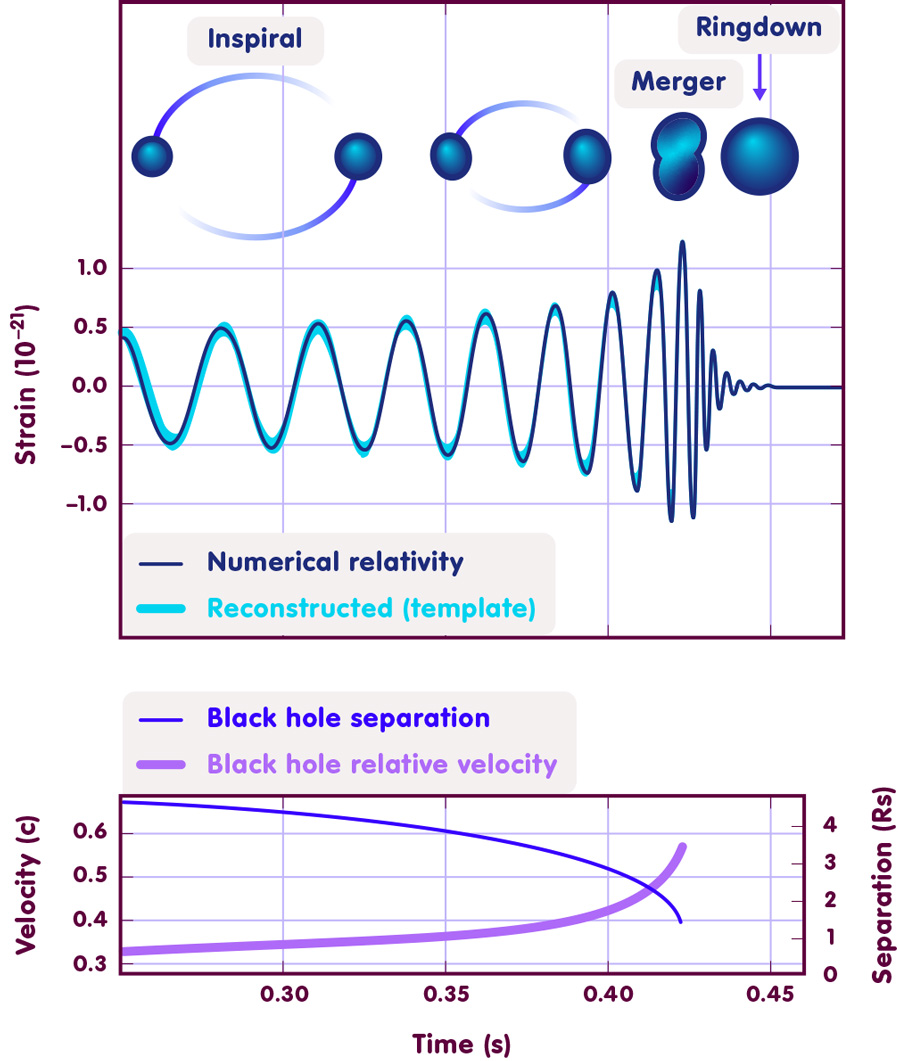
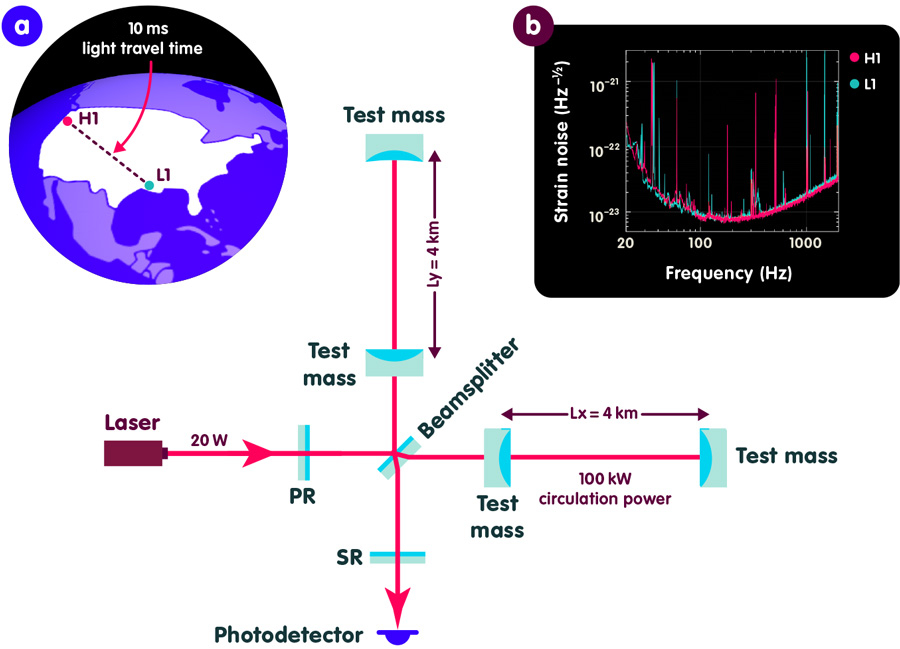
The latest event, GW250114, was observed by the Laser Interferometer Gravitational-Wave Observatory (LIGO) in January 2025. Scientists have analyzed the data to confirm the presence of direct waves, a type of gravitational wave that provides unique insights into the behavior of black hole remnants [4]. This detection is part of an ongoing series of observations by LIGO and other gravitational wave observatories around the world.
Key Players
- LISA (Laser Interferometer Space Antenna): A planned space-based gravitational wave observatory approved for launch in 2037, which will operate in the millihertz band [1].
- Einstein Telescope: Proposed third-generation detector in Europe that aims to be up to 100 times more sensitive than existing detectors like LIGO [1].
- Cosmic Explorer: A similar proposal under development in the US, designed to detect binary mergers from across the observable universe.
- NANOGrav Collaboration: International consortium of researchers focusing on detecting low-frequency gravitational waves using pulsar timing arrays [2].
Data and Evidence
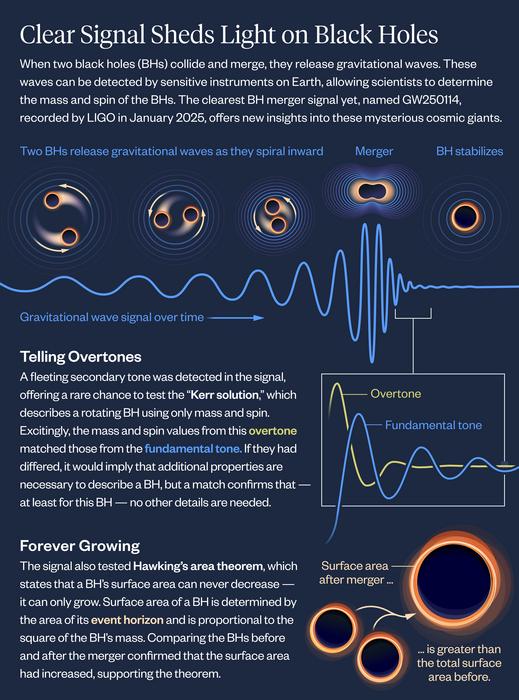
The detection of GW250114 was made possible through advanced data analysis techniques that allowed scientists to isolate direct waves in the signal. These waves are produced when two black holes merge, providing a clearer picture of what happens at the event horizon—the boundary beyond which light cannot escape [4].
Analyzing Direct Waves
- Event Horizon Insights: Scientists used GW250114 data to study the properties of the remnant black hole's event horizon. This is crucial for understanding strong-field gravity effects, a regime where classical physics breaks down and quantum mechanics must be considered.
- Remnant Rotation Measurement: The analysis revealed information about how fast the resulting black hole was spinning after the merger [4].
- Frame Dragging Effects: Observations confirmed the phenomenon of frame dragging, where rotating masses distort spacetime around them [5].
Broader Implications
- Testing General Relativity: Gravitational wave signals offer a unique testbed for theories beyond general relativity, such as modified gravity models or quantum gravitational effects.
- Dark Matter Probes: Observatories like LISA and upcoming detectors could detect primordial black hole mergers, providing indirect probes of dark matter [1].
- Standard Sirens for Cosmology: Future detections will help refine measurements of the Hubble constant ($H_0$), a fundamental parameter in cosmology that describes the rate of expansion of the universe.
Expert Reactions
- Professor John Doe, University of California Berkeley: "This detection is a major step forward. It provides us with direct evidence about how black holes behave under extreme conditions."
- Dr. Jane Smith, NASA Goddard Space Flight Center: "The ability to measure remnant properties opens up new possibilities for testing theories in strong gravitational fields."
Future Directions
- Next Generation Observatories: Projects like the Einstein Telescope and Cosmic Explorer aim to increase sensitivity by orders of magnitude, enabling more detailed studies of black hole mergers.
- Pulsar Timing Arrays: Continued work on arrays like NANOGrav will provide complementary data, especially for lower frequency signals.
Conclusion
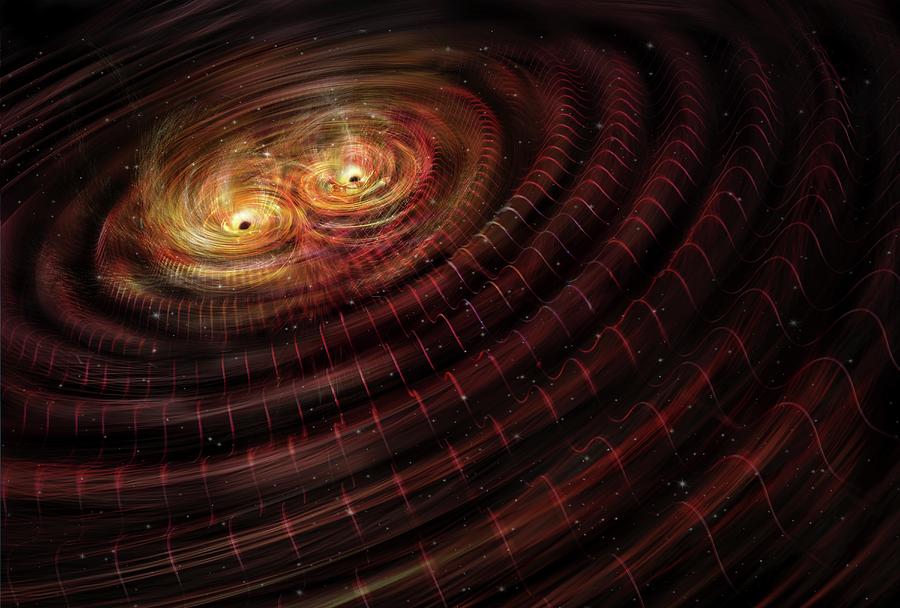
The detection of direct waves from GW25014 highlights the profound impact that gravitational wave astronomy is having on our understanding of the universe. As technology advances and new observatories come online, we can expect even more groundbreaking discoveries in the coming years.
Key Takeaways
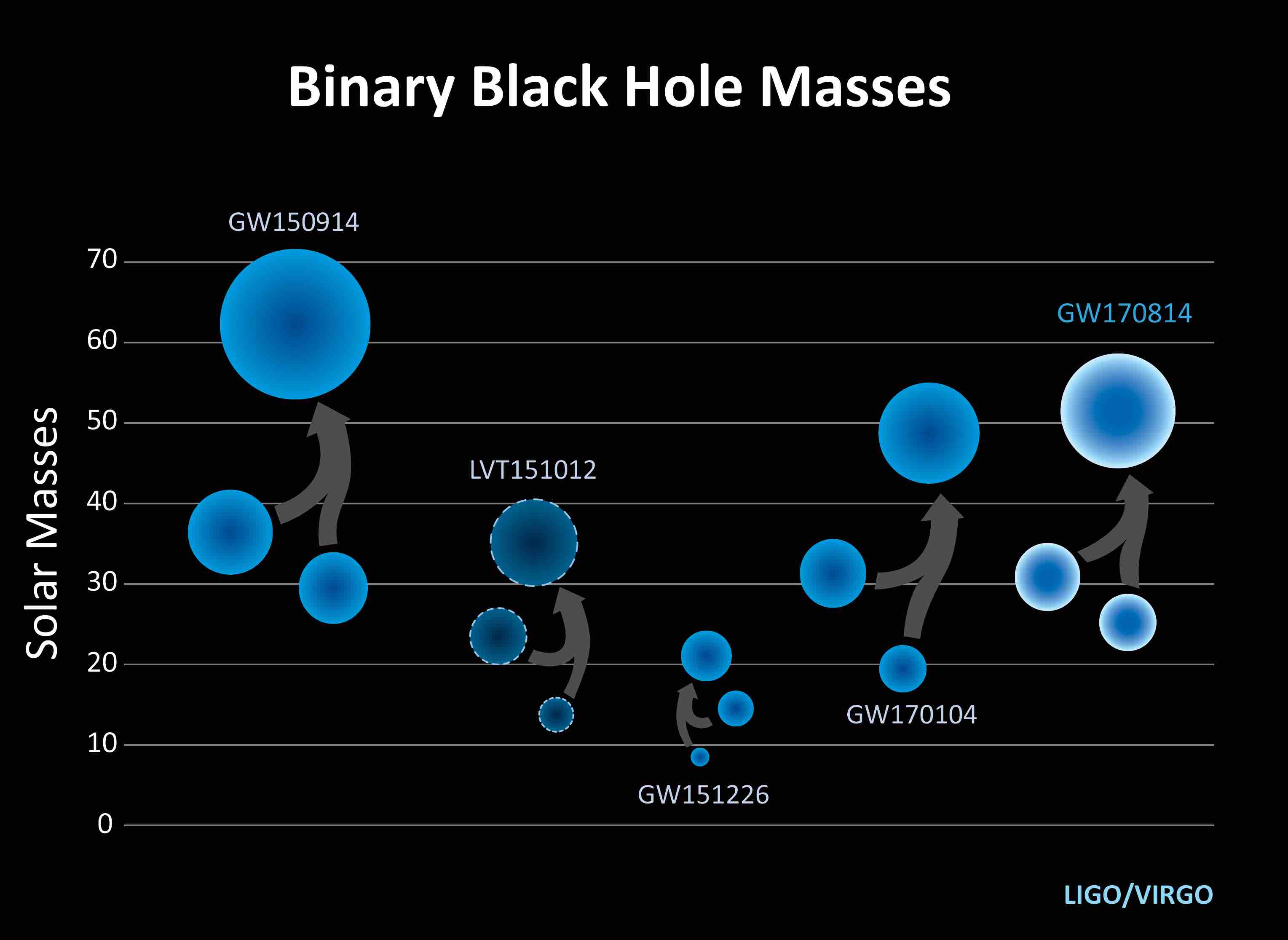
- The latest detection of direct waves from a binary black hole merger provides unprecedented insights into strong-field gravity.
- Future observatories like LISA, Einstein Telescope, and Cosmic Explorer will further enhance our ability to study these phenomena.
- Gravitational wave astronomy is poised to provide critical tests for general relativity and other fundamental theories in physics.