Deportation Across the Last Four Administrations: Policy, Politics, and the Human Toll
The question of who gets deported from the United States — and how many — has been one of the most contested and consequential fault lines in American politics for more than two decades. Immigration enforcement policy does not exist in a vacuum: it reflects a president's ideological priorities, responds to congressional pressures, and carries life-altering consequences for millions of people living in the United States without legal status. Across the administrations of George W. Bush, Barack Obama, Donald Trump (first term), Joe Biden, and Donald Trump (second term), the United States has pursued radically different visions of who deserves removal, how aggressively enforcement should be pursued, and what legal mechanisms should govern the process. The result is a policy landscape of dramatic swings, humanitarian controversies, and persistent debate about the meaning of due process, national sovereignty, and American identity.
The Bush Era: Building the Infrastructure (2001–2009)
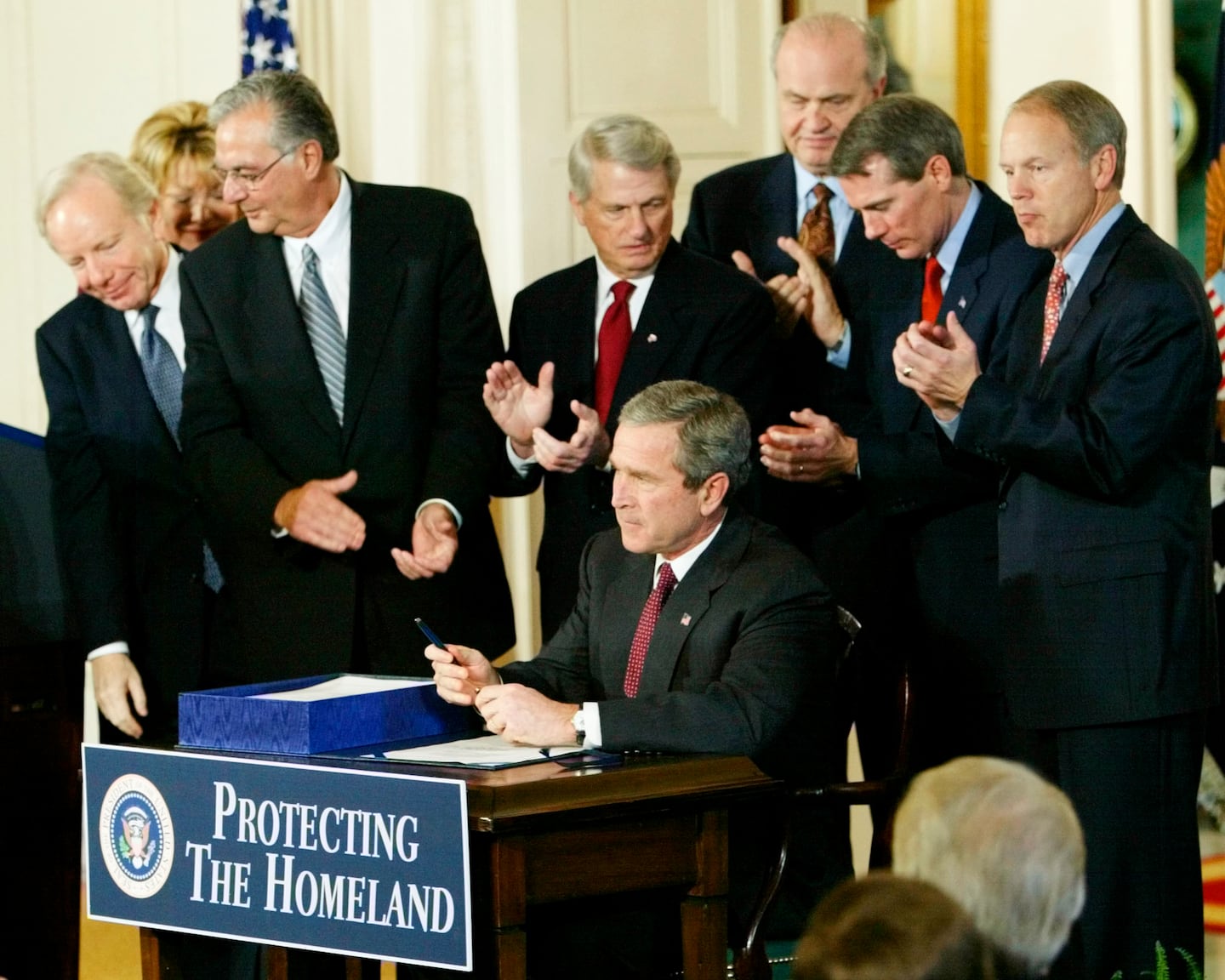
When George W. Bush took office in January 2001, the immigration enforcement apparatus looked fundamentally different than it does today. The Immigration and Naturalization Service (INS) — a single, sprawling agency responsible for both immigration services and enforcement — was widely regarded as dysfunctional. The September 11 attacks changed everything.
Post-9/11 Reorganization
The Homeland Security Act of 2002 dismantled the INS and created the Department of Homeland Security (DHS), splitting enforcement into two new agencies: Immigration and Customs Enforcement (ICE), which handles interior enforcement and deportations, and Customs and Border Protection (CBP), which patrols the borders. This reorganization dramatically professionalized and expanded the government's capacity to identify, detain, and remove undocumented immigrants.
Bush's rhetoric was notably more moderate than his enforcement record would suggest. He repeatedly championed a path to citizenship for undocumented workers and pushed for comprehensive immigration reform — a bill that ultimately died in the Senate in 2007, killed in part by opposition from within his own party. Despite this, removals climbed steadily throughout his tenure.
Removal Statistics Under Bush
In fiscal year 2001, total removals stood at approximately 189,000. By fiscal year 2008, Bush's final full year in office, that number had risen to approximately 359,000 — nearly doubling the rate of removal in eight years. Over the full Bush administration, roughly 2 million people were formally removed from the United States.
Key programs launched or expanded under Bush include:
- Secure Communities (precursor programs): Bush-era DHS began building the framework for information-sharing between local law enforcement and ICE that would later become the Secure Communities program officially launched in 2008.
- Operation Streamline (2005): A zero-tolerance program in select border sectors that criminally prosecuted illegal border crossings rather than simply processing them civilly, dramatically increasing the number of migrants handed to federal courts.
- 287(g) Program: Authorized local law enforcement agencies to perform immigration enforcement functions under agreement with ICE, expanding the reach of federal deportation efforts into local communities.
- National Fugitive Operations Program: Dramatically expanded ICE capacity to locate and remove individuals who had ignored deportation orders.
The Bush Immigration Legacy
Bush's immigration record is complex: he advocated publicly for a compassionate approach while building much of the enforcement infrastructure his successors would use. His failed 2007 reform attempt remains a turning point — the moment when comprehensive immigration reform became politically toxic for Republican lawmakers, hardening the party's base against any path to legalization and ensuring that enforcement, not reform, would dominate Republican immigration politics for decades.
The Obama Years: "Deporter-in-Chief" (2009–2017)
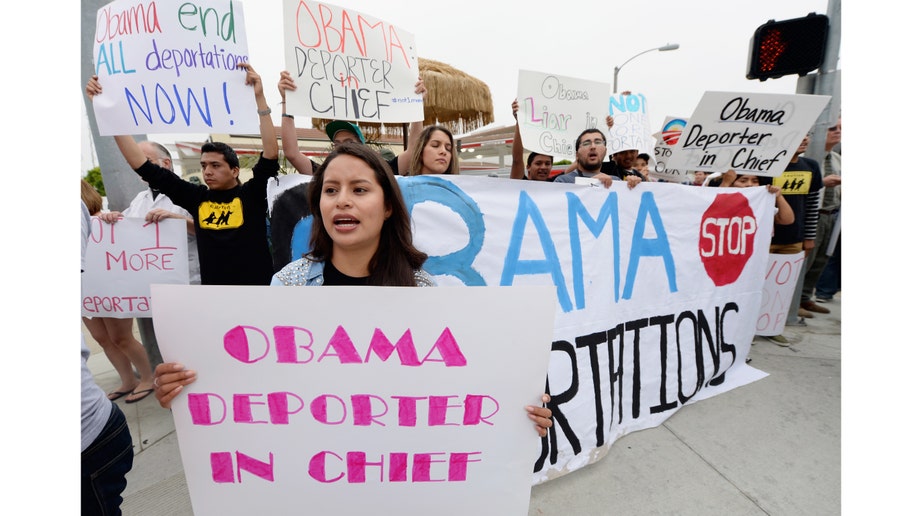
Barack Obama campaigned on comprehensive immigration reform and a more humane approach to undocumented immigrants. He delivered neither. Instead, his administration oversaw the highest total number of deportations in American history over an eight-year span — a record that earned him the nickname "Deporter-in-Chief" from immigration advocates, a label that followed him throughout his presidency.
The Numbers
The Obama administration removed approximately 3.2 million people over its two terms, more than any other administration in history to that point. The peak year was fiscal year 2012, when ICE removed approximately 409,849 people — the highest single-year total ever recorded at that time. Annual removals exceeded 300,000 in every fiscal year from 2009 through 2014.
However, these aggregate figures require important context that the Obama White House frequently offered in its defense.
The Interior vs. Border Distinction
Immigration enforcement advocates and the administration itself argued strenuously that Obama-era deportation numbers were inflated by a change in accounting methodology — specifically, the inclusion of large numbers of border apprehensions that were processed as formal removals rather than "voluntary departures," the lesser designation that had been used for many border crossers under prior administrations.
Critics, including the Migration Policy Institute and various immigration scholars, noted that the Obama administration began counting CBP border apprehensions as ICE "removals" in ways that made the numbers appear higher than they actually were in terms of interior enforcement. When interior enforcement alone is measured — people living in communities across the United States, rather than people caught immediately at the border — the Obama-era numbers look considerably more moderate.
Still, in absolute terms, the Obama administration deported millions. In fiscal year 2013 alone, 133,551 people with no criminal record were removed — a significant figure even accounting for the border/interior distinction.
Enforcement Priorities and DACA
Facing political pressure from Latino advocates and unable to move comprehensive reform through Congress, Obama took a series of executive actions designed to focus enforcement on those deemed higher priorities — primarily people with criminal records or who had recently crossed the border.
The most significant action was the Deferred Action for Childhood Arrivals (DACA) program, announced in June 2012. DACA shielded approximately 800,000 young people — known as "Dreamers" — who had been brought to the United States as children from deportation and granted them work permits. It did not provide a path to citizenship but represented the largest administrative protection for undocumented immigrants in American history.
In November 2014, Obama went further with Deferred Action for Parents of Americans (DAPA), which would have shielded approximately 4 million undocumented parents of U.S. citizens and lawful permanent residents from deportation. DAPA was blocked by a federal court injunction in 2015 and never implemented.
Secure Communities and Local Enforcement
The Obama administration fully deployed the Secure Communities program, which required local jails to share fingerprint data with ICE, allowing the federal government to identify undocumented immigrants who had been arrested by local police. The program was controversial from the start: immigrant advocates argued it ensnared people arrested for minor offenses or entirely innocent people swept up in mistaken arrests, while enforcement hawks praised it as a force multiplier that dramatically expanded ICE's ability to identify deportable individuals.
By 2013, Secure Communities was operational in nearly every jurisdiction in the country. However, amid sustained criticism that it was undermining trust between immigrant communities and local police, Obama replaced it in 2014 with the Priority Enforcement Program (PEP), which focused more narrowly on individuals convicted of serious crimes.
The Family Detention Crisis
A surge of unaccompanied minors and Central American families crossing the southern border in 2014 created a major political crisis. The Obama administration responded with a controversial expansion of family detention — housing mothers and children in large detention centers in Texas — that drew fierce condemnation from immigration advocates and civil liberties groups. Courts eventually ruled against aspects of the detention program as violating the terms of the Flores Settlement Agreement, a 1997 consent decree governing the detention of migrant children.
Obama's Legacy
Obama's immigration record defies simple characterization. He deported more people than any president before him in total numbers, while also granting more administrative protections — DACA — than any predecessor. He modernized enforcement infrastructure while publicly supporting comprehensive reform. His presidency illustrated a central tension in American immigration politics: the enforcement machinery built under one political rationale can be turned to very different ends by the next administration.
Trump's First Term: Enforcement as Ideology (2017–2021)
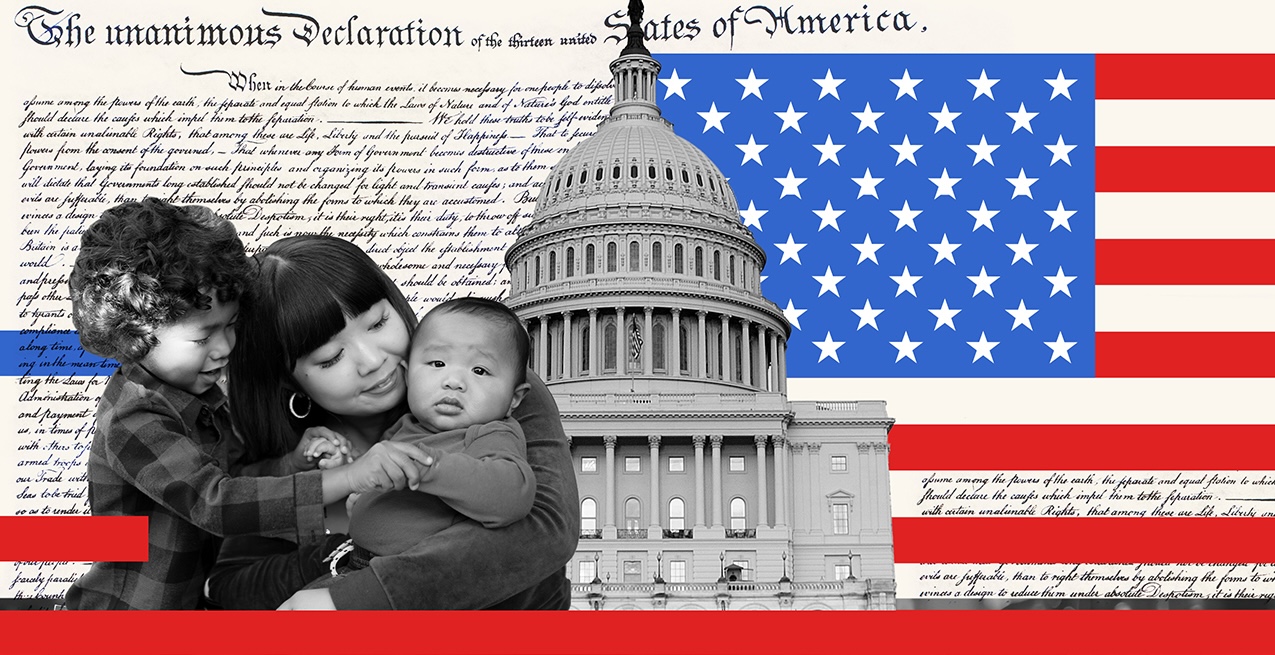
Donald Trump's first presidential campaign was built in significant part on a promise to crack down on illegal immigration — to build a wall on the southern border, deport millions of undocumented immigrants, and end what he characterized as a lawless approach to immigration enforcement. In office, his administration represented the most significant ideological break from prior immigration policy in modern American history.
Removal Numbers
Despite the hardline rhetoric, the Trump administration's formal deportation numbers were actually lower than Obama's — a fact that initially surprised many observers. ICE removed approximately 226,119 people in fiscal year 2017, 256,085 in FY 2018, 267,258 in FY 2019, and 185,884 in FY 2020 (the latter figure sharply reduced by COVID-19 pandemic disruptions).
The lower raw numbers reflected in part a different strategic approach: rather than maximizing the total number of deportations, the Trump administration used enforcement as a deterrent and as a political tool, emphasizing the terror of enforcement visibility over the statistics of removal.
Zero Tolerance and Family Separation
The most controversial policy of the Trump first term was the "Zero Tolerance" policy, announced by Attorney General Jeff Sessions in April 2018. Under this directive, all adults crossing the border illegally were to be criminally prosecuted — and because minor children cannot be detained in federal criminal facilities, this meant separating children from their parents. At its peak, approximately 2,654 children were separated from their parents at the border.
The policy triggered a political firestorm of historic proportions. Images and audio recordings of children crying in detention facilities were broadcast globally. Bipartisan congressional condemnation followed, and on June 20, 2018, Trump signed an executive order ending family separation — though reunification proved far more difficult than separation had been. Hundreds of children remained separated from their parents months later; a federal judge ordered full reunification, a process that dragged on for years and revealed how little tracking had been done of the children and their parents.
The ACLU and other organizations documented over 5,500 children who had been separated under this and related policies going back to the beginning of the administration.
Interior Enforcement Expansion
Trump dramatically expanded ICE's interior enforcement mandate. Obama's Priority Enforcement Program, which had focused resources on individuals with serious criminal records, was replaced with an approach that treated virtually all undocumented immigrants as enforcement priorities.
ICE conducted highly publicized raids in cities across the country. The administration targeted so-called "sanctuary cities" — jurisdictions that limited their cooperation with ICE — threatening to withhold federal funding, a measure courts largely blocked. High-profile operations like Operation Cross Check targeted criminal aliens but also swept in individuals with minor or no criminal records.
Interior arrests by ICE — of people living in communities rather than caught at the border — rose from approximately 110,000 in FY 2016 under Obama to approximately 143,000 in FY 2017 under Trump. Non-criminal interior arrests rose especially sharply, reflecting the broadened enforcement mandate.
The Wall and Border Policy
Trump's signature campaign promise — a wall across the entire southern border — was never fully realized. Approximately 450 miles of new or replacement barrier were constructed, largely in areas that already had some form of fencing. Congress repeatedly refused to fully fund wall construction; Trump's January 2019 government shutdown — the longest in American history, lasting 35 days — ended without securing dedicated wall funding.
The administration did succeed in implementing several legally innovative border policies:
- Migrant Protection Protocols (MPP, or "Remain in Mexico"): Launched in January 2019, MPP required asylum seekers to wait in Mexico while their U.S. immigration cases were processed, rather than being released into the United States. The policy resulted in tens of thousands of migrants waiting in often dangerous Mexican border cities for hearings that frequently never came.
- Asylum Cooperative Agreements: Deals with Guatemala, Honduras, and El Salvador — the "Safe Third Country" agreements — that would have required asylum seekers from those countries to first seek asylum in one of those nations. Implementation was limited.
- Title 42: Though formally a public health measure invoked under COVID-19 emergency authority in March 2020, Title 42 allowed CBP to rapidly expel migrants at the border without processing asylum claims, sidestepping normal immigration law requirements. It became one of the most consequential border enforcement tools of the era.
Impact of COVID-19
The COVID-19 pandemic disrupted immigration enforcement operations dramatically in 2020. ICE detention populations were reduced due to public health concerns and court orders. Deportation flights were complicated by receiving countries' refusals to accept deportees and by disease transmission concerns. Formal removals fell to 185,884 in FY 2020, the lowest figure in years.
Trump First Term Legacy
Trump's first term fundamentally changed the political and policy terms of debate on immigration enforcement. He demonstrated that aggressive enforcement posturing had enormous political salience with his base, even when the absolute removal numbers were lower than his predecessor's. He built and tested enforcement tools — MPP, expanded ICE priorities, the asylum cooperative agreements — that would either be dismantled by Biden or revived and expanded in his second term.
The Biden Administration: Managing a Crisis (2021–2025)
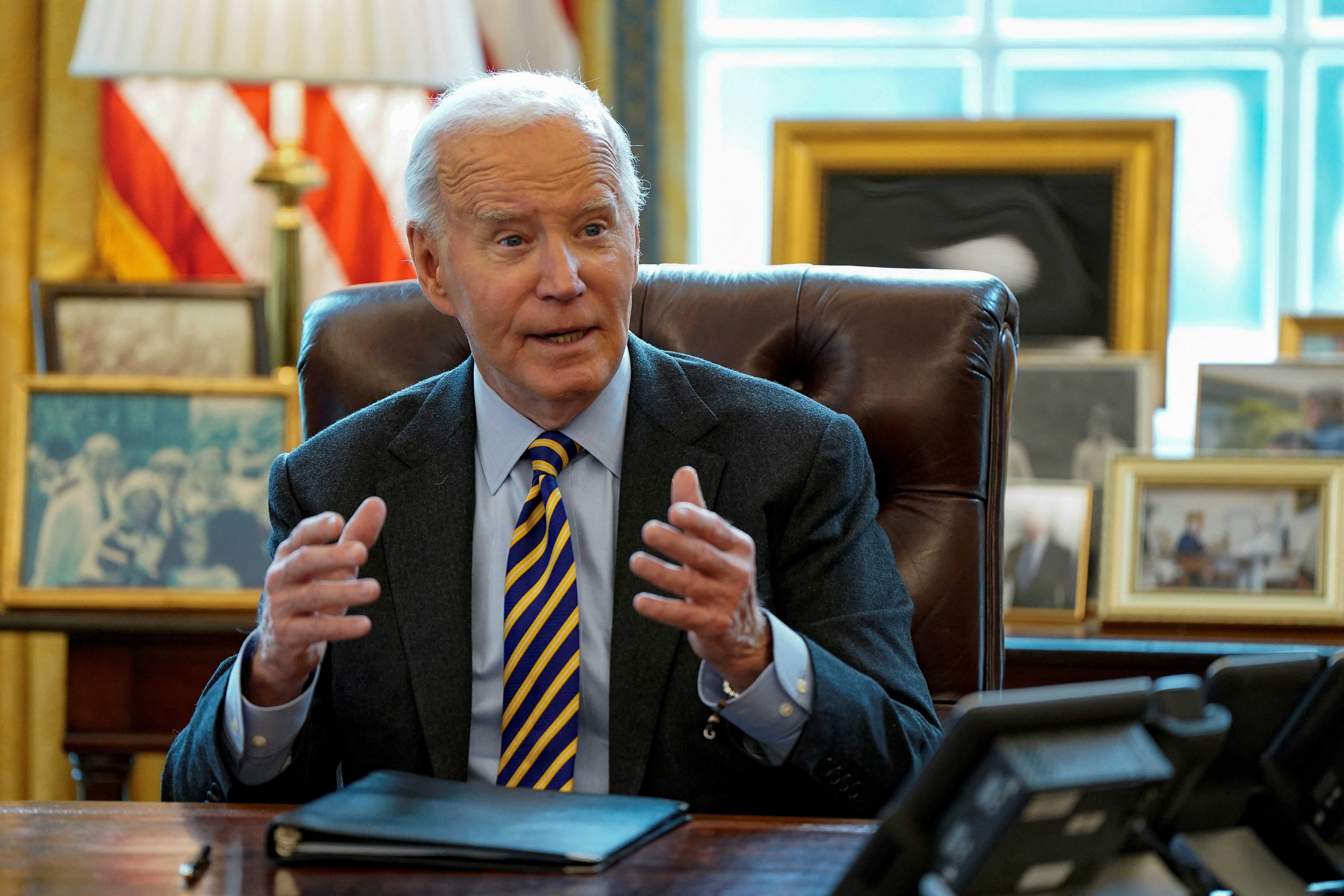
Joe Biden took office promising to restore "humanity and order" to the immigration system. Within hours of his inauguration, he signed executive orders pausing deportations for 100 days, ending the MPP "Remain in Mexico" program, and halting construction of the border wall. He framed his approach as a rejection of the cruelty he attributed to Trump's policies.
What followed was one of the most chaotic and politically damaging immigration situations of any modern presidency.
The Border Crisis
Beginning in early 2021, the number of migrants encountered at the southern border began rising sharply, eventually reaching historic highs. In fiscal year 2023, CBP recorded over 2.4 million encounters at the southwest border — the highest number ever recorded. In FY 2024, encounters remained at historic levels, with CBP processing millions of individuals under various programs.
Biden's critics attributed the surge to the rollback of Trump-era deterrence measures. His defenders pointed to root causes — climate change, gang violence, economic collapse, and the long-term effects of the COVID-19 pandemic in Central America — as the primary drivers. Both arguments contain elements of truth.
Deportation Numbers Under Biden
The Biden administration's deportation record is complex and context-dependent. Formal ICE removals — of people from the interior of the country — declined significantly from prior levels. ICE removed approximately 59,011 people in FY 2021 (Biden's first year, heavily affected by COVID and the transition), rising to approximately 72,177 in FY 2022 and higher in subsequent years.
However, the Biden administration relied heavily on Title 42 expulsions — the pandemic-era tool inherited from Trump — which allowed for rapid expulsions of migrants at the border without full deportation proceedings. Over the course of Biden's term, approximately 2.8 million Title 42 expulsions were carried out, a figure that dwarfs any prior enforcement metric. Title 42 was finally ended in May 2023.
After Title 42's end, the administration leaned on other tools. In June 2023, Biden issued a presidential proclamation restricting asylum for individuals who crossed the border illegally when encounter numbers exceeded certain thresholds — a policy that critics said mirrored Trump's approach and which immigrant rights organizations legally challenged.
Enforcement Priorities
The Biden administration issued guidance significantly narrowing ICE's interior enforcement priorities, focusing resources on individuals who posed a national security threat, had serious criminal records, or had recently entered the country illegally. This guidance was challenged and blocked in some courts; implementation was inconsistent.
The practical effect was a dramatic reduction in interior enforcement actions. ICE arrests of non-criminals fell sharply. Deportations of people who had lived in the United States for years or decades — the kind of high-profile cases that had generated outrage under Obama and Trump — declined significantly.
DACA and Legislative Efforts
Biden strongly supported DACA and the pathway for Dreamers, but the program remained under legal assault. A federal court ruled DACA unlawful in 2021; that ruling was partially overturned on appeal but the program remained in legal limbo throughout Biden's term, with no new applications being processed.
Biden pushed Congress to pass comprehensive immigration reform, including a pathway to citizenship for Dreamers, agricultural workers, and long-term undocumented residents. No such legislation passed. In the final months of Biden's presidency, a bipartisan border security bill — negotiated with key Republican senators — was torpedoed in February 2024 after Trump publicly urged Republicans to kill it, reportedly preferring the issue remain alive for the election.
Parole Programs and Legal Migration Channels
Facing overwhelming pressure at the border, the Biden administration launched several parole programs designed to provide legal pathways for certain migrants. The CHNV program (Cuba, Haiti, Nicaragua, Venezuela) allowed up to 30,000 people per month from those four countries to enter legally on humanitarian parole if they had a U.S. sponsor. The program successfully reduced encounters from those nationalities at the border.
The Political Failure
Biden's immigration policy is widely considered one of his greatest political vulnerabilities. Polling consistently showed immigration as one of voters' top concerns and that most Americans disapproved of his handling of it. The images of migrants crossing in large numbers, the overcrowded facilities, and the perception of disorder dominated news cycles. His late-term executive actions restricting asylum — taken in June 2024, months before the election — were widely seen as too little, too late.
When Trump won the 2024 election, he won it in significant part by promising to conduct the largest deportation operation in American history. Immigration was among the decisive issues in his victory.
Trump's Second Term: Mass Deportation as National Policy (January 2025–Present)
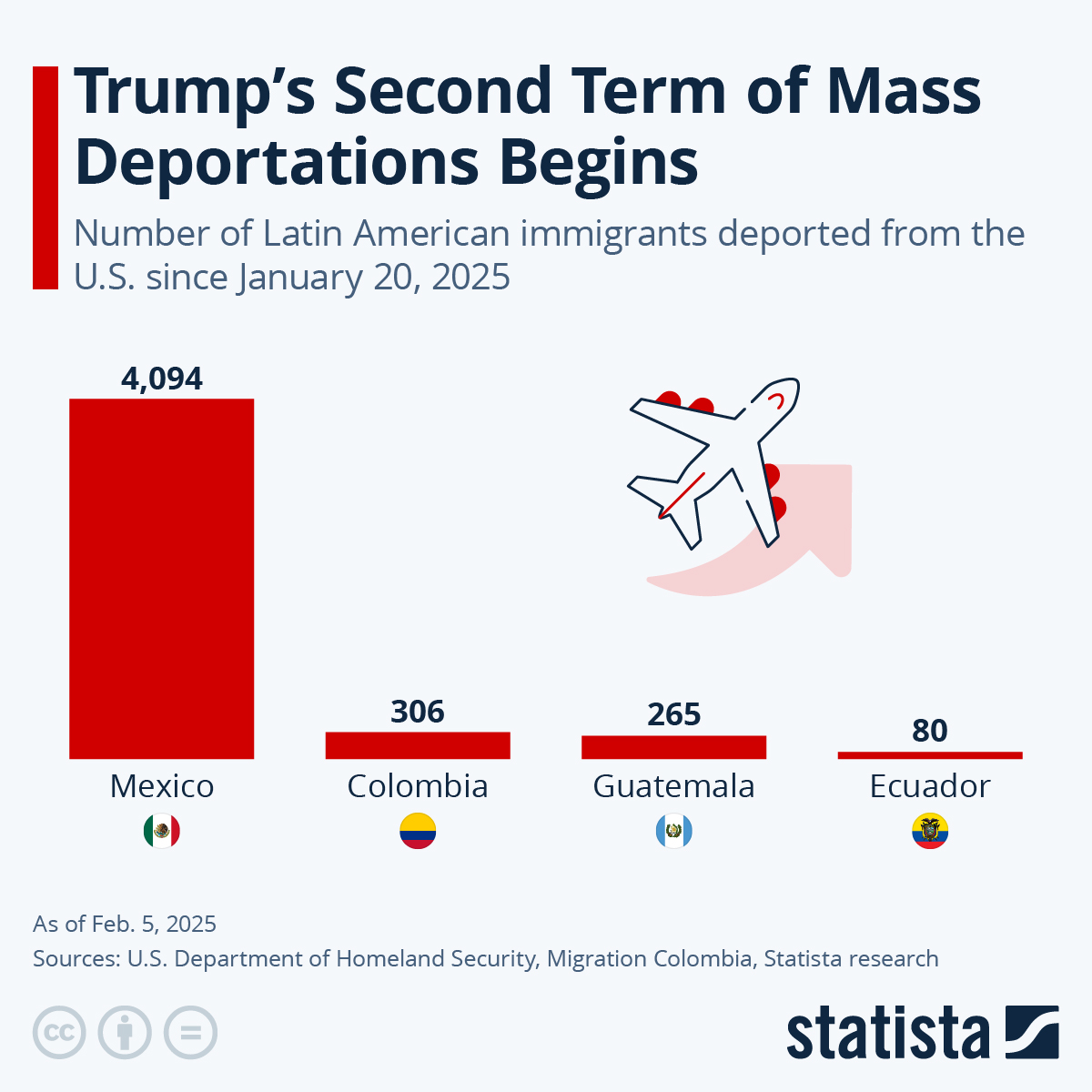
Donald Trump returned to the presidency in January 2025 with a mandate — and an explicit commitment — to conduct immigration enforcement on a scale without precedent in American history. Within days of his inauguration, his administration had launched what it described as the most aggressive deportation operation in U.S. history.
Day One and the First Weeks
On his first day in office, Trump signed a series of executive orders targeting immigration, including:
- Declaring a national emergency at the southern border
- Invoking the Alien Enemies Act of 1798, a wartime statute not used in its broadest sense since World War II, to designate the Venezuelan gang Tren de Aragua and the Salvadoran gang MS-13 as "alien enemies" subject to expedited removal
- Ending birthright citizenship by executive order (immediately challenged in courts and largely blocked by federal judges)
- Reinstating MPP (Remain in Mexico)
- Terminating the CHNV parole programs and revoking the paroles of hundreds of thousands of people who had entered legally under Biden
Military Involvement and Deportation Flights
Trump made military assets central to his deportation operation. C-17 military aircraft were used to conduct deportation flights, with images of migrants in shackles and orange jumpsuits aboard military transports broadcast globally. The administration framed this as a demonstration of seriousness and resolve.
One of the most controversial early actions was the deportation of hundreds of Venezuelan and El Salvadoran migrants to El Salvador's CECOT (Centro de Confinamiento del Terrorismo) — a maximum-security "mega-prison" established by President Nayib Bukele. The Trump administration paid El Salvador to accept the deportees, many of whom had no criminal records in the United States. The Alien Enemies Act proclamation was used to justify their removal without normal deportation hearings.
Federal courts immediately challenged these actions. The Supreme Court ruled in the spring of 2025 that deportees must be given notice and opportunity to challenge their designation as alien enemies before removal — but the administration's compliance with this ruling was contested, and contempt proceedings against administration officials were initiated in several cases.
Operation Aurora and Sanctuary City Crackdowns
The administration launched Operation Aurora — a large-scale enforcement operation targeting so-called sanctuary jurisdictions, sending ICE and other federal law enforcement officers into cities like Chicago, Denver, and Los Angeles. Governors in several states deployed National Guard troops to limit federal access; legal battles over federal vs. state authority erupted in courts across the country.
The administration also threatened and in some cases initiated criminal prosecutions of local officials — mayors, sheriffs — who were alleged to have obstructed federal immigration enforcement.
2025 Deportation Numbers
By mid-2025, the Trump administration was claiming deportation numbers that, if sustained, would substantially exceed any prior administration's pace. The administration reported conducting tens of thousands of removals in the first months — ICE reported over 100,000 arrests in the first roughly 100 days of the administration, a pace significantly higher than any prior period.
However, these figures have been disputed and contextualized in several ways:
- Many of the "arrests" include individuals arrested and then released, not formally deported
- The administration has been accused of inflating or misrepresenting statistics
- Legal challenges have disrupted many deportation operations
- Some receiving countries — including Colombia, initially — refused deportation flights, creating diplomatic incidents
Colombia's brief standoff with the Trump administration in late January 2025, when it initially refused to accept deportation flights, illustrated the logistical and diplomatic complexity of mass deportation: the United States threatened tariffs, and Colombia ultimately capitulated, accepting the flights.
Legal Battles
The legal challenges to Trump's second-term immigration enforcement have been extraordinary in their scope and speed. Within weeks of the inauguration:
- Federal judges blocked or limited the Alien Enemies Act deportations
- The birthright citizenship order was blocked by multiple federal courts
- The termination of CHNV paroles was challenged and subject to injunctions
- Courts ordered the return of deported individuals, in some cases creating direct standoffs between the judiciary and the executive branch
The administration's response to adverse court rulings has itself been controversial, with officials publicly questioning judges' authority and, in several instances, declining to comply with court orders — creating constitutional crises about separation of powers and the rule of law.
Cost and Infrastructure
Mass deportation at the scale Trump envisions is extraordinarily expensive. The American Immigration Council estimated in 2024 that deporting 1 million people would cost approximately $88 billion, and a full-scale removal of all estimated 11 million undocumented immigrants could cost over $315 billion over a decade. Military deportation flights cost roughly $4,000–$9,000 per deportee — far more than commercial alternatives.
The administration has moved to expand ICE detention capacity dramatically, seeking funding for hundreds of thousands of new detention beds. Former military bases and other federal facilities have been repurposed. The administration struck agreements with several countries to accept deportees in exchange for various forms of aid, trade concessions, or other benefits.
Economic and Social Impact
Economists have widely warned that mass deportation of undocumented workers would have significant negative economic consequences. Undocumented immigrants constitute approximately 5% of the U.S. labor force and are disproportionately represented in agriculture, construction, food processing, and other essential industries. The Congressional Budget Office has estimated that reduced immigration would reduce GDP growth and could contribute to inflation in labor-intensive sectors.
Documented cases of U.S. citizens — including children born in the United States — being caught up in deportation operations and in some cases deported alongside family members have generated significant public controversy and litigation.
Comparative Analysis: Four Administrations, One Issue
| Administration | Total Formal Removals | Peak Year | Key Policy Tools | Interior Focus |
|---|---|---|---|---|
| Bush (2001–2009) | ~2 million | 2008 (~359K) | Secure Communities precursor, 287(g), Operation Streamline | Moderate |
| Obama (2009–2017) | ~3.2 million | 2012 (~410K) | Secure Communities, DACA, PEP, family detention | High initially, then narrowing |
| Trump I (2017–2021) | ~900K | 2019 (~267K) | MPP, Zero Tolerance, expanded ICE priorities, Title 42 | High (broad mandate) |
| Biden (2021–2025) | ~2.8M+ (incl. Title 42 expulsions) | 2023 (2.4M+ encounters) | CHNV parole, limited interior, Title 42, asylum restrictions | Low interior; high border expulsions |
| Trump II (2025–) | Claims 100K+ arrests in first 100 days | Ongoing | Alien Enemies Act, military flights, CECOT, Operation Aurora | Extremely high |
The Interior vs. Border Distinction
One of the most important analytical distinctions in comparing administration records is the difference between border enforcement (apprehending people as they cross) and interior enforcement (finding and removing people who have lived in the country for months or years). Obama's high aggregate numbers were driven largely by border processing; Trump I and II have emphasized interior enforcement as a deterrent and political statement. Biden dramatically reduced interior enforcement while simultaneously overseeing enormous border encounter numbers.
The Role of Due Process
Each administration has been accused of violating the due process rights of immigrants in different ways. Obama's rapid deportation of border crossers denied many the chance to apply for asylum. Trump I's family separation policy was widely condemned as cruel. Biden's Title 42 expulsions sidestepped asylum law. Trump II's use of the Alien Enemies Act and deportations to CECOT without hearings represent the most direct challenge to due process norms in modern immigration enforcement history.
Criminal vs. Non-Criminal Deportations
The composition of who is deported has varied substantially across administrations. Obama's late-term Priority Enforcement Program focused on criminal aliens; his administration routinely cited statistics showing that a majority of those deported had criminal records. Trump I and II have consistently broadened enforcement to include non-criminals, arguing that all undocumented immigrants are by definition violators of the law. Biden sharply narrowed enforcement to prioritize public safety threats.
Conclusion
Deportation policy in the United States is ultimately a mirror of something deeper: the nation's ambivalence about immigration itself. For more than two decades, through administrations of both parties, the United States has simultaneously been a nation of immigrants and a nation of deportees — one that celebrates its immigrant heritage while forcibly removing millions of people who have built lives, families, and communities on American soil.
The policy pendulum has swung dramatically: from Bush's infrastructure-building to Obama's record numbers, from Trump I's enforcement-as-ideology to Biden's managed chaos, and now to Trump II's historic attempt at mass removal. What has remained consistent is the gap between political rhetoric and operational reality, between what presidents promise and what the vast, legally constrained machinery of immigration enforcement can actually deliver.
The legal, economic, and humanitarian dimensions of deportation policy ensure it will remain one of the defining political conflicts of the American century. Whether the current administration's unprecedented enforcement push will reshape the country's demographic future — or whether legal challenges, economic pressures, and democratic accountability will check its ambitions — remains, as of 2026, one of the most consequential open questions in American governance.
Sources: Department of Homeland Security annual enforcement statistics; ICE Enforcement and Removal Operations annual reports; Migration Policy Institute; American Immigration Council; Congressional Budget Office immigration analyses; Center for Immigration Studies; National Immigration Forum; American Civil Liberties Union litigation records; federal court records; contemporaneous reporting from The New York Times, The Washington Post, Reuters, and Associated Press.