The Engelbert Era Ends: Power, Politics, and the Transformation of the WNBA
When Cathy Engelbert walks out of the WNBA commissioner's office for the last time in December 2026, she will close a chapter that future sports historians will likely regard as the most turbulent, consequential, and paradoxical in the league's three-decade existence. The announcement of her retirement — effective at the conclusion of the 2026 season — arrives at a moment of supreme irony: the league she shepherded through a pandemic, a cultural reckoning, a historic viewership explosion, and a bruising labor war is now, by virtually every measurable metric, more valuable, more watched, and more politically charged than it has ever been. The fact that she leaves at the peak of that ascent, rather than at its nadir, complicates the simple retirement narrative and demands something more rigorous than a valedictory summary.
To understand what Engelbert's departure actually means — for women's professional basketball, for the governance of professional sports in America, and for the broader political economy of gender, labor, and entertainment — one must trace the full arc of her tenure against the long, difficult, and frequently underappreciated history of the institution she led.
Before Engelbert: The WNBA's Long Struggle for Legitimacy
The Women's National Basketball Association was founded in 1996 as a subsidiary venture of the NBA, an organization that was itself reaching the apex of the Michael Jordan era. The timing was not accidental. The 1996 U.S. Olympic women's basketball team — a supergroup that included Sheryl Swoopes, Lisa Leslie, and Dawn Staley — had captured the national imagination, and David Stern, the NBA's visionary and imperious commissioner, recognized a market opportunity. The WNBA launched the following summer, with franchises initially owned by the NBA's existing ownership groups, playing summer schedules that would not conflict with NBA games.
This origin story carries enormous explanatory power for everything that followed. The WNBA was, from its inception, structurally dependent on the NBA in ways that would simultaneously sustain and constrain it. NBA arenas, NBA marketing infrastructure, NBA broadcast relationships, and NBA capital kept the league alive during years when attendance was modest and revenues were insufficient to sustain independence. But those same dependencies created what economists call a "principal-agent problem" of unusual complexity: the WNBA was expected to generate revenue and cultural value for its parent while simultaneously advocating for the interests of its players — interests that were frequently in tension with the NBA's ownership priorities.
Val Ackerman, the WNBA's founding commissioner (1997–2005), was a lawyer who had worked as an NBA executive and understood this structural reality intimately. Her era established the league's basic governance architecture and saw the emergence of its first generation of superstars. But it was also marked by franchises folding, relocating, and struggling to find sustainable business models in markets where women's professional sports had no established audience.
Donna Orender (2005–2010) and Laurel Richie (2011–2015) each brought different approaches — Orender with a background in the PGA Tour and an emphasis on marketing; Richie with corporate strategy credentials and a focus on brand development. Neither was able to fundamentally alter the league's economic trajectory. By the mid-2010s, the WNBA was still losing money, still dependent on NBA subsidies, and still struggling to be taken seriously as a major professional sports league.
Lisa Borders (2016–2018) had the shortest tenure, departing after just two seasons to lead Time's Up, the organization founded in response to the #MeToo movement. Her exit was characterized publicly as opportunity rather than failure, but her brief tenure illustrated the difficulty of the commissioner's role in an era of rapid social and cultural change.
Into this context stepped Cathy Engelbert in 2019, and the contrast in background was immediately remarkable.
An Unlikely Commissioner: The Deloitte CEO Who Ran Women's Basketball
Engelbert arrived at the WNBA not from within sports, but from the summit of professional services. She had been the CEO of Deloitte US — the first woman to lead one of the Big Four accounting firms — where she managed a partnership of roughly 112,000 employees and was known for a leadership philosophy that combined data-driven decision-making with an unusual degree of direct employee engagement. She had no prior professional sports experience.
This background shaped her approach to the commissioner's role in ways that were immediately visible and sometimes jarring to those accustomed to the sports world's more intuitive, relationship-driven culture. Engelbert brought Deloitte's consulting rigor to every question: What does the data say about fan demographics? What are the revenue models that scale? Where are the efficiency gains in operations? This methodology produced real results — the league's revenues grew substantially during her tenure — but it also generated friction with players and advocates who felt that quantitative frameworks were being applied to questions that were fundamentally about equity, dignity, and justice.
The structural reform most associated with Engelbert's early tenure was the reconfiguration of the WNBA's relationship with the NBA. Under her leadership, the league accelerated its transition toward a model in which individual franchises, rather than the NBA, owned their teams. This shift — sometimes described as "de-subsidization" — was philosophically important. It meant the WNBA would increasingly need to demonstrate economic viability on its own terms, attracting independent investors who believed in the league's growth trajectory rather than NBA ownership groups that had inherited franchises as appendages of their primary business.
This transition attracted a new class of owners. Former Secretary of State Hillary Clinton and tennis legend Billie Jean King joined an ownership group that purchased a new expansion franchise. Hollywood figures, technology entrepreneurs, and major institutional investors followed. The signaling effect was significant: if sophisticated capital was willing to bet on the WNBA, the risk profile of the enterprise had fundamentally changed.
Whether this transformation would have occurred without Engelbert's particular corporate pedigree is an open question. Her ability to speak the language of institutional finance — to present the WNBA as an asset class with demonstrable appreciation potential rather than a charity case requiring continued subsidy — was arguably her most consequential skill.
The Pandemic Season and the Social Justice Bubble
Any assessment of Engelbert's tenure must grapple with the extraordinary circumstances of 2020. The COVID-19 pandemic forced the WNBA to play its entire season in a single-site bubble in Bradenton, Florida — a logistical challenge that the league executed remarkably successfully on a truncated timeline. But the 2020 season's significance extended far beyond epidemiology.
The players who arrived in the Bradenton bubble were already engaged in sustained, organized advocacy around racial justice, following the police shooting of Jacob Blake in Kenosha, Wisconsin. The WNBA season became, in effect, a sustained political statement — games were played wearing shirts bearing the name of Breonna Taylor, who had been killed by Louisville police officers. The league collectively dedicated its season to the Say Her Name campaign, a campaign focused on Black women killed by police violence.
The political implications were immediate and concrete. Kelly Loeffler, then a Republican senator from Georgia and part-owner of the Atlanta Dream, publicly objected to the league's social justice activities and called on Engelbert to ban political messaging on uniforms. The players responded by openly supporting Loeffler's Democratic opponent, Raphael Warnock, wearing "Vote Warnock" shirts. Warnock ultimately won that Senate race — a victory that Democrats subsequently credited, in part, with giving them control of the Senate.
Engelbert's role in this episode was characteristically ambiguous. She did not publicly sanction Loeffler, as players demanded, nor did she actively suppress the players' political activities. She maintained a posture of institutional support for the league's social justice commitments while navigating the commercial and political consequences of having the WNBA become arguably the most politically explicit major professional sports league in American history.
The Loeffler episode illustrated a structural tension that would define Engelbert's entire tenure: the WNBA's players are among the most organized, most politically engaged, and most willing to exercise collective leverage of any professional athlete group in the country. The commissioner's role — theoretically that of a neutral arbiter between owners and players, with the league's commercial interests as the overriding priority — becomes extraordinarily difficult when the players themselves define their interests in explicitly political terms.
The Collective Bargaining Wars: Labor, Leverage, and the Question of Equity
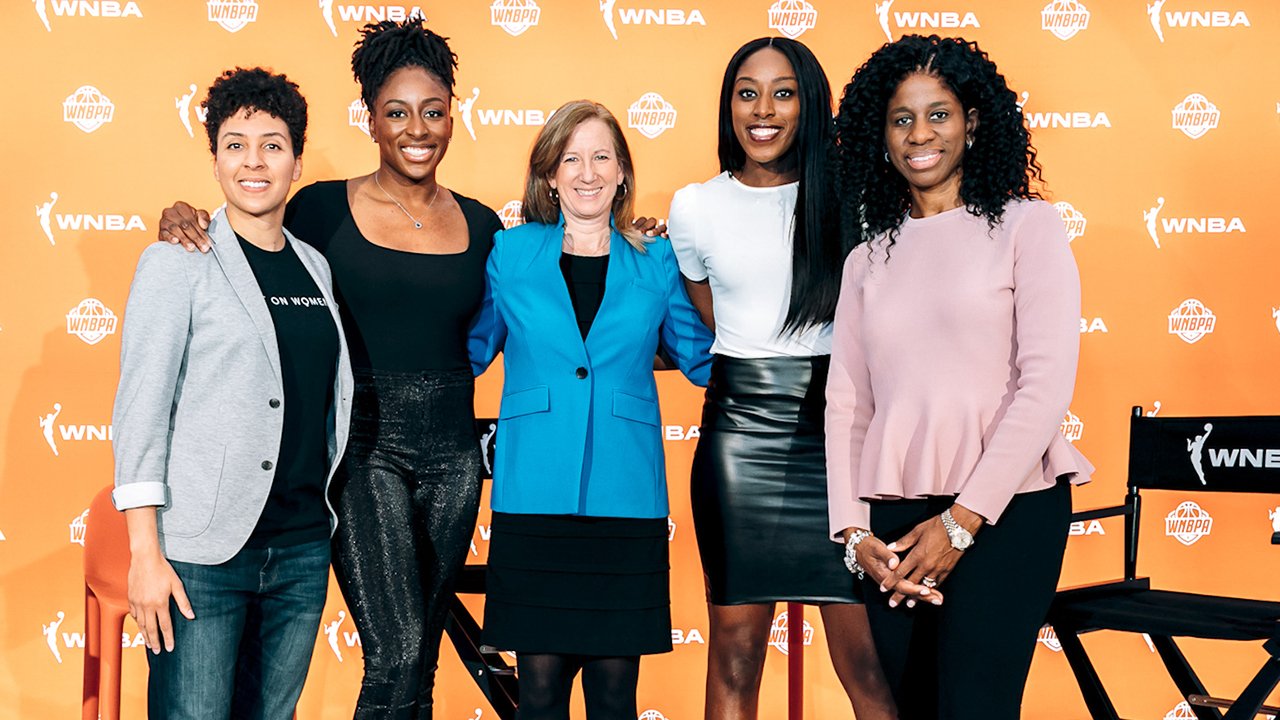
The 2020 Collective Bargaining Agreement, negotiated under Engelbert's leadership, was presented at the time as a landmark achievement. Player salaries increased substantially — the maximum salary rose from approximately $117,000 to roughly $215,000, with star players who participated in marketing programs able to earn considerably more. Enhanced benefits, including paid maternity leave, increased travel accommodations, and improved housing stipends, were also included.
But the CBA also revealed the persistent gap between the WNBA's commercial aspirations and the economic realities of women's professional basketball. Even at their new maximums, WNBA salaries remained a fraction of those in the NBA — a disparity that players pointed to constantly as evidence of systemic undervaluation. The comparison is complicated by economics: NBA revenues dwarf WNBA revenues by orders of magnitude, a gap that reflects both the historical advantages male sports have accumulated and the self-fulfilling nature of investment in visibility. But the players' point was not merely descriptive; it was prescriptive. They argued that the gap itself was a consequence of choices — about marketing investment, broadcast placement, and arena scheduling — that could be made differently.
By 2025, when negotiations began for the next CBA — the one that would define the post-Engelbert era — the landscape had changed dramatically. The Caitlin Clark phenomenon (addressed in detail below) had generated viewership numbers that made prior league records look modest. Media rights negotiations were producing figures that would have seemed fantastical five years earlier. And the players arrived at the table with a clarity of leverage they had never previously possessed.
The 2025–26 CBA negotiations were, by multiple accounts, the most contentious labor dispute in the league's history. Players, organized through the WNBA Players Association under executive director Terri Jackson, pushed for salary structures that would have players receiving a share of league revenues comparable to what NBA players receive — roughly 50 percent. The owners, represented by a league office that was simultaneously trying to attract new franchise investors at valuations predicated on current cost structures, resisted.
Engelbert found herself in the uncomfortable middle position that defines the commissioner's role in any era of labor tension: nominally representing ownership interests while also bearing responsibility for the league's public image and long-term health. Reports from the negotiating table, filtered through sources sympathetic to both sides, described an Engelbert who was more willing to consider player demands than some owners preferred, but less willing than players needed.
The final agreement — reportedly reached in early 2026 — included significant salary increases but fell short of the revenue-sharing model players had sought. Its specific terms remain, as of this writing, not fully public, which itself reflects the opacity that characterized Engelbert's approach to league business. Critics noted that in an era of unprecedented public interest in women's basketball, the commissioner's instinct toward discretion and internal management felt mismatched with a moment that demanded transparency and advocacy.
Caitlin Clark, Controversy, and the Politics of Stardom
No episode in Engelbert's tenure attracted more sustained public attention — or generated more complicated political dynamics — than the arrival of Caitlin Clark in the WNBA in 2024. Clark, the record-breaking scorer from the University of Iowa, had become a genuine cultural phenomenon during her college career, generating viewership for women's basketball that rivaled, and at times exceeded, men's college basketball. Her entry into the WNBA as the first overall draft pick of the Indiana Fever was the most anticipated moment in the league's history.
What followed was a period of extraordinary public engagement with the WNBA, accompanied by an equally extraordinary public controversy about the nature of that engagement. Clark quickly became a source of intense tension within the league. Some players — including several veterans with long WNBA careers — expressed frustration with the degree to which Clark's stardom was being positioned, both by the league's marketing apparatus and by media coverage, as the singular driver of the league's growth. There were documented incidents on the court involving Clark that received levels of media scrutiny unusual for the WNBA. Social media amplified every interaction, with competing narratives — that Clark was being targeted because of racial dynamics, that criticism of Clark was evidence of anti-white racism, that the controversy was manufactured by media figures with political agendas — flowing simultaneously.
Engelbert's handling of this episode became itself a flashpoint. She was criticized by Clark's most fervent supporters for not taking more aggressive disciplinary action against players who made hard plays against Clark. She was criticized by other players and advocates for what they characterized as an excessive focus on Clark at the expense of players who had built the league over years of lower-profile labor. She was criticized by political commentators across the ideological spectrum for different and often contradictory reasons.
The Clark phenomenon intersected with explicitly political dynamics in ways that illustrated the WNBA's unique position in American public life. Conservative commentators, including several prominent figures in the MAGA media ecosystem, seized on the Clark controversy as evidence of anti-white discrimination in progressive institutions. Some of this commentary was transparently bad-faith — an attempt to weaponize women's basketball for culture-war purposes by commentators who had never previously expressed interest in the sport. But some of it reflected genuine public discomfort with the way racial dynamics in professional sports are discussed and managed.
Engelbert, characteristically, attempted to manage the controversy through careful institutional communication — statements that acknowledged the tension without taking strong positions, actions that were calibrated to satisfy no one entirely but offend no one catastrophically. Whether this approach represented leadership wisdom or political timidity is genuinely contested.
From the perspective of governance theory, the Clark episode raised fundamental questions about what a sports commissioner is actually supposed to do when the sport they govern becomes a vessel for broader social conflicts. The traditional model — commissioner as guardian of competitive integrity, with public comments limited to matters directly affecting the game — seems inadequate for an institution that has positioned itself as a vehicle for social progress and found itself, as a result, drafted into every ongoing American culture war.
Transgender Athlete Policy: Governance at the Intersection of Science, Law, and Politics
The WNBA's transgender athlete policy, implemented during Engelbert's tenure, represents perhaps the most complex governance challenge the commissioner faced — one that requires more careful treatment than it typically receives in sports media.
The policy, which generally followed frameworks established by the International Olympic Committee and NBA guidance, allowed transgender women to compete in the WNBA subject to hormone level requirements. This placed the league in alignment with the scientific consensus, as of the mid-2020s, that transgender women who have undergone hormone therapy for a sustained period do not possess the categorical physical advantages sometimes attributed to them in public debate.
But the political context in which this policy operated was far from neutral. By the mid-2020s, transgender athlete policies in women's sports had become a major focus of legislative activity, with dozens of states passing laws restricting or prohibiting transgender women's participation in female sports categories. These laws were challenged in federal courts with mixed results. At the federal level, the Biden and subsequent administrations took different positions on the scope of Title IX's application to transgender athletes, creating a shifting regulatory landscape.
The WNBA's policy was not frequently invoked in practice — the number of openly transgender players in the league has been minimal — but its existence was consistently cited by critics of transgender inclusion in sports as evidence of political rather than scientific reasoning. And it created genuine governance complications: in states with laws restricting transgender participation, could WNBA games be played under league policy? Could franchises located in those states recruit or retain transgender players?
Engelbert handled these questions with a combination of public affirmation of the league's values and quiet institutional management. The league did not pick public fights with state legislatures, but it also did not modify its policies in response to political pressure. This positioning — principled in posture, pragmatic in practice — drew criticism from both directions. Trans advocates argued the league should have been more vocal in defending its players and policies. Conservative critics argued the policy itself was indefensible.
What is most significant, from a governance perspective, is how the transgender policy illustrated the degree to which the WNBA commissioner's role has become inseparable from political governance. Decisions about eligibility rules, once the province of sports administrators and their scientific advisors, now require navigation of federal and state law, political public opinion, sponsor concerns, and media environments in which every decision will be immediately litigated across ideological lines. The commissioner of a major professional sports league in the 2020s is, in some meaningful sense, a political actor whether they intend to be or not.
Expansion and the Franchise Value Revolution
One of the clearest measures of Engelbert's institutional success is the explosion in WNBA franchise valuations during her tenure. When she became commissioner in 2019, WNBA franchises were difficult to value with precision, in part because they had historically been subsidized appendages of NBA franchises rather than standalone businesses with independent revenue streams. Estimates of franchise values in the low tens of millions were common.
By the mid-2020s, the landscape had transformed entirely. New expansion franchises — including Golden State Valkyries (San Francisco Bay Area), franchises in Portland, Toronto, and other markets — were sold at prices that would have been unimaginable a decade earlier. Reports of franchise valuations reaching into the hundreds of millions of dollars circulated regularly, with some projections suggesting that the most valuable WNBA franchises could be worth approaching a billion dollars within a few years.
This transformation reflected several converging factors. The surge in viewership driven partly by Caitlin Clark's arrival, but also by sustained investment in broadcast quality, production values, and digital distribution, made the league's audience metrics attractive to media rights buyers. Amazon Prime Video's substantial investment in WNBA rights, alongside renewed and expanded relationships with Disney/ESPN and other broadcasters, generated revenues that fundamentally changed the league's economic profile.
The expansion into Canadian markets with the Toronto franchise also represented a significant strategic bet — one that required navigation of different regulatory environments, different cultural contexts for women's sports, and different relationships with the NBA's Canadian franchise structure. The success or failure of the Toronto experiment will be a significant part of Engelbert's legacy assessment.
The geographic expansion also raised questions about the league's ability to support franchises in smaller markets. The WNBA's history includes numerous franchise failures and relocations — Sacramento, Cleveland, Miami, Portland (in an earlier era), and others — and the risk of overexpansion remained real. Critics argued that the speed of expansion outpaced the league's capacity to develop local fan bases and sustainable economics in new markets. Supporters countered that franchise interest from sophisticated investors represented the most reliable market signal of the league's growth trajectory.
Media Rights, Streaming, and the Attention Economy
The transformation of the WNBA's media presence during Engelbert's tenure cannot be understood in isolation from the broader upheaval in sports media economics. The collapse of regional sports networks, the rise of streaming platforms, the fragmentation of the television audience, and the emergence of social media as a primary distribution channel for sports content all occurred during her seven years in office.
Engelbert's approach to media rights was more aggressive than any of her predecessors had been. The league's 2024 media rights deal — which included Amazon Prime Video as a significant distribution partner for the first time — represented a watershed moment. Amazon's involvement brought production resources and global distribution capabilities that the league had never previously accessed, and its willingness to pay substantial rights fees provided both revenue and a market signal about the league's value.
But the Amazon relationship also raised questions. Streaming distribution, while growing rapidly, does not yet reach the breadth of linear television audiences — a structural disadvantage for a league that needs to build casual fan relationships, not just serve already-committed audiences. The tradeoff between the higher per-viewer revenue of streaming and the broader audience reach of linear television is one that every sports property is navigating simultaneously, and there is genuine uncertainty about how it resolves.
Social media, and particularly short-form video platforms, played an enormous role in WNBA growth during the Engelbert era. The viral spread of highlights — Clark's long-range baskets, Angel Reese's dominant rebounding performances, spectacular dunks and cross-court passes from players who had been performing at elite levels for years without comparable visibility — introduced the league to audiences who had never watched a full game. Whether those viral moments converted into sustained fan engagement, and therefore into durable ratings and revenue, is the central question for the league's long-term trajectory.
Title IX at Fifty: The Political Economy of Women's Sports
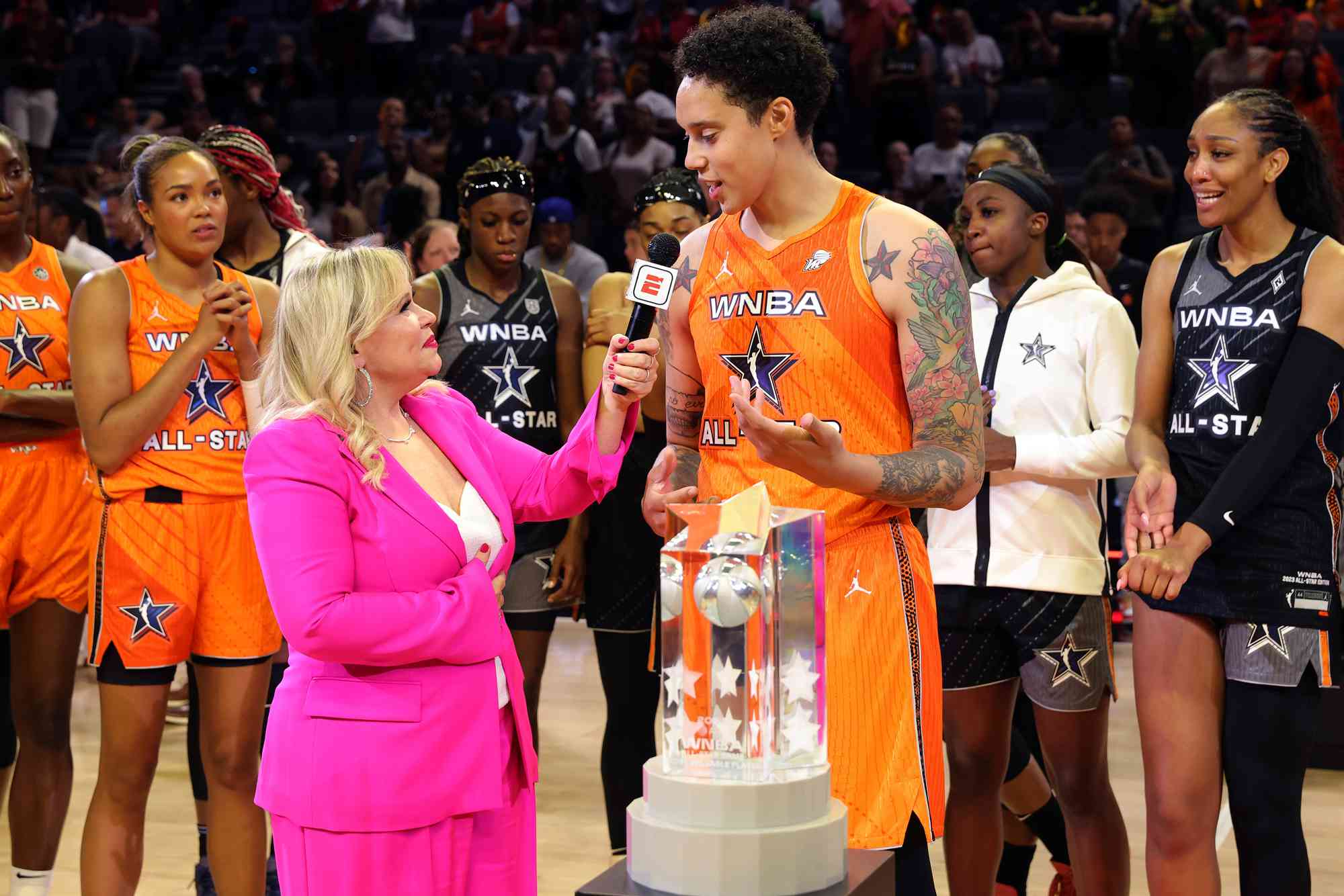
Cathy Engelbert's tenure coincided with the fiftieth anniversary of Title IX, the federal education amendment that prohibits sex discrimination in educational programs receiving federal funding. That anniversary was the occasion for substantial retrospective analysis of the law's effects on women's sports — and for renewed debate about whether those effects had been as transformative as advocates claimed or as limited as critics argued.
Title IX's impact on women's collegiate sports has been dramatic and well-documented. The number of women participating in intercollegiate athletics increased by more than 600 percent between 1972 and the 2020s. The talent pipeline for women's professional basketball — which flows almost entirely through college programs — was fundamentally shaped by this expansion. Players like Caitlin Clark, whose college careers were watched by millions, emerged from programs that would not exist in their current form without Title IX.
But Title IX applies to educational institutions, not professional leagues, and its direct impact on the WNBA is therefore limited and indirect. The political economy of women's professional sports is governed by market mechanisms — media rights, sponsorship, ticket sales, franchise valuations — rather than legal mandates. This means that the WNBA's growth depends on convincing private actors to invest in women's basketball at scale, a different and in many ways more difficult challenge than the regulatory framework Title IX created.
The debate about Title IX's limitations is relevant to understanding what Engelbert faced as commissioner. Critics from the left have long argued that Title IX compliance requirements created perverse incentives — particularly at large universities, where compliance often involved reducing men's minor sport programs rather than increasing investment in women's programs. Critics from the right have argued that Title IX imposes gender proportionality requirements that disadvantage men. Neither critique directly engages with professional sports, but both reflect broader ideological commitments about gender, opportunity, and the appropriate role of law in shaping market outcomes that are directly relevant to how the WNBA is perceived and discussed.
Several members of Congress, during Engelbert's tenure, introduced legislation specifically addressing women's professional sports — proposals that ranged from tax incentives for investment in women's leagues to requirements that public venues receiving federal support provide equitable scheduling access. None of these proposals advanced significantly, but their existence illustrated the degree to which the WNBA had become a site of legislative attention as well as cultural contestation.
The Commissioner as Political Figure: Governance Theory and Sports Administration
Academic literature on sports governance has historically focused on the commissioner's role as a manager of competitive integrity — preventing fixing, maintaining rules consistency, managing disciplinary processes. But the WNBA under Engelbert increasingly required a different framework: the commissioner as political executive, navigating relationships with government actors, managing multi-stakeholder constituencies with conflicting interests, and making decisions with explicit political valence.
This transformation is not unique to the WNBA. NBA Commissioner Adam Silver's handling of the Hong Kong controversy in 2019 — when an NBA executive's tweet supporting pro-democracy protesters triggered a major diplomatic and commercial crisis — illustrated that major sports commissioners now operate in a geopolitical environment as well as a sports management environment. NFL Commissioner Roger Goodell's handling of the Colin Kaepernick controversy demonstrated the explosive combination of athlete political action and political backlash that commissioners must navigate.
But the WNBA's situation has several distinctive features that make the political dimensions of the commissioner's role more acute than in other leagues. First, the league's players have a long history of organized political engagement — dating to the 2016 season, when players wore black warm-up shirts to protest police violence, predating the NFL's more prominent controversies. Second, the WNBA's audience demographics — heavily female, heavily educated, heavily concentrated in urban areas with Democratic voting patterns — mean that the league's political positioning is not ideologically neutral from a commercial standpoint. Sponsors who appeal to WNBA audiences tend to hold different political sensitivities than sponsors who appeal to NASCAR or professional golf audiences.
Third, and most significantly, the WNBA operates in a political environment in which women's sports, gender equity, and transgender inclusion have become explicit flashpoints in ongoing culture wars. The commissioner of the WNBA cannot make a decision about player eligibility, uniform messaging, or social media strategy without that decision being immediately interpreted through a political lens by millions of people who have strong views about what women's sports should represent.
Political scientists who study sports governance — including scholars like David Andrews at the University of Maryland and Mary McDonald at Georgia Tech, who have written extensively about the political economy of women's sports — have argued that the WNBA's unusual position as both a commercial enterprise and a vehicle for progressive identity politics creates structural tensions that no commissioner can fully resolve. The league's brand is inseparable from its values positioning, but that positioning creates vulnerabilities that purely commercial brands do not face: political backlash from the right, purity demands from the left, and a media environment that is more interested in conflict than in basketball.
Criticisms and Counterarguments: What Engelbert Got Wrong
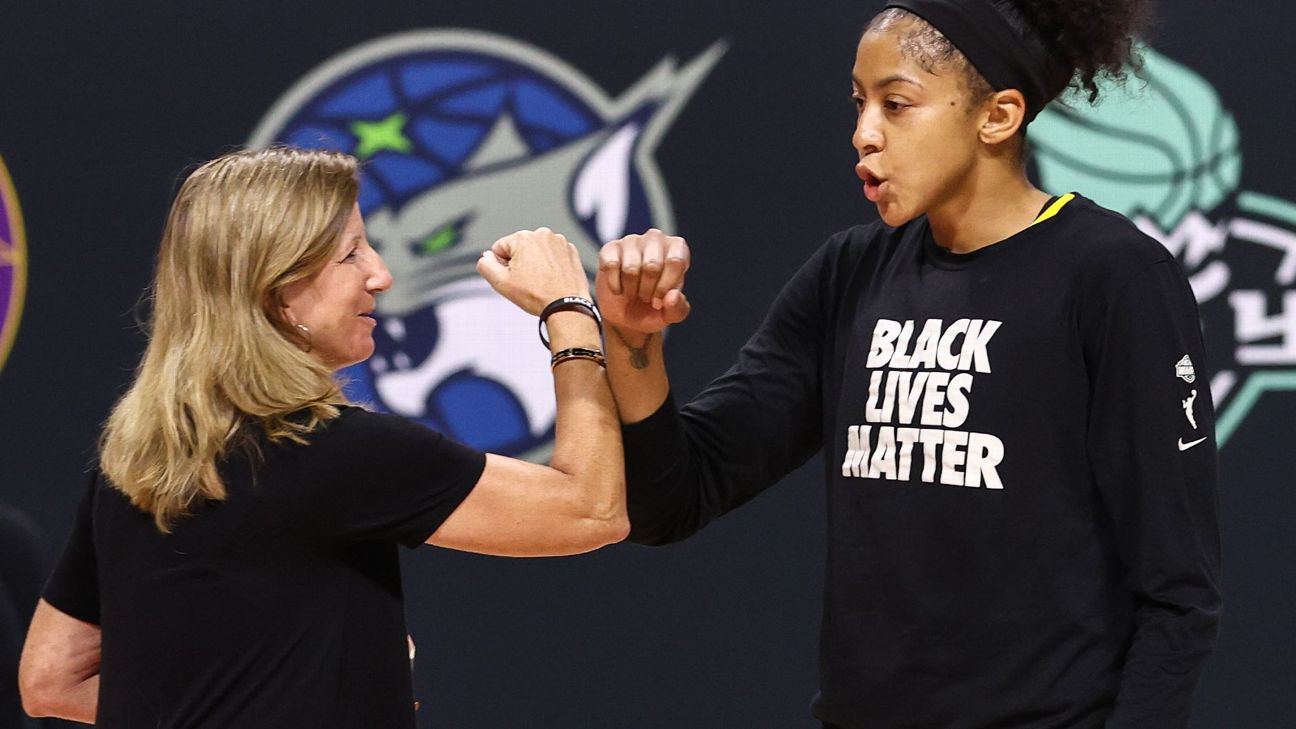
A serious assessment of Engelbert's tenure requires honest engagement with her critics, who include observers from multiple political and ideological perspectives.
From players and player advocates, the most consistent criticism was that Engelbert's corporate background made her instinctively aligned with ownership interests and uncomfortable with the kind of direct advocacy that the players felt the commissioner should provide. The salary gap between WNBA and NBA players, while reduced during her tenure, remained enormous. The players' experience of travel — commercial flights in some cases, charter arrangements that fell short of NBA standards — was a persistent source of frustration that became a public issue in the early 2020s and was not fully resolved until late in Engelbert's tenure.
The criticism about player compensation requires careful analysis. Engelbert's defenders note that WNBA revenues — while growing — remained structurally limited by the economics of the league's media market. Paying players a percentage of league revenues comparable to NBA player shares would not produce comparable absolute dollars, and the alternative — subsidizing player salaries beyond what revenue supports — was the model the league had been trying to move away from. The players' argument that higher salaries were a prerequisite for attracting the attention that would drive higher revenues had some validity, but it required owners to make investments without near-term return — a different proposition than the investment logic Engelbert was skilled at making.
From a different angle, critics argued that Engelbert was slow to leverage the Caitlin Clark moment. The league's growth from 2024 onward was, in significant part, market-driven — fans arrived because Clark's story was compelling, not because of specific league decisions. Whether the league's infrastructure was positioned to capture and convert that interest is a legitimate question, and some observers argued that Engelbert's methodical, data-driven approach was too slow for a moment that required rapid, intuitive responses to unprecedented opportunity.
The most pointed criticism from observers on the right was that Engelbert's tenure transformed the WNBA into an explicitly partisan institution — one whose social justice commitments, transgender policies, and player political activities had alienated potential audiences who might otherwise have been engaged by the quality of the basketball. This criticism should be assessed with appropriate skepticism — many of those making it had never previously expressed interest in women's basketball and were making it in bad faith — but it contained a kernel of genuine observation about market positioning. The WNBA's demographic concentration was both a strength (a highly engaged, high-income audience) and a potential limitation (a narrowed total addressable market).
The Succession Question: What Comes Next
The search for Engelbert's successor is, as of this writing, underway. Several names have circulated, and the qualities being sought offer insight into what the league's ownership group believes the next era requires.
There appears to be interest in a commissioner with direct sports business experience — a recognition that Engelbert's corporate background, while valuable in establishing institutional credibility, did not always translate into the intuitive sports market understanding that some decisions required. At the same time, the next commissioner will inherit a league that has been substantially professionalized and structured by Engelbert's corporate governance approach, and dismantling those systems would be inadvisable.
The question of whether the next commissioner will be a woman is more politically charged than it might initially appear. The WNBA's five previous commissioners were all women; Engelbert continued that tradition. The notion that a women's league should be led by a woman is intuitive but not uncontested — arguments from within sports business circles suggest that choosing a commissioner based on gender perpetuates a kind of gender essentialism that undermines professional norms. Arguments from the player community and women's sports advocates suggest that representation at the leadership level is itself a value, not merely instrumental to other values.
The next commissioner will also face CBA renegotiation, media rights renewals, continued franchise expansion decisions, and the ongoing management of the league's political positioning in an environment that shows no signs of becoming less contentious. Whether the Caitlin Clark viewership surge proved durable or was a cultural moment that peaked and receded will shape the context in which those decisions are made.
Cross-Domain Connections: Sports Governance and Democratic Theory
One of the most underappreciated dimensions of the WNBA commissioner's role is the degree to which it operates as a form of private governance with public consequences — a form that has increasingly attracted attention from legal scholars and political theorists concerned with the governance of major institutions that lack formal democratic accountability.
Scholars like Neil Fligstein at Berkeley and Timothy Büthe at Duke have written about the way private governance regimes — industry associations, standard-setting bodies, professional leagues — can function with the effective power of government without the accountability mechanisms that democratic theory would require. The WNBA commissioner makes decisions about eligibility, player conduct, disciplinary actions, and competitive structure that affect athletes' careers, franchises' commercial value, and public entertainment experiences — decisions with significant stakes for many parties — but the accountability of the commissioner runs primarily to the league's owners, not to the athletes, fans, or public who are most directly affected.
This structural asymmetry became acutely visible during the 2020 social justice season, when players attempted to use their collective leverage to influence the commissioner's decisions in ways that had no formal mechanism. The players were not employees in the traditional sense — they were employees of individual franchises — and the WNBA commissioner's accountability to player interests was limited and informal.
The contrast with democratic governance is instructive. A government official making decisions with comparable public consequences would face formal accountability mechanisms: elections, legislative oversight, judicial review, freedom of information requirements. The WNBA commissioner faces none of these, though the court of public opinion and the market mechanism of fan and sponsor response provide informal accountability of a different kind.
Engelbert's tenure illustrated both the flexibility that private governance affords — decisions can be made quickly, policies can be adjusted without legislative process — and its limitations. The accountability void is real, and it creates conditions in which grievances — from players, fans, or the broader public — can accumulate without formal resolution mechanisms.
The Women's Sports Economy at an Inflection Point
Beyond the specifics of Engelbert's tenure, her departure coincides with what may be a genuine inflection point in the political economy of women's professional sports globally. The WNBA is not alone in experiencing unprecedented growth: the National Women's Soccer League, the NWSL, has expanded and attracted major investment. Women's tennis has long been commercially established at the elite level. Women's golf has grown its commercial profile. The English Women's Super League has attracted substantial viewership.
Whether this growth represents a durable structural shift or a temporary cultural moment is the central question for investors, league executives, and policy analysts. Optimists point to generational changes in sports fandom — younger audiences are less gender-constrained in their sports preferences than older audiences, and the combination of social media exposure and quality improvement in women's sports creates reinforcing cycles of engagement. Pessimists note that women's sports have had promising moments before — the 1999 Women's World Cup generated enormous enthusiasm that did not sustain itself commercially in the years that followed.
The structural argument for durability rests on several pillars. Media rights valuations, which are the primary driver of professional sports economics, are determined by audience size and composition, not by the sport's intrinsic merits. As women's sports audiences have grown and become more precisely measurable through streaming data, the media rights market has responded with higher valuations. Higher valuations generate more investment in production quality, marketing, and player recruitment, which generate better product, which generates larger audiences. This virtuous cycle, once established, has structural momentum.
The structural argument for caution notes that the current moment's growth has been substantially driven by individual star power — specifically, by Caitlin Clark's unusual combination of on-court excellence, media accessibility, and cultural timing. Individual stars are not permanent features of any sports landscape; they retire, decline, or are superseded. Whether the WNBA has built sufficient institutional fan loyalty to survive the inevitable transition beyond Clark's playing peak is a question that will be answered over the next decade.
Engelbert's legacy will be evaluated, in significant part, through this lens. Did she use the growth moment to build durable institutional infrastructure — the media relationships, fan development programs, franchise stability, and labor relations — that will sustain the league beyond any individual era? Or did she manage a growth moment adequately without positioning the league to maximize its long-term potential?
Open Questions: What History Has Not Yet Settled
The full assessment of Engelbert's tenure will require the passage of years and the emergence of information not yet available. Several specific questions remain genuinely open.
The CBA negotiated during her tenure will shape player experiences and owner economics for years. Whether its terms represent a fair division of value — or whether, as the players argued, it perpetuated a pattern of underpaying women athletes — cannot be fully assessed until we know whether the revenues it was predicated on actually materialize, and at what scale.
The expansion franchises approved during her tenure will succeed or fail based on local market dynamics, ownership quality, and league support — none of which have been fully tested. A franchise failure in a major market would significantly affect assessments of the expansion strategy's wisdom.
The successor she leaves behind, and the culture and institutional capacity she has built, will determine whether the organizational infrastructure she created can execute under different leadership. Institutional quality is often most visible in transition moments.
The political environment in which the WNBA operates will continue to evolve. Future administration policies on transgender athletes, Title IX, and women's sports funding will shape the context in which the league makes governance decisions. Whether the league's current positioning — progressive on social issues, commercially ambitious, structurally independent from the NBA — proves sustainable in that environment will not be determined by anything Engelbert did, but by forces she cannot control.
Conclusion: The Complicated Legacy of a Transformative Tenure
Cathy Engelbert leaves the WNBA commissioner's office having achieved things that her predecessors could not and having failed to achieve things that her successors will be judged by. The league is larger, wealthier, more watched, and more politically significant than it was when she arrived in 2019. It is also more contested, more complicated, and more deeply embedded in American culture wars than any of its founders intended.
Her tenure illustrates a broader truth about leadership in institutions that occupy contested social and political terrain: there is no neutral posture. Every decision is a political decision, and the attempt to manage political tensions through careful neutrality is itself a political choice, with its own consequences. Engelbert managed this reality with considerable skill and occasional misjudgment — which is to say, like most consequential leaders.
The WNBA she leaves behind faces a future of extraordinary possibility and significant uncertainty. The market signals are positive. The cultural moment is propitious. The institutional infrastructure is stronger than it has ever been. But the political environment is more charged, the labor relations more complex, and the expectations higher than they have ever been.
What is not in serious dispute is that Cathy Engelbert changed the WNBA fundamentally — expanded its footprint, professionalized its operations, attracted new capital, and stewarded it through a period of cultural change that would have tested any organization's capacity. The question of whether she changed it enough, in the right directions, at the right pace, is one that will occupy analysts, advocates, and historians for years. That question itself — the ongoing argument about what the WNBA should be, who it serves, and what it owes to the players who make it possible — is perhaps the most important legacy of her tenure: not a settled answer, but a more clearly articulated set of stakes.
Sources referenced in this article draw from reporting by ESPN, The New York Times, ABC News, Yahoo Sports, Just Women's Sports, NewsNation, Sports Media Watch, and the Mercury News, as cited in the foundational reporting on Engelbert's retirement announcement. Academic frameworks referenced include work by Neil Fligstein (University of California, Berkeley), Timothy Büthe (Duke University), David Andrews (University of Maryland), and Mary McDonald (Georgia Tech) on sports governance, political economy, and the sociology of women's professional athletics.