Across the Abyss: A Rigorous Examination of Traveling to the Nearest Solar System
The nearest star to our Sun is so far away that light itself — traveling at 299,792,458 meters per second, fast enough to circle the Earth seven times in a single second — takes more than four years to make the journey. Proxima Centauri sits at 4.2465 light-years from us. That figure, stated plainly, tells you nothing about what it actually means. To feel the weight of it, consider that our fastest spacecraft ever launched, NASA's New Horizons probe, travels at roughly 16.26 kilometers per second. At that speed, it would take approximately 78,000 years to reach Proxima Centauri — assuming it were aimed in the right direction, which it is not. Humanity has been agriculturally civilized for only about 12,000 years. We would need to sustain a technical civilization through more than six such spans just to see a probe arrive.
This is not merely a problem of engineering. It is a confrontation with physics, biology, mathematics, philosophy, and the deep structure of time itself. The existing literature on interstellar travel tends to treat it as a collection of discrete challenges — propulsion here, life support there, radiation shielding in another chapter. But the problem is unified. Every solution exacerbates at least one other problem. Going faster exposes the ship to catastrophic bombardment by interstellar dust. Slowing down requires as much energy as speeding up. Carrying more fuel means more mass, which means more fuel, in a recursion that defeats chemical rockets before they can even begin. Relativistic speed buys you time — literally — but it severs your relationship with the civilization that sent you, which raises questions about what the mission is even for.
This article takes a reader who understands the outlines of the problem and goes deeper: into the actual physics of the options, the historical trajectory of serious proposals, the biological realities that no mission architecture can ignore, the contested science of exotic propulsion, and the profound ethical puzzles that become unavoidable once you plan to send human beings into the void between stars.
The Destination: What We Are Actually Trying to Reach
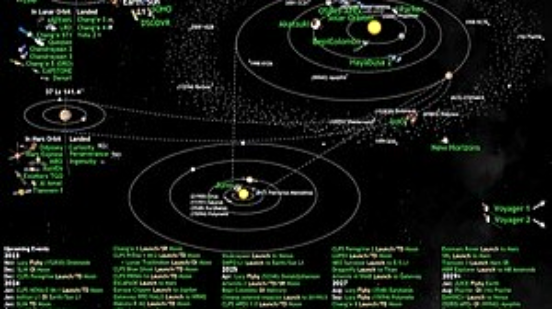
Before discussing how to get there, we should be precise about where "there" is. The nearest stellar system is not a single star but a triple system. Alpha Centauri A and Alpha Centauri B are a gravitationally bound binary pair separated by an average of roughly 23 astronomical units — a distance comparable to the orbital radius of Uranus in our own solar system. They orbit each other with a period of about 79.9 years. Alpha Centauri A is a G2 star slightly larger and brighter than our Sun; Alpha Centauri B is a K1 star, somewhat smaller and cooler. By stellar standards, they are our close relatives, and for decades they were considered the most promising targets for interstellar travel.
Proxima Centauri, however, is the actual closest star — 4.2465 light-years away compared to the approximately 4.37 light-years of the Alpha Centauri AB pair. Proxima is an M-type red dwarf, small and dim, and it orbits the AB pair at a distance of roughly 13,000 astronomical units, so slowly that it completes one orbit in approximately 550,000 years. Whether it is truly gravitationally bound or merely a long-term companion remains debated, though most current analysis suggests it is a true member of the system.
In 2016, the European Southern Observatory announced the discovery of Proxima Centauri b using radial velocity measurements — a planet with a minimum mass of approximately 1.3 Earth masses orbiting in the habitable zone of its star, with an orbital period of 11.2 days. This discovery transformed Proxima from an interesting red dwarf into a potentially inhabited destination. A second candidate planet, Proxima c, was announced in 2020, though its confirmation remains contested in the literature.
But the Proxima Centauri b discovery also introduced immediate complications. Red dwarfs are violently active stars in their youth, and Proxima — despite being billions of years old — still produces intense ultraviolet and X-ray flares at rates far exceeding solar activity. In March 2017, astronomers documented a stellar superflare from Proxima that briefly made it 68 times brighter in the ultraviolet. If Proxima b lacks a strong magnetic field and a thick atmosphere, these flares may have stripped its atmosphere over geological time, rendering the surface sterilized. The question of Proxima b's habitability is now among the most contentious in exoplanet science, with serious researchers on both sides of the argument.
The Alpha Centauri AB pair, meanwhile, was the subject of intense radial velocity searching for Earth-sized planets. A 2012 paper in Nature by Dumusque et al. announced a detection of an Earth-mass planet around Alpha Centauri B — a discovery that generated enormous excitement before being largely retracted in subsequent analyses as instrumental artifact. As of this writing, no confirmed planet has been found around Alpha Centauri A or B, though next-generation instruments including the TOLIMAN space mission (planned to launch in the mid-2020s) specifically target the system with astrometric methods capable of detecting Earth-like planets.
This uncertainty matters for mission planning. A probe sent to the Alpha Centauri system must be designed without knowing precisely what it will find. This is unlike sending a mission to Mars or even the outer planets, where extensive prior reconnaissance has characterized the destination. An interstellar mission to the Alpha Centauri system is, in the most literal sense, an exploration into the unknown.
A History of Serious Thinking About Interstellar Travel

Public discourse about interstellar travel is dominated by science fiction, which has the consequence of making the subject seem less serious than it is. In fact, rigorous engineering and physics studies of interstellar propulsion have been ongoing for more than half a century.
The earliest systematic work emerged from the space race context of the 1950s and 1960s. Project Orion, initiated in 1958 under the leadership of Theodore Taylor and physicist Freeman Dyson, proposed using nuclear pulse propulsion — detonating a series of nuclear bombs behind a spacecraft to provide thrust. Dyson's calculations suggested that an Orion-class vessel could achieve velocities of 3-10% of the speed of light, which would bring travel times to Proxima Centauri down to roughly 40-130 years. The 1963 Partial Nuclear Test Ban Treaty effectively ended Orion by prohibiting nuclear detonations in space. Dyson remained a passionate advocate for the concept throughout his life, and he has written compellingly about what he saw as a genuine missed opportunity.
The British Interplanetary Society's Project Daedalus (1973-1978) represents the most detailed engineering study of an interstellar probe ever undertaken. The Daedalus team proposed an unmanned probe using inertial confinement fusion — essentially igniting small pellets of deuterium and helium-3 fuel with electron beams, creating micro-fusion explosions at a rate of 250 per second. The ship would be constructed in two stages and reach a cruise velocity of approximately 12% of the speed of light, arriving at Barnard's Star (then considered a candidate for planetary companions) after about 50 years. Total mass at launch: 54,000 tonnes, of which 50,000 tonnes was fuel.
Daedalus was followed by the BIS's Project Icarus (2009-2013), which revisited and updated the Daedalus design philosophy with contemporary physics, specifically retargeting to the Alpha Centauri system and incorporating deceleration capability — something Daedalus explicitly omitted, treating its destination as a flyby. Icarus concluded that a decelerating fusion probe was technically feasible but required either access to helium-3 mined from the outer planets or a shift to deuterium-only fusion, which is substantially harder to ignite.
Robert Forward, a physicist who worked at Hughes Research Laboratories, is perhaps the most important figure in the history of serious interstellar propulsion concepts. His 1962 paper "Pluto: Last Outpost of the Solar System" began a career of increasingly ambitious proposals, culminating in his 1984 paper "Roundtrip Interstellar Travel Using Laser-Pushed Lightsails" in the Journal of Spacecraft and Rockets. Forward proposed using a solar-system-scale laser — eventually imagining arrays hundreds of kilometers in diameter — to accelerate a lightsail to a significant fraction of c, then using a retro-sail arrangement to decelerate at the destination. His mathematics were rigorous and his proposals, while requiring extraordinary infrastructure, violated no known physics.
The contemporary moment in interstellar thinking began with the 2016 announcement of Breakthrough Starshot by venture capitalist Yuri Milner and Stephen Hawking. Starshot proposes launching a fleet of gram-scale "StarChip" probes, each mounted on a one-meter reflective sail, and accelerating them with a ground-based laser array of approximately 100 gigawatts to 20% of the speed of light. At that velocity, travel time to Proxima Centauri would be about 20 years. The technical challenges are immense — laser coherence over the acceleration distance, sail material that can survive laser intensity without ablating, attitude control, data transmission across 4+ light-years, miniaturization of scientific instruments to gram-scale — but Breakthrough Starshot is backed by substantial funding and has attracted serious engineering attention from institutions including NASA's Jet Propulsion Laboratory and the University of California Santa Barbara.
The Energy Problem: A Rigorous Accounting
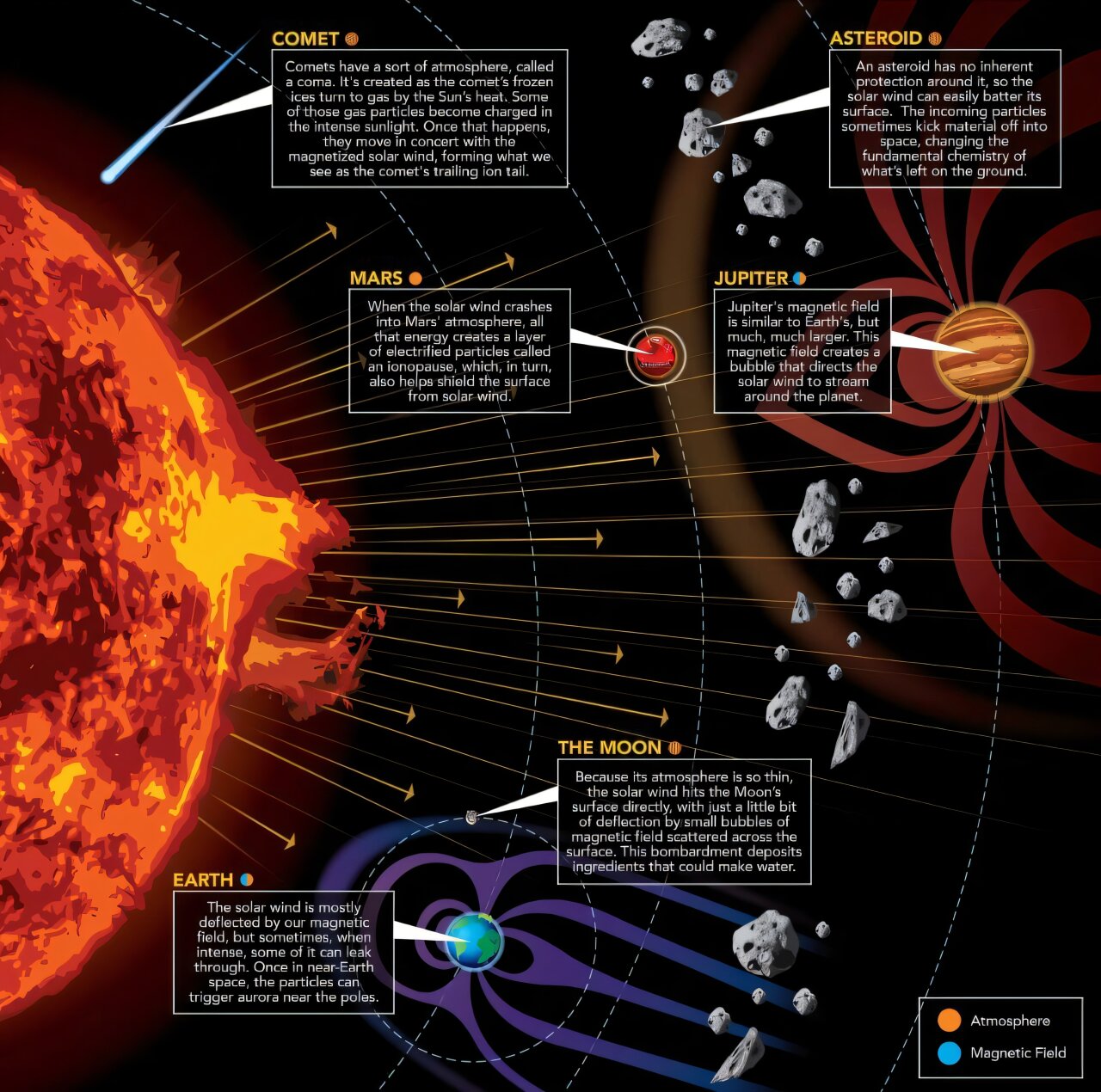
The fundamental obstacle to interstellar travel is energy, and it is instructive to confront this quantitatively. The kinetic energy of a spacecraft is (1/2)mv² in the Newtonian regime, but at relativistic velocities, the full relativistic expression (γ-1)mc² is required, where γ is the Lorentz factor. At 10% of c, γ ≈ 1.005, meaning the relativistic correction is modest. At 50% of c, γ ≈ 1.155. At 90% of c, γ ≈ 2.294.
Consider a minimal crewed interstellar vehicle with a dry mass of 1,000 tonnes — roughly the mass of the International Space Station, likely an underestimate for a crewed ship with life support, radiation shielding, and deceleration fuel. To accelerate this to 10% of c, the required kinetic energy is approximately 4.5 × 10²⁰ joules. The United States total electricity generation in 2023 was approximately 4.2 × 10¹⁸ joules. A 10%-c crewed mission would therefore require roughly 100 times the annual US electricity production, applied entirely to propulsion, with perfect efficiency.
Rocket propulsion compounds this problem through the Tsiolkovsky rocket equation: Δv = v_e × ln(m_i/m_f), where v_e is exhaust velocity and m_i/m_f is the mass ratio of initial to final mass. For a chemical rocket, v_e is approximately 4.5 km/s. To achieve 10% of c (30,000 km/s), the required mass ratio is e^(30,000/4.5) — a number so astronomically large as to be physically meaningless. Even nuclear thermal rockets, with exhaust velocities around 10 km/s, yield mass ratios of e^3000. You would need a fuel mass that exceeds the mass of the visible universe.
The only way to escape the rocket equation's tyranny is to either carry a highly energetic fuel in small quantities (antimatter) or avoid carrying the propellant entirely (beamed propulsion like Breakthrough Starshot). Antimatter is extraordinary: matter-antimatter annihilation releases energy according to E=mc², converting 100% of mass to energy, compared to nuclear fission (0.1% mass conversion) or fusion (0.7%). A kilogram of antimatter, annihilated with a kilogram of matter, releases approximately 1.8 × 10¹⁷ joules. For our 1,000-tonne ship at 10% c, and assuming 100% efficient conversion to propulsion (impossible in practice), we need roughly 5,000 tonnes of antimatter-matter propellant. Current global antimatter production is measured in nanograms per year. The production problem is so severe that researchers at Penn State (Gerald Smith's group) and elsewhere have proposed that realistic antimatter propulsion would require decades of sustained production at particle accelerator facilities orders of magnitude beyond anything currently existing, at an energy cost that approaches the energy budget of global civilization.
Fusion propulsion sits between these extremes. Deuterium-helium-3 fusion converts roughly 0.5% of mass to energy, about seven times better than fission. Project Daedalus's helium-3 fuel requirement of approximately 30,000 tonnes drew attention to a fundamental resource bottleneck: Earth's atmosphere contains only trace amounts of helium-3, while the gas giant planets — particularly Uranus and Neptune — have estimated helium-3 inventories in the millions of tonnes. This has led researchers including Krafft Ehricke and more recently Charles Orth at Lawrence Livermore to propose that any serious interstellar program would first require decades of outer solar system industrial development, essentially treating interstellar travel as the culmination of a several-century civilizational project rather than a near-term mission.
Relativistic Physics: The Experience of High-Speed Travel
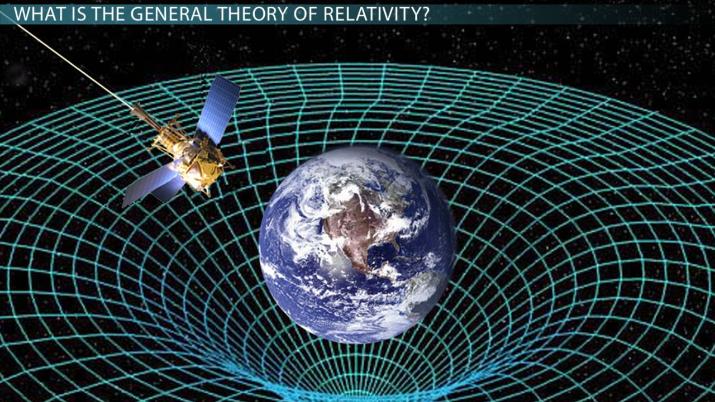
The special theory of relativity, formulated by Einstein in 1905, produces consequences that are deeply counterintuitive but experimentally verified to extraordinary precision. For interstellar travel, three relativistic effects matter most: time dilation, length contraction, and the relativistic Doppler effect.
Time dilation is the most discussed. A clock moving relative to an observer ticks slower, at a rate given by t' = t/γ, where t is time measured by the stationary observer and t' is time measured on the moving clock. At 10% c, γ ≈ 1.005, meaning time dilation is negligible (about 0.5%). At 50% c, γ ≈ 1.155, so the ship's clocks run about 13% slow. At 90% c, γ ≈ 2.29, so a journey that takes 4.24 years by Earth reckoning takes only about 1.85 years of shipboard time. At 99% c, γ ≈ 7.09, compressing 4.24 years to 0.6 years. At 99.9% c, γ ≈ 22.4, and the 4.24-year journey takes the crew only about 69 days.
This sounds enormously attractive until you consider what it means for the mission. The crew experiences only 69 days — but they left Earth 4.24 years ago, as measured on Earth. When they arrive and send a message home announcing their arrival, that message takes 4.24 years to arrive. Earth will not hear from them for 8.5 years after departure. If they want to return, the round trip takes 8.5 years of Earth time but only 138 days of crew time. The crew returns having aged less than 5 months while Earth has aged nearly nine years. This is the so-called "twin paradox" — not a paradox at all once you recognize that the traveling twin undergoes acceleration while the stationary twin does not, breaking the apparent symmetry. The traveling twin is unambiguously younger upon return. This is verified by direct measurement: GPS satellites, which move at about 14,000 km/h relative to Earth, must correct for time dilation or their clocks would drift by approximately 7 microseconds per day, accumulating errors of roughly 2 kilometers.
For crewed missions, this creates a profound existential question. The crew who arrive at Proxima Centauri b are temporally displaced from their civilization by years. The mission planners, their families, possibly their entire intellectual community are years older or dead. Each communication roundtrip takes 8.5 years. If a problem arises requiring consultation with Earth, the wait is nearly a decade. Missions at high relativistic velocities are therefore functionally autonomous in a way that orbital or even Mars missions are not.
Length contraction — the shortening of distances along the direction of travel as seen by the traveler — is less discussed but equally real. A traveler at 99.9% c doesn't experience the journey as covering 4.2465 light-years; they experience it as covering only about 0.19 light-years. From their reference frame, space itself has been compressed, and the destination rushes toward them. This is not a perceptual illusion. Both descriptions — "the ship travels 4.2465 light-years in 4.24 years" (Earth frame) and "the ship travels 0.19 light-years in 69 days" (ship frame) — are equally valid.
The relativistic Doppler effect presents serious practical challenges. A ship at high velocity observes blueshifted radiation from ahead and redshifted radiation from behind. At 90% c, starlight from ahead is shifted into the ultraviolet and X-ray regime. The cosmic microwave background radiation, normally spread across the sky as a 2.7 Kelvin glow, would be blueshifted to centimeter wavelengths from ahead and redshifted to extremely long wavelengths from behind. The ship would effectively be embedded in an increasingly energetic radiation environment as it accelerates.
The interstellar medium itself becomes dangerous at high velocities. Hydrogen atoms, at rest in interstellar space, are struck by the ship at velocities approaching c. In the ship's frame, each hydrogen atom carries the energy of a relativistic projectile. The interstellar medium has an average density of about one atom per cubic centimeter in the disk of the galaxy, with denser regions in molecular clouds. At 10% c, impacts with hydrogen atoms produce radiation equivalent to a high-energy proton beam. At higher velocities, the shielding requirements become severe — some researchers, including Albert Jackson and Michael Whitmire in their 1978 paper in Nature, proposed that a forward-facing laser or particle beam could ionize and deflect the interstellar medium before impact.
Decelerating from interstellar velocities is as great a problem as accelerating. Unless a beamed propulsion system at the destination is pre-positioned (requiring either an earlier, slower mission or a separate beam infrastructure at Alpha Centauri), the ship must carry its own deceleration propellant, essentially doubling the already impossible fuel requirement. Robert Bussard's 1960 proposal of the interstellar ramjet addressed this by proposing to scoop interstellar hydrogen with a vast electromagnetic funnel and use it as fusion fuel. The concept is elegant, but detailed analysis by T.A. Heppenheimer and others through the 1970s revealed that the drag from scooping exceeds the thrust from fusion at realistic interstellar hydrogen densities, and the proton-proton fusion chain the ramjet would rely on has an impossibly low cross-section.
Beamed Propulsion and the Starshot Architecture
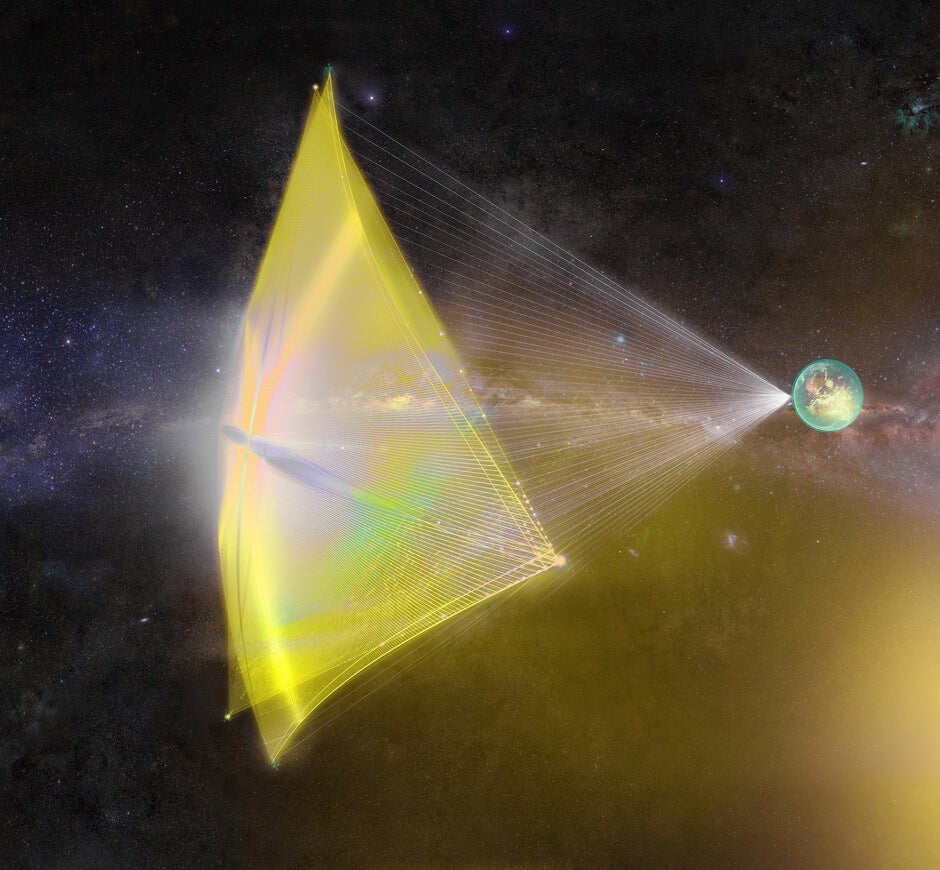
Breakthrough Starshot represents the only near-term credible interstellar mission concept. It sidesteps the rocket equation entirely by leaving the propulsion source behind. The core concept — using photon pressure to accelerate a reflective sail — was first seriously analyzed by Carl Wiley in 1951 and developed in rigorous engineering detail by Robert Forward and subsequently by Geoffrey Landis of NASA Glenn Research Center.
The physics of laser-pushed sails are straightforward: radiation pressure exerts a force of 2P/c per unit of reflective area, where P is the laser power in watts. For a one-meter sail at 100 gigawatts of laser power, the peak force is about 0.67 Newtons. Applied to a mass of 1 gram over an acceleration distance of perhaps 2 million kilometers, the numbers work out to roughly 20% of c terminal velocity — if the sail doesn't melt, isn't deformed by differential pressure, maintains pointing accuracy to arcsecond precision over the acceleration time, and the laser array phases coherently despite atmospheric turbulence and finite aperture diffraction.
Each of these "ifs" represents a formidable engineering problem. Breakthrough Starshot has published technical analyses of many of them through its research collaboration with scientists at UC Santa Barbara, Harvard, and elsewhere. The required sail material would need reflectivity exceeding 99.999% at the laser wavelength, absorbing only a tiny fraction of the 100-gigawatt beam. Even at 0.001% absorption, a one-gram sail intercepting that power would receive kilowatts of heating — sufficient to melt or vaporize most known materials. Candidates include single-layer photonic crystal structures, which can achieve theoretical reflectivities above 99.99% over narrow wavelength ranges. A 2017 paper by Kulkarni et al. in the Astrophysical Journal mapped the parameter space of sail requirements with notable rigor.
The laser array itself requires solving the fundamental coherence problem. At the wavelength and array sizes required, atmospheric turbulence (even at high-altitude sites) scrambles the wavefront. Adaptive optics systems developed for ground-based astronomy provide a model but operate on laser beams that are far weaker and illuminate targets that are far closer. The Breakthrough Starshot team has proposed segmented arrays with sophisticated phase control, essentially treating the problem like a phased-array radio antenna scaled to optical wavelengths.
The data return problem is perhaps the most underappreciated challenge. A Starshot probe massing one gram cannot carry a high-gain antenna. The signal received on Earth from a gram-scale transmitter at 4+ light-years will be extraordinarily faint. Proposed solutions include using the laser array at Earth as a receiving telescope, building a receiving array at the target system using a pre-sent larger craft (circular dependency), or using the sail itself as a retro-reflector. James Benford and colleagues have analyzed Starshot's communication constraints in several papers, concluding that data rates would be measured in bits per second or lower — sufficient for basic science data but not imagery or detailed surface mapping.
What Starshot would send are probes with instrumentation massing far less than a modern smartphone — cameras, spectrometers, magnetometers, radiation detectors. The science return would be real but limited. The primary mission would be proof of concept and first images of another planetary system. That alone would arguably be among the most significant scientific events in human history.
The Biology of Interstellar Flight
Sending humans rather than probes to the nearest stellar system introduces constraints that dwarf any purely engineering challenge. The human body was not designed for the space environment, and the modifications required — by technology or by biology itself — push the boundaries of what we understand.
Ionizing radiation is the most immediate threat. In the interplanetary environment, galactic cosmic rays — high-energy particles originating from supernovae throughout the galaxy — penetrate spacecraft hulls and human tissue with equal ease. The ISS, protected by Earth's magnetosphere at least partially, exposes astronauts to roughly 20 times the annual radiation dose of someone living at sea level. Beyond the magnetosphere, on a Mars transit, NASA estimates astronauts would receive approximately 0.66 sieverts on a 180-day journey — exceeding the current NASA career limit of 0.6 sieverts in a single trip. A multi-year interstellar journey would expose crew to doses that are carcinogenically and genetically severe under any shielding scenario using conventional materials.
Polyethylene and water are among the best radiation shields per unit mass, due to their high hydrogen content, which slows and absorbs fast neutrons and secondary particles. But secondary radiation — produced when cosmic rays strike the shielding material — can be as dangerous as the primary particles. Perfect shielding against cosmic rays would require meters of water equivalent surrounding the entire living space, adding enormous mass. Active magnetic shielding, using superconducting magnets to create an artificial magnetosphere around the ship, has been studied by researchers at CERN and ESA. The magnetic field strength required — approximately 10-20 Tesla over volumes of hundreds of cubic meters — is within the range of current high-field superconducting technology, but the engineering complexity and mass of the superconducting coils and cryogenic systems is substantial. A 2011 ESA study concluded that magnetic shielding was "potentially feasible" but required substantial further research.
Solar particle events — coronal mass ejections from the host star — are a second radiation threat specific to destinations around active red dwarfs. A crew on the surface of Proxima Centauri b, or in orbit around it, would face radiation from the star's frequent superflares at levels potentially thousands of times the safe human limit. If Proxima b lacks a strong magnetic field, an in-situ habitat would require deep underground construction to reduce radiation exposure to survivable levels.
Bone density loss and muscle atrophy in microgravity are well-documented from ISS research. Astronauts on six-month ISS missions lose on average 1-2% of bone mineral density per month despite aggressive exercise countermeasures. Current protocols — 2.5 hours of daily vigorous exercise — represent a major time burden and are only partially effective. For a multi-decade interstellar journey, bone loss accumulation would be catastrophic. Artificial gravity, generated by rotating the ship or a portion of it, is the only clean solution. A rotating habitat requires a radius and rotation rate sufficient to produce acceptable centrifugal acceleration. The relationship is g = ω²r, where ω is angular velocity and r is radius. For 1g artificial gravity, a 200-meter radius habitat could rotate at about 2 rpm — within human tolerance. A 20-meter habitat would require 7 rpm, above the threshold where Coriolis effects produce disorientation and nausea. Generation ship designs from Kim Stanley Robinson's fiction and more technical sources generally settle on large-radius rotating sections in the 100-500 meter range.
Psychological and social dynamics over multi-generational timescales represent territory where empirical data is almost nonexistent. The longest continuous isolated missions have been the 500-day Mars-500 simulation study in Moscow (2010-2011) and the Antarctic winter-over programs, where crews of 6-12 individuals spend 8-14 months in near-total isolation. These studies document predictable patterns: initial high morale, a mid-mission nadir of depression and interpersonal conflict, and late-mission impatience. Behavioral health problems correlated most strongly with confinement, monotony, and communication delays. Nick Kanas of UCSF and Dietrich Manzey of the Technical University of Berlin are among the leading researchers in space psychology; their work suggests that isolation and autonomy from Earth authority structures become the dominant behavioral health factors on multi-year missions, exceeding physiological concerns.
For a generation ship spanning decades or centuries, social structure must be not merely maintained but self-generating. Anthropologists and sociologists have been brought into interstellar research in recent years — notably at the 100 Year Starship symposia funded initially by DARPA and NASA beginning in 2011. The 100 Year Starship project, led by former astronaut Mae Jemison, explicitly incorporated social science, art, and ethics alongside engineering, recognizing that the human system is the least well-modeled component of an interstellar mission.
Population genetics presents perhaps the most concrete biological constraint on generation ship design. The minimum viable population for long-term genetic health — avoiding inbreeding depression and maintaining sufficient allelic diversity to adapt to disease and environmental challenges — has been studied by conservation biologists and space researchers. A 2002 study by Moore estimated that a minimum of 160 unrelated individuals would be needed for a viable founding population; a 2014 study by Portland State University's Cameron Smith, published in Acta Astronautica, argued for a minimum of 10,000 to 40,000 individuals after accounting for demographic stochasticity, genetic drift, and the possibility of a catastrophic mortality event mid-journey. A generation ship of 40,000 people implies a vessel of extraordinary size — by comparison, the largest ocean-going vessels are supertankers carrying a few hundred crew. Such a ship would be a city in space, with all the attendant complexity of urban social organization.
Cryosleep: The Real State of the Science
The prospect of suspending human biological processes for decades and reviving them at the destination is intuitively attractive precisely because it sidesteps most of the biological problems above: no radiation accumulation, no muscle atrophy, no social deterioration. The reality of the science, however, is far from the seamless hibernation pods of science fiction.
Two distinct approaches exist: cryopreservation and torpor induction. They are frequently conflated but involve very different biology.
Cryopreservation involves cooling to temperatures of approximately -196°C (liquid nitrogen temperature) or lower. At these temperatures, all chemical reactions effectively cease; theoretically, preservation could be indefinite. The fundamental obstacle is ice crystal formation. Water expands upon freezing; ice crystals formed within cells pierce membranes and destroy cellular architecture irreversibly. Cryonics organizations (Alcor, the Cryonics Institute) preserve human patients postmortem using cryoprotectant chemicals that partially replace intracellular water to limit crystalline damage, in a process called vitrification (the tissue becomes an amorphous glass rather than crystalline ice). Revival of a full human body from cryopreservation has never been achieved; the most complex organism successfully revived from cryopreservation is a nematode worm (C. elegans), and more recently (2016) small mammalian organs — rabbit kidneys — have been successfully preserved and transplanted after vitrification by the 21st Century Medicine group using a technique called isochoric supercooling. Human brains, with their highly differentiated architecture and approximately 86 billion neurons, present challenges several orders of magnitude beyond a kidney.
Torpor induction — reducing metabolic rate in already-alive individuals to a hibernation-like state — is a separate and potentially more tractable approach. Some mammals hibernate naturally with dramatic metabolic suppression: bears reduce metabolism by 25% during hibernation, while ground squirrels reduce core temperature to near-freezing and metabolic rate by 95-99%. The molecular mechanisms of natural mammalian hibernation — involving suppression of the Na+/K+ ATPase pump, alteration of fatty acid metabolism, and the induction of Hibernation Induction Trigger factors — are an active research area. NASA funded SpaceWorks Enterprises (led by Mark Schaffer and John Bradford) to develop "torpor inducing transfer habitats" for Mars missions; their 2014 report estimated that a Mars crew could be placed in therapeutic hypothermia (body temperature 32-34°C, similar to clinical hypothermia used in cardiac surgery) for periods of two weeks, cycling crews awake in rotation. This is a far cry from decades-long hibernation. There is no known biological mechanism that would allow extended torpor in humans over years, let alone decades.
The ethical dimension of cryopreservation for interstellar travel adds further complexity. If a person is cryopreserved for 50 years and revived, what are their legal rights? Are they the same person? Do they owe loyalty to the mission that preserved them, or can they choose to remain at the destination rather than return? These questions have no current legal framework and point to the degree to which interstellar travel challenges not just engineering but the categories through which we organize human social life.
Warp Drives: The Exotic Physics
Miguel Alcubierre's 1994 paper in Classical and Quantum Gravity, "The Warp Drive: Hyper-Fast Travel Within General Relativity," is one of the most-cited speculative physics papers of the 20th century. Alcubierre showed that Einstein's field equations permit a spacetime metric in which a "bubble" of flat space is embedded in a region where space contracts in front and expands behind. An object within the bubble rides a wave of spacetime curvature and is never locally moving faster than light — it is space itself that moves. The laws of physics are not violated within the ship's reference frame.
The problems with the Alcubierre metric are substantial and have been progressively clarified by subsequent researchers. The first issue, raised by Pfenning and Ford in 1997, is that the energy required to create the warp bubble is enormous — initial estimates were on the order of the mass-energy equivalent of a planet the size of Jupiter, in the form of exotic matter with negative energy density. Harold "Sonny" White at NASA Johnson Space Center published papers beginning in 2011 suggesting that optimization of the bubble geometry could reduce the energy requirement to modest amounts, but his calculations have been disputed by Erik Lentz, Alexey Bobrick and Gianni Martire, and others working in the field.
The second problem is more fundamental: exotic matter with negative energy density is required. Negative energy density — not negative-mass matter, which is different — exists in quantum field theory. The Casimir effect, the attraction between closely spaced conducting plates in vacuum, involves negative energy density between the plates and has been experimentally verified since 1948. However, the "quantum inequalities" formulated by Ford and Roman in the 1990s and 2000s strictly limit how much negative energy can be created, how densely it can be concentrated, and for how long it can persist. These limits appear to make the Alcubierre drive impossible with known physics.
A 2021 paper by Lentz in Classical and Quantum Gravity proposed a variant warp drive solution using only conventional positive-energy matter — a potential breakthrough if it survives scrutiny. It has been reviewed and the mathematics are correct, but the question of whether the required matter configurations can be created under any plausible physical process remains open.
A third problem with the Alcubierre drive is the event horizon issue: the interior of the warp bubble is causally disconnected from its forward edge. This means the ship cannot steer or modify the bubble once it is in motion — there is no way to send information from the crew to the front of the bubble to make course corrections. The ship would need to be pre-programmed with its entire trajectory, an obvious limitation for exploratory missions.
Wormholes — connections between distant points in spacetime predicted by general relativity, first analyzed by Einstein and Rosen in 1935 in the "Einstein-Rosen bridge" solution — face similar exotic matter requirements to remain traversable, as shown by Kip Thorne, Michael Morris, and Ulvi Yurtsever in 1988. Stephen Hawking's chronology protection conjecture suggests that quantum effects would destroy traversable wormholes before they could be used. The empirical status of these exotic propulsion concepts remains: consistent with known equations, likely impossible due to quantum field theory constraints, and definitively beyond any technology we can envision constructing.
The Artificial Intelligence and Robotic Alternative
The human desire to send people to the stars is understandable emotionally and symbolically but makes the engineering problem vastly harder. Robots and artificial intelligence systems don't require food, air, water, pressurized habitats, radiation shielding appropriate for living tissue, psychological support, or sleep. They can tolerate radiation doses that would kill humans, operate in vacuum and temperature extremes, and potentially function indefinitely given reliable power.
The case for robotic interstellar missions was made explicitly by Freeman Dyson in his 1968 paper "Interstellar Transport" and has been developed by researchers including Alan Tough (who proposed automated probes as the likely mode of any extraterrestrial intelligence's own exploration) and Robert Freitas, who designed the REPRO (self-reproducing) probe concept in the 1980s. Freitas's "Interstellar Probes: A New Approach to SETI" and his book "Xenology" remain important references.
The key advantage of robotic probes compounds over time. A self-replicating probe — if achievable — could seed an entire stellar neighborhood through exponential reproduction. Even without self-replication, a swarm of small probes like Starshot can return more distributed measurements than any single large craft. The scientific data from a 1-gram Starshot probe passing through the Alpha Centauri system at 20% c would be invaluable even if the mission returned no more than photographs and basic spectroscopy.
The counterargument for human missions is harder to make on purely scientific grounds and rests on philosophical or political premises: that human exploration has intrinsic value beyond the data it returns, that off-Earth human presence is insurance against civilizational extinction, that only human judgment can respond to the unexpected. These arguments have genuine force but should be assessed honestly as involving values rather than engineering optimization.
The emerging synthesis position in interstellar research — articulated by researchers including Andreas Hein of the Initiative for Interstellar Studies and Milan Cirkovic — is staged exploration: robotic probes first (Starshot scale), followed by increasingly capable automated systems, followed eventually by human colonization only when the destination is well-characterized and propulsion technology has improved sufficiently to make the mission survivable with reasonable probability.
The Fermi Paradox and What Interstellar Travel Theory Tells Us
The Fermi Paradox — the apparent contradiction between the high probability of extraterrestrial civilizations existing and the complete absence of any evidence for them — connects deeply to the question of interstellar travel. Enrico Fermi's 1950 lunchtime question, "Where is everybody?", was partly motivated by calculations showing that if interstellar travel is possible at even a small fraction of the speed of light, the galaxy should have been colonized many times over in a span far shorter than its current age.
Frank Tipler formalized this argument in a 1980 paper arguing that the absence of self-replicating probes anywhere in our solar system implies that no advanced technological civilizations exist elsewhere in the galaxy. This is a strong inference, disputed by many, but the underlying mathematics is striking: even at 1% c, a self-replicating probe civilization could colonize the Milky Way in a few million years — a geological eyeblink.
Several resolutions to the Fermi Paradox involve the difficulty of interstellar travel. If propulsion physics truly cannot achieve the velocities needed for colonization on timescales shorter than stellar evolution, civilizations might be effectively isolated in their home systems. Robin Hanson's "Great Filter" hypothesis suggests that either civilizations rarely arise (the filter is behind us) or that something prevents them from reaching a spacefaring stage (the filter is ahead of us). If interstellar travel is genuinely impossible or catastrophically expensive in practice, it would represent a hard filter that constrains the spread of any civilization, including our own.
The discovery of Proxima Centauri b has added a new dimension to these considerations. If life exists 4.2 light-years away, the galaxy may be teeming with inhabited worlds — which makes the Fermi Paradox more acute. But if the nearest world capable of supporting life is undetectable at our current technological level, interstellar travel's difficulty could explain our silence: civilizations that could reach us choose not to, or cannot, or the journey takes long enough that the destination has changed by the time the mission arrives.
Milan Cirkovic's extensive work on the Fermi Paradox in "The Great Silence" (2018) argues that we should take seriously the possibility of "lurkers" — probes from other civilizations already present in our solar system but not yet detected. The argument connects interstellar travel physics to SETI strategy: if we successfully design Starshot-scale probes, other civilizations presumably could have done the same millions of years ago. Looking for these artifacts in the asteroid belt, the Oort Cloud, or Lagrange points is a scientifically legitimate and currently underexplored search strategy.
Current Research Frontiers
The field of interstellar studies is more active today than at any point in its history. Several research threads are particularly worth tracking.
Photonic Propulsion at NASA. The Laser Thermal Propulsion concept being explored at NASA Marshall Space Flight Center uses laser beaming to heat hydrogen propellant without carrying energy storage onboard, potentially reducing trip times to Mars to 45 days. This is not interstellar in scale but represents technology development directly on the path toward Starshot-type missions.
High-field superconducting magnets for radiation shielding. The development of room-temperature superconductors — the subject of contested publications by Ranga Dias's group at University of Rochester (subsequently retracted amid significant controversy) and continuing work at other institutions — would be transformative for magnetic shielding of crew in deep space. Current high-temperature superconductors require cooling to 77K (liquid nitrogen temperature), which is achievable in space using passive radiation but adds engineering complexity.
Synthetic biology and radiotrophic organisms. Extremophile organisms — bacteria that survive high radiation, vacuum conditions, or extreme temperatures — may have applications in interstellar mission design, from radiation-tolerant crew microbiomes to biological systems that manufacture materials or food during transit. Cynthia Kenyon's work on longevity genetics and CalTech's work on radiation-resistant organisms (Deinococcus radiodurans is often called "Conan the Bacterium") point toward biological engineering as a component of interstellar life support.
Astronomical characterization of the Alpha Centauri system. The TOLIMAN mission (Telescope for Orbit Locus Interferometric Monitoring of our Astronomical Neighborhood), led by Peter Tuthill at the University of Sydney and scheduled for launch, uses a diffractive pupil telescope to perform precision astrometry of Alpha Centauri A and B, capable of detecting Earth-mass planets through the tiny stellar wobbles they induce. The James Webb Space Telescope's infrared capabilities, while not aimed primarily at nearby bright stars, are contributing to atmospheric characterization methods that could be applied to close stellar neighbors with future missions.
Breakthrough Starshot engineering progress. The Starshot program has published peer-reviewed papers on sail materials, laser coherence, and guidance systems since 2017. The 2021 paper by Parkin estimating the cost of a full Starshot system at approximately $10-12 billion — comparable to a major physics infrastructure project — framed it as a national-level scientific undertaking rather than an obviously impossible fantasy.
Open Questions and Genuine Controversies
The field of interstellar travel research is not without significant debates, some of which are underreported.
Can Proxima b retain an atmosphere? The flare activity of Proxima Centauri and the close orbital distance of Proxima b (which is tidally locked to its star, meaning one face perpetually day and one perpetually night) leave its atmospheric status deeply uncertain. Models by Ravi Kopparapu and others at NASA Goddard suggest that dense CO2 atmospheres could survive even intense stellar activity, while models by Vladimir Airapetian suggest that the magnetic activity of young red dwarfs would have stripped lighter atmospheres early in the planet's history. This debate is not resolvable without in-situ measurement.
Is the Alcubierre drive definitively ruled out? The Lentz 2021 positive-energy warp metric has not been refuted but has not been developed into a practical proposal. There is a legitimate scientific controversy about whether the quantum inequality constraints truly apply to all possible spacetime geometries or only to a subset. Harold White's controversial EmDrive research at NASA — which proposed a microwave resonant cavity producing thrust without reaction mass, violating conservation of momentum — was ultimately found to be explained by thermal effects and not exotic physics. But it illustrated that unexpected proposals can attract serious experimental attention.
What is the minimum mission that counts as "reaching" the system? The Breakthrough Starshot probes would be flybys, not orbiters. A one-gram probe traveling at 20% c cannot decelerate without a massive energy source at the destination. Whether a flyby lasting a few hours constitutes "traveling to" the system is partly semantic but partly a real scientific question about data return and mission architecture.
Should we go at all? The ethics of interstellar colonization are underexplored in mainstream discourse. If Proxima b hosts life — even microbial life — a mission bearing Earth organisms risks contamination that could permanently alter or destroy an independent biosphere. Planetary protection protocols developed by COSPAR govern Solar System missions but have no framework for extrasolar contamination. The debate between preservationism (prioritizing the integrity of extraterrestrial biospheres) and expansionism (prioritizing human spread) maps onto existing environmental ethics debates but with stakes that are categorically larger.
The Ethics of Sending Generations
The generation ship scenario raises an ethical problem that has been analyzed in philosophical literature with increasing seriousness. The crew of generation two and beyond — those who did not choose to embark, who were born into a vessel traveling through interstellar space — have no opportunity to consent to their situation. Charles Cockell of the University of Edinburgh has written extensively on the ethics of space colonization and specifically on the rights of generation ship inhabitants. The traditional liberal framework, which grounds moral obligations in consent, provides no clear answer for individuals whose very existence is contingent on a mission they cannot have approved.
The sociobiologist Edward O. Wilson's concept of "island biogeography" applied to a generation ship suggests that small, isolated populations tend toward simplification and loss of cultural and genetic diversity over time. A ship that departs with a sample of Earth civilization will arrive, generations later, with something that has diverged — how much depends on how deliberately diversity is maintained, what information archives are carried, and how effectively cultural transmission from the original mission culture is sustained.
Some researchers, including Jacob Haqq-Misra, have proposed that the generation ship should be considered not merely a vehicle but the founding document of a new civilization, with constitutional structures designed to preserve individual rights within the collective mission framework. The founding documents would need to address what happens if a majority of the crew votes to abandon the mission — to declare independence, to settle in interstellar space, to modify the destination. These are not hypothetical concerns for future planners; they are prerequisites for any mission design that expects to sustain human agency over generations.
What It Would Actually Take
Standing back from the individual challenges and looking at the totality, what would it actually require for humanity to send a mission — crewed or robotic — to the nearest stellar system?
For a robotic flyby mission on the Starshot architecture: a sustained 10-20 year engineering effort, international scientific collaboration comparable to the LHC or JWST, a ground-based laser array with infrastructure cost in the tens of billions of dollars, and breakthroughs in sail material science and miniaturized scientific instruments. This is within the range of ambitious-but-achievable 21st century projects. The physics is sound. The engineering challenges are severe but not obviously impossible.
For a crewed mission by any architecture remotely resembling current technology: a civilizational-scale undertaking requiring energy production, material resources, and sustained political will far beyond any 21st-century baseline. Nuclear fusion, developed and deployed at planetary scale; mining of outer solar system resources; artificial gravity systems; radiation shielding advances; life support and ecological engineering of unprecedented reliability; a sociopolitical framework capable of sustaining multi-generational mission goals — each of these is itself a century-scale project. A crewed interstellar mission may require a human civilization that is itself almost unrecognizable from today's — one that has solved energy abundance, extended human healthspan, perhaps modified human biology, and achieved a stability of purpose that our current political structures cannot maintain across electoral cycles, let alone centuries.
This is not a counsel of despair. It is, instead, a map. The path to the stars runs through the development of human civilization itself. Every advance in fusion energy, in genetic medicine, in materials science, in autonomous systems, in political philosophy contributes — in ways direct or indirect — to the prospect of reaching another star. The challenge of interstellar travel forces us to articulate what kind of civilization we want to become and how far our vision of the human future extends. In this sense, the question "Can we travel to Proxima Centauri?" is ultimately a question about what we are for — and how far into the future we are willing to think.
The stars have always been there, calling. The remarkable thing is not that traveling to them seems so impossibly hard. It is that, for the first time in the history of life on Earth, we are species capable of asking, with genuine technical seriousness, how we might answer.
Sources and key figures referenced: Miguel Alcubierre (warp metric, 1994); Freeman Dyson (Project Orion, interstellar transport); Project Daedalus / BIS (1973-1978); Robert Forward (laser sails, 1984); Breakthrough Starshot (Yuri Milner, 2016); Cameron Smith (generation ship genetics, Acta Astronautica, 2014); Nick Kanas & Dietrich Manzey (space psychology); Guillem Anglada-Escudé et al. (Proxima b discovery, Nature, 2016); Ravi Kopparapu (Proxima b habitability); Robin Hanson (Great Filter); Milan Cirkovic (Fermi Paradox); Kip Thorne, Michael Morris, Ulvi Yurtsever (traversable wormholes, 1988); L.Q. Ford & Thomas Roman (quantum inequalities); Erik Lentz (positive-energy warp solutions, 2021); SpaceWorks / Mark Schaffer (torpor induction); Peter Tuthill / TOLIMAN mission; Charles Cockell (interstellar ethics).