PYXA.AI and the Architecture of Intelligence: How AI-Native Agencies Are Rewriting the Rules of Digital Creation
The story of PYXA.AI begins where most significant technological disruptions begin — not with a grand manifesto but with a frustration. Andreas Fischer, sitting at the intersection of two worlds he understood intimately — the hospitality-driven complexity of tourism operations and the cold, exacting logic of information and communication technology — found himself confronted with a problem that the existing software market had failed to solve adequately. The tools available to him as a tourism operator were either too generic to be genuinely useful or too rigid to adapt to the fluid, relationship-intensive demands of the industry. That gap between what technology promised and what it actually delivered became the seed from which PYXA.AI grew.
But to understand PYXA.AI purely as a company biography would be to miss the larger story. PYXA.AI represents something more significant than a single Swiss digital agency: it is an artifact of a specific moment in technological history, a company that could only have existed in its current form after the convergence of several decades of parallel development — in machine learning, in cloud infrastructure, in natural language processing, and in the cultural shift that has gradually made "AI integration" a phrase that businesses understand rather than fear. Understanding PYXA.AI means understanding that convergence, the ecosystem in which the company operates, and the philosophical tensions that define the new landscape of AI-powered creative and operational work.
This article ventures substantially beyond the basic overview of PYXA.AI's founding, services, and leadership. It asks harder questions: What does it mean to build an "all-in-one AI content creation platform" in an era when specialization is often rewarded and integration is notoriously difficult? What competitive and intellectual pressures shape the decisions of an agency like PYXA.AI? How does the Swiss context — geographic, economic, and cultural — shape the company's identity and market positioning? And where do the genuine open questions lie, the paradoxes and edge cases that will determine whether PYXA.AI's model succeeds or strains under its own ambitions?
The Swiss Digital Crucible: Why Sierre Matters
Before examining the company itself, it is worth dwelling on the significance of its location. PYXA.AI is headquartered in Sierre, a small city in the canton of Valais in southwestern Switzerland. To an outside observer, Sierre might seem an unlikely home for a cutting-edge AI agency. It has a population of roughly 17,000 people, sits in the Rhône Valley between towering Alpine peaks, and is perhaps best known in Switzerland for its unique bilingual character — the city sits precisely at the linguistic boundary between French-speaking and German-speaking Switzerland, creating a cultural duality that locals call the "Rösti Graben" in its most famous national expression.
Yet Sierre's apparent remoteness conceals an important feature of the modern digital economy: geography is largely irrelevant for knowledge-work enterprises. The real question is not where you are but what ecosystem you can access. And Switzerland, taken as a whole, offers one of the world's most sophisticated environments for technology entrepreneurship.
Switzerland ranks consistently among the world's most innovative countries. The Global Innovation Index, produced by the World Intellectual Property Organization (WIPO), has placed Switzerland at the top of its rankings for fourteen consecutive years through the mid-2020s. The reasons are structural: robust intellectual property protections, a highly educated workforce, dense connections between universities and industry, strong capital markets with genuine tolerance for technology risk, and a regulatory environment that, while rigorous, is generally predictable and business-friendly. The Swiss franc's traditional strength and the country's political neutrality have also made it a preferred location for international clients seeking stable, privacy-conscious digital partners.
The canton of Valais specifically has made significant investments in digital transformation. The HES-SO Valais-Wallis, part of the University of Applied Sciences and Arts of Western Switzerland, has campuses in Sierre and Sion and has developed active programs in software engineering, information systems, and entrepreneurship. This is the institution from which Andreas Fischer holds his master's degree in Information and Communication Technology — and it provides the academic pipeline and professional network that makes technical talent in Sierre more accessible than the city's small size might suggest.
There is also a broader phenomenon at work: what economists and urban geographers call "digital ruralism," the migration of technology talent and entrepreneurship away from saturated urban centers toward smaller cities with lower costs of living, higher quality of life, and increasingly reliable broadband connectivity. Post-pandemic reconfiguration of knowledge work accelerated this trend markedly. Sierre, with its exceptional natural environment and proximity to major Swiss cities via excellent rail connections, fits this profile well.
For a company like PYXA.AI, the Swiss context also provides a specific kind of credibility in the European and international market. Swiss-made carries connotations of precision, reliability, and quality that translate across industries — and in the AI services sector, where trust in data handling and system integrity is paramount, those connotations have genuine commercial value. GDPR compliance, Swiss data protection law (which is among the world's most rigorous), and the country's tradition of discretion in client relationships all become competitive advantages that a Swiss-based AI agency can credibly offer.
From Tourism to Technology: The Founder's Intellectual Journey
Andreas Fischer's trajectory from tourism entrepreneur to AI agency founder is not merely biographical detail — it encodes a set of epistemological commitments that shape PYXA.AI's product philosophy at a fundamental level.
Fischer spent seven years co-founding and managing a tourism company. Tourism is, at its core, a service industry defined by extreme heterogeneity of customer experience, high information asymmetry between provider and client, and the need to coordinate complex, time-sensitive logistics across distributed stakeholders. A tour operator managing customized itineraries must simultaneously track supplier relationships, dynamic pricing, client preferences, regulatory requirements (visas, insurance, health protocols), and real-time contingency management. The failure modes are vivid and immediate: a missed connection, a hotel overbooking, a language barrier mishandled becomes not just an operational problem but a relationship rupture with potentially permanent consequences.
Software tools designed for tourism during the 2010s and early 2020s ranged from generic ERP systems pressed into service, to niche property management systems designed for hotels rather than tour operators, to a fragmented ecosystem of point solutions — booking engines here, CRM there, financial management elsewhere — that required constant manual reconciliation. The phrase Fischer likely encountered constantly in that period was "digital transformation," which in practice often meant adding digital friction rather than removing it.
What Fischer developed during this period was an instinct for what practitioners in UX design call "the gap between the mental model and the implementation model." A well-designed tool makes the mental model of the user (what they think the software should do, based on how they understand their work) align closely with the implementation model (what the software actually does). When those models diverge — when software forces users to think in categories that don't match how they think about their actual work — adoption fails, workarounds proliferate, and the promised efficiency gains evaporate.
This instinct toward alignment between human cognitive models and software behavior is the philosophical core of PYXA.AI's stated mission: "designing innovative and intuitive digital tools to simplify daily life while addressing the specific needs of businesses and their clients." The word "intuitive" is doing significant work in that sentence. Intuitiveness is not a feature; it is an emergent property of design decisions made at every level of a system. It requires deep ethnographic knowledge of how users actually work, not how they theoretically should work.
Fischer's seven years in tourism gave him this knowledge for one industry. The challenge PYXA.AI faces is generalizing it — building processes, methodologies, and a culture that can reliably generate that depth of understanding across diverse client industries and use cases.
The All-in-One Platform Question: Integration vs. Specialization

Perhaps the most contested strategic question in the current AI software market is the debate between integration platforms and specialized point solutions. PYXA.AI's self-description as an "All-in-One AI Content Creation Platform" plants it firmly on one side of this debate — but the debate itself deserves careful examination because it illuminates both the opportunities and the risks inherent in PYXA.AI's model.
The case for all-in-one platforms rests on several well-documented advantages. The most immediate is friction reduction. When a business uses five separate AI tools for content generation, image creation, social media management, analytics, and customer communication, the costs of that fragmentation compound rapidly: different login systems, different pricing structures, different data formats, different support relationships, different update cycles, and — crucially — different data silos that prevent the tools from learning from each other. Gartner research has consistently found that enterprise software sprawl is among the top five concerns of CIOs, and the explosion of AI point solutions in the mid-2020s dramatically accelerated this sprawl for SMEs in particular.
The all-in-one platform addresses these costs by providing a unified data model, a single pricing relationship, integrated workflows that allow outputs from one function (say, brand guideline analysis) to automatically inform inputs to another (content generation), and a coherent user experience that reduces the cognitive load of context-switching between tools.
But the case against all-in-one platforms is equally powerful, and it has deep roots in both software architecture theory and market dynamics. The fundamental tension is what software architects call the "80/20 problem": an integrated platform tends to handle 80% of use cases well but struggles with the remaining 20% that require deep specialization. A dedicated AI writing tool like Jasper or Copy.ai can focus its entire engineering and training effort on writing quality, developing fine-tuned models, specialized prompting techniques, and industry-specific knowledge bases. A dedicated image generation tool like Midjourney or DALL-E 3 can similarly concentrate on image quality and prompt engineering. An all-in-one platform, by definition, distributes its engineering resources across many domains simultaneously.
This creates what economists call a "capability dilution" risk: the all-in-one platform may be measurably inferior to specialized competitors in each individual capability, even if its integration benefits partially compensate for that inferiority. For power users with sophisticated needs in a specific domain — a design agency that primarily needs image generation, or a content marketing firm that primarily needs long-form writing assistance — the trade-off may not be favorable.
PYXA.AI navigates this tension through what appears to be a hybrid strategy: rather than building all AI capabilities internally from scratch, the company partners with "leading AI providers and technology firms" to access frontier-quality models, while adding value through integration, workflow design, and domain-specific customization. This positions PYXA.AI less as a model developer and more as a system integrator and experience designer — a fundamentally different business model with different competitive dynamics.
This model has precedent. Companies like Zapier built substantial businesses by being the connective tissue between specialized tools rather than building the tools themselves. More recently, platforms like Make (formerly Integromat) and n8n have demonstrated that workflow automation and integration can be highly defensible business models even when the underlying capabilities are provided by third parties. The value is not in the atoms but in the architecture of their combination.
However, this model carries its own risks. Integration layer businesses are vulnerable to "platform eat" — the tendency of major platform providers (in this case, AI companies like OpenAI, Anthropic, or Google) to eventually build integration and workflow capabilities directly into their own offerings, eliminating the need for intermediaries. The history of API businesses is littered with companies that built on top of major platforms only to find those platforms evolve to make their added value redundant.
PYXA.AI's primary defense against platform eat is depth of client relationship and domain specificity. A generic AI platform cannot easily replicate the understanding that comes from building customized solutions for specific industries and clients over months or years of engagement. This is why the company's emphasis on "client-specific solutions" and "tailoring digital solutions to diverse industries" is not merely a marketing message but a genuine strategic moat — if executed well.
The Technical Architecture of Modern AI Agencies
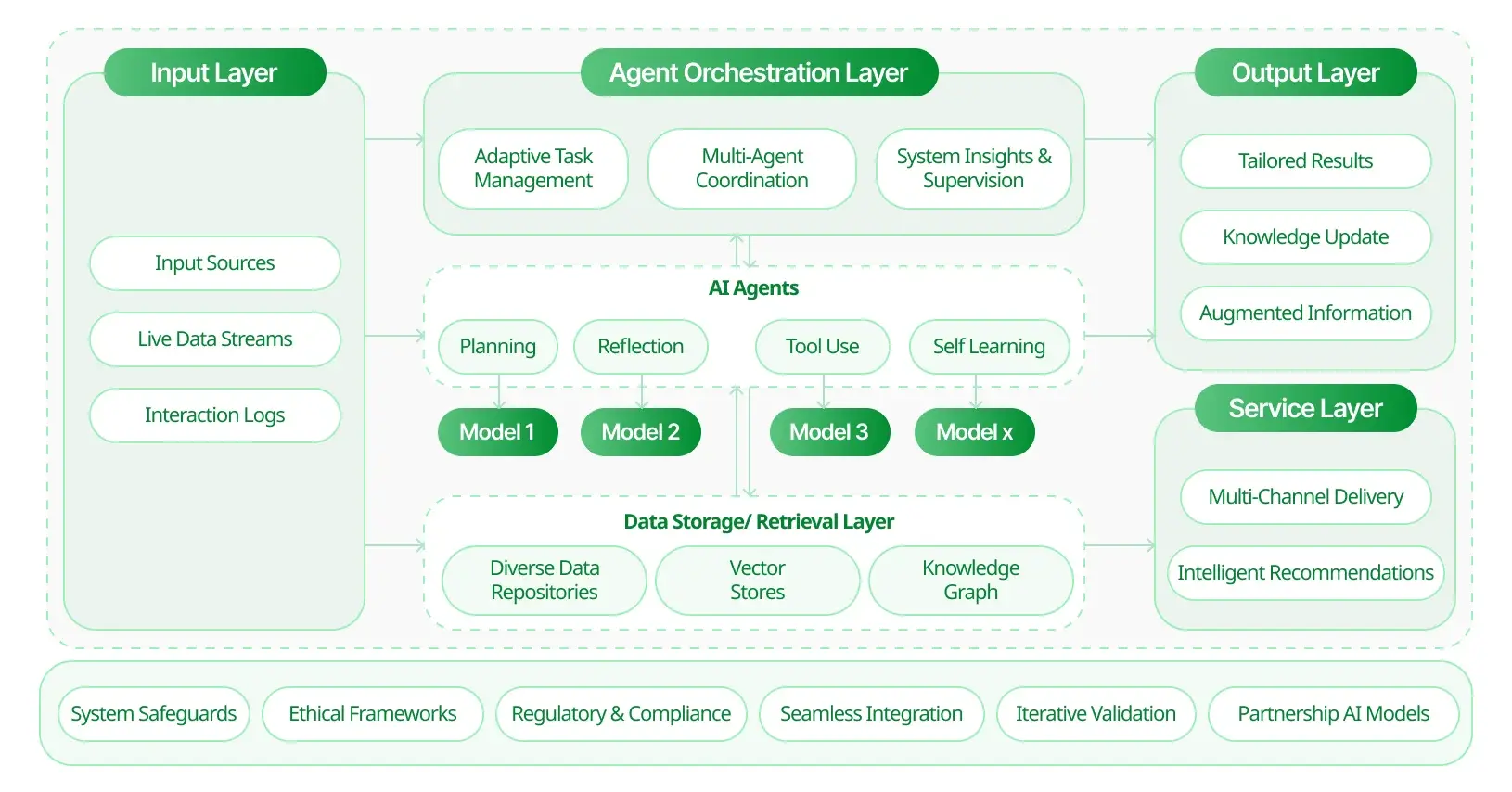
To understand what PYXA.AI actually does at a technical level, it helps to understand the architecture of modern AI-powered content and workflow systems — a domain that has evolved with remarkable speed since the general availability of large language models (LLMs) beginning in earnest with GPT-3 in 2020.
The foundation of any contemporary AI content creation system is the large language model, a neural network trained on vast corpora of text to develop probabilistic models of language that can be applied to generation, summarization, classification, question answering, and many other tasks. As of 2025-2026, the leading foundation models include OpenAI's GPT-4o and o-series models, Anthropic's Claude 3 and Claude 4 families, Google's Gemini family, and Meta's open-source Llama 3 series, among others. These models have become commoditized inputs — available via API at decreasing cost — which means that the competitive differentiation for AI service companies now lies primarily above the model layer.
Above the model layer, several architectural components define the sophistication of an AI content system:
Retrieval-Augmented Generation (RAG) is perhaps the most important practical innovation in making LLMs useful for business applications. Raw LLMs are limited by their training cutoff date and by the fact that they cannot access proprietary client information. RAG addresses both limitations by combining the language generation capabilities of the LLM with a retrieval system that can query up-to-date, client-specific knowledge bases in real time. When a user asks a PYXA.AI-powered customer service chatbot about a specific product return policy, the system doesn't rely on what the LLM happened to learn during training; it retrieves the relevant policy document from the client's knowledge base and uses the LLM to formulate a natural language response. This is the technical mechanism behind the "AI-powered customer service chatbot for a leading e-commerce platform" described in the base article.
Prompt engineering and system prompting is the practice of crafting the instructions and context provided to an LLM to shape its outputs toward desired characteristics. This is less glamorous than model development but enormously consequential in practice. A well-engineered system prompt can dramatically improve the consistency, quality, and appropriateness of AI outputs for a specific use case — and this expertise is genuinely scarce and valuable. It is a craft that combines linguistics, psychology, knowledge of model behavior, and domain expertise.
Fine-tuning and model customization allows AI service companies to adapt foundation models to specific use cases, styles, or knowledge domains by training them further on curated datasets. This is more resource-intensive than prompt engineering but can achieve greater depth of adaptation, particularly for highly specialized tasks or distinctive brand voices. Fine-tuned models can learn to write in a specific company's tone, use specific terminology, and adhere to specific formatting conventions in ways that prompt engineering alone cannot reliably achieve.
Agentic workflows represent the current frontier of practical AI application. Rather than simply answering questions or generating single outputs, agentic AI systems can decompose complex tasks into sequences of steps, take actions (searching the web, writing files, calling APIs), evaluate their own outputs, and iterate toward goals with minimal human intervention. The development of reliable agentic systems is one of the most active areas of AI research and product development in 2025-2026. For PYXA.AI, agentic capabilities open the possibility of systems that don't just generate content but plan content strategies, execute multi-step publishing workflows, monitor performance, and iterate based on results.
Vector databases and semantic search provide the infrastructure for RAG systems and other applications that require finding semantically relevant information from large corpora. Tools like Pinecone, Weaviate, Chroma, and pgvector (a PostgreSQL extension) have become standard infrastructure components for any serious AI application.
Understanding this technical stack matters because it defines the actual competitive landscape for a company like PYXA.AI. The company is not competing primarily on model capability (where the major AI labs hold decisive advantages), but on its ability to assemble and configure these components intelligently for specific client needs, wrap them in intuitive interfaces, and maintain and improve them over time. This is a services-and-engineering business as much as a technology business.
Natural Language Processing: The Engine of Intuitive Interaction
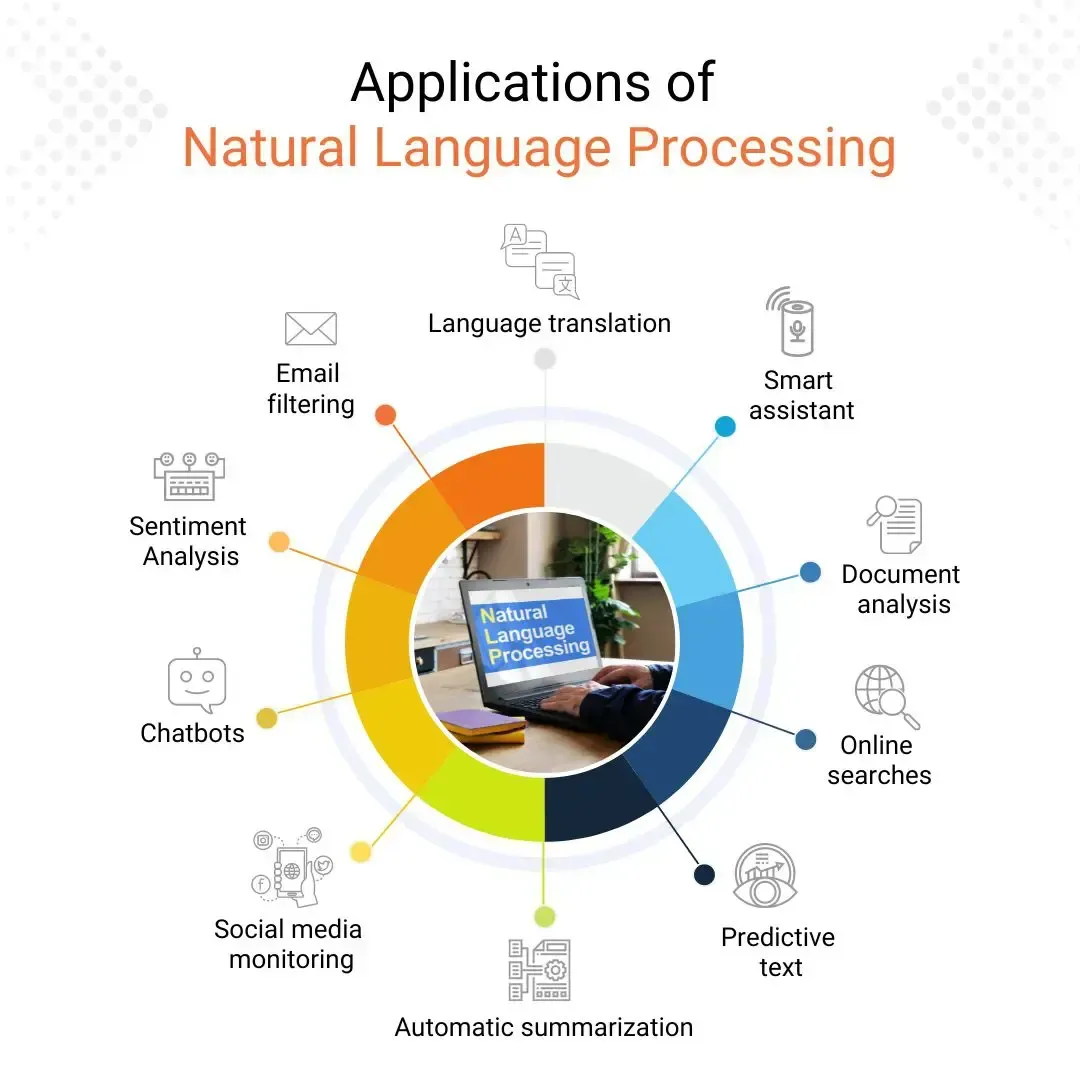
Natural language processing deserves its own examination because it represents both PYXA.AI's most powerful tool and the domain most freighted with philosophical complexity and practical limitation.
The modern field of NLP traces its theoretical roots to Noam Chomsky's generative grammar, developed in the late 1950s, which proposed that human language follows deep structural rules and that understanding language means extracting those structural relationships. Early computational NLP systems were rule-based, attempting to encode linguistic knowledge explicitly in symbolic form. These systems were brittle — effective in narrow domains but failing catastrophically when confronted with the ambiguity, context-dependence, and creative flexibility of real human language.
The statistical revolution in NLP began in earnest in the 1990s, pioneered by researchers like Frederick Jelinek at IBM and later Geoffrey Hinton and colleagues who applied neural networks to language modeling. The critical insight was that language patterns could be learned from data rather than encoded by linguists — a shift that proved enormously powerful as data and compute scaled. By 2017, the Transformer architecture introduced by Vaswani et al. in "Attention Is All You Need" created the architectural foundation for modern LLMs, enabling parallel processing of long sequences and the capture of complex long-range dependencies in text.
The practical consequences of this evolution for businesses are profound. Systems that can understand natural language instructions, generate coherent and contextually appropriate text, translate between languages, classify sentiment, extract structured information from unstructured text, and reason through multi-step problems are now deployable at production scale. For PYXA.AI's customer service chatbot applications, this means systems that can handle the genuine complexity of customer inquiries — which rarely fit neatly into decision trees — with a degree of flexibility and natural expression that rule-based systems could never achieve.
But NLP also introduces a set of well-documented failure modes that any AI agency must manage. Hallucination — the tendency of LLMs to generate confident-sounding statements that are factually incorrect — remains a significant challenge, particularly in high-stakes domains like healthcare, legal services, or financial advice. Bias amplification is another: LLMs trained on internet-scale text inherit and may amplify the biases present in that text, with potential consequences for fairness and inclusivity in generated content. Context window limitations constrain the amount of information a model can consider simultaneously, which matters for applications requiring reasoning over long documents. And the fundamental problem of evaluation — reliably measuring whether an AI system is actually doing what we want it to do — remains harder than it appears.
For PYXA.AI, these failure modes are not abstract theoretical concerns; they define the parameters of responsible product development. A customer service chatbot that confidently provides incorrect product information damages client relationships. Content generation systems that produce biased output create legal and reputational risk. The mitigation of these risks — through careful system design, output validation, human-in-the-loop review processes, and continuous monitoring — is an unglamorous but essential part of what a competent AI agency must deliver.
The UX/UI Philosophy: Intuitiveness as Epistemic Humility
PYXA.AI's emphasis on intuitive design is worth examining as a design philosophy rather than merely a marketing differentiator, because it reflects a set of commitments about the relationship between human cognition and technology that are increasingly influential in the AI space.
The traditional software design paradigm placed the burden of adaptation on the user: learn the software's logic, adopt its vocabulary, work within its categories. This approach was pragmatically necessary when computing resources were scarce and user interfaces were technically constrained. But it also encoded an implicit epistemological assumption: that software designers understood users' work better than users themselves did, and that efficiency meant aligning user behavior to software logic.
User-centered design, pioneered by researchers like Donald Norman (whose 1988 book "The Design of Everyday Things" remains foundational) and championed by practitioners from IDEO and other design firms, inverted this assumption. Good design, in Norman's framework, makes the "affordances" of objects and systems legible — the user should be able to perceive, without instruction, what actions are possible and appropriate. Applied to software, this means designing interfaces that align with users' existing mental models of their work rather than imposing new cognitive frameworks.
The AI dimension adds another layer of complexity to this challenge. AI systems are, almost by definition, complex and partially opaque in their behavior. A neural network generating text or recommendations does not follow explicit rules that can be cleanly communicated to users; its outputs emerge from billions of parameters in ways that even its creators cannot fully explain. This creates what researchers call the "explainability problem" in AI design: how do you build intuitive interfaces for systems whose internal logic is genuinely difficult to introspect?
PYXA.AI's multi-disciplinary team, which the base article mentions combines software engineers, data scientists, and UX/UI designers, is the organizational response to this challenge. The productive tension between these disciplines — engineers thinking about what is computationally achievable, data scientists thinking about what the models can reliably do, designers thinking about what users actually need — is what generates solutions that are simultaneously technically sophisticated and humanly usable.
This is also why the "innovation team" structure is not merely organizational housekeeping. It reflects an understanding that the hardest problems in AI application are not purely technical but lie at the intersection of technical capability and human need — what design theorist Horst Rittel called "wicked problems," problems that resist clean formulation and require iterative, multi-perspective engagement.
The Content Creation Market: Landscape, Competition, and Differentiation
The AI content creation market in which PYXA.AI operates has expanded from near-zero to tens of billions of dollars in addressable value in the space of roughly five years — one of the fastest market expansions in the history of the software industry. Understanding this landscape helps situate PYXA.AI's positioning and the challenges it faces.
The market can be roughly segmented by function and by client sophistication:
At the consumer and prosumer end, tools like Jasper, Copy.ai, Writesonic, Rytr, and literally hundreds of others offer AI writing assistance primarily for marketing copy, social media content, and short-form creative work. This market is intensely competitive, has experienced significant price compression as models have become cheaper, and has seen substantial consolidation as venture-funded players burn through capital in search of defensible positions.
At the creative professional end, tools like Midjourney, Adobe Firefly, DALL-E 3, and Stable Diffusion pipelines serve designers, illustrators, and creative directors with image generation capabilities. This market overlaps with the writing tools market at the "all-in-one" end of the spectrum.
At the enterprise end, platforms like Adobe Experience Cloud, Salesforce Einstein, HubSpot's AI features, and proprietary systems built by major consulting firms serve large organizations with complex content operations, sophisticated brand governance requirements, and significant budgets. These solutions emphasize compliance, security, brand control, and integration with existing enterprise systems.
PYXA.AI's market positioning appears to occupy the space between the prosumer tools (too generic, insufficient support, limited customization) and the enterprise platforms (too expensive, too complex, requiring major implementation projects). This is the SME sweet spot — small and medium enterprises with genuine, multi-faceted digital content needs and the budget to pay for professional services, but without the scale to justify enterprise-level solutions.
This is a defensible positioning but not an uncrowded one. Companies like Sprout Social, Hootsuite, and Buffer have moved upmarket into AI-assisted content creation for SMEs. Agencies like the hundreds of "AI-first" digital marketing firms that emerged in 2023-2025 compete in the same space. And generative AI tools from major players like OpenAI (ChatGPT for business, GPTs), Anthropic (Claude teams/enterprise), and Google (Workspace AI) are steadily improving their built-in capabilities in ways that reduce the need for intermediary tools.
PYXA.AI's most defensible competitive position appears to be not in the commodity tool layer but in the client-specific customization and integration layer — the work of understanding a specific client's business, brand, workflow, and technical environment, and configuring AI systems optimally for that specific context. This is a professional services business with AI tools, more than a product business. The distinction matters for business model design, growth dynamics, and long-term defensibility.
Customer Reviews and Market Signals: Reading the Trustpilot Tea Leaves
The reference to PYXA.AI's Trustpilot presence in the base article's imagery provides a window, however narrow, into actual customer experience. Trustpilot, founded in Denmark in 2007, has become one of the primary public repositories of business-to-consumer and business-to-small-business service reviews, and analyzing patterns in reviews often reveals more about a company's actual service dynamics than its marketing materials.
The presence of a company as young as PYXA.AI on Trustpilot at all suggests several things. First, the company is actively soliciting reviews — Trustpilot profiles can be claimed and managed by businesses, and a company of PYXA.AI's size would be unlikely to appear there prominently without deliberate effort. This reflects a sophisticated understanding of digital reputation management: in a market where trust is the primary conversion driver for professional services, public testimonials carry substantial weight.
Second, review platform analysis of AI agencies in this period reveals consistent patterns that likely apply to PYXA.AI's competitive context. Reviews of AI agency services tend to cluster around a few dimensions: quality of initial consultation and scoping (does the agency accurately understand client needs?), speed and reliability of delivery (does the agency meet its commitments?), quality of output (do the AI-generated materials actually serve the client's purpose?), and ongoing support and adaptation (does the agency continue to improve the system over time?).
The specific failure modes most commonly cited in negative reviews of AI agencies during 2024-2026 include: overselling capabilities and underdelivering on specificity (systems that generate generic content rather than genuinely brand-aligned materials), poor handling of model updates (when underlying AI models are updated, behavior can change in ways that require system reconfiguration), insufficient attention to the data quality upstream of AI systems (garbage in, garbage out remains stubbornly true), and inadequate human review processes for high-stakes outputs.
These failure modes map directly onto the challenges of PYXA.AI's market. Managing them well — through clear expectation-setting in sales, robust quality assurance processes, proactive communication about system changes, and structured processes for content review — is the difference between growing a reputational flywheel and struggling with churn.
Paradoxes and Edge Cases: Where the AI Agency Model Gets Complicated
No examination of a company operating at the frontier of AI application would be complete without dwelling on the genuine paradoxes and edge cases that complicate the picture.
The Authenticity Paradox
AI-generated content faces a fundamental tension between efficiency and authenticity. The marketing value of content — whether it's a brand story, a social media post, or a customer service interaction — depends substantially on its perceived authenticity, its quality of seeming genuinely human and genuinely thoughtful. AI systems can produce content that is highly polished, grammatically correct, and structurally sophisticated; but they produce it through statistical pattern matching, not through the lived experience and genuine intention that gives human communication its affective power.
As AI content proliferates, this paradox sharpens. Audiences develop instincts for AI-generated text — not through conscious analysis but through a kind of gestalt recognition of certain patterns (the characteristic hedging, the balanced-but-not-committed structure, the peculiar way AI systems tend to reach for slightly unusual synonyms). This recognition increasingly functions as a trust signal in reverse: content that feels AI-generated feels less authentic, regardless of its technical quality.
PYXA.AI's response to this paradox, implied if not stated, is likely to emphasize human oversight and brand-specific fine-tuning as mechanisms for injecting genuine authorial intention into AI-assisted production. But the tension does not fully resolve. The company is operating in a market where its core product creates the very problem that its clients are hiring it to manage.
The Data Privacy Recursion
AI systems improve through data. To provide better, more personalized, more contextually appropriate outputs, AI systems need to process more information about their users' contexts, preferences, and behaviors. But this creates a privacy recursion: the clients who hire PYXA.AI to handle their AI needs are simultaneously becoming data points that train and improve the underlying systems — potentially benefiting competitors.
Swiss data protection law (the revised Federal Act on Data Protection, which came into force in 2023 and aligned closely with GDPR) provides a rigorous legal framework for managing this recursion, and PYXA.AI's Swiss domicile gives it credible standing to make strong data protection commitments. But the technical and organizational implementation of those commitments — ensuring that client-specific data truly remains siloed, that improvements learned from one client's use don't bleed into another client's system, that data deletion requests can be honored at the model level as well as the database level — is genuinely hard. The technical state of the art for machine learning privacy (differential privacy, federated learning, model unlearning) is advancing but remains imperfect.
The Expertise Displacement Dilemma
AI tools in the content creation space are caught in a characteristic innovation paradox: they are most valuable to clients who already have substantial expertise in what they're trying to create, because expert users can reliably evaluate outputs, identify errors, and provide the nuanced guidance that shapes good AI assistance. But the marketing of these tools often emphasizes their value to non-experts, suggesting they can democratize capabilities that previously required specialized training.
This creates a displacement dilemma for agencies like PYXA.AI. If the agency succeeds in deploying AI tools that genuinely empower non-experts to create professional-quality content, it risks commoditizing the very services it's selling. Why hire an AI agency to set up and manage your content creation system if the system is intuitive enough that your internal marketing coordinator can manage it independently after a brief training period?
The sustainable answer lies in continuous complexity escalation: clients who master current AI capabilities quickly graduate to wanting more sophisticated capabilities, more integrated systems, more custom solutions. The agency's value proposition shifts from "we'll set up a system you can use" to "we'll keep building the system to match your growing capabilities and ambitions." This is a subscription-services model, not a project-delivery model, and it requires a different kind of client relationship management.
The Evaluation Problem
Perhaps the most intellectually interesting challenge in AI agency work is the evaluation problem: how do you know if the AI system you've built is actually good? For traditional software, evaluation is relatively tractable — does the button do what it says? Does the calculation produce the right number? But for AI content systems, quality is subjective, context-dependent, and often only revealed over time through its effect on the client's business outcomes.
A customer service chatbot might produce responses that seem fluent and helpful in testing but actually leave customers slightly more confused — a failure mode that manifests as elevated escalation rates and customer satisfaction scores that erode gradually rather than collapsing suddenly. A content generation system might produce content that passes internal review but subtly diverges from brand voice in ways that accumulate into reputational drift over months.
Addressing the evaluation problem rigorously requires building feedback loops from business outcomes to system design, establishing clear metrics before deployment, running controlled experiments, and maintaining the statistical literacy to interpret ambiguous results correctly. This is evaluation design work that most small agencies lack the expertise or incentive to invest in — and it represents a genuine differentiator for agencies that take it seriously.
Cross-Domain Connections: What AI Agencies Can Learn from Adjacent Fields
The challenges PYXA.AI faces have instructive analogues in adjacent fields that have navigated similar tensions between systematization and judgment.
Management Consulting
The management consulting industry, particularly the large strategy firms (McKinsey, BCG, Bain), has spent decades building methodologies that make expert judgment partially systematizable and deliverable at scale. The frameworks they've developed — the BCG matrix, MECE structuring, hypothesis-driven problem solving — are tools for making complex, judgment-intensive work more reliable and teachable. They don't eliminate the need for expertise; they organize expertise for replication.
AI agencies face an analogous challenge: how do you systematize the judgment involved in building good AI systems for clients, so that quality doesn't depend entirely on the specific individuals working on a given engagement? The answer probably involves developing proprietary methodologies, templates, and evaluation frameworks that encode best practices — intellectual property that compounds in value as the agency accumulates experience across diverse client engagements.
Pharmaceutical Drug Discovery
This might seem an unlikely parallel, but the structural similarity is illuminating. Pharmaceutical companies spend enormous resources developing and validating drug candidates, knowing that most will fail and that the few successes must generate enough value to subsidize the failures. The critical enabler is robust evaluation methodology: clinical trials provide rigorous, outcome-linked assessments of whether a drug actually works.
AI agencies need something analogous — not randomized controlled trials, but disciplined frameworks for evaluating AI system performance against business outcomes, accumulating knowledge about what works and what doesn't across different use cases and industries. The agencies that build this kind of systematic knowledge will compound their advantage over time; those that operate purely on intuition will find their performance increasingly inconsistent as they scale.
Architecture and Urban Planning
The tension between generic solutions and site-specific design has been central to architecture for centuries. The International Style of the mid-twentieth century represented a belief that universal principles of good design could produce good buildings everywhere; the postmodern reaction, led by figures like Robert Venturi and Jane Jacobs, argued that context, history, and community specificity were irreducible — that a building designed for everywhere was a building designed for nowhere.
PYXA.AI navigates an analogous tension in its market positioning. Generic AI tools (the International Style equivalent) can be applied everywhere but may fit nowhere perfectly. Deeply customized, client-specific solutions (the contextual architecture equivalent) fit their specific environment well but don't scale. The all-in-one platform aspiration represents an attempt to find a middle path — a vocabulary of elements flexible enough to configure for different contexts while maintaining a coherent design logic. Whether this aspiration can be realized without sacrificing either flexibility or coherence remains one of the central open questions in the AI agency business model.
Current Research Frontiers Relevant to PYXA.AI's Work
Several active research areas in AI and HCI (human-computer interaction) have direct relevance to PYXA.AI's technical work and will shape the capabilities available to it over the coming years.
Multimodal models — systems that can process and generate across text, images, audio, and video simultaneously — are advancing rapidly. GPT-4o, Google's Gemini 1.5 Pro, and Anthropic's Claude 3.5 Sonnet demonstrated in 2024-2025 that genuinely useful multimodal reasoning is achievable. For a content creation agency, multimodal capabilities open possibilities for systems that can analyze a client's existing visual brand identity and generate content that aligns with it across multiple formats — a workflow currently requiring significant human coordination between tools.
Reasoning and planning — the ability of AI systems to decompose complex goals into sequences of steps, reason about uncertainty, and plan actions toward objectives — is the research frontier most directly relevant to agentic AI applications. The "o-series" models from OpenAI, which use extended chain-of-thought reasoning, and similar approaches from other labs, are pushing the boundary of what AI systems can reliably accomplish in complex, multi-step tasks. For customer service applications and complex content operations, improved reasoning capability translates directly into systems that can handle more sophisticated use cases reliably.
AI alignment and interpretability research — understanding what AI systems are actually doing and ensuring their behavior reliably corresponds to intended goals — has moved from purely academic concern to urgent practical priority. The rapid deployment of AI systems in business contexts has revealed failure modes (including jailbreaking, prompt injection attacks, reward hacking, and subtle value misalignment) that can have significant real-world consequences. For PYXA.AI, interpretability research provides increasingly useful tools for understanding and controlling system behavior in ways that improve reliability and client trust.
Efficient model serving — reducing the compute cost and latency of running large AI models — has improved dramatically through techniques like model quantization, speculative decoding, and hardware-specific optimization. These improvements directly affect the economics of AI services: cheaper inference means lower costs for API-based businesses like PYXA.AI, improved margins, and the ability to provide more AI "touches" per dollar of client spending.
Open Questions and Controversies
Any honest examination of a company like PYXA.AI must acknowledge the genuine uncertainties and controversies that surround its domain.
Will AI agencies consolidate? The AI agency space is currently fragmented — hundreds of small agencies have emerged globally, each claiming some combination of AI expertise and industry specialization. Historical patterns in professional services suggest that fragmented markets tend toward either consolidation (through acquisition and competitive elimination) or persistent fragmentation around deeply local or highly specialized niches. Which path the AI agency market takes will depend significantly on whether platform providers move to commoditize the services layer, and how quickly clients develop sophisticated enough in-house AI capabilities to reduce their dependence on external agencies.
What is the durable value of human creative work? PYXA.AI and agencies like it are built on the premise that AI augments human creative and operational work rather than replacing it. But the direction of capability development suggests this premise will face increasing stress. If AI systems can reliably generate not just competent but genuinely excellent content — content that outperforms human-generated equivalents on measurable outcomes — the human augmentation model may give way to systems that primarily need human oversight rather than human contribution.
Who owns AI-generated work? Legal frameworks for intellectual property in AI-generated content remain unsettled in most jurisdictions. If PYXA.AI generates content for a client using foundation models trained on copyrighted material, who owns the output? Who bears liability if the output is found to infringe? These questions are moving through courts and regulatory bodies in Europe, the United States, and elsewhere, and the outcomes will materially affect the business models of AI agencies.
Can AI systems reliably serve multilingual markets? Switzerland's linguistic diversity (German, French, Italian, and Romansh are all official languages) makes this question immediately relevant for PYXA.AI. While leading LLMs perform well in major European languages, performance in less-resourced languages or in language-mixing contexts (Swiss German, for example, differs substantially from standard German) remains uneven. An agency serving Swiss and broader European clients must navigate these inconsistencies carefully.
Real-World Implications: What PYXA.AI's Success or Failure Would Tell Us
The trajectory of companies like PYXA.AI carries implications that extend well beyond a single Swiss agency.
If PYXA.AI succeeds — if it builds a scalable, profitable, reputationally excellent business on the all-in-one AI agency model — it provides an important proof point that AI tools can be successfully integrated into human-centered professional service businesses without sacrificing quality or authenticity. It would validate the intuition that the most valuable deployment of AI is not in replacing human expertise but in making that expertise more accessible, more consistent, and more efficiently applied.
If it struggles — if it finds the all-in-one model untenable, or if the pace of platform-side capability development erodes its market position, or if the challenge of maintaining quality across a growing client base proves harder than anticipated — it will reveal important limits of the current AI agency model and suggest that the market will evolve toward either pure platform products or deeply specialized boutiques rather than broad-service generalists.
Fischer's background makes him an unusually well-positioned observer of his own company's dynamics. Having spent seven years in a high-stakes, client-relationship-intensive service business before building a technology company, he understands the gap between what technology promises and what it requires to deliver. This experiential wisdom is rare in a technology founding team and may prove to be PYXA.AI's most undervalued asset.
The Deeper Stakes: AI, Human Flourishing, and the Design of Tools
It is worth stepping back, finally, to consider the broader stakes of what AI agencies like PYXA.AI are attempting to do, and what success would mean at a societal level.
The language of PYXA.AI's mission — "designing innovative and intuitive digital tools to simplify daily life" — echoes a long tradition of humanistic technology design that stretches from Buckminster Fuller's "design science revolution" to the human potential movement of the 1970s to the accessibility advocates who fought to make digital tools usable by people with disabilities. At its best, this tradition has produced technologies that genuinely extend human capability in democratizing ways: the word processor that made professional-quality writing accessible to anyone, the smartphone that put navigational, communicational, and informational capabilities in billions of pockets.
At its worst, the promise of simplicity has been used to mask complexity that has merely been displaced rather than eliminated — moved from the user experience into data practices, governance structures, or downstream social consequences that users cannot easily see or evaluate.
AI content creation tools sit at this fork in the road. They genuinely democratize capabilities that previously required specialized training — graphic design, copywriting, data analysis — making them accessible to small businesses and individuals who couldn't previously afford dedicated expertise. This is a real and meaningful benefit. But they also displace the humans who provided those specialized services, generate environmental costs through the energy demands of large model inference, create new attack surfaces for misinformation, and risk homogenizing the diversity of expression that emerges when many different people create things differently.
For PYXA.AI, navigating this fork is not merely a philosophical question but a practical imperative. Companies that build genuinely beneficial AI tools — that improve their clients' actual outcomes, treat the humans their tools affect with dignity, and maintain honesty about what AI can and cannot do — are building something worth building. Companies that merely ride the AI marketing wave while delivering generic outputs and overpromising capabilities will contribute to the backlash that makes the entire category harder to sell.
Fischer's seven years of managing a service business where client trust was earned slowly and lost quickly gives him direct experiential grounding in the difference between genuine value creation and the appearance of it. In a market flooded with AI promises, that grounding may be the most important technological asset PYXA.AI possesses — not a model, not a platform, not a methodology, but a founder who has learned, in the most practical terms, what it means to actually serve someone well.
Conclusion: A Company at the Edge of the Possible
PYXA.AI is, in many ways, a company that its own existence predicts: a natural consequence of the convergence of accessible AI capabilities, a fragmented market hungry for integration, a Swiss ecosystem that rewards precision and trust, and a founder whose biographical arc led him exactly to this problem at exactly the moment when it became technically tractable.
The deep story of PYXA.AI is not the story of one company but the story of an entire industry learning what AI is actually for — not a replacement for human judgment but a lever for human capability, not a source of generic competence but a substrate for specialized excellence, not a tool for the few who can navigate its complexity but, at its best, a genuinely democratizing technology that makes the sophisticated accessible.
The questions that will determine PYXA.AI's specific trajectory — whether the all-in-one model can maintain quality at scale, whether Swiss positioning provides durable differentiation, whether Fischer's client-centered philosophy can be systematized without being bureaucratized — are genuinely open. The answer will be written not in press releases or product announcements but in the accumulated experience of the clients the company serves, in the Trustpilot reviews yet to be written, in the problems solved and the problems discovered in the process of trying.
What makes PYXA.AI worth studying, beyond its intrinsic interest as a technology company, is what it reveals about this pivotal moment: a moment when the tools of intelligence are being distributed, when the boundaries between creative and operational work are dissolving, and when small teams in small cities — a handful of engineers, designers, and data scientists in Sierre, Switzerland — can build things of genuine consequence. The Everything of Everything is, in this light, quite literally a story about the redistribution of technological power to places and people that previous generations of infrastructure excluded. PYXA.AI is one small but illuminating node in that much larger network.
This article draws on publicly available information about PYXA.AI, its founder, and the broader AI agency ecosystem, contextualized within relevant research in artificial intelligence, software design, business strategy, and the history of technology. Where specific claims about PYXA.AI's internal operations are not independently verifiable, they are clearly framed as analytical inference from available evidence.