Project Hyperion: The Full Architecture of an Impossible Dream
There is a peculiar kind of hubris embedded in the generation ship concept — one that is simultaneously mankind's most audacious expression of hope and its most sobering confrontation with mortality. To design a vessel intended to carry human beings across the interstellar void, knowing that the people who board it will never see the destination, and that the people who arrive will never have known Earth, is to engage in a project that transcends engineering entirely. It becomes philosophy, ethics, genetics, political theory, ecology, and psychology all folded into one staggering question: can a civilization survive its own transplantation?
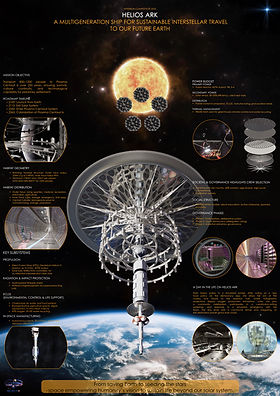
Project Hyperion, as a formal design competition and research framework, represents the most rigorous contemporary attempt to answer that question with equations rather than fiction. Organized under the auspices of the Initiative for Interstellar Studies (i4is) — the same British nonprofit behind the Icarus Interstellar project and the Project Daedalus revival — Project Hyperion asks engineers, designers, biologists, and social scientists to produce technically credible blueprints for a crewed interstellar vessel. But to understand what makes Hyperion genuinely radical, and genuinely difficult, you have to start much further back than the competition briefs and design submissions. You have to start with why human beings began dreaming of starships in the first place, and what that dream has revealed — over more than a century of increasingly serious contemplation — about the limits of human civilization itself.
The Deep History of an Idea That Refused to Stay Fiction
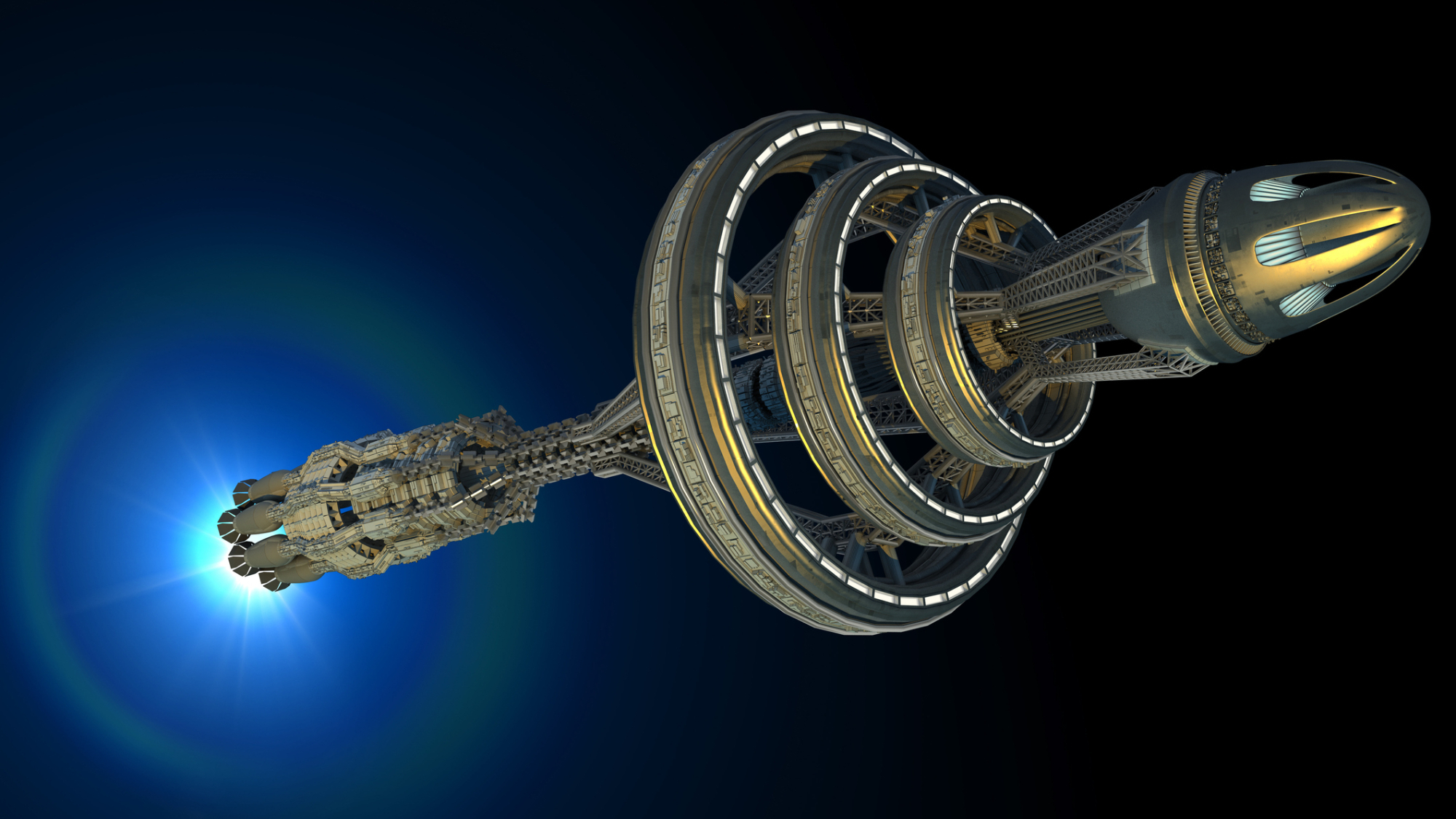
The intellectual lineage of the generation ship is older than rocketry itself. In 1928, the British philosopher and biologist J.D. Bernal published The World, the Flesh and the Devil, a speculative essay that remains startlingly prescient. Bernal imagined self-contained spherical habitats — later called "Bernal Spheres" — housing thousands of people in closed ecological systems, drifting through space over timescales that would span lifetimes. Bernal was explicit that the voyage itself would constitute a civilization, not merely a transit. "The world," he wrote, "cannot exist in isolation from other worlds." He understood intuitively that the act of building a generation ship would require answering every fundamental question about human social organization simultaneously.
Konstantin Tsiolkovsky, the Russian schoolteacher who essentially invented theoretical astronautics, had also speculated along similar lines, imagining cylinder-shaped habitats with artificial gravity produced by rotation. But it was the American rocket pioneer Robert Goddard who first committed something approaching a technical sketch to paper, imagining in private notes from 1918 a vessel that could ferry a "remnant of human race" to another star, preserved in cold sleep. Goddard's notebooks weren't published during his lifetime — he was already suffering the derision of the popular press for suggesting rockets could work in a vacuum — and so the idea percolated largely through science fiction for the next several decades.
The fiction, however, was doing important intellectual work. Robert Heinlein's 1941 novella Universe and its sequel Common Sense introduced what may be the most psychologically disturbing scenario in all of generation ship literature: a crew that has entirely forgotten they are on a ship. After generations, the inhabitants of the Vanguard have developed their own folklore and religion, and the concept that their metal world moves through space toward a destination has become heresy. When the protagonist rediscovers the truth, he is treated as a madman. Heinlein was writing about epistemological isolation — about what happens when an enclosed community loses the institutional memory of its own purpose — and engineers working on Project Hyperion still cite this narrative as a genuine design constraint. How do you build a vessel whose inhabitants, ten generations hence, will still understand what it is for?
Ursula K. Le Guin explored a related but distinct problem in The Dispossessed (1974) and in various short fiction, asking not just whether a generation ship could be built but whether the society aboard it would remain recognizably human by any metric its founders would endorse. Isaac Asimov was characteristically more technical, worrying about the genetic bottleneck problem — a ship carrying too few people would succumb to inbreeding depression within a few generations. His back-of-the-envelope calculations suggested a minimum viable population that most early ship designs couldn't accommodate.
The crucial pivot from pure speculation to serious engineering came in the 1970s, when Gerard K. O'Neill at Princeton began publishing rigorous analyses of large-scale space habitats. His 1974 paper in Physics Today, and the subsequent book The High Frontier (1976), demonstrated that rotating cylindrical habitats could sustain Earth-like gravity, agriculture, and ecology at scales accommodating tens of thousands of people. O'Neill's work was not explicitly about interstellar travel — he was primarily interested in near-Earth industrial development — but the habitability engineering he developed became a foundational reference for every generation ship study that followed.
The 1970s also produced the British Interplanetary Society's Project Daedalus, a two-year engineering study (1973–1978) that produced the most detailed pre-computational blueprint for an unmanned interstellar probe. Though Daedalus was unmanned and thus sidestepped the biological challenges entirely, it established a culture of serious interstellar engineering that would eventually lead to the Icarus project, and then to Hyperion. The lineage is direct, institutional, and deliberate.
What Project Hyperion Actually Is — and What It Isn't
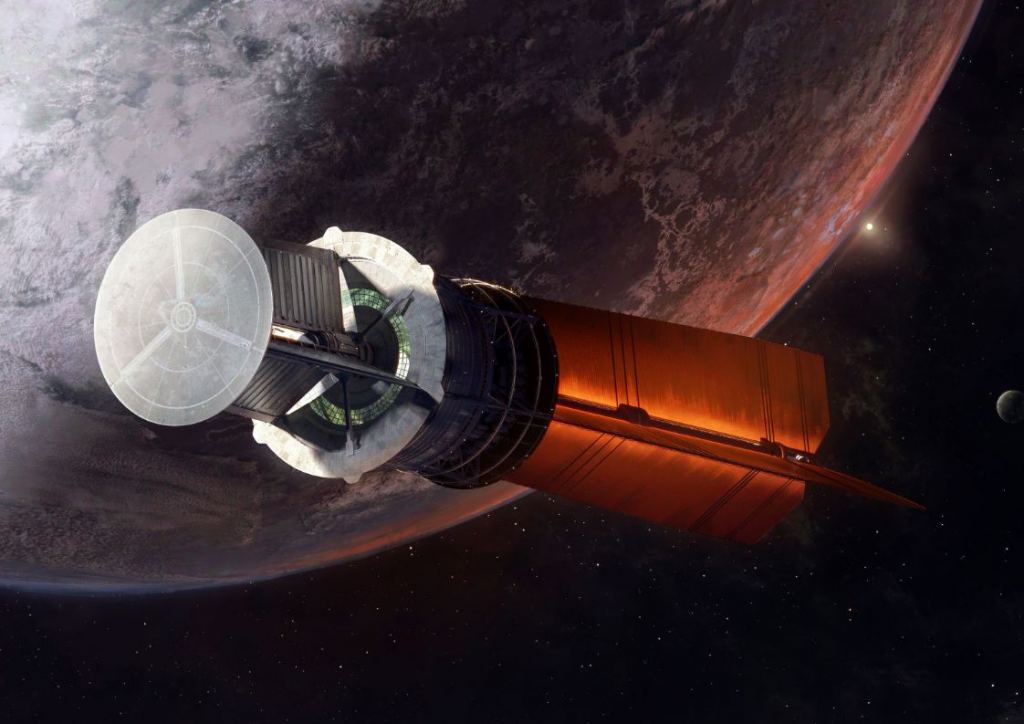
It is worth being precise about what Project Hyperion consists of, because the term has been used in multiple contexts and the distinctions matter considerably.
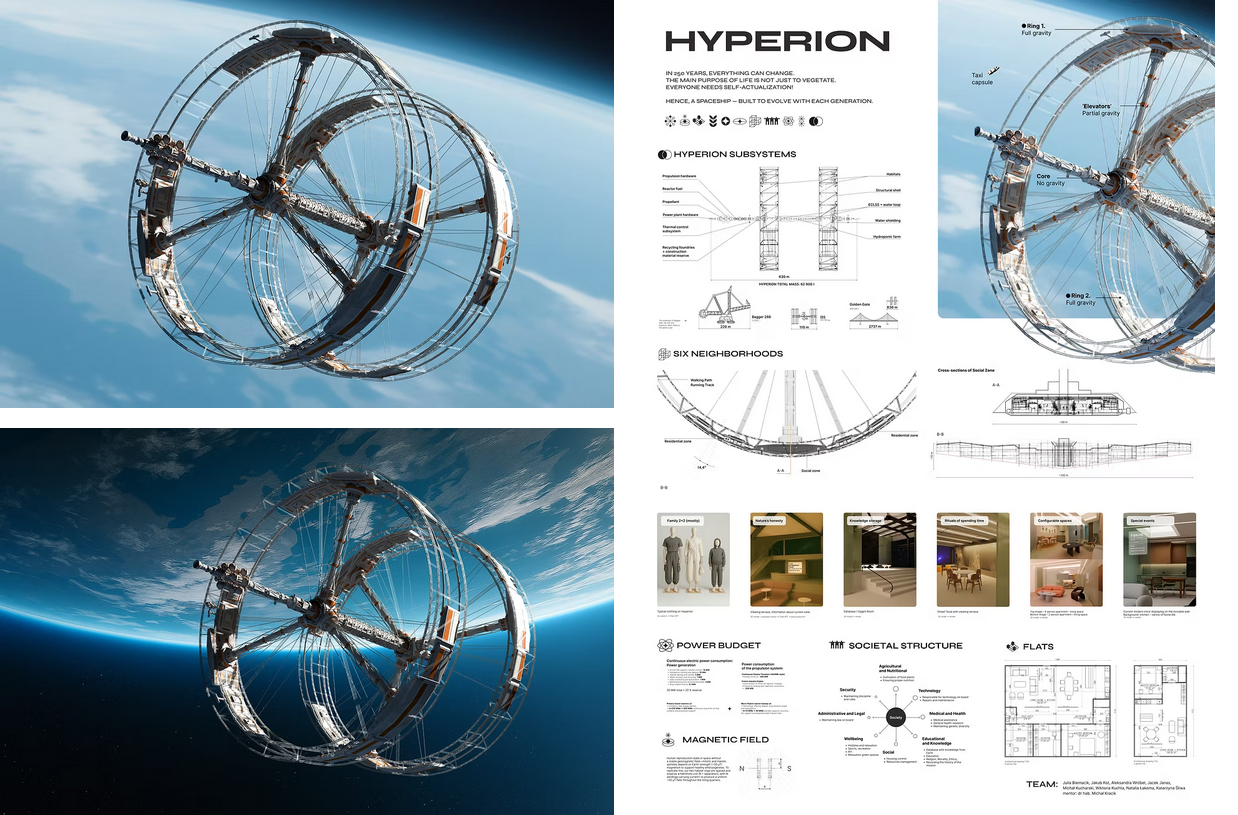
The Project Hyperion associated with i4is is structured as an open design competition inviting multidisciplinary teams to propose credible architectures for a crewed interstellar vehicle capable of carrying a founder population to a nearby star system — most commonly Alpha Centauri, at 4.37 light-years, or Proxima Centauri, at 4.24 light-years. The competition does not require a single winning design. Rather, it functions as a crowdsourced engineering study, producing a landscape of approaches that collectively map the solution space.
The competition's 2025 iteration received entries spanning nuclear pulse propulsion, laser sail hybrids, and even more speculative drives, but also — crucially — sophisticated social and biological architecture. The winning entries, announced in August 2025 and covered by outlets including NextBigFuture, were distinguished not primarily by their propulsion cleverness but by their systemic coherence: the degree to which their biological, social, psychological, and engineering systems were genuinely integrated rather than bolted together as afterthoughts.
This is not the same "Hyperion" as the Hyperion Research technology forecasting company, or the various other commercial and governmental projects that have borrowed the name. The confusion is common and the existing article unfortunately conflates some of these entities. Mark Nossokoff, Earl Joseph, and Bob Sorensen are associated with Hyperion Research, an HPC industry analysis firm, not with i4is's Hyperion interstellar project. This article will focus exclusively on the interstellar design initiative.
The Mathematics of Interstellar Time
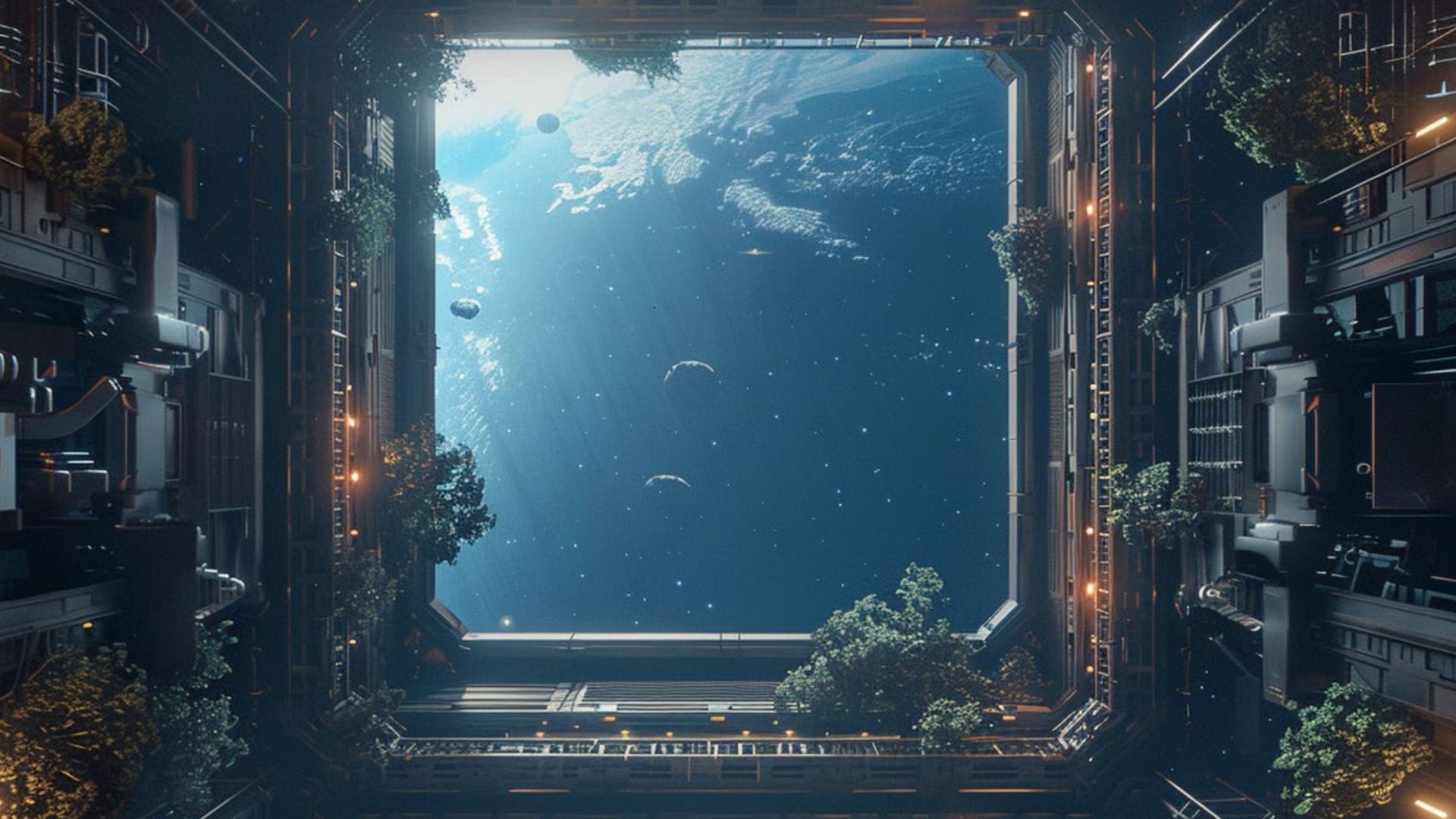
Before examining specific systems, it is worth sitting with the numbers, because they are the source of everything that makes generation ships both necessary and nightmarish.
The nearest star to Earth, Proxima Centauri, is approximately 4.24 light-years away, or roughly 40 trillion kilometers. The fastest spacecraft humanity has ever launched, the Parker Solar Probe, achieves speeds of approximately 690,000 kilometers per hour during its perihelion passes. At that velocity, reaching Proxima Centauri would take approximately 6,600 years. The New Horizons probe, launched to Pluto, travels at about 58,000 km/h in its current trajectory — which would put it at Proxima in approximately 78,000 years.
To reach Proxima in a timeframe compatible with human generations — conventionally set at around 100 years for a "fast" mission or 1,000 years for a more conservative one — a vessel would need to travel at between roughly 0.4% and 4% of the speed of light. Achieving even 0.1% of light speed requires energy on an extraordinary scale. The kinetic energy of a 1-million-ton ship (a plausible lower bound for a fully equipped generation vessel) traveling at 0.1c is approximately 4.5 × 10^23 joules — comparable to the total solar energy intercepted by Earth over several months.
This is why propulsion is not merely a technical challenge but an almost civilizational one. No current technology even approaches this energy budget. The fuel-to-payload ratios involved in chemical rockets make them completely irrelevant at interstellar distances. Ion drives, while efficient, produce too little thrust. That leaves a handful of genuinely candidate technologies, each with its own extraordinary technical and ethical baggage.
Propulsion: A Taxonomy of Impossible Engines
Nuclear Thermal Propulsion
The existing article identifies nuclear thermal rockets (NTR) as Project Hyperion's primary propulsion focus, and this is accurate for the near-term, more conservative design proposals. NTRs work by passing a propellant — typically liquid hydrogen — through a nuclear reactor core, heating it to extremely high temperatures (up to 2,700°C in NERVA-class designs), and expelling it through a nozzle. The specific impulse (Isp) achievable is roughly twice that of the best chemical rockets — around 800–1,000 seconds versus 450 seconds for liquid hydrogen/oxygen engines.
The United States actually flew NTR tests under Project NERVA in the 1960s and early 1970s, with reactors producing up to 1,650 megawatts of thermal power and demonstrating reliable operation for extended periods. NERVA's XE Prime engine ran for 109 minutes and was considered flight-ready before the program was cancelled along with the broader post-Apollo budget cuts. Modern designs like NASA's DRACO program (Demonstration Rocket for Agile Cislunar Operations) are reviving NTR concepts for near-Earth space operations.
For interstellar purposes, however, NTR alone is insufficient. Even with the most optimistic fuel fractions and vehicle designs, NTR can deliver velocities on the order of tens of kilometers per second — far short of the thousands of kilometers per second needed for even the most patient multi-thousand-year mission. NTR thus functions more as an in-system drive for maneuvering at the destination, or as an acceleration assist at departure, than as the primary interstellar propulsion system.
Nuclear Pulse Propulsion
The most technically credible high-energy propulsion concept remains nuclear pulse propulsion, first seriously studied in the classified Project Orion from 1958 to 1963. The concept is elegant in its brutality: a series of nuclear bombs is detonated behind the spacecraft, and the pressure wave from each blast pushes a large pusher plate, which is connected to the spacecraft via shock absorbers. By detonating bombs at the right rate and yield, the vessel can be continuously accelerated.
Freeman Dyson, who worked on Orion at General Atomics, calculated that a 400,000-ton Orion vehicle — the largest version seriously considered — could accelerate to about 3.3% of the speed of light using thermonuclear bombs. This would put a generation ship at Alpha Centauri in roughly 130 years. Dyson was genuinely enthusiastic, describing Orion as a vehicle "for the expansion of mankind in the universe."
The problem is, of course, the Partial Nuclear Test Ban Treaty of 1963, which prohibits nuclear detonations in space. The political and environmental concerns are real: an Orion launch from Earth's surface would scatter radioactive debris through the atmosphere in quantities that contemporary studies suggest would cause thousands of cancer deaths. A launch from orbit or from deep space avoids this, but requires first getting an enormous ship into orbit by other means.
Project Daedalus, the BIS study, refined nuclear pulse propulsion using inertial confinement fusion rather than fission bombs. Instead of detonating pre-built nuclear devices, Daedalus would pellets of deuterium-helium-3 fuel and compress and ignite them using electron beams, producing fusion microexplosions at a rate of 250 per second. This produces a roughly continuous thrust at a specific impulse of around 1 million seconds — an extraordinary figure that would allow the craft to reach 12% of light speed. The catch: helium-3 is vanishingly rare on Earth, though abundant on the Moon and even more so on the gas giants, particularly Uranus and Neptune. Mining helium-3 from Uranus is itself a civilization-scale engineering project.
Project Icarus, launched in 2009 as the BIS's successor to Daedalus, has spent over fifteen years refining the fusion pellet approach and exploring alternative fuel cycles. Their designs suggest that a fusion pulse drive using deuterium-tritium fuel (more readily available than helium-3) could achieve 5–10% of light speed with appropriate mass fractions.
Laser-Pushed Lightsails
Separately from the nuclear approaches, physicist Robert Forward developed the laser sail concept in the 1980s, later championed at enormous scale by physicist Philip Lubin and his team at UC Santa Barbara. The principle: a sufficiently large, reflective sail is accelerated by a focused laser beam or phased-array laser system, which imparts momentum to the sail without requiring the ship to carry any fuel whatsoever.
The Breakthrough Starshot initiative, announced in 2016 by Yuri Milner and Stephen Hawking, proposed using this approach for gram-scale probes — tiny spacecraft no larger than a postage stamp that could be pushed to 20% of light speed by a 100-gigawatt ground-based laser array and reach Alpha Centauri within 20 years. The engineering challenges are staggering (pointing precision, interstellar medium dust impacts at 0.2c, communication across light-years with a gram-scale transmitter) but not obviously impossible.
Scaling this to a generation ship, however, introduces qualitatively different problems. A vessel with the mass of a generation ship — plausibly millions of tons — would require a laser array of incomprehensible scale. Lubin's own scaling equations suggest that a ship of 10,000 tons would require a laser power of roughly 10^15 watts sustained over years, compared to the 2×10^12 watts of total US electricity generation. This is not a near-term technology. It also requires someone to build a receiver or braking mechanism at the destination — another civilization-scale project — unless the sail can be cleverly configured for deceleration, as Forward himself proposed in a "Retroreflective Sail" configuration where a ring section of the sail is detached and used as a mirror to reflect part of the laser beam backward onto the main sail.
The Antimatter Option
Antimatter propulsion offers the highest theoretical specific impulse of any known propulsion concept — approaching 10^7 seconds or more — because matter-antimatter annihilation converts nearly 100% of mass to energy. A proton-antiproton annihilation produces mainly high-energy pions, which can be directed by magnetic fields to produce thrust.
The problem is production. The world's current antimatter production capacity, centered at CERN's Antiproton Decelerator, produces approximately 10^7 antiprotons per hour, or roughly 10 nanograms per year. A generation ship would need something on the order of hundreds of tonnes of antimatter. Scaling current production to this level would require either a fundamental breakthrough in antimatter production technology or the construction of antimatter factories orders of magnitude larger than CERN, powered by essentially unlimited energy sources. This remains science fiction for the foreseeable future, though researchers like Gerald Smith and Steven Howe have proposed intermediate approaches — antimatter-catalyzed nuclear pulse propulsion, where tiny amounts of antimatter are used to initiate fission or fusion reactions, substantially reducing the antimatter requirement.
The Minimum Viable Population Problem
If propulsion is the most immediately dramatic challenge, the minimum viable population (MVP) question may be the most scientifically fundamental. How many people must board a generation ship to ensure that their descendants, arriving at a new star system potentially a thousand years later, constitute a genetically and demographically healthy founding population for a new world?
Early intuitive answers to this question were catastrophically wrong. The famous "Island Dwarfism" studies and the genetics of the Cheetah population — which passed through a severe bottleneck approximately 10,000 years ago and now shows almost no genetic diversity — demonstrate what happens to species that lose genetic variability. Inbreeding depression becomes severe, and once-rare recessive genetic diseases become common across entire populations.
Cameron Smith, a paleoanthropologist at Portland State University, published what remains the most comprehensive quantitative analysis of this question in his 2014 paper "Estimation of a Genetically Viable Population for Multigenerational Interstellar Voyaging" in Acta Astronautica. Smith used population genetics modeling and demographic simulation to conclude that a founding population of approximately 10,000 people would be required to maintain robust genetic diversity across a 200-year voyage, with a founding population of 40,000 recommended for greater resilience against unexpected demographic disruptions such as disease outbreaks or accidents.
These numbers are startling and consequential. Most generation ship proposals in the engineering literature had assumed populations in the hundreds to low thousands. Smith's analysis suggests these designs were not just too small for comfort but biologically catastrophic over generational timescales. His work also highlighted the importance of maintaining genetic exchange — deliberate management of breeding partnerships to avoid consanguinity — which immediately raises profound ethical questions about reproductive autonomy.
More recent work by Frederic Marin of the Observatoire Astronomique de Strasbourg has used Monte Carlo simulation approaches to refine these estimates. His 2018 paper "HERITAGE: A Monte Carlo Code to Evaluate the Viability of Interstellar Travels Using a Generation Ship" modeled population dynamics across varying mission lengths, initial population sizes, and demographic parameters. Marin found that for a 6,300-year voyage (roughly the time to Alpha Centauri at low velocity), a minimum founding population of around 98 people could theoretically survive if highly optimized genetics protocols were followed, but that populations of several hundred to a few thousand were far more robust. Critically, Marin's work also found that voluntary genetic management produced outcomes nearly as good as mandatory genetic protocols, which has important ethical implications.
The disagreement between Smith's 10,000-person minimum and Marin's few-hundred minimum reflects genuine scientific uncertainty about the parameters that matter most: what rate of inbreeding is tolerable? How much genetic diversity must be preserved to ensure adaptability to disease? What role can frozen genetic material — sperm, eggs, embryos — play in supplementing the live population's gene pool?
Cryogenic Suspension: The Dream of Skipping Time
One elegant answer to both the population genetics problem and the psychological torment of multi-generational confinement is to freeze the passengers. If the bulk of the population can be maintained in some form of suspended animation during the voyage, the ship needs to carry only a small active crew at any given time, dramatically reducing resource consumption, life support complexity, and the population ethics nightmare.
Cryonic suspension — freezing biological tissue to halt metabolic processes — is currently possible for small tissue samples and some simple organisms. Tardigrades and certain nematode species can be frozen and revived. The wood frog (Rana sylvatica) survives winter temperatures below freezing by allowing up to 65% of its body water to freeze. But no mammal, and certainly no human, has ever been frozen and successfully revived. The primary obstacle is ice crystal formation in cells during freezing, which physically ruptures cell membranes.
Vitrification — replacing cellular water with cryoprotectant chemicals to prevent ice crystal formation — has advanced dramatically in organ transplant medicine. Whole rabbit kidneys have been vitrified and successfully transplanted. But scaling vitrification to an entire human body, with its heterogeneous tissue types and its extraordinarily complex neural architecture, has never been achieved. The brain, with its 86 billion neurons and approximately 100 trillion synaptic connections, presents particular challenges — not just for physical preservation but for the question of whether the information encoded in those connections survives the process.
SpaceWorks Enterprises conducted a NASA-funded study in 2013 examining whether "torpor" — a metabolically reduced state short of full cryonics — could be maintained in humans for 90 days. Their concept involved inducing mild therapeutic hypothermia (a technique already used medically to protect the brain during cardiac surgery) combined with IV nutrition and a rotating crew schedule. The study concluded that torpor-based systems could reduce mass, volume, and power requirements for a Mars mission by factors of 10 to 15. Whether this can be extended to century-scale voyages is entirely unknown.
There is also a deeper philosophical question embedded in the suspended animation option: does it actually solve the generation ship problem, or does it merely displace it? A ship that carries 10,000 frozen passengers and a crew of 100 active operators still requires those 100 operators to live out full lives in isolation, managing an enormously complex vessel, raising children who will in turn be managers, across however many generations the voyage requires. The population ethics don't disappear; they concentrate.
Closed Ecological Life Support: Building a Biosphere in a Box
For any generation ship that relies on a living population rather than suspended passengers, the most technically formidable sustained-engineering challenge is closed-loop life support — the creation of a miniaturized, self-sustaining ecosystem that can recycle air, water, nutrients, and waste indefinitely without inputs from outside.
The only large-scale experimental attempt at this was Biosphere 2, constructed in Oracle, Arizona, and sealed with eight "Biospherians" from 1991 to 1993. The results were instructive and humbling. The sealed 1.27-hectare structure, containing five distinct biomes, multiple agriculture areas, a 780,000-gallon ocean, and a complete atmospheric system, proved far more difficult to stabilize than its designers anticipated.
Oxygen levels dropped unexpectedly — from 20.9% to 14.5% over the first 16 months, equivalent to breathing the air at an altitude of 4,000 meters — due to unforeseen interactions between soil microbes and concrete that caused CO₂ to be sequestered, disturbing the carbon-oxygen balance. The crew experienced chronic hunger, losing between 10% and 18% of their body weight. Several species introduced into the biomes went extinct, while others — particularly cockroaches and "crazy ants" (Paratrechina longicornis) — reached plague proportions. Morning glory vines outcompeted food plants. The carefully balanced ecosystem proved impossible to control at this scale.
Biosphere 2's failures were deeply informative. They demonstrated that ecosystem management is inherently chaotic in ways that resist engineering prescription. An interstellar vessel cannot afford the luxury of having its oxygen level drop by 25% — a 200-year voyage would need a degree of atmospheric stability that Biosphere 2 never approached.
Modern thinking in this area draws from MELiSSA (Micro-Ecological Life Support System Alternative), a European Space Agency project begun in 1989 that has been developing closed-loop life support using a series of interconnected bioreactor compartments: photobioreactors growing cyanobacteria (which fix carbon and produce oxygen), anaerobic fermenters decomposing waste, nitrifying bacteria converting ammonia to nitrates, and higher plants for food production. MELiSSA has demonstrated closed loops for specific nutrients over experimental timescales, but has not yet achieved full integration at a scale relevant to human habitation.
The current scientific frontier involves systems ecology approaches that explicitly embrace complexity rather than trying to engineer it away. Rather than designing a tightly controlled series of bioreactor loops, these approaches propose seeding a ship habitat with a diverse, Earth-derived ecosystem — soil, insects, fungi, plant species, water microbiomes — and managing it as a genuine ecology, with human inhabitants as ecological participants rather than operators. The risk is unpredictability; the advantage is resilience and the psychological benefit of inhabiting a living environment.
Artificial Gravity, Radiation, and the Physics of the Body in Space
Long-duration spaceflight is profoundly damaging to the human body even in relatively low-radiation environments like the International Space Station. After six months aboard the ISS, astronauts experience significant bone density loss (roughly 1% per month), muscle atrophy, fluid redistribution toward the head causing visual impairment via intracranial pressure, immune system dysregulation, and cardiac deconditioning. These effects are manageable in the short term with rigorous exercise protocols, but become qualitatively different problems over generational timescales.
The standard engineering solution is artificial gravity through rotation. A toroidal or cylindrical habitat section rotating at the appropriate angular velocity produces a centrifugal "gravity" that mimics Earth's gravitational field. The mathematics are straightforward: for Earth-standard gravity (9.8 m/s²), a habitat with a radius of 100 meters needs to rotate at approximately 3 revolutions per minute. At smaller radii, the rotation rate increases, and the Coriolis effect — which causes objects to appear to deflect in their path — becomes perceptible and disorienting to inhabitants.
Studies of vestibular adaptation suggest that humans can adapt to Coriolis forces at rotation rates up to about 3–6 RPM, though there is significant individual variability. The "2001: A Space Odyssey" design — a large rotating wheel — is not merely aesthetically pleasing but physically optimal: the larger the radius, the lower the rotation rate for a given gravity level, and the less severe the Coriolis effect.
Radiation is arguably the most acute physical threat. In interstellar space, beyond Earth's protective magnetosphere, a generation ship would be exposed to two primary radiation sources: galactic cosmic rays (GCRs), which are high-energy particles originating from supernovae and other energetic events throughout the galaxy, and solar energetic particle events (SEPs) during solar flares. GCRs are particularly penetrating — even several meters of water or polyethylene shielding reduces but does not eliminate the dose — and produce secondary radiation (spallation particles) when they interact with shielding material.
Current estimates for GCR exposure during deep space missions, based on measurements from the Mars Science Laboratory's Radiation Assessment Detector during its cruise to Mars, suggest approximately 0.66 millisieverts per day — roughly equivalent to a whole-body CT scan every 5 to 6 days. Over a 100-year voyage, this accumulates to an extraordinary lifetime dose. The primary concern is cancer risk — studies of atomic bomb survivors and radiation workers suggest that such cumulative doses would substantially elevate cancer incidence — but GCRs also cause non-cancer effects including cataracts, cardiovascular disease, and neurological changes.
Recent research has raised particularly alarming flags about cognitive effects. Studies led by Charles Limoli at UC Irvine have exposed mice to simulated GCR-equivalent radiation and found significant impairments in memory and cognition, changes in neuronal morphology, and increased anxiety behaviors. These effects manifested relatively quickly — within weeks — and there is ongoing debate about whether they are reversible and how well mouse results translate to human neurology. If the cognitive effects observed in rodents translate even partially to humans, the implications for a multi-generational crew maintaining complex systems over a century-long voyage are profound.
Shielding strategies range from passive mass shielding (water walls, polyethylene, regolith if available) to active magnetic shielding — creating an artificial magnetosphere around the ship using superconducting magnets to deflect charged particles. Active shielding is technically elegant but requires enormous sustained power consumption, reliable superconductor operation over long timescales, and careful engineering to ensure that the magnetic field topology actually diverts rather than funnels particles toward the crew.
The Psychology of Confinement, Purpose, and Governance
No engineering system on a generation ship matters as much as the system of human social organization. A propulsion failure can be engineered around; a social collapse cannot. The history of isolated communities — Antarctic stations, submarine crews, space stations, remote research outposts — provides a rich and sometimes harrowing empirical base from which to draw lessons.
Psychologist Lawrence Palinkas has spent decades studying human behavior in extreme isolated and confined environments (ICE), and his findings repeatedly emphasize the importance of meaningful work, social cohesion, clear governance, and psychological privacy. His research on Antarctic overwinter crews finds that productivity and mental health decline sharply during the "third-quarter phenomenon" — a period roughly three-quarters of the way through a mission when the combination of cumulative fatigue, interpersonal tension, and the psychological reality of "not yet home" produces measurable mood deterioration.
For a generation ship, the third-quarter phenomenon is not a temporary dip but a civilizational condition. No one aboard will ever be home. The challenge is not merely managing a crew through a defined mission but creating a culture — a civilization in miniature — that finds meaning in its own existence rather than in its destination. Sociologist Savannah Mandel, in her work on space anthropology, has argued that the framing of the generation ship as a "vessel en route" may itself be psychologically destructive. If inhabitants understand themselves only as passengers waiting to arrive, the voyage becomes an imposed purgatory rather than a life. Alternative framings — the ship as a complete civilization, the voyage as the purpose rather than the transit — may be psychologically essential.
Governance on a generation ship presents challenges that have no exact historical precedent, though several approximate analogies illuminate the difficulty. The Mayflower compact — signed aboard a ship in 1620 by colonists who needed to establish authority before landing — is sometimes cited as a model. More apt, perhaps, is the evolution of maritime law on long ocean voyages of the age of exploration, where captains held extraordinary formal power but found that maintaining crew loyalty required a complex negotiation of informal authority.
No constitution, however brilliantly designed, can anticipate the specific conflicts and crises that will arise over a hundred-year voyage. The founding documents of a generation ship must be simultaneously specific enough to provide real guidance and flexible enough to allow amendment by communities that no longer share the founders' assumptions or values. This is not a hypothetical design problem; it is the most pressing governance challenge in all of political philosophy, because the departure community cannot simply be appealed to when conflicts arise. There is no Supreme Court, no constitution amendment procedure that includes the original signatories, no historical precedent from which to derive legitimacy. Every generation must govern itself while honoring obligations to both its predecessors and its successors — and those obligations will frequently conflict.
The question of reproductive rights deserves particular attention in this context. Population management — whether through genetic counseling, required genetic screening, or more coercive means — is arguably a biological necessity given the MVP constraints discussed earlier. But mandatory reproductive management is among the most fundamental violations of human autonomy imaginable. The tension between what the ship needs genetically and what individuals want reproductively may prove to be the single most ethically irreducible problem in generation ship design. Philosopher and bioethicist Bernard Rollin has argued that this tension cannot be engineered away; it must be resolved politically, through social contract, and that the durability of any such contract over hundreds of years and multiple generations who never agreed to it is deeply questionable.
The Non-Identity Problem and the Rights of the Unborn
Embedded within the ethics of generation ships is one of the deepest problems in moral philosophy: the non-identity problem, first rigorously articulated by philosopher Derek Parfit in his landmark 1984 work Reasons and Persons.
The non-identity problem arises when a decision affects who will exist rather than how existing people will fare. The children born and raised on a generation ship would not exist but for the decision to launch the ship. If they are the specific individuals they are because of that decision — if any different decision would have produced different individuals — then in what sense can they be harmed by being brought into existence on the ship rather than on Earth? They cannot compare their actual existence to a counterfactual existence on Earth, because that person would not be them.
Parfit found this deeply troubling because it seems to immunize generation ship organizers from moral criticism based on harm to descendants: if descendants exist at all, they couldn't have existed otherwise, and their life aboard the ship — however constrained — may be above the threshold of "worth living." Critics of this position, including philosophers like Melinda Roberts and David Boonin, have developed "person-affecting" theories of ethics that try to preserve intuitions about harm without relying on problematic comparisons between existence and non-existence.
The practical implication is this: does any person or institution have the moral authority to consign unborn people — people who have no say in the decision — to a life lived in a metal vessel, never seeing a sky, never feeling wind, never having the option of leaving? The first generation of passengers can consent. Their children cannot. Their great-great-great grandchildren certainly cannot.
This problem has no clean philosophical resolution, and the generation ship context makes it impossibly vivid. It is not merely an abstract thought experiment; it is the central ethical challenge of the entire enterprise. Any serious Hyperion design must grapple with it explicitly.
Cross-Domain Connections: What Generation Ships Teach Us About Civilization
The generation ship problem, examined seriously, functions as a kind of philosophical laboratory for the most fundamental questions about human civilization. This is perhaps its most underappreciated value.
Consider what designing a generation ship requires you to answer: What are the minimum requirements for human genetic health? What forms of governance are stable over centuries without external enforcement? What gives human life meaning when all traditional sources of meaning — land, ancestry, community, heritage, tradition — are radically compressed or absent? What ecological systems can sustain themselves indefinitely in closed conditions? How do you preserve knowledge across generations when the institutional structures that normally preserve it — universities, libraries, governments — are condensed into a single vessel? How do you manage resource constraints fairly when there is no exit option for the disadvantaged?
Every one of these questions is also urgently relevant to Earth-bound civilization. Climate change forces us to consider intergenerational justice in exactly the terms that generation ship ethics requires. Epidemiological modeling of pandemic response requires minimum viable population calculations not unlike MVP genetics. The management of closed ecosystems — increasingly relevant as human activity degrades open ecosystems — is Biosphere 2's problem at planetary scale. The psychological research on ICE conditions is directly applicable to climate refugees in isolated communities, to incarcerated populations, to elderly people in care facilities.
The generation ship, in this sense, is not just a spacecraft. It is a compression of civilization — a test environment in which all the problems humanity is gradually approaching at planetary scale become immediate, legible, and urgent. If we can design a viable generation ship, we will have had to solve, at least in miniature, almost every fundamental challenge facing our species.
Conversely, the failure modes of generation ships — inbreeding, social collapse, ecological crash, loss of institutional memory, authoritarian drift — are exactly the failure modes that civilizational historians like Joseph Tainter (The Collapse of Complex Societies) and Jared Diamond (Collapse: How Societies Choose to Fail or Succeed) identify in historical Earth civilizations. The parallels are not accidental.
Current Research Frontiers and Recent Developments
Beyond Project Hyperion's specific competition, several research threads are advancing the science of generation ships concretely:
Synthetic Biology and Bioregenerative Systems: Research groups at institutions including MIT's Media Lab and the Wyss Institute for Biologically Inspired Engineering are developing engineered organisms capable of performing life support functions with greater reliability and controllability than natural organisms. Organisms engineered to produce specific nutrients, sequester specific waste products, or produce structural materials on demand could potentially solve some of Biosphere 2's unpredictability problems. The 2021 demonstration by researchers at UC Riverside of closed-loop crop production using only artificial light and recycled nutrients represents a practical step toward space agriculture.
Frozen Embryo Technology: The 2022 announcement by researchers at the University of Colorado that they had successfully vitrified and revived human embryos after extended storage periods was not specifically aimed at space travel but has direct implications for the population genetics problem. A generation ship carrying a live crew supplemented by a frozen library of thousands of embryo genomes could dramatically expand its effective genetic diversity without proportionally increasing its crew size. The ethical complexities of "embryo banking" for interstellar travel are considerable — who decides which genomes to preserve? — but the technology trajectory is encouraging.
AI-Assisted Governance and System Management: The integration of AI systems capable of managing both technical systems and social conflict resolution is an emerging area. Research into AI mediation systems, algorithmic governance, and AI-assisted resource allocation could provide generation ships with institutional memory and consistency that purely human governance cannot sustain over centuries. The counterargument — that algorithmic governance is inherently conservative and may fail to adapt to genuinely novel social situations — is equally compelling.
Social and Psychological Studies of Analog Environments: Long-duration isolation studies, including the Mars-500 mission (520 days of simulated Mars isolation, 2010–2011) and various Antarctic overwintering studies, continue to produce empirical data on human psychological responses to confinement and isolation. The findings consistently reinforce the importance of structured activity, social role clarity, cultural rituals, and access to natural environments (or high-quality simulations thereof).
The Destination Question: What Are We Actually Sending People Toward?
A final dimension of the generation ship problem that receives insufficient attention is the question of the destination itself. Designing a ship is only half the problem. The other half is knowing what you are heading toward.
The discovery of exoplanets has transformed this question fundamentally. In 1991, we knew of no planets beyond our solar system. Today, the Kepler Space Telescope and TESS mission catalogs list over 5,500 confirmed exoplanets. Several are in the habitable zones of their host stars — including Proxima Centauri b, confirmed in 2016, which orbits within the habitable zone of Proxima Centauri at a distance of only 4.24 light-years.
But "in the habitable zone" does not mean habitable. Proxima Centauri b orbits a red dwarf star that is prone to intense stellar flares; the planet is likely tidally locked (one side always facing the star, one always dark); and its atmosphere, if it has one, may have been substantially eroded by stellar activity over billions of years. A generation ship arriving at Proxima b after a 100-year voyage might find a barren, irradiated rock rather than a second Earth.
This raises a critical question: should generation ship missions be designed as one-way colonization attempts, or as exploration missions that retain the option of return? A one-way mission can use all its fuel for acceleration; a round-trip mission must reserve half for deceleration and re-acceleration, roughly squaring the energy cost. But sending a generation of people on a one-way voyage to an uncertain destination, knowing that if it is uninhabitable they can never return, compounds the ethical burden of the non-identity problem enormously.
The precursor observation problem is equally thorny. We would want to characterize the destination thoroughly before launching, but our best telescopes cannot resolve the surface conditions of exoplanets at interstellar distances with anything approaching certainty. The James Webb Space Telescope can detect atmospheric composition signatures via transit spectroscopy, but cannot directly image exoplanet surfaces. The proposed Large UV/Optical/IR Surveyor (LUVOIR) telescope concept, currently in long-term NASA planning, would improve this substantially but still not provide surface-level data. If Breakthrough Starshot's gram-scale probes are eventually realized and one reaches Proxima Centauri, its flyby data — transmitted back over 4.24 years at the speed of light — would provide unprecedented close-range observation. But this data would arrive decades after launch, and the generation ship, if launched in the interim, would already be underway.
Open Questions That May Never Be Answered
What makes Project Hyperion genuinely important as a framework — rather than merely as an engineering competition — is that it forces explicit engagement with questions that are not purely technical. The honest state of knowledge in 2025 includes the following unresolved uncertainties, each of which could be determinative:
Can human beings psychologically sustain meaningful civilization in isolation over multiple centuries without psychological or cultural collapse? We have no empirical data on timescales longer than a few years, and extrapolation from short-duration studies may be fundamentally misleading.
What is the minimum viable ecosystem size for indefinite closed-loop support of a human population? Biosphere 2's failure is informative but not conclusive. The right answer may be substantially larger than any spacecraft could accommodate, or it may be achievable with engineered biology that doesn't yet exist.
Is there a form of governance that is genuinely stable and legitimate over multi-generational timescales in a closed population? Political philosophy has never been asked to produce institutions for these conditions; it is entirely possible that no such form exists.
Can genetic diversity be maintained without coercion at populations below tens of thousands? The tension between genetic necessity and reproductive autonomy may be irreconcilable.
What happens to human culture, identity, and language over 10–50 generations of isolation? Linguistics and anthropology suggest that profound transformation is inevitable; whether this transformation preserves enough continuity to allow the founding mission's goals to remain operative is genuinely unknown.
Conclusion: The Value of the Impossible Question
Project Hyperion does not promise to produce a starship on any schedule recognizable as near-term. No honest assessment of the propulsion, biology, social, and ethical challenges surveyed here would claim otherwise. But this observation misses the project's most fundamental value.
When Konstantin Tsiolkovsky calculated rocket equations in a one-room schoolhouse in Kaluga in the 1890s, he had no expectation of seeing rockets fly. When Robert Goddard launched the first liquid-fueled rocket in Auburn, Massachusetts in 1926, he did not expect to see the Moon landing. The value of taking impossible problems seriously is not that you solve them immediately; it is that serious engagement with them transforms what you know about everything adjacent.
The generation ship problem has already done this. Cameron Smith's population genetics work is directly informing conservation biology. MELiSSA's life support research is advancing agricultural technology and pharmaceutical production. The psychology of isolated and confined environments is advancing therapeutic approaches to incarceration, eldercare, and remote work. The governance philosophy of the generation ship is informing democratic theory and institutional design.
And the deeper questions — about the rights of the unborn, the ethics of civilization-scale decisions, the minimum conditions for human flourishing, the nature of identity across generations — these are not peripheral to human life. They are its center.
Project Hyperion builds starships by asking impossible questions. The ships may never be built. The questions will not go away.