MyClaw.ai and the Architecture of Autonomous Intelligence: A Deep Dive
The history of computing is, in a meaningful sense, a history of abstraction. Every era has been defined by the emergence of a new layer that hides complexity from the user and unlocks productivity at scale. The terminal abstracted the punch card. The graphical interface abstracted the terminal. The web browser abstracted the local machine. The smartphone abstracted the web. And now, in what may be the most consequential transition yet, the autonomous AI agent is beginning to abstract the software application itself.
MyClaw.ai sits at this frontier — not merely as another AI tool but as an early commercial bet on a specific architectural thesis: that the next platform layer will be occupied not by apps or interfaces but by persistent, goal-directed agents that act on behalf of users around the clock. Understanding MyClaw.ai fully requires understanding the contested, rapidly shifting terrain on which it operates: the world of agentic computing, the open-source infrastructure it builds upon, the managed services model it applies, and the profound questions about autonomy, privacy, and trust that this combination forces into the open.
This is not a story that begins in 2025. It begins, in some respects, in the 1950s.
The Long Arc Toward Autonomous Agency
To appreciate what MyClaw.ai is doing, it is worth tracing how the idea of an "autonomous agent" has evolved from an academic abstraction into a commercially deployable infrastructure product.
Agents in Theory: From Turing to Russell and Norvig
The foundational intuition that machines could act as agents — entities that perceive their environment, reason about goals, and take actions — predates modern computers. Alan Turing's 1950 paper "Computing Machinery and Intelligence" proposed not just the imitation game but a broader conception of machine behavior that was inherently agentive: a machine that responds to input, updates internal state, and produces output in pursuit of something recognizable as an objective.
The formalization came later. Stuart Russell and Peter Norvig's canonical textbook Artificial Intelligence: A Modern Approach (first edition 1995, now in its fourth) defines an agent as "anything that can be perceived its environment through sensors and acts upon that environment through actuators." More critically, they distinguish between different types of agents by their sophistication: simple reflex agents (if-then rules), model-based reflex agents (internal state tracking), goal-based agents (reasoning toward future states), and utility-based agents (maximizing a measure of success). The book treats the rational agent as the conceptual unifying framework for all of AI.
What changed between 1995 and 2025 was not the theory but the substrate. Large language models (LLMs) gave agents something they had never had before at scale: flexible, general-purpose reasoning capabilities that could be invoked without domain-specific programming. The agent didn't need to be told how to reason about customer service emails or debugging code — it already had vast implicit knowledge about both. The "general" in "general-purpose AI agent" became, for the first time, operationally real.
The ReAct Moment and the Birth of the Modern AI Agent
The practical birth of the modern LLM-powered agent can be traced to a 2022 paper by Shunyu Yao and colleagues at Princeton and Google Brain: "ReAct: Synergizing Reasoning and Acting in Language Models." The paper introduced a deceptively simple idea: instead of asking an LLM to produce a single output, interleave chains of reasoning ("I need to search for X") with actions (actually performing the search) and observations (incorporating the result). The loop — reason, act, observe, repeat — is, in essence, the basic operating cycle of every modern AI agent.
From ReAct, the field moved rapidly. AutoGPT, released publicly in March 2023, became an unlikely cultural phenomenon: a system that gave an LLM a goal and let it recursively spawn subtasks, browse the web, write and execute code, and persist memory across turns. It was rough, often unreliable, and prone to looping unproductively — but it demonstrated something important: users would immediately grasp the appeal of a self-directed AI and begin imagining what it could do for them personally.
The period from 2023 to 2025 saw an explosion of agent frameworks: LangChain, AutoGPT, BabyAGI, CrewAI, AgentGPT, AgentScope, and dozens of others. Each approached the core loop differently — different memory architectures, tool-use patterns, multi-agent coordination strategies, and execution environments. The field was, in the language of Thomas Kuhn, in a pre-paradigmatic state: full of competing frameworks and concepts, not yet consolidated around a dominant design.
OpenClaw entered this ecosystem as a distinct architectural bet in this landscape, and MyClaw.ai is the commercial expression of that bet.
OpenClaw: Open-Source Architecture and Design Philosophy
What OpenClaw Is — and Is Not
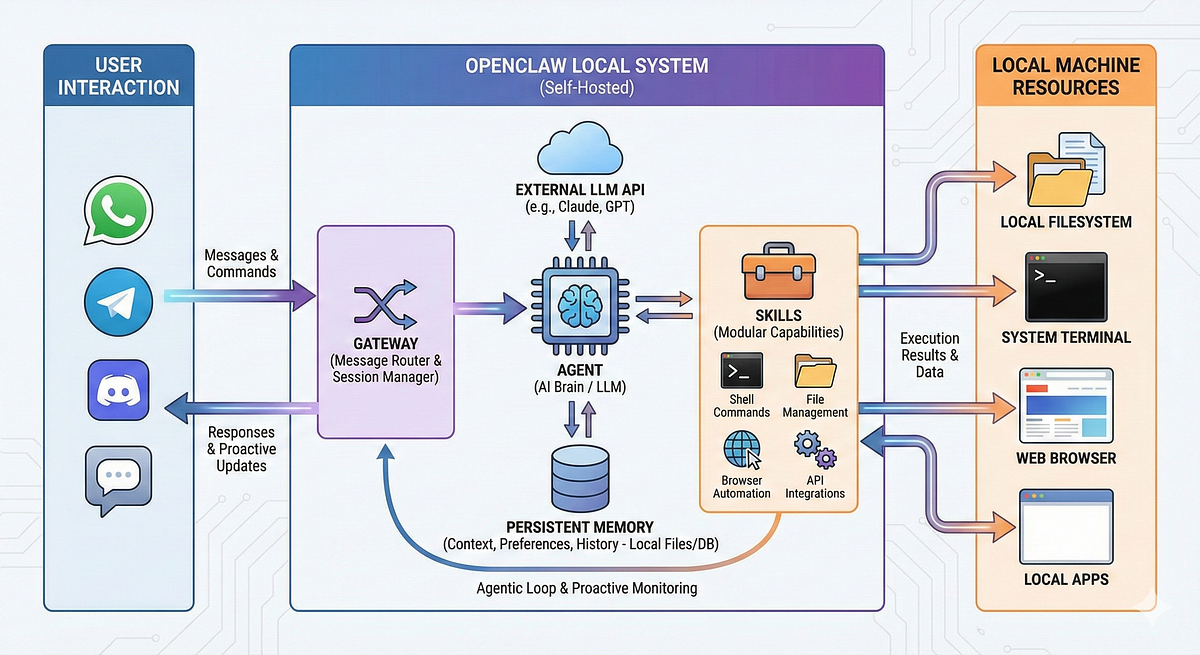
OpenClaw is, at its core, an open-source autonomous AI agent system designed with particular emphasis on personal deployment, persistent memory, and contextual continuity. To understand MyClaw.ai, one must understand OpenClaw's specific design philosophy, because MyClaw.ai is not a general managed-AI platform — it is purpose-built for the OpenClaw architecture specifically.
This matters because OpenClaw makes a set of architectural choices that distinguish it from other agent frameworks. Where many agent frameworks (LangChain, for instance) are libraries — composable components that developers assemble into custom pipelines — OpenClaw is more opinionated. It presents a more complete, integrated system: a "personal AI operating system" rather than a toolkit. The closest analogy might be the distinction between WordPress-as-library and WordPress-as-application: one you build with, one you run.
The "Claw" metaphor embedded in the name suggests something grasping, reaching, and persistent — an agent that maintains grip on context over time rather than resetting at each conversation boundary. This is one of OpenClaw's central design claims: long-horizon memory that allows the agent to remember not just the last conversation but accumulated context about the user's preferences, projects, relationships, and goals.
The Open-Source Wager
OpenClaw's decision to release under an open-source license reflects a broader philosophical wager about how AI infrastructure should develop. The tension between proprietary and open-source AI has been one of the defining debates of the 2020s.
On one side: OpenAI (despite its name, increasingly proprietary), Anthropic, and Google DeepMind have argued, in effect, that the most capable AI systems are too potentially dangerous to release without controls — and, secondarily, that proprietary development enables the investment required for frontier research.
On the other side: Meta's release of the LLaMA model family (2023), Mistral AI's open releases, and the Falcon models from the Technology Innovation Institute have demonstrated that open models can be competitive with or superior to proprietary alternatives on many benchmarks, while enabling community development, transparency, and local deployment.
OpenClaw's bet is that agent orchestration — not just the underlying model — is where open-source infrastructure matters most. The models themselves are increasingly commoditized (you can call GPT-4, Claude, Llama, or Mistral through a common API); the differentiation lies in how you coordinate their actions, maintain state, manage tool use, and personalize their behavior. Releasing the orchestration layer as open source allows researchers, hobbyists, and businesses to audit, modify, and extend the core system — while MyClaw.ai monetizes the hosting and management of that system for those who don't want to run it themselves.
This is the same model that has worked extraordinarily well in adjacent domains: WordPress (open-source CMS) powers approximately 43% of the web, and Automattic monetizes managed WordPress hosting (WordPress.com). Red Hat built a billion-dollar business on managed Linux. Elastic built a commercial cloud service on open-source ElasticSearch. The open-core model has proven to be one of the most durable in enterprise software, and MyClaw.ai is applying it to the emerging category of autonomous AI agents.
The Managed AI Platform Paradigm: Context and Precedent
What "Managed" Means in Practice
The phrase "managed cloud hosting" sounds bureaucratic, but the substance matters enormously. When MyClaw.ai describes itself as handling "security, backups, and updates" so that users don't have to, it is pointing at a cluster of problems that have historically prevented self-hosted software from reaching mass adoption.
Consider what it actually means to self-host an OpenClaw instance:
You need a server (cloud VM or on-premise hardware), and you need to choose the right specifications for your workload — CPU, RAM, storage, network — without overcrowding or under-provisioning. You need to configure the operating system, manage dependencies, handle port security, set up TLS certificates, configure firewall rules, and ensure that the server is hardened against common attack vectors. You need to manage the OpenClaw configuration itself: connecting it to your preferred LLM APIs, setting up tool integrations (email, calendar, code execution, web browsing), and configuring memory backends (vector databases, relational databases, or hybrid stores). You need a backup strategy — when does the agent's accumulated memory get backed up, and how do you restore from a corrupted state? You need an update strategy — how do you incorporate upstream changes without breaking your customizations? You need monitoring and alerting so you know when the agent goes offline or behaves unexpectedly.
Each of these is tractable for a skilled DevOps engineer. But the target user for a personal AI agent is not, primarily, a DevOps engineer. It is a product manager who wants help drafting communications and tracking project status. It is a freelance writer who wants persistent research assistance. It is an entrepreneur who wants to delegate routine business tasks. For these users, the operational overhead of self-hosting is not merely inconvenient — it is disqualifying. The friction destroys the use case.
MyClaw.ai's core value proposition is eliminating that friction entirely, collapsing a multi-day setup process into a single click. This is not a trivial engineering achievement. Building a managed service that handles the full operational lifecycle of a complex, stateful, AI-native system requires substantial infrastructure investment, and it is precisely this investment that the company is making on behalf of its users.
Comparing the Managed AI Landscape
MyClaw.ai's approach is distinctive but not without context. Several other companies have addressed aspects of this problem:
Hugging Face Inference Endpoints provides managed hosting for open-source models but is primarily a model-serving layer, not a full agent orchestration platform. You get model inference; you don't get a persistent agent with memory, tool use, and goal-directed behavior.
Relevance AI and Beam AI offer managed agent-building platforms, but with an emphasis on enterprise workflow automation — they are oriented toward business process automation rather than personal AI assistance.
Character.ai and its competitors provide managed AI characters with persistent conversational context, but within a carefully constrained product experience. You can't give a Character.ai persona access to your email or instruct it to autonomously complete multi-step tasks.
OpenAI's ChatGPT with memory and plugins approaches the personal agent use case, but within a fully proprietary, closed system. You cannot inspect or modify the underlying architecture, and you are entirely dependent on OpenAI's product decisions.
The gap that MyClaw.ai occupies is specific: an open-source agent system (meaning auditable, extensible, and not captured by a single vendor) delivered through a managed service (meaning accessible to non-technical users without operational burden). It is, in this sense, genuinely novel — or was at the time of its launch.
Technical Architecture: What a "One-Click Deployment" Actually Requires

The marketing phrase "one-click deployment" conceals considerable complexity. Understanding what MyClaw.ai must have built to make that claim credible illuminates both the technical achievement and the ongoing engineering challenges.
Infrastructure Orchestration
A production-grade OpenClaw deployment is not a single process. It is an ensemble of services: the agent runtime itself (the orchestration loop), one or more LLM API connections, a vector database for semantic memory retrieval, a relational database for structured state, a task queue for asynchronous tool execution, a file storage system for documents and artifacts, a web interface for user interaction, and an authentication system to ensure only the authorized user can access their agent.
MyClaw.ai must provision and configure all of these components when a user clicks "deploy." This implies a sophisticated infrastructure automation layer — likely using container orchestration (Kubernetes or a managed equivalent), infrastructure-as-code templates, and automated configuration management — that can stand up a complete, personalized instance in seconds. The engineering complexity here is substantial: every component must be versioned, monitored, and capable of being updated or migrated without losing the user's accumulated state.
Memory Architecture: The Hardest Problem
Of all the technical challenges in deploying an autonomous AI agent, memory architecture is perhaps the hardest. The value of a persistent agent accumulates over time: an agent that has worked with you for six months should understand your preferences, your projects, your communication style, your recurring commitments, and the specific context of your ongoing work far better than one that meets you fresh at each session.
This requires solving several interconnected problems:
What to remember: Not every interaction is equally important. An agent that remembers everything will be overwhelmed with noise; one that remembers too little loses its distinguishing value. Effective memory systems need mechanisms for importance weighting, recency bias, and relevance filtering. The Retrieval-Augmented Generation (RAG) paradigm — storing memories as embeddings in a vector database and retrieving the most semantically relevant ones at query time — is the current state of the art but has known failure modes: it struggles with relational reasoning (A relates to B relates to C), with temporal reasoning (what was true then versus now), and with the retrieval of very specific factual details.
Memory coherence: As memories accumulate, they may become inconsistent. Your preferences from three months ago may conflict with those from today. Your agent may hold stale information about projects you've abandoned or people you've lost contact with. Managing the lifecycle of memories — how they're created, updated, merged, and eventually deprecated — is an unsolved research problem that every production memory system must grapple with practically.
Privacy of the memory store: For a managed service like MyClaw.ai, the memory database represents the most sensitive possible user data: a comprehensive record of the user's goals, activities, relationships, and internal state. This data is qualitatively different from, say, email metadata or browsing history. It is a curated record of the user's cognitive engagement with the world. The security architecture required to protect it appropriately is substantial, and the policy questions about who can access it, under what circumstances, and with what governance, are ones that MyClaw.ai — like all companies in this space — must answer transparently.
Tool Integration: The Surface Area of Agency
An AI agent without tools is just a chatbot with ambitions. What makes agents genuinely capable — and genuinely risky — is their ability to take actions in the world: send emails, execute code, browse websites, call APIs, manage files, schedule meetings, make purchases. The set of tools an agent can access defines both its utility and its blast radius.
MyClaw.ai's promise of "advanced integrations" for power users points at this capability surface. Building reliable, secure tool integrations requires solving several non-trivial problems:
Authorization: Each integration requires the user to grant the agent permission to act on their behalf. OAuth 2.0 handles this for many consumer services, but the flow must be seamless and the scope of permission must be clear to non-technical users. "Your agent can read and send email on your behalf" has very different risk profiles than "your agent can read email" alone.
Error handling: Real-world tool execution fails. APIs are down, rate limits are hit, authentication tokens expire, external services change their interfaces. An agent that gives up on the first failure is unreliable; one that retries aggressively may cause unintended actions to be repeated. The error handling logic in tool execution is subtle and consequential.
Confirmation and oversight: Perhaps most importantly, for irreversible actions — sending an email, making a payment, deleting a file — the agent must have a principled way of deciding whether to act autonomously or pause and seek human confirmation. This is fundamentally a trust calibration problem, and different users in different contexts will have very different appropriate thresholds. Designing this calibration surface well is one of the deep UX challenges in agentic systems.
The Business Model: Monetizing Managed Agency
The Open-Core Alignment Problem
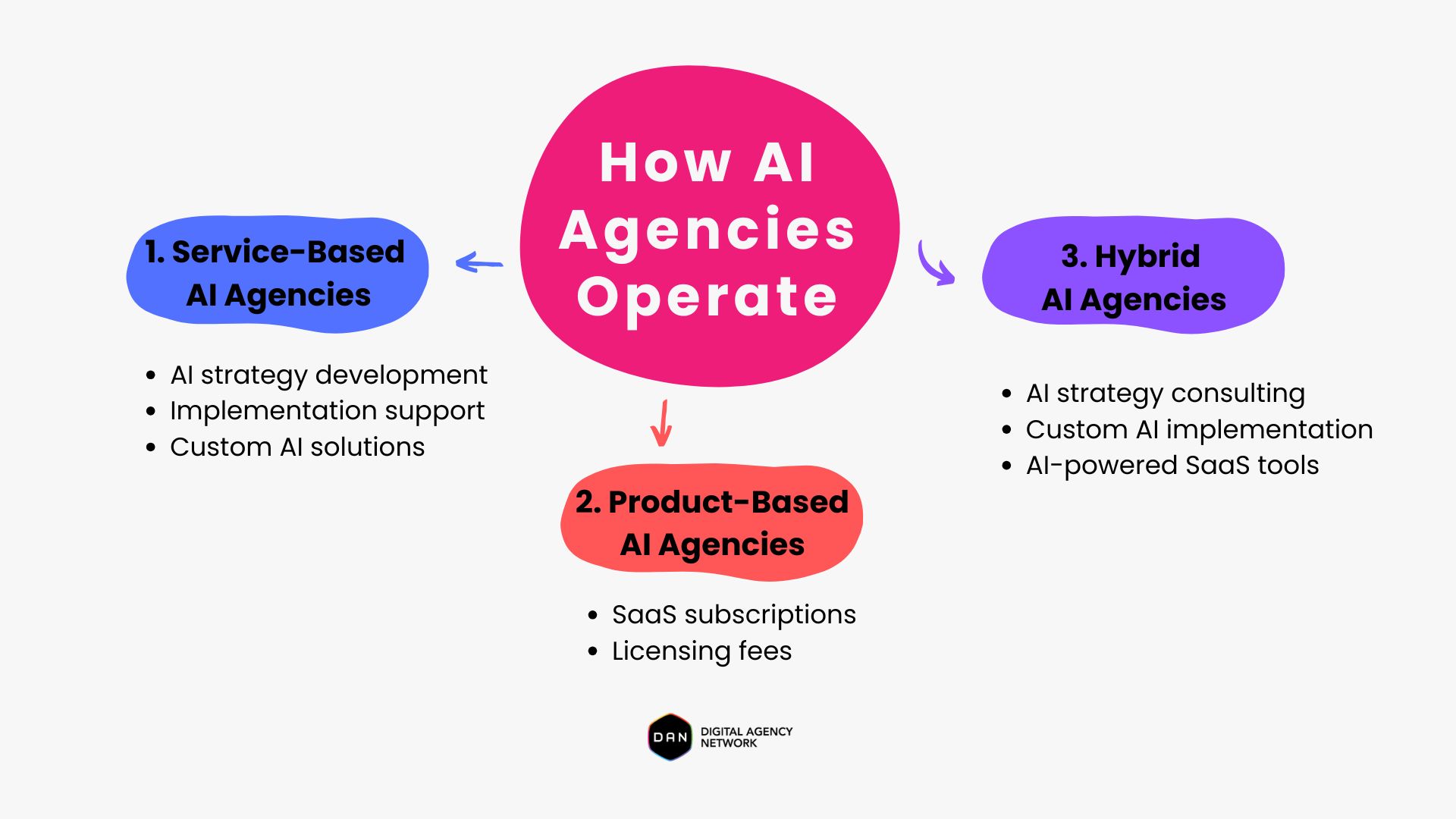
MyClaw.ai's business model — charging for managed hosting of open-source software — involves a structural tension that every open-core company must navigate. If the managed service is too easy to self-host, sophisticated users will opt out of paying, reducing the addressable market. If it's too difficult to self-host, the "open" in open-source becomes nominal rather than real, and the company faces criticism (and potential community defection) for creating a walled garden around ostensibly free software.
The sustainable resolution to this tension typically involves the managed service providing value that is genuinely difficult to replicate self-hosted: operational reliability at scale, automated updates that don't require user intervention, integrated support, compliance certifications (SOC 2, GDPR, HIPAA for healthcare use cases), and — critically for AI agents — specialized infrastructure optimizations that improve performance.
For MyClaw.ai, an additional dimension of this tension involves the underlying LLM costs. Unlike traditional software, AI agent operation has ongoing per-token costs that scale with usage. How MyClaw.ai handles this — whether it passes through API costs directly, bundles them into a flat subscription, or establishes a credit-based model — significantly shapes the product's economics and the user experience.
The "limited waitlist" and "closed beta" model described in the base article is a standard early-stage strategy for managing demand while refining the product. But it also serves a signaling function: scarcity suggests exclusivity, which attracts a certain type of early adopter (technically sophisticated, professionally ambitious) whose usage patterns and feedback are disproportionately valuable for product development.
Pricing Architecture Challenges
At the time of the base article's writing, MyClaw.ai had not publicly disclosed pricing — a notable absence for a product approaching public launch. The pricing architecture for a managed AI agent service is genuinely complex to get right, because the cost drivers are unusual:
Compute costs vary dramatically by usage pattern. An agent that runs background tasks continuously is far more expensive to host than one that is invoked only when the user actively engages with it. But the 24/7 availability that makes agents valuable requires continuous compute even during idle periods.
Storage costs scale with memory accumulation. An agent that has been running for two years has a qualitatively different storage profile than a new user. A pricing model that doesn't account for this will create adverse incentives: either penalizing long-term users (who generate the most value from accumulated context) or creating a pricing trajectory that becomes unsustainable.
LLM API costs are the most variable and hardest to predict. A user who engages the agent for complex, multi-step tasks involving many LLM calls will cost dramatically more to serve than one who uses it for simple queries. The industry has not yet converged on a standard approach: some services use per-call billing, some use token-based billing, some absorb costs into a flat subscription with usage caps, and some use a hybrid model.
Getting pricing wrong has killed otherwise viable products in the AI space. Pricing too low creates unit economics that destroy the business; pricing too high limits adoption and cedes market share to alternatives. MyClaw.ai's pricing decisions, when announced, will reveal important information about the company's target market, competitive strategy, and assessment of its own operational costs.
Competitive Landscape and Differentiators
The Spectrum of Competition
MyClaw.ai operates in a competitive landscape that is both crowded and, paradoxically, largely un-competed. The apparent paradox resolves when you note that competition exists at multiple levels:
At the model level, competition is intense: GPT-4, Claude, Gemini, Llama, Mistral, and dozens of specialized models all compete for the underlying intelligence role. But MyClaw.ai is not competing at this level — it is agnostic about which model powers OpenClaw, providing connectivity to multiple providers.
At the orchestration level, the open-source ecosystem has produced dozens of agent frameworks. LangChain has massive mindshare and a large ecosystem. LlamaIndex is strong in RAG-based applications. CrewAI specializes in multi-agent coordination. AutoGen from Microsoft Research has academic credibility. OpenClaw competes in this space with a specific design philosophy, but the competition is real.
At the managed service level, MyClaw.ai's specific combination — open-source, personal AI, managed hosting, one-click deployment — is much less contested. Most managed AI services are either closed proprietary (OpenAI, Anthropic API), oriented toward enterprise workflow automation rather than personal use, or require meaningful technical engagement to set up. The personal managed AI assistant as a consumer product category remains relatively open.
At the user experience level, MyClaw.ai competes with the friction of doing nothing. For many potential users, the question is not "MyClaw.ai versus Competitor X" but "MyClaw.ai versus my current workflow of using ChatGPT ad hoc." Overcoming the inertia of good-enough current tools is often harder than winning against direct competitors.
The Proprietary Platform Threat
The most serious long-term competitive threat to MyClaw.ai is not another managed open-source agent service but the major AI labs deploying increasingly capable personal agent products within their existing platforms.
OpenAI's "memory" features in ChatGPT, its Operator product (designed for autonomous web task execution), and its custom GPT capabilities are all steps toward the personal agent use case. Anthropic's Claude increasingly supports multi-step task execution. Google's Gemini ecosystem is deeply integrated with Gmail, Calendar, Docs, and the full Google Workspace suite — which gives it a tool integration advantage that is extremely difficult for independent platforms to match.
The countervailing argument — and MyClaw.ai's implicit bet — is that the combination of openness and user ownership will prove decisive for a significant segment of users. Users who are uncomfortable with a single powerful AI company (OpenAI, Google, Anthropic) having access to their most sensitive personal context — their goals, communications, relationships, and cognitive patterns — will prefer a system that can be self-hosted, audited, and controlled. The open-source model provides a structural guarantee of user control that no proprietary service can match.
Whether this segment is large enough to build a viable business upon is an empirical question that MyClaw.ai is, in effect, running a real-world experiment to answer.
The Enterprise Dimension: Beyond Personal Use
The base article focuses primarily on MyClaw.ai's consumer and developer-oriented use cases, but the company's blog references enterprise deployment specifically — a "Complete Guide to MyClaw Enterprise Deployment in 2026" — suggesting that the enterprise market is a significant strategic priority.
Why Enterprise AI Agents Are Different
Enterprise deployment of autonomous AI agents introduces a set of constraints and requirements that don't apply in the personal use case:
Compliance and governance: Enterprises in regulated industries (financial services, healthcare, legal) operate under strict data governance frameworks. GDPR in Europe, HIPAA in healthcare, SOX in financial services — these regulations create specific requirements for data residency, access logging, retention policies, and breach notification that a managed AI service must either accommodate or exclude itself from these markets.
Multi-tenancy and isolation: In an enterprise context, the AI agent may handle data belonging to multiple clients or business units. Ensuring that information from one context doesn't leak into another — through the memory system, through tool outputs, or through model fine-tuning — requires careful architectural isolation that adds complexity.
Auditability: Enterprise risk management requires that AI actions be auditable. When an agent sends an email or modifies a document, there must be a complete, tamper-evident log of what was done, why (in terms of the instructions the agent was operating under), and by whose authorization. This is more complex than logging in traditional software because the agent's reasoning is probabilistic and its instructions may be implicit rather than explicit.
Integration with enterprise identity: Enterprises use systems like Active Directory, Okta, or similar identity providers to manage access control. An enterprise AI agent must integrate with these systems to inherit appropriate permissions — and to ensure that the agent only has access to the resources that the authorized user has access to.
Change management: Deploying autonomous AI agents in an organization involves significant human and process dimensions beyond the technical. Employees need to understand what the agent is doing on their behalf; workflows need to be redesigned to incorporate agent assistance rather than simply layering agents on top of unchanged processes; organizational cultures that are skeptical of AI need to be engaged rather than steamrolled.
MyClaw.ai's enterprise offering, if it is to be credible, must address all of these dimensions — which suggests a very different product tier from the personal consumer service, with corresponding implications for pricing, support, and sales motion.
The 2026 Enterprise AI Landscape
As of mid-2026, the enterprise AI landscape has undergone significant consolidation and maturation. The initial wave of AI tool proliferation — in which every department independently adopted ChatGPT plugins, Copilot features, and various point solutions — has given way to more structured evaluation and vendor rationalization. Enterprises are increasingly looking for platforms that can serve as a unified layer for AI capability rather than managing a patchwork of disconnected tools.
This creates an opening for MyClaw.ai's enterprise proposition, but also raises the bar. An enterprise customer evaluating MyClaw.ai is likely also evaluating Microsoft's Copilot suite (deeply integrated with Office 365 and Azure), Salesforce's Agentforce platform, ServiceNow's AI capabilities, and the enterprise tiers of OpenAI and Anthropic. Each of these incumbents has significant distribution advantages through existing enterprise relationships.
MyClaw.ai's differentiation in this context must be specific and credible: the open-source transparency for security-conscious enterprises, the vendor neutrality for organizations that don't want to be locked into Microsoft or Google's AI stack, and the OpenClaw architecture's specific capabilities in areas where incumbent solutions are weaker.
Ethical Architecture: Autonomy, Trust, and Control
The Alignment Problem at the Personal Scale
Much of the discourse around AI alignment focuses on existential risks from highly capable future systems. But there is a more immediate and practical alignment problem operating at the scale of personal AI agents: ensuring that the agent's actions reliably reflect the user's actual intentions — including their implicit preferences, their unconsidered constraints, and their second-order interests.
This is harder than it looks. A user might instruct their agent to "manage my email" and mean "sort and prioritize incoming messages," but the agent might interpret this as authorization to unsubscribe from mailing lists, auto-reply to messages, or even delete low-priority emails. Any of these actions might be exactly what the user wants — or a violation of something they care about that they didn't think to specify. The space of possible misinterpretations is vast, and the consequences of agent actions in the world can be difficult or impossible to reverse.
The field has developed several approaches to this problem:
Constitutional AI (Anthropic's approach) involves training models with explicit principles that constrain behavior. The principles are documented and, in theory, auditable — but they operate at the model level, not the system level.
Corrigibility by design means building systems that are easy to interrupt, correct, and redirect. This requires not just interface affordances (pause and undo buttons) but architectural properties: agents that maintain checkpoints, can explain their reasoning, and can be rolled back to a prior state when something goes wrong.
Minimal footprint principles suggest that agents should request only the permissions they need for a specific task, avoid accumulating capabilities or resources beyond what's required, and prefer reversible actions over irreversible ones. These principles, proposed by OpenAI's alignment research team among others, translate into concrete design constraints that well-designed agentic systems should embody.
For MyClaw.ai, these are not abstract philosophical concerns — they are product design requirements. Users who have had their agent take an unwanted action will lose trust in the system and churn. The trust calibration problem is, in an important sense, MyClaw.ai's core product problem.
Data Sovereignty and the Privacy Paradox
An AI agent that is genuinely useful to you necessarily knows a great deal about you. The more accurately it models your preferences, goals, relationships, and working style, the more useful it becomes — and the more sensitive the data it holds. This creates what might be called the privacy paradox of personal AI: the product gets better as you give it more of yourself, but giving it more of yourself increases your exposure if the data is misused or breached.
For a managed cloud service, this paradox is particularly acute. The user doesn't physically control the infrastructure on which their most sensitive personal context is stored. They must trust the service provider's security architecture, data handling practices, and governance policies — including the policies about what happens to user data if the company is acquired, goes bankrupt, or receives government demands for data disclosure.
OpenClaw's open-source architecture provides one important safeguard: users who are sufficiently technically capable can self-host and thereby maintain physical control of their data. But MyClaw.ai's value proposition is precisely for users who can't or won't self-host — which means they must trust MyClaw.ai with their data. The company's response to this trust requirement — through encryption architectures, access controls, privacy policies, and third-party security audits — will be a significant determinant of its success in privacy-sensitive markets.
There is also the question of training data. Does MyClaw.ai use the interactions and memory states from its hosted agents to improve the underlying models or systems? This is standard practice in many AI services but deeply problematic for a personal agent service where the interaction data is uniquely sensitive. The company's policies on this point — disclosed or undisclosed — matter enormously.
The Autonomy Gradient
One of the most important and least-discussed design questions in AI agent systems is what might be called the "autonomy gradient": the spectrum from "fully supervised" (every action requires explicit human approval) to "fully autonomous" (the agent acts on all tasks without seeking confirmation). Both extremes are dysfunctional. A fully supervised agent is not much better than a traditional application — you're still doing all the work, just with better suggestions. A fully autonomous agent is dangerous in proportion to the scope of its capabilities.
Well-designed agents need a principled way to position themselves on this gradient based on task type, reversibility, stakes, and user-expressed preferences. An agent might operate fully autonomously for low-stakes, reversible actions (reorganizing files, drafting a response for review) while requiring explicit confirmation for high-stakes or irreversible actions (sending an email to a client, making a purchase, deleting data).
The specific autonomy model that OpenClaw adopts — and that MyClaw.ai exposes to users — is a key architectural choice that will significantly influence the product's utility and risk profile. The ideal is a system that learns the appropriate autonomy level for each user and task type through feedback, gradually expanding its autonomous scope as trust is established and contracting it when mistakes occur.
Cross-Domain Connections: Adjacent Fields Illuminating MyClaw.ai
From Personal Computers to Personal Agents
The history of personal computing offers instructive precedents for how MyClaw.ai's category might develop. When minicomputers gave way to the first personal computers in the late 1970s, the initial market was enthusiasts who wanted to tinker — users who would self-assemble hardware and hand-code programs. The mass market opened only when Apple (and later IBM and Microsoft) made the personal computer into an appliance: no assembly required, a bounded set of applications, and a graphical interface that didn't require knowledge of the underlying system.
MyClaw.ai is attempting an analogous transformation for personal AI agents: taking technology that currently requires significant technical sophistication to operate and turning it into an appliance. The parallels are imperfect — AI agents are inherently more complex and variable than early PCs — but the strategic logic is similar: lower the friction barrier enough, and a new user population becomes accessible.
What the personal computer history also shows, though, is that appliance-ification is not permanent. The tinkerers don't disappear — they continue to exist, shape the ecosystem, and eventually produce the next wave of innovation. MyClaw.ai's relationship with the OpenClaw self-hosting community will likely follow a similar dynamic: a sophisticated community of customizers and extenders coexists with a mass market of managed-service users, and the former's innovations eventually flow back into the latter's product.
Human-Computer Interaction: The Agency Interaction Paradigm
The field of human-computer interaction (HCI) has been grappling with the implications of AI agents for how humans and computers relate. The traditional HCI paradigm — based on direct manipulation, immediate feedback, and clear causality between user action and system response — is disrupted by agentic systems that act asynchronously, at varying degrees of autonomy, with non-deterministic outcomes.
Researchers like Phoebe Sengers (Cornell) and Sherry Turkle (MIT) have written about the psychological dimensions of interacting with systems that seem to have agency. Turkle's work on "alone together" — the ways in which digital interaction both connects and isolates — is particularly relevant to personal AI agents that may become an increasingly significant source of cognitive partnership for their users.
The risk that Turkle and others have identified is that users may develop parasocial relationships with AI agents that substitute for rather than augment human connection and cognitive development. An agent that always has the right answer, is always available, and never judges may be so frictionlessly useful that it gradually displaces the more effortful but ultimately more valuable activities of human learning and relationship.
MyClaw.ai, by making a capable AI agent available 24/7 with no friction, is implicitly taking a position on this debate: that the benefits of capable AI assistance outweigh the risks of excessive reliance. This is probably correct for many users in many contexts — but the question of where the boundary lies, and how products should manage it, is genuinely open.
Cognitive Load Theory and the Question of AI-Mediated Cognition
Cognitive load theory, developed by educational psychologist John Sweller in the 1980s and 1990s, distinguishes between intrinsic cognitive load (inherent to the task), extraneous cognitive load (unnecessary complexity introduced by poor design), and germane cognitive load (the mental effort involved in learning and schema formation).
AI agents that offload cognitive work potentially reduce both intrinsic and extraneous load — freeing up mental resources for higher-level thinking. But they may also reduce germane cognitive load, and this raises a significant concern: if the agent handles the difficult cognitive work, does the user fail to develop the schemas and skills that come from wrestling with that difficulty themselves?
This is the classic distinction between scaffolding and crutch. Good scaffolding supports learning and is gradually removed as competence grows; a crutch substitutes for capability and may actually impair development. Whether AI agents like those hosted on MyClaw.ai function more as scaffolding or crutch likely depends heavily on how they are used — whether they augment the user's own thinking or replace it. This is a research question that the field has only begun to investigate empirically.
Current Research Frontiers: What Comes After the First Generation
Multi-Agent Coordination
The first generation of AI agents — including OpenClaw as currently conceived — primarily involves a single agent acting on behalf of a single user. The next frontier is multi-agent coordination: systems in which multiple specialized agents work together on complex tasks, with appropriate division of labor, communication, and oversight.
Research in this area is advancing rapidly. Microsoft Research's AutoGen framework, the Stanford "Society of Mind" agent experiments, and OpenAI's function-calling capabilities all represent different approaches to multi-agent coordination. The challenges are substantial: agents can produce conflicting outputs, have divergent internal states, and fail to coordinate without explicit communication protocols.
For MyClaw.ai, multi-agent architectures open interesting possibilities: a user's primary agent could spawn specialized sub-agents for specific tasks (a research agent, a writing agent, a scheduling agent), each maintained and hosted by MyClaw.ai, with the primary agent coordinating their work. This would be a significant capability expansion — and a significant architectural challenge.
Embodied and Multimodal Agents
Current AI agent systems are primarily text-in, text-out (with some vision capabilities). The next generation will increasingly be multimodal: able to process and produce images, audio, video, and eventually interact with physical systems through robotics. The emergence of capable text-to-video models (Sora, Runway, Kling) and vision-language models (GPT-4V, Claude's vision capabilities, Google's Gemini) points toward agents that can reason about visual information, generate multimedia content, and eventually interact with visual interfaces (browsers, applications) in a more natural way.
For MyClaw.ai, multimodal capabilities would significantly expand the range of tasks a hosted OpenClaw agent could handle — from purely linguistic work to anything that involves looking at, interpreting, or creating visual content. Whether OpenClaw's architecture supports multimodal extension, and whether MyClaw.ai's infrastructure is designed to handle the additional compute requirements of multimodal processing, will be important determinants of the platform's long-term capability ceiling.
Memory: The Frontier Problem
If there is a single technical area that will most determine the long-term utility of personal AI agents, it is memory. Current RAG-based memory systems have significant limitations: they struggle with complex reasoning over accumulated context, they can retrieve factually but struggle with relational reasoning, and they lack principled mechanisms for memory decay and coherence maintenance.
Emerging approaches include:
Episodic memory architectures inspired by cognitive science, which represent memories as structured episodes (who, what, when, where) rather than flat text chunks, enabling more sophisticated temporal and relational reasoning.
Differentiable memory systems that allow the model itself to participate in memory management, updating memory representations as part of the inference process rather than treating memory as a separate retrieval system.
Hierarchical memory structures that maintain information at multiple levels of abstraction (immediate context, session summary, long-term schema) with appropriate retrieval mechanisms for each level.
For MyClaw.ai, advances in memory architecture translate directly into product value: a more capable memory system means an agent that is more contextually aware, more personalized, and more reliably useful over long time horizons. The company's investment in, or adoption of, improved memory architectures will be a key competitive differentiator.
Open Questions and Productive Controversies
Is Agentic AI Genuinely Ready for Deployment?
A persistent critique of current AI agent systems — one voiced by thoughtful practitioners rather than AI skeptics — is that they are not yet reliable enough for truly autonomous deployment. The failure modes of current LLM-powered agents include: tool call hallucinations (confidently executing the wrong tool or with wrong parameters), context loss over long task horizons, cascading errors in multi-step pipelines, and unpredictable behavior in edge cases outside the training distribution.
Anthropic's model card for Claude 3.5 Sonnet explicitly cautions about agentic use cases: "We do not recommend agentic applications in high-stakes settings at this time." This is notable caution from a company actively building toward agentic products.
The tension for MyClaw.ai is real: deploying OpenClaw at scale means deploying systems that will occasionally make mistakes, and those mistakes may be consequential. The responsible approach — conservative autonomy settings, extensive logging, easy rollback — reduces the perceived utility of the agent. The aggressive approach — maximum autonomy, minimal friction — increases utility but increases risk of harm.
Where MyClaw.ai draws this line, and how it evolves as the underlying models improve, is not merely a product decision. It is an ethical decision about the appropriate deployment of systems whose reliability is imperfectly understood.
The Personalization vs. Homogenization Tension
There is an underexplored paradox at the heart of AI personalization: systems trained on aggregate human behavior can only personalize within the dimensions that their training data contains. An agent that learns to anticipate your preferences is, in part, learning to predict what someone with your observable characteristics typically prefers — not necessarily what you specifically prefer.
This can produce a homogenizing effect: AI systems that nudge users toward preferences that are statistically typical for their demographic, rather than discovering and supporting genuinely idiosyncratic preferences. The user who has unusual aesthetic preferences, unconventional work habits, or outlier intellectual interests may find that an AI agent tuned on mainstream preferences actually reduces, rather than enhances, their cognitive distinctiveness over time.
Whether MyClaw.ai's approach to personalization — building on user-specific interaction history rather than fine-tuning on aggregate data — mitigates this risk is unclear. The question deserves more explicit consideration than it typically receives in the enthusiasm around AI personalization.
The Long-Run Trust Problem
Perhaps the deepest open question facing MyClaw.ai is the long-run trust problem: what happens when users discover that their trusted agent has made significant errors, and how does that discovery affect their relationship with the system going forward?
Human-agent trust is not the same as human-tool trust. We expect tools to behave deterministically; when a hammer misbehaves, we know it is the hammer's fault (or our own). We expect agents — precisely because they exhibit goal-directed, seemingly intentional behavior — to be somewhat more accountable. When an AI agent makes a significant error (sends an email to the wrong person, makes an incorrect financial calculation, provides confidently wrong information), the user's response may be to distrust the entire system rather than to recalibrate their trust appropriately.
Research in trust and automation — particularly work by Raja Parasuraman and colleagues on "automation complacency" and "automation bias" — suggests that the relationship between humans and automated systems involves systematic trust miscalibrations. Users often trust automation too much in domains where it is reliable (leading to over-reliance) and too little after a salient failure (leading to underutilization after recovery). AI agents, which present a more humanlike interface than traditional automation, may be particularly susceptible to these dynamics.
MyClaw.ai, as a platform that exposes users to the capabilities and failure modes of AI agents at first hand, has a significant role to play in shaping healthy trust relationships — and, consequently, a significant responsibility to be transparent about what the systems can and cannot reliably do.
The Broader Significance: Democratization and Its Discontents
MyClaw.ai frames its mission in terms of democratization: making advanced AI accessible to non-technical users. This framing deserves both appreciation and scrutiny.
The appreciation: genuine barriers to access are real. The technical overhead of self-hosting complex AI systems does exclude people who would benefit from them. Reducing friction has historically expanded who participates in technological progress, and expanded participation has often produced unexpected value. The person who most benefits from a capable personal AI agent may not be a Silicon Valley engineer but a rural healthcare worker, a first-generation college student, or a small business owner in a market underserved by enterprise AI.
The scrutiny: democratization of tools does not automatically produce equity of outcomes. If access to capable AI agents provides significant productivity advantages — and the evidence suggests it does — then differences in access will translate into differences in competitive position. Early access typically skews toward already-advantaged populations: English-speaking, affluent, technically networked users who can discover, evaluate, and adopt new technology. The democratizing narrative may mask a first-wave adoption pattern that initially concentrates advantage before it disperses.
There is also a distinction between access to AI tools and understanding of AI systems. A user who relies on a managed AI agent without understanding its capabilities, limitations, and risks may be in a more vulnerable position than one who uses cruder tools more knowledgeably. True democratization may require not just technical accessibility but a broader AI literacy — an understanding of how these systems work and fail, what data they use and how, and what rights users have in relation to the systems they depend on.
Conclusion: The Significance of the Bet MyClaw.ai Is Making
MyClaw.ai represents a specific, legible bet about the future of computing: that autonomous AI agents will be the next platform layer, that OpenClaw's architectural approach is a strong contender for the foundational infrastructure of that layer, and that managed cloud services will be the dominant deployment model for this infrastructure in the near term.
Each of these bets could be wrong. AI agents may remain too unreliable for autonomous deployment at scale for longer than optimists expect. OpenClaw may lose the architectural competition to a better-funded or better-designed alternative. Managed services may lose to self-hosted deployment as hardware and configuration tooling improve. Or the major AI labs may simply replicate the essential functionality within their proprietary platforms with distribution advantages that independent platforms cannot overcome.
But the bets are coherent, informed, and, in some important respects, correct about the direction of travel. The questions are about timing, depth, and who wins — not about whether the category exists.
What makes MyClaw.ai worth studying, even at this early stage, is that it is doing something genuinely difficult and genuinely underattempted: building commercial infrastructure on top of open-source AI agent systems with a managed-service model designed for non-technical users. The combination is novel. The execution challenges are severe. The opportunity, if the bets pay off, is substantial.
The deeper questions — about trust, privacy, cognitive sovereignty, and the appropriate boundaries of AI autonomy — will not be answered definitively by MyClaw.ai's success or failure. They are the constitutive questions of the agentic AI era, and they will outlast any individual company's trajectory. But MyClaw.ai, by deploying capable autonomous agents at scale for real users in the real world, is generating the empirical data that the field needs to begin answering those questions grounded in evidence rather than speculation.
That may be its most significant contribution — not the service itself, but what the service teaches us about what it means for millions of people to live and work alongside persistent, goal-directed, AI-powered agents for the first time.
The experiment has begun.
Sources and further reading: This article draws on publicly available information about MyClaw.ai, OpenClaw, and the broader agentic AI ecosystem. Key conceptual frameworks referenced include Russell & Norvig's "Artificial Intelligence: A Modern Approach" (4th ed., 2020); Yao et al., "ReAct: Synergizing Reasoning and Acting in Language Models" (2022); work by Phoebe Sengers on affective computing and HCI; Sherry Turkle's "Alone Together" (2011); John Sweller's foundational cognitive load theory papers (1988–1994); Raja Parasuraman and Victor Riley's research on human-automation interaction; and Meta's LLaMA technical reports (2023–2024). Enterprise AI deployment context draws on publicly available analyst reports from Gartner, Forrester, and Goldman Sachs Research on the AI adoption landscape through mid-2026.