Black Holes and Event Horizons: A Deep Dive into the Universe's Most Extreme Objects
There is a place in the universe where the laws of physics as we understand them cease to function. Where time slows to a crawl and then stops entirely. Where matter is crushed to infinite density. Where information itself may be destroyed — or may not be, depending on which brilliant physicist you ask, and on which Tuesday. Black holes are not merely exotic objects at the edge of astronomical curiosity; they are the universe's ultimate stress test for our theories, the places where general relativity and quantum mechanics — the two most successful scientific frameworks ever devised — crash into each other with catastrophic incompatibility and refuse to reconcile. Every serious attempt to understand black holes has produced either a profound discovery or a profound embarrassment, sometimes both simultaneously.
The existing account of black holes covers the necessary foundations competently: the Schwarzschild radius, the types of black holes, the major figures, the detection of gravitational waves, and the first image captured by the Event Horizon Telescope. But the surface has barely been scratched. The deeper you go into black hole physics, the stranger and more philosophically troubling the landscape becomes. What actually happens at the event horizon? Does an infalling observer notice anything at all when they cross it? What is the singularity, really, and should we believe in it? How do supermassive black holes get so impossibly large so fast? What does Hawking radiation actually imply about the nature of information in the universe? And what are the radical new ideas — firewalls, fuzzballs, black hole complementarity — that physicists have proposed to resolve these crises?
This article goes deeper. It traces the intellectual genealogy of black hole physics with more granularity, examines the profound conceptual battles that have shaped the field, explores the bizarre phenomenology of what it would be like to fall into a black hole, dissects the information paradox in detail, surveys the observational evidence with a critical eye, and charts the frontier research that will define the next generation of black hole science.
The Prehistory of Black Holes: Dark Stars and Newtonian Gravity
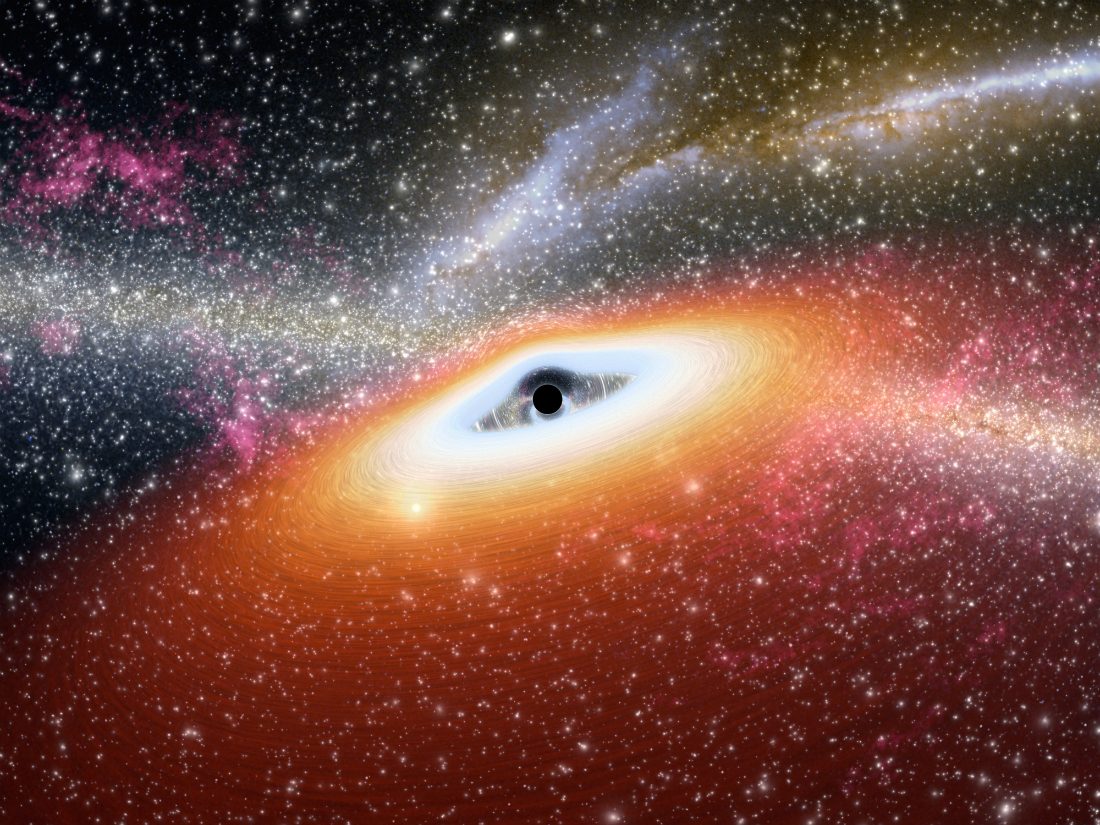
The story usually begins with John Michell's 1783 letter to the Royal Society, and rightly so — but the intellectual context deserves more attention than it typically receives. Michell was not a marginal figure. He was a Fellow of the Royal Society, a geologist who virtually invented the science of seismology, and a remarkably clear-headed Newtonian thinker. His argument was elegant in its simplicity: if light consists of particles (as Newton's corpuscular theory held), then gravity should act upon them just as it acts upon cannonballs. Given that escape velocity from a massive body scales with the body's mass and inversely with its radius, Michell calculated that a body with the same density as the Sun but roughly 500 times its diameter would have an escape velocity equal to the speed of light. He called these hypothetical objects "dark stars."
Pierre-Simon Laplace independently reached similar conclusions in his 1796 work Exposition du système du monde, though he later removed the discussion from subsequent editions — possibly because the wave theory of light, which implied light had no mass and thus would not be affected by gravity in the Newtonian framework, was gaining ground. This removal is historically ironic: Laplace's caution was scientifically reasonable at the time, but he was right for the wrong reasons (Newton's corpuscular theory), and wrong to remove the argument, since a century later general relativity would vindicate the fundamental idea through an entirely different mechanism.
The critical distinction is this: Michell and Laplace imagined dark stars using Newtonian gravity, where an object might still exist at the center and send out light that simply falls back down. The modern black hole is a fundamentally different beast, one embedded in the curved spacetime of general relativity, where the concept of "falling back" is replaced by the far more radical idea that inside the event horizon, every possible future path — including paths through space that you would normally call "moving outward" — is directed toward the singularity. The darkness of a black hole is not merely a matter of insufficient kinetic energy. It is a geometric fact about the structure of spacetime itself.
Einstein, Schwarzschild, and the Reluctant Revolution

Albert Einstein published his field equations of general relativity in November 1915, and within months — while serving on the Eastern Front of the First World War — Karl Schwarzschild had found the first exact solution to those equations. The speed of this achievement is remarkable. Einstein himself had not expected exact solutions to be findable so soon; his own calculations of Mercury's perihelion precession used approximations. Schwarzschild found the precise mathematical description of spacetime around a non-rotating, spherically symmetric mass, and he communicated his results to Einstein in a letter that Einstein presented to the Prussian Academy of Sciences in January 1916. Schwarzschild died of a disease contracted at the front just months later. He was forty-two years old.
The Schwarzschild solution contains a mathematical singularity at the Schwarzschild radius — a radius at which the metric coefficients blow up. For many years, physicists debated whether this singularity was a real physical feature or a mere artifact of the coordinate system, an illusion created by poor mathematical choices. Einstein himself believed for decades that nature would somehow forbid the actual formation of objects compressed within their Schwarzschild radius. In a 1939 paper, he argued that a rotating cluster of particles could not collapse to within the critical radius, and he took this as evidence that "Schwarzschild singularities do not exist in physical reality."
Einstein was half-right and profoundly wrong. He was right that the singularity at the Schwarzschild radius is a coordinate singularity — it vanishes when you use different coordinates, just as the apparent singularity at the North Pole in certain map projections vanishes when you switch to a different mapping. David Finkelstein demonstrated this definitively in 1958, introducing what are now called Eddington-Finkelstein coordinates, which show clearly that an infalling observer passes through the Schwarzschild radius smoothly, without experiencing any local catastrophe. But Einstein was wrong about the deeper physical singularity at the center — the point of infinite density — which is a genuine, coordinate-independent feature of the Schwarzschild spacetime. Roger Penrose proved in 1965, using topological methods, that singularities are an unavoidable consequence of gravitational collapse under very general conditions, not an artifact of oversimplified assumptions. His singularity theorems, which earned him a share of the 2020 Nobel Prize in Physics, showed that once a trapped surface forms — a surface from which even outward-pointing light rays converge — a singularity is mathematically inevitable.
The term "black hole" itself has an interesting contested history. John Wheeler is almost universally credited with coining it during a 1967 talk, and he certainly popularized it. But the physicist Robert H. Dicke had been using the term informally in lectures, and it may have been introduced to Wheeler by an audience member at that very talk, a detail Wheeler himself acknowledged. What is undeniable is that Wheeler's promotional genius — his gift for naming and framing concepts — transformed the abstract mathematical object into a vivid, culturally resonant idea that captured public imagination and drew brilliant students into the field.
The Kerr Black Hole and the Full Menagerie
The Schwarzschild solution describes an idealized, non-rotating black hole. Real astrophysical black holes — formed from rotating stars — are almost certainly spinning. The solution for a rotating black hole was found by Roy Kerr in 1963, and it is significantly more complex and physically richer than the Schwarzschild case.
The Kerr metric introduces several features absent from the Schwarzschild solution. First, there is the ergosphere: a region outside the event horizon where spacetime itself is dragged around by the rotating black hole so powerfully that no physical object can remain stationary with respect to distant stars — it is forced to co-rotate. The ergosphere is bounded on the outside by the static limit and on the inside by the outer event horizon. Objects can enter the ergosphere and escape again, which makes it physically distinct from the event horizon proper.
This opens the door to the Penrose process, proposed by Roger Penrose in 1969: a mechanism by which energy can actually be extracted from a rotating black hole. If an object enters the ergosphere and breaks apart such that one fragment falls into the black hole with negative energy (as measured from infinity), the other fragment can escape with more energy than the original object possessed. The energy comes from the rotational kinetic energy of the black hole itself, which gradually slows. This is not merely a theoretical curiosity; it may be directly relevant to the enormous energy output of quasars and active galactic nuclei, where spinning supermassive black holes appear to power relativistic jets through mechanisms related to this principle — specifically through the Blandford-Znajek process, a relativistic electromagnetic variant of the Penrose process described in 1977.
The most general classical black hole is described by the Kerr-Newman solution, which incorporates both spin and electric charge. The no-hair theorem — a phrase attributed to Wheeler, formalized by work from Werner Israel, Brandon Carter, David Robinson, and Stephen Hawking in the 1960s and 70s — states that a black hole in equilibrium is completely characterized by just three parameters: mass, spin, and electric charge. All other information about the matter that formed the black hole is, in some sense, lost. This is the first hint of what will become the information paradox.
Real astrophysical black holes almost certainly carry negligible net charge (any charge is quickly neutralized by the surrounding plasma), so they are described by the Kerr metric alone. Measurements of black hole spin — typically through X-ray spectroscopy of the inner accretion disk or through gravitational wave signals from mergers — reveal a wide range of spin parameters. The black hole merger GW150914, the first detected by LIGO in 2015, produced a final black hole spinning at roughly 67% of the theoretical maximum.
What It Is Actually Like to Fall Into a Black Hole
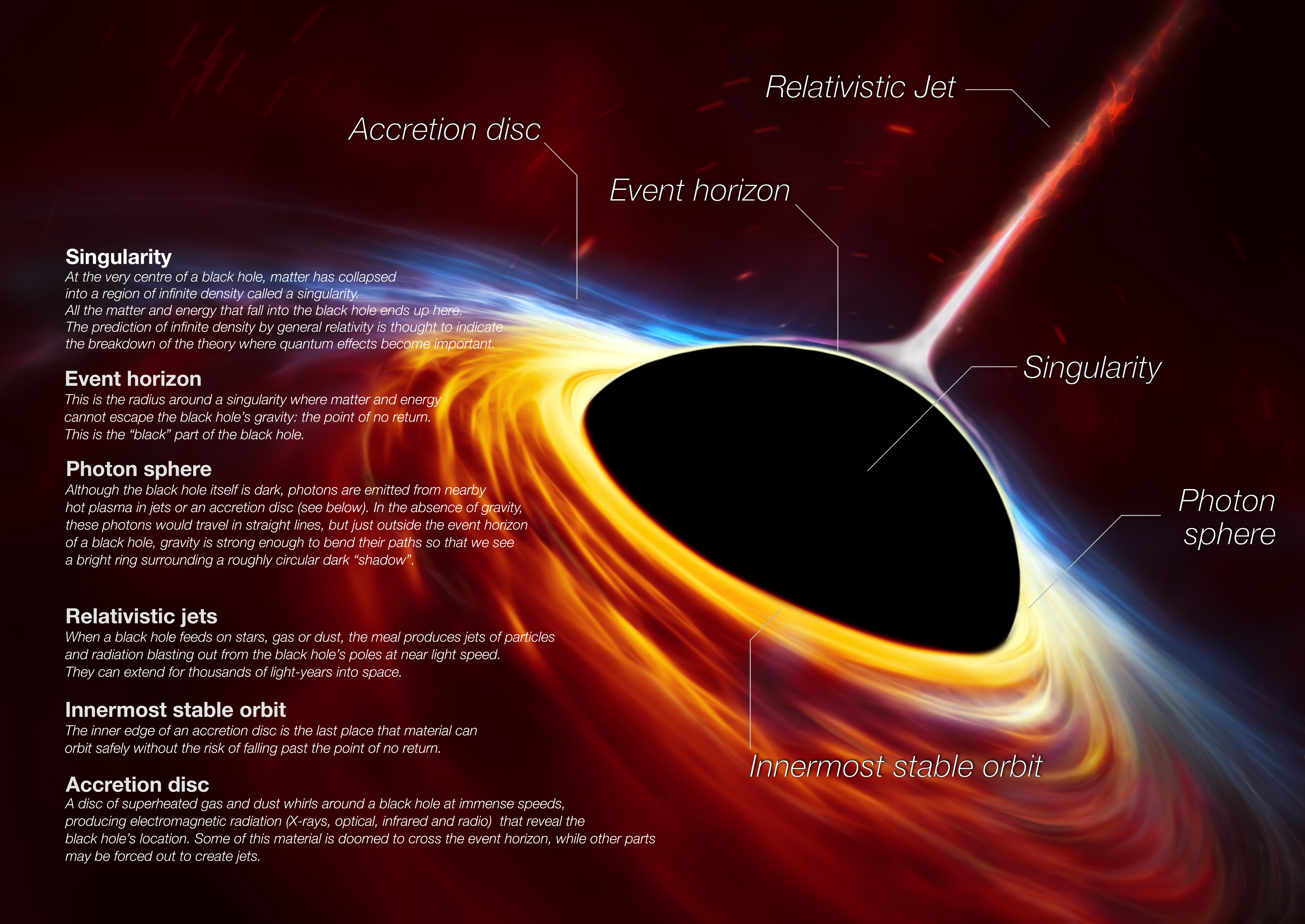
One of the most counterintuitive aspects of black hole physics is the experience of crossing an event horizon — or rather, the predicted lack of drama at the moment of crossing. According to classical general relativity, an observer falling freely into a sufficiently large black hole (large enough that tidal forces at the horizon are manageable) would notice nothing locally special when they cross the event horizon. The event horizon is not a wall, not a surface you can touch, not a place where anything locally alarming happens. It is a globally defined boundary — you can only identify it in retrospect by knowing the complete future history of the spacetime. As you fall through it, the physics is locally indistinguishable from free fall in flat space.
This seems bizarre. Surely you would notice crossing an absolute point of no return? The key is that "point of no return" is defined from outside, with respect to distant observers. For a distant observer watching someone fall into a black hole, the picture is entirely different. Due to gravitational time dilation — the slowing of clocks in stronger gravitational fields — the distant observer sees the infalling person slow down, their image becoming increasingly redshifted, appearing to freeze asymptotically at the event horizon and fading to invisibility over time. The distant observer never actually sees anyone cross the horizon. But the infalling person, from their own perspective, crosses the horizon in finite proper time and continues inward toward the singularity.
Once inside, the future is inexorably the singularity. The singularity at the Schwarzschild radius in time — using the Schwarzschild coordinates, after passing through the horizon the roles of time and space literally exchange. The radial coordinate inside the horizon becomes timelike, meaning "moving outward" is as meaningless as "moving into the past." The singularity is not a place in space that you fall toward; it is a moment in time that you fall toward. Everything inside the horizon has the singularity as its future. There is no way to avoid it, just as there is no way for us to avoid next Tuesday.
The tidal forces that rip apart an infalling object — spaghettification — depend on the mass of the black hole. For stellar-mass black holes with Schwarzschild radii of a few kilometers, the tidal forces at the event horizon are catastrophic, shredding any ordinary matter long before it reaches the horizon. For a supermassive black hole with billions of solar masses and a Schwarzschild radius of billions of kilometers, the tidal forces at the horizon are gentle enough that a human being could cross the event horizon without immediately noticing. They would have hours (by their proper time) before encountering dangerous tidal forces closer to the singularity.
The Singularity Problem: Physics Breaking Down
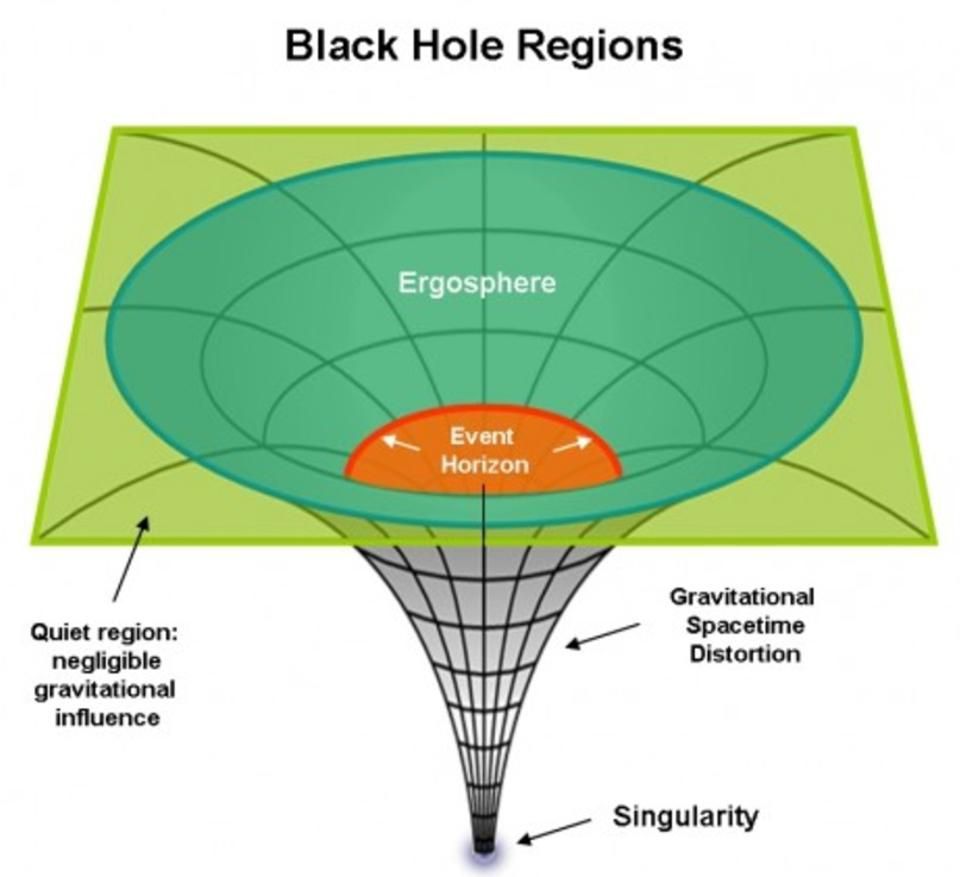
The singularity at the center of a black hole is not a physical place in the ordinary sense — it is a point where the mathematical description of spacetime breaks down. Curvature becomes infinite. Density becomes infinite. General relativity predicts its own failure, which most physicists take as a sign that general relativity is incomplete and must be superseded by a theory of quantum gravity.
The Cosmic Censorship Conjecture, proposed by Roger Penrose in 1969, hypothesizes that singularities are always hidden inside event horizons — that "naked singularities," visible to outside observers, do not form from reasonable initial conditions. If true, this would preserve the predictability of physics outside black holes even if the physics inside breaks down. The conjecture remains unproven, and there are known mathematical counterexamples — specific fine-tuned initial conditions under which general relativity does produce naked singularities. Whether these are physical or merely mathematical curiosities is debated. Work by Demetrios Christodoulou and others has explored the stability and genericity of these counterexamples with mixed conclusions.
Some physicists propose that quantum gravity effects will smear out or resolve the singularity into something finite. Loop quantum gravity, a candidate quantum gravity theory developed by Carlo Rovelli, Lee Smolin, Abhay Ashtekar and others, suggests that spacetime has a discrete, granular structure at the Planck scale (~10⁻³⁵ meters), which would prevent densities from becoming truly infinite. In this framework, the singularity might be replaced by an extremely dense but finite quantum region. Some loop quantum cosmology models even suggest that matter might bounce inside a black hole and eventually re-emerge — a highly speculative but mathematically tractable scenario that has received serious attention.
Hawking Radiation: The Most Important Theoretical Result Nobody Has Observed
Stephen Hawking's 1974 paper "Black Hole Explosions?" in Nature, and the more detailed 1975 paper "Particle Creation by Black Holes" in Communications in Mathematical Physics, represent arguably the most important theoretical result in physics of the last half century. By applying quantum field theory in curved spacetime — using semi-classical methods rather than a full theory of quantum gravity — Hawking showed that black holes are not perfectly black. They radiate thermally with a temperature inversely proportional to their mass:
$$T_H = \frac{\hbar c^3}{8\pi G M k_B}$$
where ℏ is the reduced Planck constant, c the speed of light, G Newton's gravitational constant, M the black hole mass, and k_B Boltzmann's constant.
The physical intuition usually offered — virtual particle-antiparticle pairs popping into existence near the horizon, with one falling in and one escaping — is acknowledged by Hawking himself to be a heuristic that captures some but not all of the physics. A more rigorous description involves the Bogoliubov transformation: an observer far from a black hole and an observer near the horizon define different notions of "vacuum" and "particle." What looks like a vacuum to one observer looks like a thermal bath of particles to another. This is deeply connected to the Unruh effect, predicted by William Unruh in 1976, by which an accelerating observer in flat spacetime perceives the quantum vacuum as a warm thermal bath, while an inertial observer sees nothing unusual.
The temperature of Hawking radiation for astrophysically relevant black holes is fantastically small. For a stellar-mass black hole of ten solar masses, T_H ≈ 6 × 10⁻⁹ Kelvin — far colder than the cosmic microwave background radiation (~2.7 Kelvin), which means such black holes are actually absorbing more energy from their environment than they radiate and are effectively growing rather than evaporating. Hawking radiation will only dominate for black holes much lighter than those we observe astrophysically, and even then, the final stages of evaporation — where the black hole becomes hot enough to radiate prodigiously — occur over timescales vastly exceeding the current age of the universe for any macroscopic black hole.
Despite this, Hawking radiation is among the most profound results in theoretical physics because it reveals that black holes are thermodynamic objects with entropy, temperature, and a complete evaporation process. The Bekenstein-Hawking entropy formula:
$$S = \frac{k_B c^3 A}{4 G \hbar}$$
where A is the surface area of the event horizon, assigns an entropy to a black hole proportional to its horizon area in units of the Planck area. This is an extraordinary result: it suggests that the entropy — a measure of the number of microscopic states — of a black hole scales with area rather than volume. For ordinary matter, entropy scales with volume. This area-proportional entropy is the seed of the holographic principle.
The Information Paradox: The Deepest Crisis in Theoretical Physics
The information paradox is the central unresolved crisis in black hole physics, and possibly in all of fundamental physics. Its bare statement is simple: quantum mechanics holds that information is never destroyed — the evolution of quantum states is unitary, meaning the information content of a system is conserved even as its form changes. But if a black hole forms from some complex quantum state (say, an encyclopedia dropped into a star that collapses), Hawking radiation appears to be purely thermal — random, carrying no information about what fell in. When the black hole eventually evaporates completely, the information appears to be gone.
This cannot be reconciled with quantum mechanics without violating one of several principles that physicists hold very dear. Hawking himself, for many years, maintained that black holes genuinely destroy information — that they represent a fundamental breakdown of unitarity. In 1997, he made a famous bet with Kip Thorne on one side and John Preskill on the other, wagering that information is lost. In 2004, Hawking conceded the bet, arguing that in the Euclidean path integral formulation of quantum gravity, information is preserved. But many physicists remained unconvinced by his argument, and the mechanism by which information escapes remained completely obscure.
The options, none of them comfortable, include:
Option 1: Information is truly lost. Hawking's original position. This violates unitarity and requires modifying quantum mechanics. Most physicists find this unacceptable because unitarity is foundational to the probability interpretation of quantum mechanics.
Option 2: Information escapes in the Hawking radiation. This is the current majority view, bolstered by work from Juan Maldacena and the AdS/CFT correspondence (discussed below). But the mechanism is deeply mysterious. The Hawking radiation appears thermal and featureless — how does delicate quantum information encoded in the interior structure of the black hole get smuggled out in subtle correlations among the Hawking photons? The Page time — roughly halfway through the black hole's evaporation — is when, according to this view, the Hawking radiation must begin carrying information. Understanding the mechanism of this transfer remains unsolved.
Option 3: Information is stored in a remnant. The black hole stops evaporating before complete disappearance, leaving a stable or very long-lived Planck-scale remnant containing the information. This has problems: such remnants would need to encode arbitrarily large amounts of information in a Planck-scale object, and there would be no limit to how many types of remnants could exist, causing problems with thermal partition functions.
Option 4: The firewall. In 2012, Ahmed Almheiri, Donald Marolf, Joseph Polchinski, and James Sully (AMPS) published a paper arguing that the three conditions of (a) unitarity, (b) the equivalence principle (no drama at the horizon for an infalling observer), and (c) effective field theory holding outside the horizon cannot all simultaneously be true. If information escapes in Hawking radiation and the radiation is unitary, then the Hawking radiation early and late in the evaporation process must be entangled — but the infalling observer's experience of "no drama" at the horizon requires the infalling matter to be entangled with modes inside the horizon. You cannot have both entanglements; quantum mechanics forbids a single system from being maximally entangled with two different systems (monogamy of entanglement). If unitarity is preserved, the infalling observer hits a "firewall" — a wall of high-energy radiation at the horizon — rather than experiencing smooth free fall.
The firewall paper caused a sensation because it showed that the paradox was sharper than previously appreciated. The debate continues. Proposed resolutions include modifications of general relativity near the horizon, non-locality in quantum gravity, the ER=EPR conjecture of Maldacena and Susskind (discussed below), and various modifications of quantum mechanics.
The Holographic Principle, AdS/CFT, and the Resolution Horizon
One of the most profound developments in theoretical physics of the past three decades is the holographic principle, and its concrete realization in the Anti-de Sitter/Conformal Field Theory (AdS/CFT) correspondence proposed by Juan Maldacena in 1997.
The holographic principle, developed by Gerard 't Hooft and Leonard Susskind in the early 1990s drawing on Bekenstein's entropy results, proposes that the information content of a region of space is not proportional to its volume but to its surface area — that the physics of a volume of space can be completely encoded on its boundary, like a hologram. This is directly motivated by black hole thermodynamics: since a black hole's entropy scales with horizon area, and a black hole represents the maximum entropy state of any given region of space, the maximum information in any region scales with the area of its boundary, not its volume.
Maldacena's AdS/CFT correspondence provides a concrete mathematical realization: a quantum gravity theory in a (d+1)-dimensional Anti-de Sitter spacetime is exactly equivalent to (dual to) a conformal field theory — an ordinary quantum field theory with no gravity — living on the d-dimensional boundary of that spacetime. This duality has been verified in hundreds of consistency checks and has become the most-cited paper in high energy physics. It provides a precise sense in which information is not lost in black hole formation and evaporation: the boundary theory, being an ordinary unitary quantum system, must preserve information, and therefore the bulk gravity theory, which includes black holes, must also preserve information even if the mechanism is not fully transparent.
The Page curve — the expected behavior of the entanglement entropy of Hawking radiation over the lifetime of an evaporating black hole — was calculated explicitly using AdS/CFT techniques in work by Ahmed Almheiri, Netta Engelhardt, Donald Marolf, and Henry Maxfield (2019), and by Geoffrey Penington (2019). Using the concept of "island" contributions to the entanglement entropy — quantum extremal surfaces in the interior of the black hole that contribute to the calculation of entropy — these calculations reproduce the expected Page curve, turning back down after the Page time, consistent with unitarity. This is currently the best concrete evidence that information is preserved, though the precise physical mechanism by which information escapes the black hole interior remains deeply puzzling.
The ER=EPR conjecture proposed by Maldacena and Susskind in 2013 adds another layer: it proposes that two entangled particles (EPR pairs, after Einstein-Podolsky-Rosen) are connected by a microscopic wormhole (Einstein-Rosen bridge). Scaled up: an evaporating black hole and its early Hawking radiation, which must be entangled to preserve unitarity, are connected by a geometric wormhole. This would potentially resolve the firewall paradox — the infalling observer can, in principle, access information from inside through the wormhole structure — though the precise mechanism by which this resolves the apparent contradiction remains under development.
Supermassive Black Holes: The Formation Problem
The existence of supermassive black holes — objects containing millions to billions of solar masses — at the centers of most large galaxies is observationally well-established. The problem of how they formed is one of the deepest open questions in astrophysics.
Observations using powerful telescopes like the James Webb Space Telescope (JWST) have detected quasars — luminous objects powered by actively accreting supermassive black holes — at redshifts corresponding to less than a billion years after the Big Bang. The quasar J0313-1806, discovered in 2021 and dating to just 670 million years after the Big Bang, hosts a black hole of 1.6 billion solar masses. Growing a black hole to this size in so short a time, starting from stellar-mass seeds, requires near-continuous accretion at or above the Eddington limit — the theoretical maximum rate at which accretion can proceed before radiation pressure halts infalling matter.
The Eddington luminosity is:
$$L_{Edd} = \frac{4\pi G M m_p c}{\sigma_T} \approx 1.26 \times 10^{31} \left(\frac{M}{M_\odot}\right) \text{ W}$$
where m_p is the proton mass and σ_T is the Thomson cross-section. At Eddington-limited accretion with typical radiative efficiency, the e-folding time for black hole growth is roughly 40-50 million years — the Salpeter time. To grow from a stellar-mass seed of ~10 solar masses to 10⁹ solar masses in 670 million years requires roughly fifteen e-foldings, which is just barely achievable if accretion is continuous and radiative efficiency is low. Even small interruptions make it essentially impossible.
This has motivated several alternative formation scenarios for supermassive black hole seeds:
Direct Collapse Black Holes (DCBHs): Under certain conditions in the early universe — specifically in metal-poor, molecular-hydrogen-poor environments where cooling is suppressed — a massive gas cloud of ~10⁵ solar masses might collapse directly into a single massive object without passing through an ordinary stellar phase, creating a seed of ~10⁴-10⁵ solar masses. This dramatically relaxes the timing requirements. Evidence for DCBHs remains indirect and contested, though the JWST has begun finding candidate objects.
Population III Stellar Remnants: The first generation of stars (Population III), forming from nearly primordial hydrogen and helium gas in the absence of metals, may have been extremely massive — potentially hundreds to thousands of solar masses — due to the inefficient fragmentation of metal-free gas clouds. Their remnants would be black holes significantly more massive than any black hole formed from modern stellar populations.
Black Hole Mergers in Dense Clusters: Dense globular clusters or nuclear star clusters could facilitate rapid mergers of stellar-mass black holes through dynamic interactions, producing intermediate-mass seeds that then grow through accretion.
The coevolution of supermassive black holes and their host galaxies is another profound puzzle. There is a tight empirical correlation — the M-sigma relation — between the mass of a galaxy's central black hole and the velocity dispersion of stars in the galaxy's bulge, even though the black hole influences only a tiny fraction of the galaxy's volume. This suggests that black hole growth and star formation are regulated by linked feedback processes. Active galactic nuclei (AGN) feedback — energy and momentum injected into the interstellar medium by accreting black holes through jets and winds — is now considered a crucial mechanism for suppressing star formation in massive galaxies and reproducing the observed galaxy mass function. The Milky Way's own supermassive black hole, Sagittarius A*, shows evidence of past AGN activity in the form of gamma-ray bubbles (the Fermi Bubbles) extending thousands of light-years above and below the galactic plane.
Observational Triumphs and Their Subtleties
LIGO, VIRGO, and Gravitational Wave Astronomy
The detection of GW150914 on September 14, 2015, by the LIGO detectors, announced in February 2016, confirmed a prediction of general relativity that had waited a century for experimental verification. Two black holes — approximately 29 and 36 solar masses — spiraled together and merged at roughly half a billion light-years distance, releasing approximately three solar masses of energy as gravitational waves in a fraction of a second. The signal passed through the Earth and caused distortions in spacetime of approximately 10⁻²¹ — less than one-thousandth the diameter of a proton — over a baseline of four kilometers.
The LIGO-Virgo-KAGRA collaboration has now detected dozens of compact object mergers, including black hole-black hole mergers, neutron star-neutron star mergers, and probable neutron star-black hole mergers. These observations have revealed a population of black holes with masses — including objects between 50 and 130 solar masses that fall in the "pair instability mass gap," where standard stellar evolution theory predicts black holes cannot form because the progenitor star explodes completely without leaving a remnant. GW190521, announced in 2020, produced a final black hole of approximately 150 solar masses through the merger of two black holes in this problematic mass range, implying they may themselves have been merger products — so-called second-generation black holes.
Pulsar Timing Arrays (PTAs) — networks of millisecond pulsars whose radio pulses are monitored with extraordinary precision — are sensitive to gravitational waves at much lower frequencies than LIGO, corresponding to the inspiral of supermassive black hole binaries. In 2023, multiple independent PTAs (NANOGrav, PPTA, EPTA, InPTA) reported strong evidence for a gravitational wave background at nanohertz frequencies, almost certainly produced by the cosmic population of supermassive black hole binaries undergoing inspiral across the observable universe. This represents the first detection of low-frequency gravitational waves and opens a new window on black hole physics at the largest scales.
The Event Horizon Telescope: Imaging the Invisible
The Event Horizon Telescope is not a single telescope but an Earth-spanning network of radio observatories linked together through very-long-baseline interferometry (VLBI) at millimeter wavelengths, achieving an angular resolution equivalent to a telescope the size of Earth and sufficient to resolve features at the scale of event horizons in nearby massive black holes.
The first EHT image, released in April 2019, showed M87* — the supermassive black hole at the center of the giant elliptical galaxy Messier 87, approximately 55 million light-years away and containing approximately 6.5 billion solar masses. The image showed a bright ring of emission surrounding a dark central region — the black hole shadow — whose size and shape are consistent with the predictions of general relativity. The bright ring results from photons on near-circular orbits in the photon sphere; the dark shadow arises because photons that fall within the photon sphere are captured by the black hole.
Crucially, the shadow is larger than the event horizon itself by a factor of about 2.6 in the Schwarzschild case, making it easier to image. The image of M87* showed an asymmetric brightness distribution — brighter on one side — consistent with Doppler boosting from relativistic plasma rotating in the accretion disk, confirming not only the existence of the black hole but also the rotation of surrounding material.
In May 2022, the EHT released the first image of Sagittarius A* (Sgr A), the supermassive black hole at the center of our own Milky Way, four million solar masses at a distance of 26,000 light-years. Despite being much smaller and closer than M87, Sgr A* was in some ways harder to image because it varies significantly on timescales of minutes (due to its smaller size and thus shorter dynamical timescales), requiring sophisticated time-averaging techniques. The image again shows a bright ring consistent with the expected shadow size. Comparisons between M87* and Sgr A*, black holes of vastly different masses and environments, provide tests of general relativity's scale invariance and constrain modified gravity theories.
Both images have been used to constrain deviations from Kerr geometry. The observed shadow sizes are consistent with general relativity at the roughly 10% precision level currently achievable, ruling out some alternative theories of gravity. Future EHT observations with more stations, shorter wavelengths, and space-based extensions will sharpen these constraints dramatically.
Intermediate-Mass Black Holes: The Missing Link
Intermediate-mass black holes (IMBHs), with masses between roughly 100 and 100,000 solar masses, represent a theoretically expected but observationally elusive class. Their existence would help explain both the formation of supermassive black holes and the observed properties of dense stellar systems.
Evidence for IMBHs has accumulated from several directions. Ultra-luminous X-ray sources (ULXs) — objects too luminous to be explained by Eddington-limited accretion onto stellar-mass black holes — have been proposed as IMBH candidates, though some may be explained by supercritical accretion onto stellar-mass objects. Gravitational wave observations offer another pathway: several LIGO/Virgo events have involved black holes whose masses suggest they resulted from previous mergers rather than direct stellar collapse, and GW190521's ~150 solar-mass product falls in IMBH territory. Some globular clusters show dynamical evidence (from stellar velocities) for central massive objects consistent with IMBHs, though this remains debated.
The JWST has begun searching for IMBHs through their gravitational influence on surrounding stars and gas, and through the spectra of dwarf galaxies whose low-luminosity active galactic nuclei might harbor small supermassive black holes in the IMBH mass range.
Alternative Black Hole Models and Exotic Compact Objects
The standard model of black holes, with a classical singularity at the center hidden behind an event horizon, is theoretically well-motivated but predicts features — specifically the singularity — that we know the theory cannot describe correctly. This has motivated exploration of exotic compact objects (ECOs) that mimic many properties of black holes but lack event horizons or singularities.
Gravastars (gravitational vacuum stars), proposed by Pawel Mazur and Emil Mottola in 2001, replace the interior of a black hole with a de Sitter core (a region of positive cosmological constant) surrounded by a thin shell of ultra-stiff matter. The resulting object has the same external gravitational field as a black hole and is stable, but has no event horizon and no singularity. Gravitational wave observations might distinguish gravastars from black holes through differences in their quasinormal mode spectrum — the "ringdown" frequencies emitted after a merger.
Fuzzballs, proposed in the context of string theory by Samir Mathur, replace the black hole interior entirely with a quantum object — a specific string theory configuration. The fuzzball has no singularity and no event horizon in the conventional sense; the "horizon" is replaced by a quantum fuzz of strings. The no-hair theorem is violated at the quantum level: individual fuzzballs are distinct microstates, and the thermodynamic properties of black holes arise from averaging over the exponentially large number of fuzzball configurations. The number of distinct fuzzball microstates matches the Bekenstein-Hawking entropy precisely, which is one of the most remarkable results in string theory.
Loop quantum gravity (LQG) inspired models replace the central singularity with a Planck star — a region of extremely high but finite density where quantum gravitational repulsion halts collapse. Carlo Rovelli and Francesca Vidotto proposed in 2014 that black holes could bounce and re-emerge as white holes (time-reversals of black holes, from which matter pours outward). In this picture, what we call black holes might eventually explode in a white hole phase accessible in principle to observation, though the timescales may be vastly longer than the current age of the universe.
These alternatives are currently constrained primarily through gravitational wave ringdown observations and, prospectively, through the EHT. The quasinormal modes (QNMs) of a black hole are its characteristic oscillation frequencies after a perturbation, and they depend sensitively on the nature of the object producing them. Precision measurements of post-merger ringdown by next-generation gravitational wave detectors (LISA, Einstein Telescope, Cosmic Explorer) will test whether astrophysical black holes are truly Kerr black holes or something more exotic.
Cross-Domain Connections: Black Holes Beyond Astrophysics
The physics of black holes has profound connections to other fields that might seem remote from astrophysics.
Condensed Matter Physics and Analogue Black Holes
In 1981, William Unruh proposed that certain fluid systems — specifically, flows in which the fluid velocity exceeds the local sound speed — create acoustic event horizons: surfaces beyond which sound waves cannot propagate upstream. These sonic black holes or dumb holes are mathematical analogues of gravitational black holes, and they should exhibit an acoustic analogue of Hawking radiation. In 2019, Jeff Steinhauer at Technion reported observations consistent with acoustic Hawking radiation in a Bose-Einstein condensate system, providing the first experimental verification of a Hawking-like process in a laboratory setting. While this does not directly test gravitational Hawking radiation, it validates the underlying quantum-mechanical mechanism.
Analogue gravity systems have proliferated in recent years, using superfluids, optical systems, and electrical circuits to mimic various aspects of black hole and cosmological physics in controlled laboratory settings.
Quantum Information Theory
The information paradox has driven deep engagement between black hole physicists and quantum information theorists. Concepts like quantum error correction, entanglement entropy, tensor networks, and quantum complexity — all central to quantum information theory — have become essential tools in black hole physics.
Patrick Hayden and John Preskill showed in 2007 that if a black hole is a unitary quantum system that scrambles information effectively, information can in principle be extracted from Hawking radiation, but only after processing an exponentially complex quantity of radiation. This led to the idea that black holes are fast scramblers — the most rapid possible scrambles of quantum information — a property closely related to quantum chaos and measured by out-of-time-order correlators (OTOCs). The holographic complexity programme, led in part by Leonard Susskind, proposes that the growth of the interior volume of a black hole corresponds to the growth of quantum computational complexity on the boundary — connecting general relativity to theoretical computer science in a remarkable way.
Thermodynamics and the Laws of Black Hole Mechanics
The four laws of black hole mechanics, formulated by James Bardeen, Brandon Carter, and Stephen Hawking in 1973, are formally identical to the four laws of thermodynamics:
- Zeroth law: The surface gravity κ of a stationary black hole is constant over the event horizon (analogous to: temperature is uniform in thermal equilibrium).
- First law: Changes in mass, angular momentum, and area of a black hole satisfy dM = (κ/8π)dA + ΩdJ (analogous to: energy conservation with dU = TdS + work terms).
- Second law: The total area of event horizons never decreases (analogous to: entropy never decreases).
- Third law: You cannot reduce surface gravity to zero in finite steps (analogous to: you cannot reach absolute zero temperature in finite steps).
Before Hawking radiation, this analogy was considered purely formal. After Hawking's calculation revealed that κ/2π is literally the black hole temperature and A/4 is literally the entropy (in Planck units), these laws became genuine thermodynamic statements about black holes. This connection between gravity, thermodynamics, and quantum mechanics is one of the most mysterious and potentially profound results in all of physics, and many researchers believe it points toward a deep principle — sometimes called thermodynamic gravity or entropic gravity — that spacetime geometry itself might be an emergent, thermodynamic phenomenon rather than fundamental.
The Next Frontiers: What Will We Learn in the Coming Decades
The coming decades promise an extraordinary expansion of black hole observational capabilities and theoretical depth.
Next-generation gravitational wave detectors — LISA (Laser Interferometer Space Antenna, expected launch 2030s), the Einstein Telescope, and Cosmic Explorer — will detect gravitational waves from sources currently invisible to ground-based interferometers. LISA will detect supermassive black hole mergers across essentially the entire observable universe, as well as extreme mass ratio inspirals (EMRIs) in which stellar-mass objects spiral into supermassive black holes, tracing the Kerr metric with extraordinary precision and testing general relativity in the strong-field regime far more stringently than any current observation.
The EHT's next phases, including the addition of space-based telescopes to achieve baselines larger than Earth's diameter, will produce movies rather than static images of black hole accretion processes, resolve the photon ring structure (which encodes the geometry of spacetime), and potentially detect the photon ring echoes — repeated images from light that orbits the black hole multiple times — predicted by general relativity.
The James Webb Space Telescope is already transforming our understanding of the early universe and high-redshift black holes. It has detected active galactic nuclei at redshifts greater than 10, only a few hundred million years after the Big Bang, and has found objects that challenge standard models of early supermassive black hole formation.
Quantum gravity experiments remain the most speculative frontier. Proposals include detecting Hawking radiation through laboratory analogues, testing the entanglement structure of Hawking radiation in quantum computing simulations, and searching for quantum gravity signatures in cosmic rays or high-energy photon spectra.
On the theoretical side, progress in understanding the emergence of spacetime from quantum entanglement, the resolution of the information paradox through island contributions to entanglement entropy, and the relationship between complexity and geometry all point toward a future where the distinction between quantum information theory, condensed matter physics, and gravitational physics becomes increasingly blurred.
A Note on What We Do Not Know
It is worth pausing to acknowledge the scale of our ignorance, even as we celebrate extraordinary achievements. We have never directly observed a singularity. We have never detected Hawking radiation from a gravitational black hole. We do not know how information escapes from an evaporating black hole, even if we are increasingly confident that it does. We do not know the correct theory of quantum gravity. We do not know why the Bekenstein-Hawking formula gives the right answer for entropy even though we cannot count the microstates directly from first principles within general relativity. We do not know how supermassive black holes formed so quickly in the early universe. We do not know whether intermediate-mass black holes are common or rare. We do not know whether exotic compact objects exist in nature.
Black holes, then, are not merely objects of astrophysical curiosity. They are epistemological probes — instruments for discovering the limits of our knowledge and the boundaries of our theories. Every confirmed prediction about them validates general relativity and quantum field theory. Every paradox they generate illuminates the frontier where those theories must be superseded by something deeper and more complete.
Conclusion: The Black Hole as Mirror
There is something deeply characteristic about how black holes have developed as a scientific concept: they were first dismissed as mathematical curiosities by their own discoverers, then accepted as theoretical inevitabilities, then revealed as actual astrophysical objects, and are now among the most precisely studied entities in the cosmos. At every stage, they forced revisions in what physicists thought was possible, what they thought was real, and what they thought they understood.
The event horizon — that silent, invisible, absolute boundary — functions in the scientific imagination as a mirror, reflecting back the state of our deepest understanding. In the classical Schwarzschild solution, it reflects the perfection and completeness of general relativity. In Hawking radiation, it reflects the boundary conditions of quantum field theory. In the information paradox, it reflects the incompatibility of our two greatest theories and demands that something new must emerge. In the holographic principle, it reflects the possibility that spacetime, geometry, and gravity are not fundamental but emergent — that reality at the deepest level may be a quantum information structure, not a geometric one.
Black holes do not merely sit at the centers of galaxies, bending light and swallowing stars. They sit at the center of our deepest questions about the nature of space, time, information, and existence. They are, in the most literal physical sense, the places where our understanding of the universe reaches its limits and begins, perhaps, to see beyond them.
References and Further Reading
- Schwarzschild, K. (1916). "Über das Gravitationsfeld eines Massenpunktes nach der Einsteinschen Theorie." Sitzungsberichte der Königlich Preussischen Akademie der Wissenschaften.
- Hawking, S.W. (1975). "Particle Creation by Black Holes." Communications in Mathematical Physics, 43, 199-220.
- Penrose, R. (1965). "Gravitational Collapse and Space-Time Singularities." Physical Review Letters, 14, 57.
- Bekenstein, J.D. (1973). "Black Holes and Entropy." Physical Review D, 7, 2333.
- Maldacena, J. (1997). "The Large N Limit of Superconformal Field Theories and Supergravity." International Journal of Theoretical Physics, 38, 1113.
- Almheiri, A., Marolf, D., Polchinski, J., & Sully, J. (2013). "Black Holes: Complementarity or Firewalls?" Journal of High Energy Physics.
- Almheiri, A., et al. (2019). "The entropy of bulk quantum fields and the entanglement wedge of an evaporating black hole." Journal of High Energy Physics.
- Abbott, B.P., et al. (LIGO/Virgo) (2016). "Observation of Gravitational Waves from a Binary Black Hole Merger." Physical Review Letters, 116, 061102.
- Event Horizon Telescope Collaboration (2019). "First M87 Event Horizon Telescope Results." The Astrophysical Journal Letters, 875, L1.
- Kerr, R.P. (1963). "Gravitational Field of a Spinning Mass as an Example of Algebraically Special Metrics." Physical Review Letters, 11, 237.
- Susskind, L. (2008). The Black Hole War: My Battle with Stephen Hawking to Make the World Safe for Quantum Mechanics. Little, Brown.
- Thorne, K.S. (1994). Black Holes and Time Warps: Einstein's Outrageous Legacy. W.W. Norton.