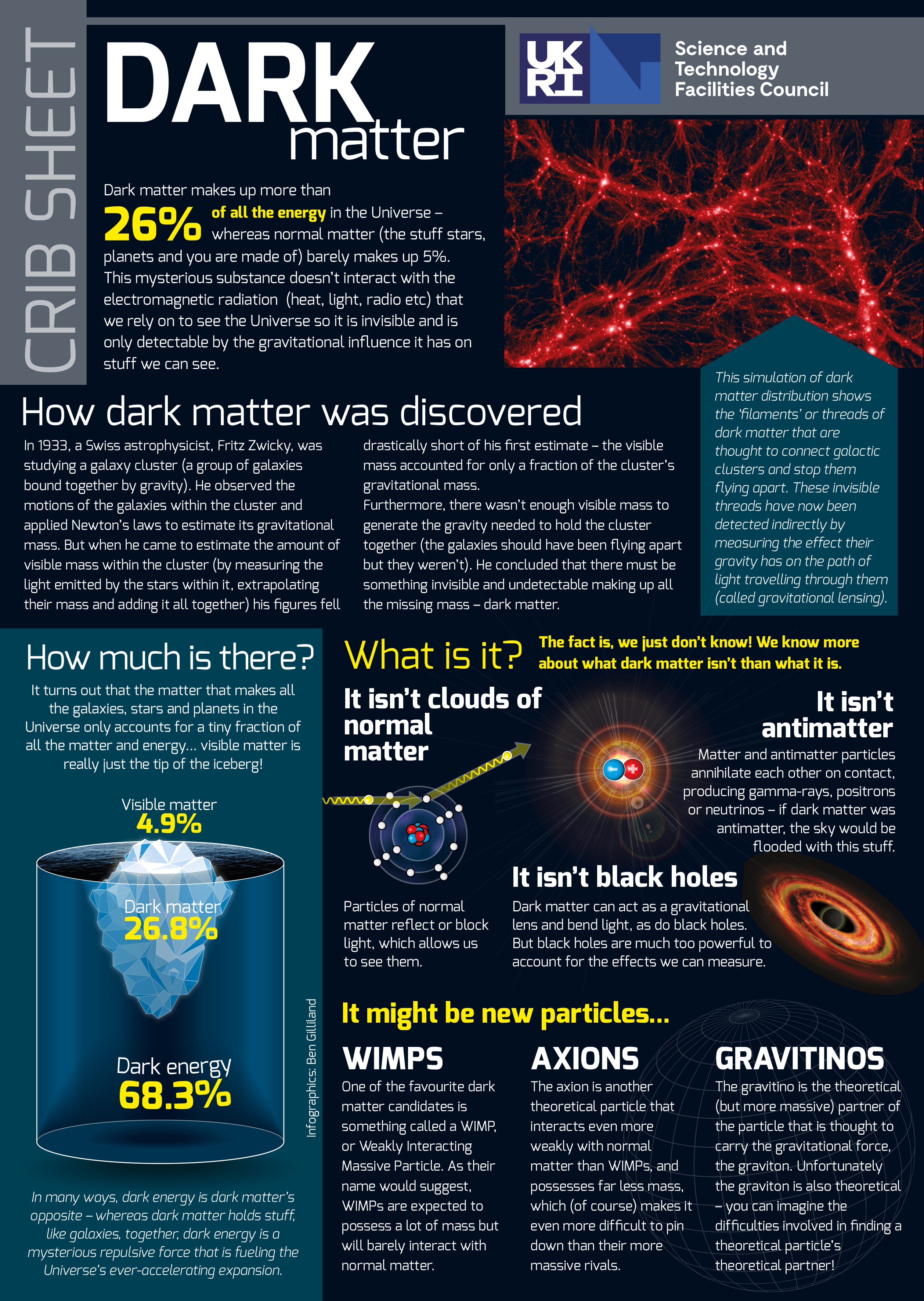
The universe is playing a trick on us. Everything we have ever seen — every star photographed, every galaxy mapped, every nebula admired in Hubble's gallery of cosmic wonders — amounts to less than five percent of what actually exists. The atoms that compose our bodies, our planet, our sun, and the entire observable tapestry of luminous matter represent a thin frosting on a cake whose bulk remains utterly invisible to us. This is not a small mystery at the edges of physics. It is a chasm at the center of our understanding, a fundamental admission that the Standard Model of particle physics — arguably the most successful scientific theory ever constructed — is, at best, profoundly incomplete.
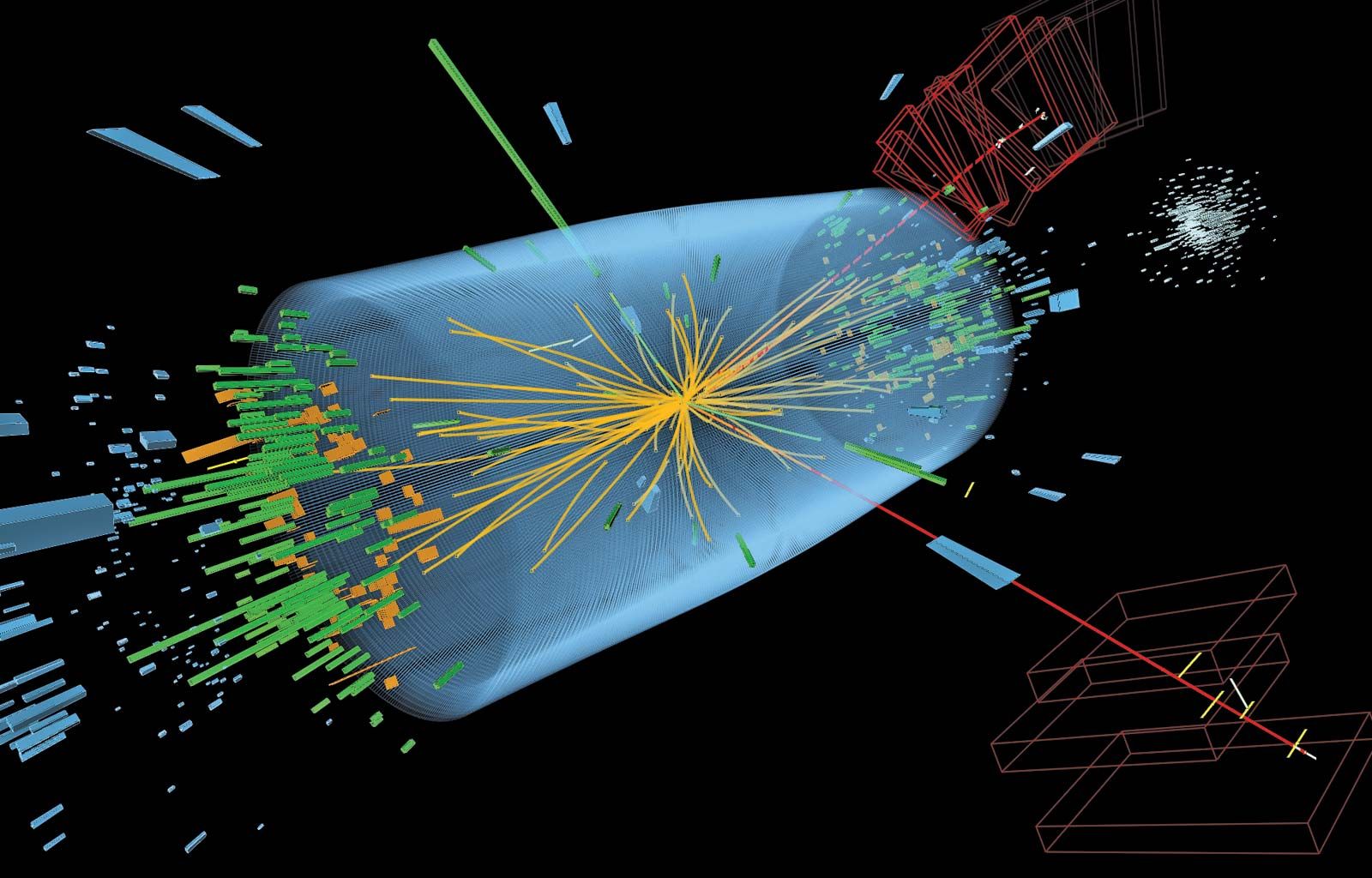
The Higgs boson's discovery in July 2012 at CERN's Large Hadron Collider felt like a triumph. It was. Physicists and journalists alike celebrated it as the completion of the Standard Model, the crowning jewel in a theoretical edifice built over decades by hundreds of brilliant minds. Peter Higgs wept in the auditorium at CERN. The particle confirmed the mechanism by which matter acquires mass — the Higgs field, a quantum field permeating all of space whose excitation manifests as the Higgs boson. It was, in every meaningful sense, a revolution. Yet the champagne had barely gone flat before the more sobering realization reasserted itself: the Higgs boson doesn't tell us anything about dark matter. Not a thing. The mechanism that explains why quarks are heavy says nothing about what constitutes 85 percent of all matter in the universe, or 27 percent of the universe's total energy content. In completing one chapter, the Higgs discovery underscored how little we have written of the book.
This article is about that larger book — about dark matter's history, its candidates, its paradoxes, its detection strategies, and the wild theoretical frontier that lies beyond it. It is also about the peculiar intellectual situation physicists now find themselves in: armed with the most sophisticated instruments ever built, possessing the most precise theory in scientific history, and still unable to identify what most of the universe is made of.
Fritz Zwicky and the First Crack in the Visible Universe
The story that the existing article opens with — Fritz Zwicky in the 1930s — deserves more than a passing sentence, because Zwicky's discovery was not merely a data anomaly. It was an act of audacity.
In 1933, Zwicky was studying the Coma Cluster, a gravitationally bound collection of over a thousand galaxies roughly 320 million light-years from Earth. Using the virial theorem — a statistical mechanics tool that relates the average kinetic energy of a bound system to its potential energy — he estimated how fast the galaxies should be moving if the cluster's mass equaled the combined mass of its visible stars. The answer he got from direct observation was wildly different. The galaxies were moving roughly seven to ten times faster than they should have been. If they were actually moving that fast based on visible mass alone, the cluster should have flown apart billions of years ago. Something was holding it together. Zwicky called this invisible binding agent dunkle Materie — dark matter.
What makes Zwicky's story philosophically interesting is what happened next: almost nothing. For roughly three decades, the physics community largely ignored or sidelined his observation. Zwicky was notoriously difficult as a person — combative, dismissive of colleagues, given to calling people "spherical bastards" (meaning bastards from every angle) — and this likely contributed to the institutional cold shoulder. But more fundamentally, the idea that most of the universe is invisible was conceptually uncomfortable. Science has a deep preference for the visible, the measurable, the tangible. Zwicky's dunkle Materie sat in the literature like an unexploded bomb while the rest of physics moved forward.
The bomb detonated in the 1970s, largely through the work of Vera Rubin and her collaborator Kent Ford. Their methodology was different from Zwicky's — rather than examining galaxy clusters, they mapped the rotation curves of individual spiral galaxies. A rotation curve plots the orbital velocity of stars and gas clouds as a function of their distance from a galaxy's center. Newtonian gravity — and by extension, general relativity in the appropriate limit — makes a straightforward prediction: stars farther from the concentrated central mass should orbit more slowly, just as Neptune moves more slowly around the Sun than Mercury does. This is called Keplerian decline.
What Rubin and Ford found, examining Andromeda and then dozens of other spiral galaxies, was that rotation curves are nearly flat. Stars at the outer edges of galaxies orbit at roughly the same speed as stars close to the center. The Keplerian decline doesn't happen. The most natural explanation: the visible stellar mass is not the total mass. Galaxies are embedded in vast, roughly spherical halos of invisible matter extending far beyond their luminous disks — matter that provides additional gravitational pull to the outer stars. The distribution of this invisible matter, extending outward in a diffuse halo, is precisely what would produce a flat rotation curve.
Rubin herself was careful and methodical in ways that Zwicky wasn't. She amassed data systematically, working with Ford across years and dozens of galaxies, publishing in peer-reviewed journals with meticulous observational backing. By the early 1980s, it was very difficult to dismiss the rotation curve evidence. Dark matter had graduated from curiosity to crisis.
The Cosmological Scaffolding: Why Dark Matter Has to Exist
Galaxy rotation curves are compelling, but they are not the only evidence for dark matter. The case is, in fact, deeply overdetermined — meaning that multiple independent lines of evidence all point to the same conclusion. This is epistemologically important. A single anomalous observation can be dismissed as measurement error or local effect. When five independent phenomena all demand the same invisible component, dismissal becomes untenable.
Gravitational Lensing: Einstein's general relativity predicts that massive objects curve spacetime, bending the path of light passing near them. The Hubble Space Telescope has produced spectacular images of gravitational lensing — background galaxies distorted into arcs or rings by foreground galaxy clusters. By measuring the degree of lensing, astronomers can calculate the total mass of the lensing object. In every case, this total mass far exceeds the mass implied by the visible matter. The Bullet Cluster, discovered in 2004 and often described as the "smoking gun" for dark matter, shows two galaxy clusters that have passed through each other. The hot gas (visible in X-rays) was slowed by electromagnetic interactions and lagged behind, while the gravitational lensing signal — which should trace mass — moved ahead with the galaxies. The lensing mass and the visible matter have literally separated in space, demonstrating that most mass is not associated with ordinary baryonic matter.
Cosmic Microwave Background (CMB): The universe began hot and dense. As it expanded and cooled, photons and baryonic matter formed a coupled plasma that underwent acoustic oscillations — pressure waves rippling through the early universe like sound. When the universe cooled enough for protons and electrons to combine into neutral hydrogen (about 380,000 years after the Big Bang), photons decoupled and streamed freely, carrying the imprint of those oscillations. We observe this imprint today as the CMB — a nearly uniform glow with temperature fluctuations of about one part in 100,000. The angular scale and amplitude of these fluctuations are exquisitely sensitive to the universe's matter content. Analyses of CMB data, particularly from the WMAP and Planck satellites, precisely constrain the fractions of ordinary matter (about 5%), dark matter (about 27%), and dark energy (about 68%) in the universe. Dark matter is needed to explain why the fluctuations have the pattern they do — particularly the relative heights of the acoustic peaks in the CMB power spectrum.
Large-Scale Structure Formation: We live in a universe of filaments, sheets, voids, and clusters — a cosmic web of matter spanning billions of light-years. Computer simulations of structure formation starting from the nearly smooth early universe only reproduce the observed large-scale structure when dark matter is included. Without it, structures cannot grow fast enough from the small initial fluctuations — gravity acting on ordinary matter alone is too weak to create the universe we see in the time available. Dark matter, which does not couple to radiation and thus can begin clustering earlier, provides the gravitational scaffolding around which ordinary matter collapses.
Big Bang Nucleosynthesis (BBN): The first few minutes after the Big Bang produced hydrogen, helium, deuterium, and trace amounts of lithium through nuclear reactions. The ratios of these light elements depend sensitively on the density of baryonic matter. Observed abundances of deuterium, in particular, constrain baryonic matter to roughly 5% of the total energy density — far less than the total matter density inferred from other evidence. This means most matter cannot be made of protons and neutrons. Dark matter must be non-baryonic.
Each of these lines of evidence is independent. Each points to the same quantitative conclusion: roughly 27% of the universe's energy density consists of a non-baryonic, non-luminous, gravitationally interacting substance. The case for dark matter's existence, as a gravitational phenomenon, is extraordinarily robust.
The Particle Physics Problem: Where Does the Standard Model End?

The Standard Model, constructed between the 1960s and 1970s, catalogs all known elementary particles and three of the four fundamental forces (electromagnetic, weak nuclear, strong nuclear — notably excluding gravity). It describes quarks, leptons, and bosons with extraordinary precision, predicting quantities like the electron's anomalous magnetic moment to more than ten decimal places. The Higgs boson, found at CERN in 2012, completed the model.
But the Standard Model has no dark matter candidate. None. Every particle in it interacts with light or decays into particles that do. This is not a minor gap to be patched — it is a fundamental failure of the theory's scope.
Moreover, the Standard Model has other known deficiencies that push physicists toward "beyond the Standard Model" (BSM) physics:
- It does not explain the matter-antimatter asymmetry — why the Big Bang produced more matter than antimatter, allowing anything to exist at all.
- It does not incorporate gravity — general relativity and quantum field theory remain unreconciled.
- It suffers from the hierarchy problem: the Higgs boson's mass is technically "fine-tuned" in ways that seem deeply unnatural, requiring extraordinary cancellations between quantum corrections.
- It does not explain neutrino masses — neutrinos were assumed massless in the original model, but experiments in the late 1990s proved they oscillate between flavors, which requires mass.
Dark matter sits in this landscape of failures as perhaps the most conspicuous missing piece. Whatever dark matter is, it represents physics beyond the Standard Model. Finding it would be the first definitive crack in the Standard Model's domain — the first particle discovered that categorically cannot be accommodated within its framework.
The Candidates: A Taxonomy of the Invisible
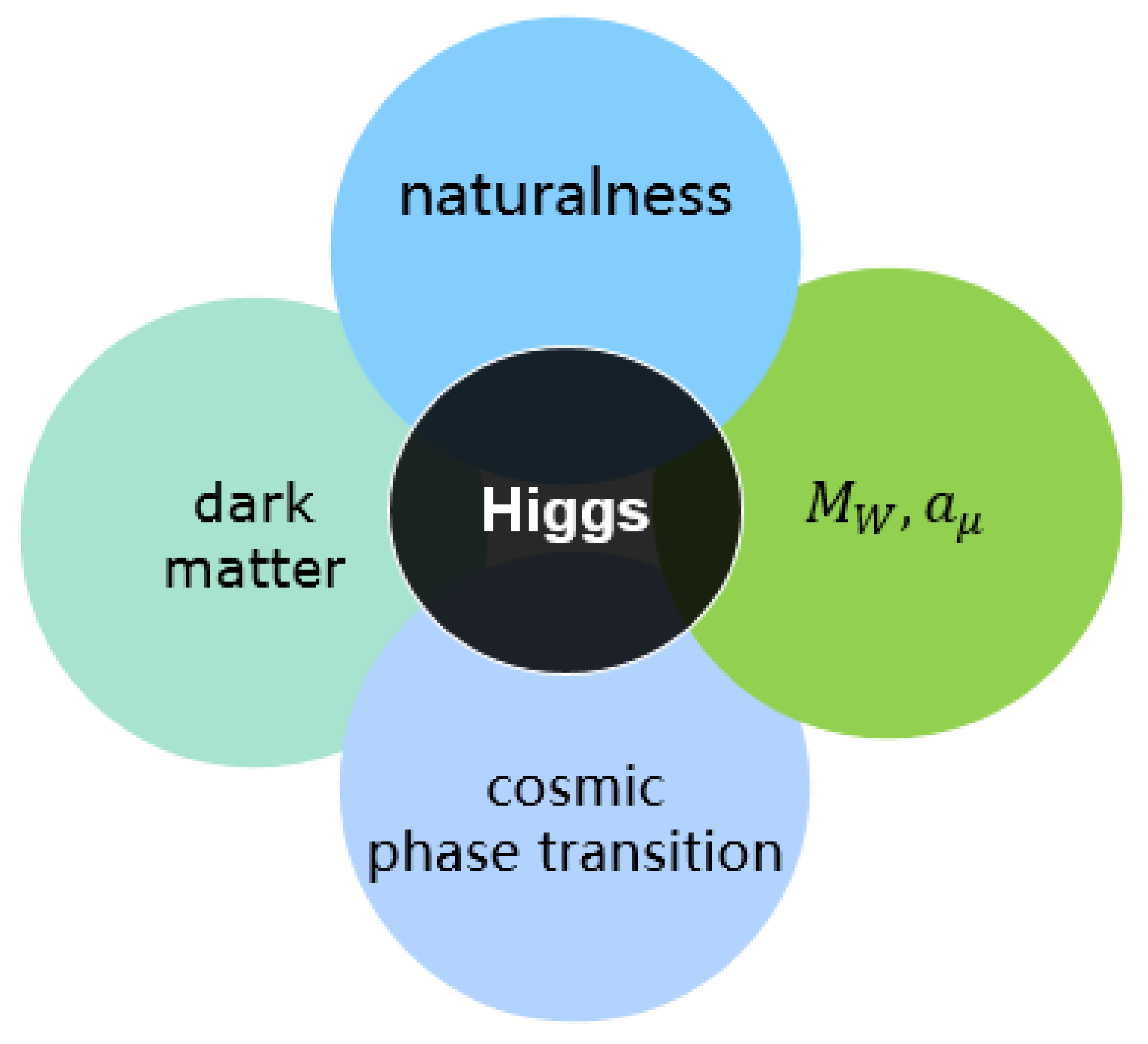
The search for dark matter's identity has generated a remarkable bestiary of proposed particles and phenomena. Each has its own theoretical motivation, its own detection signature, its own champions and skeptics.
WIMPs: The Canonical Candidate
Weakly Interacting Massive Particles — WIMPs — were, for decades, the overwhelming favorite. Their appeal is almost aesthetic: WIMPs solve the dark matter problem without being invented solely to solve it.
The argument goes like this: several extensions of the Standard Model, most notably Supersymmetry (SUSY), independently predict the existence of new massive particles that interact via the weak force. Supersymmetry proposes that every Standard Model particle has a "superpartner" with different spin quantum numbers. The lightest supersymmetric particle (LSP), often the neutralino, would be stable (conserved by a quantum number called R-parity) and would interact only via the weak force and gravity — precisely the properties required of dark matter. The mass of such a particle, typically between 10 GeV and a few TeV, is set by electroweak physics, not invented to match dark matter.
What makes WIMPs especially compelling is the "WIMP miracle": if you calculate the relic abundance of a weakly interacting massive particle that was in thermal equilibrium in the early universe and then "froze out" as the universe expanded and cooled, you get exactly the right dark matter density — 27% of the total energy budget. This coincidence between weak-scale physics and cosmological abundance is either deeply meaningful or an extraordinary accident.
WIMP detection exploits the fact that WIMPs, while massive, interact weakly with ordinary nuclei. At expected WIMP densities (roughly 0.3 GeV/cm³ in the solar neighborhood), there should be millions of WIMPs passing through every square centimeter of Earth every second. Occasionally, one should scatter off a nucleus and deposit a tiny amount of energy — potentially detectable in ultra-sensitive underground detectors.
The experimental hunt for WIMPs has been relentless and, so far, fruitless. XENON1T, operating in the Gran Sasso laboratory in Italy, used 3.5 tonnes of liquid xenon as a target, cooled to near-cryogenic temperatures, surrounded by shielding to block cosmic rays. It set world-leading limits on WIMP-nucleus cross sections. Its successor, XENONnT (5.9 tonnes fiducial mass, operational since 2021), has pushed further still. LUX-ZEPLIN (LZ), operational since 2022 with a 7-tonne active xenon target, has now achieved the most stringent limits ever placed on WIMP-nucleus interaction strength for masses above ~10 GeV. The sensitivity achieved is staggering — cross sections smaller than 10⁻⁴⁷ cm² are now excluded. To visualize how small this is: it's like trying to detect a force weaker than anything previously measured in nature, using a detector that eliminates virtually every background signal except the rarest.
The silence from these detectors is becoming cosmologically deafening. The parameter space where naive WIMP models predicted a signal has been largely eliminated. Supersymmetric models that seemed natural in 2010 are now tightly constrained or ruled out. This does not mean WIMPs are dead — there remain viable WIMP scenarios at higher masses, different coupling structures, and with "inelastic" or "pseudo-Dirac" dark matter configurations — but the golden era of naive WIMPs has passed. The physics community is reckoning with this.
Axions: The Elegant Interloper
Axions have a different origin story — one that makes them, if anything, more theoretically motivated than WIMPs, because they solve not one but two problems.
In the 1970s, physicists Peccei and Quinn noticed a disturbing problem with quantum chromodynamics (QCD), the theory of the strong force. QCD allows, in principle, for CP violation — asymmetries between matter and antimatter — through a parameter called theta (θ). Experimental measurements constrain θ to be smaller than about 10⁻¹⁰, which is extraordinarily small. Why should θ be so close to zero? This is the "strong CP problem."
Peccei and Quinn's solution: introduce a new global symmetry that is spontaneously broken, dynamically driving θ to zero. The Goldstone boson associated with this symmetry breaking — named the axion by Frank Wilczek, who also named it after a detergent for an ironic reason — naturally acquires a tiny mass and couples weakly to photons and other particles. Steven Weinberg and Wilczek independently worked out the particle physics of axions in 1978.
The original Peccei-Quinn axion was quickly ruled out experimentally. But "invisible axion" variants — particularly the KSVZ (Kim-Shifman-Vainshtein-Zakharov) and DFSZ models — with much lower masses and weaker couplings remained viable. Such axions, if produced in the early universe by a mechanism called the "vacuum realignment mechanism," could be produced in exactly the right abundance to constitute dark matter — without any thermal production. The preferred mass range is extraordinary: microelectronvolt to millielectronvolt (10⁻⁶ to 10⁻³ eV), more than ten orders of magnitude lighter than electrons.
Detecting such ultra-light particles requires completely different technology than WIMP detectors. The most promising technique, pioneered by Pierre Sikivie in 1983, exploits the axion's coupling to photons in the presence of a strong magnetic field. In a magnetic field, axions can convert to photons with precisely the same energy as the axion's mass (times c²). The Axion Dark Matter eXperiment (ADMX) at the University of Washington uses exactly this: a tunable microwave cavity inside a strong superconducting magnet, searching for photons produced by axion-to-photon conversion. ADMX has now reached the sensitivity required to detect DFSZ-model axions in the mass range of a few microelectronvolts.
New experiments are proliferating: HAYSTAC at Yale uses quantum-squeezed states of light to push below the standard quantum limit; ABRACADABRA and DM-Radio search for axion-induced oscillating magnetic fields using toroidal magnets and sensitive SQUID magnetometers; CASPEr uses nuclear magnetic resonance to detect the oscillating electric dipole moment that axions would induce in atomic nuclei. The experimental frontier for axion searches is experiencing the same explosive growth that WIMP searches saw twenty years ago.
Sterile Neutrinos: Dark Matter from the Neutrino Sector
The Standard Model contains three neutrino species — electron, muon, and tau neutrinos. All three are "active" neutrinos, meaning they participate in weak interactions. The discovery of neutrino oscillations in the late 1990s — confirmed by Super-Kamiokande and the Sudbury Neutrino Observatory (Nobel Prize 2015, Takaaki Kajita and Arthur McDonald) — demonstrated that neutrinos have mass, though the mechanism is unknown.
A natural extension: suppose there exist "sterile" neutrinos — right-handed neutrino states that do not participate in any Standard Model interaction except gravity (and, via mixing, weak interactions through their overlap with active neutrinos). Sterile neutrinos are not exotic inventions; they appear naturally in see-saw mechanisms for neutrino mass generation and in left-right symmetric models. In a certain mass range (typically keV-scale), sterile neutrinos could be produced in the early universe in sufficient abundance to be dark matter.
The distinctive detection signature of sterile neutrino dark matter is X-ray emission. A sterile neutrino of mass mₛ can decay radiatively into an active neutrino plus a photon of energy mₛ/2. For keV-mass sterile neutrinos, this produces an X-ray line. In 2014, Bulbul et al. and Boyarsky et al. independently announced the detection of an unidentified X-ray line at 3.5 keV in observations of galaxy clusters and the Andromeda galaxy, consistent with the decay of a ~7 keV sterile neutrino. The announcement was electrifying.
Subsequent years have been complicated. The ESA's XMM-Newton and NASA's Chandra observatories have both been used to search for the 3.5 keV line in additional targets with mixed results — some observations confirm it, others don't. The Hitomi satellite, launched in 2016 with unprecedented X-ray spectral resolution, provided data before it was tragically lost to a pointing control malfunction; its brief observations of the Perseus cluster did not confirm the line but had insufficient sensitivity to definitively rule it out. The XRISM satellite, launched in 2023 as Hitomi's successor, is now producing high-resolution X-ray spectra that may definitively resolve whether the 3.5 keV line is real. The community waits with genuine anticipation.
Primordial Black Holes: A Classical Alternative
Not all dark matter candidates are new elementary particles. Primordial black holes (PBHs) — black holes formed in the very early universe from density fluctuations, rather than from stellar collapse — are an alternative that requires no new particles whatsoever. They were proposed as dark matter candidates by Hawking and Carr in the 1970s and have experienced dramatic revivals.
After the LIGO gravitational wave detectors announced the first detection of merging black holes in 2016 (binary masses of 36 and 29 solar masses), some researchers — particularly Sebastien Clesse and Juan García-Bellido — noted that such massive black holes were unexpected from stellar evolution and might be primordial. Could LIGO be detecting dark matter merging?
Constraints on PBHs as dark matter are complex and mass-dependent. Small PBHs (below about 10¹⁵ grams) would have evaporated via Hawking radiation by now and cannot be dark matter. For solar-mass to sub-solar-mass PBHs, constraints come from microlensing surveys (MACHO, EROS, OGLE), gravitational wave detections, CMB spectral distortions, and pulsar timing. For masses above a few hundred solar masses, constraints from gravitational lensing of distant quasars apply.
The window that remains potentially open — around 10⁻¹⁶ to 10⁻¹¹ solar masses (roughly asteroid mass) — is being probed by optical gravitational microlensing surveys and femtosecond lensing techniques. A 2020 paper by Niikura et al. using the Hyper Suprime-Cam on the Subaru telescope to search for microlensing of stars in the Andromeda galaxy over a single night set new constraints in this regime. PBHs are not dead as a dark matter candidate; they occupy specific windows of parameter space that experiments are actively closing — or potentially confirming.
The Theoretical Frontier: Beyond WIMPs
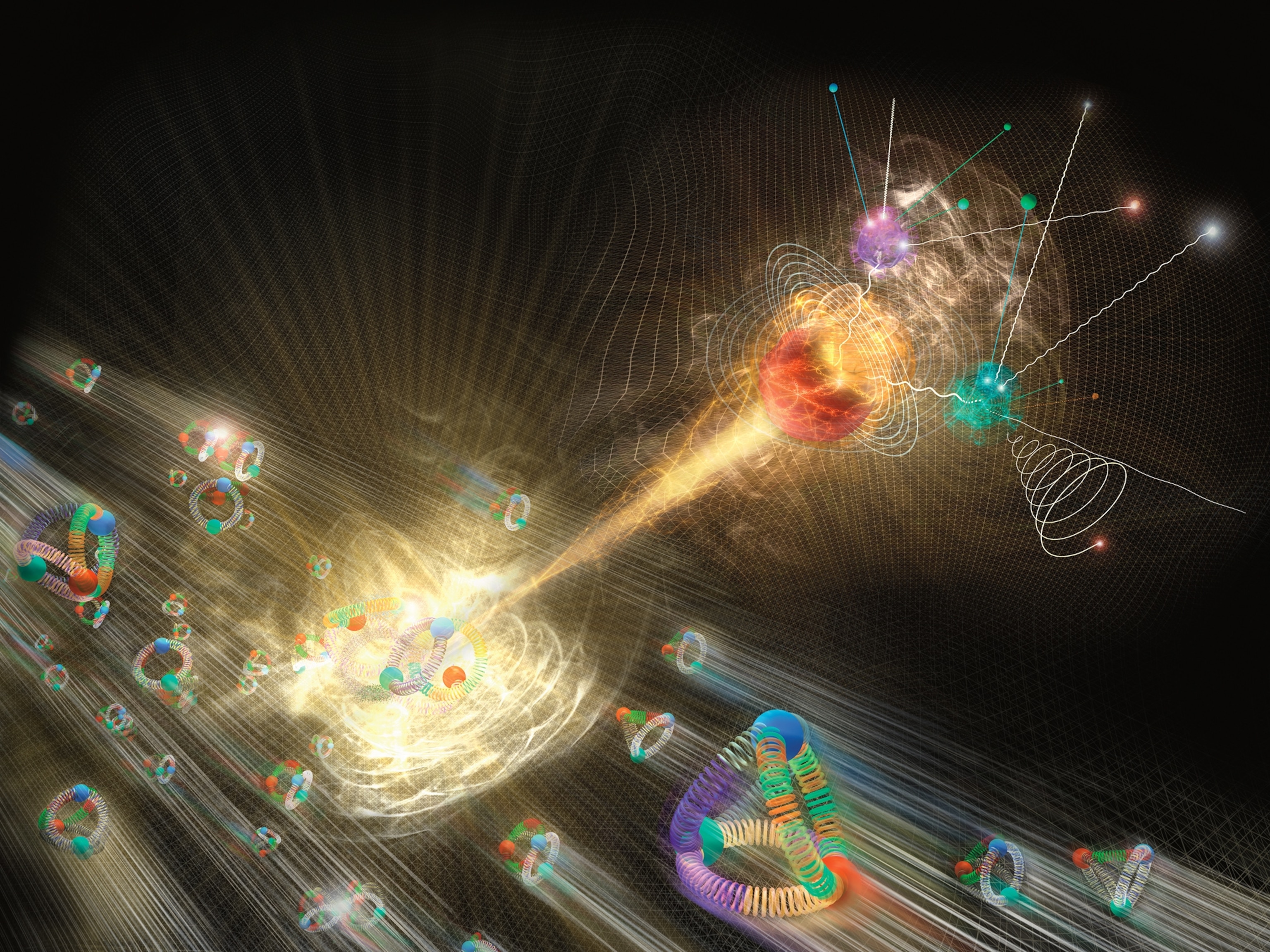
The failure of straightforward WIMP searches has accelerated theoretical creativity. Several frameworks have emerged that expand the dark matter possibility space far beyond the WIMP paradigm.
Self-Interacting Dark Matter (SIDM)
The standard Cold Dark Matter (CDM) model — WIMPs as non-interacting, cold (slow-moving at freeze-out) dark matter — makes specific predictions about structure on small scales. And on small scales, it appears to have problems.
N-body simulations of CDM predict that dark matter halos should have "cuspy" central density profiles — steeply rising toward the center, approximately ρ ∝ 1/r (the NFW profile, after Navarro, Frenk, and White). But observations of dwarf galaxies — the smallest, most dark-matter-dominated systems — consistently show "cored" density profiles — nearly constant density toward the center. This is the "cusp-core problem."
CDM also predicts that large galaxies like the Milky Way should host hundreds of satellite galaxies with masses sufficient to form stars. We observe only tens. The "missing satellites problem" — proposed by Klypin et al. and Moore et al. in 1999 — has been partially resolved by the idea that many predicted satellites are too faint to have been observed (confirmed by ongoing discoveries of ultra-faint dwarf galaxies), but the problem is not fully resolved.
Self-Interacting Dark Matter, proposed by Spergel and Steinhardt in 2000, addresses these issues by allowing dark matter particles to scatter off each other through a dark-sector force. This is not interaction with ordinary matter — SIDM particles still interact with us only via gravity — but among themselves, through a "dark force." These self-interactions redistribute momentum in the central regions of dark matter halos, softening cusps into cores and reducing the predicted number of satellites by disrupting smaller halos. A cross section per unit mass of roughly σ/m ~ 1 cm²/g is needed to produce the observed effects — large by particle physics standards, but achievable with a light mediator in a dark sector.
The recent University of California Berkeley work mentioned in the existing article — about SIDM triggering dramatic collapses inside dark matter halos — is part of this program. Under SIDM, gravothermal collapse can occur in the densest halos: the dark matter core loses energy through self-interactions and collapses, potentially forming ultra-dense dark matter "nuggets" or even primordial black holes. This process, called "core collapse" in analogy with stellar evolution, is an active area of theoretical and computational investigation.
Dark Sector Physics: Hidden Valleys and Dark Photons
Perhaps dark matter is not a single particle but an entire sector — a collection of dark particles and dark forces, mirroring the complexity of ordinary matter. This "hidden valley" concept (proposed by Matthew Strassler and Kathryn Zurek in 2006) imagines that beyond the Standard Model lies a parallel sector of particles and interactions, connected to our sector only weakly, perhaps through "portal" interactions.
The "dark photon" is one such portal. Just as ordinary matter couples to electromagnetism through photons, a dark sector might contain a U(1) gauge symmetry with its own gauge boson — the dark photon — that couples to the visible photon through kinetic mixing. The parameter ε measures the strength of this mixing, and constraints on it come from accelerator experiments (BaBar, LHCb, NA48/2), fixed-target experiments (APEX, HPS), and astrophysical observations.
Dark photons are being searched for at colliders and fixed-target experiments worldwide. The LHCb experiment at CERN has unique advantages in this search due to its forward geometry and particle identification capabilities. The proposed FASER (ForwArd Search ExpeRiment) detector at CERN, now operational for Run 3, is specifically designed to detect long-lived particles like dark photons produced in high-energy proton collisions.
Fuzzy Dark Matter and Ultra-Light Axion-Like Particles
At the ultra-light end of the mass spectrum — below 10⁻²² eV — lies "fuzzy dark matter," proposed by Hu, Barkana, and Gruzinov in 2000. At these masses, dark matter particles have de Broglie wavelengths of kiloparsec scale — comparable to the sizes of dwarf galaxies. The quantum mechanical wave nature of the dark matter becomes apparent at astrophysical scales. Fuzzy dark matter forms a quantum coherent "superfluid" with a density profile that develops quantum pressure, preventing the formation of central cusps and suppressing small-scale structure in ways that address the CDM small-scale problems.
This is not purely theoretical exotica — fuzzy dark matter makes distinct predictions that are being tested. The Lyman-alpha forest (absorption features in quasar spectra from neutral hydrogen clouds at high redshift) constrains the suppression of small-scale power in the matter distribution, setting lower bounds on the fuzzy dark matter particle mass. The current bound is roughly mψ > 10⁻²¹ eV, already in tension with the simplest fuzzy dark matter models. More sophisticated models survive, but the parameter space is tightening.
The Higgs Portal: Bridging the Visible and Dark Worlds
The connection between the Higgs boson and dark matter, while not realized in the Standard Model itself, is one of the most actively studied theoretical bridges to BSM physics. Several "Higgs portal" models propose that dark matter couples to ordinary matter specifically through the Higgs field.
The simplest case: a scalar field S — a dark matter candidate — couples to the Higgs doublet H via an interaction λ S²|H|². The Higgs boson then becomes a mediator between ordinary matter and dark matter. If the dark matter mass is less than half the Higgs mass (62.5 GeV), the Higgs can decay invisibly into dark matter pairs — a signature being searched for at the LHC. Current LHC limits constrain the invisible branching fraction of the Higgs to below about 11%.
This connection makes the Higgs boson a critical tool in dark matter searches. Precise measurements of Higgs properties — its production rates, decay channels, and couplings to Standard Model particles — constrain how strongly it can couple to hidden sectors. The HL-LHC (High Luminosity LHC), planned to begin operations around 2029, will measure Higgs couplings to sub-percent precision, potentially detecting or ruling out Higgs portal dark matter across a wide mass range.
The Higgs portal is not merely a theoretical curiosity. It represents a genuine experimental strategy: if dark matter couples to the Higgs, then colliders become dark matter factories, and careful measurements of Higgs properties become dark matter detections — albeit indirect ones. The interplay between collider physics, direct detection, and indirect detection creates a web of complementary constraints that is uniquely powerful.
The DAMA Anomaly and the Art of Interpretation
Science proceeds not just through confirmed discoveries but through contested claims, and few claims in dark matter physics have been as persistently controversial as the DAMA/LIBRA experiment's annual modulation signal.
Located at Gran Sasso, DAMA/LIBRA uses thallium-doped sodium iodide (NaI(Tl)) crystals as a target. The basic idea: if Earth moves through a dark matter halo, the relative velocity of Earth and dark matter varies seasonally as Earth orbits the Sun. This should cause a sinusoidal annual modulation in the dark matter interaction rate, peaking in June (when Earth's orbital velocity adds to the Sun's velocity through the halo) and minimizing in December. DAMA/LIBRA claims to observe exactly this modulation at extraordinary statistical significance — more than 12 standard deviations — over more than twenty years of data.
The problem: no other experiment sees anything. The parameter space preferred by DAMA/LIBRA's signal is excluded by LUX, PandaX, XENON, and CDEX by many orders of magnitude — if conventional WIMP-nucleus interactions are assumed.
Theorists have proposed dozens of mechanisms to reconcile DAMA with null results elsewhere: inelastic dark matter (dark matter that changes state when it scatters, which affects the recoil energy differently in different nuclei), dark matter that scatters preferentially off iodine or sodium rather than xenon or germanium, dark matter coupled to electrons rather than nuclei, and more. Each such mechanism is constrained by other experiments. The game of constructing and closing loopholes has been ongoing for over two decades.
Several NaI-based experiments — COSINE-100 in South Korea and ANAIS-112 in Spain's Canfranc Underground Laboratory — were specifically constructed to test DAMA's claim using the same target material. As of their most recent published results, neither has confirmed DAMA's signal; in fact, ANAIS-112's 2021 result with three years of data is inconsistent with DAMA's modulation parameters at greater than 3σ. COSINE-100 continues to accumulate data. The SABRE experiment (operating in both hemispheres) is designed to definitively test DAMA with improved sensitivity. The physics community expects a resolution — though the experimentalists at DAMA maintain their measurement with confidence.
The DAMA controversy illustrates something important about dark matter physics: the interpretation of any single result is inseparable from theoretical assumptions about dark matter's properties, and theoretical flexibility is large enough that even apparently conflicting results can be made formally consistent. This makes the field both intellectually rich and frustratingly ambiguous.
Modified Gravity: The Minority Report
Any honest treatment of dark matter must engage with the alternative: perhaps there is no dark matter. Perhaps gravity itself deviates from general relativity on galactic scales in ways that produce the observed phenomenology without requiring a new particle.
Modified Newtonian Dynamics (MOND), proposed by Mordehai Milgrom in 1983, is the most influential such proposal. Milgrom noticed that the dark matter problem in galaxies becomes significant only when accelerations fall below a critical value a₀ ≈ 1.2 × 10⁻¹⁰ m/s² — roughly 10 billion times smaller than gravitational acceleration at Earth's surface. MOND modifies Newton's second law: for accelerations much larger than a₀, Newtonian dynamics is recovered; for accelerations much smaller than a₀, the effective gravitational acceleration is modified so that circular velocities become constant regardless of radius — precisely the flat rotation curves Rubin observed.
MOND is remarkably successful at fitting galaxy rotation curves with a single free parameter (a₀), even predicting them from the visible mass distribution alone. Its greatest triumph is the Radial Acceleration Relation (RAR) — an empirical correlation between the observed centripetal acceleration in galaxies and the acceleration predicted from visible baryonic matter alone — published by Stacy McGaugh, Federico Lelli, and James Schombert in 2016. The RAR spans five orders of magnitude in acceleration and holds across galaxy types with astonishingly small scatter. MOND predicts this relation; CDM models require it to emerge from galaxy formation physics, which is less obvious.
But MOND has serious failures. It cannot explain the CMB power spectrum without supplementary exotic dark matter (relativistic MOND theories by Bekenstein, Zlosnik, Ferreira and others face severe challenges). It struggles with galaxy cluster dynamics — the Bullet Cluster, in particular, remains difficult to explain with MOND without some dark matter component (typically sterile neutrinos). And there is no satisfying relativistic extension: Tensor-Vector-Scalar gravity (TeVeS, Bekenstein 2004) was once promising but faced crushing challenges from the 2017 neutron star merger GW170817, which showed that gravitational waves travel at the speed of light — ruling out many vector-tensor extensions.
Recent work on "covariant emergent gravity" (Verlinde 2017), superfluid dark matter (Berezhiani and Khoury 2015), and relativistic MOND theories continues. These are serious theoretical efforts, not fringe physics. But the consensus of the cosmological community — bolstered by CMB, BBN, and large-scale structure arguments that independent of rotation curves — strongly favors particle dark matter. MOND and its relatives remain valuable as phenomenological frameworks for galaxy dynamics and as reminders that the small-scale failures of CDM demand either new baryonic physics or new dark matter physics.
Indirect Detection: Reading Dark Matter's Fingerprints in the Cosmos
Indirect detection strategies search not for dark matter itself, but for the products of its annihilation or decay in astrophysical environments. If dark matter is a WIMP-like thermal relic, then wherever dark matter particles are dense enough, they should annihilate pairwise into Standard Model particles — quarks, leptons, photons — producing a detectable signal against the astrophysical background.
The Fermi Large Area Telescope (Fermi-LAT), launched in 2008, observes the entire gamma-ray sky from 20 MeV to more than 300 GeV. The galactic center, densely packed with dark matter according to CDM halos, is the primary target. In 2014, several groups (including Daylan et al.) announced that the Fermi-LAT data showed an unexplained excess of gamma rays from the galactic center — a "galactic center excess" consistent with roughly 40 GeV WIMPs annihilating into bottom quark pairs. The signal is tantalizing: it has the right spatial morphology (roughly spherical, centered on the galactic center), the right spectral shape, and the right normalization.
The controversy is intense. Millisecond pulsars — ancient, rapidly-spinning neutron stars — are an alternative source for the excess. They are individually too faint to resolve but might collectively produce an unresolved gamma-ray background with a similar morphology and spectrum. Statistical analyses of the gamma-ray "photon count distribution" (looking for the clumpiness expected from point sources versus smooth dark matter annihilation) have returned conflicting results: some analyses favor dark matter, some favor pulsars. The debate remains unresolved.
The Cherenkov Telescope Array (CTA), a next-generation ground-based gamma-ray observatory with unprecedented sensitivity due to its array of over 100 telescopes across two hemispheres, is under construction in Chile and La Palma. CTA will observe the galactic center with angular resolution and sensitivity far beyond Fermi-LAT's, potentially resolving the galactic center excess into point sources (favoring pulsars) or confirming a smooth, dark matter-like morphology. It is expected to begin full operations around 2025-2026.
Neutrino-based indirect detection is another strategy. WIMPs gravitationally captured by the Sun or Earth would accumulate in their cores and annihilate, producing high-energy neutrinos that can be detected at neutrino observatories. IceCube, a cubic-kilometer neutrino detector buried in the Antarctic ice sheet, has searched for such signals from the Sun's core with high sensitivity, setting limits on WIMP-proton cross sections that are competitive with — and in some mass ranges superior to — direct detection experiments.
Positrons from dark matter annihilation in the galactic halo are detected by the AMS-02 experiment on the International Space Station. AMS-02 (led by Nobel laureate Samuel Ting) observed an excess of high-energy positrons starting around 10 GeV, confirmed and extended earlier PAMELA observations. This excess can be interpreted as dark matter annihilation into lepton pairs — but pulsars are again a competing explanation. The debate over the positron excess has produced hundreds of papers and no consensus.
The Higgs Boson's Deeper Role: Vacuum Stability and the Multiverse
One dimension of the Higgs boson's relationship to deep physics that transcends direct dark matter connections involves the stability of the vacuum itself. The measured values of the Higgs mass (125.09 GeV) and the top quark mass jointly determine whether the electroweak vacuum is stable, metastable, or unstable over cosmological timescales. Remarkably, the Standard Model with its measured parameters suggests we live in a metastable vacuum — technically a false vacuum from which the universe could quantum tunnel to a lower-energy true vacuum, with disastrous consequences for all physics as we know it. The tunneling probability is astronomically small, so this is not an imminent concern, but it raises profound questions about why the universe finds itself on the knife edge between stability and instability.
This "metastability" has implications for dark matter theories: any extension of the Standard Model that adds new particles must not destabilize the electroweak vacuum further. SUSY, for instance, generally helps stabilize it. New scalar fields coupled to the Higgs (like those in Higgs portal dark matter) must be constrained to avoid creating new instabilities. The interplay between Higgs physics, vacuum stability, and dark matter model building is an active theoretical arena.
The broader cosmological context also connects to the anthropic principle and multiverse ideas. If the Higgs mass were significantly different from its observed value, the universe would be qualitatively different — atoms might not form, or stars might not ignite. Some argue this fine-tuning suggests a multiverse in which the Higgs mass takes different values across different regions of the landscape, and we observe a value consistent with our existence. If dark matter candidates couple to the Higgs, then the dark matter abundance might itself be anthropically constrained in the multiverse framework. These ideas, associated with Leonard Susskind and the string theory landscape, are theoretically significant but essentially untestable, placing them in philosophical borderlands.
The Next Decade: A Convergence of Instruments
The 2020s and early 2030s represent arguably the most exciting experimental period in dark matter history since Vera Rubin's work. A constellation of next-generation instruments will operate simultaneously, each sensitive to different dark matter candidates across many orders of magnitude in mass.
LZ (LUX-ZEPLIN) and XENONnT will push WIMP sensitivity toward the "neutrino floor" — the background from solar, atmospheric, and supernova neutrinos that mimic dark matter signals and ultimately limit sensitivity of any terrestrial detector. Eventually, DARWIN (DARk matter WImp search with liquid xenoN) — a proposed 50-tonne liquid xenon detector — would reach this floor, definitively exploring most of the WIMP parameter space. PandaX-4T in China's Jinping Underground Laboratory is also competing at this frontier.
ADMX-G2 and other axion experiments will probe the full range of theoretically motivated axion masses over the next decade. The proposed Global Network of Optical Magnetometers for Exotic physics (GNOME) uses atomic magnetometers in a worldwide network to search for domain walls of axion-like dark matter — a qualitatively different detection approach exploiting Earth's motion through dark matter structures.
The Rubin Observatory (named for Vera Rubin) in Chile, conducting the Legacy Survey of Space and Time (LSST) starting in 2025, will image the entire southern sky repeatedly with unprecedented depth and precision. It will discover thousands of new dwarf satellite galaxies (testing CDM predictions), measure weak gravitational lensing across billions of galaxies (measuring the matter distribution), and search for microlensing by compact dark matter objects. Rubin Observatory will produce a decade's worth of dark matter constraints simply by mapping the universe's matter distribution with exquisite fidelity.
The Euclid satellite, launched in 2023 by ESA, is conducting a cosmic census using weak gravitational lensing and galaxy clustering across 15,000 square degrees of sky up to redshift 2. Its primary goal is understanding dark energy, but it will simultaneously constrain dark matter properties through the matter power spectrum, providing perhaps the most precise determination yet of whether dark matter is truly "cold" (CDM) or has some degree of warmth or self-interaction.
Gravitational wave observatories continue to expand. The Einstein Telescope (proposed in Europe) and Cosmic Explorer (proposed in the US) would be third-generation detectors 10 to 100 times more sensitive than LIGO, probing black hole mass distributions to much greater distance and helping constrain primordial black hole dark matter. LISA (Laser Interferometer Space Antenna), a space-based gravitational wave observatory approved by ESA for launch around 2037, would detect gravitational waves in the mHz band, sensitive to PBH mergers and dark matter-induced gravitational wave backgrounds.
Cross-Domain Connections: Dark Matter at the Intersection of Sciences
Dark matter research intersects unexpectedly with fields far beyond particle physics and cosmology.
Quantum computing and sensing: Next-generation dark matter detectors are driving quantum technology development. Quantum noise squeezing — reducing quantum mechanical measurement uncertainty below the standard quantum limit — is being applied in axion searches (HAYSTAC has demonstrated this). Superconducting qubits are being proposed as dark matter sensors for very light dark matter. The QUAX experiment uses ferrimagnetic resonance in yttrium iron garnet as a quantum sensor for axions. These technologies, developed for dark matter, will find applications in quantum communication and quantum computing.
Nuclear physics: Direct detection experiments require exquisite understanding of nuclear structure — specifically how dark matter particles couple to collective nuclear motion (spin-dependent interactions, nuclear recoil form factors, two-body currents). The nuclear structure calculations needed for dark matter detection are pushing the frontier of ab initio nuclear theory. Meanwhile, neutrinoless double-beta decay experiments (searching for evidence that neutrinos are their own antiparticles, a fact relevant to sterile neutrino dark matter) overlap technically and scientifically with dark matter direct detection.
Geophysics and paleontology: An intriguing proposal by Lawrence Krauss, Katherine Freese, and others: dark matter interactions might leave traces in ancient minerals. As Earth moves through the galaxy, dark matter particles traversing minerals might occasionally scatter off nuclei, creating nuclear recoil tracks preserved in crystal lattices. "Paleo-detectors" — analyzing ancient halite or other mineral crystals — could effectively provide exposure times of millions of years, offering extraordinary sensitivity to very low interaction rates. Experimental paleontology meets particle physics.
Biomedical instrumentation: The silicon photomultiplier technology developed for WIMP detectors has found direct application in positron emission tomography (PET) scanners. The liquid noble gas (xenon and argon) detection techniques developed for dark matter have influenced radiation monitoring equipment. Underground laboratory infrastructure built for dark matter experiments enables ultra-low-background measurements for nuclear safety and environmental monitoring.
Open Questions and the Horizon of Understanding
Where does this leave us? The existing article's summary is accurate but understated. The situation is more specific and more urgent:
Why has the WIMP miracle not materialized? The sensitivity reached by LZ corresponds to cross sections far below what was considered "natural" for SUSY WIMPs in 2005. Either WIMPs exist in a narrow sliver of still-allowed parameter space, or the WIMP miracle is a coincidence rather than a deep truth, or dark matter is not a thermal relic at all. Each possibility has profound theoretical implications.
Are CDM's small-scale problems physics or astronomy? The cusp-core problem, missing satellites, and "too-big-to-fail" problem (CDM predicts massive subhalos that should form stars but don't seem to exist) might indicate new dark matter physics (SIDM, fuzzy dark matter) or might be resolved by baryonic physics — the effect of supernovae blowing gas out of dwarf galaxies, reshaping their dark matter distribution. Distinguishing these requires both better simulations and better observations of dark matter-dominated systems.
What is the origin of the galactic center excess? A dark matter signal or an unresolved pulsar population? CTA will help, but not immediately.
Is the 3.5 keV line real? XRISM's high-resolution spectra of galaxy clusters will answer this definitively within the next few years.
Does the Higgs couple to dark matter? Improved measurements at the HL-LHC will probe invisible Higgs decays to unprecedented precision. A non-zero invisible branching fraction would be revolutionary.
Is the universe's dark matter a single species or a complex dark sector? Dark matter might have internal structure — dark atoms, dark chemistry — that leaves observable signatures in CMB spectral distortions, gravitational wave backgrounds from dark phase transitions, or structure formation anomalies. The richness of the visible sector gives us no reason to assume the dark sector is simpler.
Conclusion: The Productive Humility of Not Knowing
Astrophysicist Vera Rubin, at the end of her career, was characteristically direct: "We have peered into a new world and have seen that it is more mysterious and more complex than we had imagined. Still more mysteries of the universe remain hidden. Their discovery awaits the adventurous scientists of the future." She said this without despair or resignation. There is something intellectually healthy about confronting the limits of knowledge with equanimity.
The Higgs boson's discovery was genuinely triumphant — and genuinely limited. It completed one picture while leaving the next one almost entirely blank. Dark matter stands as the clearest and most quantitatively precise evidence that our best theory of fundamental physics is incomplete. It is not a small correction at the margins. It is most of the matter in the universe. We have built our entire understanding of cosmic structure — galaxies, clusters, the large-scale web — on a scaffolding of something we cannot see, cannot touch, and cannot yet identify.
But this ignorance is structured. We know dark matter's gravitational properties to extraordinary precision. We know it is non-baryonic, non-relativistic on the scales of structure formation, and ancient — present since before the first stars. We know the interaction cross sections that remain allowed and those that are excluded. We know which masses could work and which are ruled out. Every null result is information. Every limit is a constraint. The growing collection of experiments — underground xenon tanks, Antarctic neutrino telescopes, satellite gamma-ray detectors, microwave cavity resonators, kilometer-scale gravitational wave interferometers, billion-galaxy surveys — is a net being cast across an enormous theoretical ocean.
Something will be caught. The universe is not actually dark all the way down. Its five percent of visible, luminous, atom-forged matter managed, through the peculiar recursion of intelligence, to become aware of itself and to begin interrogating the other 95 percent. That interrogation is young, vigorous, and — for anyone paying attention — among the most extraordinary intellectual adventures in human history.
Further Reading and Primary Sources: Rubin & Ford (1970), ApJ 159, 379; Zwicky (1933), Helvetica Physica Acta 6, 110; Peccei & Quinn (1977), Phys. Rev. Lett. 38, 1440; Spergel & Steinhardt (2000), Phys. Rev. Lett. 84, 3760; Milgrom (1983), ApJ 270, 365; McGaugh, Lelli & Schombert (2016), Phys. Rev. Lett. 117, 201101; Planck Collaboration (2018), A&A 641, A6; LZ Collaboration (2022), Phys. Rev. Lett. 131, 041002; Bulbul et al. (2014), ApJ 789, 13; Daylan et al. (2016), Physics of the Dark Universe 12, 50.