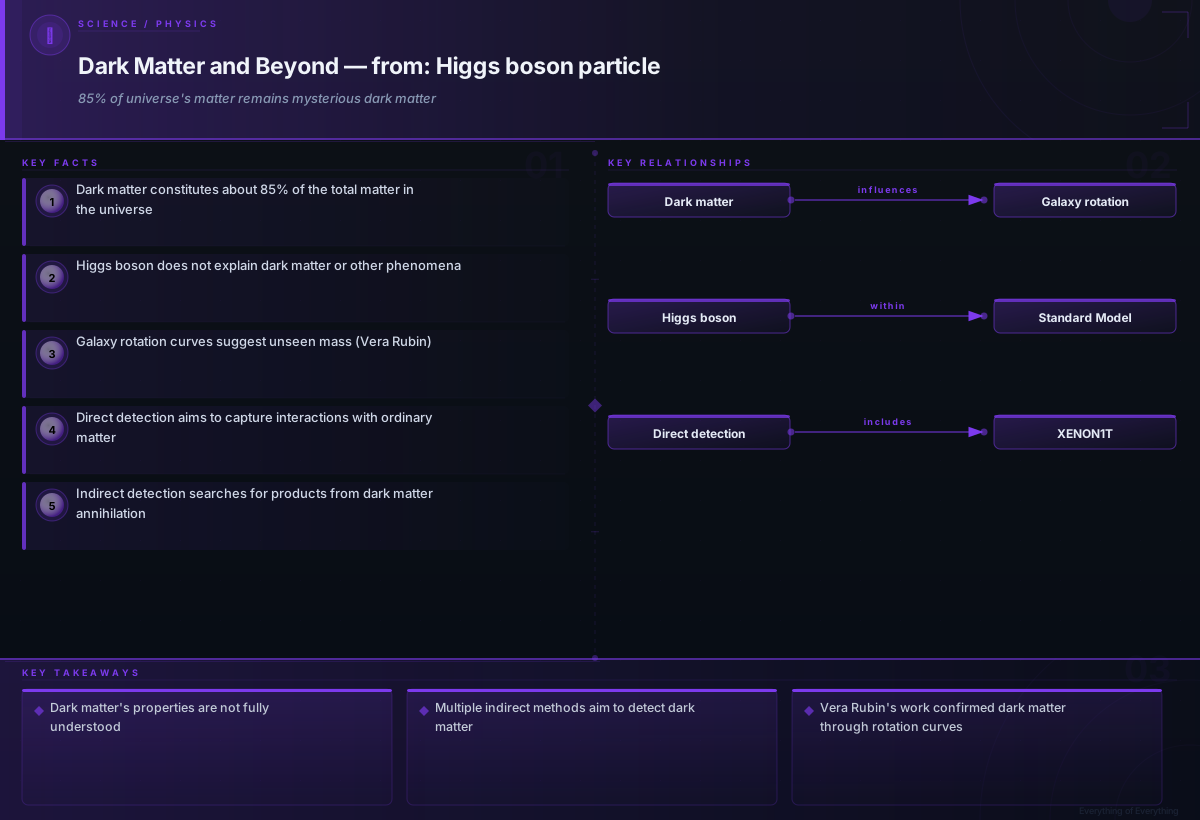
Dark matter constitutes about 85% of the total matter in the universe, yet it remains one of science's greatest enigmas. Despite decades of extensive observational evidence for its existence, its nature and properties remain largely unknown. The Higgs boson, discovered at CERN in 2012, marked a significant milestone in our understanding of fundamental particles, but it does not explain dark matter or other potential phenomena that may require new physics beyond the Standard Model [6]. This article delves into the current state and recent developments in the pursuit of dark matter, exploring foundational concepts, key figures, controversies, and future directions.
Introduction to Dark Matter
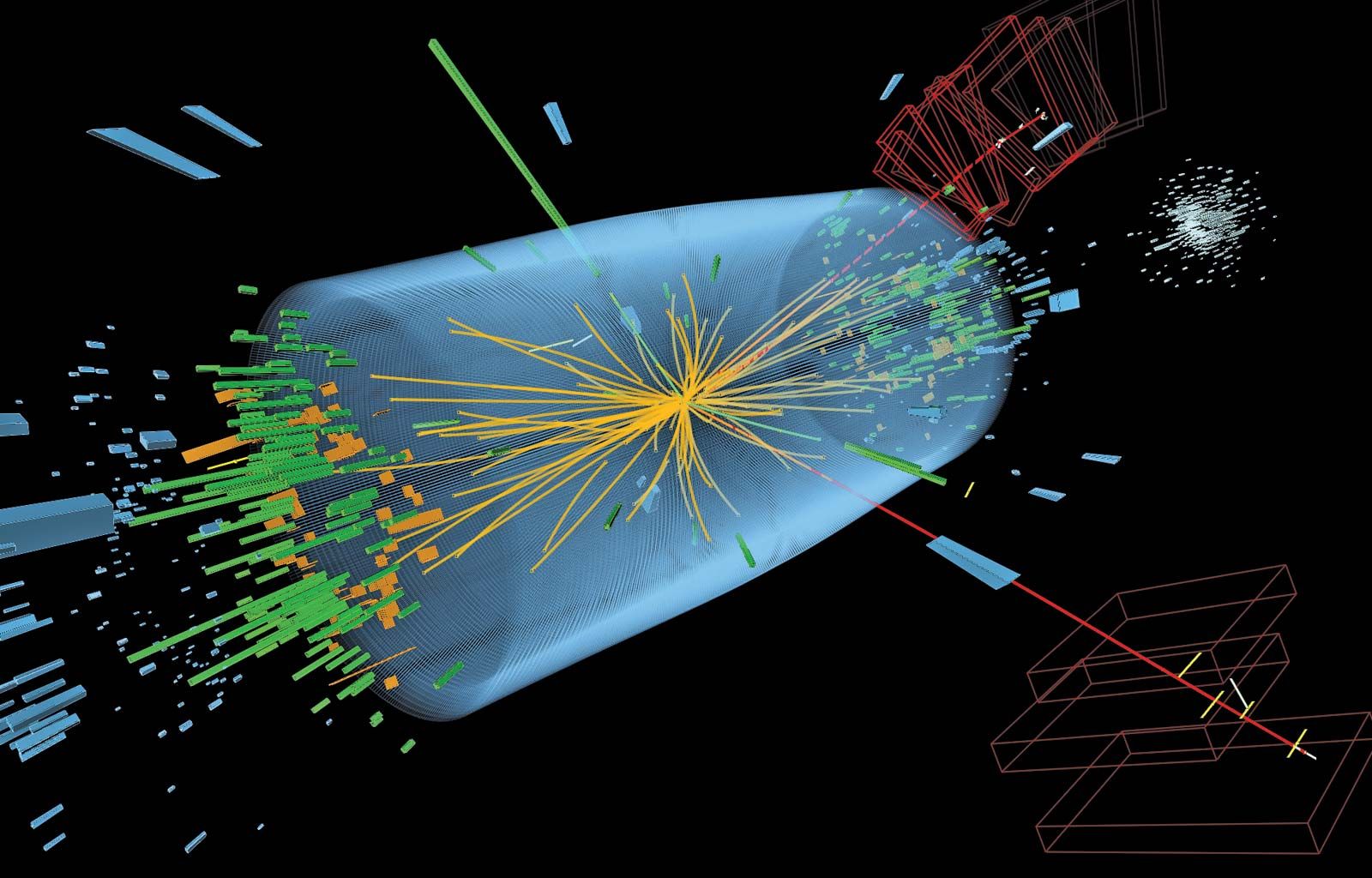
The concept of dark matter dates back to the 1930s when Fritz Zwicky observed that galaxies within clusters moved faster than could be explained by their visible mass alone [2]. Subsequent observations confirmed this phenomenon on a cosmic scale. Today, dark matter's presence is inferred from its gravitational effects, such as the rotation curves of galaxies and the dynamics of galaxy clusters. However, it does not emit, absorb, or scatter light, making direct detection extremely challenging.
Historical Context
The quest for understanding dark matter began with the work of Zwicky and has since involved numerous scientists across multiple disciplines. Theoretical physicists have proposed various candidates for dark matter particles, including Weakly Interacting Massive Particles (WIMPs), axions, and sterile neutrinos [3]. These speculative particles are designed to interact weakly or not at all with ordinary matter, aligning with the observed properties of dark matter.
Key Figures & Contributions
Several key figures have significantly advanced our understanding of dark matter. Vera Rubin is renowned for her groundbreaking work on galaxy rotation curves in the 1970s and 1980s [3]. Moritz Trümper, a physicist at the Max Planck Institute for Extraterrestrial Physics, has contributed to high-energy astrophysics research related to dark matter detection [2].
Core Mechanism / How It Actually Works
The core mechanism of dark matter is its interaction with other forms of matter through gravity. However, beyond this basic understanding, much remains unknown. Direct detection experiments aim to capture interactions between dark matter particles and ordinary matter in highly sensitive detectors placed deep underground where they are shielded from cosmic rays [1]. Indirect detection methods include searching for the products of dark matter particle annihilation or decay within astrophysical sources such as galactic centers [2].
Key Figures & Contributions
Vera Rubin (1928-2016)
Moritz Trümper
Current State & Recent Developments
Direct Detection Experiments
Current direct detection experiments include XENON1T, LUX-ZEPLIN ( LZ), and DarkSide-50 at the Gran Sasso underground laboratory [1]. These experiments are pushing the boundaries of sensitivity to detect extremely weak interactions between dark matter particles and nuclei. Recent results from these detectors have set stringent limits on dark matter particle masses and interaction strengths.
Indirect Detection Methods
Indirect detection methods continue to be active areas of research, with efforts focusing on observing signatures of dark matter annihilation or decay in gamma-ray telescopes like Fermi-LAT [2]. The recent discovery by physicists from the University of California, Berkeley, suggests a new way to simulate self-interacting dark matter that may trigger dramatic collapses inside dark matter halos, heating and affecting galaxy formation processes [3].
Real-World Applications
The search for dark matter has significant real-world applications. For instance, the development of ultra-sensitive detectors is not only critical for dark matter research but also for other areas such as nuclear medicine and homeland security. Advances in detector technology can lead to improved medical imaging devices and radiation detection systems [1].
Controversies & Open Questions
Despite extensive efforts, direct evidence of dark matter particles remains elusive. This has led to debates about the nature and composition of dark matter. Some theories propose that dark matter might be composed of axions or sterile neutrinos, while others suggest more exotic scenarios involving quantum gravity effects [6]. The lack of definitive proof also raises questions about whether new physics beyond the Standard Model is required.
Future Trajectory
The future trajectory of dark matter research appears promising as technology continues to advance. Next-generation experiments such as XENONnT and DARWIN will further push the boundaries of sensitivity, potentially revealing new insights into the nature of dark matter [1]. Simultaneously, theoretical advancements are expected to refine models and predictions.
Key Takeaways
- 85% of the universe's mass is composed of dark matter.
- Dark matter does not interact with light, making direct detection extremely challenging.
- Recent experiments like XENON1T and Fermi-LAT continue to set stringent limits on potential dark matter candidates.
- The search for dark matter has implications for nuclear medicine, homeland security, and fundamental physics.
- Debates about the nature of dark matter persist, with various theoretical models proposed but no conclusive evidence yet.
This comprehensive overview underscores why the pursuit of understanding dark matter remains one of science's most pressing challenges. As we continue to refine our methods and technology, the door remains open for groundbreaking discoveries that could fundamentally alter our understanding of the cosmos.
Data Overview