Continuing Resolution vs. Actual Operating Budget: A Decade of Dysfunction in U.S. Federal Appropriations
The federal government of the United States was designed, constitutionally, to fund itself through a deliberate, annual process: the executive branch proposes a budget, Congress debates and amends it, and twelve distinct appropriations bills are enacted into law before the new fiscal year begins on October 1. In practice, this process has collapsed with such regularity that it has become the rule, not the exception. Over the last decade, the U.S. government has relied on a legal patch called the continuing resolution (CR) to keep the lights on — sometimes for weeks, sometimes for the entire fiscal year — while Congress fails to complete its most basic constitutional duty. What was designed as a temporary stopgap has become the permanent operating mode of American government, carrying significant costs: financial, operational, and democratic.
What Is a Continuing Resolution?
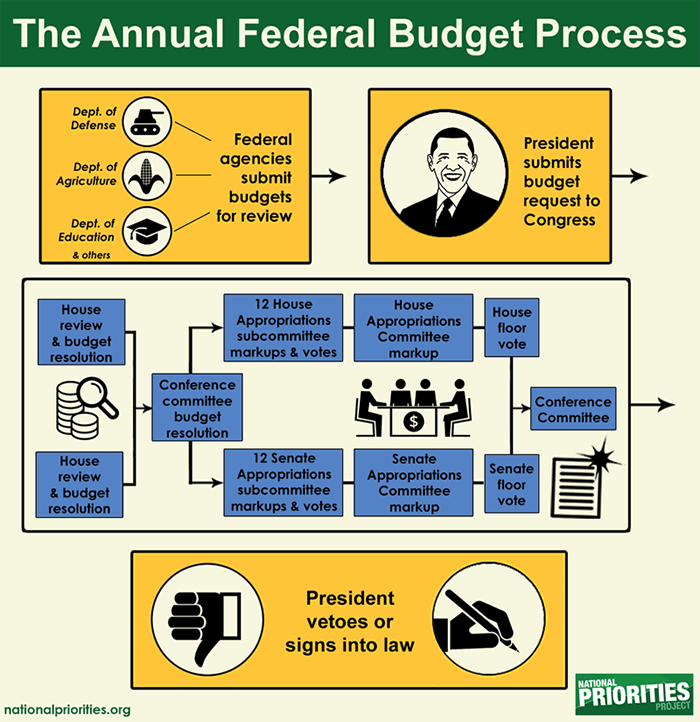
A continuing resolution is a joint resolution of Congress that provides temporary spending authority to federal agencies when the regular appropriations process has not been completed by the start of the new fiscal year. Rather than enacting the twelve individual appropriations bills that fund every federal department and agency for the full year, Congress passes a CR that typically extends funding at the prior year's spending level — or at a formula rate slightly above or below that level — for a defined period, anywhere from a few days to the full fiscal year.
The legal basis for continuing resolutions is found in 31 U.S.C. § 1301 and related provisions of the Antideficiency Act, which prohibit agencies from spending money not appropriated by Congress. Without either an enacted appropriations act or a CR, agencies must shut down all but "essential" operations — what is commonly known as a government shutdown.
CRs are not inherently unconstitutional or illegal; they have existed since the 19th century. What is historically anomalous is their frequency, their duration, and the degree to which they have replaced — rather than temporarily bridged — the actual budget process.
How the Budget Is Supposed to Work
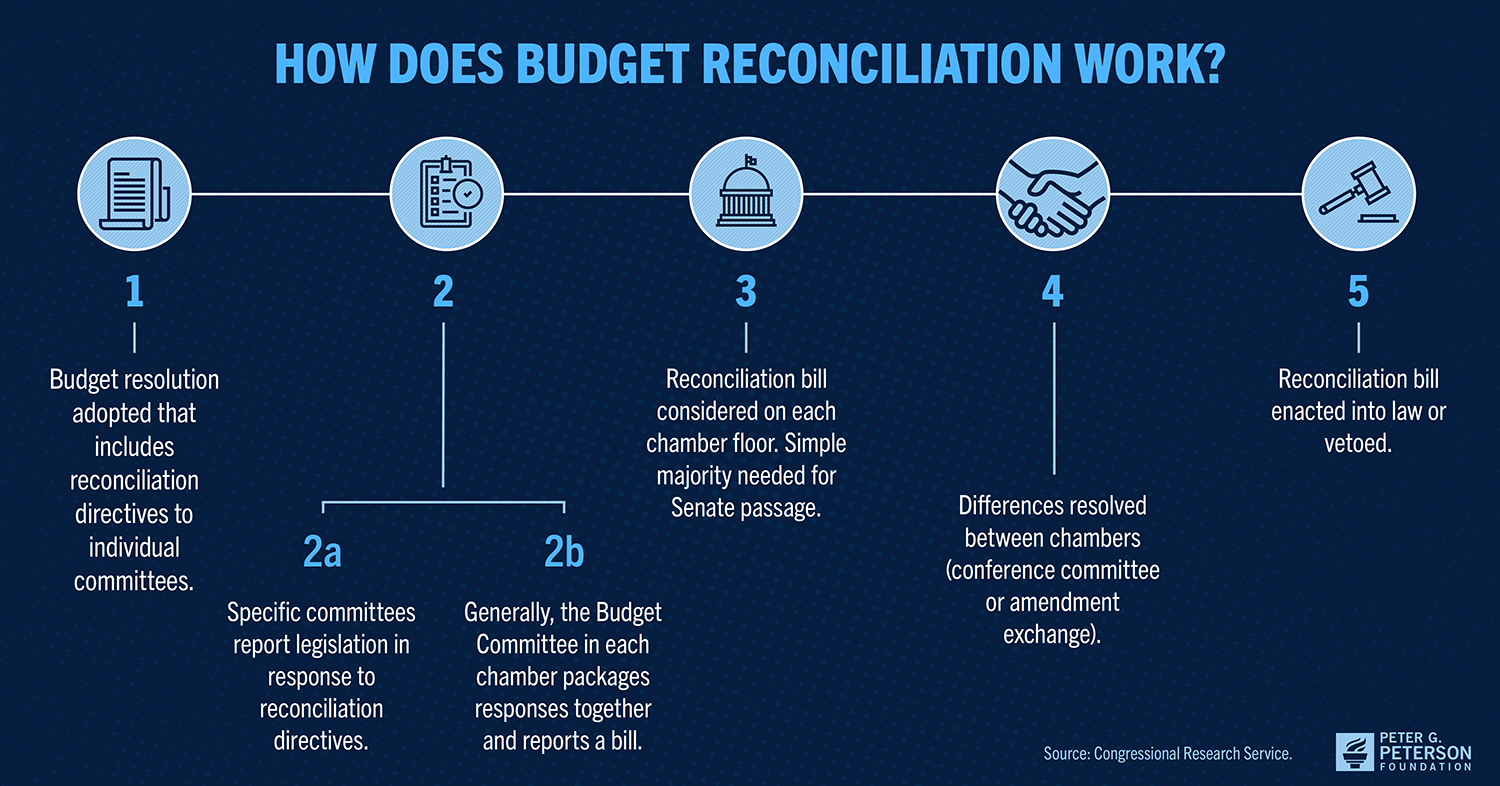
The annual federal appropriations cycle is supposed to follow a clear statutory schedule established by the Congressional Budget Act of 1974:
- First Monday in February: The President submits a budget request to Congress.
- April 15: Congress passes a concurrent budget resolution setting overall spending levels.
- June 30: The House completes action on all twelve appropriations bills.
- September 30: All appropriations bills are enacted before the fiscal year ends.
- October 1: The new fiscal year begins with full funding in place.
This sequence has not been followed in its entirety in three decades. The last time Congress passed all twelve appropriations bills on time — meaning enacted before October 1 — was fiscal year 1997, when the final three bills became law on September 30, 1996. Since then, the annual budget process has become a cascade of missed deadlines, CR extensions, omnibus packages, and shutdowns.
The Congressional Research Service has documented that in all but three of the last forty-six fiscal years, Congress has enacted at least one CR. Since fiscal year 1998, Congress has passed an average of five continuing resolutions per year, with a total of 207 CRs enacted between FY1977 and FY2025. The government has operated under temporary continuing appropriations for an average of 118 days before the appropriations process is eventually completed for a given year — and that average has worsened significantly in recent years.
Fiscal Year by Fiscal Year: The Last Decade
The following analysis covers fiscal years 2016 through 2026 — the ten most recently completed federal fiscal years and the ongoing current year — examining for each how many days were governed by a continuing resolution versus full enacted appropriations, and whether any shutdown occurred.
FY2016 (October 1, 2015 – September 30, 2016)
CR Days: ~79 | Appropriations Days: ~287 | Shutdown Days: 0
Fiscal year 2016 proceeded relatively smoothly by modern standards. Congress enacted an initial CR (H.R. 719, P.L. 114-53) that funded the government starting October 1, 2015, through December 11, covering the first 72 days of the fiscal year. A brief extension carried funding to December 16, and then another short CR extended it to December 22. On December 18, 2015, President Obama signed the Consolidated Appropriations Act, 2016 (P.L. 114-113), a sprawling $1.15 trillion omnibus package that funded the government for the remainder of FY2016.
The government operated under CRs for approximately 79 days at the outset — nearly eleven weeks — before switching to full enacted appropriations for the remaining 287 days of the fiscal year. No shutdown occurred.
FY2017 (October 1, 2016 – September 30, 2017)
CR Days: ~217 | Appropriations Days: ~148 | Shutdown Days: 0
FY2017 was substantially more chaotic. The fiscal year began with a CR (P.L. 114-223) that funded the government through December 9, 2016. With eleven of the twelve regular FY2017 appropriations bills still unenacted by that date, Congress passed another short-term extension. Congress then punted the entire FY2017 budget question into the next administration, extending government funding through April 28, 2017 under yet another CR.
The Consolidated Appropriations Act, 2017 (P.L. 115-31) was ultimately signed by President Trump on May 5, 2017 — more than seven months into the fiscal year. The government operated under CRs for approximately 217 days before receiving enacted appropriations, leaving only about 148 days of the fiscal year under a normal operating budget. No shutdown occurred, but nearly 60% of the fiscal year elapsed before Congress completed its work.
FY2018 (October 1, 2017 – September 30, 2018)
CR Days: ~171 | Appropriations Days: ~191 | Shutdown Days: 3
FY2018 is notable for featuring a government shutdown of three days — the "CHIP shutdown" — when the Senate failed to pass a CR on January 19, 2018. The 115th Congress, operating in a polarized environment, repeatedly extended short-term CRs: from October 1 through December 8 (P.L. 115-56), then through December 22, then through January 19, when the Senate vote failed and the government shut down.
The shutdown lasted from January 20–22, 2018 — three days — before a new CR was passed through February 8. That CR included a six-year extension of the Children's Health Insurance Program (CHIP), which became the central bargaining chip in the standoff. Additional CRs carried funding forward until the Consolidated Appropriations Act, 2018 (P.L. 115-141) was signed on March 23, 2018 — the largest appropriations bill ever enacted at that time, covering nearly $1.3 trillion.
The government operated under CR conditions (including the shutdown) for approximately 174 days before full appropriations were in force, leaving about 191 days under enacted appropriations.
FY2019 (October 1, 2018 – September 30, 2019)
CR Days: ~103 (for unfunded agencies) | Appropriations Days: ~228 | Shutdown Days: 35
FY2019 produced the then-longest government shutdown in American history. It is also structurally distinct from other years: Congress actually enacted funding for approximately one-third of the government — including the Department of Defense and several other departments — in a "minibus" package signed on September 28, 2018, before the fiscal year even began. The remaining eight appropriations bills were not enacted, so those agencies began FY2019 under a CR.
When that CR expired on December 21, 2018, Congress and the Trump administration could not agree on $5.7 billion in border wall funding. The government shut down at midnight. The shutdown, covering approximately 800,000 federal employees across nine departments (including Homeland Security, Transportation, Agriculture, and others), lasted 35 days — from December 22, 2018, through January 25, 2019. The Congressional Budget Office estimated the shutdown cost the U.S. economy $3 billion in permanently lost output, with $8 billion in delayed economic activity.
On January 25, Congress passed a three-week CR (H.J.Res. 28) to reopen the government through February 15 with no wall funding included, a significant concession. The Consolidated Appropriations Act, 2019 (P.L. 116-6) was signed on February 15, 2019, providing full-year funding for the remaining departments.
For the departments that were not funded before October 1, this totals approximately 103 days under CR conditions (including the 35-day shutdown), with full appropriations covering the remaining 228 days.
FY2020 (October 1, 2019 – September 30, 2020)
CR Days: ~81 | Appropriations Days: ~285 | Shutdown Days: 0
FY2020 was relatively efficient by recent standards. Congress passed an initial CR (P.L. 116-59) funding the government from October 1 through November 21, 2019 — 52 days. A second CR (P.L. 116-69) extended that through December 20, 2019 — an additional 29 days.
On December 20, 2019, President Trump signed a pair of FY2020 omnibus appropriations bills — the Consolidated Appropriations Act, 2020 (P.L. 116-93) and the Further Consolidated Appropriations Act, 2020 (P.L. 116-94) — covering all twelve bills at a combined cost of approximately $1.4 trillion. Congress passed both packages in a 297-120 vote in the House and 71-23 in the Senate.
The government operated under CRs for 81 days, then under enacted appropriations for the remaining 285 days. No shutdown occurred.
FY2021 (October 1, 2020 – September 30, 2021)
CR Days: ~88 | Appropriations Days: ~277 | Shutdown Days: 0
FY2021 set a record for the sheer number of short-term CRs enacted in a single fiscal year: five separate continuing resolutions were required before Congress finally completed full-year appropriations.
- CR 1 (P.L. 116-159): October 1 – December 11, 2020 (72 days)
- CR 2 (P.L. 116-215): December 11 – December 18, 2020 (7 days)
- CR 3 (H.J.Res. 107, P.L. 116-225): December 18 – December 20, 2020 (2 days)
- CR 4 (H.J.Res. 110, P.L. 116-226): December 20 – December 21, 2020 (1 day)
- CR 5 (P.L. 116-246): December 21 – December 28, 2020 (7 days)
The cascade of one- and two-day CRs in late December reflected the chaotic negotiation over a combined omnibus and COVID-19 relief package. The Consolidated Appropriations Act, 2021 (P.L. 116-260), combined with the COVID-19 Relief and Response Act, was signed by President Trump on December 27, 2020 — a $2.3 trillion package that was at the time the largest spending bill ever enacted.
The government spent 88 days under CRs, then 277 days under enacted appropriations.
FY2022 (October 1, 2021 – September 30, 2022)
CR Days: ~166 | Appropriations Days: ~199 | Shutdown Days: 0
FY2022 returned to pattern: Congress could not agree on FY2022 spending levels for nearly five and a half months. Four separate CRs were enacted:
- CR 1 (P.L. 117-43): October 1 – December 3, 2021 (63 days)
- CR 2 (P.L. 117-70): December 3 – February 18, 2022 (77 days)
- CR 3 (P.L. 117-86): February 18 – March 11, 2022 (21 days)
- CR 4 (P.L. 117-95): March 11 – March 15, 2022 (4 days, bridge to signing)
The fourth CR was a brief bridge allowing time for the Senate to pass and the President to sign the Consolidated Appropriations Act, 2022 (P.L. 117-103) on March 15, 2022 — a $1.5 trillion omnibus covering all twelve bills.
The government operated under CRs for approximately 166 days before receiving full appropriations, which then governed the remaining 199 days.
FY2023 (October 1, 2022 – September 30, 2023)
CR Days: ~90 | Appropriations Days: ~275 | Shutdown Days: 0
FY2023 was comparatively swift. Congress enacted an initial CR (Division A of P.L. 117-180) covering October 1 through December 16, 2022 — 77 days. Two additional short extensions carried funding through December 23 and then December 30.
On December 29, 2022, President Biden signed the Consolidated Appropriations Act, 2023 (P.L. 117-328), a $1.7 trillion omnibus package. The House passed it 225-201 and the Senate 68-29.
The government operated under CRs for approximately 90 days, then under enacted appropriations for the remaining 275 days of the fiscal year.
FY2024 (October 1, 2023 – September 30, 2024)
CR Days: ~175 | Appropriations Days: ~192 | Shutdown Days: 0
FY2024 produced a new source of dysfunction. Congressional dysfunction over the debt ceiling and the removal of Speaker Kevin McCarthy in October 2023 (directly linked to a CR fight) delayed appropriations significantly. The fiscal year featured at least four separate continuing resolutions and a near-shutdown multiple times.
One CR triggered McCarthy's removal: after he negotiated a CR through November 17 that excluded aid to Ukraine and Israel, he was removed as Speaker by a motion from Rep. Matt Gaetz. His successor, Speaker Mike Johnson, navigated the process through a staggered approach:
- CR 1 (P.L. 118-15): October 1 – November 17, 2023 (47 days)
- CR 2 (P.L. 118-22): November 17 – January 19, 2024 (63 days)
- CR 3 (H.R. 7463): January 19 – March 8/22, 2024 (staggered by bill)
The FY2024 appropriations were completed in two tranches: the first six bills signed on March 9, 2024 (Consolidated Appropriations Act, 2024 – Tranche 1), and the remaining six signed on March 23, 2024 (Consolidated Appropriations Act, 2024 – Tranche 2). The government operated under CRs for approximately 175 days, receiving full appropriations for the final ~192 days of the fiscal year.
FY2025 (October 1, 2024 – September 30, 2025)
CR Days: 366 | Appropriations Days: 0 | Shutdown Days: 0
FY2025 represents a qualitative threshold that was crossed for the first time in the modern appropriations era: the entire fiscal year operated under continuing resolutions, with no enacted regular appropriations bills at any point. The government was funded by three CRs:
- CR 1 (P.L. 118-83): October 1 – December 20, 2024 (81 days)
- CR 2 (P.L. 118-158): December 21, 2024 – March 14, 2025 (84 days)
- CR 3 — Full-Year CR (H.J.Res. 61): March 15 – September 30, 2025 (200 days)
That third CR, signed by President Trump on March 15, 2025, was itself the most extraordinary element of FY2025: a full-year continuing resolution that, for all practical purposes, was the budget. It funded most government operations at FY2024 spending levels through the end of the fiscal year. The Committee for a Responsible Federal Budget estimated the full-year CR reduced discretionary spending by approximately $54 billion through FY2034 compared to original spending caps under the Fiscal Responsibility Act of 2023.
FY2025 was the first fiscal year since the modern appropriations process was codified in 1974 in which no regular appropriations bill was enacted at any point during the year for any major department.
FY2026 (October 1, 2025 – September 30, 2026) — Ongoing
Shutdown Days: 43 (and additional partial shutdowns) | CR Days: ~150+ | Appropriations Days: Minimal
FY2026 has broken records. The fiscal year began on October 1, 2025, with no appropriations in place and no CR enacted. The resulting shutdown lasted 43 days — from October 1 through November 12, 2025 — surpassing FY2019's 35-day record to become the longest government shutdown in American history. At its height, approximately 875,000 federal employees were furloughed or required to work without pay.
The shutdown ended when Congress passed a CR (Division A of P.L. 119-37), signed November 12, 2025, funding the government through January 30, 2026, along with a "minibus" covering a handful of agencies (FDA, Agriculture's nutrition programs) through the full FY2026 year.
The situation continued to deteriorate. A further four-day partial shutdown occurred January 31 – February 3, 2026, affecting approximately half of federal departments, as negotiations over reform conditions stalled. A second partial shutdown, limited primarily to the Department of Homeland Security, ran from February 14 through April 30, 2026. As of August 2026, a full-year budget for FY2026 has not been enacted for most agencies, and reports indicate the Senate has passed yet another CR by a 90-6 vote, with House consideration pending.
Summary Data Table: FY2016–FY2025
| Fiscal Year | # of CRs | CR / Stopgap Days | Shutdown Days | Full Appropriations Days | Omnibus/Full Budget Enacted |
|---|---|---|---|---|---|
| FY2016 | 3 | ~79 | 0 | ~287 | Dec 18, 2015 |
| FY2017 | 4 | ~217 | 0 | ~148 | May 5, 2017 |
| FY2018 | 5+ | ~171 | 3 | ~191 | Mar 23, 2018 |
| FY2019 | 3 (partial) | ~103* | 35 | ~228* | Feb 15, 2019 |
| FY2020 | 2 | ~81 | 0 | ~285 | Dec 20, 2019 |
| FY2021 | 5 | ~88 | 0 | ~277 | Dec 27, 2020 |
| FY2022 | 4 | ~166 | 0 | ~199 | Mar 15, 2022 |
| FY2023 | 3 | ~90 | 0 | ~275 | Dec 29, 2022 |
| FY2024 | 4 | ~175 | 0 | ~192 | Mar 23, 2024 |
| FY2025 | 3 | 366 | 0 | 0 | Never enacted |
\FY2019 figures apply to agencies not separately funded in September 2018 minibus; Defense and several others had appropriations from day one.*
Decade totals (FY2016–FY2025, ~3,652 days):
- Days under CR or stopgap funding: ~1,536 (~42%)
- Days under full enacted appropriations: ~2,082 (~57%)
- Days under government shutdown: 38 (~1%)
Put simply: across a ten-year window covering every federal fiscal year from 2016 through 2025, the United States government operated without a complete, enacted budget for nearly half the time.
The Structural Cost of Governing by Continuing Resolution
The consequences of chronic reliance on CRs are not merely political inconvenience — they manifest in measurable, documented harm to government operations, national security, and the broader economy.
Agency Planning and Contracting
A 2022 Government Accountability Office report (GAO-22-104701) found that federal agencies employ significant workarounds to manage CR constraints, including deferring contracts, delaying hiring, and front-loading spending. CRs prohibit agencies from beginning new programs or expanding production of certain items, restrictions that fall particularly hard on defense procurement.
In a February 2026 report (GAO-26-107065), the GAO documented how stopgap funding had caused delays, increased costs, and administrative burden across the Department of Defense specifically. The report cited one case at Joint Base San Antonio where a facilities sustainment contract estimated at $579,000 more than doubled to $1.445 million after CR-related delays forced rebidding at higher market rates. Navy officials reported being unable to award ship maintenance contracts in priority order due to constrained funding, forcing short-term triage over strategic planning.
Defense Readiness
The Department of Defense is uniquely harmed by CRs. Annual defense authorizations and appropriations govern multiyear procurement programs, weapons system upgrades, and training schedules that cannot be paused and restarted without compounding costs. A CR at prior-year funding levels effectively imposes a spending cut in real terms when cost inflation, new programs, and force expansion are factored in. During FY2021 alone, the Pentagon lost planning access for 16 new-start programs during the three-month CR at the start of the fiscal year, according to the Center for Strategic and International Studies.
The Shutdown Cost
The 35-day FY2019 shutdown cost the U.S. economy an estimated $3 billion in permanently lost GDP, with an additional $8 billion in delayed economic activity, per the Congressional Budget Office. The economic cost of the FY2026 shutdown — 43 days, partially affecting 875,000 employees — is expected to be proportionally larger; early estimates from outside economists put the figure at $4–5 billion in permanent output loss, with cascading effects on federal contractors, local economies dependent on federal employment, and public services from food inspection to air traffic control staffing.
The Illusion of Budgetary Control
A CR inherently suspends the allocative function of the budget process. Regular appropriations require agencies to justify expenditures, allow Congress to redirect resources, and enable policymakers to respond to changing national priorities. A CR maintains the prior year's spending distribution indefinitely — locking in outdated allocations, preventing rebalancing, and eliminating the political accountability that appropriations hearings provide. As the Peter G. Peterson Foundation noted in 2025, "continuing resolutions were designed to be stopgap measures, but now we average five a year," a pace that transforms the exception into governance by default.
Why the Process Is Broken: Structural Causes
The collapse of the regular appropriations process is not random. Several structural and political factors drive it:
1. Polarization and the 60-Vote Senate Threshold. Under current Senate practice, most appropriations measures require 60 votes to end debate (cloture), giving the minority party significant leverage to block or delay bills, even when the majority party controls both chambers.
2. Dysfunction in the Budget Resolution Process. Congress is supposed to pass a concurrent budget resolution setting overall parameters before beginning work on individual appropriations bills. Failure to pass a budget resolution — which itself has become routine — leaves appropriators without agreed-upon top-line numbers, making completion of the twelve bills politically impossible.
3. Strategic Hostage-Taking. CRs and shutdown threats have become negotiating leverage for extracting policy concessions. The FY2019 shutdown was explicitly over border wall funding. The FY2026 shutdown reflected broader disputes about DOGE-related workforce reductions and agency restructuring.
4. Omnibus Substitution. The practice of rolling all twelve bills into a single omnibus package near fiscal year-end means members must vote up or down on thousands of pages of spending policy simultaneously, reducing meaningful deliberation and accountability. Omnibus bills also arrive with minimal time for review — the FY2022 omnibus was 2,741 pages released the night before the House vote.
5. The CR as a Lowest-Common-Denominator Outcome. A CR requires a simple majority (in most cases) and presents political actors with a binary: pass it or shut down. This coercive dynamic makes the CR easier to pass than any of the individual appropriations bills would be, creating a perverse incentive to avoid completing the regular process.
Reform Proposals
Multiple reform frameworks have been advanced by bipartisan commissions, the GAO, and individual lawmakers, none of which has achieved enactment:
- Automatic Continuing Resolution: Congress would automatically fund the government at prior-year levels if appropriations lapse, eliminating the shutdown as a political tool. Critics argue this would further reduce the urgency to complete real appropriations.
- Biennial Budgeting: Shifting to a two-year budget cycle would theoretically allow year two for oversight rather than appropriations, reducing the annual crisis dynamic. Proposals have been introduced repeatedly in both chambers.
- No-Budget, No-Pay: Legislation that withholds congressional pay if appropriations are not enacted by October 1, creating a direct financial incentive. Bills have been introduced but not enacted.
- Expedited Procedures: Reforming Senate debate rules to allow appropriations bills to advance with 51 rather than 60 votes, removing the filibuster obstacle for spending legislation.
- Ending the Hostage Dynamic: Some advocates propose reforming the Antideficiency Act to allow limited automatic continuing appropriations for truly essential services (air traffic control, military pay, Social Security) regardless of shutdown status.
The 2022 GAO report on CR management noted that "until Congress and the President are able to complete action on regular appropriations in a timely manner, federal agencies will continue to face the management challenges that come with operating under CRs."
Conclusion
The continuing resolution was designed as a brief bridge — a few weeks of stable funding while Congress tied off the last few legislative threads of an appropriations process that was nearly complete. In the decade between fiscal years 2016 and 2025, it became something else entirely: the default mechanism of American federal finance, covering roughly 42% of all fiscal days across a ten-year period. In FY2025, the bridge became the road itself, as the United States went an entire fiscal year without enacting a single regular appropriations bill. In FY2026, the government shut down for 43 days, the longest in American history, before lurching back onto another CR.
This is not merely a procedural embarrassment. Every day the federal government operates under a continuing resolution rather than a real budget is a day that agencies cannot plan contracts, cannot start programs, cannot redirect resources toward current national priorities, and cannot be held accountable through the deliberative appropriations process the Constitution envisions. The CR is the symptom; the disease is a political system that has lost the capacity to perform one of its most fundamental tasks. Until structural reforms — in the filibuster, in budget procedures, in the incentive structure of shutdown brinkmanship — are enacted, the continuing resolution will remain not a stopgap but the default operating system of American government.
Sources:
- Continuing Resolutions: Overview of Components and Practices | Congress.gov
- Duration of Continuing Resolutions in Recent Years - EveryCRSReport.com
- What is a Continuing Resolution and How Does It Impact Government Operations? | U.S. GAO
- Continuing Resolutions Are Stopgap Measures — But Now We Average Five a Year | PGPF
- What You Need to Know About Continuing Resolutions | Bipartisan Policy Center
- Appropriations Status Table: FY2017 | Congress.gov
- Appropriations Status Table: FY2021 | Congress.gov
- Appropriations Status Table: FY2023 | Congress.gov
- Appropriations Status Table: FY2025 | Congress.gov
- Appropriations Watch: FY 2024 | Committee for a Responsible Federal Budget
- Appropriations Watch: FY 2026 | Committee for a Responsible Federal Budget
- 2025 United States federal government shutdown | Wikipedia
- 2026 United States federal budget | Wikipedia
- 2026 United States federal government shutdowns | Wikipedia
- Past Government Shutdowns: Key Resources | Congress.gov
- U.S. GAO - Federal Budget: Selected Agencies Used Strategies to Manage CR Constraints (GAO-22-104701)
- U.S. GAO - Defense Budget: Effects of Continuing Resolutions on DOD's National Security Mission (GAO-26-107065)
- Budget Issues: Continuing Resolutions and Other Budget Uncertainties Present Management Challenges | GAO
- What a Continuing Resolution Means for Appropriations Strategy | Bloomberg Government
- Congress has long struggled to pass spending bills on time | Pew Research Center
- FY 2022 omnibus appropriations bill released | National Association of Counties
- Overview of Continuing Appropriations for FY2026 | Congress.gov
- Federal Government Shutdown for Fiscal Year 2026 | KTS Law
- Stopgap funding measures cause delays, increased costs across DoD | Federal News Network
- Government Shutdowns Q&A: Everything You Should Know | CRFB