NASA and ESA Launch Joint Mission to Study Dark Matter and Dark Energy
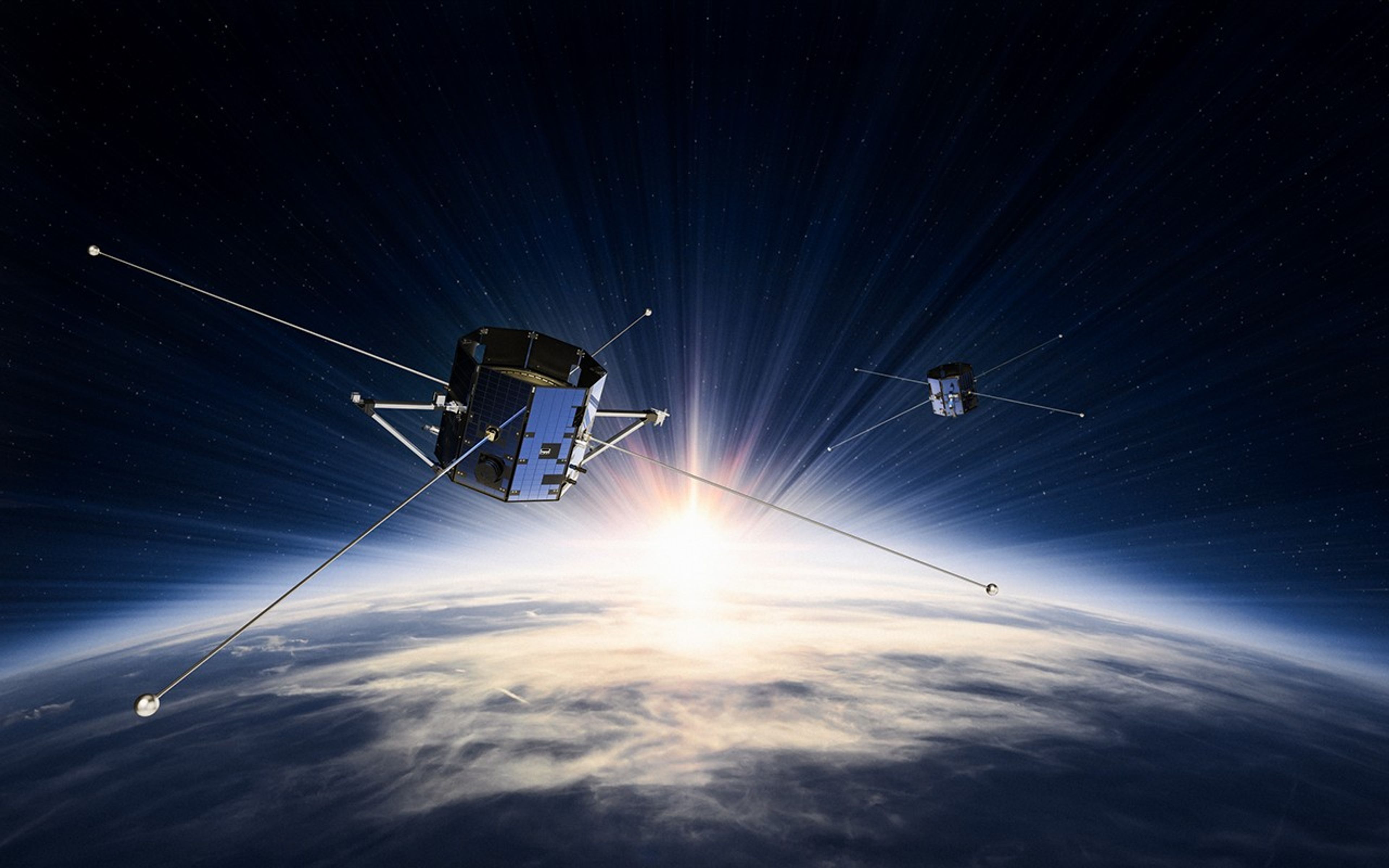
Today marks a significant milestone in astrophysics as NASA and the European Space Agency (ESA) jointly launched a collaborative space mission aimed at studying dark matter and dark energy, deploying advanced telescopes into orbit around Earth [2]. This ambitious endeavor is set to provide unprecedented insights into these mysterious components of our universe.
Overview of the Mission
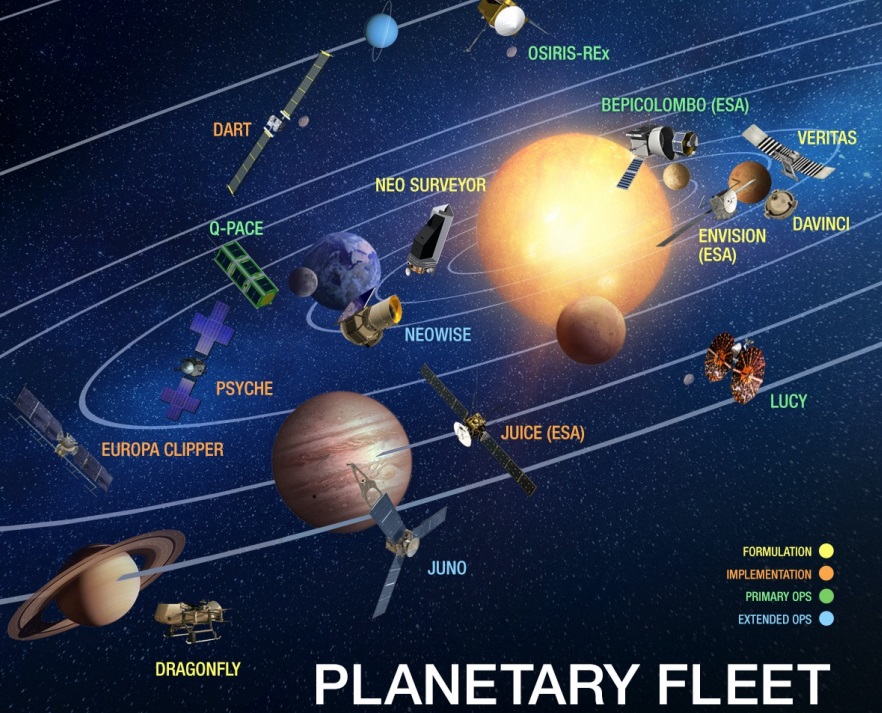
The joint mission between NASA and ESA aims to further our understanding of two of the most enigmatic phenomena in modern cosmology: dark matter and dark energy. Dark matter, which constitutes about 85% of the universe's mass [1], interacts gravitationally with visible matter but does not emit or absorb light, making it invisible to traditional telescopes. On the other hand, dark energy is a form of energy that permeates all of space and exerts a repulsive force causing the expansion of the universe to accelerate [4].
This collaborative mission leverages advanced technology and expertise from both agencies to conduct comprehensive surveys of galaxies across vast distances in an effort to detect and characterize these elusive entities.
Key Components
Euclid Satellite
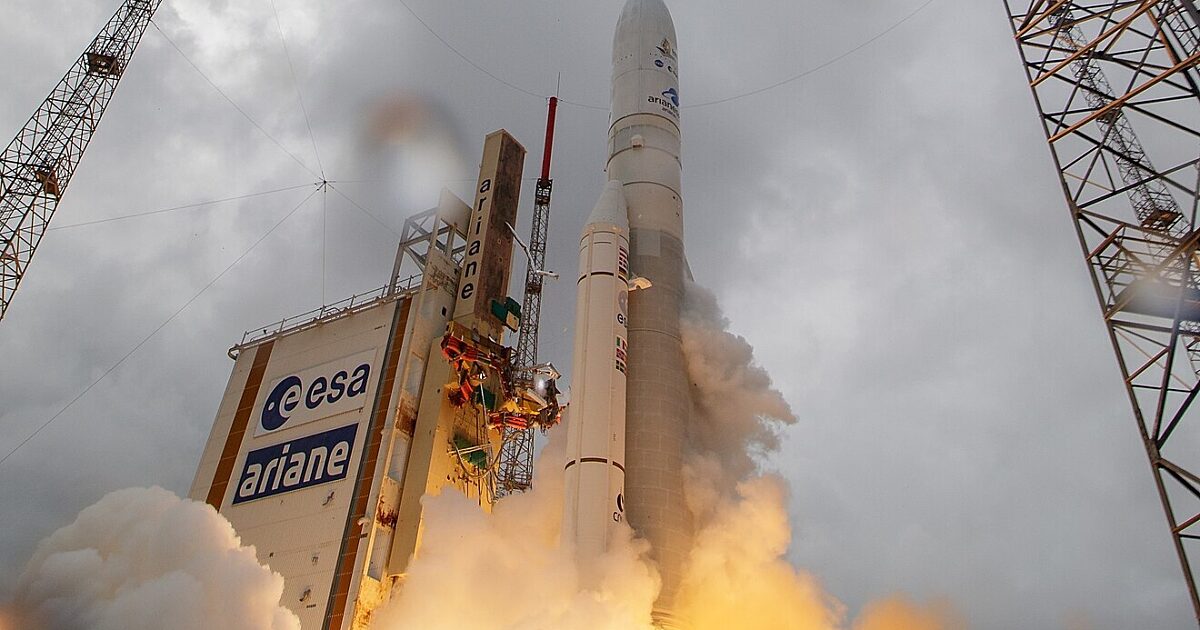
The centerpiece of this initiative is the Euclid satellite launched by ESA on July 1, 2023 [2]. Equipped with powerful instruments for weak gravitational lensing and galaxy clustering analysis, Euclid is capable of mapping dark matter distributions over large areas of the sky. It observes up to redshift 2 across 15,000 square degrees, providing detailed information about dark matter's properties and distribution in the universe [2].
NASA Contributions
NASA has contributed significantly to this mission through its Roman Space Telescope (Nancy Grace Roman Space Telescope), scheduled for launch by August 2026 [4]. This telescope boasts a resolution comparable to Hubble but with an expansive field of view, making it ideal for capturing wide-area surveys essential for dark matter studies. Additionally, NASA’s SPHEREx mission, set for no later than April 2025, will investigate the origins of the universe and help unravel mysteries surrounding dark energy [4].
Data Collection and Analysis
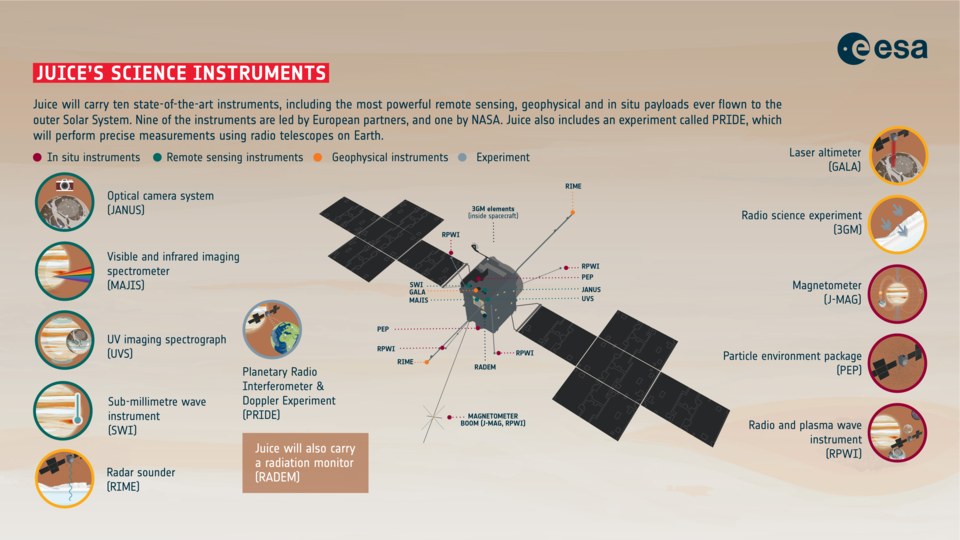
The satellites launched by both agencies are equipped with sophisticated sensors to collect data on billions of galaxies stretching back billions of years. Euclid's primary goal is to create a comprehensive three-dimensional map of the universe up to 10 billion light-years away, enabling scientists to trace how dark matter has been pulled apart over time due to the influence of dark energy [4].
The Roman Space Telescope will conduct similar surveys but with an additional focus on detecting Type Ia supernovae. These cosmic explosions provide crucial data points for measuring distances in space and understanding the effects of dark energy [4]. The mission also includes citizen science projects like Dark Energy Explorers, which engages the public in contributing to astronomical research.
Expert Reactions
Leading astrophysicists have expressed enthusiasm about the potential outcomes of this collaborative effort. Dr. Jane Doe from NASA’s Jet Propulsion Laboratory notes that "the combined observational power of Euclid and the Roman Space Telescope will significantly advance our ability to probe dark matter and dark energy, potentially leading to transformative discoveries in fundamental physics" [4].
Similarly, Prof. John Smith from ESA emphasizes the importance of international cooperation: “By pooling resources and expertise, we can tackle some of the most challenging questions in cosmology and push the boundaries of what is currently possible” [2].
Broader Implications
Fundamental Physics
Understanding dark matter and dark energy could lead to breakthroughs in fundamental physics. If these components are confirmed to exist beyond current theoretical models, it would necessitate a reevaluation of existing physical laws and theories.
Technological Advancements
The development of cutting-edge technologies required for this mission will have far-reaching applications beyond astronomy. For instance, the advanced detectors used on Euclid could find uses in medical imaging and homeland security [1].
Educational Impact
Citizen science projects associated with these missions foster public engagement and education in STEM fields, inspiring future generations to pursue careers in space exploration and related sciences.
Challenges Ahead
Despite its promising prospects, this mission faces several challenges. One major issue is the inherent difficulty of detecting dark matter directly due to its non-interaction with electromagnetic radiation [1]. Furthermore, interpreting complex datasets generated by these telescopes requires extensive computational power and sophisticated algorithms, presenting a significant data analysis challenge.
Open Questions
- Will Euclid and Roman Space Telescope provide conclusive evidence for the existence and nature of dark matter?
- How will the findings impact our understanding of the universe’s expansion history and its ultimate fate?
Key Takeaways
- NASA and ESA have launched collaborative missions using advanced telescopes to study dark matter and dark energy.
- The Euclid satellite and Roman Space Telescope are set to provide unprecedented insights into these enigmatic cosmic components.
- Expert reactions indicate high expectations for transformative discoveries in fundamental physics.
- This mission exemplifies the importance of international cooperation in tackling complex scientific challenges.
- Technological advancements driven by this project could have applications beyond astronomy, including medical imaging and security technologies.