Attacks on ICE: The Pattern Behind the Headlines
Between the summer of 2025 and the summer of 2026, U.S. Immigration and Customs Enforcement and its sister agency, U.S. Customs and Border Protection, absorbed more assaults, ambushes, and ramming attacks against their officers than in any comparable twelve-month stretch in either agency's history. The numbers are not close, and neither is the pattern behind them. This article walks the sequence — three shootings, an organized-cell prosecution, dozens of vehicular attacks, and a hospital confrontation that fractured a New York neighborhood — and lands where the earlier reporting on the Dallas sniper landed. Whatever a person believes about American immigration policy, the argument about whether it is acceptable to attack the federal officers executing that policy is not, and should not be, an open one.
The Numbers, First
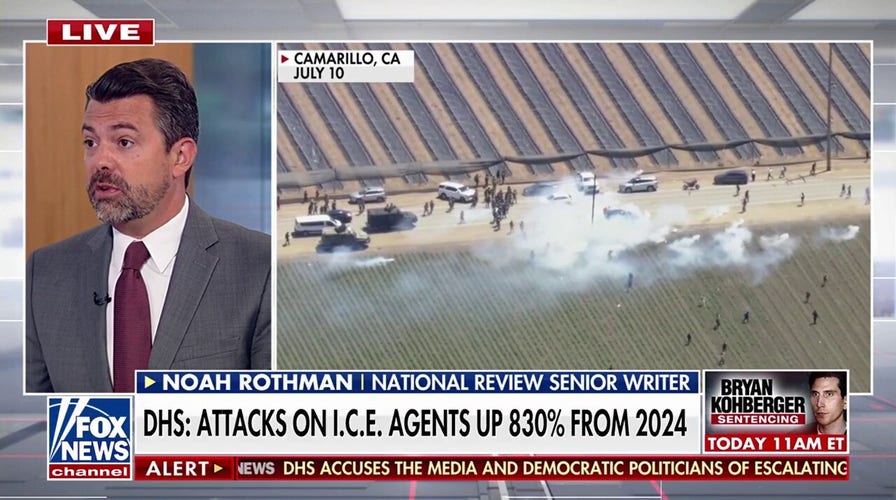
The Department of Homeland Security's January 2026 tally is the starting point. During the first year of the current administration — January 20 to December 31, 2025 — DHS recorded 275 assaults on ICE law enforcement officers. In the same window a year earlier, it recorded 19. The increase, calculated straight, is 1,347 percent. Vehicular attacks specifically rose from 2 to 66 over the same interval, a 3,200 percent increase. Death threats against ICE personnel and their families rose 8,000 percent. Combined vehicle attacks against ICE and CBP officers exceeded 180 across the twelve-month window, and by July 2026 the vehicular trend had not slowed.
The numbers are useful because they place the marquee incidents inside a floor of ordinary, everyday hostility. The shootings are the peaks. The floor is people trying to run officers over with cars.
The Three Shootings
Three attacks in Texas over eleven weeks in the summer and early fall of 2025 defined the escalation curve.
July 4, 2025 — Prairieland ICE Detention Center, Alvarado. Eleven people dressed in black, later identified as an organized cell that federal prosecutors named the "North Texas Antifa Cell," set off fireworks and vandalized parked vehicles outside the detention center on Independence Day. When Alvarado police responded, a shooter positioned in a nearby wooded area opened fire with a rifle and struck an Alvarado police officer in the neck. Twenty to thirty rifle rounds were fired at correctional officers on scene. Nineteen individuals were ultimately charged; nine went to trial in Fort Worth in February 2026; on March 13, 2026 the jury returned guilty verdicts on terrorism-support and attempted-murder charges. On June 23, 2026, sentences ranged from thirty years to a hundred years in federal prison. The gunman, Benjamin Song, is facing a minimum of twenty years and a possible life sentence.
July 7, 2025 — Border Patrol Annex, McAllen. Three days later, in the pre-dawn hours, a twenty-seven-year-old man from Ludington, Michigan named Ryan Louis Mosqueda drove a Chevrolet Cobalt to the Rio Grande Valley Border Patrol Sector Annex at McAllen International Airport, exited the vehicle, and opened fire on the entry doors of the building with a rifle. He fired many dozens of rounds. He wounded a Border Patrol officer, a Border Patrol civilian employee, and a McAllen police officer. Return fire from responding agents killed him at the scene. His vehicle was spray-painted with what investigators believe to be Latin phrases. A second rifle and a pistol were recovered from the car. His father had reported him missing hours earlier after an argument about the family's planned move back to Michigan. The FBI has not publicly announced a determined motive.
September 24, 2025 — ICE Dallas Field Office. The already-published article on Joshua Jahn's sniper attack covers the third case in detail. In brief: Jahn, twenty-nine, of Fairview, Texas, positioned an eight-millimeter bolt-action rifle on the roof of a commercial building on West Mockingbird Lane and fired seventeen rounds into the field office's sally port at the start of the workday. Two detainees died. One survived thanks to ICE officers who ran into the fire and applied a tourniquet. Jahn killed himself. His notes described ICE agents as "people showing up to collect a dirty paycheck" and set out his intention to "maximize lethality against ICE personnel." He had researched the September 10 assassination of Charlie Kirk.
The three cases differ in almost every operational way. Prairieland was a group. McAllen was a lone man of unclear motive who died before the investigation could complete. Dallas was a lone man with a written ideological manifesto. What they share is the target category — federal immigration officers — and the willingness to use lethal weapons.
The Everyday Floor: Vehicular Ramming
If the three shootings are the peaks, sixty-six ICE vehicular attacks and one hundred fourteen CBP vehicular attacks in a single twelve-month stretch are the floor. Two representative cases:
On December 8, 2025, a Venezuelan national and suspected member of the Tren de Aragua transnational gang, identified as Luis Jesus Acosta Gutierrez, drove his vehicle into an ICE law enforcement vehicle in Elgin, Illinois, forcing it into a tree. The officer was not injured. The suspect was arrested.
On January 13, 2026, a Cuban national identified as Robyn Argote Brooks rammed two ICE vehicles during an arrest attempt in San Antonio, Texas, nearly running an officer over before crashing into other vehicles. One officer was injured. Brooks was booked on federal assault charges.
The pattern's texture is worth noting. In the vehicular category the perpetrators are often people ICE is attempting to arrest — the ramming is a resistance to a lawful arrest, not a targeted ambush. This distinguishes it operationally from the Texas shootings, in which the shooters sought out federal officers who had no idea they were being targeted. But the distinction matters less than it sometimes seems. In both categories the underlying premise is that the officer's role — showing up to do a job authorized by statute — makes him a legitimate object of physical attack. That premise is what has broken.
The Bushwick Confrontation
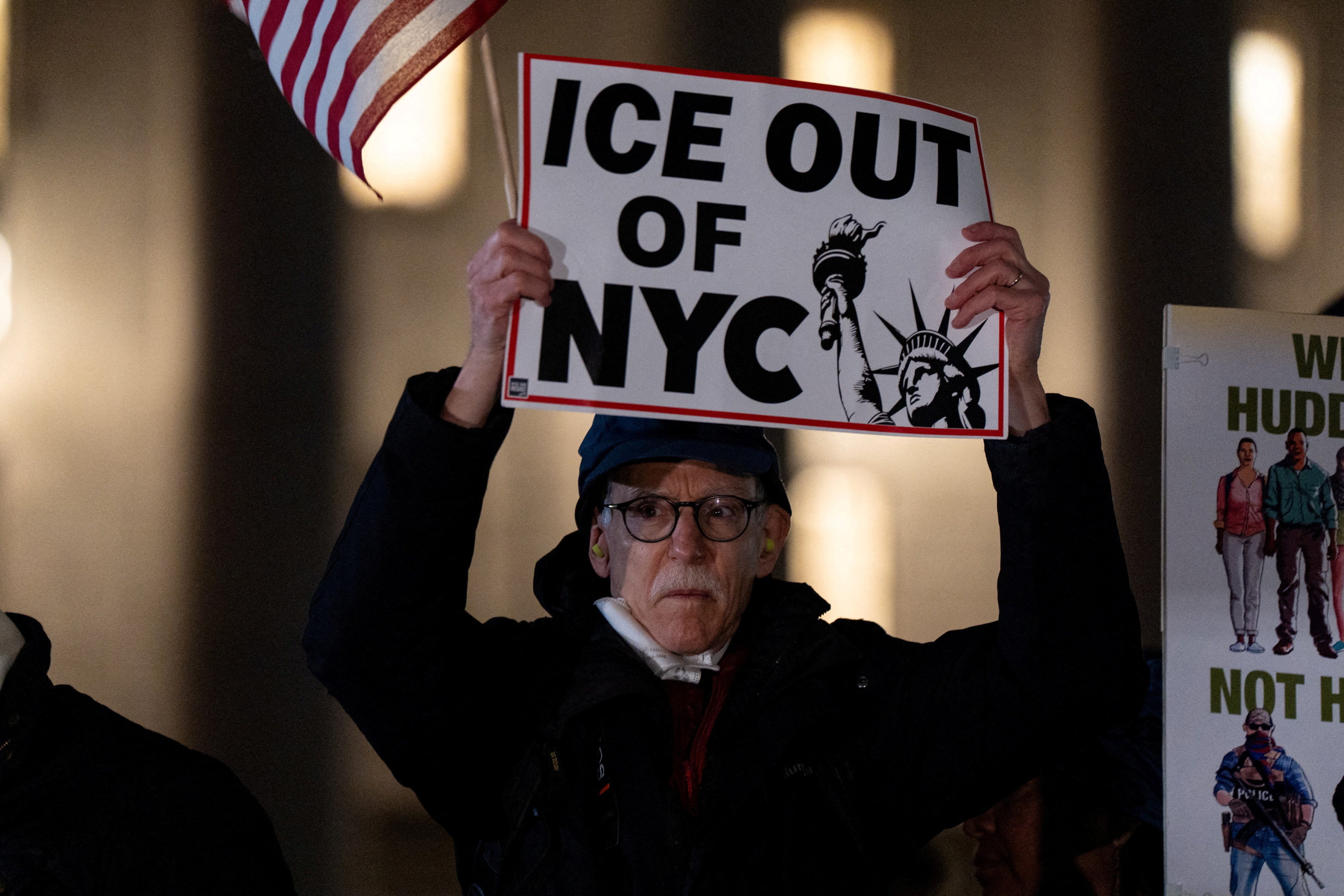
On May 2, 2026, masked ICE agents arrested a Nigerian national named Chidozie Wilson Okeke in his car in the Bushwick neighborhood of Brooklyn. The arrest was contested; video captured an agent using a taser on Okeke multiple times as another agent tried to force him out of the car. Okeke was taken to Wyckoff Heights Medical Center for treatment. Word spread. Approximately two hundred protesters assembled outside the hospital. When ICE moved to leave with Okeke, agents pepper-sprayed the crowd, dragged Okeke — described by witnesses as semi-conscious — across the pavement to an ICE vehicle, then drove through the crowd, striking a protester on the way out. Eight or nine protesters were arrested by the NYPD. New York City Mayor Zohran Mamdani said the NYPD had responded to 911 calls about the protest, not to a request from ICE for backup.
Bushwick is a different category from Prairieland, McAllen, and Dallas. There was no rifle. The protesters were not attempting to kill federal officers, and the officers were not attempting to kill protesters. What Bushwick illustrates instead is the friction zone that surrounds each ICE action — the daily reality that any enforcement operation in a jurisdiction hostile to that operation can escalate into a physical confrontation with injuries on both sides. It is worth naming because it shows what the argument between "policy dispute" and "targeted attack" looks like at the boundary. Bushwick sat on the boundary. The Texas shootings did not.
The Shape of the Argument
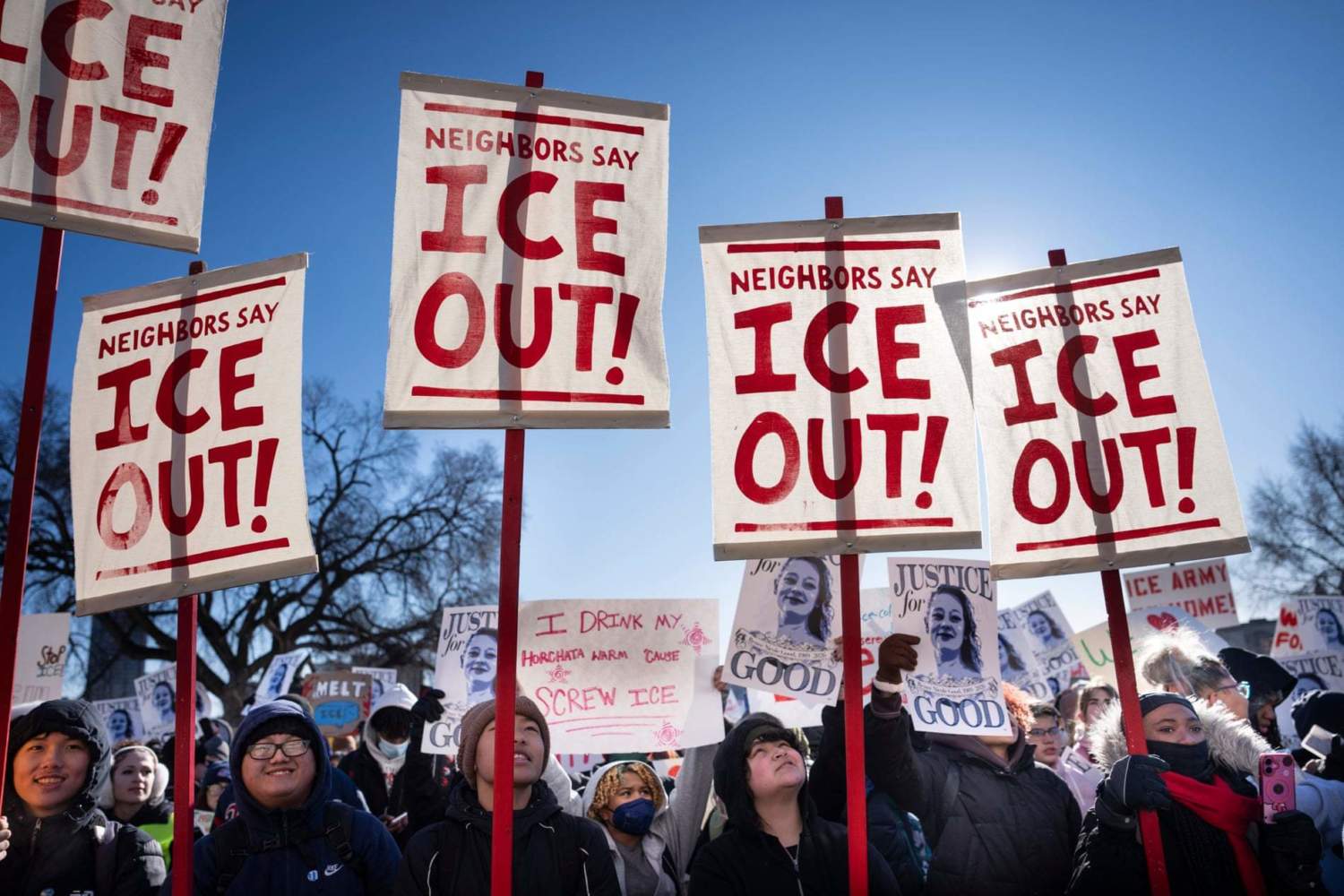
Every one of these incidents produces a predictable set of responses. Sanctuary-jurisdiction politicians and progressive commentators tend to frame the underlying enforcement action as the provocation, the officer's presence as the aggression, and the response — whether it is a protester's shove, a driver's ramming, or a shooter's rifle — as a foreseeable and in some ways justified consequence of federal overreach. Federal officials, congressional Republicans, and conservative commentators tend to frame the sanctuary rhetoric itself as the provocation, the officer as a public servant carrying out lawful duties, and any physical response as criminal violence dressed up in political language.
Both framings capture something. Neither captures everything. Rhetoric on any subject, sustained long enough, will produce a small number of people willing to act on it, and both sides of this argument have participants who have crossed the line from expression into action. What separates the framings from the events themselves is that the events are not framings. They are facts about specific people who fired specific rifles at specific human beings on specific mornings.
The Rule That Should Not Need Restating
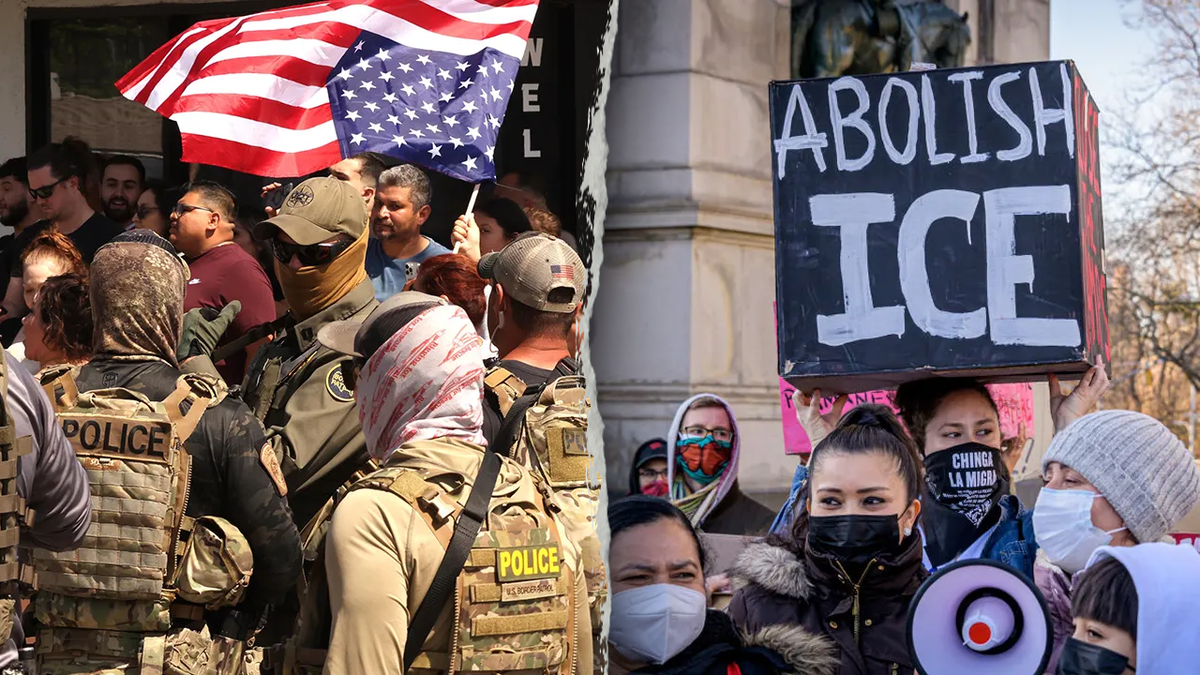
The principle underneath all of this is not sophisticated and does not require a political affiliation to hold. Disagreement with a policy does not create a right to attack the people carrying out the policy. Voting against the policy is legitimate. Organizing against the policy is legitimate. Suing to overturn the policy is legitimate. Nonviolent protest against the policy is legitimate. Ramming an officer's vehicle in the course of your arrest is not. Firing a rifle at an officer arriving at work is not. These are not close cases at the level of principle, however hot the surrounding debate may be at the level of politics.
The reason this matters — the reason articles like this one, and the earlier piece on Joshua Jahn, are worth writing at all — is that the same democratic system that permits argument about immigration policy is the system that prohibits killing the policy's executors. The two protections come as a set. A person who abandons the second protection cannot coherently keep the first, because the first only exists inside a system where the second is respected. The Prairieland defendants, the McAllen shooter, and the Dallas sniper each understood themselves to be resisting an unjust system. The system they were actually damaging was the one that protected their right to say so.
Solutions happen through respect and through compromise. They do not happen through rifles on rooftops or cars driven into officers. Everyone reading this understands the first sentence intuitively. The task of the country over the next several years is to hold that understanding steady long enough for the second sentence to become obvious again.