In a prime-time address on July 17, 2026, President Donald Trump stood before a national television audience and announced that the federal government had identified approximately 278,000 noncitizens registered to vote across four American states. Hours earlier, his newly installed Homeland Security Secretary, Markwayne Mullin, had dispatched warning letters to election officials in California, New Jersey, Nevada, and Pennsylvania, declaring that a DHS review had identified over 250,000 potential noncitizen registrants on their voter rolls. The administration framed it as a breakthrough in election integrity — proof, at last, of systematic noncitizen infiltration of America's voting system. Critics immediately called it something else entirely: a politically driven pressure campaign built on a methodology that federal courts have since ruled was unlawful, applied to data that experts say is riddled with errors. The ensuing weeks have brought lawsuits, congressional battles, a landmark appellate ruling, and a startling admission from a Democratic governor — revealing just how tangled the truth behind the 250,000 figure actually is.
The Announcement: Who Said What and When
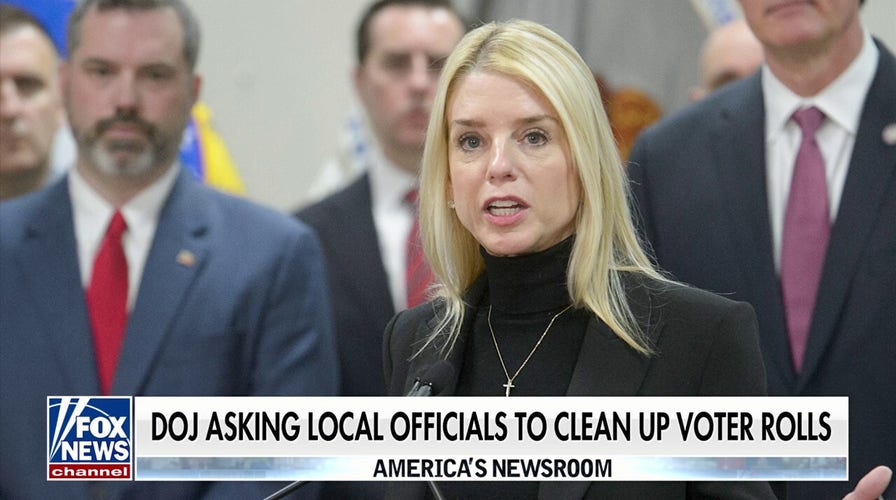
The opening salvo came from DHS Secretary Markwayne Mullin, the former U.S. Senator from Oklahoma who was confirmed to lead the Department of Homeland Security in 2025. On July 17, 2026, Mullin sent formal letters to the secretaries of state in California, New Jersey, Nevada, and Pennsylvania, citing what he described as a "preliminary review" of state voter records cross-referenced against federal immigration databases. The letters alleged that a combined 250,000-plus potential noncitizens appeared on the voter rolls in those four states alone, and demanded that officials cooperate with federal efforts to purge those names — or face consequences including the loss of federal grants.
The same evening, President Trump amplified the claim during an election security address, inflating the figure to 278,000 noncitizens registered to vote. He described the situation as a crisis and threatened states that refused to participate in what the administration characterized as legitimate federal compliance programs.
"We've identified 250,000 noncitizens registered to vote," Mullin said in interviews following the announcement. "This isn't a small number. This is a systematic problem."
The letters gave states two weeks to respond and explain their plans to remove the flagged registrants.
The Numbers: A Moving Target
One of the first problems with the administration's claim is that the headline figure changed depending on who was talking — and when. Multiple numbers circulated simultaneously, with no clear explanation from DHS about which figure was definitive.
The most commonly cited breakdown of the 256,000 figure, attributed to DHS's "preliminary review" of public voter files, was:
- California: 190,832 potential noncitizen registrants
- New Jersey: 35,152
- Nevada: 15,903
- Pennsylvania: 14,576
Those four figures total approximately 256,463 — the number Fox News reported, consistent with the headline DHS announced.
However, a separate set of numbers attributed to a SAVE database cross-check — matching voter registrations against federal immigration records using Social Security numbers and other personal identifiers — produced substantially lower totals:
- California: 81,336
- New Jersey: 19,497
- Nevada: 8,576
- Pennsylvania: 8,594
That cross-check total comes to roughly 118,000 — less than half the headline figure. DHS did not publicly explain the discrepancy between these two numbers, nor did Mullin clarify in press appearances which methodology produced which result.
President Trump then rounded up further to 278,000 in his prime-time speech, adding another layer of confusion. A review of documents released by the White House following the speech, reported by multiple outlets, suggested the administration may have inadvertently included a significant number of deceased voters in its count — a data quality failure that would substantially inflate any headline figure.
The Center for Election Innovation and Research, a nonpartisan election research organization, noted in a subsequent statement that this kind of shifting arithmetic is a common feature of noncitizen voter claims. "When those claims are scrutinized and investigated," the organization wrote, "the number of alleged instances of noncitizens identified on voter rolls drops."
The Agency: DHS's New Enforcement Role in Elections
DHS is not traditionally an election integrity agency. Its Systematic Alien Verification for Entitlements program, known as SAVE, was designed decades ago as an immigration benefits verification tool — a way for federal and state agencies to confirm that applicants for programs like Medicaid or food stamps are legally present in the United States. Under the Trump administration's second term, that system has been repurposed aggressively for election use.
Beginning in 2025, DHS began urging states to run their voter rolls through SAVE, cross-referencing Social Security numbers, names, and dates of birth in state voter registration files against DHS's database of known noncitizens. Mullin declared that states refusing to use SAVE would be denied access to federal grants — effectively using federal funding as a coercive lever.
The administration has also coordinated with the Department of Justice on what officials describe as a parallel enforcement track. DOJ, under Attorney General Pam Bondi, and with Harmeet Dhillon serving as Assistant Attorney General for Civil Rights, has pursued an aggressive campaign to compel states to turn over voter registration data, including sensitive information like Social Security numbers and driver's license records.
A March 2025 executive order by President Trump directed the attorney general to "ensure compliance" with federal voter registration laws, which the administration has interpreted broadly to justify demanding voter rolls from all 50 states.
The DOJ's Legal Campaign: Threats, Lawsuits, and Defeats
Parallel to the DHS announcement, the Justice Department has conducted its own expansive — and largely unsuccessful — legal campaign to force states to cooperate with the voter roll investigation.
On July 7, 2026, Harmeet Dhillon signed letters sent to election officials in all 50 states and the District of Columbia, warning that they could face criminal prosecution under three federal statutes — the Voting Rights Act, the Help America Vote Act, and the National Voter Registration Act — if noncitizens remained on their voter rolls or cast ballots. The letters demanded responses within five days explaining how each state planned to maintain "clean voter lists."
Election officials and legal experts described the letters as extraordinary — and constitutionally questionable. "This looks far more like political pressure than legal enforcement," said one senior election official cited by Votebeat. Federal law does not generally give the Justice Department the authority to unilaterally define what a "clean" voter list requires, and the five-day turnaround window left essentially no time for meaningful legal review.
The DOJ then sued 30 states that refused to produce their unredacted voter rolls, including Social Security numbers and other sensitive personal data. The legal campaign has been nearly uniformly rejected by the federal judiciary.
As of late June 2026, no court at either the district or appellate level had ruled in favor of the Justice Department on these demands. Cases against 17 states — including Arizona, California, Michigan, New York, Pennsylvania, Virginia, and others — had been dismissed outright. On June 24, 2026, the 6th U.S. Circuit Court of Appeals issued what legal observers called the most significant setback yet: a ruling that Michigan was under no obligation to produce non-public information in its voter registration files. It was the first appellate-level ruling on the question, and it signals a potential Supreme Court showdown.
Voting rights organizations have filed their own countersuit against the DOJ, alleging that the Justice Department's voter purge lists violate the constitutional rights of lawful voters.
The SAVE Database: A Flawed Tool at the Center of the Controversy
At the heart of the administration's methodology is the SAVE database — and federal courts have now ruled that the way the Trump administration repurposed that system was unlawful.
On June 22, 2026, U.S. District Judge Sparkle Sooknanan in Washington, D.C., issued a ruling blocking DHS from using SAVE to remove voters from registration rolls. The judge found that the Trump administration's 2025 overhaul of the system — which made it easier for states to check voter rolls against immigration records, including Social Security numbers — violated multiple federal laws: the Social Security Act's prohibition on disclosing Social Security numbers, the Privacy Act of 1974, and the Administrative Procedure Act.
"Federal officials haphazardly combined and repurposed the private information of millions of Americans, including citizenship data that they knew to be unreliable," Judge Sooknanan wrote in her ruling.
That finding — that the government was knowingly using data it understood to be unreliable — cuts to the core of the administration's 250,000 claim.
Independent reporting and academic research had long flagged SAVE's limitations for voter eligibility use. The system was designed to evaluate immigration benefits applications, not electoral citizenship. Its data matching depends on exact matches of names, dates of birth, addresses, and Social Security numbers — a process that fails routinely due to name variations, data entry errors, address changes, typographical inconsistencies, and information that is simply outdated.
A March 2026 investigation by FactCheck.org found that SAVE had produced an error rate of approximately 14% in Denton County, Texas, during a noncitizen voter check — meaning roughly one in seven people flagged as potential noncitizens were demonstrably U.S. citizens. Officials acknowledged the actual error rate was likely higher, since some incorrectly flagged voters may not have responded to notices in time.
A ProPublica investigation found that SAVE provided incorrect citizenship information to at least five states. In Missouri, state officials directed county election administrators to temporarily disenfranchise voters flagged as potential noncitizens — and in hundreds of cases, those determinations were wrong.
In Arizona, Maricopa County officials found that a set of 137 noncitizens identified by a local election official using SAVE data was based on "shaky data," with verifiable errors undermining the initial count.
The U.S. Citizenship and Immigration Services (USCIS), the federal agency that operates SAVE, released a statement in April 2026 that is perhaps the most telling data point: of all records run through SAVE in citizenship verification contexts, only 0.03% merited additional review as potentially noncitizen. When state and local officials conducted subsequent follow-up reviews, those numbers fell further.
State-by-State: Who Is Cooperating and Who Is Pushing Back
California
California's Secretary of State has pursued an active legal challenge to DOJ demands for statewide voter registration data and declined to turn over voter information. Los Angeles County, the nation's largest county by population, also stated it had not complied. California represents by far the largest share of the DHS claim — with 81,336 to 190,832 potential noncitizens depending on which DHS number is used. Critics note that California also has the largest overall voter registration base, making any percentage-based discrepancy enormous in raw numbers.
New Jersey: A Genuine Discovery — With a Very Different Explanation
New Jersey became the most complex case study in the entire controversy when Governor Mikie Sherrill, a Democrat, announced on July 21, 2026, that a software error in the state's Motor Vehicle Commission system had improperly registered approximately 6,600 noncitizens to vote.
The error, which occurred between June 2023 and June 2024 — during the administration of former Governor Phil Murphy — registered individuals who had indicated they were noncitizens when obtaining driver's licenses or state IDs. Rather than being flagged and excluded, they were enrolled in the voter registration system due to a software glitch.
Sherrill said that a preliminary analysis showed fewer than 400 of those individuals actually cast ballots, and that there was "no evidence at this time that any elections were swayed." She ordered the erroneous registrations removed and announced the replacement of the vendor responsible for the system.
The New Jersey case is instructive in both directions. It confirms that noncitizens can and do end up on voter rolls — but through systemic and administrative error, not intentional fraud. The error also undercuts the DHS figure: New Jersey was listed at 19,497 (SAVE cross-check) or 35,152 (public records) potential noncitizen registrants. A thorough investigation led by the state's own Democratic governor produced a confirmed number of 6,600, fewer than one-third of the lower DHS estimate.
Nevada and Pennsylvania
Nevada and Pennsylvania, two perennial battleground states, have not produced the kinds of dramatic findings the administration's headline numbers implied. Pennsylvania Secretary of State Al Schmidt — a Republican who served as a Philadelphia election official during the contentious 2020 election cycle — said after the DHS letters that "all evidence has shown that noncitizen voting is extremely rare across the country." Pennsylvania listed 14,576 potential noncitizens by DHS public record review and 8,594 by SAVE cross-check.
Texas
Texas, which was not among the four states named in the initial DHS letters, has become a parallel case study in what happens when a state actively uses SAVE. Secretary of State Jane Nelson said a statewide database cross-check flagged 2,724 potential noncitizen voters across more than 18 million registered Texans. By May 2026, the state was cross-referencing that list against Texas Department of Public Safety records to see how many had already provided citizenship documentation when getting a state ID — a necessary step because SAVE had flagged voters who had, in fact, already demonstrated their citizenship. In one striking illustration of the system's limitations, at least six people on the noncitizen list were confirmed U.S. citizens. Texas's own attorney general had previously referred just 33 potential noncitizen voters for criminal investigation following the November 2024 election.
What the Experts and Fact-Checkers Found
The reaction from the independent research and academic community was consistent: the claim of 250,000 illegal voters is, at minimum, massively overstated — and potentially fabricated from unreliable data.
PolitiFact rated the Trump administration's count as misleading, noting that DHS had not explained its methodology, that the figures varied dramatically depending on which internal number was cited, and that every prior investigation into such claims had seen the numbers fall precipitously upon scrutiny.
FactCheck.org issued a detailed takedown of Trump's July 17 election security speech, identifying multiple claims as false or unsupported, including the noncitizen voter number. The review found that the documents the White House released to support the figure appeared to lump deceased voters into the noncitizen category — a fundamental data quality failure.
Charles Stewart III, a political science professor at MIT who specializes in election administration, directly challenged the DHS claims, pointing out that the type of data cross-checking DHS had employed is "error-prone and legally questionable." Stewart's analysis, published through MIT's political science department, concluded that the administration's estimate was not credible given the known limitations of SAVE.
The Brennan Center for Justice released a report titled "Noncitizen Voting is Vanishingly Rare," citing decades of research showing that noncitizens are deeply unlikely to risk criminal prosecution and deportation by attempting to vote. The Brennan Center noted that the legal penalties — up to five years in federal prison and permanent inadmissibility for immigration purposes — create an overwhelming deterrent.
The Heritage Foundation — an organization sympathetic to election integrity concerns and not typically aligned with voting rights advocates — maintains its own database of election fraud cases. That database identified just 23 instances of confirmed noncitizen voting between 2003 and 2022 across the entire United States.
A 2026 audit of Georgia's voter rolls, which includes 8.2 million registered voters, uncovered 20 noncitizens who had registered, including nine who had actually cast ballots. While those cases are real and represent genuine violations of federal law, they represent 0.00025% of the state's total registered voters.
In Louisiana, the SAVE program identified 403 potential noncitizen registrants out of 2.96 million total — roughly 0.014%. After vetting, the actual confirmed noncitizen voter count was a fraction of even that number.
The pattern is consistent: when initial SAVE-based flags are subjected to rigorous follow-up investigation, they collapse. The 250,000 figure has never been subjected to that follow-up. It is a raw data match, not a verified count.
The Broader Political Context
The July 17 DHS announcement did not occur in a vacuum. It arrived ten days after the DOJ's sweeping criminal threat letters to all 50 states, and roughly three months before the November 2026 midterm elections — elections in which Republicans are seeking to consolidate their congressional majorities and Democrats are hoping to contest the House of Representatives.
The administration's election integrity push has been accompanied by a series of parallel executive actions and rhetoric designed to frame the midterm elections as a referendum on voter fraud. Trump's July 17 speech included not only the noncitizen voter claim but also references to voting machine vulnerabilities and alleged foreign interference — claims that fact-checkers rated as unsubstantiated or false.
Mullin threatened to withhold federal aid from states that do not comply with DHS election directives, a power whose legal basis has been challenged by constitutional scholars who argue that election administration is fundamentally a state function under the U.S. Constitution.
DOGE — the Department of Government Efficiency, the Trump administration's cost-cutting and data-access initiative led by Elon Musk — has also been involved in the voter rolls investigation, cross-referencing DHS data against state registration files. By late April 2026, DOGE had referred just 57 cases for prosecution out of what it described as "thousands" of suspected noncitizen voters — a vanishingly small yield given the scale of the claimed problem.
Democracy Docket, the voting rights litigation organization founded by attorney Marc Elias, characterized the entire campaign as an effort to intimidate election officials and lay groundwork for post-election challenges. "What we're seeing is not a law enforcement action — it's a political operation dressed in law enforcement clothing," Democracy Docket wrote in a July 2026 analysis.
What Is Established — and What Remains Contested
After stripping away the headline figures and legal maneuvering, a clearer picture emerges of what is actually documented versus what remains asserted.
What is established:
- Noncitizens do appear on voter rolls in the United States, primarily due to administrative error in state motor voter programs (the "Motor Voter" Act automatically registers individuals when they obtain a driver's license or state ID, and software errors or human mistakes can enroll noncitizens who should have been flagged).
- New Jersey confirmed 6,600 noncitizen registrations due to a software glitch, with under 400 confirmed votes cast.
- Texas flagged 2,724 potential noncitizens, with ongoing cross-verification revealing confirmed errors in the data.
- Georgia confirmed 20 noncitizen registrations, with 9 confirmed votes, out of 8.2 million registered voters.
- The SAVE database, the primary tool used to generate the DHS figures, has documented error rates of 14%+ when applied to voter rolls.
- A federal judge ruled in June 2026 that the Trump administration's overhaul of SAVE violated federal privacy and administrative law.
- Federal courts have unanimously rejected DOJ demands for unredacted voter roll data, with the 6th Circuit delivering the first appellate ruling against the administration.
What is contested:
- Whether the 250,000 / 256,000 / 278,000 figure represents verified noncitizen voters, unverified database matches, or data inflated by erroneous inclusion of deceased voters.
- Whether DHS's repurposing of SAVE for electoral use, now blocked by a federal court, ever produced reliable results.
- Whether the DOJ's letter campaign constitutes legitimate election law enforcement or politically motivated intimidation of state officials.
- Whether any of the flagged individuals actually voted, rather than merely appearing in a registration database.
Conclusion
The claim that 250,000 illegal voters have been identified nationwide is, as of the evidence available in July 2026, more accurately described as a claim that roughly 250,000 database records were flagged by a cross-matching process a federal judge has since ruled was conducted in violation of federal law — using a tool documented to carry error rates as high as 14% or more.
That is a materially different statement than the one the administration made.
None of this means that noncitizen voter registration is a non-issue. The New Jersey software error — which produced 6,600 improper registrations through pure administrative failure, not fraud — demonstrates that real vulnerabilities exist in the voter registration pipeline and warrant genuine, methodologically rigorous investigation. States like Georgia and Louisiana have conducted exactly that kind of investigation, and found noncitizen voter participation in the dozens, not the hundreds of thousands.
The gap between "dozens confirmed" and "250,000 claimed" is not a rounding error. It is a difference of orders of magnitude, and it sits at the center of one of the most consequential electoral battles of the 2026 cycle. As federal courts continue to reject the administration's legal tools, and as state-level investigations produce far smaller numbers than DHS's preliminary claims, the burden falls squarely on the federal government to explain — with precision, transparency, and legally permissible methodology — exactly how it arrived at the number it broadcast to the nation.
So far, it has not done so.
Sources:
- DHS Secretary Mullin Sends Letters to Secretaries of State Warning About Non-Citizens on Voter Rolls
- Fact-check: Are 250,000 Noncitizens on US Voting Rolls? — PolitiFact
- Trump Says 278,000 Noncitizens Are on Voting Rolls. Experts Say That's Wrong — The Spokesman-Review
- FactChecking Trump's Election Security Speech — FactCheck.org
- System That DHS Is Urging States to Use to Assess Voter Rolls Known to Return Faulty Results — ABC News
- DHS Alleges Over 256,000 Non-Citizens May Be on Voter Rolls Across 4 States — Fox News
- Trump Administration Warns 4 States Over 250,000 Potential Noncitizens Voting — Newsweek
- Trump Administration Threatens State Election Officials With Criminal Charges — Votebeat
- DOJ Warns of Criminal Charges for State Election Officials If Noncitizens Vote — NBC News
- In Blow to Trump, Federal Judge Blocks DHS From Using Citizenship Database to Purge Voters — Democracy Docket
- Judge Blocks Trump Administration's Overhaul of SAVE Database — Votebeat
- Judge Says Trump Can't Use Social Security Data for Voter Roll Purges — CNN
- Appeals Court Deals Biggest Setback Yet to Trump DOJ's Demands for Voter Roll Data — CNN
- The DOJ Accelerates Its Hunt For Voter Fraud — With DOGE's Help — Democracy Docket
- Flaws in Government Tool to ID Noncitizen Voters — FactCheck.org
- SAVE Tool Keeps Mistakenly Flagging Voters as Noncitizens — Texas Tribune
- New Jersey Says Software Error Improperly Registered 6,600 Noncitizens to Vote — CBS News
- 6,600 Noncitizens Were Registered to Vote in N.J. Because of a 'Software Error,' Governor Says — NBC News
- SAVE Tool, Explained — Protect Democracy
- Noncitizen Voting is Vanishingly Rare — Brennan Center for Justice
- Tracking the DOJ's Effort to Get U.S. Voter Registration Data — NBC News
- Update: Review of Claims of Noncitizen Registrants and Voters — Center for Election Innovation and Research
- Trump Speech on Election Integrity — Votebeat
- Charles Stewart DOGE Claims About Noncitizens Voting — MIT Political Science